Valentine’s Day might be marketed to couples, but ask any parent and they’ll tell you: for kids, it’s one of the most exciting days of the school year. The classroom valentine exchange, the decorated boxes, the sugar-fueled party — it’s pure childhood joy. Valentine’s Day gifts for kids: sweet ideas from parents covers everything from toddler-safe treats to tween-approved gifts, classroom valentines teachers actually appreciate, and DIY projects you’ll genuinely enjoy making together.
The parent’s role on Valentine’s Day is a happy one: you’re not navigating romantic expectations, just looking for ways to make your child feel loved and to help them spread a little kindness to their classmates. That simplicity is a gift in itself — but it still helps to have ideas organized by age, budget, and situation, because a great gift for a four-year-old and a great gift for an eleven-year-old have almost nothing in common.
Below you’ll find age-by-age gift ideas, a classroom valentine playbook (including allergy-aware and non-candy options teachers love), family DIY projects, a comparison table, a video full of budget-friendly ideas, and answers to parents’ most common questions.
Valentine’s Day Through a Child’s Eyes
Understanding what kids actually value about Valentine’s Day will make you a better gift-giver. For young children, the holiday is about participation: decorating the shoebox mailbox, choosing valentines for each classmate, the thrill of opening them all at the party. The gifts themselves matter less than the ritual. A parent who leans into the ritual — helping decorate the box the night before, making a special breakfast on the 14th — gives more than any object.
For older kids, roughly ages 8–12, Valentine’s Day starts to carry social weight. Who gives valentines to whom, what’s “cool” versus “babyish,” whether to give something to a crush — these are real (if low-stakes) social negotiations. Parents help most by keeping things light and inclusive: no elaborate romantic gestures, no gifts that single out one child in a way that creates playground drama, and a steady message that kindness to everyone is the point.
Across all ages, kids respond to three things: surprise (something unexpected waiting at breakfast), personalization (their name, their interests, proof you know them), and participation (making something together beats receiving something alone). Keep those three in mind and you can’t go far wrong.
Valentine’s Day Gifts for Kids by Age
Toddlers and Preschoolers (Ages 2–5)
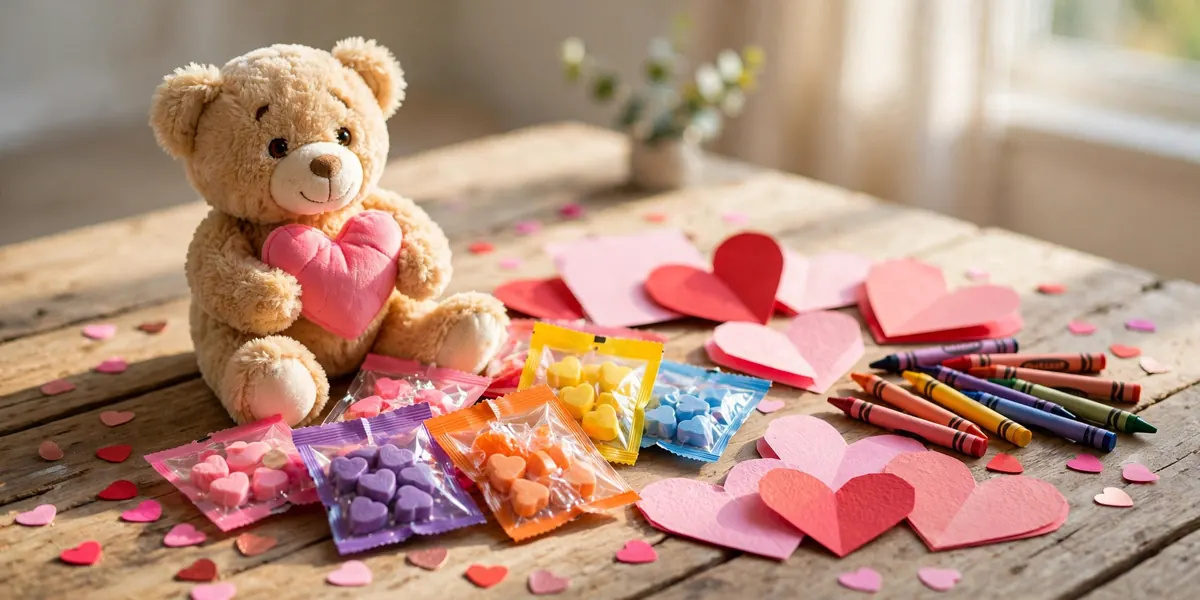
At this age, Valentine’s Day is pure sensory delight: red and pink everything, heart shapes, soft textures, sweet tastes. Keep gifts simple, safe, and tactile. Excellent picks include soft plush toys (a small teddy bear holding a heart is a classic for a reason), board books with a love theme, heart-shaped crayons or chunky art supplies, play dough in Valentine’s colors, and simple puzzles.
Safety first: avoid small parts, hard candies, and anything with button batteries accessible to little fingers. If you’re sending treats to a preschool classroom, check the school’s policy — many preschools are now nut-free and some request non-food valentines entirely. Stickers, mini bubbles, and rubber ducks are classroom-safe classics that toddlers adore.
Budget: $5–$20 covers toddler Valentine’s beautifully. At this age, the wrapping is half the fun — a paper bag they’ve decorated themselves, filled with a few small treasures, will delight them completely. Don’t overthink it; do lean into the cute.
Early Elementary (Ages 6–8)
Six-to-eight-year-olds are at peak Valentine’s enthusiasm: old enough to write their own cards, young enough to be thrilled by all of it. Great gifts at this age include craft kits (friendship bracelets, painting sets, build-your-own projects), books from a series they’re reading, LEGO-style building sets in small sizes, card games the family can play together, and themed treats.
This is also the prime age for experience gifts from parents: a “date” with mom or dad — ice cream outing, movie night with special snacks, a trip to the bookstore where they pick anything — often means more than any wrapped object. Kids this age are starting to measure love in time and attention, and Valentine’s Day is a natural moment to give both generously.
Classroom valentines hit their stride in these grades. Let your child choose or make their own cards — ownership matters — and help them write classmates’ names carefully. Teachers consistently say the best classroom valentines are the ones kids clearly participated in making. Budget: $10–$25 for a home gift; classroom valentines typically run $5–$15 for a class set.
Tweens (Ages 9–12)
Tweens are the trickiest Valentine’s audience: too old for babyish stuff, not yet teens, and acutely aware of what’s cool. The winning strategy is treating them like the young people they are. Good picks: books (graphic novels are huge in this bracket), art supplies a step up from the kids’ aisle, sports equipment for their actual activities, science kits, puzzles and brain-teasers, journals, and modest tech accessories like a fun phone case or earbuds.
Avoid anything that talks down to them — packaging matters enormously at this age. A gift that looks “for little kids” will be rejected regardless of content. When in doubt, ask: tweens will tell you exactly what they want if you ask casually and without pressure. Many parents find a short wishlist request in early February solves the whole problem.
Tweens also appreciate gifts of independence: a gift card with a shopping trip, a sleepover with friends that you host (and then discreetly vanish from), or a special outing with one parent. Budget: $15–$40 for most tween Valentine’s gifts.
Classroom Valentines: The Parent’s Playbook
The classroom exchange is the centerpiece of kids’ Valentine’s Day, and a little planning makes it joyful instead of stressful. Here’s how to handle it like a pro.
Start Early, Keep It Simple
Classroom valentine sets sell out — really. The good boxed sets (with decent designs, not flimsy paper) disappear from stores in late January. Buy early, and buy for the full class plus a few extras; there’s always a new student or a lost card. Most teachers send home a class list; if yours doesn’t, ask. Having every child’s name spelled right matters to kids more than adults realize.
Help your child sign each valentine personally — even young kids can manage their name, and older kids can add a short note. Pre-signed, impersonal valentines feel like junk mail; a signed one feels like a gift. This is also a nice moment to talk about including everyone: the classmate who’s sometimes left out will remember being remembered.
Non-Candy Valentines Teachers Love
Many schools now discourage or ban candy valentines — and honestly, teachers and parents are often relieved. Non-candy valentines are creative, allergy-safe, and don’t contribute to the February sugar avalanche. Proven winners include: mini play dough tubs, stickers and temporary tattoos, pencils and erasers in Valentine’s designs, mini bubbles, small bouncy balls, bookmarks, and seed packets (“you make my heart grow”).
Pair the trinket with a punny card and kids go wild: “You rule!” with a ruler, “You’re a-maze-ing!” with a mini maze puzzle, “You make my heart pop!” with popcorn or bubble wrap. These are cheap (often under $0.50 per valentine in bulk), fun to assemble, and teachers genuinely prefer them. Check your school’s specific rules first — some restrict even small toys.
Allergy-Aware and Inclusive Gifting
Food allergies are common in elementary classrooms, and Valentine’s Day is a minefield. The safest approach: go non-food, or if you do send treats, choose individually wrapped, clearly labeled items and check with the teacher about specific allergies in the class. Never send homemade baked goods for classroom distribution unless the teacher explicitly approves — most schools prohibit them for allergy reasons.
Inclusivity extends beyond allergies. Avoid valentines that rank or exclude (no “best friend” superlatives for only some classmates), keep romantic language out of classroom exchanges entirely, and make sure every child in the class receives one. The goal is a day where every kid feels included — that’s the real Valentine’s spirit.
Quick Comparison: Kids’ Valentine’s Gifts
| Gift type | Budget range | Best for |
|---|---|---|
| Plush toys and soft gifts | $5–$20 | Toddlers and preschoolers; sensory comfort |
| Craft and art kits | $10–$25 | Ages 4–10; creativity and quiet time |
| Books and graphic novels | $8–$25 | All ages; matched to reading level |
| Classroom valentine sets | $5–$15 | School exchanges; buy early, include everyone |
| Non-candy valentines (bulk) | $5–$15 | Allergy-aware classrooms; teachers’ favorite |
| Experience gifts (outings) | $10–$40 | Ages 6–12; time and attention as the gift |
| Tween tech accessories | $15–$40 | Ages 9–12; phone cases, earbuds, journals |
DIY Valentine’s Projects to Make as a Family
Some of the best Valentine’s gifts for kids aren’t bought at all — they’re made together, with all the mess and laughter that implies. These projects are genuinely fun for parents too:
Handprint and footprint art: For little ones, handprint hearts on canvas or card stock — “I love you from the bottom of my heart, hands down” — make keepsakes grandparents treasure. Use washable paint, cover the table, and embrace the chaos. These become family artifacts; date them on the back.
Valentine’s cookie decorating: Bake heart-shaped sugar cookies together and set up a decorating station with frosting and sprinkles. Kids decorate some for the family and package others as gifts for neighbors, teachers, or grandparents. It’s an activity, a gift factory, and a snack, all in one afternoon.
Love-note scavenger hunt: Hide small treats or notes around the house, each with a clue leading to the next, ending with their Valentine’s gift. It takes 20 minutes to set up and creates the kind of morning kids talk about for years. Scale the clues to their age — picture clues for pre-readers, riddles for older kids.
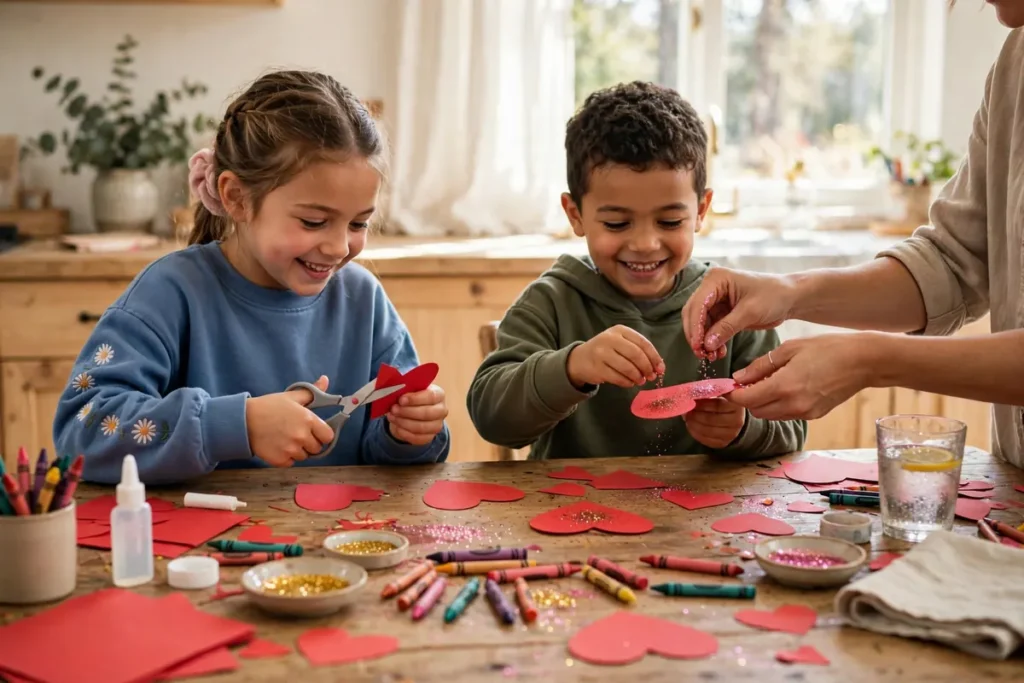
Homemade valentines for the class: Instead of boxed sets, make cards together: folded card stock, stickers, stamps, and their own drawings. It’s more work, but kids take visible pride in handmade valentines, and classmates notice the difference. Start a week ahead — 25 handmade cards is a multi-evening project.
“Reasons I love you” jar: Fill a jar with slips of paper, each naming something you love about your child. Read a few together on Valentine’s morning, then keep the jar where they can pull one out whenever they need it. For older kids especially, this kind of specific, written affirmation lands deeply.
Watch: Budget-Friendly Valentine’s Gift Ideas
Proof that wonderful Valentine’s gifts don’t require a big budget: this video walks through ten creative Dollar Tree gift DIYs — many perfect for kids, classrooms, and family gifting:
Gifts From Kids to Others: Teaching Generosity
Valentine’s Day is a natural moment to teach kids that giving feels as good as receiving. Encourage them to make or choose something for others: a card for grandparents (see our Valentine’s Day gifts for grandparents for ideas they’ll love), a small treat for their teacher (our Valentine’s Day gifts for teachers guide has classroom-appropriate picks), or a valentine for a neighbor.
Keep the child’s giving voluntary and joyful — forced generosity breeds resentment, not kindness. But most kids, given the opportunity and a little help, genuinely enjoy making someone else’s day. That’s a lesson worth more than any gift.
For families watching the overall holiday budget, our guide to planning a thoughtful Valentine’s Day on a budget shows how the whole day — kids’ gifts included — can stay meaningful without overspending.
Valentine’s Morning Magic: Making the Day Special at Home
The gift is only part of it — the morning is where parents can create real magic with almost no budget. Kids remember how Valentine’s Day felt far longer than what they received, and a festive morning sets the tone for the whole day.
The decorated breakfast table: Heart-shaped pancakes (use a cookie cutter or a squeeze bottle to draw shapes), strawberries, pink milk, and a small gift or card at each place setting. It takes 15 extra minutes and transforms an ordinary school morning into an event. Kids will photograph it, talk about it at school, and remember it.
The morning surprise trail: A short trail of paper hearts from their bedroom door to the breakfast table, each with a reason you love them. For pre-readers, use heart stickers and small treats instead of words. The anticipation of following the trail is the actual gift.
Lunchbox love notes: Tuck a valentine into their lunchbox — a joke, a compliment, a “good luck on your spelling test.” Middle-of-the-day surprises hit differently; kids consistently name lunchbox notes among their favorite childhood memories. Keep a stash of small notes and deploy them year-round, not just on Valentine’s Day.
The after-school reveal: If mornings are rushed, make after-school the main event: their room lightly decorated, a gift on the bed, a special snack waiting. The “someone did this for me while I was gone” feeling is powerful.
None of this requires spending. It requires planning — ten minutes the night before — and that’s precisely what makes it feel like love rather than logistics.
Gifts for Kids With Special Considerations
Thoughtful gifting means thinking about the specific child, including needs that standard gift guides overlook.
Sensory-sensitive kids: Avoid scratchy fabrics, strong scents, loud toys, and slimy textures unless you know they’re welcomed. Instead: soft plush in preferred textures, noise-free fidgets, weighted lap pads in fun colors, or sunglasses-style “calm down” kits. The best gift for a sensory-sensitive child is one that respects their sensory world — when in doubt, ask their parent or therapist rather than guessing.
Kids with dietary restrictions: For children with diabetes, celiac disease, or severe allergies, a mountain of candy they can’t eat feels exclusionary. Non-food gifts — crafts, books, toys — let them participate fully. If the classroom is doing food valentines, coordinate with the teacher on safe alternatives so no child sits out.
Kids in hospital or with limited mobility: Valentine’s gifts that come to them: window decorations, a cozy blanket, audiobooks, video calls with family, or a “valentine parade” where loved ones wave from outside. Presence, adapted to circumstance, is the whole gift.
Blended families and sensitive situations: Keep Valentine’s gifting equitable across households and children. Nothing sours the holiday faster than one child receiving lavishly while another gets little. Coordinate quietly with co-parents; kids notice fairness even when they don’t mention it.
After Valentine’s Day: Keeping the Warmth Going
Valentine’s Day ends, but the parenting wins don’t have to. A few small habits extend the holiday’s spirit across the year — and they’re the things kids internalize about love and family.
Save the valentines. Keep a folder or box of your child’s classroom valentines each year. In a decade, that stack of construction-paper hearts becomes a time capsule of their childhood social world — and of how loved they were. Date the folder; future-you will be grateful.
Keep the lunchbox notes going. If the Valentine’s lunchbox note was a hit, make it a weekly habit. A two-sentence note takes 30 seconds and pays dividends in connection that no gift can match. Kids who receive regular small affirmations from parents navigate adolescence with measurably more confidence.
Debrief the day. Over dinner on the 14th, ask what their favorite valentine was, who they gave theirs to, what the party was like. Listening to the Valentine’s recap with genuine interest teaches them that their social world matters to you — which is, in the end, the deepest Valentine’s gift a parent gives.
And remember the simplest truth of all: for young kids, the gift is rarely the point — the ritual is. The heart-shaped pancakes, the lunchbox note, the five minutes of undivided attention while they open a small surprise: these are the things that build the childhood memories they’ll describe decades from now. Keep it sweet, keep it simple, and keep showing up.
Frequently Asked Questions
How much should parents spend on kids’ Valentine’s gifts?
Most families spend $10–$30 per child, and honestly, kids are delighted well below that. Young children care about surprise and presentation more than price; older kids care about relevance. A $15 gift matched to their interests beats a $50 generic one every time.
What are the best non-candy classroom valentines?
Mini play dough, stickers, temporary tattoos, Valentine’s pencils and erasers, mini bubbles, bouncy balls, and bookmarks are all proven winners. They’re allergy-safe, inexpensive in bulk (often under $0.50 each), and teachers strongly prefer them over candy.
Should classroom valentines go to every student?
Yes — this is the iron rule of classroom exchanges. Every child in the class gets one, no exceptions, no tiers. Most teachers require it, and it’s simply the kind thing to do. Buy a few extras for new students or lost cards.
Are homemade treats okay for classroom parties?
Usually not, due to allergy policies — most schools prohibit homemade food for classroom distribution. Always check with the teacher first. Individually wrapped, store-bought, clearly labeled treats are the safe standard where food is allowed at all.
What if my child doesn’t want to participate in the valentine exchange?
Don’t force it, but do explore why — sometimes it’s shyness or not knowing what to write, which you can help with. Participation is usually worth encouraging gently, since being the one child who opts out can feel worse than participating. Keep their contribution simple and low-pressure.
How do I handle Valentine’s Day if my child is being bullied or left out?
Talk to the teacher, who can reinforce inclusive exchange rules. At home, make your child’s own Valentine’s morning extra special — a surprise at breakfast, a heartfelt note — so the day feels good regardless. And consider a quiet word with the parents of kind classmates; small alliances help.
Valentine’s Day gifts for kids work best when they stay true to what the holiday means at this age: sweetness, surprise, and inclusion. Keep gifts age-appropriate, keep classroom exchanges kind, make something together if you can — and enjoy one of the few holidays that’s still pure magic through a child’s eyes. Years from now, they won’t remember every gift; they’ll remember that Valentine’s Day was a day their family made feel special.
Start planning a little early, keep the whole thing joyful, and let the day belong to them — that’s the real sweet idea behind it all.