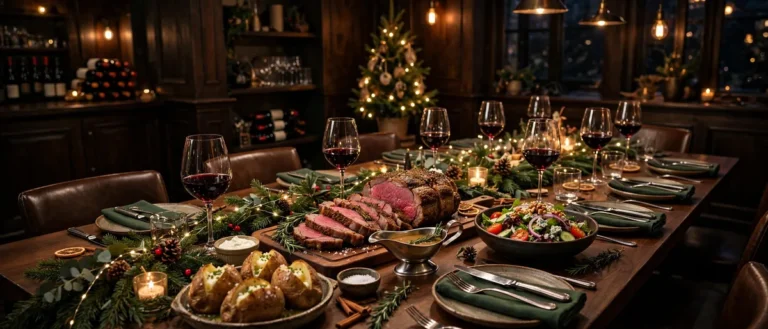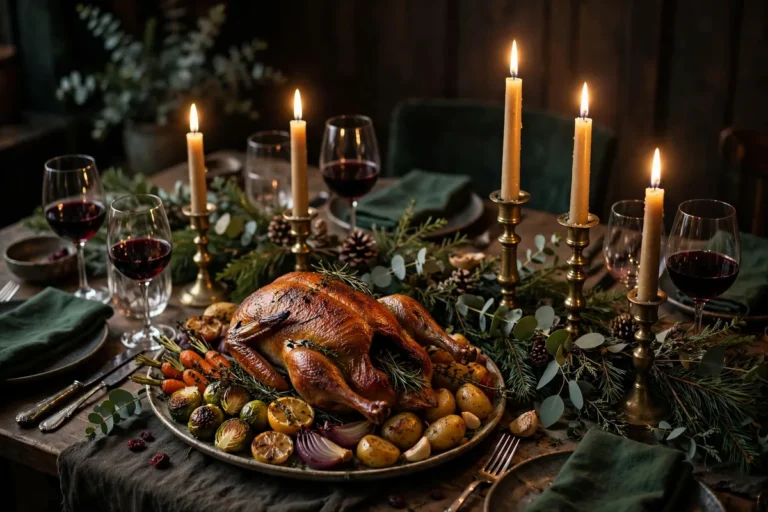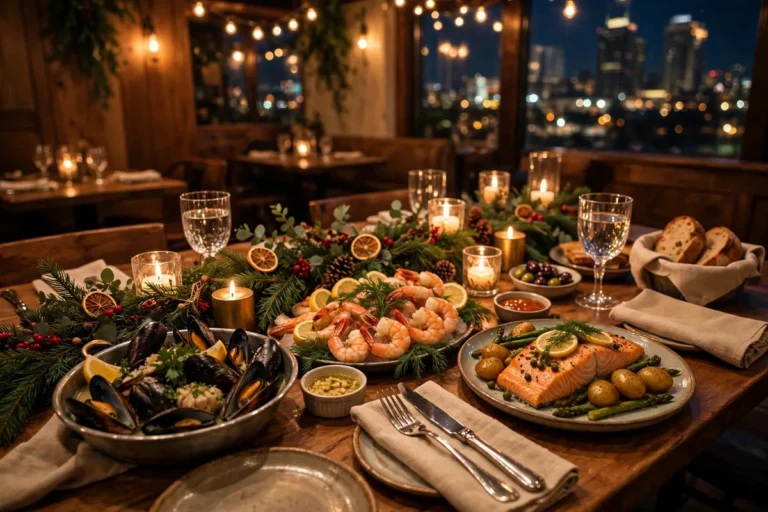
For much of the world, Christmas doesn’t end on December 25 — it crescendos on January 6. Three Kings Day — Día de los Reyes Magos, the Feast of the Epiphany — celebrates the arrival of the Magi at the manger, and in Spain, Mexico, Puerto Rico, France, and dozens of other countries, it’s the biggest gift-giving day of the season, complete with parades, special cakes, and traditions as rich as anything in December.
While much of the English-speaking world packs away the decorations on Boxing Day, the Three Kings are just getting started: grand cabalgatas (parades) through Spanish cities on January 5, the rosca de reyes cake in Mexico with its hidden baby Jesus, star-singing children in Germany, and the blessing of the waters in Greece. Epiphany is Christmas’s spectacular second act — and for billions of Christians, the season’s true finale.
This worldwide guide to Three Kings Day Epiphany traditions covers the biblical roots, then tours the globe: Mexico, Spain, Puerto Rico, France, Germany, the Philippines, Greece, and beyond — plus how to celebrate at home. It’s the natural sequel to December’s Las Posadas and Noche de Rábanos, and it pairs with Italy’s own Epiphany figure, La Befana.
What Is Three Kings Day?
Three Kings Day, celebrated on January 6, is the Christian Feast of the Epiphany — commemorating the visit of the Magi (the “wise men” or “kings”) to the infant Jesus in Bethlehem, bearing gifts of gold, frankincense, and myrrh. In Western Christianity, Epiphany marks the end of the twelve days of Christmas; in many cultures, it’s the day the Christmas season reaches its peak rather than its conclusion.
The “kings” of tradition — Melchior, Gaspar (or Caspar), and Baltasar (Balthazar) — aren’t named in the Bible; their names and royal status come from later Christian tradition. By the Middle Ages, they were firmly established as kings: Melchior, the elder with gold; Gaspar, the younger with frankincense; and Baltasar, often depicted as African, with myrrh. Their journey following the star became one of Christianity’s great narratives, and their feast day became one of its great festivals.
The date matters: January 6 is the twelfth night after Christmas (count inclusively from December 25), which is why Epiphany Eve — January 5 — is the night of parades and preparations across the Spanish-speaking world. In Eastern Orthodox traditions, which follow the Julian calendar for church feasts, Epiphany (Theophany) falls on January 19 — a separate, equally rich set of customs centered on the blessing of waters.
What unites the world’s Epiphany celebrations is the theme of manifestation — the word “epiphany” comes from the Greek for “appearance” or “revelation.” The Magi’s arrival revealed Christ to the Gentiles; the feast reveals, in each culture’s own way, what Christmas means to them. Let’s take the world tour.
Mexico: Rosca de Reyes and the Hidden Baby
In Mexico, Día de Reyes on January 6 is second only to Christmas itself — and for many children, it’s the main gift day, when the Reyes Magos (rather than Santa) deliver presents overnight. The centerpiece is the rosca de reyes: a magnificent oval ring of sweet bread, decorated with candied fruits symbolizing the Magi’s jewels, with a sweet, buttery crumb somewhere between brioche and fruitcake.
Hidden inside the rosca are one or more tiny plastic baby Jesus figurines (muñequitos). The ritual: family and friends gather on January 6, each person cuts (or is served) a slice, and whoever finds the baby in their piece has a sacred duty — they must host the tamalada on February 2, Día de la Candelaria (Candlemas), providing tamales and atole for everyone present. Finding the baby is thus a mixed blessing: an honor that comes with a catering bill.
Mexican children also write letters to the Reyes Magos, and in many households leave out shoes — sometimes filled with hay or grass for the kings’ camels — on the night of January 5. The season’s throughline from December is unbroken: the posadas of mid-December lead to Christmas, which leads to the rosca, which leads to Candlemas. For visitors, early January in Mexico offers Christmas-season travel at its most authentic, after the December crowds have thinned.
Spain: Cabalgatas and the Night of the Kings
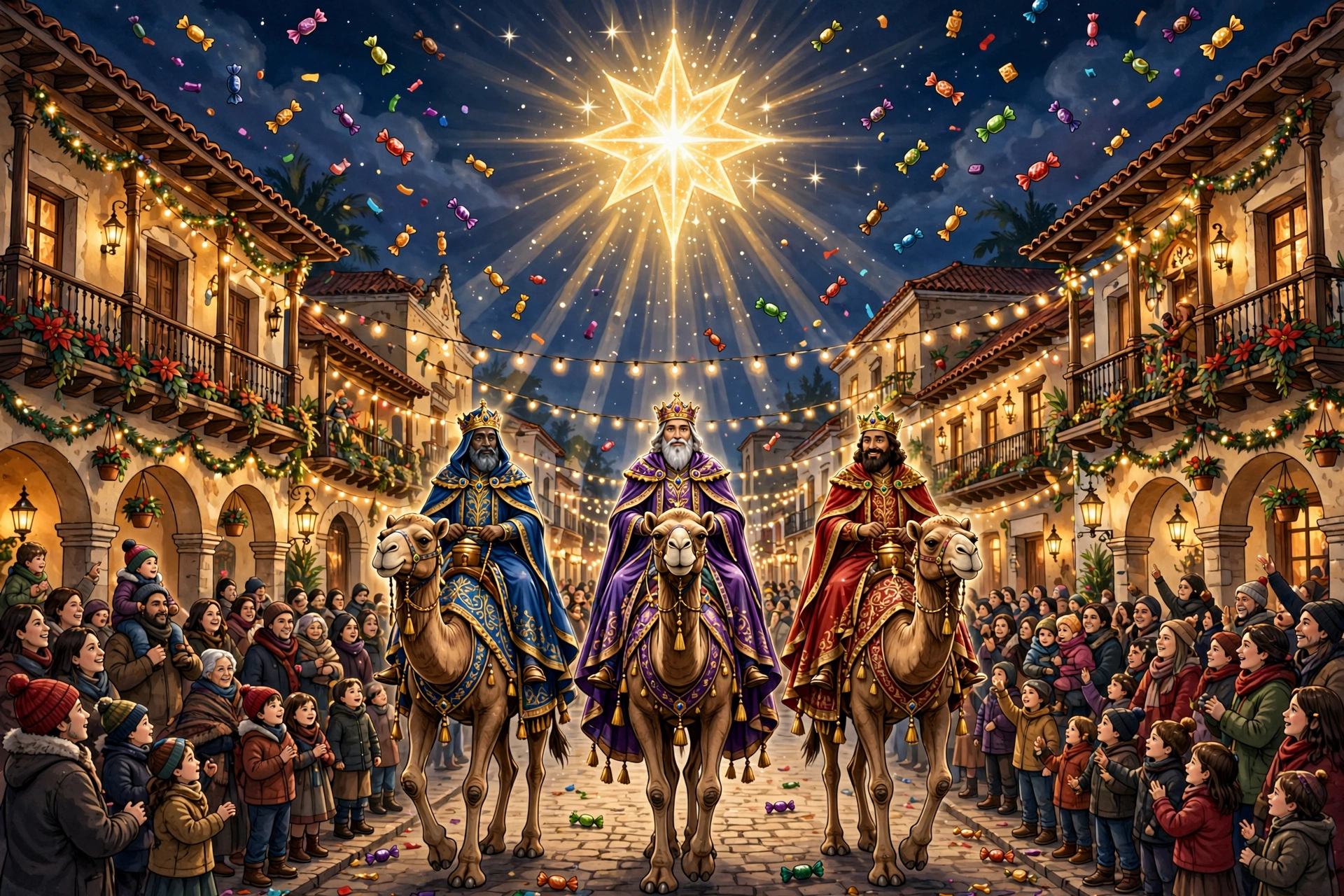
Spain celebrates the Reyes with unmatched spectacle. On the evening of January 5, nearly every Spanish city and town stages a Cabalgata de Reyes — a grand parade in which the Three Kings process through the streets on elaborate floats, accompanied by pages, musicians, dancers, and marching bands, throwing thousands of kilos of candy into the crowds. The great cabalgatas of Madrid, Barcelona, and Seville draw hundreds of thousands of spectators; the smallest villages mount their own with touching devotion.
Spanish children spend the weeks after Christmas writing letters to the Reyes Magos (there are special mailboxes and even “royal postmen” collecting them), and on the night of January 5 they leave out their shoes — along with water for the camels and perhaps a glass of something for the kings themselves. Overnight, the magic happens: the kings deliver the real presents (Santa, where he appears in Spain, is a recent import and distinctly junior varsity). Naughty children traditionally receive carbón dulce — sweet “coal,” actually delicious black-dyed sugar candy.
January 6 itself is a national holiday, for family, for the Roscón de Reyes (Spain’s version of the ring cake, with the same hidden figurine — and the same tamale-adjacent obligation, here usually just buying next year’s roscón), and for the happy chaos of new toys. It’s also the traditional day for the Lotería del Niño (the “Child’s Lottery”), Spain’s second great Christmas lottery draw — a sort of Epiphany encore to December’s El Gordo.
Puerto Rico, Latin America, and the Caribbean
In Puerto Rico, Día de Reyes is arguably the heart of the entire holiday season — which Puerto Ricans famously stretch from Thanksgiving to mid-January in the world’s longest Christmas (“la Navidad más larga del mundo”). Children place boxes of grass or hay under their beds on January 5 for the kings’ camels (or horses, in some tellings); the kings leave gifts and take the grass. The octavitas — eight days of continued celebration after Epiphany — extend the party even further.
Across Latin America, the day takes local color. In Argentina and Uruguay, children leave shoes and water for the kings’ camels on January 5 night. In Peru, the Bajada de Reyes (“Descent of the Kings”) is a traditional celebration with music and dance. In Colombia, the Carnaval de Negros y Blancos in Pasto begins around Epiphany, blending indigenous, African, and Spanish traditions. In Cuba, the Día de Reyes was historically celebrated with the comparsas and the tradition of the cabildos.
The Dominican Republic, Venezuela, and other Caribbean and Latin nations each add their flavor — but the constants are the kings as gift-bringers, the night of January 5 as the magical night, and the sense that Christmas isn’t over until the Magi have come and gone.
France: Galette des Rois
France’s Epiphany tradition is deliciously egalitarian: the galette des rois (“kings’ cake”), a golden disc of flaky puff pastry filled with frangipane (almond cream), served throughout January. Hidden inside is the fève — originally a dried bean, now a tiny porcelain figurine, often a whimsical collectible. Whoever finds the fève in their slice is crowned king or queen for the day, complete with a paper crown that comes with the cake.
The ritual has its own charming protocol: the youngest child traditionally hides under the table and calls out who gets each slice, ensuring the fève’s distribution is truly random. The crowned “monarch” then chooses their queen or king, and presides — briefly, gloriously — over the gathering. In an age of republican France, it’s a delightful annual monarchy.
Regional variations abound: in the south, the gâteau des rois is a brioche ring studded with candied fruit (cousin to the rosca and roscón); in Provence, Epiphany is part of an elaborate thirteen-desserts tradition. And note the American echo: Louisiana’s king cake — the Mardi Gras staple with its hidden baby — descends directly from the French galette tradition, with the Epiphany-to-Carnival season (January 6 to Mardi Gras) as its calendar.
Germany’s Sternsinger and Central Europe
In Germany, Austria, and Switzerland, Epiphany belongs to the Sternsinger (“star singers”): groups of children, dressed as the Three Kings with golden crowns and a star on a pole, who go from door to door around January 6 singing carols and collecting donations for children’s charities. It’s one of Europe’s largest children’s charity actions, raising tens of millions of euros annually — faith, festivity, and fundraising in one.
The Sternsinger also perform the traditional house blessing: with blessed chalk, they inscribe above the door C+M+B flanked by the year’s numerals (e.g., 20*C+M+B*27 for 2027). The letters stand for the traditional names Caspar, Melchior, and Baltasar — but also for the Latin blessing Christus Mansionem Benedicat (“May Christ bless this house”). The chalked blessing remains visible all year, a quiet Epiphany signature on millions of Central European doorways.
Elsewhere in Central and Eastern Europe, Epiphany customs blend the Magi with midwinter folk tradition. In Poland, the Trzej Królowie processions feature the kings on horseback; in Czechia and Slovakia, the Tři králové go door to door similarly to the Sternsinger. The chalk blessing appears across the region — a shared visual language of Epiphany.
The Philippines, Greece, and Beyond
The Philippines — home to the world’s longest Christmas season (starting in September) — honors the Three Kings (Tatlong Hari) as the season’s grand finale on January 6, with the kings featuring in church celebrations and the last of the holiday decorations coming down afterward. For Filipinos, Epiphany closes a four-month celebration.
In Greece and Orthodox traditions, Epiphany (Theophania, January 6 on the Gregorian calendar, January 19 on the Julian) centers on Christ’s baptism rather than the Magi — and on the spectacular blessing of the waters. Priests cast a cross into the sea, a river, or a harbor; young men dive in to retrieve it, with the successful diver receiving a blessing (and considerable glory). From Tarpon Springs, Florida — home to a large Greek-American community with a famous Epiphany dive — to harbors across the Aegean, it’s one of Christianity’s most dramatic rituals.
Other notable Epiphany customs: in Ethiopia, the related feast of Timkat (January 19) features processions of tabots (replicas of the Ark) and mass baptisms — an Epiphany-season spectacle of extraordinary scale. In Russia and Eastern Europe, Orthodox Epiphany (January 19) brings the tradition of the Jordan — blessing of waters, with the bravest taking a plunge through ice holes. In England, Twelfth Night (January 5–6) was historically the great night of feasting, wassailing, and the Lord of Misrule — Shakespeare’s play of the name was written for the occasion.
And in Italy, Epiphany Eve belongs to La Befana, the good witch who flies on her broomstick delivering gifts (or coal) to children — Italy’s beloved Epiphany gift-bringer, who deserves her own celebration.
How to Celebrate Three Kings Day at Home
You don’t need to be in Madrid or Mexico City to honor the Magi. Here’s how to bring Three Kings Day Epiphany traditions into your own January:
Bake a kings’ cake. Try a rosca de reyes, a galette des rois with frangipane, or a Louisiana king cake. Hide a figurine (a dried bean works traditionally; warn your guests). Crown whoever finds it. If you follow the Mexican custom, the finder owes everyone tamales on February 2 — plan accordingly.
Stage a mini cabalgata. Organize a neighborhood parade on January 5: kids in crowns, a star on a pole, candy to throw. It doesn’t need Seville’s budget to delight.
Chalk the door. Adopt the Sternsinger blessing: with chalk, write 20*C+M+B*27 above your front door (adjust the year). It’s a beautiful, visible way to mark the feast — and a conversation starter all year.
Leave shoes out. On the night of January 5, have children place shoes by the door with a wish list for the kings — and a snack for the camels. It’s Santa’s Eve all over again, and children adore the encore.
Give the Epiphany gift. In the Spanish tradition, the big gifts come from the kings, not Santa. Consider shifting your family’s major gift exchange to January 6 — it extends the magic, eases December’s frenzy, and connects you to billions of celebrants worldwide.
The Biblical Magi: History Behind the Legend
The Three Kings Day Epiphany traditions rest on one of the Bible’s most evocative stories — and one of its most mysterious. The Gospel of Matthew (2:1–12) tells of magi — the Greek word suggests astrologers or wise men, not kings — who come “from the east” following a star, ask Herod where the newborn “king of the Jews” is, find the child in Bethlehem, and offer gifts of gold, frankincense, and myrrh. That’s the entire biblical account: no names, no number (three is inferred from the three gifts), no crowns.
Everything else is tradition layered over centuries. The names Melchior, Gaspar, and Baltasar first appear in a 6th-century Greek manuscript; their royal status developed through medieval interpretation (gold being a kingly gift); and their depiction as representing the three known continents — Europe, Asia, and Africa, with Baltasar traditionally portrayed as Black — made them symbols of Christ’s universality. By the Middle Ages, their supposed relics were among Christendom’s great treasures: the Shrine of the Three Kings in Cologne Cathedral, translated there in 1164, remains one of Europe’s major pilgrimage destinations.
The historical reality behind the magi is debated — some scholars see Persian astrologers, others a literary device — but their cultural reality is undeniable. They gave Epiphany its narrative: the journey, the star, the gifts, the homage of the powerful to the humble. Every cabalgata float, every rosca figurine, every chalked doorway is a footnote to Matthew’s twelve verses.
The gifts themselves carry symbolic weight that preachers have unpacked for centuries: gold for kingship, frankincense (temple incense) for divinity, myrrh (burial spice) for mortality — the whole of Christ’s story in three presents. It’s a lot of theology for a parade, but the best traditions carry their depth lightly.
Three Kings Day for Kids: Activities and Crafts
Three Kings Day Epiphany traditions are wonderfully kid-friendly — here are activities to bring the feast alive for children:
Make crowns. Gold paper, stick-on jewels, elastic bands — every child becomes a monarch. Pair with the French galette ritual: whoever finds the fève is king or queen for the day (use a dried bean in a homemade cake, with appropriate warnings).
Follow the star. Create a star-themed scavenger hunt: hide star cutouts around the house or yard, each with a clue leading to the next, ending at the “manger” (or the presents). It’s the Magi’s journey in miniature.
Bake the cake. A simplified rosca or galette is a great family baking project — sweet dough, candied fruit decoration, and the thrill of hiding the figurine. Let kids decorate; perfection is not the point.
Chalk the door together. The Sternsinger blessing (20*C+M+B*27) is a lovely family ritual: explain the meaning, let the oldest child do the writing, and talk about blessing the home for the new year.
Write letters to the kings. Like letters to Santa, but with a January 5 deadline — it extends the magic and gives kids a second round of wish-list excitement. Leave the letters with the shoes, plus water for the camels.
Learn the carol. “We Three Kings” (written in 1857 by John Henry Hopkins Jr.) is the English-speaking world’s Epiphany anthem — dramatic, minor-key, and fun to sing with assigned parts for each king. A perfect family Christmas activity for the season’s final act.
In Pictures: Three Kings Day and Epiphany Traditions
On January 6th, Christmas returns to the streets of Spain and Latin America: children wake to gifts from the Three Wise Men, parades rain candy, and families share the Rosca de Reyes.
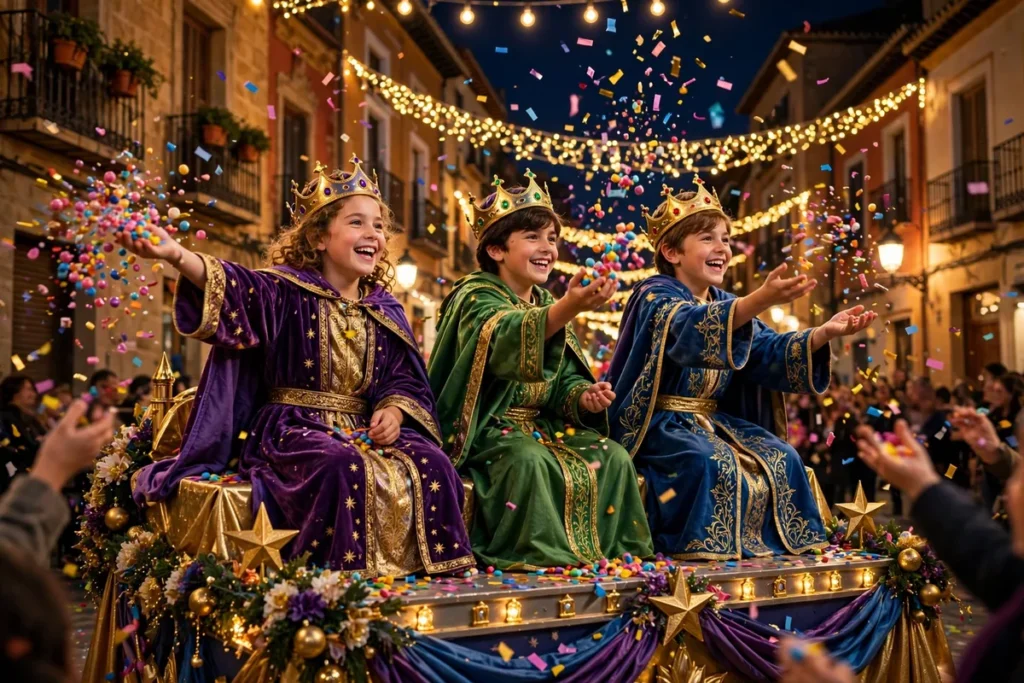
Día de los Reyes: a Three Kings parade float at night, with children dressed as Melchior, Balthazar, and Caspar tossing candies to the crowd.
Watch: Three Kings Day and Epiphany Traditions
St Joseph's Corner explains Epiphany's traditions — chalking the door, the Three Kings, Theophany in the East, and the customs of January 6th around the world.
At a Glance: Three Kings Day and Epiphany Traditions
The date, the Magi, and the customs of January 6th.
| Element | What it is | Key detail |
|---|---|---|
| 6 January | The date | Epiphany and Three Kings Day are celebrated on January 6th; in many countries the feast is transferred to the first Sunday after January 1st |
| “Epiphany” | The meaning | From the Greek for “manifestation” — the revelation of Christ to the Gentiles, the non-Jewish peoples |
| The Magi | The visitors | Traditionally named Melchior, Balthazar, and Caspar, bearing gifts of gold, frankincense, and myrrh |
| Día de los Reyes | The gifts | In Spain and Latin America, children write letters to the Three Wise Men and wake on January 6th to their presents |
| Rosca de Reyes | The bread | A sweet bread shared by families, with a surprise figurine hidden inside |
| The parades | The celebration | Vibrant Epiphany parades where candy is tossed from floats to the crowds |
| Theophany | The Eastern feast | In Eastern Orthodox tradition, Epiphany centers on the baptism of Jesus and the Great Blessing of Water |
| Chalking the door | The custom | Families mark their homes with blessed chalk as a prayer for Christ's protection in the new year |
Frequently Asked Questions
When is Three Kings Day 2027?
Three Kings Day — the Feast of the Epiphany — is celebrated on January 6 every year; in 2027, that’s a Wednesday. The eve of the feast, January 5, is when most parades (cabalgatas) and shoe-leaving traditions take place. Eastern Orthodox churches following the Julian calendar celebrate Theophany on January 19.
What are the Three Kings’ names?
Tradition names them Melchior (or Melchor), Gaspar (Caspar), and Baltasar (Balthazar). These names don’t appear in the Bible — they come from later Christian tradition. They’re associated respectively with the gifts of gold, frankincense, and myrrh.
What is rosca de reyes?
The rosca de reyes is the traditional Mexican (and broader Latin American) Three Kings cake: an oval ring of sweet bread decorated with candied fruit, with tiny baby Jesus figurines hidden inside. Whoever finds a baby in their slice must host a tamale feast on February 2 (Día de la Candelaria). Spain’s equivalent is the roscón de reyes; France’s is the galette des rois.
Do the Three Kings bring gifts instead of Santa?
In Spain, Mexico, Puerto Rico, and much of Latin America, yes — the Reyes Magos are the primary gift-bringers, delivering presents on the night of January 5–6. Santa Claus is a more recent import in these cultures and generally plays second fiddle. Many families celebrate both, with smaller gifts in December and the main event at Epiphany.
What does the chalk blessing C+M+B mean?
Written above doorways at Epiphany (with the year’s numerals), C+M+B stands for the traditional names Caspar, Melchior, and Baltasar — and simultaneously for the Latin blessing Christus Mansionem Benedicat (“May Christ bless this house”). It’s inscribed by Germany’s Sternsinger (star-singing children) and in Catholic households across Central Europe.
Is Epiphany the end of Christmas?
In Western tradition, yes — January 6 (Twelfth Night/Epiphany) closes the twelve days of Christmas, and decorations traditionally come down afterward (or by Candlemas, February 2, in older custom). But in the cultures that celebrate it most fervently, Epiphany feels less like an ending than a climax: the season’s biggest parades, cakes, and gifts.
The Bottom Line
Three Kings Day Epiphany traditions are Christmas’s best-kept secret in the English-speaking world: a whole second peak of the season, celebrated by billions, with parades grander than anything in December, cakes with hidden babies, chalk blessings, diving for crosses, and gift-giving that puts Santa’s Eve to shame. However you mark January 6 — with a rosca, a galette, a chalked doorway, or shoes by the door — you’re joining a celebration that has crowned the Christmas season for over a thousand years. The Magi followed a star; follow their example, and let Christmas last a little longer.