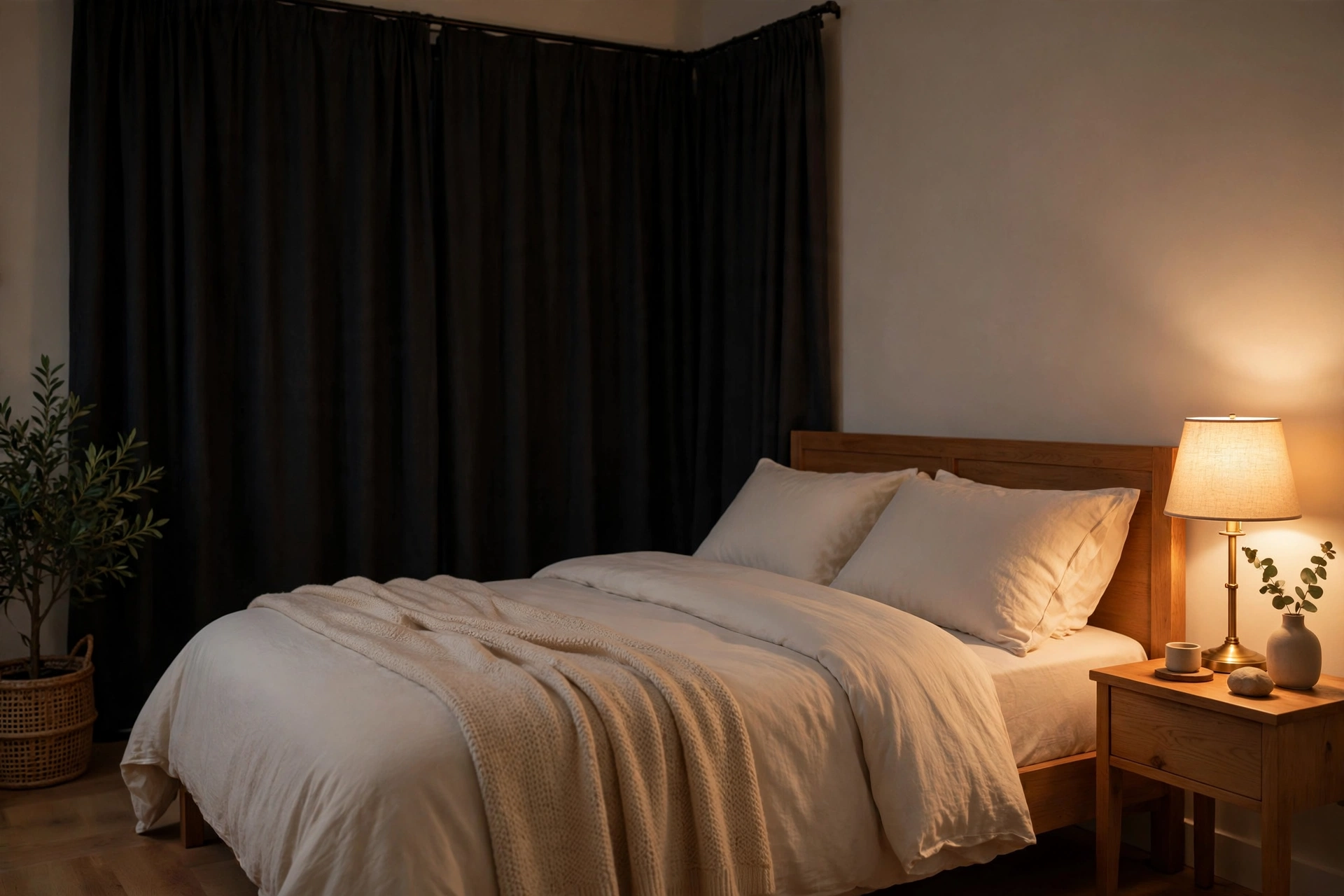
If you are searching for sleep hygiene tips that actually improve your rest, start here: sleep hygiene is the set of daily habits and bedroom conditions that set your body up for deep, consistent sleep — and most adults can fix their sleep by changing habits, not by buying gadgets or supplements. This guide covers the evidence-backed sleep hygiene tips that matter most, a step-by-step evening wind-down, the biggest sleep myths to ignore, and a printable checklist to track your progress.
What Is Sleep Hygiene, Really?
Sleep hygiene is not about how clean your sheets are (though fresh sheets do feel great). It is the umbrella term sleep researchers use for the behaviors and environmental factors that promote healthy sleep: consistent timing, light exposure, bedroom conditions, and pre-sleep routines. Think of it as dental hygiene for your sleep — small daily practices that prevent big problems.
Poor sleep hygiene does not just make you tired. Chronically short or fragmented sleep is linked to worse focus, lower mood, weaker immune function, and poorer decision-making. The good news: unlike many health interventions, sleep hygiene is free, has no side effects, and often works within one to two weeks.
A note on scope: these sleep hygiene tips are general wellness habits. If you snore loudly, gasp during sleep, or feel exhausted despite 8 hours in bed, talk to a healthcare professional — those can be signs of a sleep disorder that habits alone will not fix.
The Foundation: Consistency Beats Everything
If you take one thing from this guide, make it this: go to bed and wake up at the same time every day, including weekends. Your brain runs on rhythms, and irregular sleep times confuse those rhythms more than most people realize.
- Pick a wake time you can keep 7 days a week, and anchor everything to it.
- Keep weekend wake times within one hour of weekday times — sleeping in two extra hours on Saturday creates “social jet lag” that makes Monday morning genuinely harder.
- If you are currently inconsistent, shift your schedule by 15–30 minutes every few days rather than all at once.
- A consistent wake time matters even more than a consistent bedtime, because morning light after waking is what sets your clock.
Sleep Hygiene Tips for Your Bedroom Environment
Your bedroom should be a cave: cool, dark, and quiet. Each element matters.
Cool
Your core body temperature needs to drop to initiate sleep. Most adults sleep best in a room around 65–68°F (18–20°C). If you sleep hot, try breathable cotton or bamboo bedding, a cooler pillow, or a fan. A warm shower 60–90 minutes before bed can also help — the subsequent cooldown signals sleepiness.
Dark
Even small amounts of light can fragment sleep. Use blackout curtains or a comfortable sleep mask, cover or remove glowing electronics, and keep hallway light from spilling under the door. If you get up at night, use a dim amber nightlight instead of overhead lights.
Quiet
Sudden noises fragment sleep even when you do not fully wake. Earplugs, a white noise machine, or a fan can mask disruptive sounds. If your partner snores, this is a relationship investment, not a luxury.
Comfortable and Clutter-Free
An uncomfortable mattress or pillow is a nightly tax on your sleep. Replace pillows every 1–2 years and mattresses every 7–10. And a calm, uncluttered bedroom genuinely helps many people relax — a quick 10-minute tidy before bed can make the whole room feel calmer.
Sleep Hygiene Tips for Daylight Hours
What you do at 10 a.m. shapes how you sleep at 10 p.m.
- Get bright light in the morning. 5–30 minutes of outdoor light (or a light therapy lamp) within an hour of waking anchors your circadian rhythm and improves both daytime alertness and nighttime sleepiness.
- Move your body. Regular exercise is one of the strongest sleep aids available — many people find it improves sleep quality more than any supplement. Morning or afternoon exercise is ideal; vigorous exercise within 2–3 hours of bedtime can delay sleep for some people.
- Watch caffeine timing. Caffeine has a half-life of 5–6 hours, meaning your 2 p.m. coffee is still half-active at 8 p.m. Set a caffeine cutoff 8–10 hours before bed (so, around noon–2 p.m. for a 10–11 p.m. bedtime).
- Limit long naps. A 10–20 minute nap before 3 p.m. can refresh you; a 90-minute late-afternoon nap steals from tonight’s sleep. If you are napping daily because you are exhausted, your nighttime sleep needs attention first.
- Eat on a rhythm. Regular meal times support regular sleep. Heavy, spicy, or very sugary meals close to bed can disrupt sleep — lighter evening meals tend to work better. For daytime fuel that will not wreck your night, see our healthy snacks on the go guide.
The Evening Wind-Down: A Step-by-Step Routine
You cannot go from a stressful day to deep sleep in five minutes. Your brain needs a runway. Start winding down 60–90 minutes before bed:
- T-90 min: Dim the lights. Switch to lamps instead of overheads. Dim light in the evening supports your body’s natural melatonin rise.
- T-60 min: Screens off (or night mode + boundaries). The issue is not just blue light — it is the stimulation. Scrolling news or arguing online keeps your brain wired. If you must use screens, use night mode and stick to calm content.
- T-45 min: Warm shower or bath. As noted above, the post-shower cooldown promotes sleepiness.
- T-30 min: Calm activity. Read a physical book, stretch gently, journal, or listen to calm music or a podcast. This is also a good time for tomorrow’s prep — lay out clothes, write your top three priorities — so your brain stops rehearsing them.
- T-15 min: Bedroom only for sleep. Get into bed when sleepy, not just when the clock says so. If you are not sleepy after 20 minutes, get up and do something calm in dim light until drowsiness returns.
What About Alcohol, Screens, and Late Snacks?
| Habit | What people think | What the evidence suggests |
|---|---|---|
| Nightcap | “It helps me fall asleep” | Alcohol may speed sleep onset but fragments the second half of the night and suppresses REM sleep. Net effect: worse sleep quality. |
| Scrolling in bed | “It relaxes me” | The light is a minor factor; the mental stimulation is the real problem. Doomscrolling and arguments keep the brain alert. |
| Late-night snack | “I can’t sleep hungry” | A small, light snack is fine if you are genuinely hungry. Heavy, greasy, or spicy food close to bed tends to disrupt sleep. |
| Sleeping in on weekends | “I’m catching up” | You cannot fully repay sleep debt this way, and the irregular timing confuses your rhythm. Consistency beats catch-up. |
| Melatonin supplements | “It’s natural so it’s safe” | Melatonin is a hormone, not a sedative; evidence supports it mainly for timing issues like jet lag. Talk to a clinician before regular use, especially long-term. |
Sleep Hygiene Myths to Stop Believing
- “I can train myself to need less sleep.” Short sleepers who genuinely thrive on under 6 hours are extremely rare. Most people who think they have adapted are simply unaware of their impaired performance.
- “Snoring is harmless.” Occasional light snoring is common, but loud nightly snoring — especially with pauses or gasping — deserves a medical evaluation.
- “A warm bedroom is cozier for sleep.” Cozy-feeling is not the same as sleep-promoting. Cool rooms consistently produce better sleep.
- “If I can’t sleep, I should stay in bed trying.” Lying awake trains your brain to associate bed with wakefulness. Get up, do something calm in dim light, and return when sleepy.
- “Weekend catch-up sleep fixes the week.” It helps slightly with sleepiness but does not erase the metabolic and cognitive costs of weekday sleep loss — and the schedule shift hurts next week’s sleep.
Sleep Hygiene for Shift Workers
Shift work fights biology, but good sleep hygiene still helps enormously:
- Wear sunglasses on the drive home after a night shift to block morning light.
- Make your bedroom as dark as a cave with blackout curtains — daytime sleep depends on it.
- Keep the same sleep schedule on days off if possible; if not, keep it as consistent as you can.
- Use white noise to mask daytime sounds.
- Tell family and friends your sleep hours and ask them to protect that window.
Your Sleep Hygiene Checklist
- ☐ Same wake time daily (within 1 hour on weekends)
- ☐ Bright light within 1 hour of waking
- ☐ Regular exercise (not vigorous within 2–3 hours of bed)
- ☐ Caffeine cutoff 8–10 hours before bed
- ☐ Naps: 20 minutes max, before 3 p.m. only
- ☐ Bedroom cool (65–68°F), dark, and quiet
- ☐ Screens off or calmed 60 minutes before bed
- ☐ 60–90 minute wind-down routine
- ☐ Bed reserved for sleep (and intimacy)
- ☐ No alcohol as a sleep aid; light evening meals
- ☐ Out of bed after 20 sleepless minutes (calm activity, dim light)
Sleep Hygiene for Different Life Stages
Young Adults (20s–30s)
The biggest threats are irregular schedules and late-night screens. Social lives, gig work, and graduate school wreck consistency — so anchor a fixed wake time even when bedtimes vary, and treat the phone-out-of-bedroom rule as non-negotiable. Caffeine sensitivity is often highest in this stage; an early-afternoon cutoff pays real dividends.
Parents of Young Children
Sleep is fragmented by necessity, so optimize what you can control: sleep when the baby sleeps is cliché because it works, trade night shifts explicitly with your partner so each of you gets one uninterrupted block, and protect your own wind-down even if it is only 20 minutes. Lower the bar everywhere else — this is a season, not a failure. If exhaustion is severe and persistent beyond the newborn stage, talk to your pediatrician and your own clinician.
Midlife Adults (40s–50s)
Hormonal changes, stress, and early-morning waking become more common. Keep the bedroom cool (this matters more now), limit alcohol (it fragments sleep more noticeably with age), and get morning light exposure to anchor rhythms that drift earlier. Regular exercise helps enormously with the 3–4 a.m. wake-ups many midlife adults experience.
Older Adults (60+)
Sleep gets lighter and more fragmented with age — that is normal, not a disorder. Naps become more useful (20–30 minutes, earlier in the day), and daytime light exposure plus gentle evening activity help consolidate nighttime sleep. Review medications with your doctor, since many common prescriptions affect sleep. The consistency and environment rules in this guide matter at every age.
When Sleep Hygiene Isn’t Enough
Good habits resolve most sleep complaints — but not all. Seek professional evaluation if you experience:
- Loud nightly snoring with pauses, gasping, or choking (possible sleep apnea)
- Chronic insomnia (trouble falling or staying asleep 3+ nights a week for 3+ months) despite good habits
- Restless legs or an irresistible urge to move your legs at night
- Excessive daytime sleepiness despite 7–9 hours in bed
- Sleepwalking, night terrors, or acting out dreams
- Persistent 3 a.m. waking with racing thoughts and low mood (which can overlap with anxiety or depression)
Sleep medicine has effective treatments — from CBT-I (cognitive behavioral therapy for insomnia, the gold-standard insomnia treatment) to CPAP for apnea — that go far beyond “try harder.” Asking for help is the advanced move, not the failure mode.
Build Your Personal Sleep Plan (10 Minutes)
- Pick your wake time and commit to it 7 days a week.
- Choose 3 habits from the checklist to start this week (consistency, morning light, and phone-out-of-bedroom are the highest-impact trio).
- Set your caffeine cutoff and your screen curfew — put both on a sticky note where you will see them.
- Design your wind-down: pick 2–3 calm activities and a fixed sequence.
- Track for 2 weeks: note bedtime, wake time, and a 1–5 morning freshness score. Patterns will jump out.
- Adjust one thing at a time based on what the tracking shows.
Frequently Asked Questions
What are the most important sleep hygiene tips?
The highest-impact sleep hygiene tips are: keep a consistent wake time (including weekends), get bright morning light, set a caffeine cutoff 8–10 hours before bed, keep the bedroom cool, dark, and quiet, and wind down for 60–90 minutes before sleep. These five habits resolve most common sleep complaints.
How long does it take for sleep hygiene to work?
Many people notice improvement within 1–2 weeks of consistent sleep hygiene, with full benefits over 3–4 weeks. Consistency matters more than perfection — an 80% consistent routine beats a perfect routine you abandon after five days.
Is it bad to use my phone before bed?
The biggest issue is mental stimulation, not just screen light. Calm, passive content with night mode is far less disruptive than news, arguments, or work email. That said, many people find that putting the phone in another room is the single most effective sleep hygiene change they make.
What should I do if I wake up at 3 a.m. and can’t fall back asleep?
Don’t watch the clock — it increases anxiety. If you’re awake more than about 20 minutes, get up and do something calm in dim light (read, stretch) until drowsy, then return to bed. Avoid bright lights and problem-solving. If 3 a.m. wake-ups happen most nights for weeks, consider discussing it with a healthcare professional.
Do I need 8 hours of sleep?
Most adults need 7–9 hours. The right amount is the amount after which you wake feeling refreshed and stay alert through the day without caffeine dependence. If you consistently need 9+ hours and still feel tired, that is worth discussing with a clinician.
Can exercise too close to bedtime hurt sleep?
Vigorous exercise within 2–3 hours of bedtime can delay sleep onset for some people, while gentle exercise like stretching or yoga is usually fine. Morning and afternoon exercise consistently improves sleep quality. Pay attention to your own pattern and adjust timing accordingly.
Quick-Reference: Sleep Hygiene by Time of Day
- Morning: Same wake time daily; bright light within an hour; make the bed (a made bed invites sleep later); no snoozing.
- Midday: Exercise (morning or afternoon); lunch away from screens; caffeine cutoff 8–10 hours before bed; nap 20 minutes max before 3 p.m.
- Evening: Dim lights after dinner; lighter meal 2–3 hours before bed; no alcohol as a sleep aid; screens off or calmed 60 minutes before bed.
- Bedtime: Cool, dark, quiet room; consistent bedtime; wind-down routine; bed reserved for sleep; out of bed after 20 sleepless minutes.
Tape this to your bathroom mirror for the first two weeks. Once the pattern is automatic, you will not need the reminder.
The Bottom Line
The best sleep hygiene tips are unglamorous: consistent timing, morning light, a cool dark room, a real wind-down, and sensible caffeine and screen habits. You do not need a perfect routine or expensive products — you need a consistent one. Pick three habits from the checklist, practice them for two weeks, and let better sleep compound from there.