Not every vow renewal needs a twenty-minute ceremony with readings, rituals, and a receiving line. Sometimes the most powerful moments are the briefest: two people, a few honest words, a kiss, done — with the whole thing over before the champagne loses its chill. A short vow renewal ceremony script distills the occasion to its essence, and when it is done well, guests remember it more vividly than ceremonies three times as long.
Short scripts suit elopement-style renewals, intimate backyard gatherings, surprise renewals, and couples who would rather be celebrating than performing. They also solve real logistical problems: restless toddlers, outdoor ceremonies in uncertain weather, venues with tight time slots, and partners who break out in hives at the thought of public speaking. This guide gives you complete, ready-to-use short ceremony scripts for every situation — officiant-led, couple-led, with kids, and fully private — plus a timing breakdown, a build-your-own template, and rehearsal advice that keeps a five-minute ceremony from feeling rushed.
When a Short Script Is the Right Choice
Longer is not better; longer is just longer. A short ceremony script is the right choice when the renewal itself is one beautiful moment inside a larger celebration rather than the main event. If you are hosting a dinner party, a backyard barbecue, or a weekend getaway and want to pause for ten minutes to renew your vows before returning to the festivities, a short script fits the flow perfectly. Nobody wants to sit through a full wedding ceremony when they came for tacos.
Short scripts also shine when the audience is small or the setting is unconventional. Renewing vows on a mountaintop, on a beach at sunset, or in your living room in pajamas does not call for a processional and three readings. It calls for words that match the moment: direct, warm, and brief. The setting provides the grandeur; the script just needs to provide the meaning.
Then there is the matter of temperament. Some people are poets; some people are not, and a renewal ceremony should not feel like an oral exam. A short script with simple, strong lines lets a reluctant speaker shine instead of suffer. And practically speaking, short ceremonies photograph better — the emotion is concentrated, the tears are fresh, and the kiss happens while everyone is still fully present rather than after twenty minutes of fading attention.
The one situation where a short script is wrong: when either partner secretly wants the full production. If one of you has been dreaming of a big ceremonial moment, a five-minute script will feel like a letdown no matter how well written. Have that conversation honestly before you commit to brevity. Short should be a shared choice, not a compromise that breeds quiet disappointment.
Script One: The Classic Five-Minute Officiant-Led Ceremony
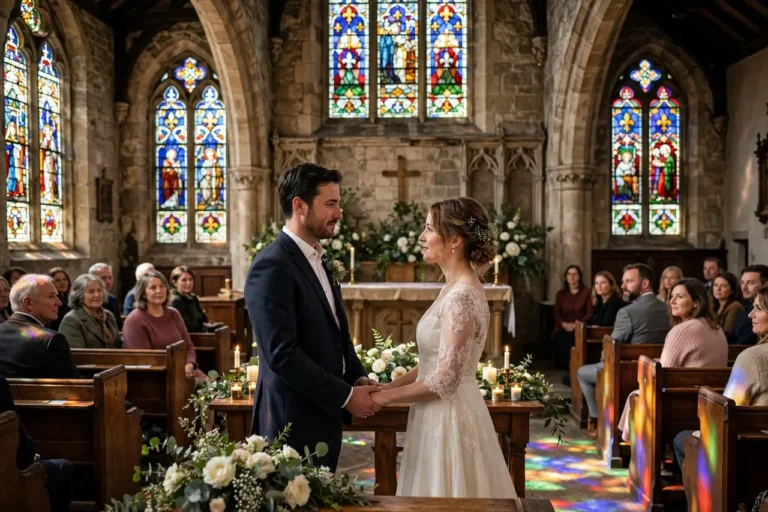
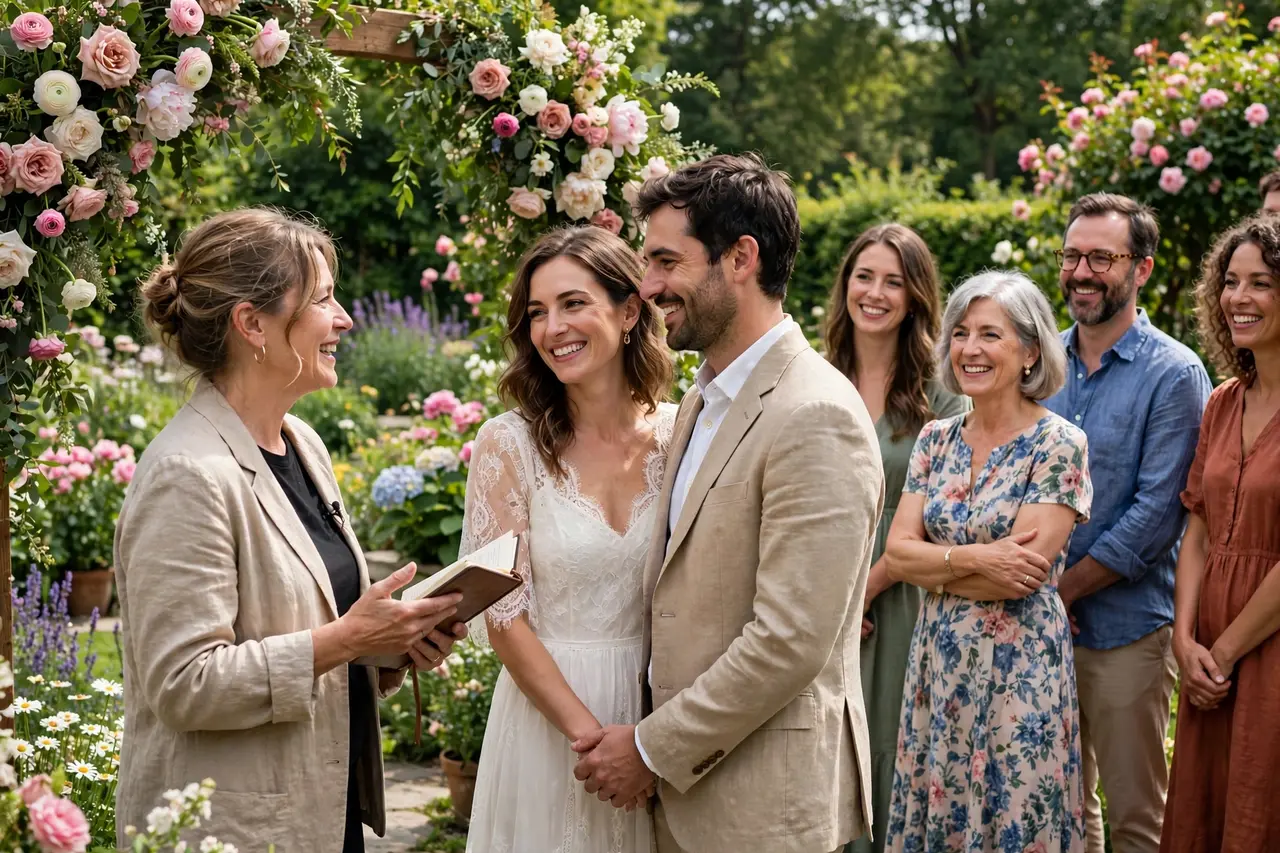
This is the workhorse — a complete, warm, traditional-leaning script that runs about five minutes and works for almost any couple. It includes a welcome, a brief reflection, the vow exchange, an optional ring exchange, and the closing. Customize the bracketed details.
Officiant: “Friends and family, thank you for being here. [Partner A] and [Partner B] first stood together [number] years ago and promised each other a lifetime. Today, with the wisdom those years have given them, they choose to make that promise again — not because the first one failed, but because it succeeded so well they want to say it twice.”
Officiant: “Marriage, the second time you promise it, is a different thing than the first. The first time, you promise based on hope. This time, you promise based on knowledge — knowledge of each other’s flaws and still choosing, knowledge of hard days and still staying, knowledge of a thousand ordinary mornings that turned out to be the good stuff. That is a stronger promise, and it deserves stronger words.”
Officiant: “[Partner A], please repeat after me — or speak from your heart: [Partner A] exchanges vows here. [Partner B] responds in kind.”
Officiant: “Do you reaffirm your love for [Partner B]? Do you promise to continue choosing them — in joy and in difficulty, in health and in struggle — for all the days to come?” Partner A: “I do.”
Officiant: “[Partner B], do you reaffirm your love for [Partner A]? Do you promise the same?” Partner B: “I do.”
Officiant (optional ring exchange): “As a symbol of these renewed promises, you may exchange rings — or simply hold the hands that have held yours through [number] years.” (Couple exchanges rings or clasps hands.)
Officiant: “By the love you have shown each other, and the commitment you renew today, I happily reaffirm you as partners in this life — today, tomorrow, and always. You may kiss.”
That is the whole ceremony. It runs four to six minutes depending on pacing, it hits every emotional beat, and it leaves plenty of room for the couple’s personal vows to be inserted after the officiant’s questions if they wish.
Script Two: The Couple-Led Private Ceremony
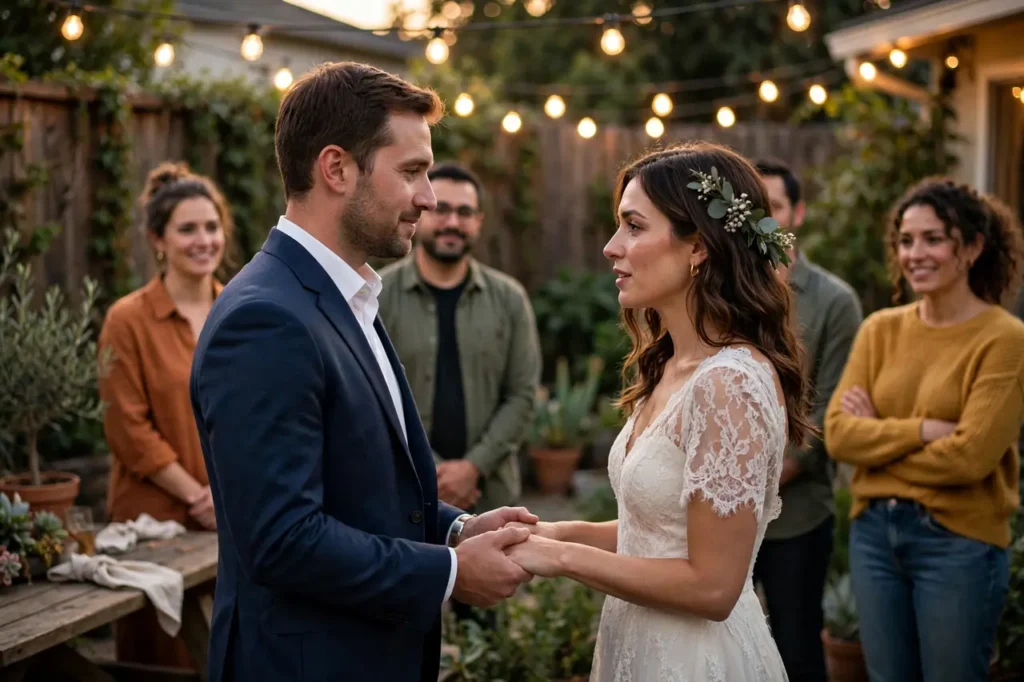
For renewals with no officiant and no audience — just the two of you on a beach, a mountaintop, or your back porch — this script is designed to be spoken by the couple to each other, alternating lines. Print two copies.
Together: “We came here to say it again.”
Partner A: “[Number] years ago, I promised you my future. I didn’t know what I was promising — I couldn’t have imagined [one specific thing: the kids, the moves, the adventures]. But I’d promise it all again, knowing everything I know now.”
Partner B: “And I promised you mine. We’ve kept those promises imperfectly and beautifully. Thank you for [one specific gratitude]. Thank you for staying through [one hard thing, named briefly].”
Partner A: “So here’s my promise for the next chapter: [one specific, personal vow].”
Partner B: “And here’s mine: [one specific, personal vow].”
Together: “Same team. Same promise. Still us.”
(Kiss. Done.)
The power of this script is its spareness. With no audience to perform for, every word lands directly on the one person it is for. Couples who use this script often report it as the most emotional moment of their anniversary — precisely because there was no one to be composed for.
Script Three: The Family Ceremony With Children
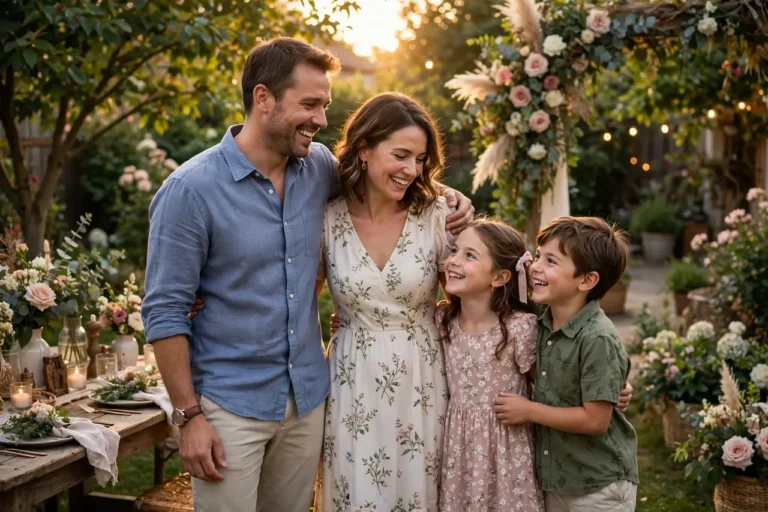
When kids are part of the story, including them transforms the ceremony. This six-minute script weaves children in naturally — as witnesses, participants, and recipients of their own promises. Adjust the language for their ages.
Officiant or Partner A: “We’re here today because [number] years ago, two people made a promise — and then something even better happened. That promise grew into a family. [Children’s names], you are the best thing that promise ever made.”
Partner A to Partner B: “[Name], before these witnesses — especially these small ones — I renew my promise to you. I will love you loudly and quietly, in big moments and boring ones, for the rest of our story.”
Partner B to Partner A: “[Name], I renew my promise to you. Thank you for building this life with me — for every version of our family, past and future.”
To the children: “[Children’s names], we also make a promise to you: that this family — the laughing, the mess, the love — is our greatest adventure, and you are at the center of it. We love you endlessly.”
Officiant: “As a family, you have already proven what these vows mean. Today you just said it out loud. [Partner A] and [Partner B] — still married, still choosing, still us. You may kiss — and kids, you may cheer as loud as you want.”
Two notes on performing this script. First, brief the kids in advance on when they speak or respond, but do not over-rehearse them — a child’s unscripted reaction is always better than a polished one. Second, keep a small, quiet activity ready for very young children in case their attention expires mid-ceremony; a coloring page at their seat has saved many ceremonies.
Script Four: The Surprise Renewal
Surprising your partner with a renewal ceremony is one of the most romantic moves in the playbook — and it requires a script that works when one person had no idea this was happening. The key: keep it short, keep it simple, and give the surprised partner an easy, gracious role that requires no preparation.
You (to your partner, in front of gathered loved ones): “I told you this was just dinner. I lied a little. [Number] years ago I made you a promise, and I’ve spent every day since trying to keep it. Today, in front of the people who love us most, I want to make it again — properly, out loud, where you can hear it.”
You: “[Name], I choose you. I chose you then, I’ve chosen you every day since, and I choose you now — for all the days we get. Will you keep choosing me too?” Partner: “Yes.” (They always say yes. But have the officiant or a friend ready with a lighthearted backup line just in case nerves strike.)
Friend/officiant: “Then by the power of everyone in this room who loves you, you’re still married — more so than ever. Kiss already.”
The surprise renewal works best embedded in an event that already gathers your people — a birthday dinner, a holiday party, an anniversary dinner they think is just dinner. Coordinate with one trusted ally who can cue the guests, handle any logistics, and film the reaction. That footage becomes a family treasure.
Ceremony Elements and Timing Breakdown
Even a short ceremony has moving parts. This timing table shows how the minutes break down across the scripts above, so you can see exactly where the time goes and trim or expand with confidence.
| Ceremony Element | Typical Duration | Essential? | Notes |
|---|---|---|---|
| Welcome and framing | 45–60 seconds | Yes | Tells guests why they’re here; sets the emotional tone |
| Reflection on the years | 30–60 seconds | Recommended | One or two specific memories; skip if fully private |
| Vow exchange | 1–3 minutes | Yes | The heart of it; personal vows go here |
| Ring exchange or hand ritual | 30–45 seconds | Optional | Re-exchange originals, upgrade, or simply hold hands |
| Children’s inclusion | 45–60 seconds | If kids present | Keep their part short and unpressured |
| Closing and kiss | 20–30 seconds | Yes | One strong closing line, then the kiss — don’t rush it |
| Total | 4–7 minutes | Under ten minutes keeps every guest fully present |
Build-Your-Own: The Five-Line Template
If none of the scripts above fits exactly, build your own in five lines. This template is the distilled skeleton every short renewal ceremony shares — fill in each line and you have a complete, coherent script.
Line 1 — The welcome: Name the occasion and the people. “We’re here to say it again.” One sentence is enough; its job is to focus the room.
Line 2 — The history: One specific memory or truth about the years. “Twelve years, three cities, two kids, one very patient dog.” Specificity beats poetry here.
Line 3 — The gratitude: What you are thankful for, right now. “Thank you for choosing us every day, especially the hard ones.”
Line 4 — The promise: The actual vow, in your own words. “I promise to keep choosing you — loudly, daily, on purpose.”
Line 5 — The close: Seal it. “Still us. Still yes.” Then kiss.
Five lines, two minutes, unforgettable. Couples are often surprised that the script they wrote themselves in twenty minutes moves them more than anything elaborate — because every word is theirs.
Rehearsal and Day-Of Tips
A short ceremony needs less rehearsal than a long one, but it needs some. Read the script aloud together once, timing it. Mark where each person speaks if you are alternating lines. Decide who holds the printed copy — the officiant, or one partner with large-print pages. Agree on the physical choreography: where you stand, when you hold hands, when the rings appear if you are using them. Two minutes of blocking prevents the awkward shuffle that makes short ceremonies feel disorganized.
On the day, remember that brevity is a feature, not a limitation. Do not apologize for the ceremony being short — “we’ll keep this brief” undercuts the moment before it begins. Instead, let the shortness speak for itself: a couple so sure of each other they do not need twenty minutes to say it. Speak slowly, pause between lines, make eye contact. A five-minute ceremony delivered with presence feels longer and richer than a fifteen-minute one delivered in a rush.
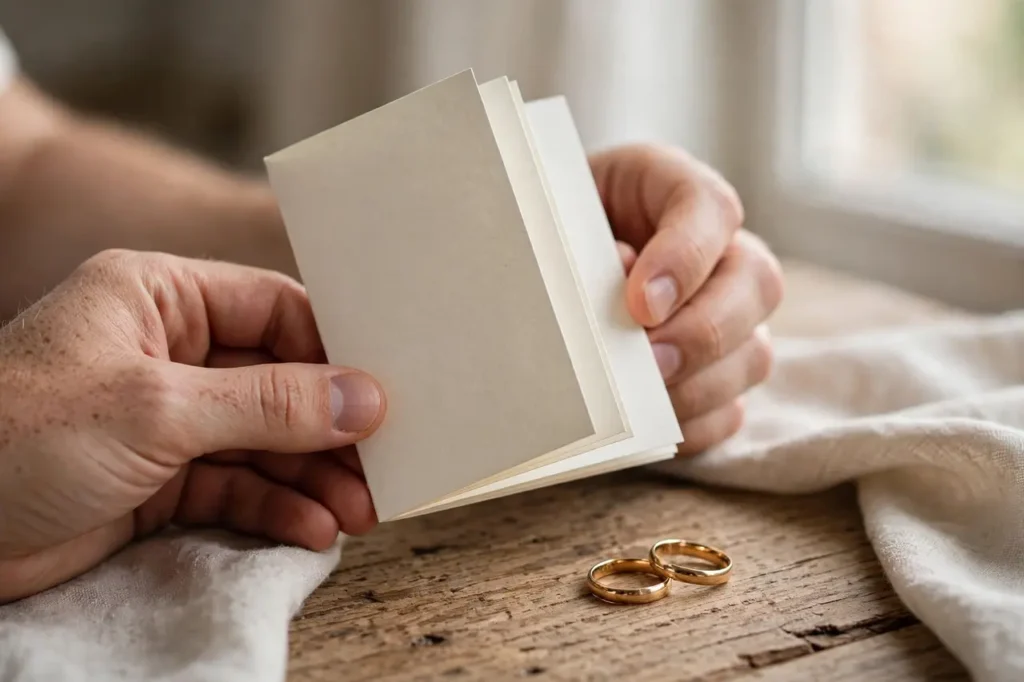
Finally, capture it. Assign one person — not a guest who wants to watch, but someone happy to film — to record the ceremony on a phone. Short ceremonies are over in a blink, and you will want to relive it. A simple tripod and a phone is all you need; this is not the moment for a videography crew. For ideas on folding the ceremony into a larger celebration, see our guide to celebrating your anniversary at home and silver anniversary celebration ideas for milestone inspiration.
Watch: A Real Vow Renewal Ceremony
To see how a heartfelt renewal ceremony flows in real life, watch this beautiful celebration of a couple renewing their vows surrounded by family. Notice the pacing — unhurried but concise — the personal words, and the joy in the room. It is a perfect example of how a short, sincere ceremony can carry enormous emotional weight.
Personalizing Any Script: Techniques That Make It Yours
A script becomes yours through specific details, not through rewriting every line. These personalization techniques work with any of the scripts above and take minutes to apply.
Start with numbers. Replace every generic time reference with your real ones: not “many years” but “fourteen years,” not “we’ve moved a lot” but “four apartments, two houses, and one memorable month with your parents.” Numbers make a script feel documented rather than decorated. Guests lean in when they hear specifics because specifics signal truth.
Add one signature story — a single anecdote, told in two or three sentences, that captures your relationship. The story of how you met, the disaster honeymoon, the night you knew. Place it in the reflection section of the script, and let it do the emotional heavy lifting for the whole ceremony. One vivid story outperforms five minutes of abstract sentiment every time. If you need help shaping the story, our guide to anniversary date ideas for couples includes storytelling prompts that work beautifully for ceremony reflections.
Weave in your shared language. Every long-term couple has private vocabulary — nicknames, catchphrases, the weird way you say goodnight. Dropping one piece of your private language into a public ceremony is electric: the guests hear a sweet line, but the two of you hear a whole history. One phrase is enough; more than that and the ceremony starts to feel like an inside joke the audience is not part of.
Consider a ritual object. Short ceremonies can include one symbolic action without adding meaningful length: lighting a unity candle, pouring two wines into one glass, tying a knot, planting something together. Choose an action that takes under a minute and means something to you specifically — the couple who met volunteering might plant a tree; the couple who bonded over coffee might brew a shared cup. The action gives photographers a visual moment and gives the ceremony a physical anchor guests remember.
Finally, write your own closing line. Scripts can be borrowed, but the last line should be yours — it is the sentence the ceremony ends on, the one guests will quote back to you for years. Make it short, make it true, and make it sound like you. “Still us” has closed more beautiful ceremonies than any borrowed poetry.
Scripts for Special Settings: Outdoor, Destination, and Virtual
Short scripts adapt beautifully to unconventional settings — in many cases, the setting does half the emotional work. A few adjustments make each environment shine.
For outdoor ceremonies, keep the script even tighter than usual. Wind, sun, and uneven ground all tax attention, and guests standing on a beach or hillside will not settle into a long ceremony. Print the script on cardstock rather than loose paper, assign someone to hold a backup copy, and skip any element that requires fine motor skills in gloves or wind. Open by acknowledging the setting — “We couldn’t think of a better witness than this view” — and let nature provide the grandeur your words do not need to.
For destination renewals with a small traveling group, the ceremony can lean into the journey. Reference the trip itself: the flight, the place, the adventure of getting there. Destination scripts work well with the couple-led format, since the intimacy of a small traveling party suits direct address. One practical note: check local regulations if the ceremony is in a public or protected space — some beaches and parks require permits even for a five-minute vow exchange.
For virtual ceremonies including distant loved ones, structure matters more. Appoint an emcee (a friend on the call) to manage the flow: welcome, mute reminders, the vow exchange, and the closing. Look into the camera during key lines so remote guests feel included. Keep it to five minutes — video-call attention spans are short — and consider recording the call so absent family can watch later. The chat window, flooded with hearts and congratulations afterward, becomes a keepsake in its own right.
Frequently Asked Questions
How short can a vow renewal ceremony be and still feel meaningful?
Two minutes is the practical floor — enough for a welcome, vows, and a kiss. Most couples find four to seven minutes ideal: substantial enough to feel like a real ceremony, short enough that every guest stays emotionally present. Under two minutes risks feeling abrupt; over ten starts to need the structure of a full ceremony to sustain attention.
Do we need an officiant for a short renewal ceremony?
No. Vow renewals carry no legal weight, so no officiant is required. A friend or family member can lead, or the couple can speak directly to each other using a script like the couple-led one above. An officiant or emcee mainly helps with flow and gives the moment a sense of occasion — worth having if guests are present, optional if it is just the two of you.
Should we exchange rings again?
It is a lovely touch but entirely optional. Some couples re-exchange their original bands, some use the ceremony to upgrade or add anniversary bands, and some skip rings in favor of another ritual — lighting a candle, planting a tree, or simply holding hands. If you do exchange rings, keep the wording to one sentence; the gesture carries the meaning.
Can we do a short ceremony as a surprise?
Yes, and surprise renewals are consistently described as the most romantic kind. The keys are secrecy (tell only one or two co-conspirators), simplicity (the surprised partner needs no preparation), and embedding it in an existing gathering so the audience is already assembled. Rehearse your own part well, since you will be nervous too.
What if one of us cries through the whole thing?
Build pauses into the script and keep water nearby. Tears during a short ceremony are concentrated — there is no long reading for composure to return during — so plan for them: print the script large, mark breathing pauses, and agree in advance that either partner can squeeze the other’s hand as a signal to pause. Genuine emotion is the point; the script just needs to survive it.
Is a short ceremony appropriate for a milestone like 25 years?
Absolutely. Milestone years do not obligate you to a long ceremony — many twenty-five and fifty-year couples prefer short scripts precisely because the marriage itself is the statement. If you want to honor the milestone more fully, put the extra time into the celebration around the ceremony (toasts, a slideshow, a great party) rather than lengthening the vows themselves.
How do we include guests without making it long?
Give guests one collective moment rather than individual parts: a group blessing (“repeat after me: we wish you joy”), a round of applause as punctuation, or a single guest reading of thirty seconds. The children’s inclusion script above shows how to involve family in under a minute. One shared moment of participation bonds the room without adding ceremony length.
Where can we find more ideas for the celebration around the ceremony?
Our complete guide to anniversary traditions by year is full of ritual and symbolism ideas, and our anniversary party theme ideas will help you design the party that follows your short, perfect ceremony.
Say It Short, Mean It Completely
A short vow renewal ceremony is an exercise in confidence: the confidence that your love does not need twenty minutes of explanation. Choose the script that fits your situation, make it yours with a few specific details, rehearse it once, and then stand up and say it like the surest thing you know.
Because it is. And everyone in the room will feel it. Print the script, trust the words, and let the brevity be the boldest statement of the day: a love so certain it needs only five minutes to say what some couples take a lifetime to learn.