Outdoor yoga events turn ordinary parks, beaches, botanical gardens, and city rooftops into open-air studios where sun salutations meet actual sunshine. If you have only ever practiced under fluorescent lights, your first class on dewy morning grass — with birdsong replacing the playlist and a breeze doing what no air conditioner can — will recalibrate what yoga feels like. These gatherings range from free weekly flows in neighborhood parks to ticketed sunset sessions on skyscraper rooftops, and they have become one of the fastest-growing ways Americans practice.
This guide covers everything a first-timer needs: the most popular types of outdoor yoga events, where to find classes near you, exactly what to bring, outdoor-specific etiquette, how to dress for the weather, and honest answers to the questions everyone asks before unrolling a mat on uneven ground. Whether you are a seasoned yogi or someone who has never done a downward dog, there is an outdoor class with your name on it.
Why Outdoor Yoga Events Are Booming
Yoga participation in the United States has grown steadily for two decades, and the outdoor segment has grown fastest of all. Several forces converged to make practicing under the sky mainstream. First, the pandemic era pushed fitness outside, and millions of people discovered they preferred it. Parks departments, studios, and independent instructors responded by building permanent outdoor schedules that never went away.
Second, the wellness-travel mindset has gone local. People want experiences, not just exercise, and a sunrise flow on the beach or a full-moon session in a botanical garden feels like a small adventure — even when it is ten minutes from home. Third, the barrier to entry is low. Many outdoor yoga events are free or donation-based, sponsored by parks departments, breweries, hotels, or athletic brands that see them as community marketing. A beginner can try yoga with zero studio-membership commitment.
Finally, there is the simple science of it. Practicing in natural light and fresh air is associated with better mood, lower perceived effort, and stronger adherence to an exercise habit. Instructors consistently report that students who start outdoors stick with yoga longer than those who start in studios. The setting does half the motivational work.
The Most Popular Types of Outdoor Yoga Events
Not all outdoor classes are the same. Knowing the format helps you pick an event that matches your fitness level, schedule, and tolerance for novelty. Here are the formats you will encounter most often across the country.
Park Yoga (the Classic)
Park yoga is the backbone of the outdoor yoga world: a free or low-cost weekly class on a lawn in a public park, usually led by a local studio or the parks department. Expect all-levels vinyasa or gentle flow, a friendly neighborhood crowd, and kids and dogs at the edges. Many cities run these from May through October, and some warm-climate cities run them year-round. They are the single best entry point for beginners because the vibe is casual and the price is right.
Beach Yoga
Beach yoga classes meet on the sand at sunrise or sunset, when the light is golden and the crowds are thin. The sand is a wonderful teacher: balancing poses become a genuine challenge, which builds stabilizing muscles fast, and the sound of the surf is a built-in meditation aid. Bring a large towel or dedicated beach mat — sand destroys standard mats — and expect wind to be part of the practice. Coastal cities from San Diego to Miami to the Jersey Shore run these in season.
Rooftop Yoga
Rooftop yoga pairs skyline views with sunrise or sunset flows, usually hosted by hotels, office buildings, or rooftop bars. These are often ticketed ($15–$40) and skew toward special-occasion energy: DJ-accompanied flows, post-class mimosas or smoothies, and a social scene afterward. If you are looking for a memorable date or a fun group outing rather than a weekly practice, rooftop sessions are ideal. Book ahead — capacity is limited and popular series sell out.
Goat Yoga and Puppy Yoga
Yes, this is real, and yes, it is as joyful as it looks. Goat yoga classes take place on farms or grassy lawns where friendly goats wander among the mats, occasionally climbing on participants during tabletop poses. Puppy yoga does the same with adoptable puppies from local shelters — many events double as adoption fundraisers. The yoga itself is intentionally gentle, because nobody is there for an advanced workout. Go for the laughter and the photos; stay for the surprisingly calming effect of animals.
Full-Moon and Sunrise Yoga
Special-occasion outdoor yoga events built around natural moments: full-moon flows at night (often with live acoustic music or sound baths), sunrise salutations on solstices and equinoxes, and sunset series that run weekly through summer. These draw bigger crowds than regular classes and often include extras like guided meditation, journaling prompts, or community potlucks. They are wonderful ways to mark a season or celebrate with friends.
SUP (Stand-Up Paddleboard) Yoga
For the adventurous, SUP yoga moves the practice onto a paddleboard floating on calm water — a lake, bay, or slow river. Every pose becomes a balance exercise, and falling in is part of the fun. Classes are led by certified instructors who anchor the boards, and no prior paddleboarding experience is usually required. Expect a full-body workout and a lot of laughing. Bring a swimsuit, sunscreen, and a sense of humor.
Garden and Winery Yoga
Botanical gardens, arboretums, lavender farms, and vineyards increasingly host yoga among the flowers and vines. These events are usually ticketed and include something extra — a garden tour, a wine tasting, or a farm-fresh breakfast after class. They make excellent gifts and weekend outings, and the settings are among the most beautiful places you will ever practice. Check whether the venue allows you to explore the grounds after class; many do.
How to Find Outdoor Yoga Events Near You
Outdoor yoga schedules are hyper-local and seasonal, so the best search strategy combines a few channels rather than relying on one app.
- Your city parks department website: Search for “yoga” on your city or county parks and recreation site. This is where the free summer series live, and they are often poorly advertised anywhere else.
- Eventbrite and similar platforms: Search “outdoor yoga” plus your city. Independent instructors and studios list ticketed and free events here, including one-off experiences like full-moon flows.
- Local studios’ social media: Follow yoga studios near you on Instagram. Outdoor pop-ups, park takeovers, and weather-related schedule changes are announced there first, often only a day or two ahead.
- Athletic and outdoor retailers: National outdoor brands sponsor free community fitness events, including yoga, at their stores and nearby parks. Check store event boards and websites.
- Hotels and rooftops: Upscale hotels with rooftop space frequently host summer yoga series open to the public. Search the hotel’s events page even if you are not a guest.
- Meetup and Facebook groups: Community yoga groups organize regular outdoor meetups, especially in suburbs and smaller cities where studios are scarce.
- Word of mouth: Ask at your gym, running club, or farmers market. Outdoor yoga communities are tight-knit, and regulars know every series in town.
Pro tip: many series are weather-dependent and announce cancellations the morning of the event. Always check the organizer’s social media or event page within a few hours of class time before heading out.
What to Bring to an Outdoor Yoga Class
Packing right is the difference between a blissful hour and an uncomfortable one. The outdoors adds variables — sun, bugs, uneven ground, wind — that studios eliminate. Here is the packing list experienced outdoor yogis swear by, and it pairs well with our broader guide to packing for outdoor events in changeable weather.
| Item | Why You Need It | Priority |
|---|---|---|
| Yoga mat (or outdoor mat) | Standard mats work on grass; bring a thicker or sacrificial mat for sand, gravel, or damp ground. | Essential |
| Large towel or blanket | Layer under your mat for cushioning on hard ground; doubles as a shawl for savasana. | Essential |
| Water bottle | Sun and breeze dehydrate you faster than studio air. Bring more water than you think you need. | Essential |
| Sunscreen | Apply 15 minutes before class, including ears, feet, and the back of the neck. Reapply for 90-minute sessions. | Essential |
| Sunglasses (secure fit) | For savasana and any supine poses facing the sun. Sports straps keep them on during movement. | Highly recommended |
| Bug spray or wipes | Dawn and dusk classes near water or woods attract mosquitoes. Unscented wipes avoid bothering neighbors. | Highly recommended |
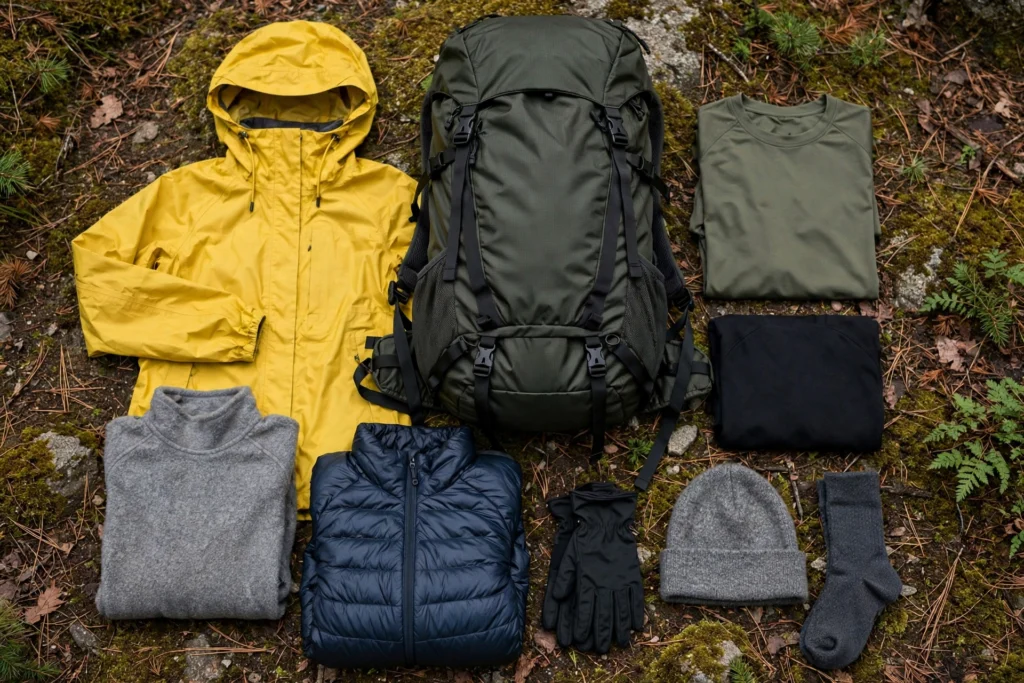
| Layers (light jacket or hoodie) | Mornings start cool; shade and breeze drop the temperature during final relaxation. | Highly recommended |
| Hair ties and headband | Wind plus inversions equals chaos. Secure everything before class starts. | Recommended |
| Small bag for valuables | Keep phone, keys, and wallet in one zipped pouch at the top of your mat. | Recommended |
| Yoga blocks (optional) | Helpful on uneven ground where balance is harder. Many outdoor regulars bring one block. | Optional |
Outdoor Yoga Etiquette: The Unwritten Rules
Outdoor classes have a relaxed vibe, but a few courtesies keep them pleasant for everyone — including the non-yogis sharing the park.
- Arrive early and set up quietly. Aim for 10–15 minutes before start time. Late arrivals stepping over mats mid-flow disrupt the whole class.
- Give your neighbors space. Leave at least an arm’s length on all sides. On crowded lawns, stagger your mat rather than lining up shoulder-to-shoulder.
- Keep voices low before and after class. Many people come to outdoor yoga specifically for the calm. Save the socializing for the walk to the coffee shop.
- Share the space graciously. Parks are public. If joggers, dogs, or frisbees pass through, treat it as part of the practice rather than an interruption.
- Leave no trace. Pack out everything, including water bottle caps and granola bar wrappers. Instructors notice — and appreciate — students who help the park stay clean.
- Respect the instructor’s weather call. If class is canceled for lightning or extreme heat, do not practice alone in the same spot. It undermines the organizer and can be unsafe.
- Tip donation-based classes. “Free” outdoor yoga is usually sustained by donations. If you can, contribute what a drop-in studio class would cost — or at least a few dollars.
What to Wear for Outdoor Yoga
Dress for the forecast, not for the studio. Moisture-wicking fabrics are non-negotiable — cotton stays damp and gets cold in a breeze. In summer, choose lighter colors that reflect sun, and consider a hat for walking to and from class (remove it during practice). In spring and fall, wear a light base layer with a zip-up you can shed after warm-up; you will want it back for savasana when your body temperature drops.
Footwear is simple: slip-on sandals or flip-flops you can kick off at your mat. Avoid practicing in shoes even on rough ground — your feet need the feedback. If the ground is truly uncomfortable, that is what the extra towel layer is for. For beach yoga, go barefoot and rinse off afterward; for dewy morning grass, expect damp feet for the first ten minutes and then forget about it.
Indoor vs. Outdoor Yoga: An Honest Comparison
| Factor | Indoor Studio | Outdoor Events |
|---|---|---|
| Cost | $15–$30 per drop-in class | Often free–$20; many sponsored series |
| Weather | Controlled, predictable | Variable; cancellations happen |
| Surface | Flat, sprung floors | Grass, sand, or pavement — uneven |
| Ambiance | Curated music and lighting | Natural sounds, real sky, wildlife cameos |
| Class size | 10–30 students | 20–200+; big community energy |
| Distractions | Minimal | Weather, passersby, bugs — part of the practice |
| Schedule reliability | Year-round, fixed | Seasonal; weather-dependent |
| Best for | Technique, consistency, winter | Joy, community, stress relief |
The takeaway is not that one is better — most devoted outdoor yogis also practice indoors in winter. The outdoors simply offers something a studio cannot: the feeling that your practice is connected to something larger than the room.
Outdoor Yoga Through the Seasons
Spring is prime season: mild temperatures, blooming surroundings, and the return of weekly park series. Mornings can be damp, so bring the extra towel layer. Summer brings the most events but also heat — choose morning or evening classes, hydrate aggressively, and skip midday sessions on heat-advisory days. Fall is the connoisseur’s season: crisp air, golden light, smaller crowds, and some of the year’s most beautiful settings. Winter does not have to end your practice: warm-climate cities run year-round, and snow yoga — practiced in winter boots on packed snow — is a real and growing niche in mountain towns.
Frequently Asked Questions
Do I need to be flexible to attend outdoor yoga events?
No. Most outdoor series are explicitly all-levels, and instructors offer modifications for every pose. The casual, mixed-ability crowd is actually more forgiving than a studio full of regulars. If you can breathe and move a little, you are ready.
What happens if it rains?
Most organizers cancel for steady rain or lightning and announce the call on social media a few hours before class. Light drizzle? Some hardy groups practice anyway. Never practice under a tree in a thunderstorm — no class is worth the risk.
Are outdoor yoga events really free?
Many are, especially park series run by municipalities and nonprofits. Ticketed events (rooftops, wineries, special experiences) typically run $15–$40. Even free events usually welcome donations that keep the series alive.
Can I bring my dog?
It depends on the event. Park classes in dog-friendly cities often welcome leashed dogs at the edge of the group; ticketed and farm events usually do not. Check the event description, and when in doubt, leave the pup home the first time. Dedicated free community events listings sometimes note pet policies.
Is outdoor yoga safe for beginners with injuries?
Uneven ground makes outdoor yoga slightly more demanding on ankles and knees than studio practice. If you are managing an injury, choose a gentle or restorative outdoor class, tell the instructor before class, and skip anything that causes pain. When in doubt, consult your doctor first.
What is the best time of day for outdoor yoga?
Early morning and the hour before sunset are the sweet spots: cooler temperatures, softer light, and calmer wind. Midday summer classes are the hardest and least pleasant — experienced organizers avoid them.
How do I handle bugs during class?
Apply unscented repellent before class (strong scents bother neighbors), avoid practicing right at dusk near standing water, and accept that one determined mosquito is part of the curriculum. Long sleeves for the walk home help too.
Will my mat get ruined?
Grass and pavement are fine for standard mats; sand, gravel, and damp soil will shorten a mat’s life. Many regulars keep a dedicated “outdoor mat” — often a cheaper, thicker one — and save their premium mat for the studio.
Your First Outdoor Class: A Simple Game Plan
Start with a free park series on a mild-weather morning. Pack the essentials from the table above, arrive fifteen minutes early, and introduce yourself to the instructor — mentioning you are new gets you extra guidance without any awkwardness. Place your mat where you can see the instructor, keep your expectations light, and let the setting do its work. Then, if you loved it, explore the more adventurous formats: a sunset beach flow, a goat yoga session that will dominate your group chat, or a full-moon gathering that feels like a small festival. If you enjoy gathering with neighbors outside, you may also love browsing family-friendly events across the USA for your next weekend plan. The sky, it turns out, is a very good studio.
Yoga Styles You Will Encounter Outdoors: A Quick Glossary
Event listings use style names that confuse beginners. Vinyasa/flow: movement synchronized with breath, moderately athletic — the most common outdoor format. Hatha: slower, pose-by-pose with holds — excellent for beginners. Yin: long, passive floor holds (3–5 minutes) targeting deep connective tissue — deeply relaxing, minimal sweating. Restorative: fully supported poses with props; essentially guided relaxation. Power yoga: vigorous, fitness-oriented vinyasa — expect to work hard. Kundalini: breathwork, chanting, and repetitive movements — spiritually flavored and unlike the others. Acro yoga: partner-based acrobatics — fun to watch, not a first-class choice. For your first outdoor event, choose hatha, gentle flow, or all-levels vinyasa; save power and acro for after you know you enjoy the format.