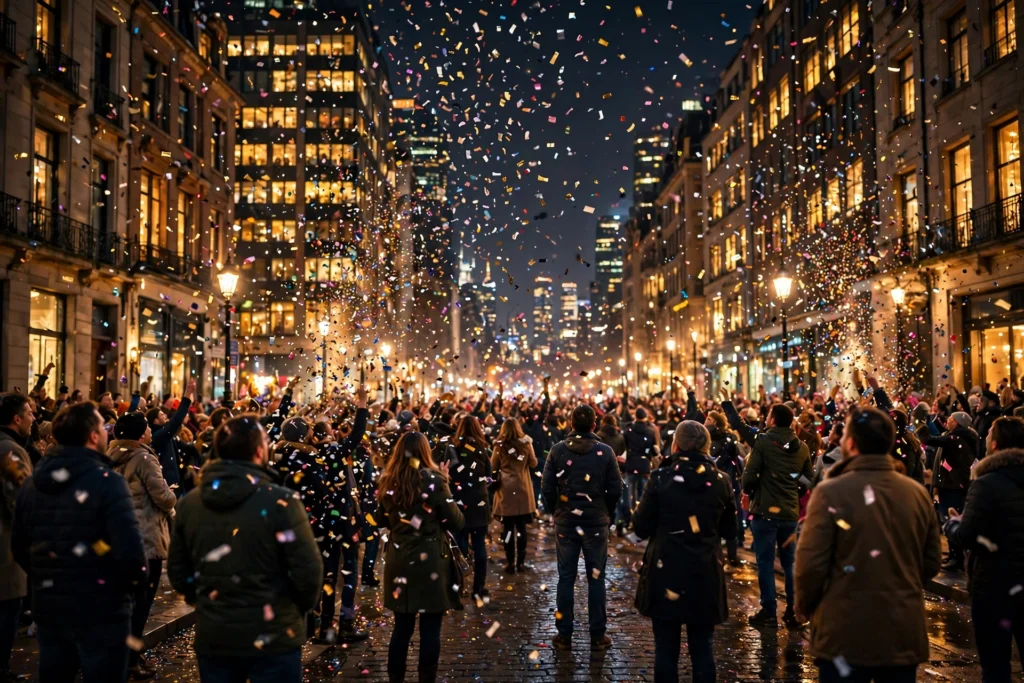
Every culture on Earth marks the turning of the year with its own rituals, and exploring new year’s traditions around the world is one of the best ways to appreciate how differently — and how similarly — humans welcome fresh beginnings. Some eat twelve grapes at the stroke of midnight. Others smash plates, jump waves, ring temple bells 108 times, or carry empty suitcases around the block. This guide tours more than 30 fascinating New Year’s traditions across six continents, explains what each one symbolizes, and shows you which ones you can try at home this December 31.
Why New Year Traditions Look So Different Everywhere
Most new year’s traditions around the world share three deep themes: letting go of the old (burning effigies, throwing out old objects, sweeping the house), inviting luck and prosperity (lucky foods, symbolic colors, first-footing), and gathering the community (shared meals, public countdowns, music). The specific rituals vary because they grew out of local history, religion, agriculture, and climate — but the human impulse underneath is universal. Keep those three themes in mind as you tour the list below, and you will start seeing the patterns.
Europe: Ancient Rituals and Midnight Magic
Spain — Twelve Grapes at Midnight
As the clock in Madrid’s Puerta del Sol chimes twelve times, Spaniards eat one grape per chime — las doce uvas de la suerte, the twelve grapes of luck. Each grape represents a month of the coming year; eat them all in time and you earn twelve months of good fortune. The tradition dates to 1909, when grape growers in Alicante promoted it to sell a bumper harvest. Today it is observed across Spain and much of Latin America. Trying it at home is harder than it looks — practice your grape speed.
Scotland — Hogmanay and First-Footing
Scotland’s Hogmanay celebration rivals Christmas in importance. After torchlight processions and street parties in Edinburgh, the tradition of first-footing begins: the first person to cross your threshold after midnight should be a dark-haired man bearing gifts — coal for warmth, shortbread for food, whisky for cheer, and coins for prosperity. A fair-haired first-footer was historically considered unlucky, a superstition tracing back to Viking raids. Fire festivals, with blazing tar barrels and fireballs swung overhead, symbolize burning away the old year.
Denmark — Smashing Plates and Leaping Chairs
Danes save up chipped crockery all year for one purpose: hurling it at friends’ doorsteps on New Year’s Eve. The bigger the pile of broken porcelain on your doorstep, the more friends you have — it is a badge of honor, not vandalism. At midnight, Danes stand on their chairs and literally jump into the new year as the clock strikes twelve.
Italy — Red Underwear and Lentils for Wealth
Italians wear red underwear on New Year’s Eve for love and luck in the year ahead (the underwear should be new, and ideally a gift). At dinner, lentils are served — often with cotechino sausage — because the small round legumes resemble coins and promise wealth. In Naples, an older tradition had people throwing old pots, pans, and furniture out the window to symbolically discard the past, though modern safety concerns have mostly retired it.
Germany — Lead Pouring and “Dinner for One”
Germans practice Bleigießen (lead pouring): melting a small piece of lead or tin and dropping it into cold water, then reading the resulting shape like a fortune — a heart means love, a ship means travel. (Modern kits use safer wax.) Equally beloved is watching the 1963 British comedy sketch “Dinner for One” on television — a New Year’s Eve ritual so entrenched that it holds a world record for the most repeated TV program. New Year’s Eve itself is called Silvester, after the saint’s feast day.
Greece — Vasilopita and the Onion of Rebirth
Greek families bake vasilopita, a sweet bread or cake named for St. Basil, with a coin hidden inside. The head of the household cuts slices for each family member (and one for the house, one for the poor); whoever finds the coin gets a year of good luck. Greeks also hang onions — symbols of rebirth because they sprout even without soil — on their doors, and children are tapped on the head with the onion on New Year’s morning for growth and health.
Ireland — Bread Against the Walls
An old Irish tradition holds that banging a loaf of Christmas bread against the doors and walls of the house chases away bad luck and invites good spirits in for the new year. Families also leave the back door open just before midnight to “let the old year out” and lock it after to “keep the new year in.”
Finland — Molten Tin Fortunes
Like Germany, Finland practices fortune-telling with molten tin (uudenvuoden tina). The shapes are interpreted with a traditional key: a ship means travel, a pig means plenty of food, a broken shape means bad luck. It is a centerpiece of Finnish New Year’s Eve parties.
Asia: Bells, Noodles, and Ancestral Reverence
Japan — 108 Bells and Year-Crossing Noodles
At Buddhist temples across Japan, massive bronze bells ring 108 times on New Year’s Eve — 107 times on the old year, once on the new. Each ring cleanses one of the 108 earthly desires (bonnō) that cause human suffering, in a ceremony called Joya no Kane. Families eat toshikoshi soba (“year-crossing noodles”) — long buckwheat noodles symbolizing longevity and resilience, easy to cut like the year’s hardships. On New Year’s Day, families visit shrines (hatsumode) to pray for the year ahead and share osechi ryori, elaborately packed New Year foods where each dish carries a wish.
China — Red Envelopes and Reunion Feasts (Lunar New Year)
While January 1 is observed, China’s biggest celebration is Lunar New Year (late January or February). Families gather for reunion dinners, children receive hongbao — red envelopes of money for luck — and fireworks and lion dances drive away evil spirits. The color red dominates everything: lanterns, couplets, clothing. Each year is governed by a zodiac animal, shaping fortunes and festivities, and symbolic foods — dumplings for wealth, fish for abundance, spring rolls for prosperity — play a starring role at every reunion table.
Philippines — Round Everything
Filipinos believe round shapes attract wealth, so New Year’s tables groan under twelve round fruits — one for each month — and celebrants wear polka dots and fill their pockets with round coins. Children jump as high as they can at midnight to grow taller in the new year. Firecrackers blast away evil spirits.
South Korea — Sunrise and Ancestral Rites
Koreans celebrate Seollal (Lunar New Year) with charye, ancestral memorial rites, and sebae, deep bows to elders in exchange for blessings and money. Many also gather on beaches and mountaintops on January 1 to watch the year’s first sunrise — a moment of collective hope.
Thailand — Water Blessings (Songkran)
Thailand’s traditional New Year, Songkran (mid-April), is famous for its nationwide water fights — but the water symbolizes washing away the past year’s misfortunes. Gently pouring scented water over elders’ hands remains the respectful core of the tradition.
Latin America: Color, Fire, and Suitcases
Mexico — Colored Underwear and the Suitcase Walk
Mexicans choose their New Year’s Eve underwear with intention: red for love, yellow for prosperity, white for peace, green for health. At midnight, those dreaming of travel grab an empty suitcase and walk — or run — around the block to guarantee adventures in the new year. Families also sweep the house to clear out bad energy and eat twelve grapes, a tradition shared with Spain.
Colombia — Potatoes Under the Bed and Burning Effigies
Colombians place three potatoes under the bed on New Year’s Eve — one peeled, one half-peeled, one unpeeled. At midnight, reaching under blindfolded and grabbing one predicts the year’s finances: unpeeled means wealth, half-peeled means stability, peeled means hardship. Many also burn año viejo effigies — scarecrow-like dummies representing the old year — to destroy bad luck in flames.
Ecuador — Burning the Old Year
Ecuadorians craft elaborate años viejos effigies — often caricatures of politicians or celebrities — stuffed with fireworks, and burn them at midnight while jumping over the flames. Widows of the year (men dressed as widows) beg for coins in the streets in a playful mourning of the departing year.
Brazil — White Clothes and Seven Waves
On Copacabana Beach, two million people dressed in white for peace gather for one of the world’s great New Year’s parties. At midnight, celebrants jump seven ocean waves, making a wish with each leap, and toss white flowers into the sea as offerings to Yemanjá, the Afro-Brazilian goddess of the sea. Fireworks over the bay complete the scene.
Argentina — Beans for Work and Pink Underwear
Argentines eat beans at New Year’s for job security and prosperity, and women wear brand-new pink underwear — traditionally gifted by family — for love and happiness. In La Plata, giant effigies are burned at midnight, and the first person to toast with champagne sets the tone for the year.
Peru — Yellow Everything and Takanakuy Fights
Yellow dominates Peruvian New Year — yellow underwear, yellow flowers, yellow candles — as the color of prosperity and good fortune. In the Andes, the Takanakuy festival resolves the year’s grudges through ritual fistfights: opponents embrace afterward, starting the year with a clean slate.
North America: Countdowns and Polar Plunges
United States — The Ball Drop and “Auld Lang Syne”
New York’s Times Square ball drop has run almost every year since 1907, and the Scottish poem “Auld Lang Syne” — set to music in the 1700s — closes parties nationwide. Regional traditions add flavor: the South eats Hoppin’ John (black-eyed peas and rice) for luck, Pennsylvania Dutch country serves pork and sauerkraut for progress, and polar bear plunges on New Year’s Day see brave souls charge into freezing water from Coney Island to Seattle. Thinking of joining the crowds? Our New Year’s Eve activities guide will help you find the best local celebrations.
Canada — Ice Fishing and the Polar Bear Dip
Canadians lean into winter: Vancouver’s Polar Bear Swim (running since 1920), ice fishing derbies, and maple taffy poured over snow. In Quebec, La Grande Virée features traditional music and dancing through the night.
Africa and the Middle East: Faith, Fireworks, and Renewal
South Africa — Cape Minstrel Carnival
Cape Town’s New Year belongs to the Kaapse Klopse (Cape Minstrel Carnival), a centuries-old parade of colorfully costumed troupes with banjos, brass, and ghoema drums filling the streets on January 2 — a celebration rooted in the history of enslaved people granted one day of freedom.
Ethiopia — Enkutatash (September New Year)
Ethiopia follows its own calendar, celebrating Enkutatash in September with the adei abeba daisy, bonfires, singing, and dancing. Girls in traditional dress go door to door singing and receiving gifts.
Turkey and Armenia — Pomegranate Smashing
In Turkey and Armenia, a pomegranate is smashed on the doorstep at midnight — the more seeds scatter, the more abundance the household will enjoy. The fruit’s hundreds of seeds symbolize fertility and prosperity.
Dubai, UAE — Skyline Spectacle
Dubai’s Burj Khalifa fireworks and light show is among the most watched New Year displays on Earth, blending cutting-edge spectacle with traditional Emirati hospitality — dates, coffee, and family gatherings.
Oceania: First to Welcome the Year
Australia — Sydney Harbour Fireworks
Thanks to time zones, Sydney is among the first major cities to welcome the new year, and its Harbour Bridge fireworks — including the famous 9 p.m. “family fireworks” for kids — set the global tone. Beach barbecues and harbor cruises define the Australian summer New Year.
New Zealand — The Very First Fireworks
Auckland’s Sky Tower hosts the world’s first major-city fireworks of the new year, followed by festivals in Wellington and Queenstown. Summer weather means outdoor concerts and lakeside countdowns.
Traditions at a Glance: What They Symbolize
| Tradition | Country | Symbolism | Easy to Try at Home? |
|---|---|---|---|
| Twelve grapes at midnight | Spain, Mexico | A lucky month for each grape | Yes — buy seedless grapes |
| 108 temple bells | Japan | Cleansing 108 earthly desires | Adapted — ring a bell 108 times mindfully |
| First-footing | Scotland | Luck brought by the first visitor | Yes — arrange a first-footer |
| Plate smashing | Denmark | Friendship and good fortune | Adapted — smash a cheap plate outdoors |
| Jumping seven waves | Brazil | Wishes granted by the sea | Only at the beach |
| Suitcase walk | Colombia, Mexico | Travel in the new year | Yes — walk your block |
| Colored underwear | Italy, Mexico, Brazil | Love, wealth, or peace | Yes |
| Burning effigies | Ecuador, Colombia | Destroying the old year’s bad luck | Adapted — burn a written list of grievances safely |
| Vasilopita coin cake | Greece | Luck for whoever finds the coin | Yes — bake with a wrapped coin |
| Toshikoshi soba | Japan | Longevity and resilience | Yes — cook long noodles |
| Pomegranate smashing | Turkey, Armenia | Abundance and fertility | Yes — outdoors! |
| Leaping off chairs | Denmark | Jumping into the new year | Yes — carefully |
5 Traditions to Try at Your Own New Year’s Eve
You do not need a plane ticket to borrow the world’s best ideas. Here are five new year’s traditions around the world that adapt beautifully to any home celebration:
- The 12 grapes (Spain): Hand each guest twelve grapes and a printout of the months. Eat one per clock chime at midnight — it is chaotic, hilarious, and delicious.
- The grievance bonfire (Ecuador, adapted): Have everyone write the year’s worst moments on paper and safely burn them in a fire pit. Cathartic and symbolic.
- First-footing (Scotland): Designate a “first footer” to step outside at 11:59 p.m. and re-enter at midnight bearing bread, salt, and a coin for the household.
- The wish waves (Brazil, adapted): No ocean? Have each guest write seven wishes on slips of paper, fold them into paper boats, and float them in a tub or pool.
- The bell cleansing (Japan, adapted): Ring a bell or chime 108 times together (take turns), naming something to release with each ring. Meditative and memorable.
Pair these with a great party setup — our New Year’s Eve party ideas and at-home celebration plan have you covered — and finish the night by setting fresh intentions for the twelve months ahead.
Frequently Asked Questions
Which country has the most unique New Year’s tradition?
It is hard to beat Denmark’s plate-smashing, Ecuador’s burning effigies, or Peru’s Takanakuy ritual fistfights for sheer uniqueness. Scotland’s first-footing and Japan’s 108 bell rings are the most spiritually rich. “Most unique” depends on what surprises you most.
Why do Spaniards eat 12 grapes on New Year’s Eve?
The tradition began in 1909 when grape growers in Alicante, Spain, promoted eating twelve grapes — one per midnight chime — to sell a surplus harvest. Each grape represents a month of the coming year, and finishing all twelve in time is said to bring twelve months of luck.
What do the Japanese do on New Year’s Eve?
Japanese families eat toshikoshi soba (long “year-crossing” noodles) for longevity, listen to temple bells ring 108 times to cleanse earthly desires, and visit shrines on New Year’s Day to pray for the year ahead.
What color underwear should you wear on New Year’s Eve?
It depends on the country: Italy says red for love and luck, Mexico assigns red for love, yellow for prosperity, and white for peace, while Brazil wears white clothing overall for peace. Pick the intention you want most.
Are New Year traditions the same as New Year’s resolutions?
No — traditions are cultural rituals passed down through generations, while resolutions are personal goals you set for yourself. But they share a purpose: marking a fresh start. Many people combine both, adopting a world tradition at their party and setting resolutions at midnight.