A truly memorable New Year’s Eve dinner menu is choreographed like a great evening out: it builds, it surprises, and it lands the finale — dessert and the midnight toast — exactly on cue. Whether you are hosting an intimate dinner for four or a glittering party for twelve, this guide gives you a complete elegant plan from appetizers to dessert: a curated menu, nine full recipes with ingredients and step-by-step instructions, wine and champagne pairings, and a make-ahead timeline so you spend the evening with your guests instead of chained to the stove.
The menu below follows the classic European réveillon structure — the long, luxurious New Year’s Eve dinner traditional in France — adapted for home cooks anywhere in the world. It balances richness with freshness, offers a vegetarian path through every course, and is designed so that nearly everything can be prepped ahead. Each recipe serves 6–8 as part of this menu (scale freely), and every course includes timing notes so the whole evening flows. If you are planning the broader celebration too, our New Year’s Eve at home plan covers decor, music, and midnight logistics.
The Menu at a Glance
Here is the full arc of the evening, designed to be served over about three hours — cocktails at 8:00 PM, dessert around 11:15 PM, champagne at midnight.
To greet: Smoked Salmon Blinis with Dill Crème Fraîche + a signature cocktail from our New Year’s Eve cocktails and mocktails collection.
First course: Roasted Butternut Squash Soup with Brown Butter and Sage — or the Winter Citrus & Fennel Salad for a lighter start.
Main course: Herb-Crusted Beef Tenderloin with Red Wine Jus — or Mushroom Wellington for vegetarian guests.
Sides: Garlic-Parmesan Duchess Potatoes and Honey-Glazed Rainbow Carrots.
Dessert: Dark Chocolate Fondants with Sea Salt — or Champagne Panna Cotta with Raspberry Coulis.
Midnight: Champagne (or sparkling wine) — see our champagne guide for choosing and serving it properly.
The logic: begin with bright, palate-waking flavors; move to a comforting soup; land the savory peak with the tenderloin; refresh with dessert; and finish with bubbles. Every course shares ingredients where possible (butter, cream, fresh herbs) to simplify shopping, and the whole menu avoids last-minute frying or fiddly plating.
Appetizer: Smoked Salmon Blinis with Dill Crème Fraîche
These elegant two-bite pancakes are the perfect greeting — luxurious, make-ahead friendly, and endlessly customizable. Makes about 24 blinis (serves 6–8 as an appetizer).
Ingredients — blinis: 1 cup all-purpose flour; 1 teaspoon baking powder; ½ teaspoon sugar; ½ teaspoon fine salt; ¾ cup whole milk; 1 large egg; 2 tablespoons melted butter, plus more for the pan.
Ingredients — topping: ¾ cup crème fraîche (or sour cream); 2 tablespoons chopped fresh dill, plus sprigs for garnish; 1 teaspoon lemon zest; 8 oz smoked salmon, cut into ribbons; 2 tablespoons capers, drained; ½ small red onion, very thinly sliced; lemon wedges, to serve.
Steps: 1. Whisk flour, baking powder, sugar, and salt in a bowl. In a second bowl, whisk milk, egg, and melted butter; pour into the dry ingredients and stir just until combined — a few lumps are fine. Rest 10 minutes. 2. Heat a nonstick skillet over medium heat and brush lightly with butter. Drop tablespoonfuls of batter and cook 1–2 minutes per side until golden with small bubbles. Keep warm in a low oven. 3. Stir crème fraîche with chopped dill, lemon zest, and a pinch of salt. 4. To assemble: spoon a dollop of dill crème onto each blini, top with a ribbon of smoked salmon, and finish with capers, red onion slivers, and a dill sprig. Serve with lemon wedges. Make-ahead: blinis keep 2 days refrigerated (reheat in a 350°F/175°C oven 5 minutes); assemble no more than 1 hour before serving.
Appetizer Alternative: Baked Brie with Cranberry & Pistachio
For a warm, crowd-pleasing alternative (or addition), this baked brie takes 20 minutes and looks spectacular. Serves 8 as part of a spread.
Ingredients: 1 wheel brie (8–12 oz), top rind scored; ½ cup cranberry sauce (whole berry); ¼ cup shelled pistachios, roughly chopped; 1 tablespoon honey; 1 teaspoon fresh thyme leaves; crackers and sliced baguette, to serve.
Steps: 1. Heat oven to 375°F (190°C). Place brie on a parchment-lined baking dish. 2. Spoon cranberry sauce over the top, letting it pool slightly. 3. Bake 12–15 minutes until the cheese is soft and just beginning to ooze at the edges. 4. Drizzle with honey, scatter pistachios and thyme, and serve immediately with crackers and baguette. Tip: warm brie waits for no one — time this to come out of the oven as guests arrive. More finger-food ideas live in our New Year’s Eve appetizers roundup.
First Course: Roasted Butternut Squash Soup with Brown Butter & Sage
Silky, golden, and deeply comforting — this soup can be made two days ahead and reheated, making it the ideal first course for a host who wants to enjoy the party. Serves 6–8.
Ingredients: 1 large butternut squash (about 3 lb), peeled and cubed; 1 onion, quartered; 4 garlic cloves, unpeeled; 3 tablespoons olive oil; 1 teaspoon salt, plus more to taste; ½ teaspoon black pepper; 4 cups vegetable or chicken stock; ½ cup heavy cream; 4 tablespoons butter; 12 fresh sage leaves; pinch of nutmeg; toasted pumpkin seeds, to garnish.
Steps: 1. Heat oven to 400°F (200°C). Toss squash, onion, and garlic with olive oil, salt, and pepper on a sheet pan; roast 30–35 minutes until caramelized at the edges. 2. Squeeze garlic from skins into a blender with the roasted vegetables, stock, and cream; blend until completely smooth. (An immersion blender in the pot works too.) 3. Transfer to a pot, stir in nutmeg, and simmer 10 minutes; adjust salt. 4. In a small pan, melt butter over medium heat, swirling until it foams and turns amber with a nutty smell (2–3 minutes); add sage leaves and fry 30 seconds until crisp. 5. Ladle soup into warm bowls, drizzle with brown butter, and top with crisp sage and pumpkin seeds. Make-ahead: soup base (before brown butter) keeps 3 days refrigerated or 1 month frozen.
Lighter First Course: Winter Citrus & Fennel Salad
If soup feels too heavy before the main event, this bright salad resets the palate beautifully. Serves 6–8.
Ingredients: 3 blood oranges (or navel oranges); 1 grapefruit; 1 small fennel bulb, very thinly sliced; 4 cups mixed winter greens or arugula; ⅓ cup pomegranate seeds; ¼ cup toasted hazelnuts, chopped; 3 tablespoons extra-virgin olive oil; 1 tablespoon honey; 1 tablespoon white wine vinegar; salt and pepper.
Steps: 1. Supreme the citrus: cut away peel and pith, then slice between membranes to release segments; squeeze the leftover membranes over a bowl to catch juice. 2. Whisk olive oil, honey, vinegar, 2 tablespoons of the citrus juice, salt, and pepper into a vinaigrette. 3. Toss greens and fennel with half the dressing; arrange on a platter. 4. Top with citrus segments, pomegranate seeds, and hazelnuts; drizzle with remaining dressing. Serve immediately.
Main Course: Herb-Crusted Beef Tenderloin with Red Wine Jus
The centerpiece: meltingly tender beef with a fragrant herb crust, served with a glossy jus. A whole tenderloin (4–5 lb) serves 8–10; a center-cut chateaubriand (2–2.5 lb) serves 4–6. This recipe uses a 3-lb center-cut roast serving 6–8.
Ingredients: 1 center-cut beef tenderloin (about 3 lb), trimmed and tied; 2 tablespoons olive oil; 2 teaspoons kosher salt; 1 teaspoon black pepper; 3 tablespoons Dijon mustard; 3 garlic cloves, minced; 2 tablespoons each chopped fresh rosemary, thyme, and parsley.
For the jus: 1 cup dry red wine; 2 cups beef stock; 1 shallot, minced; 1 tablespoon butter; 1 teaspoon balsamic vinegar.
Steps: 1. Bring beef to room temperature 1 hour before cooking. Heat oven to 425°F (220°C). 2. Rub beef with olive oil, salt, and pepper; sear in a hot oven-safe skillet 2–3 minutes per side until browned. 3. Brush with Dijon, then press the garlic-herb mixture firmly all over. 4. Roast 20–25 minutes until an instant-read thermometer registers 125°F (52°C) for medium-rare at the thickest point. 5. Rest 15 minutes tented with foil — the temperature will rise to about 135°F. 6. Meanwhile, make the jus: sauté shallot in the skillet, add wine and scrape up browned bits, reduce by half; add stock and reduce until slightly syrupy; whisk in butter and balsamic. 7. Slice the tenderloin into 1-inch medallions, arrange on a warm platter, and spoon jus around (not over, to preserve the crust). Food safety: use a thermometer — color alone is unreliable. Leftovers make exceptional next-day sandwiches.
Vegetarian Main: Mushroom Wellington
No guest should get a lesser meal. This mushroom Wellington — earthy, rich, and dramatic when sliced — earns its place as a true centerpiece. Serves 6.
Ingredients: 2 lb mixed mushrooms (cremini, shiitake, portobello), finely chopped; 1 onion, diced; 3 garlic cloves, minced; 2 tablespoons olive oil; 1 tablespoon butter; 2 teaspoons fresh thyme; ½ cup dry white wine; 1 cup cooked lentils (or chestnuts, chopped); 2 tablespoons soy sauce; 1 sheet puff pastry, thawed; 1 egg, beaten (for egg wash); salt and pepper.
Steps: 1. Sauté mushrooms in olive oil and butter over high heat in batches until deeply browned and all moisture evaporates (about 15 minutes total — do not crowd the pan). 2. Add onion and garlic; cook 5 minutes. Add thyme and wine; cook until wine evaporates. Stir in lentils and soy sauce; season boldly. Cool completely. 3. On a floured surface, roll puff pastry into a rectangle; mound the mushroom mixture along the center and fold pastry over, sealing edges with egg wash. Place seam-side down on a lined sheet pan. 4. Brush with egg wash, score a decorative pattern, and chill 20 minutes. 5. Bake at 400°F (200°C) for 25–30 minutes until deep golden. Rest 10 minutes before slicing. Make-ahead: assemble up to 24 hours ahead and refrigerate; bake from cold, adding 5 minutes.
Sides: Garlic-Parmesan Duchess Potatoes
Individual piped potato rosettes — crisp-edged, fluffy-centered, and far easier than they look. Serves 6–8 (makes about 16 rosettes).
Ingredients: 2½ lb russet potatoes, peeled and quartered; 4 tablespoons butter; ⅓ cup heavy cream, warmed; 2 egg yolks; 3 garlic cloves, roasted or sautéed soft; ½ cup grated Parmesan; salt, pepper, and nutmeg to taste.
Steps: 1. Boil potatoes in salted water until very tender (18–20 minutes); drain and steam-dry 2 minutes. 2. Mash until completely smooth (a ricer is ideal — no lumps allowed). 3. Beat in butter, warm cream, egg yolks, garlic, Parmesan, salt, pepper, and a grating of nutmeg. 4. Pipe rosettes onto a lined sheet pan using a large star tip (or spoon into mounds). 5. Bake at 425°F (220°C) for 18–22 minutes until golden with crisp tips. Make-ahead: pipe up to a day ahead, refrigerate uncovered, and bake before serving.
Sides: Honey-Glazed Rainbow Carrots
Sweet, glossy, and jewel-toned — the color this rich menu needs. Serves 6–8.
Ingredients: 2 lb rainbow (or regular) carrots, peeled, halved lengthwise if thick; 3 tablespoons butter; 3 tablespoons honey; 1 tablespoon apple cider vinegar; ½ teaspoon cumin; salt and pepper; 2 tablespoons chopped pistachios and fresh dill, to finish.
Steps: 1. Melt butter in a large skillet over medium-high heat; add carrots in a single layer and sear 3–4 minutes until charred in spots. 2. Add honey, vinegar, cumin, salt, and ½ cup water; cover and simmer 8 minutes. 3. Uncover and cook 5–7 minutes more, turning, until carrots are tender and glazed. 4. Scatter with pistachios and dill; serve warm.
Dessert: Dark Chocolate Fondants with Sea Salt
Molten-center chocolate cakes, timed to emerge from the oven at 11:15 PM — the grand finale before midnight. Serves 6.
Ingredients: 6 oz dark chocolate (60–70%), chopped; ½ cup (1 stick) butter, plus more for ramekins; 2 eggs + 2 yolks, at room temperature; ¼ cup sugar; pinch of salt; ⅓ cup flour; cocoa powder, for dusting; flaky sea salt and vanilla ice cream, to serve.
Steps: 1. Heat oven to 425°F (220°C). Butter six 6-oz ramekins generously and dust with cocoa. 2. Melt chocolate and butter together until smooth; cool slightly. 3. Whisk eggs, yolks, sugar, and salt until pale and thick (2–3 minutes). Fold in chocolate, then flour, just until combined. 4. Divide among ramekins (fill ¾ full). At this point they can wait, refrigerated, up to 4 hours — bring to room temperature 20 minutes before baking. 5. Bake 10–12 minutes until edges are set but centers still jiggle. Rest 1 minute, run a knife around the edge, invert onto plates, and finish with flaky salt. Serve immediately with ice cream.
Dessert Alternative: Champagne Panna Cotta with Raspberry Coulis
Light, make-ahead, and on-theme — the bubbles go into the dessert too. Serves 6–8.
Ingredients: 2 cups heavy cream; ½ cup sugar; 1 vanilla bean (or 2 teaspoons extract); 2¼ teaspoons powdered gelatin; ¾ cup brut champagne or sparkling wine, divided; 2 cups raspberries (fresh or frozen); 2 tablespoons sugar (for coulis); 1 teaspoon lemon juice.
Steps: 1. Sprinkle gelatin over ¼ cup cold champagne; let bloom 5 minutes. 2. Heat cream, sugar, and vanilla seeds to a bare simmer; off heat, stir in bloomed gelatin until dissolved. Cool 10 minutes, then stir in remaining ½ cup champagne. 3. Pour into glasses or molds; chill at least 4 hours (or overnight). 4. For coulis: simmer raspberries, sugar, and lemon juice 5 minutes; strain. 5. Spoon coulis over each panna cotta just before serving. Note: alcohol does not fully cook out here — keep this one for the adults and serve the chocolate fondants to younger guests.
Drink Pairings for the Evening
One well-chosen bottle per phase beats a crowded bar. With appetizers: a crisp sparkling wine or a light cocktail — our cocktails and mocktails guide has a champagne cocktail that doubles as the greeting drink. With soup or salad: an unoaked white (Chablis-style) or simply sparkling water with lemon — the course is delicate. With the tenderloin: the red wine you used in the jus, or any medium-bodied red; with the Wellington, a Pinot Noir. With dessert: switch back to bubbles — a demi-sec champagne loves chocolate, while brut loves the panna cotta. At midnight: the best bottle you have — our champagne guide explains brut vs. demi-sec, proper temperature (45–48°F / 7–9°C), and how to open the bottle without redecorating the ceiling.
Make-Ahead Timeline: Enjoy Your Own Party
Two days before: make the soup base; bake blinis; make cranberry topping; shop for everything. Day before: assemble the Wellington (refrigerate); pipe duchess potatoes; make panna cotta; prep all vegetables (peel, chop, store in water or damp towels); set the table completely — linens, candles, glassware, place cards. Morning of: make fondant batter and fill ramekins (refrigerate); make raspberry coulis; assemble salad components (dress at the last minute). Afternoon: bring beef to room temperature at 4 PM; preheat strategy written on a sticky note on the oven. Evening: 6:30 — Wellington in; 7:00 — blinis reheat, brie in; 7:30 — guests arrive; 8:00 — soup on; 8:45 — beef in; 9:30 — beef out to rest, carrots and potatoes in; 10:00 — mains served; 11:10 — fondants in; 11:25 — dessert; 11:55 — champagne on ice by the door, glasses ready. Midnight: you are holding a glass, not a spatula.
Setting the Table: Ambiance in 30 Minutes
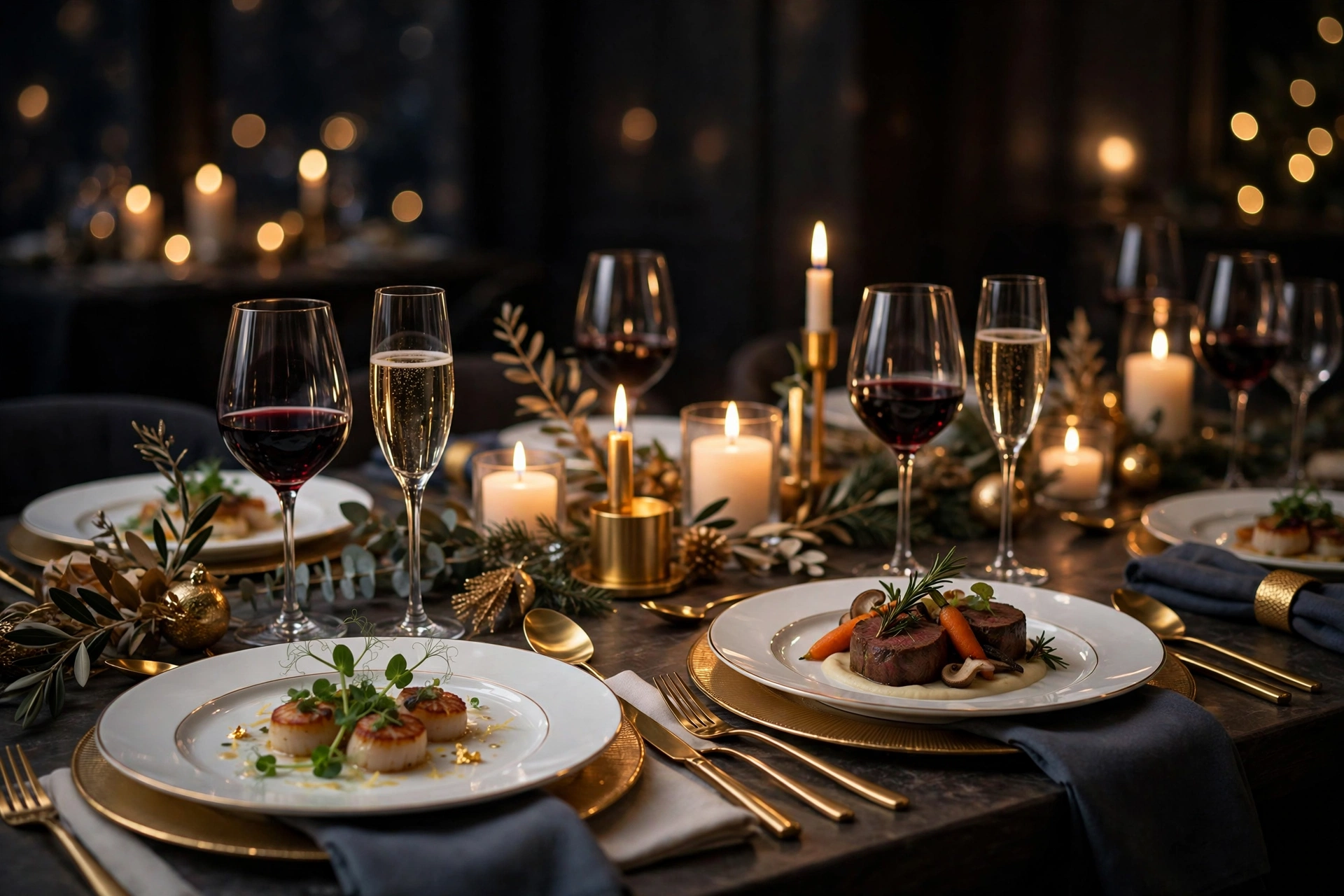
Great food deserves a worthy stage, and it takes less effort than you think. Start with the lowest light you can — dim overheads, then add candles: a mix of pillar candles and tea lights down the center of the table gives instant celebration. A simple runner (linen, kraft paper, or even wrapping paper turned pattern-side down) unifies the table; scatter a few metallic ornaments, pine sprigs, or citrus halves for a New Year feel without a craft project.
Glassware matters more than china: polish wine and champagne glasses until they sparkle, and set one water glass, one wine glass, and one flute per guest from the start — resetting stemware mid-party kills momentum. Cloth napkins, simply folded with a sprig of rosemary tucked in, read as far more elegant than their cost. Place cards are worth the five minutes: they eliminate the awkward hover, let you seat couples and conversationalists strategically, and double as a keepsake. Finally, music: build a 4-hour playlist that starts jazzy and low during appetizers, lifts through dinner, and turns celebratory by 11 PM. Set the volume so conversation never has to compete — the food is the headliner.
In Pictures: New Year's Eve Dinner Menu
The last supper of the year deserves ambition — courses that build, lucky foods, and a sweet finish at midnight. Here's the table, set.
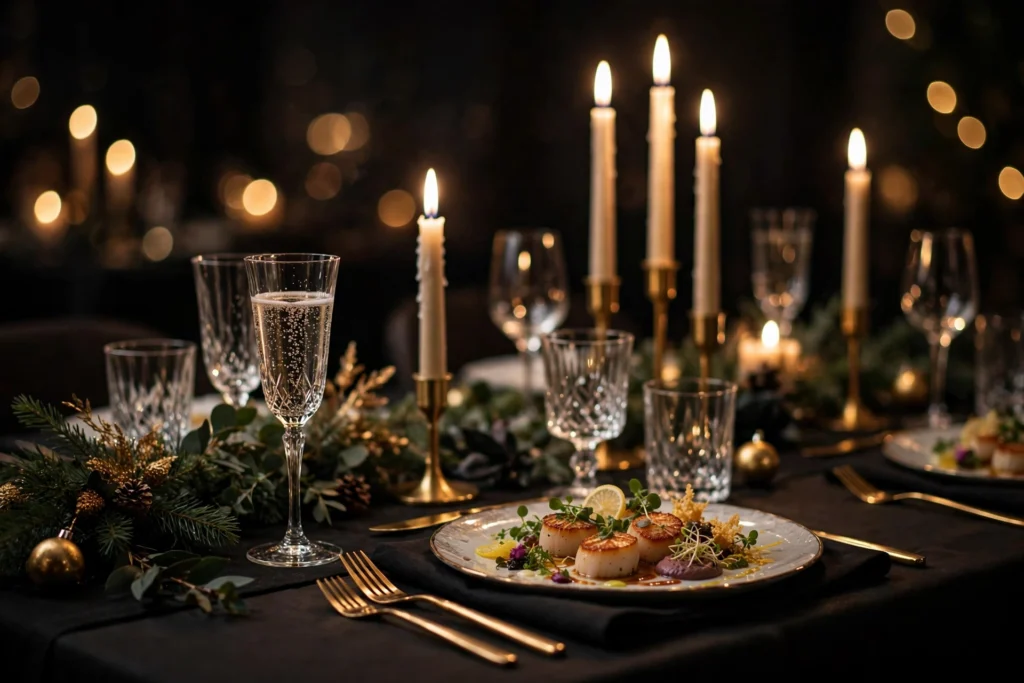
An elegant New Year's Eve dinner table: candlelight, gold-rimmed plates, and a multi-course feast ready to be served.
Watch: New Year's Eve Dinner Menu
The New Year's Feast — a full celebratory dinner menu built for the biggest night of the year.
At a Glance: New Year's Eve Dinner Menu
Lucky foods and menu structure for the year's final dinner.
| Course / Food | Tradition | Detail |
|---|---|---|
| Lentils | Italy | Round lentils are said to resemble coins; eating them is linked to prosperity |
| Black-eyed peas | Southern United States | A traditional New Year's Day dish for luck |
| Twelve grapes | Spain | Eaten at midnight, one per clock chime |
| Pork | Germany and Austria | Pigs root forward, symbolizing progress — roast pork is a classic |
| Fish | Many cultures | Fish swim forward, another forward-motion symbol for the new year |
| Noodles | East Asia | Long noodles symbolize long life |
| Dessert | Something sweet at midnight | A sweet finish is the near-universal closing course |
Frequently Asked Questions
How many courses should a New Year’s Eve dinner have?
Four to five courses is the sweet spot for home hosting: appetizer, first course (soup or salad), main with sides, and dessert — plus the midnight champagne. More than that exhausts the cook; fewer feels like an ordinary dinner. The menu above follows this structure and paces it over about three hours.
What is the best main course for New Year’s Eve?
Beef tenderloin is the classic celebration roast — tender, quick-cooking (under 30 minutes), and easy to slice elegantly. For a luxurious alternative, consider rack of lamb, duck breast, or lobster tails. Always offer a vegetarian centerpiece of equal dignity, like the Mushroom Wellington above, rather than an afterthought plate.
How do I time dessert for midnight?
Choose a dessert with a flexible finish. Chocolate fondants bake in 10–12 minutes and the batter can wait refrigerated for hours — put them in at 11:10 PM for an 11:25 PM serve. Panna cotta is even easier: fully made ahead, just spoon over the coulis. Have champagne chilling and glasses ready by 11:55 PM.
Can I prepare a New Year’s Eve dinner menu in advance?
Almost entirely, yes. In this menu, the soup base, blinis, Wellington (assembled), duchess potatoes (piped), panna cotta, fondant batter, and coulis are all made 1–2 days ahead. On the day, you are only reheating, roasting the beef, glazing carrots, and baking — about 90 minutes of active evening work if you follow the timeline.
What should I serve vegetarian guests at a formal New Year’s dinner?
Serve a true centerpiece, not a side dish promoted. The Mushroom Wellington above looks dramatic sliced, pairs with the same sides and jus (use vegetable stock), and takes the same effort as the meat main. Ask about dietary needs a week ahead so you can plan rather than improvise.
How much champagne do I need for midnight?
Plan one bottle per 6–8 guests for the midnight toast (a standard bottle pours about 6 generous flutes). If champagne flows all evening, budget one bottle per 2–3 guests. Chill bottles to 45–48°F (7–9°C) — about 3 hours in the fridge or 30 minutes in an ice bucket.
Conclusion
An elegant New Year’s Eve dinner menu is not about culinary heroics — it is about choreography. Choose dishes that love being made ahead, pace them so the evening breathes, and land dessert just before midnight with champagne already cold. Your guests will remember the candlelight, the laughter between courses, and the way the chocolate fondant gave way at exactly 11:25 PM.
Start your prep two days out, trust the timeline, and give yourself the gift every host deserves: a glass in your hand when the clock strikes twelve. For the drinks that carry the evening, see our festive drink recipes and champagne guide — and for sweet inspiration beyond tonight, our New Year’s Eve desserts collection awaits. Happy hosting, and happy New Year.