Forget everything you picture when you hear the words “naming ceremony” — the stiff church pews, the whispered formality, the aunt who shushes everyone. Today’s parents are rewriting the script entirely. A modern naming ceremony might unfold on a sunlit rooftop with a jazz trio, in a design-studio loft with a neon name sign, or in a backyard where the “officiant” is the baby’s grandmother and the dress code is “wear what makes you happy.” The heart of the tradition — gathering your people to speak your child’s name aloud with love — stays exactly the same. Everything else is gloriously up for reinvention.
This guide is for parents who want a naming day that feels like them: contemporary, personal, and photogenic without being performative. Inside you will find 30 modern naming ceremony ideas organized by style, a sample timeline that actually works with a baby’s schedule, decor and menu ideas with a current edge, smart ways to weave in technology, and honest answers to the questions modern families ask most. Whether you are proudly secular, spiritually eclectic, or simply allergic to stuffiness, here is how to throw a naming celebration that feels like the future — because it is.
What Makes a Naming Ceremony “Modern,” Anyway?
A modern naming ceremony is not defined by any single aesthetic. It is defined by intention: every element is chosen rather than inherited. Where a traditional ceremony follows a script handed down through generations, a modern one asks, “What do we actually believe, who do we actually love, and how do we want this day to feel?” — and builds outward from the answers.
In practice, that tends to mean a few recognizable shifts. The officiant is often a friend, family member, or professional celebrant rather than clergy. The venue is wherever the family feels most themselves — a home, a garden, a gallery, a favorite restaurant’s private room. The guest list is curated for closeness rather than obligation. Rituals are borrowed from anywhere meaningful: a unity candle from weddings, a tree planting from earth-centered traditions, a group singalong from summer camp. Readings might come from children’s books, poetry, or song lyrics instead of scripture.
None of this means modern ceremonies are less meaningful. In fact, parents consistently report the opposite: because every word was chosen deliberately, the ceremony lands harder. A friend who has known you for fifteen years speaking about the kind of parent you are becoming will undo a room faster than any formal liturgy. The modern naming ceremony trades inherited gravity for chosen intimacy — and for a generation of parents building families on their own terms, that trade feels exactly right.
It also helps to know what a modern ceremony is not. It is not a branding exercise, not content for social media first and a celebration second. The most stylish ceremonies share one trait: the parents were fully present. Keep the phone in a pocket, hire the photographer if you can, and let the day belong to the people in the room. Polish is lovely; presence is everything.
8 Modern Ceremony Styles to Steal
Start with the overall vibe, because every other decision — venue, decor, food, flow — cascades from it. Here are eight fully-formed styles, each with a distinct personality. Pick the one that makes you say “that’s us,” then borrow details freely from the others.
1. The Minimalist Gathering
Twenty of your closest people, a bright white room, one long table, and nowhere to hide — in the best way. The minimalist naming ceremony strips away decor so the words carry everything: a short welcome, each guest sharing one hope for the child, a single beautiful reading. A lone olive branch in a vase, linen napkins, and natural light do all the visual work. This style suits parents who find meaning in simplicity and want the day to feel calm rather than produced. Budget-friendly by design, it proves that restraint photographs better than excess.
2. The Rooftop Golden Hour
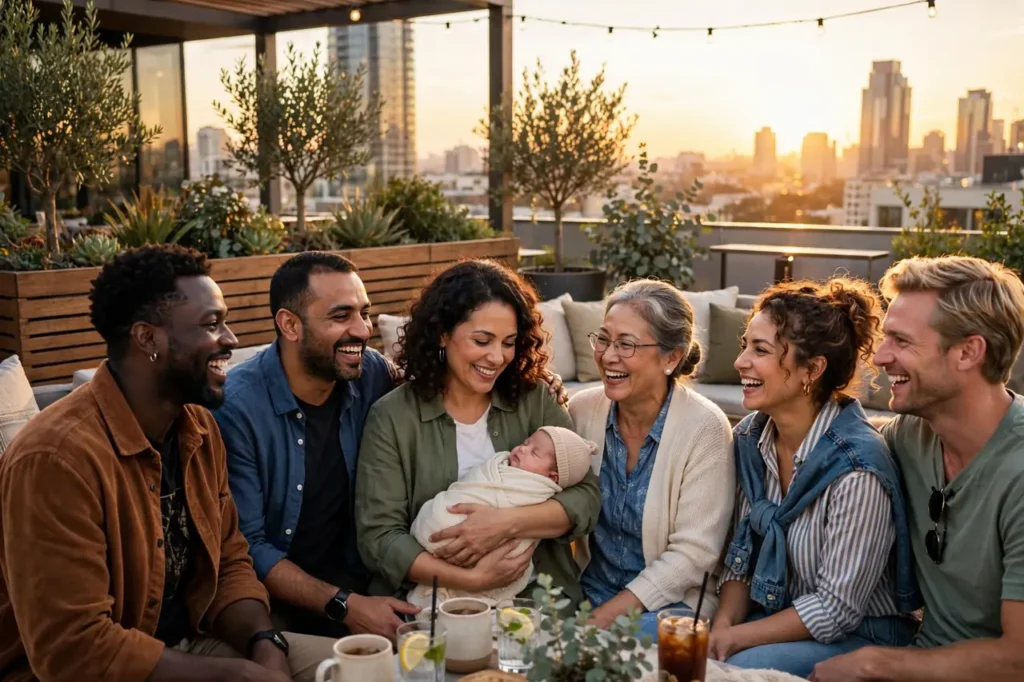
Time the ceremony for the hour before sunset and let nature handle the lighting design. Rooftops, terraces, and hilltop gardens give you skyline views, a natural breeze, and photographs that need no filter. Structure the ceremony in 20 tight minutes — welcome, name announcement with a champagne-style sparkling cider pop, blessings from four chosen speakers — then let the party breathe as the light turns gold. Have a weather backup that you would genuinely enjoy, not one you resent.
3. The Backyard Festival
Think less formal ceremony, more beautiful day-long hang: lawn games, a taco truck or wood-fired pizza oven, a shaded ceremony corner with floor cushions where the naming happens mid-afternoon. Kids run free, grandparents hold court under a canopy, and the baby naps through half of it in a bassinet under a tree. The festival style is the most forgiving of baby chaos and the most fun for guests with children of their own. It also happens to be one of the most affordable ways to host well.
4. The Design-Led Loft
Rent a gallery, studio, or industrial loft for the afternoon and treat the ceremony like an installation: a sculptural floral piece as the altar, a neon or acrylic sign with the baby’s name as the backdrop, museum-style printed programs. The ceremony itself can be short and artful — a string quartet playing modern covers, three readings, a collective toast. This is the style for parents who live for aesthetics and want the day to feel like an extension of their home and taste.
5. The Intimate Dinner Ceremony
Twelve guests, one candlelit table, the naming woven between courses. Each course is introduced with a short reading or toast; the name is formally announced over dessert. There is no audience and no performance — just the people who will actually shape this child’s life, sharing a meal and making promises across the table. Profoundly moving, completely unfussy, and the easiest format for including far-flung loved ones via a single laptop at the table’s end.
6. The Adventure Ceremony
For outdoorsy families: a short hike to a viewpoint, a naming at the summit with the wind doing the sound design, a picnic waiting at the trailhead. Or a beach at low tide, a lakeside dock at dawn, a desert overlook. Keep the ceremony itself to ten minutes — nature is the decor and the distraction — and bring more snacks and layers than you think necessary. The photographs will be unreal, and the story (“we named her on a mountaintop”) never gets old.
7. The Cultural Remix
Many modern families are blending two or more heritages, and the naming ceremony is the perfect place to honor all of them honestly. A West African naming ritual alongside a Scandinavian name-day song; a Japanese omiyamairi-inspired blessing next to a Mexican padrino tradition; Hebrew, Arabic, or Gaelic names explained with their full stories. The key is respect over decoration: include the elders who carry each tradition, explain the meaning to guests, and let the ceremony be genuinely multicultural rather than merely multicolored.
8. The Party-First Celebration
Some parents know themselves: they are party people, and a solemn ceremony would feel like wearing someone else’s clothes. So flip the structure — throw an incredible party with the people you love, and tuck a sincere ten-minute naming moment into its heart: gather everyone, say the name, share the story behind it, raise a glass. Nobody will feel shortchanged on meaning, because the meaning was never in the formality. It was in the room full of people who showed up.
A Modern Order of Events That Actually Works
The number-one mistake in modern ceremonies is running long. Babies have a hard limit of about 20–30 minutes of formal attention before the wheels come off, and honest planning respects that. Here is a timeline that keeps the meaningful parts tight and gives the celebration room to breathe.
| Time | What happens | Why it works |
|---|---|---|
| 0:00 | Guests arrive, drinks & mingling | No awkward waiting; the baby can nap until showtime |
| 0:30 | Welcome & the story of the name (5 min) | Parents speak while energy and attention are high |
| 0:35 | Readings & blessings (10 min) | Three short pieces max — poetry, lyrics, or personal words |
| 0:45 | The naming moment & symbolic ritual (10 min) | Candle, tree planting, or handprints — one ritual, done well |
| 0:55 | Group toast & photos | Everyone raises a glass; photographer captures the peak moment |
| 1:00 | Food, music & open celebration | Structure dissolves; the party becomes the memory |
| 2:30 | Graceful wind-down | End while energy is still high — leave them wanting more |
Notice what is missing: no receiving line, no hour of speeches, no gap between ceremony and party where guests stand around wondering what happens next. Modern ceremonies compress the formal and expand the joyful. If a beloved relative insists on a fifteen-minute speech, give them the microphone during the open celebration, not during the ceremony — the baby will thank you.
Decor That Defines the Modern Look
Modern naming ceremony decor has a recognizable language: natural textures, intentional negative space, one or two statement moments rather than decoration in every corner. The goal is a room that photographs beautifully but feels like somewhere you could actually relax.
The name installation. Nearly every modern ceremony has one: the baby’s name rendered large as the visual anchor. Options range from oversized acrylic script on a greenery wall to a neon sign (rentable for the day), a hand-painted linen banner, or wooden letters on a mantel. This is where guests take their photos, so give it good light and a clean background. After the party, it moves to the nursery — the rare decor investment that keeps working.
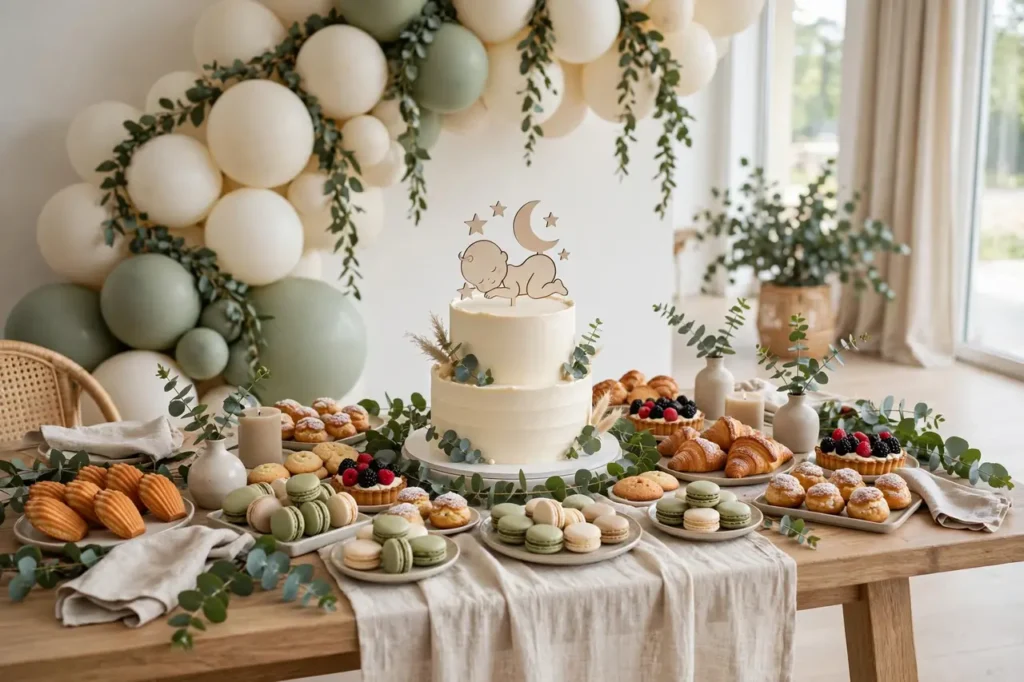
Tablescapes with restraint. Forget the tall centerpieces that block conversation. Modern tables favor low, loose arrangements — bud vases with single stems down the table’s length, eucalyptus runners, candles at varying heights. Mix materials: raw wood, linen, stoneware, brass. The look is collected, not matched, and it is far more forgiving to assemble than a formal floral design.
Signage with personality. A welcome sign in your own words (“Come as you are, leave as family”), a bar menu with a signature mocktail named after the baby, a “wishes for baby” station with beautiful cards — modern signage is where the couple’s voice comes through. Keep the wording warm and specific; generic signs are the fastest way to make a personal event feel like a template.
Lighting as decor. If your venue allows it, lighting does more per dollar than almost anything else: string lights or festoon bulbs for outdoor evenings, clusters of pillar candles for indoor warmth, a single spotlight on the name installation. Dim the overheads the moment the ceremony ends — the shift in light tells guests, without a word, that the party has begun.
Watching how other families stage their celebrations — like the joyful grand ceremony above — is the fastest way to calibrate your own plans. Notice the flow of the event, the moments that draw applause, and the decor choices that read beautifully on camera, then adapt what you love to your scale and style.
Food and Drink: Menus with a Current Edge
Modern naming menus share a philosophy: excellent food, served casually, with attention to how people actually eat at parties — standing, chatting, holding a baby. The white-glove plated dinner has largely given way to formats that keep the energy moving.
Interactive stations remain the crowd favorite: a taco or bao bar, a wood-fired pizza oven working through the afternoon, a build-your-own grain bowl station for the health-conscious crowd. Stations double as entertainment and naturally accommodate dietary restrictions without anyone needing a special plate or an awkward conversation.
The grazing table has earned its ubiquity honestly. A sprawling, artfully messy table of cheeses, charcuterie, fruits, dips, and breads feeds guests continuously for hours, looks spectacular in photos, and requires no service staff beyond periodic restocking. Add a separate, clearly labeled kid-friendly corner with familiar favorites so small guests are happy and their parents can relax.
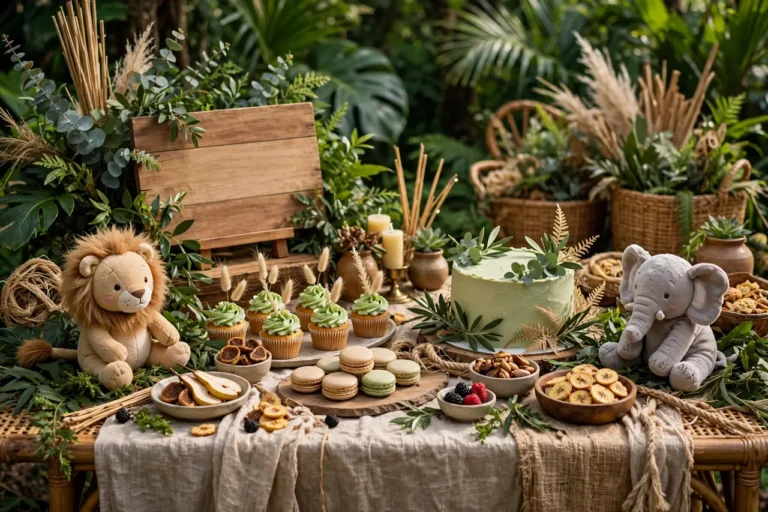
Dessert with a moment. The modern equivalent of the christening cake is often a dessert table — but keep one hero item for the ceremonial cut or toast: a sculptural cake, a tower of profiteroles, a doughnut wall with the baby’s name. Serve it with coffee and a toast led by someone who can hold a room, and you have your party’s emotional peak without any solemnity.
Drinks that include everyone. A signature mocktail named for the baby (the “Milo Spritz,” the “Wren & Tonic”) served alongside wine and beer signals that this is a celebration, not a bar — and ensures pregnant guests, designated drivers, and non-drinkers feel considered rather than tolerated. Batch the mocktail in large dispensers; it will be the most photographed drink of the day.
Tech Touches Worth Including
Technology, used thoughtfully, makes modern ceremonies more inclusive rather than less personal. A few ideas that consistently earn their place:
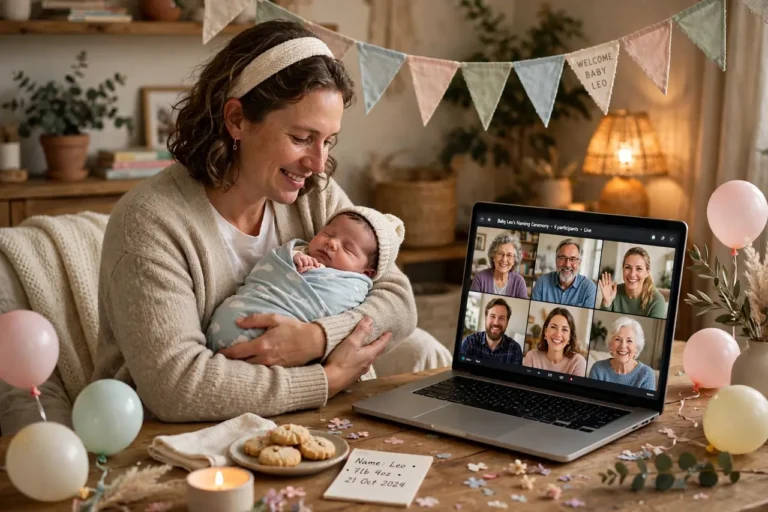
A livestream for the far away. One phone on a tripod, a private YouTube or Zoom link, and a designated “stream host” who greets online guests and holds the camera steady during the naming moment. Keep expectations honest — it is a window, not a broadcast — and remote grandparents will be moved beyond measure. Record it too; the baby will want to see this someday.
A shared photo album. Set up a shared cloud album with a simple QR code on the welcome sign, and invite guests to add their photos throughout the day. You will end up with hundreds of candid shots no hired photographer could capture — the baby asleep on three different grandfathers, the toddlers’ secret snack summit — and guests love contributing to the collective memory.
Digital guest book. A tablet at the entrance running a simple guest-book app, or even a beautifully designed online form, collects messages you will actually be able to find later — unlike the paper book that lives in a drawer. Prompt guests with a question (“What do you hope for [name]?”) rather than a blank page; specific prompts get specific, keepable answers.
The name-reveal film. If you kept the name secret, a 60-second video — ultrasound clips, the nursery coming together, the story of choosing the name — played just before the announcement turns the reveal into cinema. Keep it short, keep the music low enough to hear the gasps, and have tissues ready. This is the one tech moment worth rehearsing.
Three Real Modern Ceremonies, Deconstructed
Sometimes the fastest way to plan is to see how other families did it. Here are three composite examples drawn from ceremonies parents describe as their best decision of the newborn year — each built on the principles above, each utterly different.
The Sunday-morning loft, 40 guests. Maya and Jordan rented a photography studio for four hours on a Sunday morning. Guests arrived to coffee, pastries, and a string duo playing indie covers. At 11:00 sharp, Jordan’s sister — a high-school English teacher with a voice made for this — welcomed everyone and told the two-minute story of how the name “June” was chosen (a grandmother’s middle name, a favorite month, a song). Three friends read short pieces: a Mary Oliver poem, lyrics from a lullaby the couple sang during pregnancy, and a letter from June’s great-grandmother, read aloud by her mother. Maya and Jordan then lit a single candle together and spoke their promises — two sentences each, written the night before. The whole formal portion lasted 22 minutes. Then: a taco cart, a Polaroid guest book, and a playlist the couple had been building for months. Total cost: under $4,000. June slept through the ceremony and woke up for tacos.
The backyard golden hour, 65 guests. Priya and Sam hosted in their own backyard, which meant the budget went almost entirely to food and a tent in case of rain. The ceremony corner featured floor cushions in a semicircle, a low wooden table holding a brass bowl of water, marigolds, and a framed print of the baby’s name in three scripts — English, Tamil, and Hebrew — honoring both families’ heritages. Priya’s mother performed a brief traditional blessing; Sam’s father, a retired judge not known for sentimentality, surprised everyone by reading a poem he’d written at 2 a.m. the week before. The naming itself combined both traditions: the name spoken first in Tamil by the grandmother, then in English by the parents, with guests repeating it back in a joyful, ragged chorus. Dinner was a South Indian–Jewish fusion buffet that guests still talk about. The tent stayed folded in the corner, unused and unbemoaned.
The dinner-table twelve, one laptop. Elena and Marcus kept it radically small: ten guests around their dining table, plus Elena’s parents beaming in from a laptop propped on a stack of cookbooks. Between the main course and dessert, Marcus dimmed the lights and played a 90-second video — the nursery coming together, set to the song that was playing when Elena’s water broke. Then they announced the name, “Rafael,” and went around the table with a single question: “What is one thing you want to teach Rafael?” The answers, recorded with everyone’s permission, became the most treasured audio file the family owns — including Marcus’s 80-year-old father saying, voice cracking, “How to be kind when nobody is watching.” Dessert was flan from Elena’s grandmother’s recipe. Nobody wanted to leave.
What unites all three is not a style but a discipline: a short, deliberate ceremony inside a generous, joyful gathering, with at least one moment that could only belong to that family. Copy the discipline; invent the details.
Frequently Asked Questions
Do we need an officiant, or can we lead the ceremony ourselves?
You can absolutely lead it yourselves — many modern ceremonies are parent-led, and there is something powerful about speaking your own child’s naming into being. That said, a friend or professional celebrant acting as host frees you to be emotionally present instead of managing the flow. A good compromise: a friend emcees, and you speak the parts that matter most.
How do we handle family members who wanted a traditional religious ceremony?
With honesty and one well-placed olive branch. Explain your choice warmly and early — not as a rejection of their traditions but as an expression of your own values. Then include a nod to heritage: a grandparent’s blessing, a traditional song, a moment of silence for those who came before. Most families find that a sincere, beautiful ceremony wins over skeptics faster than any argument.
What should guests wear to a modern naming ceremony?
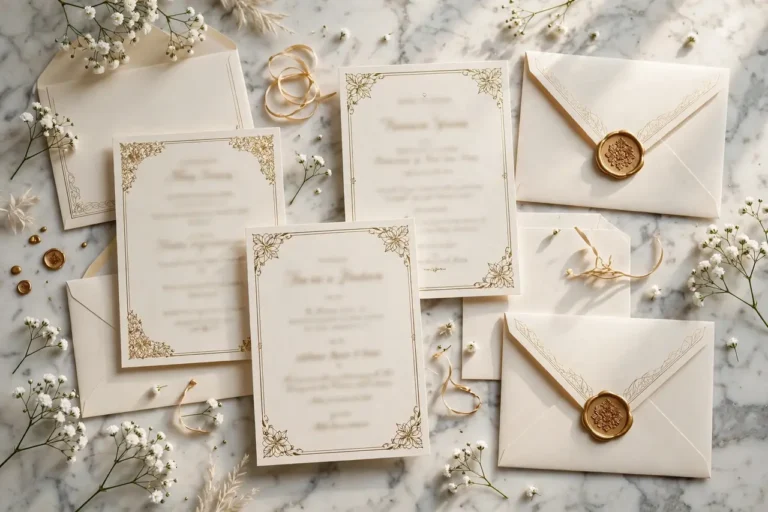
Tell them, explicitly, on the invitation. “Garden party attire,” “dressy casual,” or “wear what makes you happy (you’ll be photographed)” all work — the key is removing guesswork. When in doubt, suggest a color palette rather than a dress code; a crowd in soft neutrals or joyful brights looks intentional in photos without anyone feeling policed.
Can we combine the naming ceremony with a first birthday?
Yes, and many families do — especially if the first year was a blur of survival. A combined “naming day and first birthday” celebration is efficient, joyful, and completely legitimate. Just give the naming moment its own distinct space in the program so it doesn’t get swallowed by cake-smash chaos; ten focused minutes is all it needs.
How much should we budget?
Modern ceremonies span an enormous range: a beautiful backyard gathering for 25 can cost under $500, while a designed loft event for 100 with catering can run $5,000–$10,000. The biggest cost drivers are venue and food, in that order. Decide those two first, and let everything else flex around them. Some of the most memorable ceremonies in this guide’s spirit cost almost nothing — intention is free.
Should we register gifts or request no gifts?
Either is fine, but say so clearly. “Your presence is the present” on the invitation gracefully closes the question; a small registry or a contribution to the child’s education fund gives gift-inclined guests direction. What creates awkwardness is silence — guests will guess, and guess anxiously. One sentence on the invitation solves it completely.
How do we include loved ones who can’t attend?
Livestream the naming moment, collect video blessings to play at the party, and set a place for them symbolically — a framed photo at the welcome table, a toast in their honor. Afterward, send a small package: a printed program, a photo, a piece of cake’s story. Distance stings less when people feel deliberately included rather than incidentally missed.
Is it okay to keep the baby’s name secret until the ceremony?
More than okay — it’s one of the great modern traditions. A name reveal gives the ceremony a genuine moment of surprise and delight that guests remember for years. If you go this route, guard the secret seriously (one leak ruins it), build the reveal into the program’s climax, and have the photographer ready. The collective gasp is worth every bit of the secrecy.
Make It Unmistakably Yours
The through-line of every great modern naming ceremony is simple: it could only have been thrown by you. Not by a template, not by tradition, not by what the neighbors did — by you, for this child, with these people, in this season of your life. That is what guests will feel when they walk in, and it is what your child will sense decades later when they hear the story.
So take these thirty ideas as raw material, not instructions. Keep the rooftop or lose it. Borrow the grazing table, skip the neon sign, write your own vows at midnight the night before. The only non-negotiable is the one the tradition has always carried: gather the people who love this child, speak their name aloud with joy, and promise — out loud, in front of witnesses — to love them well. Everything else is your signature. For more ways to celebrate your growing family, browse our Baby & Children celebrations, our guide to celebrating as new parents, and these sweet first Halloween costume ideas for the months ahead.