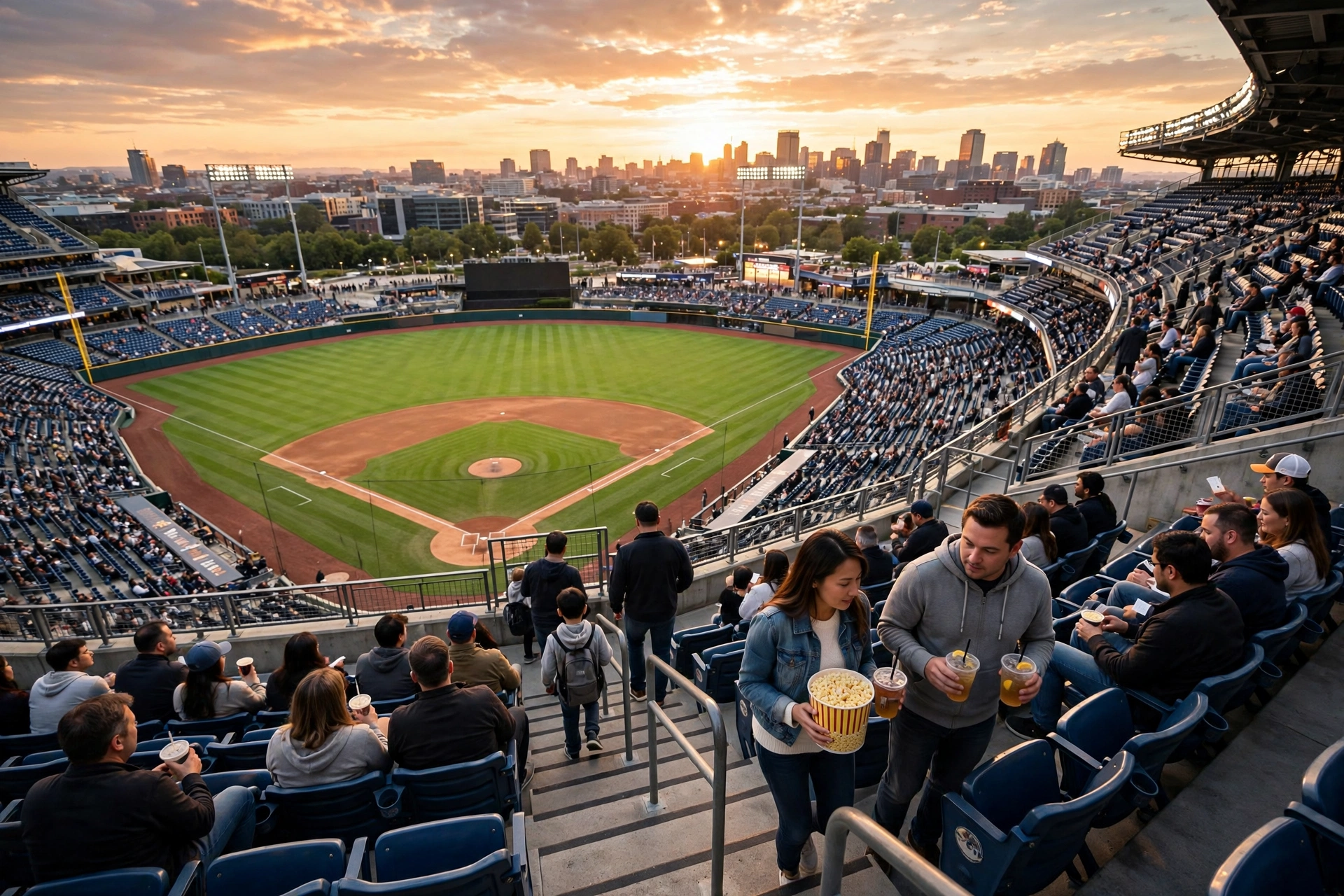
Walking into a Major League ballpark for the first time is one of the great American experiences — the green field opening up as you climb the concourse stairs, the smell of grilled food, the murmur of the crowd. This mlb ballpark guide is your complete playbook for making that first visit (or your thirtieth) perfect. From choosing seats and buying tickets to navigating food, parking, and ballpark etiquette, here is everything a fan needs to know before heading to the game.
Whether you are planning a trip to your home team’s stadium or starting the classic quest to visit all 30 MLB ballparks, this guide covers seating strategy, ticket-buying tactics, what to bring, where to sit for the best experience at different budgets, and the unwritten rules that will make you feel like a regular from the first pitch.
Choosing Your Seats: A Section-by-Section Breakdown
Not all seats are created equal, and the “best” seat depends on what you want from the day. Here is how the typical MLB seating map breaks down:
| Area | View | Price | Best For |
|---|---|---|---|
| Behind home plate (lower) | Pitch-by-pitch detail; see break on every pitch | $$$$ | Serious fans studying pitching |
| Field level, baselines | Close to action; great for line drives and plays at bases | $$$ | First-timers wanting immersion |
| Upper deck behind home | Full-field tactical view; best value for watching strategy | $$ | Fans who love the chess match |
| Outfield / bleachers | Home-run balls come to you; rowdy social scene | $–$$ | Groups, young fans, party atmosphere |
| Corner / foul pole | Unique angle; watch plays develop | $$ | Photographers, repeat visitors |
| Standing room | Roam the park; social | $ | Budget visits, exploring the stadium |
The Case for the Upper Deck
Here is a secret veteran fans know: the upper deck behind home plate often offers the best pure baseball view in the house. You see the entire field, defensive shifts, outfielder positioning, and baserunner leads — the full tactical picture — at a fraction of field-level prices. If your goal is understanding the game rather than being close enough to hear the third baseman, sit upstairs behind the plate.
Bleachers and Outfield Seats
Outfield bleachers are the social heart of many ballparks — louder, more communal, and the place to be when home-run balls are flying. They are also among the cheapest seats. Just know the trade-offs: you are far from the infield action, the sun can be brutal for day games (many bleachers face west into the afternoon sun), and the vibe is rowdier, which is perfect for some and too much for others.
How to Buy Tickets Without Overpaying
- Buy early for marquee games: Opening Day, rivalry series, weekend games against contenders, and giveaway days sell well. Buy these as soon as single-game tickets go on sale.
- Wait for weeknight games: Tuesday-through-Thursday games against non-contenders are routinely discounted — sometimes steeply — on both primary and resale markets.
- Compare primary vs. resale: Check the team’s official site first, then verified resale. For low-demand games, resale often undercuts face value; for high-demand games, official “dynamic pricing” may already reflect demand.
- Consider partial plans: If you will attend several games, mini-plans (10–20 games) usually beat single-game pricing and come with perks like presale access.
- Watch for promotions: Family Sundays, student discounts, military appreciation days, and post-game concerts or fireworks add value beyond the game itself.
The ticket tactics in our concert ticket buying guide — setting price alerts, understanding dynamic pricing, avoiding speculative listings — apply directly to baseball tickets, and the venue-savvy advice in our best concert venues in the USA roundup will resonate if you are comparing stadium experiences across cities.
Getting There: Parking, Transit, and Timing
Arrive Early
Gates typically open 90 minutes to two hours before first pitch. Arriving early gets you: batting practice viewing (watch the home team hit, usually until about 40 minutes before game time), shorter concession and security lines, giveaway items (often limited to the first several thousand fans), and a relaxed lap around the concourse to find your bearings.
Parking vs. Transit
Downtown ballparks (the majority of modern MLB stadiums) are usually well-served by light rail, subway, or bus lines — and transit beats driving on both cost and post-game traffic. Suburban parks lean car-dependent; check the team’s transportation page for official lots versus third-party options. Rideshare pickup zones get chaotic after the final out; many veterans walk a few blocks away from the stadium before requesting a ride.
Bag Policies
Nearly all MLB parks restrict bags: typically only small clutches or clear bags are allowed, with strict size limits. Check the specific stadium’s policy before you go — being turned away at security with a backpack is a miserable start. Most parks allow sealed water bottles and outside food in soft containers, which is a genuine money-saver for families.
Ballpark Food: What to Eat
Ballpark food has evolved far beyond hot dogs (though the classic hot dog remains essential). Modern stadiums feature local restaurant outposts, regional specialties, craft beer stands, and surprisingly good barbecue, tacos, and seafood depending on the city. Strategy:
- Do a recon lap first: Walk the main concourse before buying. The best stands often hide in the outfield concourse or upper levels.
- Eat local: Each park’s signature items reflect its city — this is the one place where “when in Rome” is mandatory.
- Time your meals: Lines peak between the third and sixth innings. Eat in the second inning or after the seventh-inning stretch to skip waits.
- Bring your own: Where permitted, packing sandwiches and snacks cuts costs dramatically — put the savings toward one signature stadium item.
What to Bring (and What to Leave Home)
| Bring | Why |
|---|---|
| Sunscreen, hat, sunglasses | Day games are sun-intense; many seats uncovered |
| Light jacket or blanket | Night games cool down, even in summer |
| Scorecard and pencil | Keeping score is a beloved tradition and deepens engagement |
| Portable phone charger | Ballpark apps, mobile tickets, and photos drain batteries |
| Glove (for kids, and the young at heart) | Foul balls and home runs — be ready |
| Cash + card | Most parks are cashless, but have backup |
Leave home: large bags, outside alcohol, noisemakers (most parks ban them), beach balls (they will get confiscated and you will get booed), and laser pointers. Umbrellas are usually prohibited too — bring a poncho instead.
Ballpark Etiquette: The Unwritten Rules
Baseball crowds are welcoming, but a few norms keep the peace. Our concert etiquette guide covers the same spirit for music venues — respect the people around you and everyone has a better time. For baseball specifically:
- Do not walk in front of people during an at-bat: Wait for a break between batters to return to your seat. Ushers enforce this in many parks.
- Stay off your phone during big moments: Nobody minds a photo, but narrating the game on speakerphone does not fly.
- Learn the home team’s traditions: Every park has its chants, songs, and seventh-inning-stretch rituals. Join in — it is the fastest way to feel like you belong.
- Catch a foul ball? Give it to a kid: The beloved tradition. If a child is nearby, the ball is theirs. You will get a bigger ovation than the play itself.
- Do not leave early in a close game: You will miss the walk-off, and the regulars will judge you. (Blowouts are a different story.)
- Booing: Directed at the opposing team or your own team’s poor play, booing is part of baseball. Keep it about the game, never personal or abusive toward individual players’ families.
Visiting All 30 Ballparks: The Quest
The “ballpark chase” — visiting all 30 MLB stadiums — is a beloved fan pilgrimage. Tips from those who have done it:
- Group by geography: The Northeast corridor (multiple parks within train distance), the Midwest cluster, and West Coast swings maximize parks per trip.
- Prioritize endangered parks: Stadiums slated for replacement move to the top of the list — you cannot visit a demolished park.
- Mix old and new: Classic parks (intimate, quirky dimensions, history-soaked) and modern parks (amenities, food halls, views) offer completely different pleasures.
- Document it: Photos from the same seat location (behind home plate, upper deck) at each park make a great series. Passport-style ballpark books with stamps are popular.
- Go beyond the game: Stadium tours on non-game days reveal press boxes, dugouts, and retired-number displays you will never see during a game.
Stadium Tours: The Non-Game-Day Experience
Most MLB teams offer guided ballpark tours on non-game days (and sometimes mornings before night games). Tours typically include the dugout, press box, luxury suites, the field itself, and trophy displays. They are affordable, uncrowded, and genuinely fascinating — especially for kids and architecture nerds. Book through the team’s website; group sizes are limited.
Kids’ Guide to the Ballpark
Baseball is arguably the most kid-friendly major sport to attend live: afternoon games, open concourses, playgrounds and kids’ zones in many parks, and the constant low-stakes action of foul balls and between-inning games. Tips:
- Pick a day game: Shorter attention spans do better in daylight; night games run past bedtimes.
- Sit near the concourse: Easy exits for bathroom and food runs without missing much.
- Visit the kids’ zone early: Lines grow as the game goes on.
- Bring the glove: Every kid dreams of catching a foul ball. Sit in the lower outfield or along the baselines for the best odds.
- Autograph alley: Many parks have designated pre-game autograph areas near the dugouts — arrive when gates open.
- Set expectations: It is fine to leave after the seventh-inning stretch. A great partial game beats a miserable full one.
Night Games vs. Day Games
| Factor | Day Games | Night Games |
|---|---|---|
| Atmosphere | Relaxed, family-heavy | Electric, date-night energy |
| Weather | Sun and heat; bring protection | Cooler; jacket recommended |
| Crowds | Smaller on weekdays | Larger, louder |
| Special events | Giveaways, kids’ days | Fireworks, concerts |
| Best for | Families, purists, photographers | Atmosphere seekers, groups |
Money-Saving Playbook
- Weekday games: The single biggest lever — Tuesday–Thursday tickets and parking cost less.
- Upper deck + one splurge: Cheap seats plus one signature food item beats expensive seats with no food budget.
- Bring food and water: Where allowed, this saves a family $50+ per game.
- Transit over parking: Saves $20–$60 in many cities.
- Team apps and newsletters: Flash sales and presale codes drop regularly.
- Standing room: The cheapest ticket in the park, and you can roam.
A family of four can do a memorable ballpark day for well under the cost of most other major live events — one reason baseball remains America’s most accessible big-league experience.
Ballpark Apps and In-Stadium Tech
Download the home team’s official app before you go — it is now essential infrastructure for the modern MLB ballpark guide experience. Typical features include mobile ticketing (screenshots often do not scan; use the app’s dynamic barcode), mobile food ordering with express pickup windows, interactive stadium maps, and real-time stats and replays. Many parks offer free Wi-Fi, though it slows when 40,000 fans connect at once; download tickets and parking passes beforehand rather than relying on stadium connectivity.
Pro tip: mobile ordering during the game lets you skip concession lines entirely. Order in the third inning, pick up between innings, and never miss a pitch standing in line. Some apps also offer seat delivery in premium sections — worth checking if your section qualifies.
Accessible Seating and Services
Every MLB park offers accessible seating at multiple price levels, with companion seats alongside. Book through the team’s ticket office or accessibility line for the best placement advice — online maps do not always convey sightlines and concourse distances well. Services commonly include assistive listening devices, sign-language interpretation on select days, sensory-inclusive rooms or kits for fans with sensory sensitivities, and wheelchair assistance from gates to seats. If anyone in your group has mobility, vision, or hearing needs, a five-minute call to the ticket office before buying will dramatically improve the day.
Exploring the Neighborhood
The area around the ballpark is half the experience in many cities. Pre-game, arrive an extra hour early to explore: historic bars, team-themed restaurants, and street vendors cluster near most downtown parks. Post-game, the neighborhood either celebrates or commiserates with you — both are fun. Check for post-game concerts and fireworks nights, which turn a game into a full evening. If you are making a weekend of it, the stadium district often anchors broader entertainment zones worth a second day.
Souvenir Strategy
The team shop is dangerous territory — set a budget before entering. Smart souvenir plays:
- Program/scorecard: Cheap, traditional, and genuinely useful if you are keeping score.
- Stadium-exclusive items: Giveaway days and park-specific merchandise hold value as mementos; generic gear can be bought online anytime.
- Kids first: A cap or mini-bat makes the day for young fans and costs less than adult jerseys.
- Shop after the game: Lines are shorter, and you will know whether the day deserves a commemorative purchase (walk-off win? absolutely).
- Team shop vs. outside vendors: Licensed shops guarantee authenticity; street vendors are cheaper but quality varies.
First-Timer’s Game-Day Checklist
Print this mentally on the way to the park: tickets in the team app (downloaded, not screenshots), ID, card plus a little cash, sunscreen applied before you leave, hat and sunglasses, light jacket for night games, portable charger, and — if the stadium allows — sealed water and snacks. Arrive at gate opening, do a concourse lap, eat in the second inning, stand for the seventh-inning stretch, and stay until the final out. Follow this MLB ballpark guide checklist and your first game will feel like your fiftieth — in the best way.
Frequently Asked Questions
What is the best seat at a baseball game for a first-timer?
Field-level seats along the first- or third-base line, about 10–20 rows up, offer the best first-timer experience: close enough to feel the speed of the game with a good angle on the whole field. Budget pick: upper deck behind home plate for the best tactical view at the lowest price.
How early should I arrive at the ballpark?
Aim for gates opening, typically 90 minutes to two hours before first pitch. You will catch batting practice, avoid security lines, and have time to explore the concourse and find food before the game starts.
Can you bring food into MLB stadiums?
Most MLB parks allow outside food in soft containers and sealed water bottles, though policies vary by stadium. Always check the specific ballpark’s website before game day, as sizes and container rules differ.
What happens if it rains during a game?
Games can be delayed for rain; stadium staff will announce updates. If the game is called before it becomes official (typically before five innings), tickets are usually exchangeable for a future game under the team’s rain-check policy. Retractable-roof stadiums rarely have issues.
Are ballparks cashless?
Most MLB stadiums have gone cashless for concessions and merchandise, though policies evolve. Bring a card or mobile payment as your primary method, with a small amount of cash as backup for street vendors outside the park.
Can I tour a ballpark on a non-game day?
Yes — most teams run guided stadium tours on non-game days, covering the dugout, press box, field, and trophy displays. They are affordable, uncrowded, and bookable through the team’s website. It is an excellent option for architecture fans and families who want the ballpark experience without game-day crowds.
What is the seventh-inning stretch?
Between the halves of the seventh inning, fans stand, stretch, and sing “Take Me Out to the Ball Game” together. It is a century-old tradition and the natural halftime of a baseball game — the perfect moment for a final food run before the late innings.