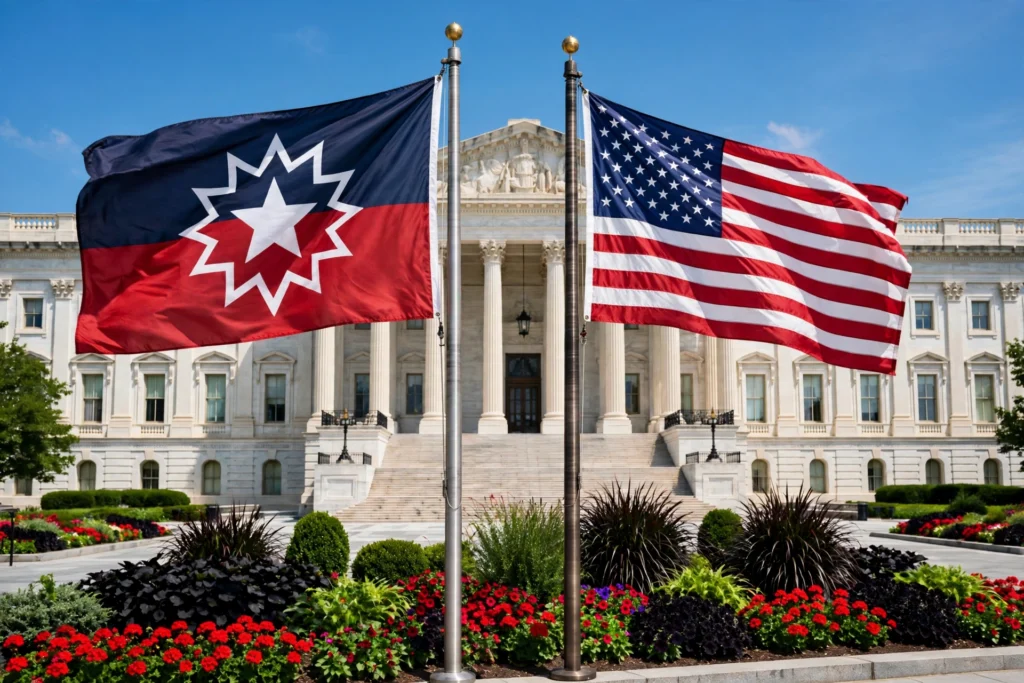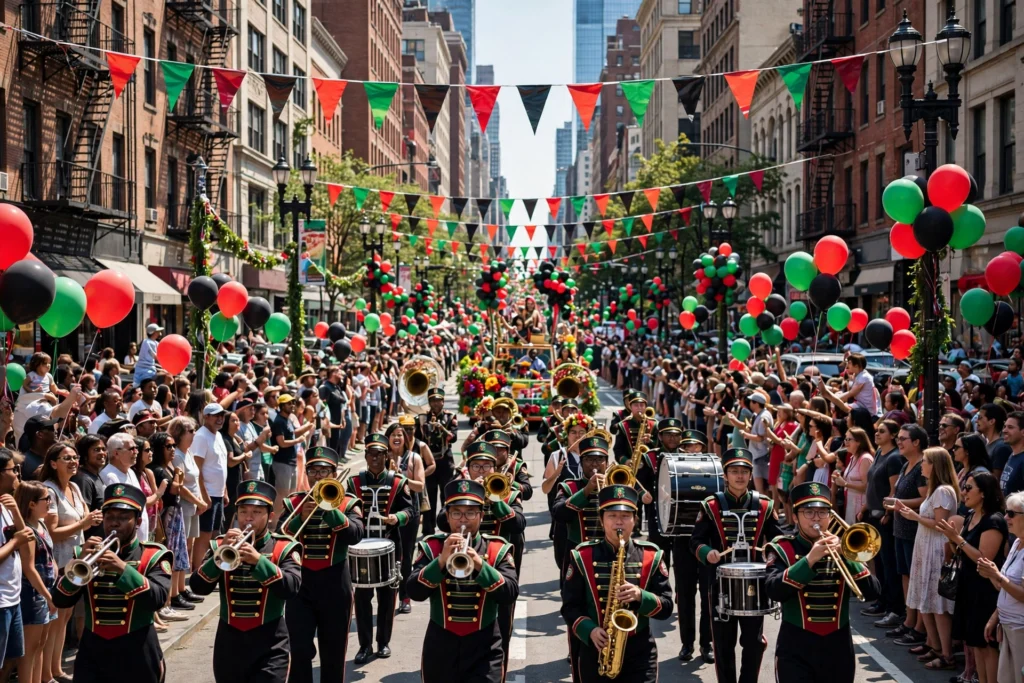
Juneteenth vs July 4th is a comparison every American should understand: two independence days, two very different stories. July 4th marks 1776, when the colonies declared independence from Britain — a freedom that did not extend to enslaved Black people. Juneteenth marks June 19, 1865, when the last enslaved Americans in Texas finally learned they were free — nearly 90 years later. This guide compares Juneteenth vs July 4th across history, meaning, traditions, food, and observance, and explains why millions of families proudly celebrate both.
Juneteenth vs July 4th at a Glance
| Juneteenth | July 4th (Independence Day) | |
|---|---|---|
| Full name | Juneteenth National Independence Day | Independence Day |
| Date | June 19 | July 4 |
| Year originated | 1865 (first celebrated 1866) | 1776 (first celebrated 1777) |
| What it commemorates | Emancipation reaching the last enslaved people in Texas | Declaration of Independence from Britain |
| Federal holiday since | 2021 | 1870 |
| Traditional colors | Red, black, green (Pan-African) | Red, white, blue |
| Signature foods | Barbecue, soul food, red foods & drinks | Hot dogs, hamburgers, apple pie, BBQ |
| Signature activities | Parades, festivals, cookouts, Emancipation readings | Fireworks, parades, cookouts, concerts |
| 2027 date | Saturday, June 19, 2027 | Sunday, July 4, 2027 (observed Monday, July 5) |
The History: Two Independence Days
July 4, 1776: Freedom Declared — for Some
On July 4, 1776, the Continental Congress adopted the Declaration of Independence, announcing the thirteen colonies’ separation from Great Britain. The document’s soaring language — “all men are created equal” — became America’s founding creed. But the reality was starkly different: the authors themselves enslaved people, and the new nation’s freedom explicitly excluded the roughly 500,000 enslaved Black people living in the colonies. Independence Day celebrated a freedom that was, from the start, incomplete.
June 19, 1865: Freedom Delivered — at Last
Nearly nine decades later, Union General Gordon Granger arrived in Galveston, Texas, and issued General Order No. 3, announcing emancipation to the last enslaved people in the Confederacy — more than two years after the Emancipation Proclamation. Juneteenth marks the moment America’s promise of freedom finally became true for everyone. That is why it is called America’s second independence day: July 4th declared the ideal; Juneteenth delivered it.
Frederick Douglass’s Famous Question
No one captured the tension between the two days better than Frederick Douglass in his 1852 speech “What to the Slave Is the Fourth of July?” Speaking in Rochester, New York, Douglass told his audience: “This Fourth of July is yours, not mine. You may rejoice, I must mourn.” The speech is still read at Juneteenth events today — it is the intellectual bridge between the two holidays, insisting that American freedom be measured by its reach, not just its rhetoric.
Juneteenth vs July 4th: Meaning and Tone
The two holidays feel different because they remember different things:
- July 4th is a national birthday party — patriotic, unifying in intent, focused on the country’s founding and its ideals. Its tone is celebratory and forward-looking.
- Juneteenth is both celebration and commemoration — joyful, but rooted in the memory of slavery and the long struggle for freedom. Its tone blends jubilation with reflection.
Neither tone is “better” — they are complementary halves of the American story. July 4th asks Americans to love their country’s ideals; Juneteenth asks them to confront how long those ideals took to reach everyone, and to celebrate that they finally did.
Traditions Compared: Juneteenth vs July 4th
What They Share
Both holidays run on the same American celebration engine: parades, cookouts, community gatherings, patriotic music, and time with family. Barbecue appears on both tables. Both are summer holidays built for the outdoors. And both have become major retail weekends.
What Sets Them Apart
| Tradition | Juneteenth | July 4th |
|---|---|---|
| Colors | Red, black, green | Red, white, blue |
| Centerpiece spectacle | Parades, concerts, festivals | Fireworks displays |
| Signature drink | Red drinks (hibiscus tea, strawberry soda) | Lemonade, beer, patriotic cocktails |
| Signature dessert | Red velvet cake | Apple pie, flag cakes |
| Ceremonial reading | General Order No. 3 / Emancipation Proclamation | Declaration of Independence |
| Music | Gospel, soul, R&B, hip-hop, jazz | Patriotic marches, pop, country |
| Historical focus | Emancipation and Black American culture | Founding fathers and national unity |
Food Face-Off: The Two Holiday Tables
Both holidays love a grill, but the menus tell different stories. The July 4th table is the all-American cookout canon: hot dogs, hamburgers, corn on the cob, coleslaw, potato salad, watermelon, apple pie, and flag-decorated cakes. The Juneteenth table, detailed in our Juneteenth food traditions guide, centers slow-smoked barbecue (especially brisket), soul food classics (collard greens, black-eyed peas, mac and cheese, fried chicken), and the distinctive red foods and drinks — red velvet cake, strawberry soda, hibiscus tea — that carry the holiday’s symbolism. Overlap dishes (barbecue, watermelon, potato salad) appear at both, but the red tradition is uniquely Juneteenth, and the hot dog is uniquely July 4th.
Where the Traditions Came From
Why Fireworks Belong to July 4th
Fireworks have been part of Independence Day since the very first anniversary in 1777, when Philadelphia marked the occasion with bonfires, bells, and fireworks — John Adams had even predicted “illuminations” in a letter to Abigail. The tradition stuck because fireworks suit July 4th’s theme: a loud, sky-filling celebration of nationhood. Juneteenth, by contrast, developed no fireworks tradition — its first celebrations centered on prayer, speeches, music, and feasting. The absence is meaningful: Juneteenth’s spectacle is the parade and the gathering itself, not pyrotechnics.
Why Parades Belong to Both
Parades are the shared language of the two holidays, but they evolved separately. July 4th parades grew from 19th-century civic pageantry — militia musters, fire companies, and town bands. Juneteenth parades grew from emancipation celebrations — church groups, fraternal organizations, and later marching bands and step teams processing through Black neighborhoods. Watch both in the same summer and you will feel the difference: one performs national unity, the other performs community survival and joy.
The Cookout: America’s Common Ground
The backyard cookout might be the single most American tradition, and it belongs equally to both holidays — with different accents. July 4th codified the burger-and-dog cookout as the national summer ritual. Juneteenth’s cookout tradition is older in its specific form, tracing directly to the communal feasts of 1866 Texas. When you grill on both holidays, you are participating in two lineages of the same ritual — one national, one rooted in emancipation.
The Commercial Side: Juneteenth vs July 4th
Both holidays drive serious commerce, but at different scales and stages of maturity:
- July 4th retail is a mature, massive machine — mattress sales, appliance deals, car promotions, and grocery stock-ups are fixtures of the retail calendar, planned a year in advance.
- Juneteenth retail is younger but growing fast — summer apparel, grills, patio furniture, and electronics sales now anchor the mid-June weekend, with a distinctive emphasis on spotlighting Black-owned brands.
- Travel: July 4th is one of the year’s biggest travel weekends; Juneteenth travel is smaller but surging, concentrated on festival cities.
- Advertising tone: July 4th ads lean patriotic and generic; Juneteenth ads (from responsible brands) lean into heritage, community, and Black-owned business support — though the holiday has also seen its share of tone-deaf commercialization controversies.
How Schools Teach Juneteenth vs July 4th
The educational treatment reveals the holidays’ different places in American life. July 4th gets the full elementary-school treatment: flag crafts, the Founding Fathers, the Declaration, fireworks safety — all before summer break. Juneteenth, falling after dismissal, historically got little classroom time; its 2021 federal recognition is changing that, with late-May and early-June units now common in many districts. The most effective teaching pairs them: July 4th for the founding ideals, Juneteenth for the unfinished work of realizing them. Together they give students a complete story — promise and progress — rather than either alone.
Can You Celebrate Both? Absolutely
This is the most important section for anyone wondering whether Juneteenth vs July 4th is an either/or choice: it is not. Millions of Black American families have celebrated both for generations — Juneteenth as the truer independence day and July 4th as the national holiday — and millions more Americans of all backgrounds now do the same. The holidays fall just two weeks apart, each with its own distinct meaning, food, music, and traditions. Celebrating both is not contradictory; it is the fullest expression of American patriotism — loving the country’s ideals enough to celebrate them twice, once for the promise and once for the delivery.
How Families Do Both
- Juneteenth (June 19): Focus on history and heritage — the cookout with red foods, the parade, the reading, the family stories.
- July 4th (July 4): Focus on the national celebration — fireworks, the all-American cookout, community events.
- Between the two: Many families treat the stretch as a season of American celebration, with each holiday deepening the other.
Federal Holiday Status: Juneteenth vs July 4th
Both are federal holidays, but their histories as such differ enormously. Independence Day became a federal holiday in 1870 — nearly a century after the event it commemorates. Juneteenth became a federal holiday in 2021 — 156 years after the event, and remarkably fast once momentum built. What this means practically: July 4th has 150 years of entrenched observance (everyone knows what is open and closed), while Juneteenth’s federal status is still young — employer adoption, retail traditions, and public awareness are all still growing. For the practical details, see our guides on whether Juneteenth is a federal holiday and what is open and closed on Juneteenth 2027. For July 4th planning, note that July 4, 2027 falls on a Sunday, so the federal observed day is Monday, July 5, 2027.
Planning Both Holidays in 2027: The Calendar
Celebrating both means navigating two holiday weekends two weeks apart. Here is the 2027 lay of the land:
| Date | Day | What |
|---|---|---|
| June 18, 2027 | Friday | Juneteenth observed (federal) — day off for many; travel day for festival-goers |
| June 19, 2027 | Saturday | Juneteenth — parades, festivals, cookouts on the true anniversary |
| June 20, 2027 | Sunday | Juneteenth weekend wind-down; Father’s Day is also June 20, 2027 — double celebration for many families |
| July 3, 2027 | Saturday | Pre-July 4th weekend festivities begin in many towns |
| July 4, 2027 | Sunday | Independence Day — fireworks and celebrations on the day |
| July 5, 2027 | Monday | July 4th observed (federal) — day off; fireworks finales Sunday night |
Note the delightful collision: Father’s Day 2027 falls on Sunday, June 20 — the day after Juneteenth. Families celebrating both get a full weekend trifecta: freedom Friday-to-Saturday, fathers on Sunday. Plan the grill accordingly — it will get a workout.
The Two Holidays Beyond America
How the world sees Juneteenth vs July 4th is revealing. July 4th is globally recognized — U.S. embassies host Independence Day receptions worldwide, and the date is synonymous with America itself. Juneteenth is newer on the world stage but spreading: expatriate communities and cultural organizations now host Juneteenth events in London, Toronto, Paris, and Tokyo, and the holiday resonates with emancipation commemorations across the African diaspora — from Emancipation Day in the Caribbean (August 1) to abolition anniversaries in Brazil and beyond. July 4th exports American patriotism; Juneteenth exports America’s reckoning with freedom — and the world is listening to both.
What the Two Holidays Teach Together
Taught together, Juneteenth vs July 4th offers the most honest civics lesson available: America declared universal ideals in 1776 and took nearly a century — plus a civil war — to begin living up to them. The gap between the two dates is the story of American freedom: declared, delayed, fought for, and finally delivered. Families who discuss both holidays give their children a patriotism with depth — love of country that includes its hardest truths. That is not divisive; it is the opposite. A country confident enough to celebrate both its promise and its progress is a country that understands itself.
Common Myths About Juneteenth vs July 4th
- Myth: Juneteenth is meant to replace July 4th. Reality: Juneteenth complements July 4th. The holidays honor different moments, and celebrating one does not diminish the other.
- Myth: Only Black Americans celebrate Juneteenth. Reality: Juneteenth is a federal holiday for all Americans, and celebrations are open to everyone. Freedom’s story belongs to the whole country.
- Myth: July 4th freed everyone. Reality: The Declaration of Independence changed nothing for enslaved people — that is precisely why Juneteenth exists as a separate commemoration.
- Myth: The two holidays have the same traditions. Reality: They share the cookout-and-parade format but differ in colors, foods, music, ceremonial readings, and meaning.
- Myth: Juneteenth is a new invention. Reality: It has been celebrated continuously since 1866 — over 160 years. Only its federal recognition (2021) is new.
Frequently Asked Questions: Juneteenth vs July 4th
Is Juneteenth the Black Fourth of July?
Some call it that affectionately, but most celebrants prefer “America’s second independence day” — Juneteenth is not a replacement for July 4th but a companion to it, commemorating when freedom became real for everyone.
Do you celebrate Juneteenth instead of July 4th?
You do not have to choose — most families celebrate both. They are two weeks apart, each with distinct meaning, food, and traditions.
Which came first, Juneteenth or July 4th?
July 4th by 89 years: Independence Day commemorates 1776; Juneteenth commemorates 1865.
Why is Juneteenth called the second independence day?
Because July 4, 1776 declared independence that excluded enslaved people, while June 19, 1865 marks when emancipation finally reached the last enslaved Americans — completing the promise.
Are the colors different for Juneteenth and July 4th?
Yes — and mixing them up is the most common mistake. Juneteenth uses red, black, and green (Pan-African colors); July 4th uses red, white, and blue.
Is Juneteenth a federal holiday like July 4th?
Yes. Both are federal holidays. July 4th has been one since 1870; Juneteenth since 2021. See our federal holiday guide for details.
Which holiday has bigger celebrations?
July 4th is far larger overall — a 250-year-old national holiday with fireworks in every town. Juneteenth celebrations are smaller in total scale but intensely vibrant, and growing fast, especially in cities with deep traditions like Houston, Atlanta, and Galveston.
Do other countries have two independence days like this?
Several nations mark both a declaration and a later emancipation or liberation — Haiti, for example, celebrates both its 1804 independence and its revolutionary heritage distinctly. America’s pairing is unusual in keeping both as joyous national holidays two weeks apart.
What did Frederick Douglass say about the Fourth of July?
In his 1852 speech “What to the Slave Is the Fourth of July?”, Douglass declared: “This Fourth of July is yours, not mine. You may rejoice, I must mourn” — a searing reminder that American freedom was incomplete, and a text still read at Juneteenth events.
The Bottom Line on Juneteenth vs July 4th
July 4th is the birthday of American ideals; Juneteenth is the birthday of American freedom made real. One declared that all men are created equal, the other marks the day that promise finally included everyone. Celebrate the first with fireworks, the second with jubilee — and understand that together, they tell the truest story America has: that freedom is not a moment but a movement, still marching forward every June and July.
Explore both holidays further in our holiday guides — from what Juneteenth is to Thanksgiving and Columbus Day planning.