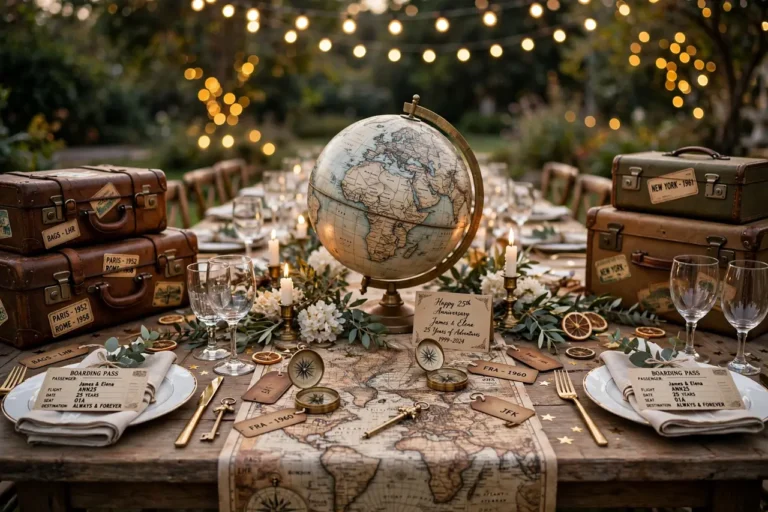
Every couple has an origin story — the tale of how two strangers became an “us.” It gets told at dinner parties, to new friends, to children who ask with wide eyes. And once a year, on the anniversary of the day it happened, that story deserves more than a retelling. It deserves a celebration. These “how we met” anniversary celebration ideas are all built around a single conviction: your origin story is the most valuable thing you own together, and honoring it deliberately is one of the most romantic things you can do.
Inside: creative ways to retell the story, story-themed parties, keepsakes built from your beginning, an anniversary interview with questions that go deep, honest guidance for complicated origin stories, and a year-by-year archive system that turns your history into a legacy. Whether your meeting was a fairy tale, a comedy of errors, or something in between, there is a celebration here worthy of it.
Your Origin Story Is Your Greatest Asset
Think about what your “how we met” story actually does. It is your couple’s founding myth — the narrative that explains, to yourselves and to others, why you are together. Every retelling is a small renewal of the bond, a reminder that out of all the possible lives you could have lived, this is the one that happened — and you would choose it again.
Founding myths matter enormously: they give the relationship an identity, a sense of destiny, a shared text you both know by heart. Couples with a strong, oft-told origin story report higher relationship satisfaction, and it is not hard to see why. The story is proof — retold regularly — that something remarkable happened, and that you both chose to keep it happening.
The anniversary of the meeting is the story’s annual festival. Like all festivals, it does three jobs: it commemorates (we remember what happened), it renews (we choose it again), and it transmits (we tell it to others, or to our future selves). A celebration built around the story performs all three at once. That is why story-centered anniversaries feel so much more meaningful than generic date nights — they are not just enjoyable; they are load-bearing. They hold up the identity of the relationship.
So treat the story as the guest of honor. Everything in this guide — the retellings, the parties, the keepsakes, the interviews — is a different way of putting the story at the center of the day and saying: this happened, it mattered, and we are still writing it.
Creative Ways to Retell How You Met
You have told the story a hundred times. This year, tell it differently:
The dual narration. Each of you tells the story from your own perspective, alternating paragraph by paragraph. The discrepancies — what each of you noticed, remembered, and completely invented — are comedy gold and genuine revelation. Record it; the dual version becomes the canonical one.
The dramatic reenactment. Act it out, badly and joyfully. Props from around the house, exaggerated impressions of yourselves and the witnesses, full commitment to the bit. The worse the acting, the better the evening. Invite the friend who introduced you to play themselves.
The illustrated edition. Draw it — stick figures encouraged — as a comic strip, one panel per beat. You do not need artistic skill; you need enthusiasm. The crude drawings of your pivotal moments will be funnier and more touching than any polished version.
The news report. One of you plays the anchor, the other the field reporter, delivering the meeting as breaking news: “We go live to the scene where two strangers just made eye contact over the guacamole.” Absurd, delightful, and weirdly moving when the “report” reaches the part where it all worked out.
The children’s book version. Write and illustrate (badly) a picture book of your meeting, as if explaining it to a five-year-old. Simple language forces you to the emotional core: “And then they talked, and they laughed, and they didn’t want to stop.” Couples who do this often find themselves unexpectedly emotional — simplicity strips the story to its truth.
The timeline wall. Map the story physically: a long strip of paper along the wall with every beat marked — the almost-miss, the first words, the turning point, the goodbye that wasn’t. Walk it together, adding details as you go. The spatial format makes the story feel epic, which it is.
Story-Themed Parties: Sharing the Legend
On milestone years, open the celebration to witnesses. A “how we met” themed party is part anniversary, part theater, and entirely memorable:
- The recreation party. Decorate the venue like the place you met — the coffee shop, the bar, the campus quad, rendered in party form. Dress code: what everyone wore back then (or their best guess). The guests arrive inside your origin story.
- The roast of the beginning. A lighthearted roast where friends who witnessed the early days tell their versions — the embarrassing, the unflattering, the hilarious. Emcee it yourselves; the couple roasts each other last. Laughter is the tribute.
- The documentary screening. Compile the evidence — photos, messages, videos, witness interviews recorded in advance — into a short film. Premiere it at the party. There will not be a dry eye among people who love you, and you will watch it every year after.
- The quiz night. Guests compete on how well they know your story: the date, the place, the first words, the near-miss. The couple is the answer key and the judges. Competitive, hilarious, and a genuine honor — people love proving they know your legend.
- The vow-adjacent toast. End the party with the story told once, properly, by both of you together — then the fixed toast. Guests witness the myth being renewed. This is the moment the party becomes a ceremony.
Keep the guest list to people who are actually part of the story’s extended universe — the introducers, the early witnesses, the friends who heard every update. Intimacy of the guest list matters more than its size; ten people who were there beat fifty who were not.

Turning “How We Met” Into Keepsakes
Stories fade; objects endure. Each anniversary, convert a piece of the story into something you can hold:
| Keepsake | Effort | Cost | Lasts |
|---|---|---|---|
| Illustrated storybook of the meeting | High | $15–$40 | Forever — becomes a family heirloom |
| Framed first messages (printed and mounted) | Low | $10–$25 | Decades |
| Star map of the night you met | Low | $15–$30 | Decades |
| Custom map marking the meeting spot | Low–Medium | $20–$50 | Decades |
| Recorded oral history (audio/video) | Medium | $0 | Forever — the most precious format |
| Shadow box of artifacts (tickets, stubs, trinkets) | Medium | $15–$35 | Decades |
| “How we met” custom song or poem | High | $0–$200 | Forever |
| Annual photo book (grows each year) | Medium yearly | $30–$60/yr | Compounds — the ultimate archive |
The recorded oral history deserves special emphasis: it is free, it takes an hour, and it is the keepsake your descendants will treasure most. Sit down together, press record, and tell the whole story — the details, the digressions, the laughter. Voices age; recordings do not. Do this every few years and you will have a multi-decade documentary of your own legend, narrated by its protagonists.
The annual photo book is the keepsake with the highest compounding value. Start this year with the story’s beginning and this anniversary; each year, add the new chapter. In a decade you will hold a published-feeling volume titled, in effect, “us.” Our couples’ photo ideas will help you capture anniversary-worthy shots worth printing, and our morning photo ideas adapt beautifully to slow anniversary mornings.
The Anniversary Interview: Questions That Go Deep
Once a year, interview each other about the story. Not the facts — the feelings underneath them. These questions are designed to surface what the years have taught you:
- What is your earliest memory of me — not the meeting itself, but the first impression before we spoke?
- What did you tell your friends about me after we first met, in your own words?
- When did “this might be something” become “this is something”? Was there a moment?
- What almost went wrong in the beginning that I have never fully appreciated?
- What is something you believed about me early on that turned out to be completely wrong?
- What is something you believed about me early on that turned out to be completely right?
- If you could give your pre-meeting self one sentence of advice, what would it be?
- What part of our story do you hope we never stop telling?
- What do you think our story will look like to us in ten more years?
- What are you most grateful for about the accident of our meeting?
Ask these over the anniversary dinner, one at a time, with no rush. Write down the answers — or better, record them. The interview is a ritual that deepens with repetition: the answers change as you change, and comparing year one’s answers to year ten’s is a profound experience. This is the cheapest, deepest anniversary tradition in this entire guide.
When Your “How We Met” Story Is Complicated
Not every origin story is a fairy tale. Some couples met during hard times, in messy circumstances, through endings rather than beginnings — the rebound, the workplace complication, the friendship that crossed a line, the meeting shadowed by grief or upheaval. If that is your story, the anniversary can feel tender rather than triumphant. Celebrate it anyway — honestly.
Own the complexity. The sanitized version of a messy story feels false, and falsehood is the enemy of intimacy. You do not need to perform a fairy tale; you need to honor what actually happened, including the hard parts. “We met at the worst time in both our lives, and somehow it was the best thing” is a magnificent anniversary toast — truer and more moving than any gloss.
Separate the meeting from the mess. If the circumstances were difficult but the connection was real, celebrate the connection. The anniversary honors the moment two people recognized each other, not the chaos around it. Focus the rituals on the recognition: the conversation, the laugh, the feeling.
Let the story evolve. Early anniversaries of a complicated meeting might be quiet and private; later ones, with distance and perspective, might become joyful and open. There is no required arc. Let each year’s celebration match what the story feels like now, not what it felt like then.
Write the true version. If you have never written down the real story — the whole thing, honestly — the anniversary is the occasion. Write it for each other, not for an audience. The true version, held between two people, has a power the polished anecdote never will. Some stories are not dinner-party stories; they are better. They are yours.
Building the Archive: Year by Year
The ultimate “how we met” celebration is not a single event but a system — an archive that grows every anniversary and becomes, over decades, one of the most precious objects your family owns. Here is the system:
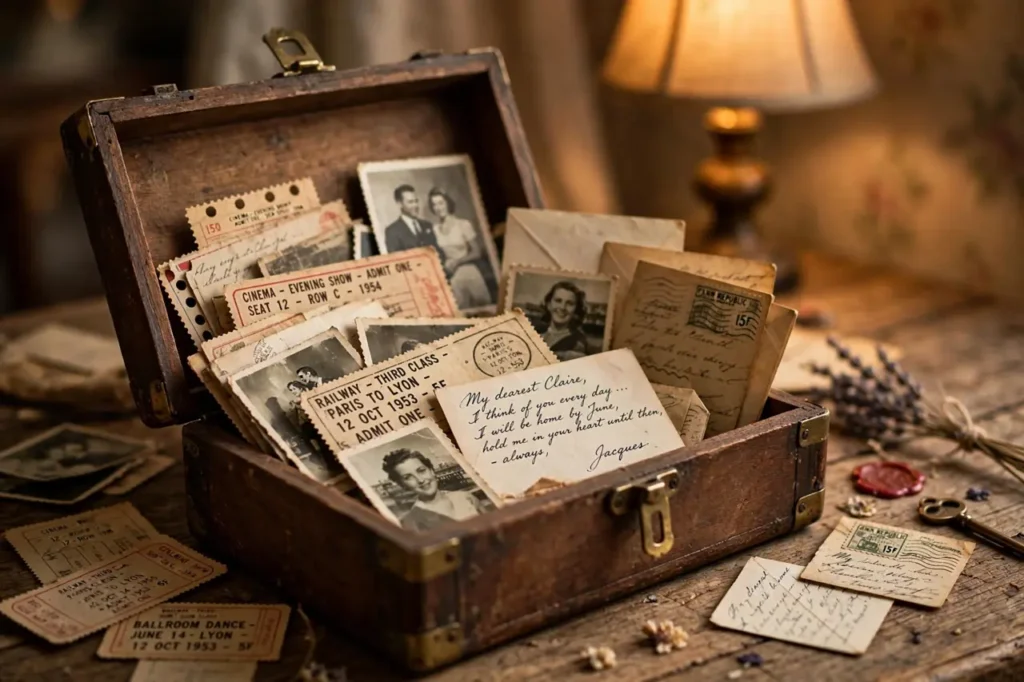
The box. One beautiful box, dedicated to the story. Each anniversary, add: the year’s letter, the annual photo, one object from the celebration, and a one-page “year in review” — three lines each on what happened, what you learned, what you hope.
The digital twin. A shared folder with the same structure: photos, the recorded interview, the playlist, scans of the letters. Physical archives are romantic; digital archives are indestructible. Maintain both.
The annual additions. Every year, without fail: the interview (recorded), the photo (same pose), the letter (sealed for next year), the object (one thing from the celebration). Four additions, twenty minutes of effort, compounding forever.
The milestone compilations. Every five years, compile: the best photos printed as a book, the interviews edited into a single film, the letters bound. The five-year compilations become the family editions — the versions shown at parties, given to children, treasured by everyone who loves you.
Start this year. The box, the folder, the four additions. In twenty years, you will open a box containing two decades of your own love story, told by its protagonists in real time — and you will understand, viscerally, why you bothered. Archives are love letters to the future. This one is addressed to you.
For the words that go into the archive — the letters, the cards, the captions — our guide to what to write in an anniversary card has message frameworks that adapt perfectly to meeting anniversaries; swap the wedding details for your origin details and every template fits.
The “How We Met” Dinner Party: A Complete Hosting Guide
If you are opening the celebration to witnesses this year, here is the full hosting playbook — tested by couples who have thrown legendary origin-story parties:
The guest list. Ten to twenty people maximum: the introducers, the early witnesses, the friends who got the play-by-play. Send invitations that set the theme: “You were there at the beginning (or heard about it within hours). Come celebrate the anniversary of the day it started.” The invitation itself tells guests their role: witnesses, not audience.
The decor. The timeline wall is non-negotiable — a long paper strip with the story’s beats, photos, and artifacts. Add the photo garland, the “then and now” display, and table tents with quiz questions about the story (answers revealed during toasts). The decor should make guests feel they have walked into your history.
The program. Every great party has a rhythm. Ours: arrival drinks and timeline browsing (30 min), dinner with the story told in courses — each course introduced by one chapter of the meeting (60–90 min), the witness toasts and roast (30 min), the quiz with prizes (20 min), and the closing: the couple’s joint retelling plus the fixed toast, everyone raising a glass. Two and a half hours, structured but breathing.
The food. Theme it to the story: the cuisine of the place you met, the dish from the first date, the dessert from the era. Label each dish with its story connection (“The tacos — gas station, midnight, first date”). Food with footnotes is catnip for guests.
The favor. Send guests home with a piece of the legend: a printed copy of the story (the illustrated edition if you made one), a photo from the night, a small token from the theme. Favors turn attendees into carriers of the myth — they will retell your story at their own tables, which is exactly how legends grow.
Adapting the Celebration as the Years Pass
The “how we met” anniversary is a decades-long project, and the right celebration changes as the story lengthens:
Years 1–5: the documentation era. Your job is capture. Record everything, photograph everything, write everything down — the details are freshest now and will never be this vivid again. Celebrations in this era should be heavy on documentation: the interviews, the recordings, the first archive box. Future you is depending on present you.
Years 5–15: the tradition era. The rituals founded early are now load-bearing: the annual photo series is becoming impressive, the interview archive is becoming deep, the letters are becoming a collection. Celebrations in this era refine and repeat — same rituals, deepening meaning. This is when the anniversary starts feeling like an institution.
Years 15–30: the legacy era. The story now belongs to more than the two of you — children, close friends, maybe grandchildren know it by heart. Celebrations in this era transmit: the documentary screening, the story told at the family table, the archive shared. You are no longer just celebrating a meeting; you are curating a legacy.
Years 30+: the monument era. The compiled archive — the books, the films, the box of decades — becomes a family treasure. Celebrations in this era are reunions around the story: the retelling with everyone who knows it, the toast with the fixed words that now catch three generations’ throats. The meeting, decades past, is still doing its work: gathering the people it made possible.
Whatever era you are in, the principle is constant: honor the story at the scale the year allows, document relentlessly, and never skip the rituals. The story is the longest project you will ever work on together. Celebrate it like one.
Watch: Ten Years Since the Day We Met
There is no better illustration of this guide’s thesis than a couple marking a full decade since the day they met. This anniversary film — ten years to the day since their “encuentro” — is a quiet, joyful testament to what annual honoring of an origin story looks like: the ritual kept, the story alive, the love visibly deeper for the remembering.
Watch it with your partner and notice what it does to you both: the instinct to turn to each other, to compare notes, to start telling your own version. That instinct is the whole point. Feed it.
Frequently Asked Questions
How do you celebrate a “how we met” anniversary?
Center the origin story: retell it creatively (dual narration, reenactment, illustrated edition), revisit the place or its spirit, build or add to a keepsake, conduct the annual interview, and close with a fixed ritual. The celebration’s job is to commemorate, renew, and transmit the story — every element should serve at least one of those three.
What is a good way to tell our “how we met” story at our anniversary?
The dual narration — alternating perspectives, recorded — is the gold standard: it captures both versions, the discrepancies become comedy and revelation, and the recording becomes a keepsake. For parties, the documentary screening (compiled photos, messages, witness interviews) is unmatched.
Should we include friends in our “how we met” anniversary?
On milestones, yes — the witnesses love it, and their versions add texture you have forgotten. Keep the core rituals private and add a witnesses’ chapter around them: the matchmaker’s drink, the story dinner, the quiz night. Intimacy of guest list beats size; invite the people who are actually in the story’s universe.
How do we preserve our “how we met” story?
The archive system above: one box plus one digital folder, four annual additions (recorded interview, annual photo, sealed letter, one object), five-year compilations. Start this year. The system takes twenty minutes per anniversary and produces, over decades, a family treasure.
What if we do not remember exactly how we met?
You remember more together than either of you does alone — interview each other, consult witnesses, check old messages and photos. Whatever remains unknown becomes part of the legend: the disputed details (“you say the blue shirt, I say the green”) are often the most beloved parts of the story. Embrace the gaps; mythology needs a little mystery.
Our “how we met” story is embarrassing. Should we still celebrate it?
Especially then. The embarrassing beginning, survived and transmuted into love, is a better story than the perfect one — it has comedy, humility, and the unmistakable ring of truth. The loving roast is your format: exaggerate, laugh, and let the underlying message (“we chose each other anyway”) shine through.
How do we celebrate if our meeting story involves a difficult time?
Honestly and privately: own the complexity, celebrate the connection rather than the circumstances, let the tone evolve year by year, and write the true version for each other. Not every anniversary needs to be triumphant; some years the most meaningful celebration is the quiet acknowledgment of what you survived together.
What questions should we ask each other on our anniversary?
The ten interview questions above — earliest memory, the friends’ version, the turning point, the near-miss, what proved wrong and right, advice to your past self, the part to never stop telling, the ten-year view, the gratitude. One per course of dinner, no rush, answers recorded.
How do we make the story interesting for our kids?
Tell the age-appropriate adventure version: the quest, the near-miss, the funny bits, the happy ending. Kids love origin stories — it is their origin story too. The children’s-book version you make for the anniversary doubles as the version you tell them. Let them ask questions; their questions will show you parts of the story you had forgotten mattered.
What is the best keepsake from a “how we met” anniversary?
The recorded oral history — free, irreplaceable, and the keepsake future generations will treasure most. Second place: the growing annual photo book. Both compound in value every year, and both capture what objects cannot: your voices, your laughter, the story in your own words.
The Story Continues — Make Sure It Is Told
Your “how we met” story is not just a anecdote; it is the founding document of everything you have built together. Celebrating it once a year — retelling it, recording it, adding to the archive, toasting it with the fixed words — is how you keep it alive, and how you keep yourselves connected to the wonder of the beginning. So tell it again this year, differently and deliberately. Record it. Seal the letter. Take the photo. Gather the witnesses when the year calls for it, and keep the quiet rituals when it does not. And then turn to each other and say what the story has always meant: of all the strangers in all the world, you walked into mine. Happy anniversary.