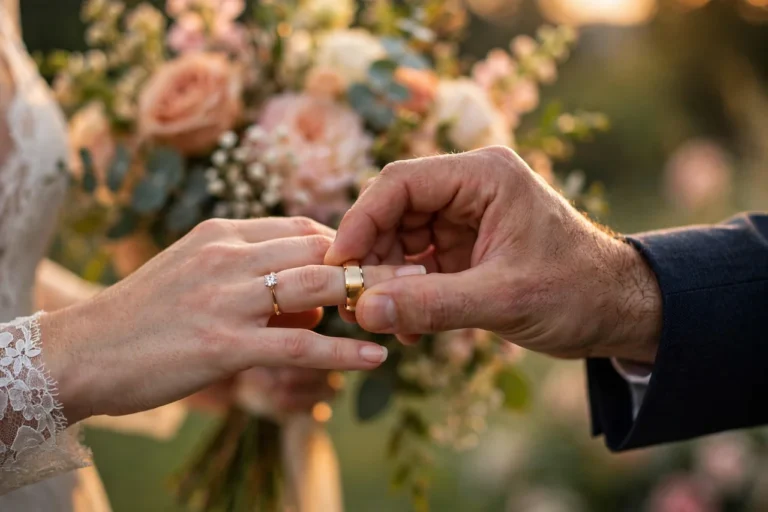
Planning a vow renewal ceremony is one of life’s happiest projects — and one of the least documented. Weddings have a thousand guides; renewals have folklore. Should there be an officiant? A processional? Rings? Who stands where, who speaks when, and how do you keep fifteen minutes of ceremony from feeling either rushed or endless? This guide answers all of it: how to plan a vow renewal ceremony in twelve clear steps, from the first conversation to the final kiss.
The liberating truth about vow renewals: there are no legal requirements and almost no traditional ones. No license, no mandated officiant, no required wording. That freedom is the point — your ceremony can be exactly as formal or informal, religious or secular, tiny or grand as your marriage warrants. But freedom without a framework is paralysis, so consider this your framework: the decisions that matter, the order to make them in, and the details that separate a moving ceremony from an awkward one.
Step 0: Start With the “Why”
Before booking anything, have the conversation: why are we renewing our vows? The answer shapes every subsequent decision. Common reasons include milestone anniversaries (10th, 25th, 50th), surviving a hard chapter (illness, separation, loss), including children who were not born yet at the wedding, having the celebration you could not afford the first time, or simply wanting to say the words again with the weight of experience behind them.
Write the “why” down in a sentence. “We want our kids to witness our commitment.” “We want the wedding we could not afford at 24.” That sentence becomes your planning compass — when you are torn between options, choose the one that serves the why. A couple renewing after a health scare needs intimacy and gratitude, not a 200-person gala. A couple finally throwing their dream wedding needs the works. The why keeps you honest.
The 12 Steps to Planning Your Vow Renewal Ceremony
Step 1: Choose Your Ceremony Style (Month 6)
Renewals fall into four broad styles. Pick the one that matches your why: Intimate (just the two of you, or under 10 guests — private, emotional, minimal logistics); Family (10–40 guests, usually family-centered, often at home or a meaningful location); Celebration (40–100 guests with a party afterward — the classic renewal); or Grand (100+ guests, formal, the full production). There is no hierarchy — a living-room renewal can be more moving than a ballroom one. What matters is fit.
Step 2: Set the Date (Month 6)
Options: your actual anniversary date (most meaningful, but check the day of the week), the nearest Saturday (most practical for guests), or a meaningful season. Consider guest travel, venue availability, and weather for outdoor ceremonies. Unlike weddings, you do not need a year of lead time — but popular venues still book 6+ months out for Saturdays. Once set, treat the date as fixed; moving it confuses guests and vendors alike.
Step 3: Set the Budget (Month 6)
Decide the total first, then allocate. A useful starting split for a mid-size renewal: venue 20%, photography/videography 20%, food and drink 30%, decor and flowers 10%, attire 8%, music 7%, officiant and misc 5%. Adjust to your priorities — photographers will tell you to protect their line item, and they are usually right. Write the budget down and track spending against it; renewal budgets drift upward just like wedding budgets do.
Step 4: Choose the Location (Month 5)
The venue sets the ceremony’s entire tone. Meaningful options: your home or backyard (intimate, personal, free), the place you married (powerful symmetry — check it still exists and hosts events), a house of worship (for faith-centered renewals), a garden or park (natural beauty, low decor costs), a beach (romantic, but plan for wind, sand, and permits), a restaurant private room (ceremony-to-dinner simplicity), or a destination (combine with travel). Visit at the same time of day as your planned ceremony to check light, noise, and parking.
Step 5: Book Key Vendors (Month 5)
Book in this order: photographer (the best ones go first), venue (if not secured), officiant, caterer or restaurant, then music and florals. For each vendor, confirm: date, arrival time, hours of coverage, total cost including fees, and cancellation terms — in writing. A vow renewal has no wedding planner by default; you are the general contractor, so written confirmations are your project management.
Step 6: Design the Ceremony (Month 4)
This is the creative heart of the planning. Decide the ceremony’s arc: processional, welcome, readings or rituals, vows, ring exchange or blessing, pronouncement, recessional. Choose your rituals (unity candle, sand ceremony, handfasting, wine box — pick one, not three), your readings (poems, scripture, or personal reflections), and your music (processional, ceremony underscoring, recessional). Write the first draft of your vows now — they take longer than you think and benefit from revision time. For wording inspiration, see our wedding vow examples for him and adapt the tense from promise to testimony.
Step 7: Choose the Officiant (Month 4)
Anyone can officiate a vow renewal — there is no legal requirement. Options: a friend or family member (most personal; they know your story), your original wedding officiant (beautiful continuity, if available), a religious leader (for faith-centered ceremonies), or a professional celebrant (polished, experienced, worth the fee for larger events). Brief your officiant on your story, your desired tone (solemn? joyful? humorous?), and the full script at least a month out. A good officiant rehearses; a great one personalizes.
Step 8: Plan the Guest Experience (Month 3)
Think through the ceremony from a guest’s perspective: Where do they park? Where do they sit? Can they hear? (Outdoor ceremonies need microphones — always.) Is there shade and water? What happens before the ceremony starts (music? a welcome drink?) and what is the transition afterward? Assign an usher or two for larger ceremonies. Print a simple program — it answers guests’ questions (“who is that speaking?”) and becomes a keepsake.
Step 9: Handle Attire, Rings & Details (Month 2)
Attire: wear what makes you feel celebrated — there are no renewal dress codes. Many couples coordinate colors without matching exactly. Rings: decide whether to re-exchange originals, bless new bands, or add an eternity ring; have them cleaned and sized now. Details: order or DIY decor, finalize flowers, confirm the cake, build the day-of timeline, and assemble an emergency kit (sewing kit, stain remover, tissues, medications, phone chargers, cash tips for vendors).
Step 10: Write Final Vows & Confirm Everything (Month 1)
Finalize your vows — read them aloud, time them (aim for 1–2 minutes each), and print clean copies in large type for the ceremony (do not read from a phone; it photographs badly and screens die). Confirm every vendor in writing: date, time, location, headcount, and balance due. Share the day-of timeline with all vendors and helpers. Chase final RSVPs and build the seating or processional plan.
Step 11: Rehearse (Week Of)
Walk through the ceremony physically: where everyone stands, the processional path, where the officiant faces, when the music starts and stops, where the photographer positions. A 20-minute rehearsal prevents 90 percent of ceremony-day awkwardness. Test the sound system at full volume in the actual space. Confirm the marriage of logistics: who holds the rings, who cues the music, who wrangles family for photos afterward.
Step 12: Be Present (Day Of)
Eat breakfast. Drink water. Arrive early enough to breathe. Then let go — you planned well, your vendors are confirmed, your helpers know their jobs. Your only task on the day is to be fully present: look at your partner during the vows, actually listen to the words, let yourself feel it. Couples who stay present consistently describe their renewal as a peak life experience; couples who spend it managing logistics describe a blur. Assign a day-of point person and then stop managing.
Key Decisions at a Glance
| Decision | Options | Our Guidance |
|---|---|---|
| Officiant | Friend/family, original officiant, clergy, professional celebrant | Choose the person who knows your story best; brief them thoroughly |
| Vows | Repeat originals, write new ones, or blend both | New vows (or blended) — the decade(s) since are your best material |
| Rings | Re-exchange originals, new bands, eternity ring, or no rings | Any option works; decide by month 2 and have rings serviced |
| Processional | Walk together, escorted by children, traditional separate entrance | Walking together symbolizes the journey; children escorting is unforgettable |
| Religious elements | Full faith service, blessing, secular ceremony | Match your actual practice — authenticity over performance |
| Photography | Professional, friend with a good camera, phones only | Hire a professional if budget allows; this is family history |
| Guest count | 2 to 200+ | Invite the people who are part of your marriage story |
| Party after | Full reception, dinner, cake-and-champagne, or nothing | At least share a meal — celebrations need a communal exhale |
Planning Timeline: 6-Month Checklist
| When | Focus | Key Deliverables |
|---|---|---|
| 6 months out | Vision | Style, date, budget, and guest count decided |
| 5 months out | Vendors | Venue, photographer, officiant, caterer booked |
| 4 months out | Ceremony | Script drafted, rituals chosen, vows started, officiant briefed |
| 3 months out | Guests | Invitations sent; guest logistics planned; programs designed |
| 2 months out | Details | Attire, rings, decor, flowers, music, timeline finalized |
| 1 month out | Confirmations | Vows finalized; all vendors confirmed in writing; RSVPs closed |
| 1 week out | Rehearsal | Walkthrough done; emergency kit packed; helpers confirmed |
| Day of | Presence | Show up, breathe, and be fully in the moment |
For budget-specific strategies at every tier, our wedding day celebration ideas on a budget guide translates directly to renewals.
Watch: A Complete Vow Renewal Ceremony Script
Before you design your ceremony, watch a professional walk through a full sample script — invocation, reflection on the marriage, vow exchange, blessing, and pronouncement. It is the fastest way to understand the ceremony’s architecture:
Use this as a skeleton, not a script — replace every generic line with your specifics. The structure is universal; the words must be yours.
Building Your Ceremony Script
A vow renewal ceremony typically runs 15–25 minutes. Here is the proven architecture, with timing:
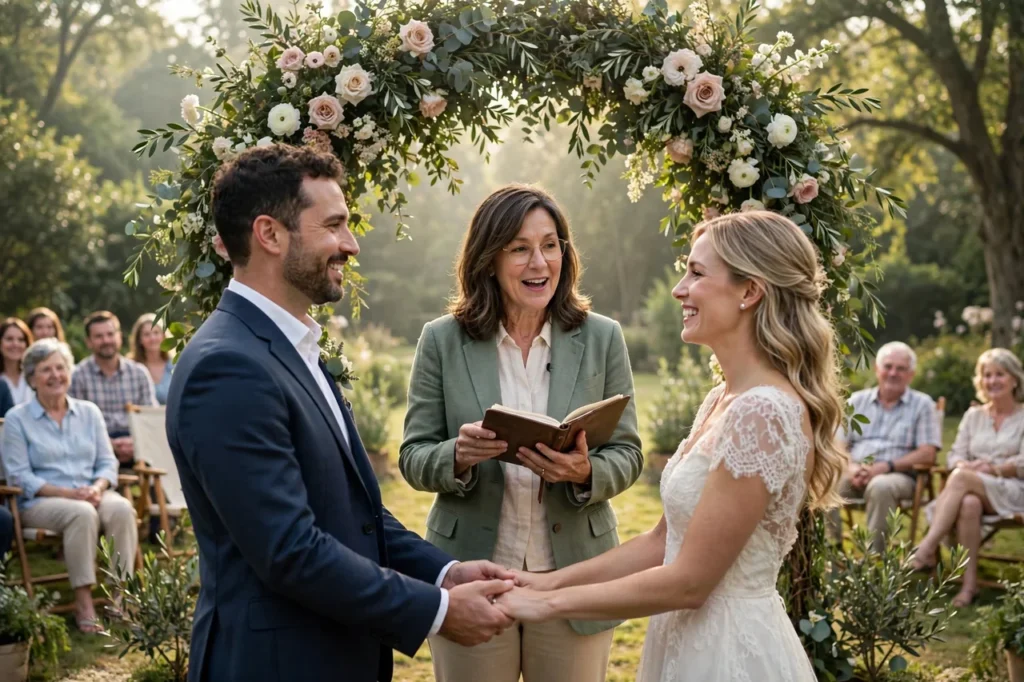
- Processional (3–5 min): The entrance. Walk together, be escorted by your children, or make separate entrances. Music matters — choose something meaningful, not just pretty.
- Welcome & framing (2–3 min): The officiant tells the room why you are here: how long you have been married, what you have built, what today means. This orients guests emotionally.
- Readings or reflections (3–5 min): A poem, a scripture, a friend’s brief reflection, or a child’s reading. One or two pieces maximum — this is seasoning, not the meal.
- Unity ritual (2–3 min, optional): Sand ceremony, handfasting, unity candle, wine box. Choose one that resonates; skip it entirely if none do. Forced rituals feel forced.
- The vows (4–6 min): The heart. Each partner speaks 1–2 minutes. Structure: then (a vivid early memory), now (what a decade+ taught you about your partner), always (one concrete promise for the future).
- Ring exchange or blessing (2 min): Re-exchange, bless new rings, or simply hold hands during a blessing. Keep it simple and sincere.
- Pronouncement & kiss (1–2 min): The officiant pronounces you “still married” (humor welcome), you kiss, the room erupts.
- Recessional (2–3 min): Exit to joyful music — confetti, petals, bubbles, or applause.
For visual planning — where everyone stands, the key photo moments — see our wedding day photo ideas for couples and wedding day decoration ideas guides.

7 Ceremony Planning Mistakes to Avoid
- No microphone outdoors: The single most common renewal regret. Wind, distance, and soft voices mean guests hear nothing. Rent a mic and speaker; test them at the rehearsal.
- Copying your wedding instead of honoring your marriage: The renewal’s power is the years since, not the day itself. Reference your real life relentlessly.
- Too many rituals and readings: Each addition dilutes the vows. One ritual, one or two readings, then the words that matter.
- Vows written the night before: They will sound like it. Start at month 4, revise twice, read aloud.
- Forgetting the marriage license myth: You do not need a license, an ordained officiant, or witnesses for a renewal — it is ceremonial, not legal. Anyone who tells you otherwise is confusing it with a wedding. (This also means anyone can officiate.)
- No day-of point person: Without one, the couple spends the day managing vendors instead of experiencing the ceremony. Assign your most decisive friend.
- Skipping the rehearsal: Fifteen minutes of walkthrough prevents the officiant facing the wrong way, the music mistiming, and the couple not knowing where to stand.
Three Sample Ceremony Scripts (Steal & Adapt)
These are starting skeletons — replace every generic line with your specifics. Each runs about 15–20 minutes with vows included.
The classic script. Officiant: “We are gathered today not to witness a beginning, but to honor a journey. [X] years ago, [Partner A] and [Partner B] promised each other a future. Look around — that future is here, in this room, in the family they built and the friends they kept. Today they renew those promises, not in hope but in knowledge.” Reading: a favorite poem or passage. Vows: each partner speaks. Ring blessing: “These rings have circled your fingers for [X] years. May they circle for all the years to come.” Pronouncement: “I pronounce you husband and wife — still, and more than ever.”
The modern script. Officiant: “No one here needs to be convinced these two belong together — [X] years of evidence settled that. So we will keep this simple: a few words about the journey, their promises to each other, and then we eat.” Reflection: one friend shares a 60-second story about the couple. Vows: each partner speaks, humor welcome. Unity moment: the couple blends two wines and drinks, or ties a fisherman’s knot together. Pronouncement: “By the power vested in me by your children and this group chat, I pronounce you still married. Kiss already.”
The family script (with kids). Officiant (often an adult child or close friend): “We’re here because two people kept a promise long enough to create all of us.” Children’s reading: each child reads one line about what the marriage taught them. Vows: the couple speaks to each other, then turns to the children: “And we promise you — the family continues.” Ring warming: the rings pass through every guest’s hands for silent blessings before the exchange. Pronouncement: a grandchild (or the youngest present) announces, “I now pronounce you Grandma and Grandpa — still married!”
Notice what all three share: a framing that honors the years, vows as the centerpiece, one ritual at most, and a pronouncement with personality. The words around the vows should be brief — they are the frame, not the painting.
Vow Renewal Ceremony Music Guide
Music cues the ceremony’s emotions more efficiently than any decor. You need three pieces (or one musician who covers all three):
- Processional: The entrance music — 2–4 minutes. Meaningful beats pretty: your wedding song, “your song” as a couple, or a piece tied to your story. Instrumental versions work beautifully and avoid lyrical distraction during the entrance.
- Ceremony underscoring: Soft instrumental music under readings or the unity ritual — barely audible, purely atmospheric. A solo guitar, piano, or string piece. Many couples skip this; it is optional but lovely.
- Recessional: The exit — joyful, upbeat, celebratory. This is the moment for the song that makes you both grin. The recessional sets the energy for the party, so choose euphoria.
Live vs. recorded: a live musician (guitarist, string duo, pianist) elevates even a backyard ceremony enormously and typically costs $300–$800 for the ceremony hour. If using recordings, assign one tech-savvy person to the playlist with explicit cues (“start track 3 when the officiant nods”) — and test the speaker at full volume in the actual space. Bluetooth dropouts during vows are a special kind of heartbreak; use a wired connection or downloaded files.
One more music note: include your original wedding song somewhere prominent even if it is not the processional. When those first notes play, every guest who attended the wedding will feel the decades collapse — it is the cheapest time machine available.
Working with Vendors: The Renewal Difference
Vendors treat renewals slightly differently than weddings, and knowing how saves money and miscommunication:
- Say “vow renewal” upfront: Some vendors offer renewal-specific packages (shorter coverage, smaller minimums) that cost less than wedding packages. A photographer who charges $3,000 for 8-hour wedding coverage may offer 3-hour renewal coverage for $900 — but only if you ask for renewal terms rather than accepting the wedding brochure.
- Negotiate the minimums: Florists, caterers, and rental companies often have wedding minimums that exceed renewal needs. Ask directly: “We need centerpieces for 8 tables, not 20 — what can you do?” Most will flex; the ones who will not are telling you they are not the right vendor.
- Get everything in writing: Date, arrival and departure times, exactly what is included, total cost with fees and taxes, payment schedule, and cancellation terms. Verbal promises evaporate; emails endure. This applies doubly to friend-vendors doing you a “deal.”
- Feed your vendors: Any vendor working through a meal needs one — photographers, videographers, DJs, coordinators. Many contracts require it. Plan vendor meals into the catering count; it is both contractual and decent.
- Tip thoughtfully: Renewal tipping follows wedding norms: 10–20% for exceptional service from caterers and hair/makeup, flat $50–200 for officiants (many do not expect it but appreciate it), and always a genuine thank-you note. Cash in labeled envelopes, distributed by your day-of point person — not by you, mid-celebration.
Frequently Asked Questions
Do you need an officiant for a vow renewal ceremony?
Legally, no — a vow renewal is purely ceremonial, with no license, paperwork, or legal requirements, so anyone can lead it. Practically, yes: a designated officiant (friend, family member, clergy, or professional) guides the flow, sets the tone, handles surprises, and gives the ceremony structure. Choose someone who knows you as a couple and brief them on your story and desired tone at least a month ahead.
How long should a vow renewal ceremony be?
Fifteen to twenty-five minutes is ideal: processional, welcome, one reading or ritual, personal vows, ring exchange or blessing, pronouncement, recessional. Shorter than 10 minutes can feel abrupt; longer than 30 needs exceptional content to sustain energy. Remember the ceremony is the concentrated emotional core — the celebration afterward is where the event expands.
What is the order of events in a vow renewal ceremony?
The standard order: processional (entrance), welcome and framing by the officiant, readings or reflections, an optional unity ritual, the vow exchange, ring exchange or blessing, pronouncement and kiss, recessional (exit). This mirrors a wedding’s architecture because it works — but every element is optional except the vows themselves. Adapt freely to your style and story.
Do you walk down the aisle at a vow renewal?
Only if you want to. Common approaches: walking in together (symbolizing the journey), being escorted by your children, recreating your original entrance, or simply starting together at the front with no processional at all. There are no rules — the “right” entrance is the one that feels true to your marriage. Many couples find walking in together the most meaningful option.
What should we wear to our vow renewal ceremony?
Whatever makes you feel celebrated. Options range from wedding attire (new or original) to cocktail dress, suits, cultural dress, or casual elegance for beach and backyard ceremonies. Coordinate with each other in formality and palette, dress for the venue and weather, and prioritize feeling like yourselves. There are no renewal dress codes — only the question of what makes you feel amazing.
Do vow renewals require a marriage license?
No. A vow renewal is not a legal proceeding — you are already married. No license, no paperwork, no waiting period, no legal officiant requirements. This is why anyone (a friend, a child, a family member) can officiate, and why the ceremony can happen anywhere, anytime. Do not let anyone tell you otherwise; it is a common confusion with weddings.
How much does it cost to plan a vow renewal ceremony?
The ceremony itself can cost almost nothing (a backyard, a friend officiating, handwritten vows) to several thousand for a formal production. Typical mid-size renewal ceremonies run $2,000–$8,000 all-in including the celebration, with photography and food as the largest line items. Set the total budget first, allocate by priority, and track spending — renewal budgets drift upward without oversight, just like wedding budgets.
When should we start planning our vow renewal?
Six months is comfortable for a mid-size renewal; 3–4 months suffices for intimate ones; destination or large events deserve 9–12 months. The critical path is venue, photographer, and invitations — everything else flexes. Unlike weddings, you are not competing for peak-season venues a year out, but the best photographers still book early.
Can we include our kids in the vow renewal ceremony?
Absolutely — and for many couples, it is the best part. Children can escort you down the aisle, carry rings, scatter petals, give readings, or simply stand with you. Keep roles age-appropriate and brief, rehearse with them once, and have a backup adult for very young children. Their participation turns your milestone into a family memory they will carry forever.
Planning a vow renewal ceremony is really planning a moment of truth — a few minutes where you stand before the people who matter and say what your marriage means, out loud, on purpose. Follow the steps, honor your real story, protect the vows above all else, and let the day be what it is: a celebration of the best decision you ever made, renewed. Here is to the ceremony — and to every year it honors.
The Planning Mindset That Actually Works
Here is the planning mindset that makes a vow renewal joyful instead of stressful: treat it as a celebration of what already exists, not a performance of what should be. Every decision gets easier when you ask, does this reflect us, or does this impress them? The couples who enjoy their renewals most are the ones who cut the guest list ruthlessly, spent the savings on one thing they will feel — the photographer, the meal, the music — and gave themselves permission to skip every tradition that does not fit. Start planning from the vows outward: write those first, and the ceremony, the venue, and the party will organize themselves around the words. And build in one completely unstructured hour — a slow morning, a long dinner, a walk between events. That is when the day actually happens, in the unplanned spaces between the schedule.