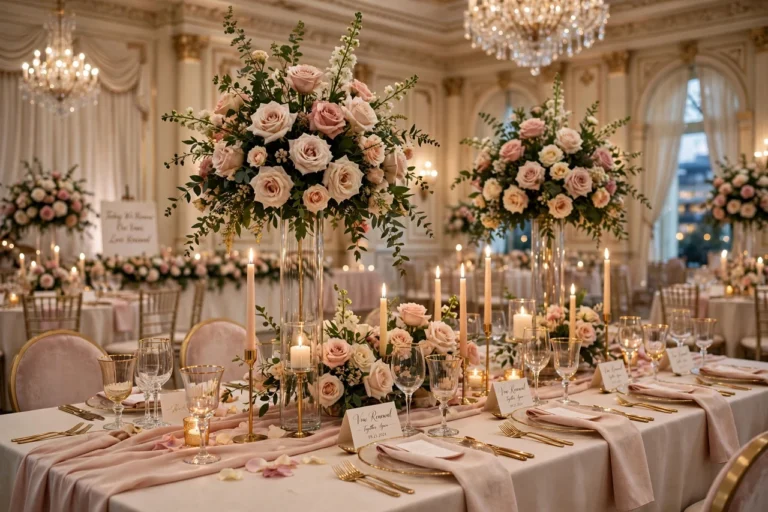
You are planning your vow renewal, the ceremony script is coming together, and then the question surfaces: do you need rings for a vow renewal? Do you exchange new ones? Re-exchange the originals? Skip rings entirely? Jewelers, etiquette experts, and married couples all have opinions — and they do not agree. This guide settles it: the tradition, the seven options couples actually choose, what each costs, and the ceremony wording for every approach.
The short answer: no, you do not need rings for a vow renewal — there is no traditional ring exchange in renewal ceremonies, because the marriage (and its rings) already exists. But most couples choose to include rings in some form, because the ring moment gives the ceremony a physical anchor: something held, exchanged, and seen. What follows is everything you need to decide what is right for your renewal, from keeping your beloved originals to choosing new bands that mark the milestone.
The Short Answer, Expanded
At a wedding, the ring exchange is a legal and symbolic necessity — the rings seal the marriage. At a vow renewal, the marriage is already sealed; the ceremony is commemorative, not constitutive. That is why traditional renewal scripts include no ring exchange at all. The vows themselves are the entire point.
But “not required” and “not worthwhile” are different things. Surveys of renewal couples consistently show that 70–80% include some form of ring moment — re-exchanging originals, blessing new bands, adding an eternity ring, or simply holding hands during a ring blessing. The reasons are emotional, not traditional: the ring exchange is the ceremony’s most tactile moment, the one guests photograph, the one that feels like a wedding. When two people stand before their family to recommit, having something tangible to hold onto steadies the nerves and focuses the meaning — which is why the pattern holds across cultures, budgets, and ceremony styles. If your renewal would feel incomplete without it, include it. If rings were never your thing, skip them without a second thought. Both choices are correct because the only authority here is you.
A Brief History: Rings, Weddings & Renewals
Wedding rings date back millennia — ancient Egyptians exchanged braided reeds, Romans used iron bands, and the modern diamond engagement ring is largely a 20th-century marketing triumph. Through all of it, the ring’s meaning stayed constant: an unbroken circle symbolizing unending commitment, worn on the finger believed (by the Romans, incorrectly but romantically) to contain a vein running directly to the heart.
Vow renewals, by contrast, are a modern invention — popularized in the late 20th century as anniversaries became celebration-worthy milestones. Because renewals borrowed the wedding’s form (ceremony, vows, celebration) without its function (creating a legal marriage), every element became optional — including rings. Early renewal etiquette explicitly stated there was “no exchange of rings,” a rule born less from philosophy than from practicality: the couple already had rings. Over time, couples rebelled against the omission — the ring moment felt too meaningful to skip — and jewelers happily obliged with “anniversary bands” and “renewal rings.” Today’s landscape: no rules, seven good options, and a thriving market in milestone jewelry.
Your 7 Ring Options, Explained
Option 1: Re-Exchange Your Original Rings
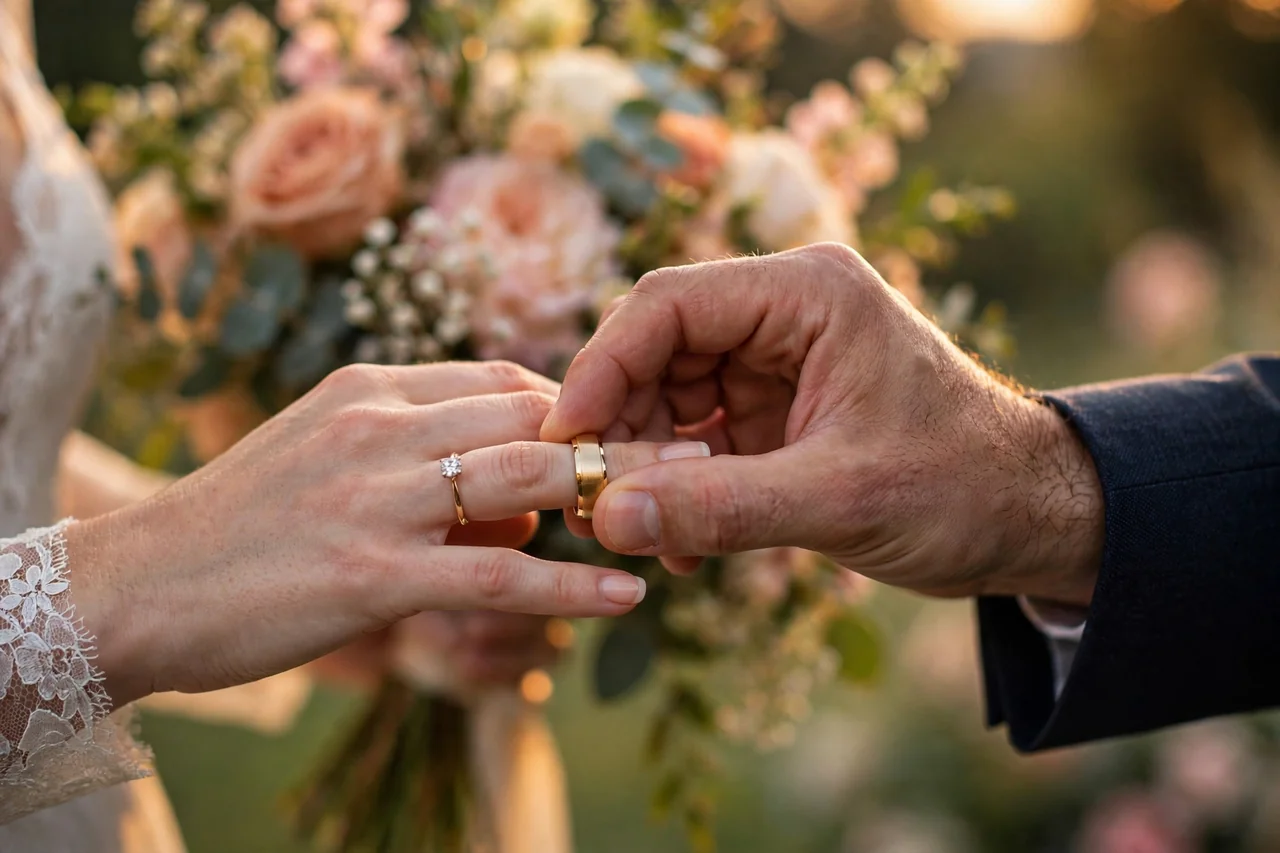
The simplest and most popular choice: during the ceremony, you remove your wedding bands and place them on each other’s fingers again, with new words. The symbolism is perfect — the same rings, carrying every year of the marriage, recommitted. Cost: zero (though many couples have the rings cleaned and re-polished beforehand, $25–$75). Ceremony wording: “[Name], I give you this ring again — the same ring, worn through [X] years — as a sign of my renewed promise.” Best for: couples deeply attached to their originals, which is most couples.
Option 2: Bless the Rings You Are Already Wearing
Even simpler: keep the rings on, and have the officiant bless them in place — sometimes with the couple joining hands over the rings, sometimes with guests’ silent good wishes. No removal, no fumbling, no dropped rings rolling under chairs (it happens more than anyone admits). Best for: intimate ceremonies, nervous couples, and anyone whose rings no longer slide off easily. The blessing can be religious or secular: “May these rings, worn for [X] years, continue to remind you…”
Option 3: Exchange New Wedding Bands
Many couples choose new bands for the renewal — often upgrading from the simple bands of their youth to something that reflects their current taste and means. The originals are kept (worn on the right hand, saved for children, or stored). New bands typically cost $300–$3,000+ depending on metal and design. Best for: milestone anniversaries (10th, 25th, 50th), couples whose style evolved, and anyone whose original bands are worn thin. Tip: engrave the wedding date and the renewal date inside — the two dates tell the whole story.
Option 4: Add an Eternity Ring
The classic anniversary-ring move: an eternity band (diamonds or gemstones circling the entire band) added alongside the original set, usually for the wife but increasingly for both partners. It symbolizes never-ending love and marks the milestone visibly. Cost: $500–$5,000+. Best for: 10th, 20th, and 25th anniversaries especially; couples who want a visible milestone marker. An eternity ring’s unbroken circle of stones is arguably the perfect renewal symbol — it says “forever” in a way words cannot.
Option 5: Upgrade or Restyle the Originals
A middle path: keep the original rings but transform them — reset the diamond in a new setting, add anniversary stones, engrave a message inside, or have a worn band rebuilt with the original gold. You keep the history and gain the freshness. Cost: $200–$2,000 depending on the work. Best for: sentimental couples who want “same but renewed” — the jewelry equivalent of the vow renewal itself. Many jewelers offer “renewal restyling” services; ask specifically.
Option 6: Exchange Something Other Than Rings
Who says it must be rings? Some couples exchange watches, bracelets, necklaces, or meaningful objects — a compass for the journey, a key to the house you built together. Others plant a tree, pour a blended wine, or exchange letters as the ceremony’s tangible moment. Best for: couples who never wore rings, lost the originals, or simply want something personal. The ceremony needs a physical anchor, not specifically a ring — choose the object that anchors your story.
Option 7: Skip the Ring Moment Entirely
Completely valid. Some ceremonies are pure words — vows, readings, a kiss — with no object exchange at all. This suits intimate renewals, couples for whom rings were never central, and ceremonies aiming for simplicity. Best for: minimalists and the already-well-ringed. If you skip it, give the ceremony a different physical beat (a unity ritual, a handfasting, the kiss itself as the climax) so the arc still has a peak.
Comparing Your Options
| Option | Typical Cost | Symbolism | Best Milestone |
|---|---|---|---|
| Re-exchange originals | $0–$75 (cleaning) | Continuity; the same love, renewed | Any |
| Bless in place | $0 | Gratitude; honoring what is | Intimate renewals |
| New bands | $300–$3,000+ | Growth; the marriage today | 10th, 25th, 50th |
| Eternity ring | $500–$5,000+ | Forever; milestone marked visibly | 10th, 20th, 25th |
| Restyle originals | $200–$2,000 | Renewal itself; same but new | Any milestone |
| Alternative object | Varies | Personal story | Any |
| Skip entirely | $0 | Words are enough | Intimate renewals |
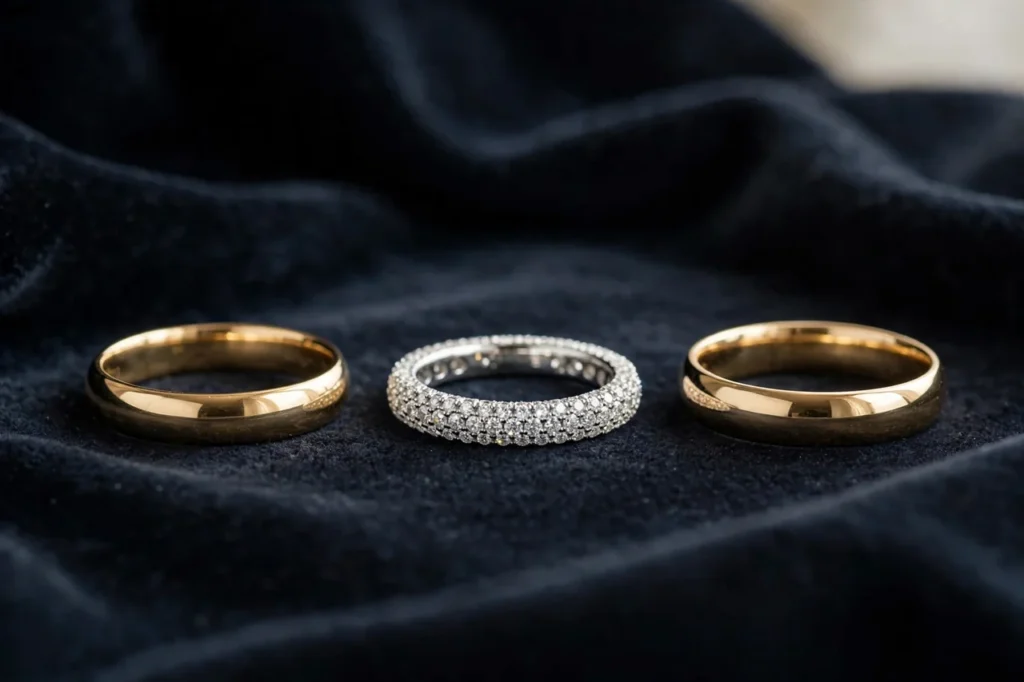
Notice the pattern: cost and meaning are uncorrelated. The free options (re-exchange, blessing) are among the most emotionally powerful, because they honor the actual history rather than purchasing a symbol of it.
Choosing New Rings: Styles & Costs
If you are buying new or additional rings, here is the landscape:
| Ring Style | Typical Range | Notes |
|---|---|---|
| Classic gold band | $300–$900 | Timeless; matches most originals; 14k vs 18k affects price and durability |
| Platinum band | $800–$2,000 | Heavier, hypoallergenic, prestigious; the “forever” metal |
| Diamond eternity band | $1,000–$5,000+ | The classic anniversary statement; full vs. half-eternity affects price and comfort |
| Gemstone anniversary band | $400–$2,500 | Birthstones, anniversary gemstones, or favorite colors; deeply personal |
| Custom designed | $1,500–$6,000+ | Incorporate original stones, fingerprints, handwritten engraving; one of a kind |
| Vintage / antique | $500–$3,000 | History and character; ensure sizing is possible before buying |
| Silicone / alternative (for active lifestyles) | $30–$80 | Practical second set; many couples wear these daily and save fine rings for occasions |
Shopping tips: start 2–3 months before the renewal (custom work takes 4–8 weeks); bring your original rings for matching; ask about the jeweler’s renewal/anniversary services specifically; and get the engraving done by the selling jeweler (it is usually free or cheap at purchase, expensive later). For budget-friendly milestone gifts beyond rings, our wedding day gift ideas under $50 and DIY wedding day gift ideas guides prove meaningful does not mean expensive.
Watch: A Real Vow Renewal with Ring Exchange
Theory is useful; watching a real couple exchange vows — rings included — shows how the moment actually lands. This vow renewal ceremony includes the full arc: the story, the vows, and the ring exchange that seals the recommitment:
Notice how the ring moment functions as the ceremony’s physical climax — the thing guests watch, photograph, and remember. Whatever option you choose, give the moment room to breathe.
Ceremony Wording for Every Ring Approach
The words matter as much as the rings. Adapt these to your voice:
- Re-exchanging originals: “[Name], [X] years ago I placed this ring on your finger as a promise of the future. Today I place it again — no longer a promise of what might be, but a testament to what is. With this ring, I renew my vows to you.”
- Blessing in place: “Look at the rings you already wear — [X] years of mornings, arguments, laughter, and ordinary days are in that metal. May they remind you, every day, of the promise renewed here today.”
- New bands: “These new rings mark not a new marriage but a renewed one — the same love, deepened by [X] years. As you wear them, remember both the wedding-day promise and today’s.”
- Eternity ring: “This circle of stones has no beginning and no end — like the love it celebrates. Wear it as a sign of [X] years behind us and all the years ahead.”
- Secular blessing: “Rings are circles — no start, no finish. May your love be the same: unbroken by time, brightened by years, and renewed today by choice.”
- Humorous: “This ring has survived [X] years of dishwashing, gardening, and being angrily removed and put back on. It has earned its place. Let’s make it official — again.”
Keep the ring wording to 3–5 sentences. It is a beat within the vows, not a second speech. For last-minute needs, our last-minute wedding day gift ideas and personalized wedding gifts for couples guides cover gifts that pair with the ring moment.
Caring for Original Rings Before the Renewal
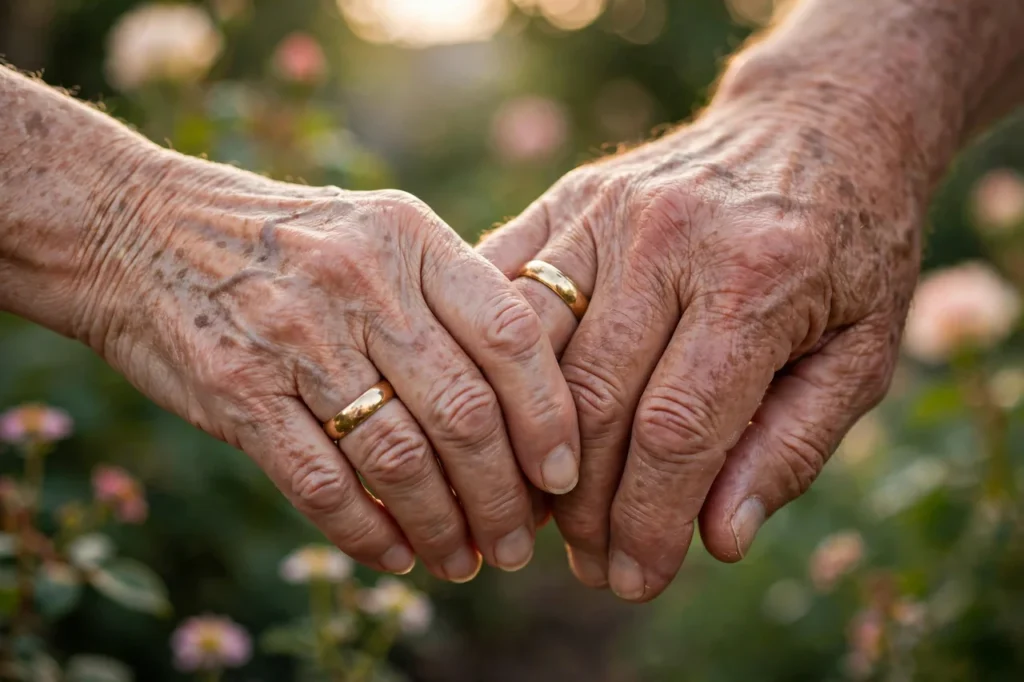
If your originals are taking center stage, give them their due:
- Professional cleaning and inspection ($25–$75): jewelers check prongs, tighten stones, and restore shine. Do this 3–4 weeks before the renewal — loose stones are discovered at inspections, and resetting takes time.
- Resizing: fingers change over decades. If a ring spins or sticks, resize it (usually $50–$150). Allow 1–2 weeks.
- Re-polishing and re-plating: white gold needs rhodium re-plating every 12–18 months ($40–$80); all gold benefits from professional polishing. Your rings will look new in photos.
- Engraving: add the renewal date inside the band alongside the wedding date — $30–$100, and the two dates together tell the story every time you glance inside.
- Appraisal update: if it has been years, update the appraisal and insurance. Anniversary milestones are natural moments for this housekeeping.
5 Ring Mistakes to Avoid
- Assuming new rings are required: they are not — and couples who buy expensive new rings out of perceived obligation often feel the originals’ history was sidelined. Choose from desire, not duty.
- Leaving ring decisions to the last week: custom work takes 4–8 weeks; resizing 1–2; even cleaning needs a few days. Start at least two months out.
- Forgetting who holds the rings: designate a ring holder (best man equivalent, a child, or the officiant’s pocket) and rehearse the handoff. Fumbling for rings mid-ceremony is the most avoidable awkwardness in existence.
- Skipping the ring warming (if doing one): if guests will hold the rings for blessings, plan the logistics — a small pouch, a clear instruction from the officiant, and enough time. Do not spring it on guests unannounced.
- Mismatched metals without intention: mixing metals is fashionable, but do it deliberately. If one partner upgrades to platinum while the other keeps yellow gold, make sure both are happy with the pairing — or choose complementary new bands together.
The Ring Warming Ceremony: A Renewal Favorite
One ritual deserves special attention for vow renewals: the ring warming. Before the ceremony, the couple’s rings are placed in a small pouch or tied with ribbon and passed among the guests. Each guest holds the rings briefly, offering a silent blessing, wish, or prayer for the marriage, then passes them on. By the time the rings reach the couple, they are literally “warmed” by the love of everyone present.
Why it suits renewals perfectly: at a wedding, guests are blessing a beginning they have not witnessed; at a renewal, they are blessing a marriage they have watched — their good wishes carry the weight of evidence. The ritual also solves a practical problem: it gives guests something meaningful to do before the ceremony starts, replacing awkward milling with quiet participation.
Logistics: start the warming 20–30 minutes before the ceremony (it takes time to circulate through 50+ guests); use a small pouch or a ribbon long enough to prevent drops; have the officiant explain it in one sentence (“As the rings come to you, hold them a moment and offer a silent wish for [names]’ marriage”); and station the pouch’s journey to end with the officiant or ring bearer, not lost in the back row. For ceremonies under 20 guests, it takes five minutes and feels intimate rather than logistical. For very large ceremonies, warm the rings among the wedding party or family only — circulating through 200 guests takes too long.
Wording: “These rings have circled [names’] fingers for [X] years. As they pass through your hands, warmed by your love and blessings, they carry every good wish in this room back to the couple. When you are ready, pass them on.” Simple, clear, and moving.
What If the Original Rings Are Lost, Damaged, or Gone?
It happens more than people admit: rings lost to the ocean, the garbage disposal, or the chaos of young children; bands worn paper-thin after decades; originals sold during hard years the couple survived. If your originals are gone, the renewal is actually the perfect moment to address it — not with shame, but with story.
Options: choose new bands together and let the ceremony mark a fresh chapter (many couples find this unexpectedly joyful — the lost rings become part of the lore, not a wound); have a jeweler recreate the originals from photos; or skip rings in favor of a different tangible moment. What to say: honesty, briefly, then forward. “We lost the original rings years ago — the ocean has them now. These new bands carry the same promise, plus everything we have learned since.” Guests find this charming, not sad; it is proof the marriage was never about the objects.
Damaged originals deserve a jeweler’s assessment before the renewal: many “ruined” rings can be rebuilt, re-shanked, or re-set for a few hundred dollars. Ask specifically about restoration rather than replacement — jewelers love this work, and the restored ring carries both its history and its rescue story.
Ring Engraving Ideas for Renewals
The inside of a band is the most private real estate in jewelry — visible only to the wearer, carrying words for decades. Renewal-worthy engravings:
- The two dates: “6.14.1996 — 6.14.2026” — the whole story in numbers.
- The renewal phrase: “I still do,” “Still us,” “Again, always.”
- Coordinates: of where you married, where you renewed, or where you met.
- A private reference: the inside joke, the song lyric fragment, the pet name — the thing only you two understand.
- The children’s names or initials: for renewals where the family is the story.
- A single word: “Forever,” “Always,” “Home” — sometimes one word carries the most.
Keep engravings short (most bands fit 20–30 characters), choose a script that will age well, and have it done by the selling jeweler at purchase when possible. For originals being re-engraved, confirm the band has enough metal thickness — very thin vintage bands may not take new engraving safely, and a good jeweler will tell you honestly.
Frequently Asked Questions
Do you need rings for a vow renewal?
No — there is no traditional or required ring exchange at a vow renewal, because the marriage already exists and the original rings already symbolize it. The ceremony’s core is the vows themselves. That said, 70–80% of couples include some ring moment (re-exchanging originals, blessing new bands, or adding an eternity ring) because it gives the ceremony a beloved physical anchor. Include rings from desire, never from obligation.
Do you exchange new rings at a vow renewal?
You can, and many couples do — especially at milestone anniversaries. Options include exchanging entirely new bands, adding an eternity or anniversary band, restyling the originals, or simply re-exchanging the original rings with new words. There is no rule; the most popular choice remains re-exchanging the original rings, whose [X] years of history no new jewelry can match.
What kind of ring do you get for a vow renewal?
The most popular choices are eternity bands (diamonds circling the band, symbolizing never-ending love), new classic bands in gold or platinum, gemstone anniversary bands, or restyled originals. There is no “correct” vow renewal ring — choose what reflects your taste and milestone. Many couples engrave both the wedding date and the renewal date inside any new band. If you are torn between styles, visit jewelers together and try bands on side by side with your originals; the right choice usually announces itself the moment you see the pairing on your hand.
Can we just re-exchange our original wedding rings?
Absolutely — it is the most meaningful and most popular option. Have the rings professionally cleaned and inspected 3–4 weeks beforehand, consider adding an engraved renewal date inside, and write new words for the re-exchange (not a repeat of the wedding wording). The same rings, recommitted with [X] years of evidence behind the promise, is the purest expression of what a renewal means.
Do both partners need new rings, or just one?
Whatever you both want. Common patterns: both exchange new bands; the wife adds an eternity ring while the husband keeps his original; both restyle their originals; or neither changes anything. Discuss it openly — mismatched expectations (one partner expecting new jewelry, the other assuming originals) cause the only real friction here. There is no etiquette rule favoring any arrangement.
How much should we spend on vow renewal rings?
Whatever brings joy without financial stress. Realistic ranges: $0–$75 to clean and re-commit originals; $300–$900 for classic new gold bands; $1,000–$5,000+ for eternity or diamond bands; $200–$2,000 to restyle originals. The correlation between spending and meaning is weak — the free re-exchange of beloved originals routinely moves couples more than expensive new jewelry. Spend for joy, not for impression.
What do you do with the original rings if you get new ones?
Popular options: wear the original on the right hand; save them for children (a deeply meaningful heirloom gift); have them melted into new jewelry that incorporates the original gold; store them safely with the wedding mementos; or wear originals daily and new bands for occasions. Discuss it together — the originals carry decades of meaning and deserve an intentional decision, not a drawer.
What words do you say when exchanging rings at a vow renewal?
Keep it to 3–5 sentences that acknowledge the history: “[Name], [X] years ago I placed this ring on your finger as a promise of the future. Today I place it again as a testament to what is. With this ring, I renew my vows to you.” For new bands, reference both dates; for blessings, speak to what the worn rings have witnessed. Humor is welcome if it fits your marriage — the ring that survived decades of dishwashing has earned a joke.
Is it bad luck to skip rings at a vow renewal?
Not at all — there is no superstition or tradition requiring rings at a renewal, and many beautiful ceremonies include no ring moment whatsoever. The vows are the ceremony; rings are an optional enhancement. If rings were never central to your marriage, skipping them is more authentic than forcing a moment that does not resonate. Give the ceremony a different physical peak instead — a unity ritual, a handfasting, or simply the kiss.
So: do you need rings for a vow renewal? No. Should you include them? If the thought of the ring moment moves you — the weight of the original band, the gleam of a new eternity ring, the words spoken over that unbroken circle — then yes, absolutely. Choose the option that honors your history, whether that means the same beloved rings recommitted with new words, new bands marking the milestone, a lovingly restyled original, or a warmed circle of stones carrying every guest’s blessing. Speak the words that honor your future, give the moment room to breathe, and let the circle do what it has always done: remind you, every single day, of the promise you just renewed.
Rings, Reworn and Reblessed
Whether or not you use rings at your vow renewal, take a moment to look at the ones you already wear. Those bands have held a thousand ordinary days — hospital waiting rooms, mortgage payments, school runs, quiet Sunday mornings. That is what makes them sacred, more than any ceremony could. If you exchange new rings, wear both: the original band closest to your heart, the new one as its witness. If you simply rebless the old ones, have the officiant hold them up and tell their story — guests will be moved in a way a brand-new ring never manages. And if the originals no longer fit, resize them rather than replacing them; jewelers do this every week, and keeping the same metal keeps the continuity intact. The ring is a circle because the promise has no end. Saying it again just makes the circle brighter.