How do journalists verify information before they publish it? Behind every trustworthy news story is an invisible process of checking, cross-checking, and pressure-testing facts — a discipline reporters call verification. In an era of AI-generated images, viral rumors, and sophisticated disinformation, understanding how journalists verify stories is both fascinating and practical: it shows you what separates professional reporting from rumor, and it gives you techniques you can use yourself. This guide walks through the verification process step by step, the tools newsrooms use, and how to tell verified reporting from guesswork.
Why Verification Is the Heart of Journalism
Anyone can publish a claim. What makes journalism different — or at least what is supposed to make it different — is the work done before publication to establish that the claim is true. Verification is that work. It is the reason a news report carries more weight than a social media post making the same assertion: the reporter did not just hear it, they checked it.
The stakes explain the effort. Publishing something false can ruin reputations, move markets, swing elections, and in the worst cases cost lives — think of wrongly identifying a suspect or misreporting safety information during a disaster. News organizations can also be sued for defamation, which gives verification a legal dimension: in many jurisdictions, showing that a reporter did careful verification work is a key defense. Accuracy is not just an ideal; it is the business model and the legal shield.
It helps to know that verification happens under two very different conditions. Enterprise verification is the slow kind: weeks or months of document review, source cultivation, and fact-checking for an investigative piece. Breaking-news verification is the fast kind: minutes to authenticate a video or confirm a casualty number while the story is already moving. The principles are the same, but the techniques and the acceptable level of uncertainty differ enormously. (For the breaking-news side, watch how fast-moving stories develop in our US weather news roundup, where verification happens under extreme time pressure.)
The Verification Process, Step by Step
While every newsroom has its own workflow, professional verification follows a consistent sequence. Here it is, in the order reporters actually work:
Step 1: Define the Claim Precisely
Verification starts with clarity. A reporter takes a fuzzy tip — “something happened at the warehouse district” — and converts it into specific, checkable assertions: What happened? Where exactly? When? Who was involved? Vague claims cannot be verified, so the first skill is rewriting the claim until each element can be confirmed or refuted independently. Experienced reporters often write the claim on a whiteboard or document and attack each piece separately.
Step 2: Find the Original Source
Before checking whether a claim is true, reporters check where it came from. A video shared ten thousand times is not ten thousand sources — it is one source with ten thousand amplifiers. Tracing a claim upstream to its origin often resolves the question immediately: the dramatic photo turns out to be from a different country, or the “official statement” comes from a parody account. Source verification precedes fact verification, because a claim from an unreliable origin needs far more corroboration.
Step 3: Seek Independent Corroboration
The golden rule: two independent sources for important facts. “Independent” is doing heavy lifting here — two outlets quoting the same press release are not two sources. Reporters look for confirmation from genuinely separate angles: an eyewitness plus an official record, a document plus a second person who saw it, a data set plus an expert who can interpret it. For the most sensitive claims — criminal accusations, for example — newsrooms may require three or more.
Step 4: Check the Documents
Paper (and its digital equivalent) beats memory. Court filings, property records, corporate registrations, campaign finance disclosures, meeting minutes, emails obtained through public-records requests — documents anchor stories in verifiable reality. Reporters learn to read documents skeptically too: Who created this? For what purpose? What is missing from it? A document can be authentic and still misleading if it is incomplete or taken out of context.
Step 5: Consult Experts — and Challenge Them
For technical claims, reporters call people who know the field: scientists, engineers, lawyers, doctors, former officials. But experts are sources, not oracles. Good reporters ask experts to explain their reasoning, disclose their conflicts of interest, and respond to counterarguments. When experts disagree — which happens constantly — the story should reflect the disagreement honestly rather than picking the expert who fits the narrative. Watch for this in science and health coverage especially.
Step 6: Verify Visuals Forensically
Photos and videos get special treatment because they are so persuasive and so easy to fake or misattribute. Verification desks run a standard battery of checks on any visual they did not produce themselves:
- Reverse image search to find where else the image has appeared and whether it predates the event.
- Metadata examination for timestamps, device information, and signs of editing — while knowing metadata can be stripped or faked.
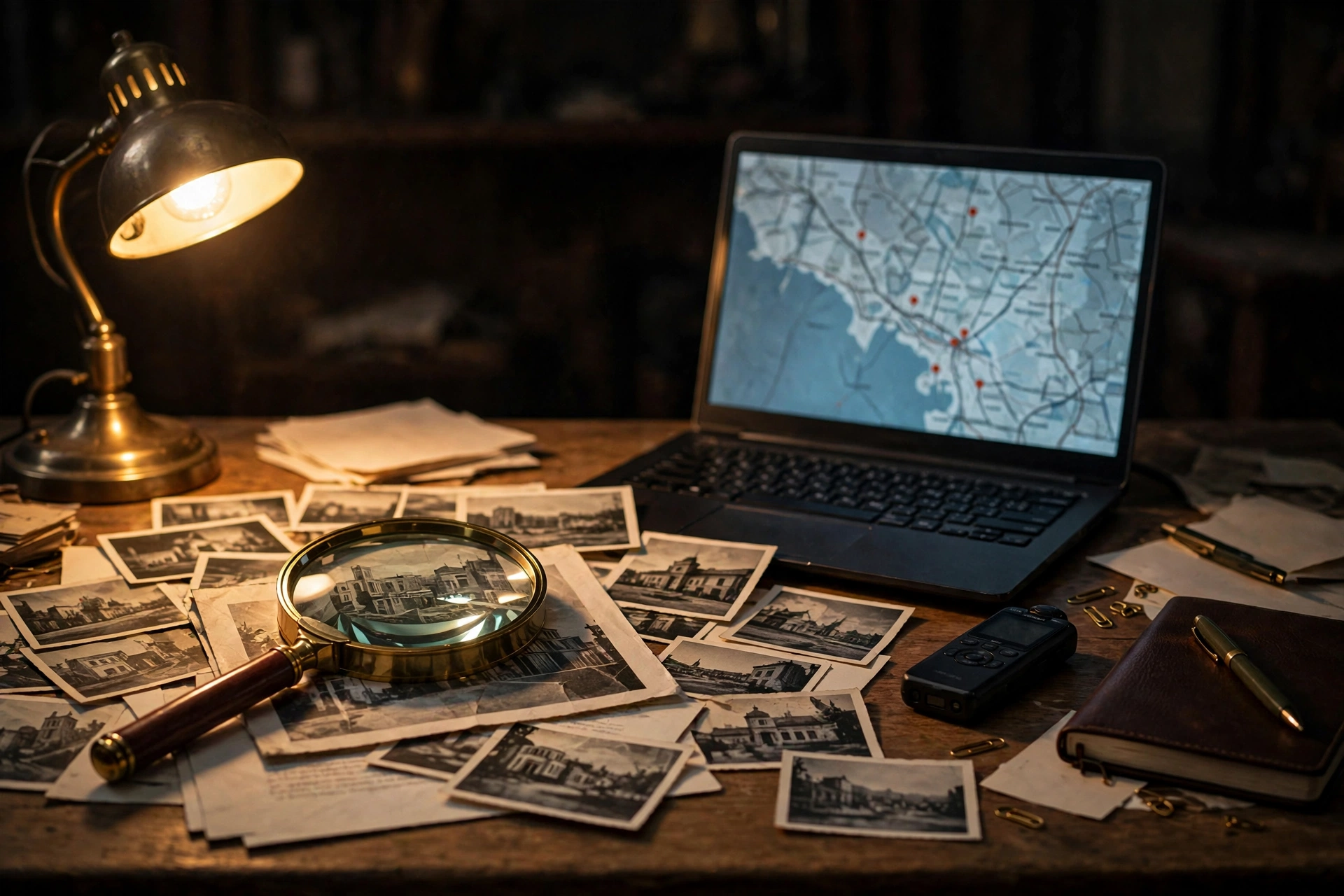
- Geolocation: matching buildings, signs, mountains, and street layouts against satellite imagery and maps to confirm where footage was shot.
- Chronolocation: using shadows, weather records, and visible clocks to confirm when it was shot.
- Source analysis: examining the uploader’s account history — is it a real person, how old is the account, what else have they posted?
- Deepfake detection: looking for anatomical glitches, unnatural blinking, inconsistent lighting, and audio-visual mismatches in suspected synthetic media.
Step 7: Pressure-Test the Story
The best verifiers try to disprove their own story. Could the video be old footage from a different event? Could the quote be out of context? Could the document be forged? Could the apparent pattern be a coincidence? This adversarial step is what separates professional verification from confirmation bias. If the story survives genuine attempts to knock it down, it is much safer to publish. Newsrooms sometimes formalize this as a “red team” review for big investigations.
Step 8: Get Response and Final Review
Before publishing anything that accuses or criticizes, ethical newsrooms contact the subject for comment — and mean it. This is both a fairness requirement and a verification tool: the response sometimes reveals the story is wrong, or adds the context that makes it right. Finally, editors review the piece against the outlet’s standards: Is every factual assertion sourced? Are anonymous sources justified and approved? Is the language precise? Only then does it publish.
The Newsroom Verification Toolkit
| Technique | What It Checks | Example Use |
|---|---|---|
| Reverse image/video search | Whether visuals are recycled | Catching a 2019 protest photo reused for a 2026 story |
| Geolocation | Where footage was actually shot | Matching a street corner in a viral clip to satellite maps |
| Metadata analysis | When/how a file was created | Checking a photo’s timestamp against the claimed event time |
| Archive search (Wayback Machine) | What pages used to say | Proving a politician’s website quietly changed a position |
| Public records requests | Official documents | Obtaining police reports or spending records |
| Database cross-checks | Names, addresses, corporate ties | Confirming a source’s identity and background |
| Social media forensics | Account authenticity | Spotting bot networks amplifying a narrative |
| Data replication | Statistical claims | Re-running the numbers behind a “shocking study” |
| On-the-record confirmation | Quotes and attributions | Playing back a quote to the speaker before publishing |
None of these tools replaces human judgment — that is the industry’s constant refrain, and it is true. A reverse image search can tell you a photo is old, but only a reporter can decide what that means for the story. Tools accelerate verification; they do not automate truth.
A Walkthrough: Verifying a Viral Claim
To make this concrete, here is how a verification desk might handle a typical viral claim: a video supposedly showing a dramatic event in your city, shared thousands of times within an hour.
- Capture it. Download the video immediately — viral posts get deleted, and you need the original file with its metadata intact.
- Trace the origin. Find the earliest posting. Is the account local? How old is it? Does it have a history of real posts or was it created last week?
- Reverse-search key frames. Extract stills and search them. If the same footage appeared months ago attached to a different city, the claim collapses here.
- Geolocate. Identify landmarks — a distinctive building, a street sign, a mountain profile — and match them against maps. If the landmarks do not match the claimed city, the video is misattributed.
- Chronolocate. Check shadows against the sun’s position for the claimed time, compare visible weather with weather records, look for dated elements like billboards or construction.
- Find corroboration. Search for other angles of the same event, check local scanner traffic and official accounts, call the relevant authorities.
- Decide and document. The desk reaches a verdict — verified, unverified, or debunked — and documents the evidence trail so editors and readers can see the reasoning.
This entire sequence can take twenty minutes for a simple case or days for a complex one. The next time you wonder why an outlet has not yet confirmed a viral story, this is what is happening behind the curtain.
How Verification Differs Across Newsroom Types
Not all newsrooms verify the same way, and knowing the differences helps you calibrate trust:
- Wire services (Associated Press, Reuters) verify to a standard designed for republication by thousands of outlets across the political spectrum. Their copy is terse partly because every extra adjective is a verification liability. Treat wire copy as the reliability baseline.
- National newspapers and networks have dedicated verification and standards desks, lawyers on call, and formal anonymous-source policies. Their resources allow deep verification — which is also why their investigations take months.
- Local newsrooms often verify through direct relationships: the reporter knows the police chief, the city clerk, the school board members personally. This can make local verification fast and strong on community facts, though thinly staffed outlets struggle with complex technical claims. Supporting community journalism is partly about preserving this verification capacity where you live — and finding reliable local news sources is the audience-side version of the same project.
- Digital-native outlets and newsletters vary enormously. Some uphold rigorous standards; others optimize for speed and voice. Check whether the outlet publishes corrections and names its editors — transparency about process is a proxy for the process itself.
Verification vs. Fact-Checking: Are They the Same?
The terms overlap but describe different jobs. Verification is what reporters do before publication to make sure a story is right. Fact-checking usually refers to what happens after publication — either internal fact-checkers at magazines reviewing articles pre-press, or external organizations (like dedicated fact-check sites) evaluating claims already in circulation.
Both matter to you as a reader. Pre-publication verification is why you can generally trust a reported story more than a viral post. Post-publication fact-checking is your tool for adjudicating claims you encounter in the wild — political ads, forwarded messages, influencer assertions. Use them together: trust verified reporting as your starting point, and reach for fact-checkers when you encounter claims outside it.
Red Flags: When Verification Probably Did Not Happen
You can often tell from the published story whether real verification occurred. Watch for these warning signs:
- Single anonymous source, no corroboration. One unnamed person making an explosive claim with no supporting evidence is a rumor, not reporting.
- No named author or outlet. Real verification attaches to real reputations. Anonymous content has no accountability.
- Emotional language doing the persuading. Verified reporting leans on evidence; unverified content leans on outrage. (Sensationalism often fills the gap where verification is missing — see how to spot fake news for the reader’s defense against it.)
- No links to primary material. A story about a study that does not link the study, or about a document that does not show the document, is asking for trust it has not earned.
- No corrections ever published. Every newsroom makes mistakes. One that never admits any is either not checking its work or not telling you about it.
- The story never updates. Real stories develop. A sensational claim frozen in its original form, never followed up, often died because it could not be verified.
How to Verify Things Yourself: A Reader’s Toolkit
You do not need a newsroom to do basic verification. These five techniques handle most of what you will encounter:
- Reverse image search the visuals. Right-click any suspicious image and search it. Five seconds of effort catches most recycled photos.
- Read past the headline. Headlines are written for clicks; the article often contains the caveats the headline dropped. If the article contradicts its own headline, trust the article.
- Check the date. Old stories recirculate constantly, presented as new. A two-year-old article about an event “happening now” is one of the most common misinformation formats.
- Triangulate with a wire service. Search the claim on an AP or Reuters feed. If the wires are not carrying it, treat it as unconfirmed regardless of how viral it is.
- Look for the primary source. Follow the citation chain to the original document, data set, or recording. Each hop away from the primary source is a hop away from reliability.
For a deeper dive into evaluating suspicious content, our guide on how to spot fake news builds directly on these techniques.
Frequently Asked Questions About News Verification
How do journalists verify anonymous sources?
Carefully and reluctantly. Reporters must know the source’s real identity even when the audience does not, assess the source’s motives and access to information, and corroborate the source’s claims independently. Most major outlets require senior editor approval before granting anonymity, and the bar is highest for the most damaging claims. Anonymity protects whistleblowers; it is not a shortcut around evidence.
What happens when journalists get it wrong?
Responsible outlets publish corrections — and the best ones make corrections prominent, not buried. Serious errors trigger internal reviews of what failed in the verification chain. Legal consequences are possible in defamation cases, particularly when the outlet cannot show it did careful verification work. An outlet’s corrections record is one of the most honest signals of its standards.
Can AI verify news automatically?
AI can accelerate parts of verification — transcribing interviews, flagging statistical anomalies, scanning large document sets — but it cannot determine truth on its own. AI systems confidently generate plausible-sounding falsehoods, which makes them dangerous as final arbiters. Newsroom policies increasingly treat AI output as an unverified lead: useful for starting an investigation, never sufficient for publishing.
How long does verification take?
It ranges from minutes to months. A straightforward photo authentication might take twenty minutes; a complex investigation involving reluctant sources and sealed documents can take a year. This is why breaking news carries more uncertainty than enterprise reporting — not because the journalists are worse, but because the verification window is compressed.
Why do two outlets sometimes verify the same story differently?
Because verification involves judgment calls: how many sources are enough, whether a source is credible, how to weigh conflicting evidence. Outlets also have different risk tolerances and different access. When reputable outlets disagree, read both accounts carefully — the disagreement itself is informative, and the truth often sits between the two versions.
How can I tell if a story was actually verified?
Look for the evidence trail in the story itself: named sources, linked documents, specific attributions (“according to court records filed Tuesday”), and clear distinctions between confirmed and unconfirmed details. Verified reporting shows its work. If a story asks you to take explosive claims on faith, with no sourcing you can inspect, verification probably did not happen.