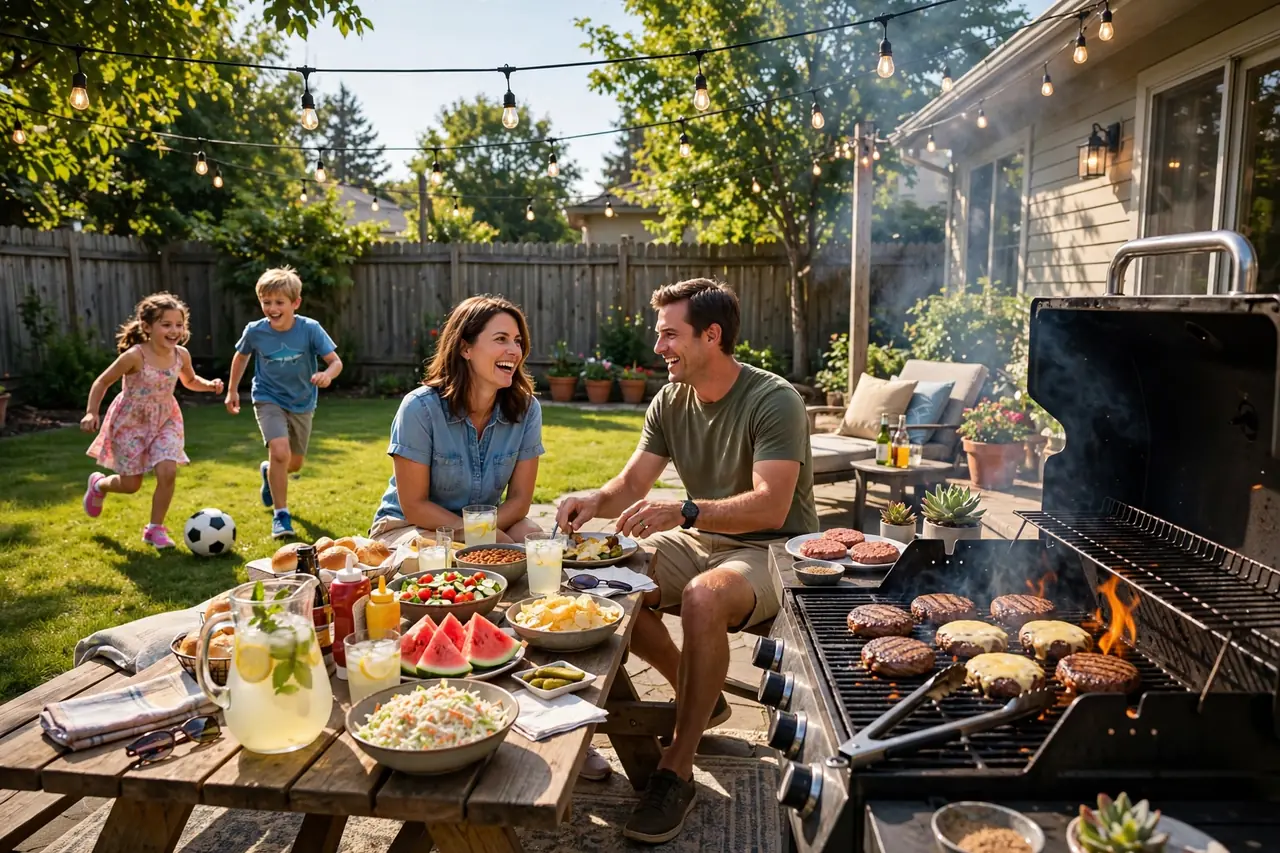
Few things say “family” like the smell of a grill warming up on a sunny afternoon. A Family Day BBQ is celebration in its most relaxed form: paper plates, cold drinks, kids running barefoot across the grass, and a table that never quite empties because someone is always going back for “just one more” burger. It is also one of the most forgiving ways to feed a crowd — the grill does the heavy lifting, the sides are mostly make-ahead, and the dress code is whatever you are comfortable sitting on the lawn in.
This guide covers everything you need for a memorable family cookout: the full grill menu (including how to actually cook burgers and chicken that stay juicy), sides that steal the show, games and activities for every age, safety tips for grilling with kids around, and a minute-by-minute timeline. For more inspiration on getting the whole family together outdoors, check out our guides to family events across the USA and surviving family festivals.
Planning Your Family Day BBQ: The Basics
A great BBQ starts before the charcoal is lit. First, decide your headcount and cook accordingly: plan on two burger patties or equivalent per adult, one to two per child, plus extra for the inevitable “seconds” round. It is far better to have leftover grilled chicken for tomorrow’s salads than to run out at 4 PM with hungry teenagers circling.
Second, audit your equipment a week ahead. Clean the grill grates (a hot grill and a stiff brush handle most buildup), check your propane tank or buy an extra bag of charcoal, and make sure you have long-handled tongs, a spatula, and an instant-read thermometer. The thermometer is the single most important BBQ tool — it is the difference between guessing and knowing, and it prevents both dry chicken and unsafe burgers.
Third, think about shade, seating, and the bathroom situation. A pop-up canopy or two transforms a hot yard into a comfortable venue. Borrow folding chairs and tables rather than buying them. Set up a drink station in the shade with a cooler of ice, and put sunscreen and bug spray in a basket where guests can find them. These unglamorous details determine whether people stay for three hours or six.
The Grill Menu: Mains Done Right
Classic burgers that stay juicy
The secret to a great burger is restraint: 80/20 ground beef, loosely formed patties slightly larger than the bun (they shrink), a deep thumbprint in the center to prevent puffing, and salt and pepper applied just before grilling — not mixed in, which makes the texture dense. Grill over direct medium-high heat, 3–4 minutes per side for medium, and touch them as little as possible. Let them rest five minutes before serving. Offer a toppings bar: cheeses, lettuce, tomato, onion, pickles, bacon, sautéed mushrooms, and at least three sauces.
Chicken that does not dry out
Chicken is where most home grillers stumble, because they cook it like a burger — hot and fast. Instead, use a two-zone fire: sear bone-in thighs or breasts over direct heat for color, then move them to indirect heat to finish gently. A simple brine (one quart water, 1/4 cup salt, 1/4 cup sugar, 30 minutes) makes an enormous difference. Pull chicken at 160°F internal temperature; carryover heat brings it to a safe 165°F while it rests. Marinate in anything acidic (citrus, vinegar, yogurt) for at least an hour and up to overnight.
Hot dogs and sausages
Do not overlook the humble hot dog — for kids, it is often the main event. Grill good-quality all-beef dogs until they have light char marks, and offer “gourmet” toppings alongside the classic ketchup and mustard: chili, coleslaw, pickled jalapeños, and crushed potato chips. Italian sausages (sweet and hot) grilled whole and served on rolls with peppers and onions give adults something with a little more character.
Something for the vegetarians
Every BBQ needs a proper vegetarian main, not just side dishes. Portobello mushroom caps marinated in balsamic and grilled make excellent “burgers.” Veggie skewers with halloumi cheese, zucchini, peppers, and cherry tomatoes are colorful and satisfying. Grilled corn on the cob slathered in chili-lime butter pleases everyone. And a great veggie burger — smashed thin with crispy edges — earns respect even from skeptics when the toppings bar is generous.
Ribs and low-and-slow options
If you want to show off, baby back ribs are the move: remove the membrane, apply a dry rub, and cook low and indirect for 3–4 hours, wrapping in foil with a splash of apple juice for the last hour. They are mostly unattended cooking, which means you can socialize while they work. Pulled pork from a pork shoulder follows the same philosophy — start it early, ignore it, and shred it to applause.

Sides That Steal the Show
Ask any BBQ veteran and they will tell you: people remember the sides. The grill gets the glory, but the potato salad gets the recipe requests. Make sides ahead, serve them at room temperature or chilled, and choose a mix of creamy, crunchy, and fresh.
The essential six
- Classic potato salad — with a mustard-mayo dressing, celery crunch, and hard-boiled eggs. Make it the morning of; it needs a few hours for flavors to marry.
- Coleslaw with a twist — try a vinegar-based slaw with apples and toasted pecans; it holds up better in heat than creamy slaw.
- Grilled vegetable platter — zucchini, peppers, asparagus, and red onion tossed in olive oil, grilled, and finished with balsamic and fresh herbs.
- Baked beans — doctored canned beans (bacon, onion, brown sugar, mustard) baked until bubbly; keep warm in the slow cooker.
- Watermelon-feta salad — watermelon, feta, mint, and a squeeze of lime; the most refreshing thing on the table.
- Cornbread or dinner rolls — warm bread for sopping up sauce; bake the morning of.
Make-ahead strategy
Potato salad, coleslaw, baked beans, and desserts can all be made a day ahead. Chop vegetables for the grill platter the morning of. The only sides that need last-minute attention are anything served warm from the grill — and those take ten minutes. Label serving dishes with sticky notes the night before so setup is mindless.
BBQ Games and Activities for Every Age
Food brings people to the yard; activities keep them there. The best BBQ games need almost no equipment, accommodate mixed ages, and can be joined or abandoned without ceremony.
For little kids (under 7)
A bubble station (a few bottles of bubbles and wands) entertains toddlers for an astonishingly long time. Sidewalk chalk on the driveway, a simple scavenger hunt with picture clues (“find something red,” “find a smooth rock”), and a kiddie pool or sprinkler on hot days round out the essentials. Set up a shaded “kid zone” with blankets and quiet toys for when little ones need to decompress.
For big kids (8–14)
Water balloon toss, three-legged races, and a cornhole tournament hit the sweet spot for this age. A “grill master junior” challenge — who can build the most creative burger from the toppings bar — gets kids invested in the food. Capture-the-flag works brilliantly with a big yard and mixed ages; let the teens be team captains.
For teens and adults
Cornhole, ladder toss, and giant Jenga are the holy trinity of adult yard games — competitive enough to be fun, casual enough to play with a drink in hand. A trivia game about family history (“What year did Grandma and Grandpa get married?”) gets surprisingly intense. And do not underestimate the appeal of a simple horseshoes or bocce set that lives in someone’s garage.
For grandparents
Create comfortable spectator seating in the shade with a good view of the games — many grandparents are happiest watching the chaos with a cold drink. A card table with dominoes or cards, a “story corner” where grandkids interview grandparents on video, and a slow-paced croquet game on the lawn all work beautifully. The key insight: inclusion does not always mean participation; sometimes it means the best seat in the house.

Grilling Safely With Kids Around
A hot grill and excited children require deliberate planning, not just hope. Establish a clear “kid zone” and “grill zone” with at least three feet of buffer around the grill on all sides. Tell kids the rule simply — “the grill is hot, we stay behind the line” — and mark the line with chalk, tape, or a row of chairs.
Never leave the grill unattended, even for “just a minute.” Keep a spray bottle of water nearby for flare-ups and know where your fire extinguisher is. Position the grill away from foot traffic, overhanging branches, and anything flammable; never grill in a garage or under a low canopy. Use long-handled tools to keep hands away from heat, and teach older kids grill safety only under direct adult supervision — handling raw meat, the heat zones, and the “clean hands” rule.
Food safety matters as much as fire safety. Keep cold foods cold (below 40°F) — use coolers with ice for salads and dips, and do not let perishable food sit out for more than two hours (one hour if it is above 90°F). Use separate plates and utensils for raw and cooked meat. When in doubt, the instant-read thermometer is your answer: burgers to 160°F, chicken to 165°F, and leftovers refrigerated within two hours.
The Cookout Timeline
Timing a BBQ is about working backward from when you want to eat. This timeline assumes a 4:00 PM serving time for the main spread — adjust to your family’s rhythm.
| When | What to Do | Notes |
|---|---|---|
| Day before | Make potato salad, slaw, beans, desserts; marinate meats; charge speakers | Marinades need 8+ hours for full flavor |
| Morning of | Set up tables, chairs, shade; arrange drink station; prep veggie platter | Do yard setup before it gets hot |
| 2:00 PM | Start low-and-slow items (ribs); set out cold sides to temper slightly | Cold sides taste better near room temp |
| 3:00 PM | Light grill; put out appetizers and drinks; welcome early arrivals | Charcoal needs 20–30 min to be ready |
| 3:30 PM | Grill chicken (indirect finish); warm buns; set out toppings bar | Chicken rests while burgers cook |
| 3:50 PM | Grill burgers, dogs, sausages; grill vegetables and corn | Fast items go last so everything is hot |
| 4:00 PM | Eat! | Keep grill warm for second rounds |
| After | Dessert; pack leftovers; enlist kids for trash sweep with a prize | A “cleanest team wins” game speeds cleanup |
Watch: Low-Cost, High-Yield BBQ Recipes
You do not need an expensive spread to host a legendary BBQ. This video shows how to make three crowd-pleasing BBQ recipes — smoked chicken drumsticks, juicy grilled burgers, and baked beans — that are low-cost, high-yield, and perfect for feeding a family without spending all day at the grill. Watch for the burger technique and the bean recipe; both are worth stealing.
Drinks and Desserts
Keep drinks simple and self-serve: a cooler with water, sodas, and beer for adults; a big drink dispenser with lemonade, iced tea, or fruit punch; and plenty of ice. Freeze fruit into ice cubes for a pretty touch that keeps drinks cold. For a festive adult option, a big-batch sangria or spiked lemonade made in a dispenser beats individual cocktails for a crowd.
BBQ desserts should be easy to eat standing up with one hand — because the other hand is holding a drink. Think: ice cream sandwiches (store-bought, kept in the cooler), watermelon slices, brownies, fruit cobbler, and grilled peaches with vanilla ice cream (halve peaches, grill cut-side down for 3 minutes, serve warm over ice cream). A root beer float station — vanilla ice cream plus root beer plus fun straws — is pure nostalgia and costs almost nothing.
Meat Temperature Guide
Bookmark this table or tape it inside your grill lid. Temperatures are the internal temp at which you pull the meat; rest 5–10 minutes before serving.
| Meat | Pull Temperature | Rest Time | Notes |
|---|---|---|---|
| Burgers (beef) | 160°F | 5 min | No pink for ground meat — always use a thermometer |
| Chicken (all cuts) | 160°F | 5–10 min | Carryover brings it to a safe 165°F |
| Pork chops / tenderloin | 145°F | 5 min | Blush pink is safe and juicy at 145°F |
| Sausages / hot dogs | 160°F | 3 min | Pre-cooked dogs just need heating through |
| Steak (medium-rare) | 130–135°F | 10 min | Rest on a warm plate, tented with foil |
| Ribs (baby back) | ~195°F (bend test) | 15 min | Done when the rack bends and the meat cracks |
| Salmon / fish | 145°F | 3 min | Flakes easily with a fork when done |
Frequently Asked Questions
How much food do I need for a family BBQ?
Plan on 1/2 pound of meat per adult (pre-cooked weight) and 1/4 pound per child, plus two burger’s worth of extra for seconds. For sides, estimate 1/2 cup per person per side dish. For drinks, plan three drinks per person for a three-hour event. Leftovers are a feature, not a failure — grilled meats become tomorrow’s salads, sandwiches, and tacos.
What is the best cheap meat for a big BBQ?
Chicken thighs (bone-in, skin-on) are the unbeatable value: cheap, forgiving, and loved by everyone. Pork shoulder for pulled pork is the next best value for feeding a huge crowd. For burgers, 80/20 ground chuck in bulk packs keeps the per-burger cost low. Buy meat a few days ahead when it goes on sale and freeze it.
How do I keep burgers from drying out on the grill?
Use 80/20 ground beef, handle the meat as little as possible when forming patties, make a thumbprint indent in the center, salt just before grilling, and do not press the patties with the spatula (that squeezes out the juices). Pull them at temperature and rest five minutes. Most dry burgers are simply overcooked — the thermometer fixes this instantly.
Can I host a BBQ without a grill?
Absolutely. A grill pan on the stove, a broiler, or even a smoker box setup can approximate grilled flavor. Alternatively, make it a “cookout” with slow-cooker pulled pork, oven-baked ribs, and stovetop burgers — the menu matters more than the equipment. Many families do “BBQ-style” indoors in winter with great success.
How do I handle vegetarians at a BBQ?
Grill a proper vegetarian main — portobello caps, halloumi and vegetable skewers, or quality veggie burgers — on a clean section of the grill or a grill mat to avoid meat contact. Make sure at least two sides are vegetarian (most are) and label everything. Asking ahead and providing one thoughtful main beats an apologetic plate of side dishes.
What do I do if it rains on BBQ day?
Have a rain plan before you need it: a pop-up canopy over the grill and serving tables handles light rain, while a full move indoors means switching to oven and stovetop cooking. Many BBQ menus (pulled pork, baked beans, slaw, potato salad) are completely rain-proof since they are made ahead or indoors. Check the forecast the morning of and communicate the plan early.
How early should I start the grill before guests arrive?
Light charcoal 30–45 minutes before you want to cook; gas grills need 10–15 minutes to preheat. Start low-and-slow items (ribs, pork shoulder) hours ahead. Aim to have the grill hot and the first food on about 30 minutes before you plan to eat, so appetizers and mingling fill the gap while the main cooks.
What are the best make-ahead BBQ sides?
Potato salad, coleslaw, baked beans, pasta salad, and most desserts improve with a day in the fridge. Chop vegetables and make dressings the day before. The morning of, all you should need to do is grill fresh items, warm bread, and arrange platters. A BBQ where the sides are done before noon is a BBQ the host actually enjoys.
For more ways to fill a family day with memorable experiences, explore our guide to family events across the USA, our family festival survival guide, and our roundup of free family events for budget-friendly inspiration.
Hosting a BBQ on a Budget
A fantastic family BBQ does not require a fantastic budget. In fact, some of the best cookouts are the scrappiest ones — the charm of a BBQ is its informality, and informality is free. Here is how to keep costs down without anyone noticing.
First, choose your proteins strategically. Chicken thighs, pork shoulder, and ground beef in bulk are dramatically cheaper per serving than steaks, ribs, or salmon. A pork shoulder that costs a few dollars per pound becomes pulled pork sandwiches that feed twenty. Supplement with affordable “filler” mains that guests love: hot dogs for the kids, grilled corn, and a big pot of baked beans all stretch the meat further.
Second, go potluck for sides and desserts. Most relatives are genuinely happy to contribute — it makes them feel part of the day rather than just guests. Assign categories, not specific dishes (“Can you bring a cold side?”) so people cook what they are good at. You handle the grill and the drinks; the crowd handles the rest. Keep a shared note on your phone so you do not end up with four potato salads.
Third, buy smart. Shop sales the week before and freeze meat. Buy buns, condiments, and paper goods in bulk. Make your own lemonade, iced tea, and infused water instead of buying cases of soda — a few dollars of lemons and sugar makes gallons. Borrow rather than buy: tables, chairs, canopies, coolers, and yard games almost certainly exist in your extended family’s garages.
Fourth, decorate with what the yard already gives you. String lights you own, wildflowers in mason jars, and a playlist instead of a hired anything. A BBQ decorated with effort rather than money always feels warmer. For more ideas on celebrating without overspending, our free family events guide is full of inspiration that costs nothing at all.
Cleanup: The Unsexy Part Done Right
Every great BBQ ends the same way: with a yard full of evidence. The trick is to make cleanup fast and — dare we say — almost fun, so the day ends on a high note instead of a sigh.
Set yourself up during setup, not after. Place clearly labeled trash and recycling bins in at least two spots (people will use them if they are visible). Line coolers with trash bags for easy ice disposal. Keep a roll of paper towels and a spray bottle of all-purpose cleaner in an accessible spot for the inevitable spills.
Recruit the cleanup crew before the party, not after. Announce it cheerfully mid-afternoon: “Cleanup crew assembles at six!” Kids respond well to gamified cleanup — who can collect the most cups, who finds the most bottle caps. Adults respond well to direct, specific asks: “Can you break down the tables?” works infinitely better than “Can someone help clean up?”
Handle the grill properly: for charcoal, close all vents and let coals cool completely (several hours) before disposing of ashes in a metal container. For gas, turn off the burners and the tank, then brush the grates while still warm — tomorrow’s you will be grateful. Scrape and oil the grates lightly to prevent rust.
Pack leftovers immediately — within two hours of serving — into containers guests can take home. Label anything that needs to stay cold. What remains becomes the best part of the week: pulled pork sandwiches, grilled chicken salads, and cold watermelon straight from the fridge taste like the BBQ all over again.
Make It a Tradition
The first Family Day BBQ takes planning. The second takes a group text: “Same as last year?” That is the real goal — a tradition so beloved it plans itself. Take the group photo in the same spot every year. Keep the same signature dish (every family BBQ needs one thing it is “famous” for). Write down what worked and what did not while it is fresh, and next year will be even better.
Years from now, your kids will not remember whether the burgers were medium or medium-well. They will remember the water balloon fight, the way Grandpa manned the grill like a captain, and the feeling of a whole day with nowhere else to be. Fire up the grill, gather your people, and make some smoke — happy Family Day.
Fun BBQ Themes to Try
Once the basic BBQ is second nature, a theme takes it from “cookout” to “event your family talks about all year.” Themes give decorations, food, and activities a shared direction, which paradoxically makes planning easier — every decision answers the question, “Does this fit the theme?”
Decades BBQ: Pick a decade and run with it — 50s (checkered tablecloths, root beer floats, rock and roll), 80s (neon, big hair optional, arcade games on a tablet), or 90s (tournament brackets, nostalgic snacks). Ask grandparents to share music and stories from “their” decade for a built-in intergenerational activity.
Chili cook-off BBQ: Everyone brings a pot of chili; the grill handles burgers and dogs as backup. Set up anonymous tasting cups, print scorecards, and award a goofy trophy (a spray-painted ladle works perfectly). Competitive cooking brings out everyone’s best and gives the day a narrative arc.
Luau BBQ: Grass skirts on the tables, leis for arrivals, grilled pineapple and teriyaki everything, and a limbo contest at sunset. It is gloriously silly, kids adore it, and the food theme (sweet, smoky, tropical) practically cooks itself.
Family Olympics BBQ: Organize the yard games into a scored tournament — cornhole, water balloon toss, three-legged race, trivia — with teams mixing ages and a medal ceremony (chocolate coins on ribbons) before dessert. The sillier the events, the better the memories, and the photos will be priceless.