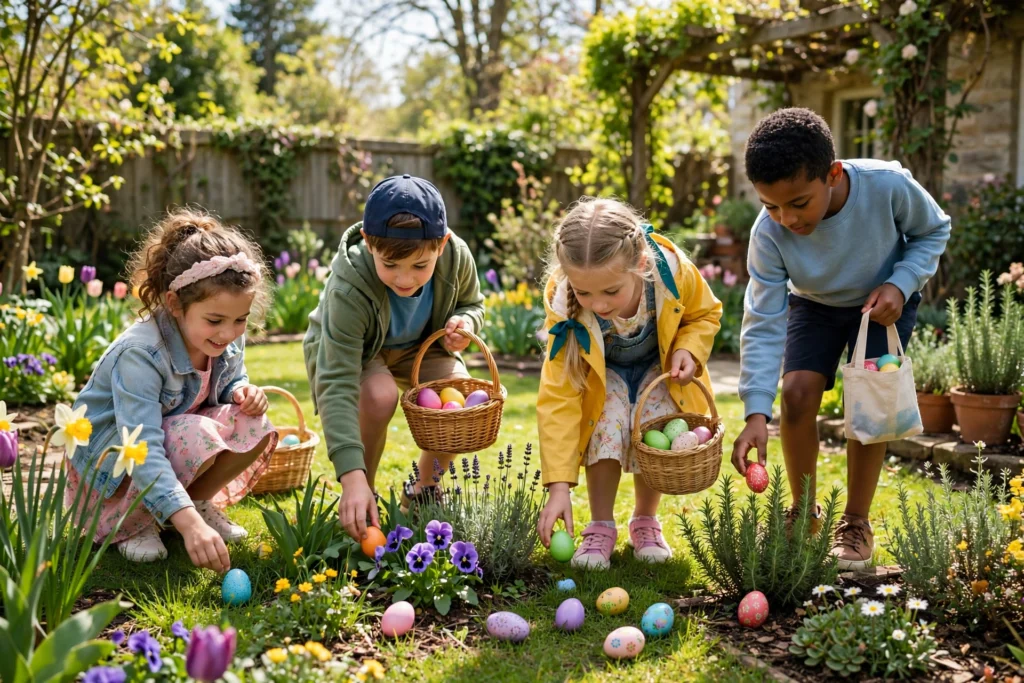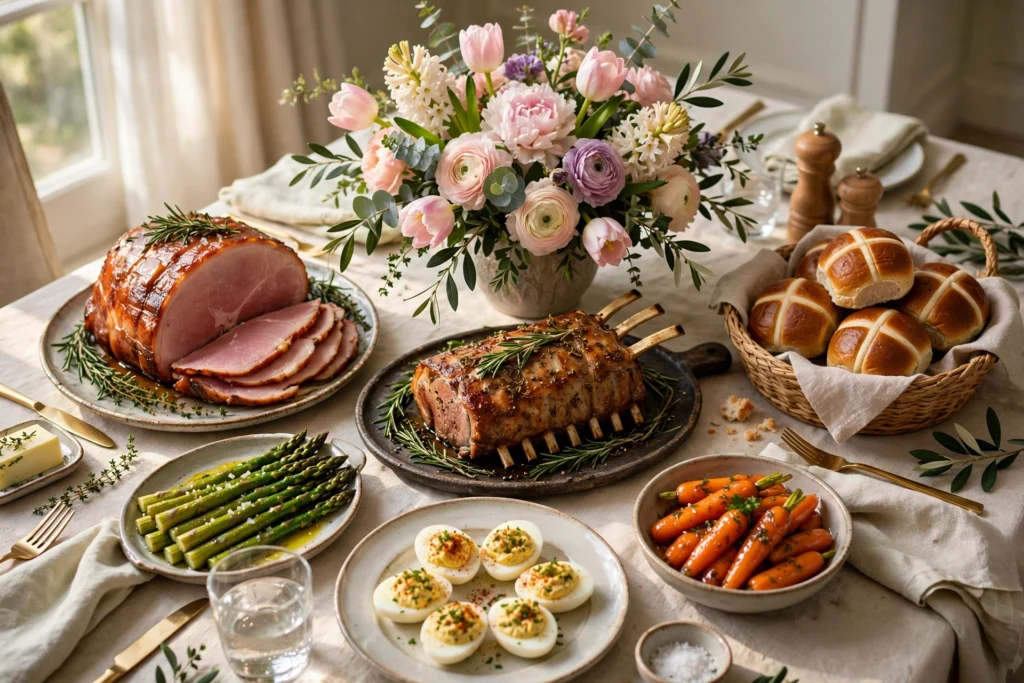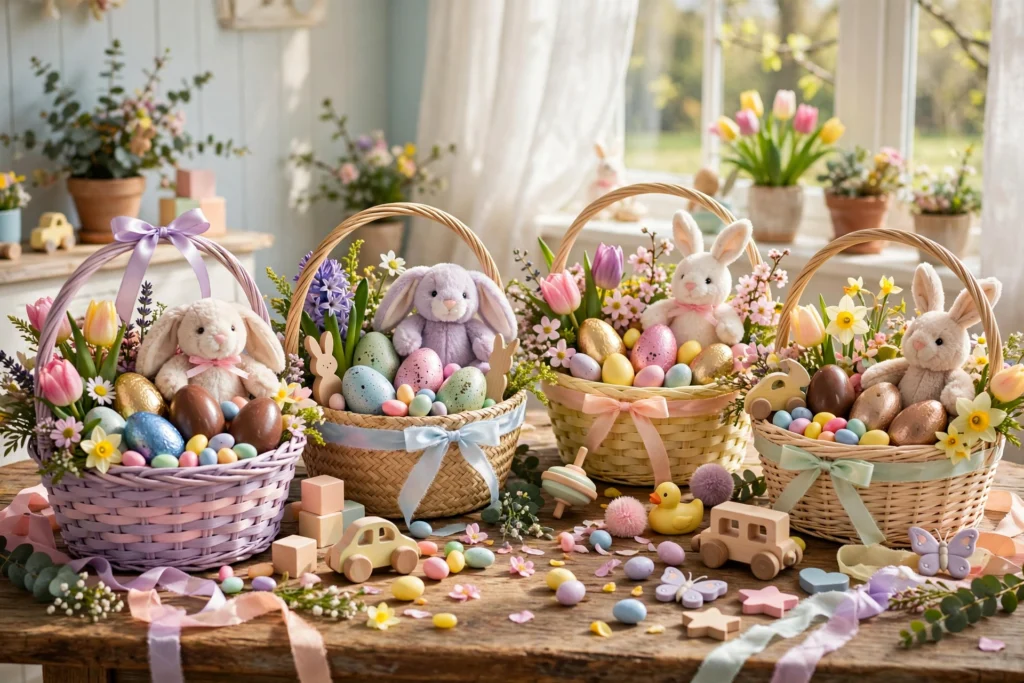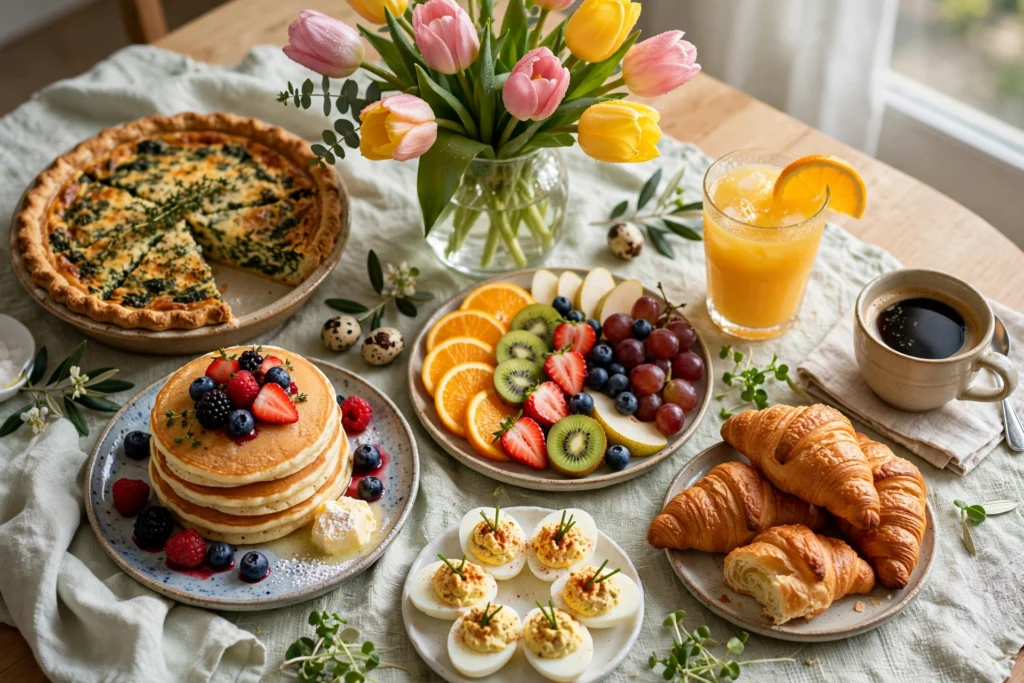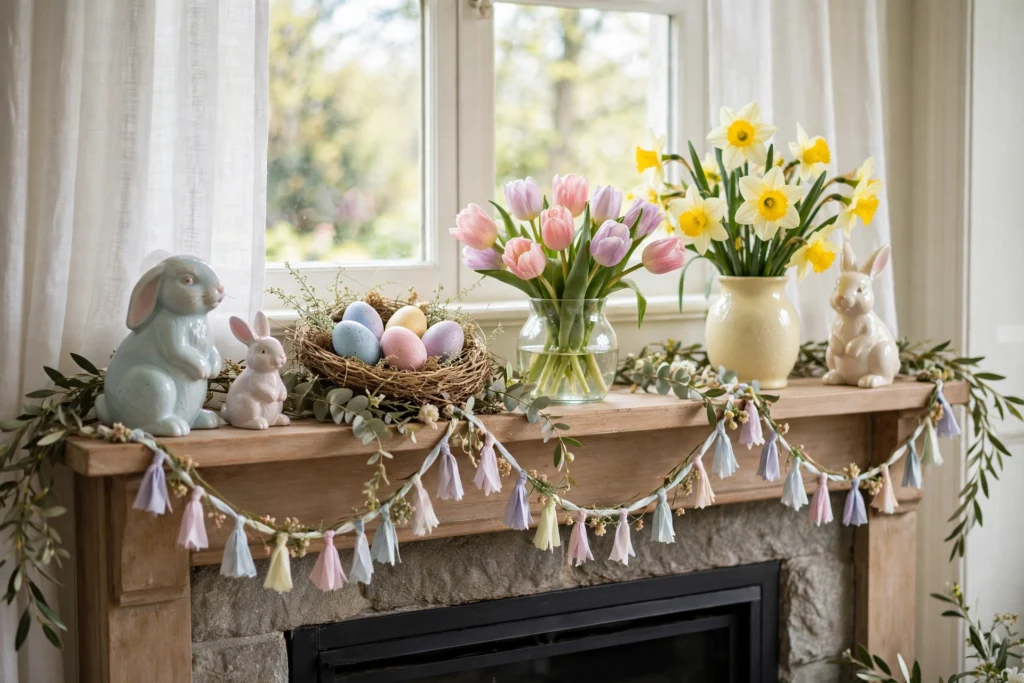
Chocolate bunnies and egg hunts are only one version of the story. The real easter traditions around the world include water fights in Poland, witch costumes in Sweden, exploding carts in Florence, kite flying in Bermuda, and midnight candlelight in Greece — a global patchwork of rituals shaped by centuries of faith, folklore, and local character. This guide tours easter traditions around the world country by country, explains where each custom came from, and shows how you can borrow the best ideas for your own celebration.
Easter is celebrated on every continent, but almost nowhere the same way twice. Understanding these traditions is not just fascinating — it is practical inspiration for travel, for teaching kids about world cultures, and for refreshing a holiday routine that feels stale. If Easter travel appeals to you, our Easter weekend in Orlando planning checklist covers a family-friendly domestic trip, and our best places to spend Christmas guide proves that holiday travel is worth planning around.
Easter Traditions Around the World at a Glance
| Country | Tradition | Local Name | What Happens |
|---|---|---|---|
| Poland | Water splashing | Śmigus-Dyngus | On Easter Monday, people douse each other with water |
| Sweden | Easter witches | Påskkärringar | Children dress as witches and trade drawings for candy |
| Greece | Red eggs & midnight service | — | Midnight candlelight service; red-dyed eggs cracked for luck |
| Germany | Egg trees | Osterbaum | Branches decorated with painted eggs, indoors and out |
| Italy | Exploding cart | Scoppio del Carro | A firework-packed cart is ignited in Florence on Easter Sunday |
| France | Giant omelette | — | A village cooks a 4,500-egg omelette in the town square |
| Spain | Holy Week processions | Semana Santa | Elaborate religious processions with floats and hooded penitents |
| Mexico | Burning Judas | Quema de Judas | Firework-filled effigies of Judas are exploded |
| Bermuda | Kite flying | — | Homemade kites flown on Good Friday |
| Australia | Easter bilby | — | A native marsupial replaces the Easter bunny |
| Czech Republic | Willow whipping | Pomlázka | Men lightly whip women’s legs with braided willow for health |
| United States | White House egg roll | — | Annual egg-rolling event on the White House lawn |
Europe’s Most Unusual Easter Traditions
Poland: Śmigus-Dyngus (Wet Monday)
On Easter Monday, Poland turns into the world’s friendliest water fight. Known as Śmigus-Dyngus or Wet Monday, the tradition has celebrants sprinkling — or outright drenching — each other with water. Historically, boys would sprinkle girls on Monday and girls would get revenge on Tuesday. Today it is an all-ages free-for-all with water guns, buckets, and in some towns, fire trucks getting involved.
The symbolism runs deep: water represents purification, baptism, and the washing away of winter. The tradition dates back to the 15th century, possibly earlier, with roots in pre-Christian spring rites of cleansing. If you want to borrow it: host a backyard water fight on Easter Monday. It is the perfect antidote to a sugar-heavy Sunday.
Sweden and Finland: The Easter Witches
In Sweden, Easter looks a lot like Halloween. Children dress as påskkärringar — Easter witches — in old clothes, painted rosy cheeks, and headscarves, carrying brooms and coffeepots. They go door to door delivering handmade Easter cards and drawings in exchange for candy, much like trick-or-treating.
The folklore behind it: legend held that witches flew to a mythical place called Blåkulla on brooms on the Thursday before Easter. To ward them off, people lit bonfires and fired guns — a tradition of Easter bonfires that survives in parts of Sweden today. The children’s costumes turned a frightening legend into a charming one.
Greece: Red Eggs and the Midnight Resurrection
Greek Easter — usually celebrated on a different date than Western Easter, following the Orthodox calendar — centers on Holy Saturday midnight. Churches fill with worshippers holding unlit candles; at midnight, the priest emerges with a single flame and passes it from candle to candle until the entire church glows. The cry of “Christos Anesti” (Christ is risen) goes up, fireworks light the sky, and the fast of Lent breaks.
Eggs are dyed deep red, symbolizing the blood of Christ and the renewal of life. After the service, families play tsougrisma — tapping their eggs against each other’s, with the owner of the last uncracked egg promised good luck for the year. On the island of Corfu, the tradition escalates: at 11 AM on Holy Saturday, residents hurl clay pots from balconies into the street, smashing them to ward off evil.
Germany: The Osterbaum (Easter Egg Tree)
Germans hang decorated eggs from branches — indoors in vases, outdoors on trees and bushes — creating Easter egg trees known as Osterbaum. The tradition symbolizes new life bursting from bare winter branches. Some families add a few eggs each year, building a collection over decades; the town of Saalfeld famously decorates a single apple tree with over 10,000 eggs.
Germany is also the birthplace of the Easter bunny himself — the Osterhase first appeared in German writings in the 1600s, a hare who laid colored eggs for well-behaved children. German immigrants carried the bunny to America in the 1700s, and the rest is confectionery history.
Italy: Scoppio del Carro (Explosion of the Cart)
Florence celebrates Easter with controlled chaos. A 30-foot-tall antique cart, packed with fireworks and pulled by white oxen, is stationed before the cathedral. During Easter Mass, a mechanical dove — the colombina, symbolizing the Holy Spirit — slides down a wire from the altar to the cart and ignites it in a spectacular explosion of light and sound.
The tradition dates to the Crusades, when a Florentine knight supposedly brought back flints from the Holy Sepulchre. A flawless explosion predicts a good harvest and a prosperous year. It is one of Europe’s most dramatic Easter spectacles and draws thousands of spectators.
France: The Giant Omelette of Bessières
In the town of Bessières in southwestern France, Easter Monday means one thing: a giant omelette. Legend says Napoleon once stopped in the town, enjoyed an omelette so much that he ordered the townspeople to gather every egg available and make an enormous one for his army. Today, the town’s knights of the omelette — in full ceremonial dress — crack some 4,500 eggs into a four-meter pan and cook an omelette that feeds a thousand people in the town square.
French children, meanwhile, are told a different Easter story than American ones: it is not a bunny who brings the chocolate, but flying church bells. Les cloches de Pâques are said to fly to Rome on Good Friday and return on Easter morning, dropping chocolates and sweets as they pass overhead.
Spain: Semana Santa
Spain’s Holy Week is among the world’s most visually stunning religious observances. In Seville, Málaga, and dozens of other cities, brotherhoods (cofradías) carry enormous floats — pasos — bearing statues of Christ and the Virgin through streets packed with spectators. Participants wear pointed hoods (capirotes) and robes, some walking barefoot or in chains as penance.
The processions run day and night for the entire week, accompanied by brass bands and saetas — haunting flamenco-style songs sung spontaneously from balconies. It is solemn, theatrical, and deeply moving, drawing over a million visitors to Seville alone.
Czech Republic and Slovakia: Pomlázka
On Easter Monday, Czech and Slovak men visit the homes of female relatives and friends carrying pomlázka — braided whips made from willow twigs and decorated with ribbons. They lightly whip the women’s legs while reciting a traditional rhyme, a ritual believed to transfer the willow’s vitality and ensure health and fertility for the coming year. The women reward them with painted eggs, chocolate, or a shot of plum brandy.
Easter Traditions in the Americas
Mexico: The Burning of Judas
Mexico’s Holy Week blends solemn Catholic observance with explosive folk tradition. In many towns, artisans build giant papier-mâché effigies of Judas — often caricaturing unpopular political figures — stuffed with fireworks. On Holy Saturday, the effigies are strung up and detonated in a shower of sparks, symbolizing the triumph of good over evil and the community’s collective grievances going up in smoke.
Earlier in the week, the town of Taxco stages some of the world’s most intense penitential processions, with hooded participants carrying heavy wooden crosses and bundles of thorns through the cobblestone streets.
Bermuda: Good Friday Kites
Bermuda’s signature Easter tradition is pure joy: on Good Friday, the sky fills with handmade kites. The custom supposedly began with a 19th-century Sunday school teacher who built a kite shaped like a cross to explain Christ’s ascension to his students. Today it is a beloved island-wide event — families spend weeks crafting elaborate kites from wood, paper, and cloth, then gather on beaches and hillsides to fly them. Competitions judge the most beautiful and best-flying designs.
United States: The White House Easter Egg Roll
America’s most famous Easter tradition is also one of its oldest continuous ones. Since 1878, children have gathered on the White House South Lawn the Monday after Easter to roll decorated hard-boiled eggs across the grass with spoons — a race, not a hunt. The event now draws tens of thousands of attendees with storytelling stages, musical performances, and appearances by the Easter Bunny. Tickets are distributed by lottery, and the tradition has survived wars, depressions, and pandemics.
Guatemala: Sawdust Carpets of Antigua
In Antigua, Guatemala, Holy Week produces some of the world’s most ephemeral art. Residents create alfombras — elaborate “carpets” of colored sawdust, flowers, pine needles, and fruit — covering the cobblestone streets along procession routes. The intricate designs, often religious in theme, take all night to create and are destroyed within minutes as the procession’s floats pass over them. The beauty is inseparable from its impermanence.
Easter Traditions in Oceania and Beyond
Australia: The Easter Bilby
Australia replaced the Easter bunny with the Easter bilby — and for good reason. Rabbits are an ecological disaster in Australia, an introduced species that has devastated native ecosystems. The bilby, a small endangered marsupial with long ears, became the conservation-minded alternative in the 1990s. Chocolate bilbies now outsell chocolate bunnies in many shops, with proceeds supporting bilby conservation. It is Easter tradition as environmental statement.
The Philippines: Salubong
In the Philippines, Easter dawn begins with the Salubong — a pre-dawn reenactment of the meeting between the risen Christ and his mother Mary. Two processions, one bearing the statue of Christ and one bearing a veiled statue of Mary, converge in the town plaza. A child dressed as an angel descends (often on a wire) to lift Mary’s veil of mourning, church bells ring, and grief turns to celebration as the sun rises. It is one of Asia’s most moving Easter rituals.
Ethiopia: Fasika
Ethiopian Orthodox Christians celebrate Fasika after a 55-day Lenten fast — one of the longest fasts in Christendom, during which the devout abstain from all animal products. The fast breaks after a midnight service with a feast centered on doro wat, a rich chicken stew, and tej, a honey wine. Easter in Ethiopia usually falls a week or two after Western Easter.
Where Common Easter Symbols Came From
| Symbol | Origin | Meaning |
|---|---|---|
| Decorated eggs | Ancient Persia and Egypt; adopted by early Christians | New life emerging from a seemingly lifeless shell — the resurrection |
| The Easter bunny | German folklore, 1600s (Osterhase) | Hares and rabbits symbolize fertility and spring renewal |
| Easter lilies | 19th-century American commercial cultivation | Purity and resurrection; traditionally decorate churches |
| Hot cross buns | Medieval England | The cross marks the crucifixion; spices represent embalming spices |
| New clothes (“Easter bonnets”) | European tradition of baptisms at Easter | New garments for new converts; renewal and fresh starts |
| Lamb | Jewish Passover and Christian symbolism | Christ as the Lamb of God; also the traditional spring meat |
| Pretzels | Medieval European monasteries | Arms crossed in prayer; associated with Lent and Easter |
Borrowing Traditions for Your Own Easter
You do not need a plane ticket to enrich your Easter. Here are the most borrowable traditions from this guide:
- Start an egg tree (Germany): Hang a few painted eggs on branches each year and watch the collection grow.
- Dye eggs red and play tsougrisma (Greece): The egg-tapping game needs no equipment and delights every age.
- Fly kites on Good Friday (Bermuda): A perfect outdoor family activity for the long weekend.
- Hold a Wet Monday water fight (Poland): The ideal Easter Monday energy-burner for kids.
- Make pysanky-style eggs (Ukraine): Wax-resist egg decorating is a craft project and an art form in one.
- Cook a giant communal omelette (France): Scale the Bessières spirit to a neighborhood brunch — one huge pan, everyone contributes eggs.
- Serve a midnight feast (Greece/Ethiopia): Even a simple late-night dessert after the kids are asleep makes Easter feel like an event, not just a day.
Easter Monday Traditions Worth Stealing
In much of the world, Easter is a two-day holiday — and Easter Monday has its own distinct traditions. Poland’s Śmigus-Dyngus water fights turn the day after Easter into the year’s most playful morning. In France, the giant omelette of Bessières feeds the whole town. In the Czech Republic and Slovakia, Pomlázka whipping rituals continue. In the UK, Easter Monday brings funfairs, football matches, and egg-rolling competitions down steep hills — the most famous at Avenham Park in Preston, where decorated eggs race to the bottom.
The American habit of treating Easter as a single Sunday leaves a great day on the table. Borrow the two-day mindset: keep decorations up through Monday, plan one low-key activity (a water fight, a kite-flying outing, a leftover brunch), and let the holiday breathe. The families with the fondest Easter memories are usually the ones who stretched it past Sunday.
Frequently Asked Questions
Why do Easter traditions vary so much between countries?
Easter absorbed local pre-Christian spring festivals as Christianity spread, so each region’s existing customs — water rites, bonfires, egg decorating — merged with the Christian story. The result is a holiday with one theological core and dozens of cultural expressions.
What is the most unusual Easter tradition in the world?
Contenders include Florence’s exploding firework cart, Corfu’s balcony pot-smashing, the Czech willow-whipping ritual, and France’s 4,500-egg omelette. Each is deeply meaningful locally despite sounding outlandish to outsiders.
Why does Greek Orthodox Easter fall on a different date?
Orthodox churches calculate Easter using the Julian calendar and require it to follow the Jewish Passover, while Western churches use the Gregorian calendar. The dates sometimes coincide and sometimes differ by weeks.
Where did the Easter bunny come from?
From German folklore — the Osterhase (Easter hare) appeared in German writings in the 1600s as a hare that laid colored eggs for good children. German immigrants brought the tradition to Pennsylvania in the 1700s, and it spread across America from there.
What is Śmigus-Dyngus?
Poland’s Easter Monday tradition of playfully drenching each other with water, symbolizing purification and the washing away of winter. It dates back centuries and today involves water guns, buckets, and whole-town water fights.
How can I teach kids about Easter traditions around the world?
Pick three or four countries from this guide, try one hands-on activity from each (dye red eggs for Greece, fly kites for Bermuda, make an egg tree for Germany), and cook one traditional food. Experiencing a tradition beats reading about it every time.