Planning the holiday table is one of spring’s happiest projects, and the right easter dinner ideas are the difference between a chaotic afternoon and a relaxed, memorable feast. Whether you are hosting a dozen people for the first time or refining a family tradition that spans generations, this guide gives you complete easter dinner ideas for every situation: classic menus, modern alternatives, make-ahead timelines, special-diet swaps, and portion math that keeps you out of the kitchen when your guests arrive. These are not just recipe names — they are full menu plans with pairings, prep schedules, and hosting wisdom you can use year after year.
Easter dinner sits in a sweet spot on the holiday calendar. It carries the warmth of a major celebration without the pressure of Christmas or the formality of Thanksgiving, and the arrival of spring produce — asparagus, peas, artichokes, rhubarb, and fresh herbs — gives you ingredients that practically plan the menu themselves. Our farmers market food guide shows what is in season and worth buying, and if you enjoy the rhythm of big holiday cooking, our Christmas dinner ideas guide covers the winter version of this same planning system.
The Easter Dinner Formula
Before choosing specific dishes, understand the structure that every successful holiday meal follows. Easter dinner works best with five components, and every menu in this guide hits all of them:
- Welcome bites: Something small within 15 minutes of arrival. Guests are hungry and the kitchen smells like a promise.
- First course: A spring soup or salad. Light, colorful, and mostly make-ahead.
- The main event: A roast or centerpiece protein with two to four sides. This is the emotional center of the meal.
- Bread: Hot rolls or Easter bread. Non-negotiable for mopping up sauces and gravy.
- Dessert and coffee: The sweet finish, served unhurriedly.
You do not need restaurant-level ambition in every category. Pick one showpiece (usually the main), keep the rest simple and reliable, and your guests will remember the meal as effortless — even though this guide ensures the effort is simply well organized.
| Course | Budget Option | Classic Option | Splurge Option |
|---|---|---|---|
| Welcome bites | Deviled eggs and crudités | Cheese board with spring fruit | Shrimp cocktail and smoked salmon canapés |
| First course | Simple garden salad | Asparagus soup | Lobster bisque |
| Main | Honey-glazed ham | Herb-crusted rack of lamb | Standing rib roast |
| Sides | Mashed potatoes, glazed carrots | Dauphinoise potatoes, roasted vegetables | Truffle mashed potatoes, charred asparagus |
| Bread | Store-bought rolls, warmed | Homemade Parker House rolls | Italian Easter bread |
| Dessert | Carrot cake from a mix | From-scratch carrot cake | Coconut layer cake |
Complete Easter Dinner Menus
Four full menus, each balanced across the five components. Choose one and cook it straight through, or mix and match courses across menus.
Menu 1: The Traditionalist — Honey-Glazed Ham
Ham is the most forgiving Easter main: it arrives already cooked, so you are glazing and warming rather than roasting from raw. Ideal for first-time hosts and for anyone who wants to actually enjoy their own party.
- Welcome bites: Classic deviled eggs and a cheese board with apples and grapes
- First course: Creamy potato-leek soup (make ahead, reheat gently)
- Main: Spiral-cut ham with a honey, brown sugar, and Dijon glaze
- Sides: Scalloped potatoes, honey-glazed carrots, Southern-style green beans with bacon
- Bread: Warm dinner rolls with salted butter
- Dessert: Carrot cake with cream cheese frosting
- Drinks: Riesling or sparkling cider; ham’s sweetness loves a touch of sweetness in the glass
Timing: The ham needs about 10 minutes per pound at 325°F for a spiral-cut half ham. Start the scalloped potatoes an hour before serving — they rest happily while the ham is glazed. Make the deviled eggs and carrot cake the day before.
Menu 2: The Classic — Herb-Crusted Rack of Lamb
Lamb is Easter’s most traditional main across much of Europe, and a rack of lamb cooks faster than most people expect — about 25 minutes in a hot oven. The herb crust does all the visual work.
- Welcome bites: Whipped feta crostini with hot honey and thyme
- First course: Shaved asparagus salad with Parmesan and lemon
- Main: Rack of lamb with a Dijon, garlic, rosemary, and breadcrumb crust
- Sides: Creamy polenta, roasted spring vegetables (asparagus, carrots, radishes), mint chimichurri
- Bread: No-knead rustic bread
- Dessert: Lemon olive oil cake with berries
- Drinks: Pinot Noir or a dry rosé
Timing: Sear the racks first, then roast at 425°F for 20–25 minutes to 125°F internal for medium-rare. Rest 10 minutes. Everything else — polenta, vegetables, salad prep — happens while the lamb rests or roasts.
Menu 3: The Crowd-Pleaser — Slow-Roasted Turkey Breast or Whole Turkey
For families who want Christmas-adjacent comfort in April. A bone-in turkey breast feeds six to eight beautifully and roasts in under two hours, while a whole bird handles the biggest gatherings.
- Welcome bites: Pimento cheese dip with crackers and celery
- First course: Spring pea soup with mint and crème fraîche
- Main: Herb-butter roasted turkey (breast or whole) with gravy
- Sides: Classic bread stuffing, creamy mashed potatoes, roasted carrots with dill, green beans almondine
- Bread: Parker House rolls
- Dessert: Coconut layer cake or strawberry shortcake
- Drinks: Oaked Chardonnay or sparkling wine
Menu 4: The Modern — Spring Vegetable Feast (Vegetarian-Friendly)
Not every Easter table centers on meat, and spring produce deserves a menu of its own. This menu works as a full vegetarian dinner or as the side spread for a mixed table.
- Welcome bites: Burrata with roasted beets, pistachios, and orange
- First course: Chilled pea and mint soup
- Main: Whole roasted cauliflower with romesco, or mushroom Wellington
- Sides: Farro with asparagus and lemon, roasted carrots with harissa yogurt, spring greens with strawberries and goat cheese
- Bread: Focaccia with rosemary and flaky salt
- Dessert: Rhubarb crisp with vanilla ice cream
- Drinks: Sauvignon Blanc or a citrusy spritz
Easter Dinner Recipes by Course
Prefer to build your own menu? Here are the strongest dishes in each category, with the key technique notes that make them work.
Appetizers That Actually Get Eaten
Easter appetizers should be one-bite, room-temperature friendly, and gone by the time the first course lands. Deviled eggs are the undisputed champion — they are on-theme, cheap, and everyone eats them. Make them the day before, transport the whites and filling separately, and pipe the filling in just before guests arrive so they look pristine.
Other reliable options: a cheese board built around one soft cheese, one hard cheese, and one blue, with honey and nuts; whipped feta with roasted vegetables on crostini; and shrimp cocktail, which feels celebratory for almost no effort. Avoid anything that needs the oven in the last hour — the main dish owns the oven.
Mains: Ham, Lamb, and Beyond
Honey-glazed ham: Buy a spiral-cut, bone-in half ham (about 7–9 pounds feeds 10–12). Score the surface, brush with a glaze of honey, brown sugar, Dijon, and a splash of cider vinegar, and bake tented in foil. The glaze goes on in the final 20 minutes so it caramelizes instead of burning. Save the bone for split pea soup — it is one of cooking’s great free lunches.
Rack of lamb: French the bones or buy them frenched. Sear fat-side down to render, then coat with Dijon, press on a mixture of breadcrumbs, minced garlic, rosemary, and parsley, and roast at 425°F until a thermometer reads 125°F for medium-rare. Two racks feed six generously. The most common mistake is overcooking out of fear — trust the thermometer, not the clock.
Leg of lamb: The economical lamb option for a crowd. A 5–7 pound bone-in leg, rubbed with garlic, rosemary, olive oil, and anchovy paste (it melts away and adds depth, not fishiness), roasts at 325°F for about 20 minutes per pound to medium-rare. Rest it a full 30 minutes.
Alternatives: A standing rib roast borrows Christmas luxury for spring; a glazed pork loin is the budget ham alternative; cedar-plank salmon suits the seafood-leaning table. For more inspiration across proteins, browse the menus in our Christmas dinner ideas guide — the roasting principles transfer directly.
Sides: The Spring Advantage
Easter sides should taste like the season changed. Asparagus is the single best Easter side dish — it is in season, it cooks in minutes, and it looks like spring on a plate. Roast it at 425°F with olive oil and salt for 10–12 minutes, then finish with lemon zest and shaved Parmesan.
Other winners: honey-glazed carrots (baby carrots, butter, honey, a splash of orange juice, thyme); creamy mashed potatoes (Yukon Golds, warm milk, real butter — never cold dairy); scalloped potatoes for the ham menu; a spring pea risotto if you want one impressive starch; and a simple green salad with strawberries, goat cheese, and candied pecans to cut the richness of the mains.
Roasted radishes deserve a special mention: raw radishes are peppery and divisive, but roasted they turn sweet and mellow, blush pink, and convert skeptics. Toss with olive oil and salt, roast at 425°F for 20 minutes.
Breads Worth the Effort
Homemade rolls signal “special occasion” more reliably than almost anything else. Parker House rolls are the classic Easter choice — soft, buttery, fold-over rolls that bake in a single pan. Make the dough the day before and refrigerate; shape and bake on Easter afternoon.
Italian Easter bread — a sweet, braided brioche with dyed eggs nestled in the braids — doubles as a centerpiece. It is a project, but it photographs beautifully and the leftovers make extraordinary French toast on Monday morning.
The Make-Ahead Timeline
The secret to enjoying your own Easter dinner is front-loading the work. Here is a timeline that leaves Easter Sunday for the main dish and final assembly only.
| When | Tasks | Why Now |
|---|---|---|
| 1 week before | Finalize menu and guest count; shop for pantry items, wine, and non-perishables; make dessert if it freezes well | Beats the pre-holiday grocery rush |
| 3 days before | Buy fresh produce and dairy; brine nothing (Easter mains rarely need it); make cranberry-style sauces or chutneys | Sauces taste better after a day of melding |
| 2 days before | Bake carrot cake or layer cake; make deviled egg filling; prepare soup base | Cakes frost better cold; fillings deepen overnight |
| Day before | Prep all vegetables (wash, trim, cut); assemble casseroles unbaked; make roll dough; set the table; chill drinks | The single highest-leverage day of the week |
| Easter morning | Assemble deviled eggs; bake rolls; start the main dish; finish soup | Kitchen is calm, guests are hours away |
| 2 hours before serving | Main dish in the oven; sides prepped for their turn; set out appetizers | Oven choreography begins |
| 30 minutes before | Rest the meat; finish vegetables; warm bread; dress the salad | Resting meat is not idle time — it is when everything else happens |
Portion Math: How Much to Buy
Running out of food is the host’s nightmare; drowning in leftovers for two weeks is the quiet second nightmare. Use this table for the main protein and scale sides proportionally.
| Guests | Bone-in Ham | Rack of Lamb | Turkey | Total Sides (cooked) |
|---|---|---|---|---|
| 4–6 | 4–5 lb half ham | 2 racks | 8–10 lb breast or small bird | 4–5 quarts |
| 8–10 | 7–9 lb half ham | 3 racks | 12–14 lb bird | 6–8 quarts |
| 12–16 | 10–12 lb whole ham | 4–5 racks | 16–20 lb bird | 9–12 quarts |
| 16–20 | 14–16 lb whole ham | 6 racks or add a leg | 20–24 lb bird | 12–15 quarts |
A good rule of thumb: plan about 1.25 pounds of total food per adult guest, and remember that Easter leftovers are a feature, not a bug — ham becomes split pea soup and sandwiches, lamb becomes shepherd’s pie, and turkey becomes pot pie for the whole week.
Easter Dinner Ideas for Special Diets
Someone at every modern table has a dietary restriction. Planning for it upfront is easier and kinder than improvising on the day.
| Diet | Main Dish Swap | Side Adjustments | Dessert Option |
|---|---|---|---|
| Vegetarian | Whole roasted cauliflower with romesco, or mushroom Wellington | Use vegetable stock in gratins and soups; olive-oil mashed potatoes | Any classic cake or pie |
| Vegan | Stuffed acorn squash or lentil-mushroom loaf | Coconut-milk mashed potatoes, maple-glazed vegetables, vegan rolls | Vegan chocolate mousse or fruit crisp |
| Gluten-free | Any roast (naturally GF); check ham glaze ingredients | Thicken gravy with cornstarch; rice-based stuffing | Flourless chocolate cake, pavlova, macarons |
| Dairy-free | Herb-roasted meats are naturally dairy-free | Olive oil instead of butter; coconut cream in gratins | Sorbet, dairy-free chocolate truffles |
| Low-carb | Lamb or ham with extra vegetables | Cauliflower mash, roasted radishes, big salad | Berries with whipped mascarpone |
Setting the Table
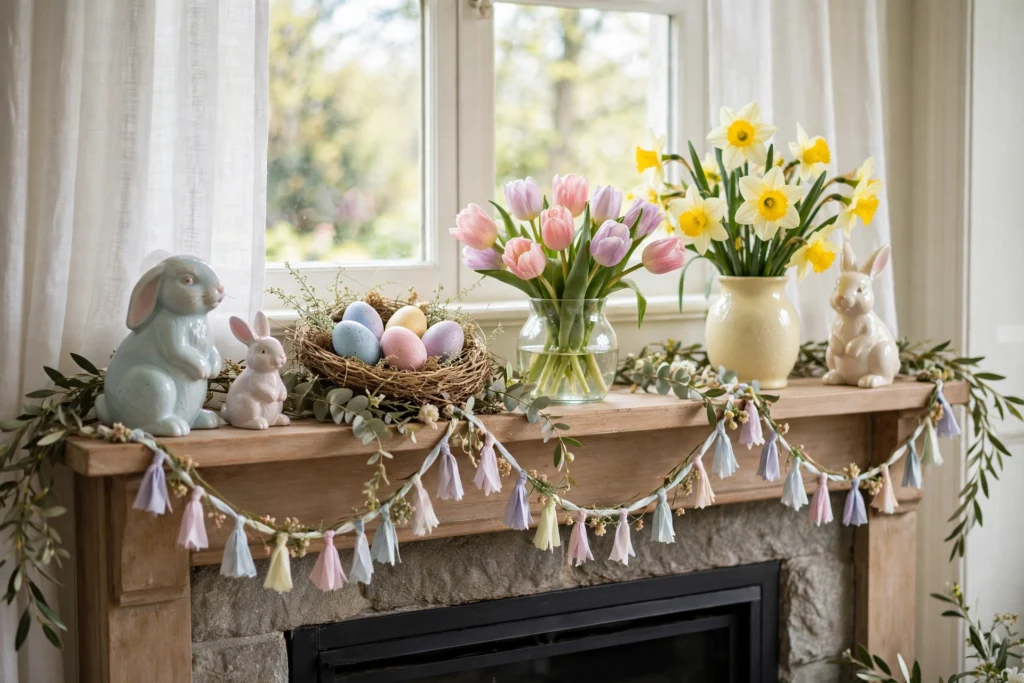
Easter is the easiest holiday to decorate for because the season does half the work. A runner or simple white cloth, a low arrangement of tulips or daffodils (keep it low so guests can see each other), and a bowl of dyed eggs are enough. Add place cards — even handwritten ones — and the table instantly feels intentional.
Light candles even at lunch; daylight plus candlelight is flattering in a way overhead lights never are. Put water glasses and wine glasses out before guests arrive, and keep a pitcher of something non-alcoholic — sparkling lemonade with mint — on the table for kids and non-drinkers.
The Leftover Strategy
Plan leftovers deliberately instead of discovering them. Night one: open-faced ham sandwiches with mustard and pickles, or cold lamb with mint chimichurri in pitas. Night two: the big transformation — ham becomes split pea or potato soup, turkey becomes pot pie or tetrazzini, lamb becomes shepherd’s pie with the leftover mashed potatoes.
Freeze in meal-sized portions with labels and dates; most cooked Easter mains keep three months frozen. Deviled eggs do not freeze well and should be eaten within two days — a hardship no one has ever complained about. Extra dyed eggs become egg salad, Cobb salad topping, or Scotch eggs for the adventurous.
Frequently Asked Questions
What is the most traditional Easter dinner?
Roast lamb is the most traditional Easter main across Christian cultures, symbolizing spring and renewal. In the United States, honey-glazed ham is equally traditional and more common — it is easier, feeds a crowd cheaply, and the leftovers are legendary.
How far in advance can I prepare Easter dinner?
Most of it. Desserts, deviled eggs, soups, sauces, and casseroles can be made one to two days ahead. Vegetables can be prepped the day before. On Easter Sunday itself you should only need to cook the main protein, bake bread, and finish vegetables.
What time should Easter dinner be served?
Most families serve between 1 PM and 4 PM, especially with an egg hunt or church service in the morning. A mid-afternoon dinner lets you serve one big meal instead of lunch plus dinner, and the leftovers cover the evening.
How do I keep food warm for a buffet?
Use the oven at 200°F as a holding oven, slow cookers on warm for sides, and chafing dishes if you have them. Never hold food between 40°F and 140°F for more than two hours. Slice meats just before serving rather than ahead.
What wine goes with Easter dinner?
Match the main: Pinot Noir or dry rosé with lamb, Riesling or sparkling wine with ham, Chardonnay with turkey. When in doubt, buy a dry rosé — it pairs with nearly every Easter menu and looks the part.
How do I host Easter dinner on a budget?
Ham is the cheapest impressive main per serving. Lean on seasonal produce (asparagus, carrots, peas are cheap in spring), make bread and dessert from scratch, and ask guests to bring a side or appetizer — most people are happy to contribute.