Dairy-Free Indian Recipes: 12 Flavor-Packed Classics
Indian cooking and dairy-free eating have a complicated relationship: ghee, paneer, and yogurt are beloved, but the cuisine’s vegetarian traditions – especially in the south – are full of naturally dairy-free brilliance. Coconut, mustard oil, and ground nuts have always done the richness work in huge parts of India, which means this guide is built on authentic technique, not apology substitutions.
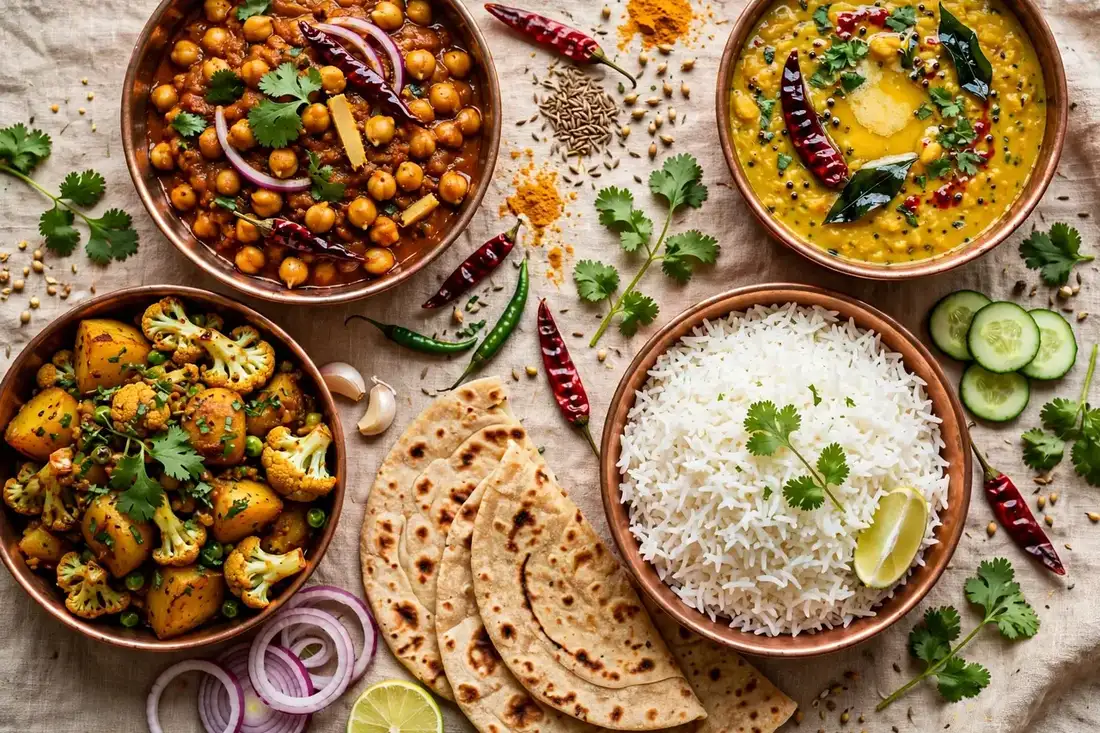
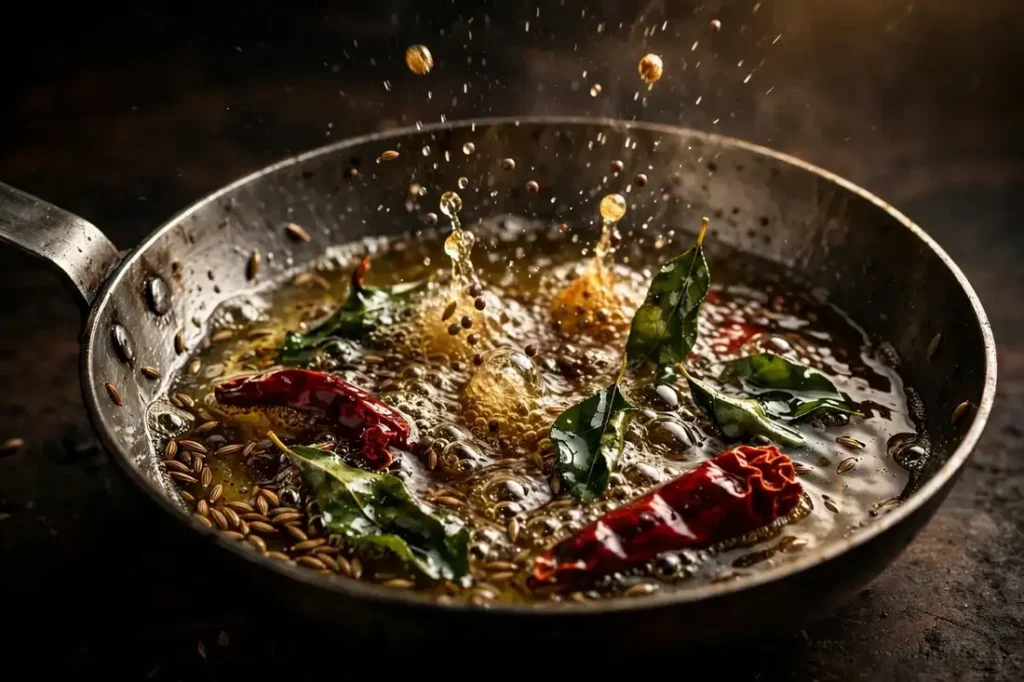
The twelve recipes below span the subcontinent: Punjabi comfort (chana masala, dal tadka, rajma), southern coconut curries and sambar, Goan vindaloo heat, and Bengali-leaning vegetable dishes. You will learn the two moves that define Indian flavor – blooming whole spices in hot oil (tadka) and building a proper onion-tomato masala base – and both are naturally dairy-free.
A word on ghee: where traditional recipes call for it, this guide uses coconut oil or mustard oil, and honestly, in heavily spiced curries you will not miss it. For creamy finishes, cashew cream or coconut milk step in. Buy whole spices and toast them fresh; pre-ground garam masala from a dusty jar is the number-one reason home Indian food tastes flat.
Indian cuisine is one of the most rewarding for dairy-free cooking because its flavor architecture – bloomed spices, browned onions, ginger-garlic foundations – never depended on dairy to begin with. Yes, ghee and cream appear in restaurant dishes, but home-style Indian cooking has always had coconut-based coastal curries, mustard-oil Bengali dishes, and lentil dals that are naturally dairy-free. The recipes below span this range, from inherently dairy-free classics to smart adaptations of creamy favorites. Once you taste a properly built masala, you will understand: the spices were always the star.
The Dairy-Free Pantry: Swaps That Actually Work
Going dairy-free does not mean giving up creamy, rich, satisfying food – it means learning a short list of swaps that do the same jobs milk, butter, cream, and cheese used to do. For everyday cooking milk, unsweetened soy milk is the most versatile: it has the protein to behave like dairy in sauces and baking. Oat milk is the crowd-pleaser for coffee, cereal, and creamy soups because it is naturally sweet and full-bodied. Coconut milk (the canned, full-fat kind) is your heavy-cream stand-in for curries, chowders, and whipped-style desserts.
For butter, the swap depends on the job. In sautes and roasting, a good olive oil or avocado oil beats butter on flavor anyway. In baking, refined coconut oil or a quality vegan butter stick gives the tenderness and flakiness you want – just avoid anything labeled merely as spread, which has too much water. For cream sauces, raw cashews blended with hot water into cashew cream are the professional kitchen’s open secret: neutral, silky, and endlessly adaptable. A squeeze of lemon in cashew cream even mimics sour cream convincingly.
Cheese is the hardest goodbye, and honesty helps: nothing melts exactly like mozzarella. But nutritional yeast gives a genuinely cheesy, savory depth to sauces, popcorn, and pasta water emulsions; a sprinkle of it plus salt over olive-oil pasta scratches the parmesan itch better than most vegan shreds. And remember that entire cuisines – much of Chinese, Thai, Japanese, Mexican, and Middle Eastern cooking – were dairy-free long before it was a label, which is why this guide leans on them heavily.
Butter alternatives are not interchangeable, and knowing which to reach for is the fastest way to level up dairy-free cooking. For spreading and finishing, cultured vegan butters (the ones with a tangy, fermented flavor) beat basic margarine by a mile. For baking, stick butters formulated for baking – they have the right fat percentage and water content, while tub-style spreads make cakes greasy and cookies flat. For high-heat searing, refined coconut oil or avocado oil outperform vegan butter, which can burn. Taste your butter alternative on toast before you cook with it; if you would not eat it plain, it will not improve your food.
Cheese alternatives have improved enormously, but they still follow rules. Shredded vegan mozzarella melts best under a broiler or on pizza where direct heat helps it along; in a covered dish it can stay stubbornly solid. For parmesan-style finishing, nutritional yeast blended with ground cashews and salt gives the salty-umami punch without any melting required. Cream cheese alternatives work beautifully in frostings and dips but can turn grainy in hot sauces – add them off the heat. And remember that many dishes do not need a cheese substitute at all: a dairy-free pesto, a romesco, or a tahini drizzle often satisfies the craving better than an imitation.
How to Keep Dairy-Free Cooking Delicious, Not Deprived
The number-one rule: replace the fat, not just the dairy. Dairy carries flavor and richness, so when you remove it, add richness back deliberately – olive oil, coconut milk, nuts, avocado, or a tahini drizzle. A dairy-free dish that tastes thin usually is not missing cheese; it is missing fat. Taste your sauces before serving and ask whether they need salt, acid, or oil; one of the three is almost always the answer.
Read labels like a detective. Dairy hides under names like whey, casein, lactose, and milk solids in bread, crackers, seasoning blends, and even some canned stocks. If you cook mostly from whole ingredients – vegetables, beans, grains, meats, spices – you sidestep the problem entirely, which is another reason the recipes in this guide favor simple, whole-food cooking over processed substitutes.
Finally, lean into umami. Without cheese and butter, the savory depth has to come from elsewhere: tomato paste browned until dark, mushrooms (especially dried shiitakes), soy sauce or tamari, miso, olives, capers, and toasted nuts. Build these into your weeknight rotation and nobody at the table will describe dinner as missing anything – they will just ask for seconds.
Umami is the secret weapon of dairy-free cooking, because so much of what we miss about cheese and butter is actually savoriness, not dairy flavor itself. Tomato paste browned in olive oil, miso whisked into dressings, soy sauce in mushroom dishes, and nutritional yeast over roasted vegetables all deliver the deep, savory satisfaction that keeps food from tasting like something is missing. Dried mushrooms – porcini ground to powder, shiitakes in broth – are the most powerful tool in the kit; a spoonful of mushroom powder in a soup or gravy reads as richness, not mushroom flavor.
Texture does as much work as flavor. Dairy adds creaminess, but creaminess can come from blended cashews, silken tofu, white beans, or even a well-emulsified vinaigrette. Crunch matters too: toasted nuts, panko browned in olive oil, and crispy chickpeas give the textural contrast that cheese often provided. And do not underestimate acidity – a squeeze of lemon or a splash of vinegar at the end brightens a dairy-free dish the way a knob of butter finishes a French sauce. When a dairy-free meal tastes flat, the fix is almost always salt, acid, or umami, in that order.
Dairy-Free Nutrition: Covering What Milk Provided
Going dairy-free removes a major source of calcium, so replacing it deliberately matters – especially for kids, teens, and older adults. Fortified plant milks typically match cow’s milk at around 300 mg of calcium per cup, but check the label: not all brands fortify, and the calcium settles, so shake the carton every time. Tofu set with calcium sulfate, canned sardines and salmon with bones, tahini, almonds, and cooked collard greens or kale all contribute meaningfully. A day built on fortified milk, tofu, and greens can meet calcium needs without a single dairy product.
Vitamin D and B12 deserve attention because dairy is often fortified with D and animal products are the natural B12 source. Many plant milks are fortified with vitamin D2 or D3 – again, the label tells the story, and D3 from lichen is the vegan-friendly form. B12 comes reliably only from fortified foods (nutritional yeast, plant milks, cereals) or a supplement; it is not something to leave to chance, since deficiency develops slowly and silently. If you eat eggs, they contribute some B12, but fortified foods or a basic B12 supplement are the dependable route.
Protein is rarely the problem people fear, but completeness is worth understanding. Dairy provides complete protein; most plant proteins are slightly low in one amino acid – but eating varied proteins across the day (beans with grains, nuts with seeds, soy in any form) covers every essential amino acid without any single meal needing to be perfect. Soy milk, tofu, tempeh, and edamame are complete proteins on their own. A dairy-free diet built on legumes, whole grains, nuts, and soy easily meets protein needs; the recipes in this guide lean on these staples constantly.
Reading labels becomes second nature, and the hidden-dairy list is longer than beginners expect. Whey, casein, lactose, milk powder, and nougat are obvious once you know them; less obvious are natural flavors (sometimes dairy-derived), caramel color (usually fine, occasionally not), and the dreaded may contain milk on shared equipment. In the US, the allergen statement is your friend – FDA labeling requires milk to be called out. Baked goods, deli meats, and spice blends are the most common surprise sources; when in doubt, the plain whole ingredient beats the processed product.
Eating out dairy-free is a skill, and restaurants are better at it than they used to be. State the need plainly – allergy versus preference changes how carefully a kitchen handles it – and ask about the specific risks: butter on the grill, cream in the soup, cheese in the ‘vegan’ salad. Cuisines that traditionally use little dairy (Thai, Vietnamese, Japanese, Ethiopian, much of Chinese and Mexican cooking) are the easiest wins. Pizza and French restaurants demand the most vigilance. And always have a backup plan: a protein bar in the bag has rescued many dairy-free diners from a bread-and-fries dinner.
Fortified foods are the quiet backbone of a nutritionally complete dairy-free diet, so choose them intentionally rather than by accident. Compare plant milks on protein (soy and pea lead, almond and oat trail), calcium, vitamin D, and B12 – the nutrition panel varies enormously between brands. Nutritional yeast fortified with B12 earns its place as both seasoning and supplement. And remember that whole foods still do the heavy lifting: no fortified product replaces a diet built on vegetables, legumes, whole grains, nuts, and fruits. The fortification just closes the specific gaps dairy used to fill.
12 Dairy-Free Indian Recipes
Twelve complete, tested recipes below – every one naturally dairy-free or adapted with the swaps above, every one built for real weeknight cooking. Each includes full ingredients, step-by-step instructions, timing, and a cook’s tip.
1. Chana Masala
The chickpea curry that anchors a thousand weeknights: chickpeas simmered in a deeply spiced onion-tomato masala with ginger, finished with garam masala and cilantro. The secret is cooking the masala until the oil separates at the edges – that visual cue means the raw onion taste is gone and the flavor is fully developed.
Time: 40 min | Serves: 6 | Difficulty: Easy
Ingredients
- 2 cans chickpeas, drained
- 3 tbsp coconut oil
- 1 large onion, finely diced
- 1 tbsp grated ginger
- 3 garlic cloves, minced
- 2 tsp cumin seeds
- 1 can (14 oz) crushed tomatoes
- 2 tsp ground coriander
- 1 tsp turmeric
- 1 tsp garam masala
- 1/2 tsp cayenne
- Cilantro and rice, to serve
Instructions
- Sizzle cumin seeds in coconut oil 30 seconds.
- Add onion; cook 10 minutes until deeply golden.
- Add ginger, garlic; cook 2 minutes.
- Add tomatoes, coriander, turmeric, cayenne; cook 10 minutes until oil separates.
- Add chickpeas and 1 cup water; simmer 15 minutes.
- Stir in garam masala; serve with cilantro and rice.
Cook’s tip: A pinch of baking soda in the simmering liquid makes canned chickpeas creamy like slow-cooked dried ones.
2. Dal Tadka
Red lentils cooked to silk, then hit with a sizzling tadka of garlic, cumin, and dried chilies in hot oil. The tadka is poured over at the table for maximum drama and aroma. This is Indian comfort food in its purest form – cheap, nourishing, and ready in 30 minutes.
Time: 30 min | Serves: 6 | Difficulty: Easy
Ingredients
- 1.5 cups red lentils, rinsed
- 1 tsp turmeric
- 4 cups water
- 3 tbsp coconut oil
- 1 tsp cumin seeds
- 4 garlic cloves, sliced
- 2 dried red chilies
- 1 tsp mustard seeds
- Salt
- Cilantro and rice, to serve
Instructions
- Simmer lentils, turmeric, water, and salt 20 minutes until completely soft.
- Whisk or blend until smooth; keep warm.
- Heat coconut oil until shimmering.
- Add mustard seeds; when they pop, add cumin, garlic, chilies.
- Fry 1 minute until garlic is golden.
- Pour sizzling tadka over dal; top with cilantro.
Cook’s tip: Red lentils dissolve into creaminess – brown or green lentils will not give the same silk.
3. Aloo Gobi
Potatoes and cauliflower tumbled with turmeric, cumin, and ginger until golden and tender – the dry-style sabzi that proves vegetables need no sauce to satisfy. The trick is giving the vegetables space in the pan so they roast rather than steam.
Time: 35 min | Serves: 4 | Difficulty: Easy
Ingredients
- 1 lb potatoes, 3/4-inch cubes
- 1 small cauliflower, florets
- 3 tbsp mustard or coconut oil
- 1 tsp cumin seeds
- 1 tsp turmeric
- 1 tbsp grated ginger
- 2 tomatoes, diced
- 1 tsp ground coriander
- 1/2 tsp cayenne
- Peas (optional)
- Cilantro
Instructions
- Heat oil; sizzle cumin seeds 30 seconds.
- Add potatoes; cook 8 minutes, turning.
- Add cauliflower, turmeric, salt; cook 8 minutes.
- Add ginger, tomatoes, coriander, cayenne; cover and cook 10 minutes.
- Uncover; cook 5 minutes until dry and golden.
- Top with peas and cilantro.
Cook’s tip: Do not stir constantly – letting the vegetables sit builds the golden crust.
4. Baingan Bharta
Smoky mashed eggplant – the whole eggplant is charred directly over a flame until collapsing, then mashed with onion, tomato, peas, and spices. The smoke is the dish; a gas burner or grill gives what an oven cannot. Naturally vegan and deeply savory.
Time: 45 min | Serves: 4 | Difficulty: Medium
Ingredients
- 2 large eggplants
- 3 tbsp mustard oil or coconut oil
- 1 onion, diced
- 2 tomatoes, diced
- 1 tbsp grated ginger
- 2 green chilies, minced
- 1 tsp cumin seeds
- 1/2 tsp turmeric
- 1 cup peas
- Cilantro
- Roti or rice
Instructions
- Char eggplants over open flame, turning, until completely collapsed, 20 minutes.
- Cool; peel off skin and mash flesh.
- Sizzle cumin in oil; add onion, 6 minutes.
- Add ginger, chilies, tomatoes, turmeric; cook 8 minutes.
- Fold in eggplant and peas; cook 10 minutes.
- Top with cilantro; serve with roti.
Cook’s tip: Prick the eggplant before charring – trapped steam can make it burst.
5. Coconut Chicken Curry
Tender chicken simmered in a coconut-milk curry with curry leaves, mustard seeds, and turmeric – South Indian style, where coconut was always the cream. Curry leaves are non-negotiable for the authentic aroma; find them fresh or frozen at Indian markets.
Time: 40 min | Serves: 6 | Difficulty: Easy
Ingredients
- 2 lbs chicken thighs, cubed
- 3 tbsp coconut oil
- 1 tsp mustard seeds
- 12 curry leaves
- 1 onion, diced
- 1 tbsp grated ginger
- 3 garlic cloves, minced
- 2 tbsp curry powder
- 1 can (14 oz) coconut milk
- 1 cup chicken stock
- Salt
- Cilantro and rice
Instructions
- Pop mustard seeds in coconut oil; add curry leaves (stand back).
- Add onion; cook 8 minutes until golden.
- Add ginger, garlic, curry powder; cook 1 minute.
- Add chicken; sear 5 minutes.
- Pour in coconut milk and stock; simmer 20 minutes.
- Season; serve with cilantro and rice.
Cook’s tip: Add the curry leaves to hot oil and cover immediately – they splatter dramatically.
6. Sambar
The lentil-vegetable stew of South India: toor dal simmered with tamarind, sambar powder, and whatever vegetables need using – drumstick, carrots, eggplant, okra. Tangy, earthy, and traditionally served over rice with a drizzle of oil. Sambar powder from an Indian market beats homemade blends for beginners.
Time: 50 min | Serves: 6 | Difficulty: Easy
Ingredients
- 1 cup toor dal, rinsed
- 1 tsp turmeric
- 3 cups mixed vegetables, chunked
- 2 tbsp tamarind paste + 1 cup hot water
- 3 tbsp sambar powder
- 3 tbsp coconut oil
- 1 tsp mustard seeds
- 2 dried chilies
- 10 curry leaves
- Salt
- Rice
Instructions
- Simmer dal and turmeric 30 minutes until soft; mash lightly.
- Add vegetables; cook 15 minutes until tender.
- Stir in tamarind water and sambar powder; simmer 10 minutes.
- Temper mustard seeds, chilies, curry leaves in coconut oil.
- Pour tadka over sambar.
- Serve over rice.
Cook’s tip: Tamarind strength varies by brand – start with less and adjust the tang to taste.
7. Chicken Vindaloo (Goan-Style)
Fiery, tangy Goan curry with Portuguese roots: chicken marinated in vinegar, garlic, and a blaze of dried chilies, then braised until the sauce is dark and intense. The vinegar is essential – it tenderizes and gives vindaloo its signature bite. Make it a day ahead; it improves overnight.
Time: 1 hr | Serves: 6 | Difficulty: Medium
Ingredients
- 2 lbs chicken thighs
- 8 dried Kashmiri chilies, soaked
- 6 garlic cloves
- 1 tbsp grated ginger
- 1/3 cup white vinegar
- 2 tsp cumin seeds
- 1 tsp mustard seeds
- 1 onion, diced
- 3 tbsp coconut oil
- 2 cups water
- Salt
- Rice
Instructions
- Blend soaked chilies, garlic, ginger, vinegar, cumin, mustard into a paste.
- Marinate chicken in paste 1 hour (or overnight).
- Sear chicken in coconut oil 6 minutes.
- Add onion; cook 8 minutes.
- Add water; braise covered 30 minutes.
- Uncover; reduce 10 minutes until sauce clings. Serve with rice.
Cook’s tip: Kashmiri chilies give color without brutal heat; add hotter chilies only if you dare.
8. Palak with Coconut Cream
The spinach curry everyone loves, dairy-free: fresh spinach blanched and pureed, simmered with ginger, garlic, and green chili, finished with coconut cream instead of the usual cream swirl. The vibrant green color depends on not overcooking the spinach – blanch fast, blend fast.
Time: 30 min | Serves: 4 | Difficulty: Easy
Ingredients
- 2 lbs fresh spinach
- 3 tbsp coconut oil
- 1 tsp cumin seeds
- 1 onion, diced
- 1 tbsp grated ginger
- 3 garlic cloves
- 1 green chili
- 1/2 tsp garam masala
- 1/3 cup coconut cream
- Salt
- Rice or roti
Instructions
- Blanch spinach 2 minutes; shock in ice water; blend smooth.
- Sizzle cumin in oil; add onion, 6 minutes.
- Add ginger, garlic, chili; cook 2 minutes.
- Add spinach puree and 1/2 cup water; simmer 8 minutes.
- Stir in garam masala and coconut cream.
- Season; serve with rice.
Cook’s tip: The ice bath after blanching locks in the bright green color.
9. Rajma (Kidney Bean Curry)
Punjabi comfort: red kidney beans braised in a spiced tomato-onion masala until creamy, traditionally served over rice as rajma chawal. Dried beans cooked from scratch give the creamiest result, but canned beans work for weeknights – just simmer them longer in the masala.
Time: 1 hr | Serves: 6 | Difficulty: Easy
Ingredients
- 2 cans kidney beans (or 1.5 cups dried, soaked and cooked)
- 3 tbsp coconut oil
- 1 onion, finely diced
- 1 tbsp grated ginger
- 3 garlic cloves, minced
- 2 tomatoes, pureed
- 2 tsp coriander
- 1 tsp cumin
- 1 tsp garam masala
- Salt
- Cilantro and rice
Instructions
- Cook onion in oil 10 minutes until deep golden.
- Add ginger, garlic; cook 2 minutes.
- Add tomato puree, coriander, cumin; cook 10 minutes until oil separates.
- Add beans and 1.5 cups water; simmer 20 minutes.
- Mash some beans for body.
- Finish with garam masala and cilantro; serve over rice.
Cook’s tip: Mashing a cup of beans against the pot wall thickens the curry without any starch.
10. Lemon Rice
South Indian lemon rice: cooked rice tossed with turmeric, mustard seeds, peanuts, curry leaves, and lots of lemon. Bright, nutty, and ready in 20 minutes with leftover rice. The peanuts must be fried until truly golden for crunch that lasts.
Time: 20 min | Serves: 4 | Difficulty: Easy
Ingredients
- 4 cups cooked rice, cooled
- 3 tbsp coconut oil
- 1 tsp mustard seeds
- 1/3 cup peanuts
- 2 tbsp chana dal (split chickpeas)
- 10 curry leaves
- 1/2 tsp turmeric
- Juice of 2 lemons
- Salt
- Cilantro
Instructions
- Heat oil; fry peanuts and chana dal until golden; remove.
- Pop mustard seeds; add curry leaves and turmeric.
- Add rice; toss 3 minutes to heat through.
- Off heat, add lemon juice and salt.
- Top with peanuts, dal, and cilantro.
- Serve warm or room temperature.
Cook’s tip: Cold, day-old rice gives the best texture – fresh rice clumps.
11. Tandoori-Style Chicken (Dairy-Free Marinade)
All the char and spice of tandoori without the yogurt: a marinade of coconut yogurt (or blended cashews), lemon, garlic, ginger, and tandoori spices, roasted screaming-hot until the edges blacken. A hot oven or grill mimics the clay oven’s blast heat.
Time: 1 hr + marinating | Serves: 6 | Difficulty: Medium
Ingredients
- 2 lbs chicken thighs or drumsticks
- 1/2 cup unsweetened coconut yogurt
- Juice of 1 lemon
- 1 tbsp grated ginger
- 4 garlic cloves, minced
- 2 tbsp tandoori masala
- 1 tsp Kashmiri chili powder
- 2 tbsp mustard oil
- Salt
- Onion and lemon, to serve
Instructions
- Score chicken; rub with salt and lemon; rest 15 minutes.
- Mix yogurt, spices, ginger, garlic, oil into marinade.
- Coat chicken; marinate 4 hours or overnight.
- Roast at 475F 25 minutes, turning once.
- Broil 5 minutes for char.
- Serve with onion and lemon.
Cook’s tip: The high heat is everything – a timid oven steams tandoori instead of charring it.
12. Vegetable Korma with Cashew Cream
The mild, luxurious Mughlai curry – mixed vegetables in a cashew-thickened, coconut-kissed sauce fragrant with cardamom and cinnamon. Cashews blended smooth replace both cream and yogurt; the result is arguably silkier than the original.
Time: 40 min | Serves: 6 | Difficulty: Easy
Ingredients
- 1 cup raw cashews, soaked 2 hours
- 3 tbsp coconut oil
- 1 onion, diced
- 1 tbsp grated ginger
- 3 garlic cloves
- 4 cardamom pods
- 1 cinnamon stick
- 2 cups mixed vegetables
- 1 can (14 oz) coconut milk
- 1 tsp garam masala
- Salt
- Rice
Instructions
- Blend cashews with 1 cup hot water until completely smooth.
- Sizzle cardamom and cinnamon in oil 30 seconds.
- Add onion; cook 8 minutes.
- Add ginger, garlic; cook 2 minutes.
- Add vegetables, coconut milk; simmer 15 minutes.
- Stir in cashew cream and garam masala; simmer 5 minutes. Serve with rice.
Cook’s tip: Blend the cashews longer than feels necessary – any grit ruins the silk.
12 Dairy-Free Indian Recipes at a Glance
Scan the full set before you meal-plan: times, difficulty, servings, and what each recipe is best for.
| Recipe | Total Time | Difficulty | Serves | Best For |
|---|---|---|---|---|
| Chana Masala | 40 min | Easy | 6 | weeknight staple |
| Dal Tadka | 30 min | Easy | 6 | comfort bowl |
| Aloo Gobi | 35 min | Easy | 4 | vegetable side |
| Baingan Bharta | 45 min | Medium | 4 | smoky vegetarian |
| Coconut Chicken Curry | 40 min | Easy | 6 | crowd curry |
| Sambar | 50 min | Easy | 6 | southern staple |
| Chicken Vindaloo (Goan-Style) | 1 hr | Medium | 6 | heat seekers |
| Palak with Coconut Cream | 30 min | Easy | 4 | green goodness |
| Rajma (Kidney Bean Curry) | 1 hr | Easy | 6 | pantry comfort |
| Lemon Rice | 20 min | Easy | 4 | leftover rice |
| Tandoori-Style Chicken (Dairy-Free Marinade) | 1 hr + marinating | Medium | 6 | weekend grill |
| Vegetable Korma with Cashew Cream | 40 min | Easy | 6 | mild & creamy |

Dairy-Free Cooking Tips
Six habits that make dairy-free cooking easier and better-tasting from the very first week.
- Bloom whole spices in hot oil first – the sizzle is where the flavor lives.
- Cook onion-tomato masala until the oil separates; pale masala means raw flavor.
- Toast and grind your own garam masala monthly – the difference is night and day.
- Add coconut milk toward the end of cooking so it stays silky, not grainy.
- Acid matters: lemon, tamarind, or tomato brighten heavy curries – taste before serving.
- Make double tadka dal – it reheats better than almost anything in this guide.
Watch: Dairy-Free Cooking in Action
The video below walks through Indian curry fundamentals – tempering spices, building masala, and finishing with coconut – on dishes like the ones in this collection.
Frequently Asked Questions
Is Indian food easy to make dairy-free?
Yes – much of it already is. South Indian coconut curries, dals, sambar, and most vegetable sabzis never contained dairy. Where ghee or cream traditionally appears, coconut oil and cashew cream or coconut milk substitute seamlessly because the spice layers are so bold. The recipes here that needed adapting say so; most did not.
What do I use instead of ghee?
Coconut oil for curries and dals (its richness suits the cuisine), mustard oil for Bengali and Punjabi dishes where its pungency is traditional. For finishing, a spoonful of coconut cream gives the luxurious mouthfeel ghee provided. In heavily spiced dishes, the swap is nearly undetectable.
How do I make curry creamy without cream or yogurt?
Blend soaked cashews with hot water into cashew cream – neutral, silky, and heat-stable. Or use full-fat coconut milk, which suits South Indian and Thai-adjacent flavor profiles. A third trick: puree some of the cooked dal, beans, or vegetables directly into the curry for body.
What are the essential spices for Indian cooking?
Start with cumin seeds, mustard seeds, turmeric, ground coriander, cayenne or Kashmiri chili powder, and garam masala. Add cardamom, cinnamon, and cloves for Mughlai dishes. Buy whole where you can and toast fresh – and replace ground spices yearly, as they go stale fast.
Can I make Indian curries ahead for meal prep?
Curries are ideal meal prep – most improve overnight as spices meld. Refrigerate 4 days or freeze 3 months (coconut-milk curries freeze fine; stir well when reheating). Cook rice fresh or freeze in portions; keep cilantro, lemon, and onion garnishes separate until serving.
What should I serve with Indian curries besides rice?
Roti or paratha made with oil instead of ghee, or store-bought pita in a pinch. A simple kachumber salad (cucumber, tomato, onion, lemon) cuts richness, and pickles or chutneys add punch. Papadums – lentil crackers – need only 30 seconds in a hot dry pan.
More Recipes to Explore
Keep cooking with these reader favorites from around the site – plenty of ideas for rounding out your week.
Twelve recipes in, dairy-free should feel less like a restriction and more like a well-stocked pantry and a few good habits. Keep the swaps list on your fridge, restock the umami builders, and cook the cuisine chapters that excited you most first – momentum beats perfection. Your next grocery run is the only thing standing between you and a week of dinners nobody misses the dairy in.