Most companies handle anniversary gifting the way they handle fire drills — reactively, inconsistently, and with a vague sense that someone should have planned better. Corporate business anniversary gift ideas deserve better than a last-minute purchase order. When your company hits a milestone anniversary, you’re not just buying gifts; you’re running a multi-audience recognition program spanning executives, clients, employees, vendors, and community partners — each with different expectations, compliance constraints, and emotional registers. This guide shows you how to build that program properly: the tier framework, 30 gift ideas segmented by audience, a procurement checklist, branding rules, measurement methods, and the operational details that separate a professional program from an expensive scramble.
The strategic case for a formal program is straightforward. Ad hoc gifting produces three predictable failures: inequity (similar relationships receiving wildly different gifts, breeding resentment), compliance exposure (well-meaning managers exceeding client gift policies or tax thresholds), and brand dilution (a chaotic mix of vendors, quality levels, and branding that says “we don’t have our act together” — the opposite of what an anniversary should communicate). A program fixes all three with one infrastructure: defined tiers, approved vendors, clear policies, and centralized tracking. The upfront work is real — expect 20–30 hours to design it — but it pays back every anniversary cycle for years. Companies that run anniversary gifting as a program consistently report higher recipient satisfaction, fewer compliance incidents, and lower per-unit costs through consolidated purchasing. For the relationship fundamentals underneath it all, our networking guide covers the professional relationship-building that anniversary programs celebrate.
Building Your Corporate Anniversary Gifting Program
Design the program in five steps. Step 1: Segment your audiences. List every group the anniversary touches: C-suite and board, key clients, broad client base, employees by tenure band, strategic partners, vendors and suppliers, community and civic leaders, media and analysts. Each segment gets its own tier, budget, and gift character — a board member and a mailroom employee should both feel honored, but identically is not the way. Step 2: Set the budget architecture. Work top-down (what’s the total anniversary budget, and what share is gifting?) and bottom-up (per-recipient costs × headcount per tier). Reconcile the two; the gap is your negotiation space with finance. Step 3: Define the tiers. Use the framework table below as your starting template — adapt the bands to your company’s scale. Step 4: Build the vendor bench. Qualify 2–3 vendors per tier before you need them: request samples, verify lead times in writing, confirm customization capabilities, and check references. Step 5: Write the playbook. A single document covering tiers, approved gifts, message templates, compliance rules, timelines, owners, and tracking. If it’s not written down, it’s not a program — it’s a hope.
The Corporate Anniversary Tier Framework
| Tier | Audience | Headcount Scale | Per-Unit Budget | Gift Character | Owner |
|---|---|---|---|---|---|
| Heritage | Board, C-suite, founders | 5–25 | $250–$1,000+ | Legacy pieces, commissioned, permanent | CEO office |
| Strategic | Key clients, top partners | 20–100 | $100–$300 | Premium, personalized, symbolic | Account leadership |
| Professional | Established clients, vendors | 100–500 | $35–$100 | Quality curated, lightly branded | Marketing |
| Team | All employees | 50–5,000+ | $25–$75 | Celebratory, inclusive, fun | People Ops |
| Tenure | Employees by milestone years | Varies | $50–$750 by band | Recognition-grade, personal | People Ops + managers |
| Community | Civic leaders, nonprofits, media | 20–100 | $25–$75 | Thoughtful, values-aligned | Comms / CSR |
| Broad base | All remaining clients/contacts | 500+ | $8–$25 | Simple, warm, scalable | Marketing ops |
Two principles govern the table. Transparency within, discretion across: publish the employee tenure bands internally (fairness demands it), but keep client and executive tiers confidential. Consistency of quality, not identity of gift: every tier should feel considered — a $15 gift can feel premium with great curation and presentation, while a $200 generic basket feels cheap. The tier defines the budget; the program defines the standard.
30 Corporate Business Anniversary Gift Ideas by Segment
For Executives, Board & Founders (8 ideas)
- Commissioned anniversary sculpture or crystal ($400+). A desk-scale bronze, glass, or crystal piece engraved with the anniversary years and their name. Heritage-tier gifts must feel permanent — this is institutional memory in object form, appropriate for the people who built the institution.
- Heritage watch — engraved ($600+). A quality timepiece with the anniversary years engraved on the caseback. The symbolism is irresistible (time given, time honored), and it’s worn daily for decades. Present it in a ceremony, not a mailer.
- Legacy portrait commission ($500+). An artist’s portrait of the founder or longtime CEO, destined for the office wall. It honors the person while literally building the company’s visual heritage.
- First-edition book collection ($300). First editions related to your industry or the executive’s interests, presented in a custom slipcase with an anniversary bookplate. Intellectual, personal, and permanently shelf-worthy.
- Private anniversary dinner — hosted ($800+). An intimate dinner for heritage-tier recipients with a guest speaker, live music, or a meaningful venue (the original office, a historic site). The experience becomes part of company lore.
- Endowed named award ($1,000+). Establish an annual company award in their name. Their legacy becomes structural — given to others in perpetuity. The most meaningful heritage gift costs relatively little and means everything.
- Anniversary documentary — personal cut ($200). A professionally edited short film about their tenure and impact, with interviews from colleagues across the years. Screen it at the celebration; give them the file. There won’t be a dry eye.
- Philanthropic tribute ($500+). A significant donation to their chosen cause with formal recognition at the anniversary event. For values-driven leaders, this outshines any luxury object.
For Key Clients & Strategic Partners (8 ideas)
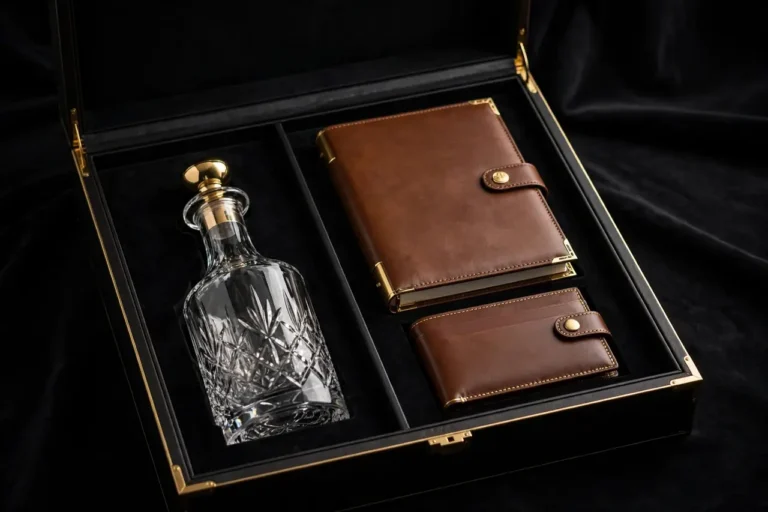
- Dual-branded anniversary artifact ($180). A crystal decanter, framed timeline, or commissioned piece carrying both companies’ marks and the shared anniversary years. Partnership symbolism made permanent — the gift should say we, not me.
- Executive gift set — personalized ($150). A leather portfolio and premium pen in a rigid presentation box, with the recipient’s name and a handwritten note referencing a specific shared win. The corporate classic endures because it works.
- Curated anniversary hamper — premium ($140). Champagne or fine sparkling, artisan foods, and keepsakes in a wooden keepsake box. The keepsake box extends the gift’s life far beyond its contents.
- Private tasting or dining experience ($350+). A sommelier-led tasting or chef’s table for the client’s key contacts. Shared experiences deepen commercial relationships more than objects do.
- Custom partnership artwork ($250). A commissioned piece reflecting the shared history — the first project site, an abstract incorporating both brand palettes, a timeline rendered as art. One-of-one and unforgettable.
- Smart luxury tech ($300). Premium noise-canceling headphones or a smart mug, engraved with initials and a subtle anniversary mark. Daily-use luxury with personal marking.
- Joint charitable gift ($200+). A donation to a cause aligned with the client’s values, presented with a handsome certificate and personal note. Meaningful, compliance-friendly, and clutter-free.
- Anniversary-edition product ($120). A limited, numbered edition of your own product created for the anniversary — only for key accounts. Scarcity plus relevance makes it collectible.
For All Employees — The Team Tier (7 ideas)
Every employee gets this tier regardless of tenure — it’s the “we’re all in this together” gift. Keep it celebratory, inclusive, and fun.
- Anniversary celebration box ($45). A festive box: quality snacks, a commemorative item (pin, patch, or ornament), confetti, and a card from leadership. Designed for a shared unboxing moment — coordinate a company-wide open-it-together video call.
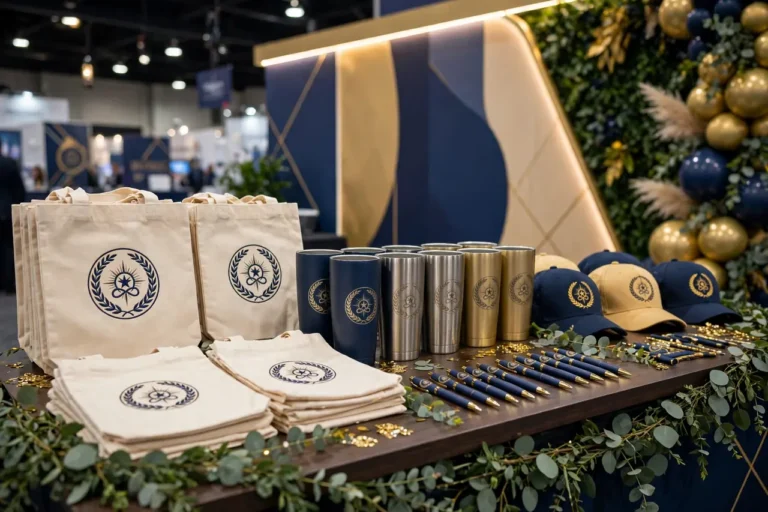
- Premium anniversary apparel ($40). A genuinely nice piece — heavyweight tee, embroidered quarter-zip, or quality cap — in a limited anniversary colorway. Not the usual promo-table fare; something people actually wear. Scarcity (“anniversary edition, never reprinted”) makes it coveted.
- Team experience day ($60/person). A half-day celebration: food trucks, activities, entertainment, or an outing. Shared joy beats boxed goods for team cohesion — the photos alone are worth it.
- Anniversary bonus or gift card ($50). A straightforward $50 bonus or flexible gift card with a celebratory note. Not the most creative, but universally appreciated — pair it with one symbolic item so it doesn’t feel purely transactional.
- Custom anniversary illustration ($25). A commissioned illustration celebrating the milestone — the office, the team, an inside joke rendered as art — printed as a poster or postcard set for everyone. Art scales beautifully: one commission, hundreds of recipients.
- Wellness day + treat box ($55). A half-day off in the anniversary month plus a delivered treat box (gourmet snacks, quality candle, cozy socks). Rest plus delight — the combination says “we value your whole self.”
- Charitable giving credit ($40). A $40 credit for each employee to donate to their chosen charity through the company’s giving platform, in honor of the anniversary. Values-aligned, inclusive of all beliefs, and the aggregate impact is newsworthy.
For Vendors, Suppliers & Community (7 ideas)
Often forgotten, never unnoticed when remembered. These relationships keep the machine running.
- Artisan thank-you box ($55). Local gourmet treats, quality coffee, and a sincere handwritten note from the department they serve. Vendors rarely receive gratitude gifts — which is exactly why yours will stand out.
- Framed partnership certificate ($35). A handsome certificate recognizing their years of service to your company, suitable for their office wall. Formal recognition costs little and means a great deal to small suppliers.
- Vendor spotlight feature ($0). Feature key suppliers in your anniversary content — social posts, newsletter, event signage. Visibility is currency for small businesses, and the goodwill compounds.
- Community impact donation ($75). A donation to a local cause in honor of your vendor and community partners collectively, announced at the anniversary event. Shared values, shared stage.
- Premium desk gift ($45). A quality desk object — brass card holder, leather tray, elegant pen — with a subtle anniversary engraving. Professional, permanent, and appropriate across cultures.
- Invitation to the celebration ($0 + hospitality). Invite key vendors and community partners to the anniversary event as honored guests, not background. Inclusion is the gift — and the networking is priceless for them.
- Testimonial & referral package ($0). A formal testimonial letter, a LinkedIn recommendation from your executive, and active referrals. For B2B vendors, your endorsement is worth more than any object — and it costs you nothing but sincerity.

The Procurement Checklist: From Plan to Doorstep
Corporate gifting fails in logistics, not in intentions. Run this checklist 12 weeks out:
Vendors (week 12–10): Finalize the vendor bench — 2–3 qualified suppliers per tier. Get samples in hand, not just catalog pages. Confirm customization capabilities (engraving, embroidery, printing), minimum order quantities, and written lead-time commitments with penalty clauses for flagship tiers. Check references from similar-scale programs. Design (week 10–8): Lock the anniversary lockup, packaging design, card templates, and message variants per tier. Order packaging samples — the unboxing is half the gift. Data (week 8–6): Finalize recipient lists per tier with verified shipping addresses (home vs. office — ask, don’t assume, in the hybrid era). Scrub for duplicates, departures, and compliance flags. Build the tracking sheet: recipient, tier, gift, address, ship date, delivery confirmation, follow-up owner. Production (week 6–3): Place orders with buffer quantities (5–10% overage for errors and last-minute additions). Approve physical proofs before full runs — never approve from photos alone. Assembly & QA (week 3–2): Kitting, card insertion (handwritten notes for top two tiers), quality spot-checks on every batch. Photograph the final kits for records. Distribution (week 2–0): Ship in waves — international first (3 weeks), then domestic (1 week), hand-deliveries last (2–3 days before the date). Track every tracking number; confirm deliveries; trigger the follow-up sequence. After: Reconcile invoices, archive the playbook with lessons learned, and send thank-you notes to the vendors who nailed it — they’ll prioritize you next time.
Branding Dos and Don’ts
Do: create one anniversary lockup used consistently across all tiers — it makes the program feel like a program. Do: keep branding subtle on the gift itself (debossed, engraved, tonal) and fuller on the packaging and card. Do: match branding intensity to tier — heritage pieces can carry elegant commemorative marking; broad-base items can be more visibly branded. Don’t: turn gifts into billboards — a huge logo converts a gift into an ad and insults the recipient’s intelligence. Don’t: use different vendors’ branding inconsistently — one lockup, everywhere. Don’t: brand the personal note — the note is from a human, not the marketing department. Don’t: forget the inside of the box — a printed message under the lid (“Thank you for [X] years”) is the detail people photograph. The branding rule of thumb: if the recipient would proudly display the gift without knowing it’s from you, the branding is right.

Measuring Program Impact
Report the program like the business investment it is. Operational metrics: on-time delivery rate (target: 98%+), budget variance per tier, vendor defect rate, address accuracy. Recipient metrics: thank-you response rate per tier (track it — silence patterns reveal problems), social mentions and hashtag uses, employee engagement survey lift in the anniversary quarter. Business metrics: client retention in the anniversary cohort vs. control, employee regretted-attrition in the following 12 months, press and backlink pickups from anniversary content, and attributed pipeline from anniversary-touch contacts. The dashboard: one page, updated weekly during the program window, shared with leadership. Programs that report impact get funded again; programs that report activity get questioned. For ongoing relationship measurement ideas, our mentorship guide discusses how invested relationships compound — the same logic applies to every segment above.
Watch: Employee Gift Ideas That Boost Morale
See practical corporate gift ideas that strengthen culture — from everyday appreciation picks to morale-boosting favorites:
Common Program Pitfalls
The December collision: running anniversary gifting alongside holiday gifting — separate them by at least 6 weeks or combine deliberately into one bigger moment. The tier leak: recipients comparing gifts across tiers — mitigate with genuinely different gift characters (not just bigger versions of the same box) and discreet delivery. The international afterthought: designing for HQ and improvising for global offices — localize from week 12, not week 2. The data decay: recipient lists built from a 6-month-old HR export — verify, verify, verify. The single-vendor gamble: one supplier for everything — when they slip, the whole program slips; the bench exists for a reason. The no-owner problem: “marketing is handling it” without a named human — assign one accountable owner with real authority. The missing debrief: archiving nothing and relearning everything next milestone — the playbook update is a deliverable, not an afterthought.
Sample Program Budget: A 150-Person Company
Numbers make programs real. Here’s a worked example for a hypothetical 150-employee company with 300 active clients celebrating its 10th anniversary:
| Tier | Recipients | Per-Unit | Subtotal |
|---|---|---|---|
| Heritage (board/C-suite) | 12 | $400 | $4,800 |
| Strategic (key clients/partners) | 40 | $175 | $7,000 |
| Professional (established clients/vendors) | 160 | $60 | $9,600 |
| Team (all employees) | 150 | $50 | $7,500 |
| Tenure (milestone employees ~30) | 30 | $150 avg | $4,500 |
| Community | 30 | $40 | $1,200 |
| Broad base (remaining contacts) | 400 | $12 | $4,800 |
| Program total | $39,400 | ||
Add 15% contingency ($5,910) for overages, rush fees, and last-minute additions: ~$45,300 all-in. Against a $150-person payroll, that’s a fraction of one percent — and against the cost of losing even two key clients or three tenured employees, it’s negligible. Present this table to finance with the retention math attached, and the conversation shifts from “can we afford this?” to “can we afford not to?” Scale the per-unit figures to your reality; the structure holds at any size.
The One-Page Playbook Template
Every program needs its bible. Yours fits on one page: Objective (one sentence — e.g., “Honor every stakeholder in our 10th anniversary with tier-appropriate, on-brand recognition”). Tiers & budgets (the framework table, adapted). Approved gifts per tier (2–3 options each, with vendor contacts). Message templates (one per tier, plus the handwritten-note standard for top tiers). Compliance rules (caps, restricted recipients, documentation requirements). Timeline (the 12-week checklist milestones). Owners (one named human per tier — no committees). Tracking (the sheet’s location and update cadence). Debrief date (scheduled before launch, so it actually happens). Print it, share it with every owner, and pin it where the work happens. Programs fail in ambiguity; the playbook eliminates it.
Sustainability: Gifting Without the Guilt
Corporate gifting at scale generates waste — packaging, shipping, unwanted items. A modern program addresses it head-on. Choose consumables and experiences where possible: food, donations, event invitations leave no landfill trace. Demand sustainable packaging from vendors — recycled rigid boxes, paper tape, no plastic fill — and put it in the RFP, not as an afterthought. Offer a “no gift” opt-out with a donation default: some recipients genuinely prefer it, and the option itself signals values. Consolidate shipping to cut the program’s carbon footprint, and favor local vendors per region over single-source global shipping. Measure and report it: “92% recyclable packaging, 40% of gifts consumable or experiential” is a line for the anniversary impact report that stakeholders increasingly expect. Sustainability isn’t a constraint on gifting — it’s a design principle that makes the program defensible, modern, and aligned with the values anniversaries are supposed to celebrate.
The Gifting Maturity Model: Where Are You?
Level 1 — Reactive: gifts bought last-minute, no tiers, no tracking. Level 2 — Organized: a spreadsheet, consistent vendors, basic tiers. Level 3 — Programmatic: written playbook, approved vendors, compliance checks, measured results. Level 4 — Strategic: gifting tied to retention and relationship metrics, personalized at scale, reported to leadership like any investment. Most companies sit at Level 1–2; this guide is your ladder to Level 4. Assess honestly, then climb one level per anniversary cycle — sustainable progress beats a single heroic leap.
Frequently Asked Questions
What is a reasonable total budget for a corporate anniversary gifting program?
Most companies land between $50–$150 per employee-equivalent when all tiers are averaged, with total program costs of 0.5–2% of the anniversary marketing budget. A 200-person company with a healthy client list typically spends $25,000–$75,000 all-in. Build the budget bottom-up from the tier table, then negotiate top-down with finance using retention math.
How far in advance should we start planning?
Twelve weeks minimum for programs over 500 recipients; 8 weeks for smaller ones. Custom and commissioned pieces (heritage tier) need the most lead time — start those at 16 weeks. The procurement checklist above is sequenced for a 12-week runway.
Should all employees receive the same anniversary gift?
The team tier gift should be identical for all employees — it’s the shared celebration. Tenure recognition sits on top of it as a separate layer with its own bands. This two-layer structure (everyone + tenure) is the industry standard because it balances inclusion with earned distinction.
How do we handle gifting across multiple countries?
Centralize the framework, localize the execution. Set global tier budgets, then let regional leads select culturally appropriate gifts within them. Watch for: alcohol restrictions, gift-value laws, holiday calendars, customs duties, and data-privacy rules for recipient lists. Never ship HQ’s gift globally without local review.
What are the tax implications of corporate anniversary gifts?
For employees, U.S. rules allow tax-free treatment for qualified length-of-service achievement awards up to $1,600/year under specific conditions (tangible property, meaningful presentation, written program, 5-year gap). Client gifts are generally deductible up to $25 per recipient per year — a famously low limit worth knowing. Run the full program past your tax advisor; this is orientation, not advice.
Can we combine anniversary gifting with holiday gifting?
Only deliberately, never accidentally. If your anniversary falls near December, either separate the moments by 6+ weeks or design one clearly-combined “anniversary holiday” gesture that’s bigger than either would be alone. Two small gifts a month apart feel like an afterthought; one significant combined gesture feels intentional.
How do we choose between one vendor and many?
Use a bench, not a single source: 2–3 qualified vendors per tier. Single-vendor programs are fragile — one production slip cascades everywhere. The bench also creates competitive pricing and gives you fallback options. Consolidate purchasing (one PO process) while diversifying supply.
What if a key recipient has a strict no-gifts policy?
Honor it completely — and tell them you’re honoring it. A note saying “we respect your policy and wanted you to know you’re appreciated” plus (where appropriate) a charitable donation in their name keeps the relationship warm without violating their rules. Respecting the boundary is the gesture.
How do we measure whether the program worked?
The impact dashboard above: operational metrics (delivery, budget), recipient metrics (response rates, social mentions, survey lift), and business metrics (retention, attrition, pipeline). Set baselines before launch and report 30/90 days after. Programs with data get refunded; programs with anecdotes get debated.
Should we announce the gifting program publicly?
Announce the celebration, not the gifting. Public posts about “we gave every employee X” read as bragging and invite tier comparisons. Let recipients post organically — the unboxing wave is more authentic than any announcement. The program’s public face is the anniversary story; the gifts are its private heartbeat.
A corporate anniversary only happens once per milestone — but the program you build for it compounds for years. Segment deliberately, tier transparently, procure professionally, brand subtly, and measure honestly. Do that, and your anniversary won’t just be remembered; it’ll become the standard every future milestone is measured against — and the playbook your successors will thank you for. For the human side of the professional relationships your program honors, keep our professional wishes collection close — because programs run on systems, but relationships run on words.