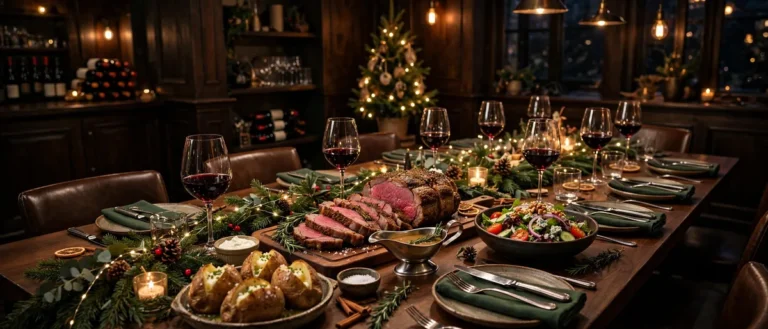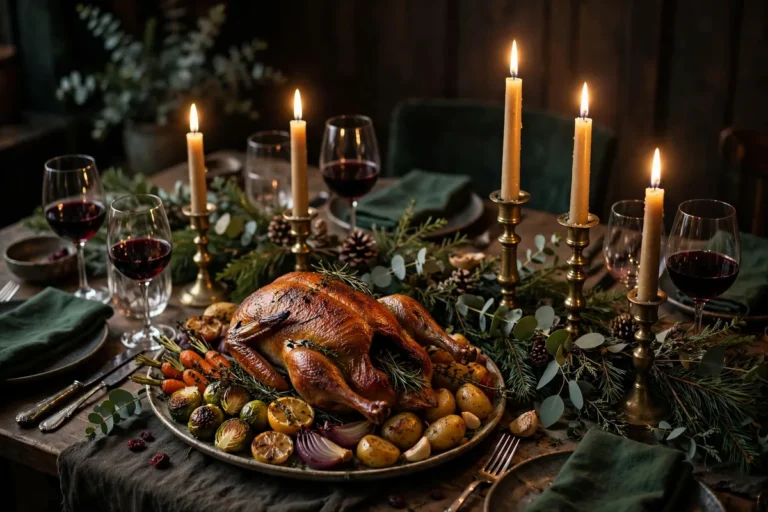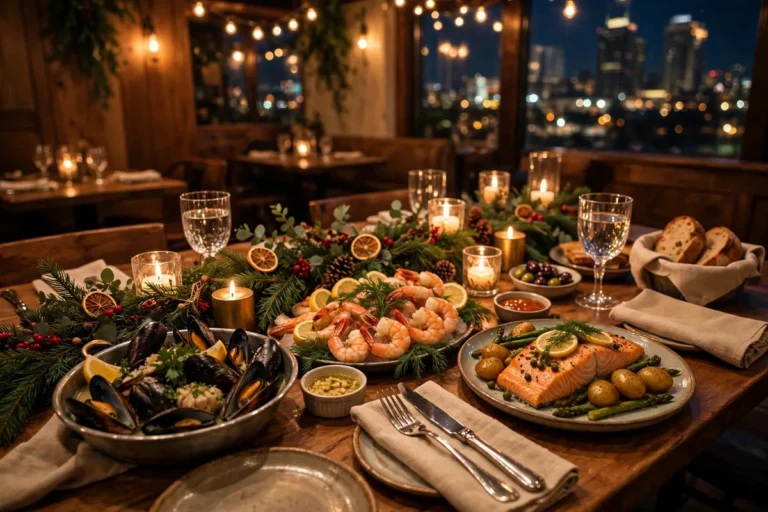
Christmas traditions in Portugal are a journey through one of Europe’s oldest nations at its most festive — from Lisbon’s grand illuminated avenues to Madeira’s legendary floating nativity of lights, from midnight Mass in medieval village churches to the sweet, egg-yolk-rich desserts that make the Portuguese Christmas table unlike any other. Natal in Portugal is deeply Catholic, deeply familial, and deeply delicious: a season when codfish takes pride of place at the Christmas Eve table, when the bolo rei (king cake) appears in every bakery, and when the whole country seems to move to the rhythm of church bells and family gatherings. This guide tours Portugal region by region — Lisbon, Porto and the north, the Algarve, Madeira, and the Azores — so you can taste how Christmas traditions in Portugal change from place to place while holding to the warm constants of faith, family, and extraordinary food.
The Portuguese Christmas Season: An Overview
The Portuguese Christmas season runs from early December through Epiphany (January 6, Dia de Reis — Kings’ Day). December 8, the Feast of the Immaculate Conception, is a public holiday that traditionally opens the season — many families put up their Christmas tree and presépio (nativity scene) on this day. Christmas Eve (Consoada) is the heart of the celebration: families gather for the traditional supper, attend Missa do Galo (midnight Mass, the “Rooster’s Mass”), and exchange gifts at midnight or on Christmas morning. Christmas Day (Dia de Natal) is for the extended family feast and rest.
Two things define Christmas traditions in Portugal above all. First, the centrality of the presépio: the nativity scene is not a mere decoration but the spiritual centerpiece of the Portuguese Christmas, displayed in homes, churches, and public squares with devotion and artistry. Second, the Christmas Eve fast-turned-feast: the Consoada supper is traditionally built around cod (bacalhau) rather than meat — a legacy of the old Christmas Eve abstinence — followed by an almost overwhelming array of desserts. Meat takes over on Christmas Day itself, when the cabrito (roast kid goat) or turkey appears.
Portugal’s Christmas is also notable for what it lacks: the commercial frenzy is gentler than in Northern Europe, the weather is mild (Lisbon averages around 15°C/59°F in December), and the season retains a distinctly religious character even as modern celebrations grow. For travelers seeking a warm-weather Christmas with deep traditions, Portugal is one of Europe’s best-kept December secrets — and a worthy entry on any list of the best places to spend Christmas.
Lisbon: Christmas Lights and Bolo Rei
The capital’s Christmas is the grandest in Portugal. Lisbon’s Christmas lights (iluminações de Natal) transform the city’s grand avenues — the Avenida da Liberdade, Rua Augusta, and the Chiado district become canyons of light, with the city’s historic plazas hosting markets and events. The Wonderland Lisboa Christmas market in Eduardo VII Park (typically late November through early January; check official schedules for 2026) offers an ice rink, Ferris wheel, market stalls, and Santa’s village with views over the city.
Lisbon’s churches stage magnificent nativity scenes, and the Basilica da Estrela houses one of Portugal’s most famous presépios — an 18th-century Baroque masterpiece with hundreds of terracotta figures. Midnight Mass at Lisbon’s Sé (cathedral) or the Jerónimos Monastery is an unforgettable experience, with full choirs and the city’s faithful filling the ancient naves.
Food-wise, Lisbon does the classics: the Consoada’s bacalhau, the Christmas Day roasts, and above all the bolo rei — the “king cake,” a crown-shaped sweet bread studded with candied fruits and nuts, dusted with powdered sugar. Every Lisbon bakery competes for the season’s best bolo rei, and the cake appears at every gathering from December through Kings’ Day. Its companion, the bolo rainha (queen cake, without candied fruit, heavy on nuts), serves those who prefer their cake fruit-free. The great bolo rei debate — candied fruit: yes or no? — is a staple of Portuguese December conversation.
Porto and the North: Rabanadas and Regional Feasts
Northern Portugal keeps the most traditional Christmas in the country, and Porto is its handsome, granite showcase. The city’s Avenida dos Aliados glows with lights, the Ribeira district’s medieval streets host markets and buskers, and the view of Gaia’s port lodges across the Douro — strung with lights — is pure December magic. Porto’s São Bento station, with its azulejo tile panels, makes even arriving feel festive.
The north’s Christmas table has its own signatures. Rabanadas — Portuguese French toast, soaked in milk or wine, fried, and dusted with cinnamon sugar — are the essential Christmas dessert of the north (and increasingly the whole country). Northern families also serve lampreia de ovos, the astonishing lamprey-shaped dessert made of egg yolks and sugar — a baroque confection that looks like a fish and tastes like heaven. The Consoada bacalhau here is often bacalhau de consoada: boiled cod with potatoes, cabbage, carrots, and hard-boiled eggs, dressed with olive oil — simple, traditional, perfect.
In the rural north — the Minho, Trás-os-Montes, the Douro Valley — older customs survive: the madeiro (a great Christmas log burned in the village square), the caretos (masked winter figures, more associated with Carnival but part of the broader winter folklore), and midnight Masses in Romanesque village churches where the whole community gathers. The north’s Christmas is the most rustic, the most traditional, and for many Portuguese, the most authentic.
The Algarve and the South: Christmas in the Sun
Southern Portugal offers the mildest Christmas in the country — daytime temperatures in the Algarve often reach 17–18°C (low 60s°F) in December, making it a favorite for Europeans fleeing the northern winter. The Algarve’s towns — Faro, Lagos, Tavira — decorate their historic centers with lights, host modest markets, and serve the Christmas classics with a southern accent: more seafood, more almond-based sweets, and the region’s famous figos cheios (stuffed dried figs) and Dom Rodrigo egg-yolk confections.
The Alentejo, Portugal’s agricultural heartland, keeps distinctive traditions: the bread-based Christmas soups, the filhós (fried dough pastries, also beloved nationwide), and village presépios of great folk-art charm. In Évora, the Roman temple floodlit above the Christmas market is a sight worth traveling for.
For visitors, the southern Christmas offers a unique proposition: Christmas Eve dinner followed by a moonlit walk on a nearly empty beach. It is not the traditional Portuguese Christmas — but it is an increasingly popular one, and the Algarve’s December golf courses, coastal trails, and seafood restaurants make it a compelling alternative to the northern cold.
Madeira’s Christmas: The Most Festive Island in Portugal
If one place in Portugal owns Christmas, it is Madeira. The island’s capital, Funchal, stages one of Europe’s most spectacular Christmas light displays: the entire amphitheater of the city — from the harbor up the mountainsides — is draped in millions of lights, with illuminated nativity scenes, floating light installations in the bay, and decorations that transform the island into what locals proudly call a floating Christmas crib. Madeira’s Christmas lights are genuinely world-class, drawing visitors from across Europe.
Madeira’s Christmas traditions are distinct and deeply loved. The Missas do Parto (Childbirth Masses) — nine dawn Masses held from December 16 to 24 — are the island’s signature devotion: crowds gather in churches at 6 or 7 a.m., and after Mass, the churchyards fill with food stalls serving poncha (the island’s fiery rum, honey, and citrus drink), broas de mel (honey cakes), and sandwiches. The atmosphere is half religious observance, half street party — a combination only Madeira could pull off.
Other Madeiran specialties: the lapinhas — elaborate nativity scenes, often built into hillsides or displayed in public buildings, some of them enormous community projects; the bolo de mel (Madeira honey cake, dark, spiced, and aged — traditionally made on December 8 and eaten through the season); and New Year’s Eve in Funchal, whose fireworks display over the bay was once recognized among the world’s greatest. Madeira at Christmas is not a side trip — it is a destination in itself.
The Azores: Holy Spirit Traditions and Island Natal
The nine islands of the Azores keep a Christmas shaped by their unique religious heritage: the Cult of the Holy Spirit (Culto do Divino Espírito Santo), with its chapels (impérios) and traditions of communal feasting, colors the islands’ spiritual life year-round and gives their Christmas a distinctive flavor. Midnight Mass in the islands’ Baroque churches, the presépios in every village, and the folias — groups singing traditional songs door to door — mark the season.
Azorean Christmas food features the islands’ rich dairy heritage: queijadas (cheese tarts), espécies (spiced filled pastries, especially from São Jorge), and the ubiquitous massa sovada (sweet bread). The Consoada bacalhau appears here too, alongside island fish and seafood. On Terceira, the Christmas season blends into the island’s famous touradas (bull-running) traditions that resume in the new year — a reminder that Azorean festivity is never far from the street.
The Azores at Christmas are quiet, green, and profoundly peaceful — a retreat Christmas for those who want the traditions without the crowds. Flights and ferries run on reduced holiday schedules, so plan accordingly.
Missa do Galo: Midnight Mass, the Rooster’s Mass
Missa do Galo — the “Rooster’s Mass” — is Portugal’s midnight Mass on Christmas Eve, and its name carries a legend: a rooster crowed at midnight to announce Christ’s birth. Churches across Portugal fill for the Missa do Galo, from Lisbon’s great basilicas to the smallest village chapels. The service features the traditional kissing of the Christ Child (beijar o Menino Jesus): after Mass, the faithful queue to kiss the infant figure from the presépio — a tender, deeply Portuguese ritual.
In many parishes, the Missa do Galo is followed by the offering of the madeiro or community gatherings with jeropiga (a sweet fortified wine) and filhós. The walk home through streets strung with lights, in the company of neighbors, is itself part of the tradition. For visitors, attending Missa do Galo is the single most immersive way to experience Christmas traditions in Portugal — arrive early, dress warmly (old churches are cold), and respect the reverent atmosphere.
Portuguese Christmas Food: Bacalhau, Bolo Rei, and a Hundred Desserts
The Portuguese Christmas table deserves its reputation as one of Europe’s great holiday feasts — with a particular emphasis on the sweet course that borders on the baroque.
The Consoada (Christmas Eve supper): Bacalhau de consoada — boiled salt cod with potatoes, cabbage, carrots, chickpeas, and hard-boiled eggs, dressed generously with olive oil. It sounds humble; in context — after the fast, by candlelight, with family — it is sublime. Some families serve bacalhau com natas (cod with cream) or octopus (polvo) instead. The meal is traditionally meatless, honoring the old abstinence.
Christmas Day: The meat feast — cabrito assado (roast kid goat) in many regions, turkey (peru) stuffed with chestnuts in others, leitão (roast suckling pig) in the Bairrada region. Canja (chicken soup) often opens the meal.
The desserts — the legendary part: bolo rei and bolo rainha; rabanadas (cinnamon French toast); filhós (fried dough puffs); sonhos (“dreams” — fried dough balls); aletria (sweet vermicelli pudding); arroz doce (rice pudding with cinnamon crosses); lampreia de ovos (egg-yolk lamprey); pão de rala and other Algarve almond confections; broas de mel; and bolo de mel da Madeira. A Portuguese Christmas table without at least five desserts is, by definition, incomplete.
For cooks inspired to build an international holiday menu, our Christmas dinner ideas offer dishes from around the world — and for the gift-givers at the table, our Christmas gifts for men guide has the Portuguese pai covered.
The Janeiras: New Year Carolers
Portugal’s caroling tradition extends past Christmas into the new year with the Janeiras — groups who go door to door in January singing songs welcoming the new year and honoring the Reis (the Magi, whose feast, Dia de Reis, falls on January 6). The Janeiras songs wish prosperity on the household and often include verses tailored to the family. Like the kalanta of Greece (see our guide to Christmas traditions in Greece), the Janeiras keep the musical spirit of the season alive well into January — a reminder that in Portugal, Christmas is a season, not a day.
Presépios: Portugal’s Nativity Scenes
The presépio deserves a final, dedicated note, because in Portugal it is an art form. The tradition dates to St. Francis of Assisi’s first nativity scene in 1223 and took deep root in Portugal’s convents and churches. Portuguese presépios range from the Baroque masterpieces of Estrela and São Vicente de Fora in Lisbon — with hundreds of 18th-century terracotta figures — to folk-art presépios in villages, built from cork, moss, and local materials, often incorporating miniature Portuguese village life: the baker, the fisherman, the shepherd with his flock.
Many families build their presépio on December 8 and expand it through the season, adding figures and details. The lapinhas of Madeira take this to monumental scale. Public presépios — in churches, town halls, and shopping centers — are visited like exhibitions, with families touring multiple displays. In a Portuguese Christmas, the presépio is not decoration; it is the story itself, told in miniature, renewed each year with love.
Portuguese Christmas Music: From Church Choirs to Folk Songs
Music weaves through Christmas traditions in Portugal in both sacred and folk registers. The Missa do Galo showcases Portugal’s church music at its finest: polyphonic choirs, organ voluntaries, and the beloved Portuguese carols — “Noite Feliz” (Silent Night), “Adeste Fideles” sung with Portuguese verses, and the traditional “Ó Menino tão bonito”. Lisbon’s great churches program December concert series that draw music lovers from across the city.
The folk tradition is equally rich. The Janeiras songs of January, the cantares de Natal (Christmas songs) of the Alentejo — sung in the region’s distinctive choral style — and the folias of the Azores keep the season musical in villages and towns. In Madeira, the Missas do Parto feature traditional Madeiran hymns sung by congregations at dawn, a sound unlike anything else in the Christmas world. And no Portuguese December would be complete without the sound of fado in Lisbon’s Alfama taverns — melancholic, beautiful, and, at Christmas, often turned to seasonal themes.
For visitors, the most accessible musical experiences are the church concerts (many free, in stunning Baroque settings) and the street performances at Christmas markets. Check parish and municipal listings in December — the Portuguese Christmas sounds best live.
Dia de Reis: Kings’ Day and the Season’s Finale
January 6th — Dia de Reis (Kings’ Day, Epiphany) — closes the Portuguese Christmas season with traditions as charming as any in December. The Janeiras carolers reach their peak, going door to door with songs honoring the Magi. In many villages, presépios vivos (living nativity scenes) are staged, with costumed villagers and live animals reenacting the Nativity — some of these productions are elaborate community theater events drawing visitors from surrounding towns.
The bolo rei makes its final appearance: tradition holds that the king cake is eaten from Christmas through Kings’ Day, and the last slice on January 6th carries special significance. In some families, the burning of the Christmas tree or the ceremonial taking-down of the presépio marks the day’s end. Children in some regions receive small additional gifts on Kings’ Day — a final echo of the Magi’s offerings.
Dia de Reis is a public holiday in some Portuguese municipalities (though not nationally), and its celebrations have been growing — a sign that Portugal’s Christmas season, like its presépios, keeps expanding with love. The season that began with Advent candles on December 8th ends, a month later, with the kings’ arrival: a complete, satisfying arc.
In Pictures: Christmas in Portugal
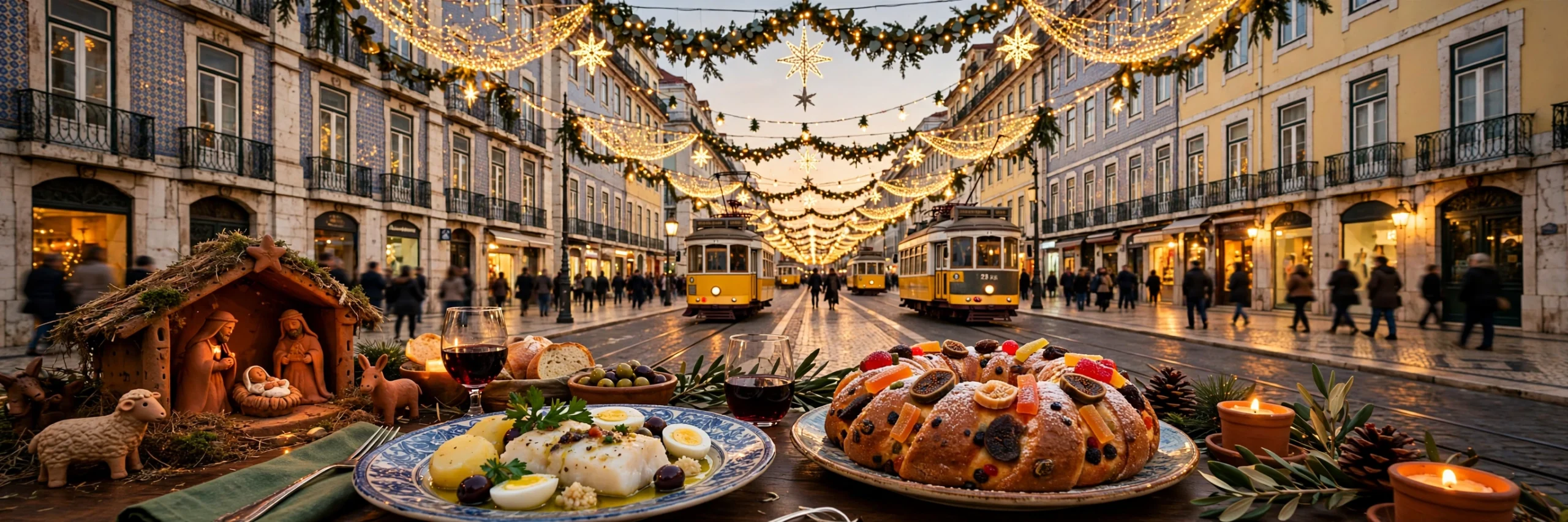
Portugal’s Christmas centers on the Consoada — bacalhau on Christmas Eve, the crown-shaped Bolo Rei, and nativity scenes that outshine the tree.
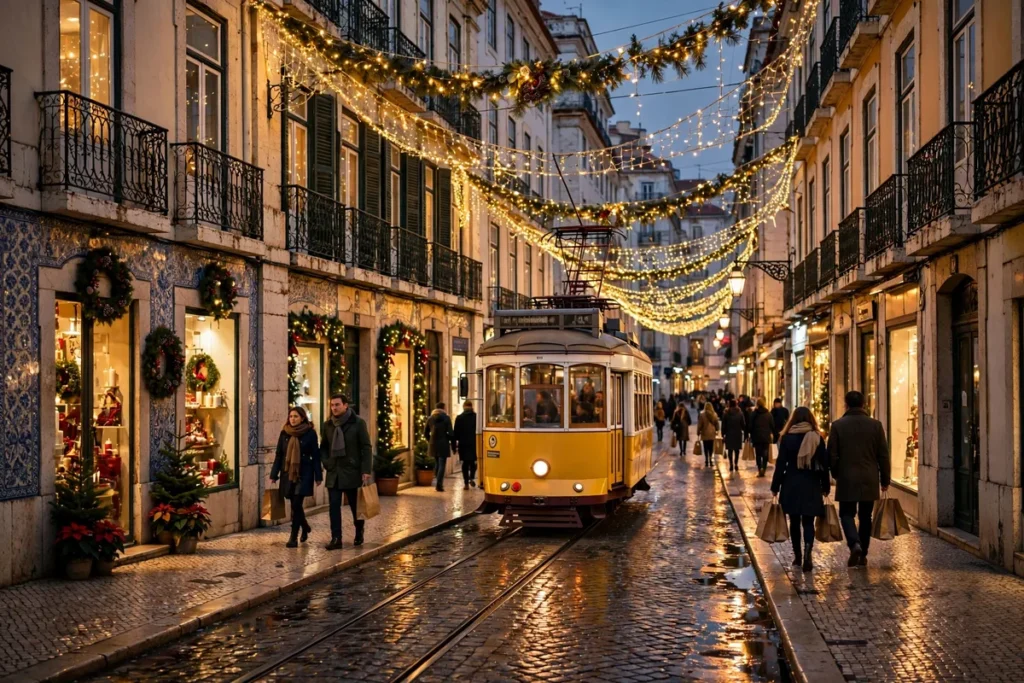
A Lisbon street at Christmas night: historic buildings draped in golden lights, a vintage tram passing beneath, cobblestones reflecting the glow.
Watch: Christmas in Portugal
An honest tour through Christmas in Portugal — from Águeda’s giant Santa to the Consoada feast, presépio tradition, Missa do Galo and Bolo Rei.
At a Glance: Christmas in Portugal
The traditions of a Portuguese Natal.
| Tradition | Date | Key detail |
|---|---|---|
| Consoada | 24 December | The Christmas Eve supper — bacalhau com todos (salt cod, potatoes and cabbage) shared with family |
| Missa do Galo | 24–25 December | The “Rooster’s Mass” at midnight — after it, the table fills with sweets, cakes and Port wine |
| Bolo Rei | December | The crown-shaped king cake of dried and crystallized fruit — find the hidden fava bean and you buy next year’s cake |
| Rabanadas & filhós | December | Fried Christmas sweets — rabanadas, filhós, sonhos, broas de mel and coscorões |
| Presépio | December | The nativity scene, more important than the tree — elaborately recreated in homes and town squares |
| Gifts at midnight | 24–25 December | Presents are exchanged after midnight mass — shoes left by the fireplace for Pai Natal |
| Madeira’s Christmas | December | Funchal’s famous Christmas — lights, flowers and one of Europe’s most spectacular New Year’s fireworks |
Frequently Asked Questions
What do Portuguese eat for Christmas Eve dinner?
The traditional Christmas Eve supper (Consoada) centers on bacalhau (salt cod) — typically boiled with potatoes, cabbage, carrots, and eggs, dressed with olive oil — honoring the old Christmas Eve abstinence from meat. An extraordinary array of desserts follows: bolo rei, rabanadas, filhós, sonhos, and more.
What is bolo rei?
Bolo rei (“king cake”) is Portugal’s iconic Christmas cake: a crown-shaped sweet bread studded with candied fruits and nuts, dusted with powdered sugar. Traditionally containing a hidden bean and trinket (now often omitted for safety), it appears in every bakery from December through Kings’ Day (January 6).
What is Missa do Galo?
Missa do Galo (“Rooster’s Mass”) is Portugal’s midnight Mass on Christmas Eve, named for the legend that a rooster crowed at midnight to announce Christ’s birth. Churches fill nationwide, and the service traditionally includes the kissing of the Christ Child figure from the nativity scene.
Why is Madeira famous at Christmas?
Madeira’s capital Funchal stages one of Europe’s most spectacular Christmas light displays, draping the entire city amphitheater in lights. The island’s unique traditions include the Missas do Parto (nine dawn Masses before Christmas, followed by street food and poncha), monumental lapinhas nativity scenes, and a legendary New Year’s Eve fireworks display.
What are Janeiras?
Janeiras are Portuguese New Year carolers — groups who go door to door in January singing songs that welcome the new year and honor the Three Kings (Dia de Reis, January 6), wishing prosperity on each household they visit.
When does the Portuguese Christmas season start and end?
The season traditionally opens on December 8 (Feast of the Immaculate Conception), when many families set up the tree and presépio. It peaks with the Consoada (Christmas Eve) and Christmas Day, and closes with Dia de Reis (Epiphany, January 6).
Christmas traditions in Portugal are an invitation to slow down and savor: the cod and the cakes, the midnight Mass and the morning carols, the lights of Funchal and the quiet of an Alentejo village. In a world of frantic Decembers, Portugal keeps a Christmas of faith, family, and unforgettable flavor. Feliz Natal! From the midnight Mass to the last slice of bolo rei on Kings’ Day, Portugal offers a Christmas season of rare warmth and depth — one well worth experiencing in person, and easy to borrow from wherever you celebrate.