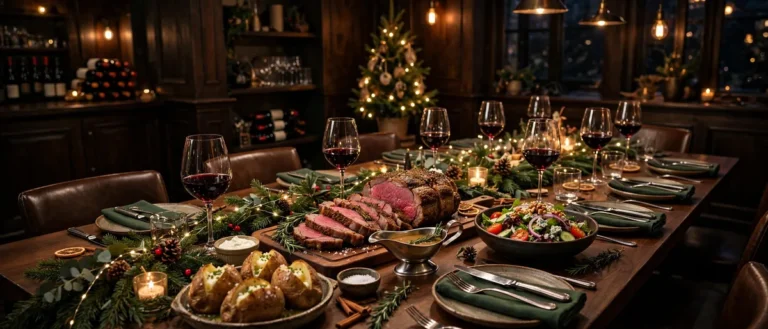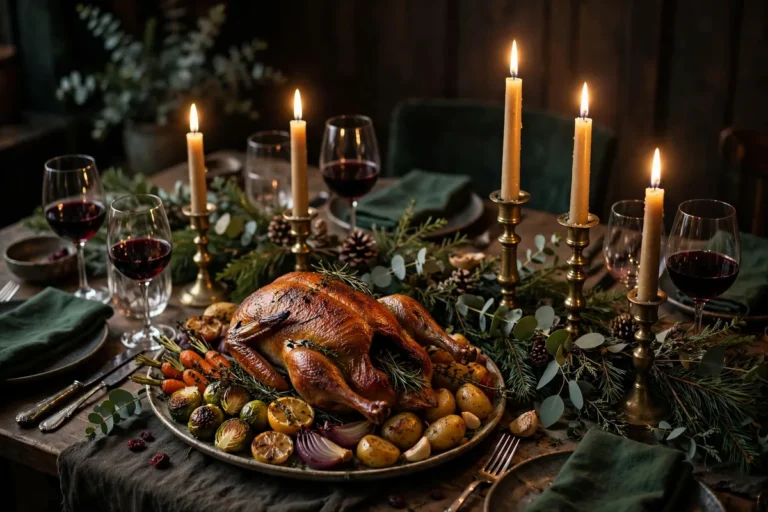
Christmas traditions in Hungary glow with candlelight, taste of fish soup and poppy-seed rolls, and sparkle with szaloncukor — the foil-wrapped candies Hungarians hang directly on the Christmas tree. In Hungary, Christmas (Karácsony) is an intimate, family-centered holiday built around Christmas Eve (Szenteste, the Holy Evening), when the tree is decorated in secret, the family fasts until evening, and angels — not Santa — deliver the gifts.
This guide explores the Hungarian Christmas from Advent to Epiphany: the Luca Day customs, the great Christmas Eve fast and feast, the famous halászlé fish soup and bejgli rolls, the betlehemezés nativity plays, and the superstitions that still shape the holiday. Along the way, you’ll find plenty of ideas to borrow for your own celebration.
Szenteste: The Holy Evening Comes First
Like its Central European neighbors, Hungary centers Christmas on December 24 — Szenteste (Holy Evening). The day is traditionally a fast day: many families eat no meat during the day, saving their appetite for the evening feast. Children are told that the angels (angyalok) — or in some families, the baby Jesus (Jézuska) — decorate the Christmas tree and bring the gifts while the family is out or in another room.
The tree-trimming is a secret ritual: parents decorate the karácsonyfa behind closed doors, then a little bell rings to announce that the angels have been. Children rush in to find the tree glittering with szaloncukor — oblong fondant candies wrapped in shiny foil with fringed ends, hung on the branches like ornaments. Hungary consumes astonishing quantities of szaloncukor each December; the candies are as much decoration as treat, and families argue good-naturedly about which filling (jelly, marzipan, chocolate) is best.
Gifts are opened on Christmas Eve evening, and the night is spent together — quiet, warm, and unhurried. December 25 and 26 are for visiting extended family and eating leftovers.
Luca Day: Witches, Chairs, and Wheat
Hungary’s Advent season holds one of Europe’s strangest customs: Luca napja (Luca Day, December 13). According to folk belief, this was a day when witches were most active, and a thicket of protective customs grew around it. The most famous: young men would begin building a Luca chair (Luca széke) on December 13, working on it a little each day until Christmas Eve — using nine kinds of wood and no nails. On Christmas Eve, the maker would stand on the chair at midnight mass to see the witches in the congregation, then run home before they could catch him, burning the chair behind him.
Gentler Luca customs survive more widely: on Luca Day, families plant Luca wheat (Lucabúza) in a small dish — wheat grains that sprout by Christmas into lush green shoots, symbolizing life and the coming spring, and placed under the tree or on the festive table. Girls traditionally wrote boys’ names on slips of paper on Luca Day, burning one each day until Christmas Eve to reveal their future husband — one of many Central European love divinations of the season.
The Christmas Eve Feast: Halászlé and Bejgli
Because Christmas Eve is a fast day, the Hungarian Christmas Eve dinner traditionally contains no meat — but it is anything but austere. The star is halászlé — the fiery red fisherman’s soup, made with river fish (traditionally carp), paprika, onions, and tomatoes, cooked in a kettle and served with white bread. Halászlé is Hungary’s national Christmas dish, and families defend their regional recipe (Szeged-style with strained broth vs. Baja-style with fish chunks and homemade noodles) with genuine passion.
Alongside the soup: fried fish (carp or catfish), stuffed cabbage (töltött káposzta) in some regions, bejgli — the iconic rolled cakes filled with poppy seed (mákos) or walnut (diós) — and zserbó (layered walnut-apricot-chocolate cake). Christmas Day lunch is when the meat appears: roast turkey or goose, töltött káposzta, and more bejgli. For more festive menu inspiration, see our Christmas dinner ideas.
Hungary’s Christmas baking also includes mézeskalács — beautifully decorated honey-gingerbread cookies, often shaped into hearts and ornaments, iced with white folk patterns. They’re given as gifts, hung on trees, and displayed as edible art.
Betlehemezés: Hungary’s Nativity Plays
One of the most distinctive Christmas traditions in Hungary is betlehemezés — traditional nativity plays performed by groups of young people (historically shepherd boys) who carry a small portable nativity scene (betlehem) from house to house. The performers, dressed as shepherds, angels, and the old shepherd, act out the Christmas story with songs, jokes, and blessings for the household.
Hosts reward the players with food, drink, and money. The tradition is strongest in villages and small towns, particularly in Transdanubia and among Hungarian communities across the border, but urban folk groups keep it alive in Budapest too. Watching a betlehemezés performance — with its mix of reverence and rowdy shepherd comedy — is one of the great experiences of a Hungarian Christmas.
Hungarian Christmas Markets and City Lights
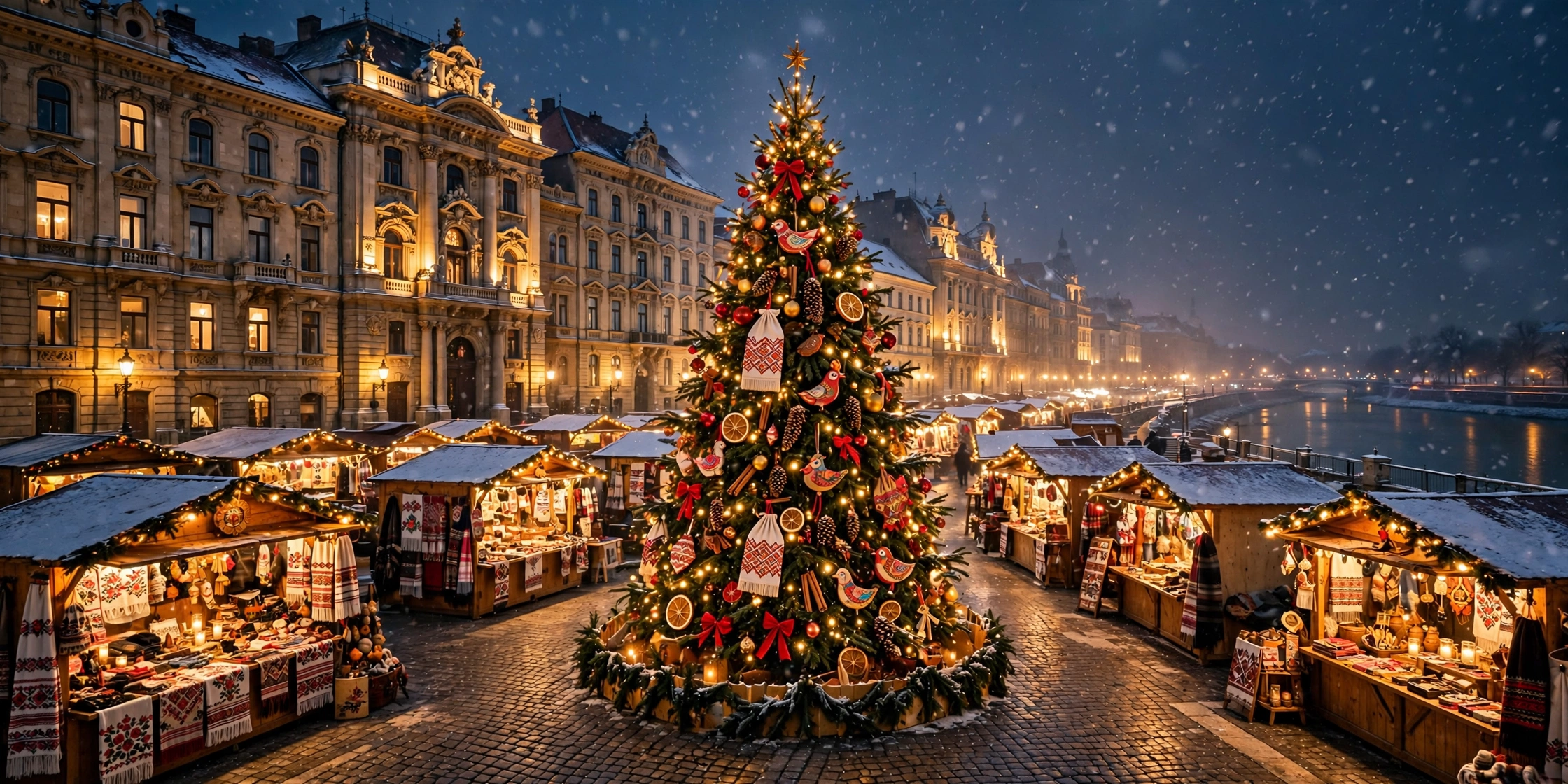
Budapest’s Christmas markets are among Europe’s most atmospheric. The Vörösmarty Square market — held in front of the Gerbeaud coffee house — fills with wooden stalls selling kürtőskalács (chimney cake), forralt bor (mulled wine), langos, and folk crafts, all beneath a canopy of lights. The St. Stephen’s Basilica market adds a spectacular 3D light show projected onto the basilica’s facade — one of Europe’s great Christmas sights.
Markets typically run from late November through early January (check official dates for 2026). Beyond Budapest, Debrecen, Szeged, Pécs, and Eger host charming markets in historic squares. What to buy: mézeskalács, embroidered textiles, Herend-style porcelain, szaloncukor gift boxes, and bottles of Tokaji aszú — Hungary’s legendary sweet wine, the perfect Christmas gift.
Christmas Superstitions and Folk Beliefs
Hungarian Christmas is thick with folk belief — many still observed, at least playfully. On Christmas Eve, the first visitor to the house determines the year’s luck (a man brings good fortune). Straw is sometimes placed under the tablecloth, recalling the manger. Coins baked into cakes, apple divinations like the Czechs’, and lead pouring all have Hungarian variants.
Food superstitions abound: eating fish on Christmas Eve brings wealth (the scales resemble coins); poultry is avoided by the superstitious on Christmas Day because chickens “scratch away” your luck; lentils and beans on New Year’s Day bring money. Onion calendars — twelve onion skins salted on New Year’s Eve, each representing a month — were once used to forecast the year’s weather. These beliefs connect Hungarian Christmas to ancient agrarian magic, and they make the holiday feel enchanted.
New Year’s in Hungary: Trumpets, Lentils, and New Beginnings
The Hungarian festive season flows into Szilveszter (New Year’s Eve) — a night of parties, fireworks, trumpet tooting, and champagne at midnight. New Year’s Day lunch must include lentils (lencse) — for wealth — and often pork, because pigs “root forward” into the new year (unlike chickens, which scratch backward). Korhelyleves (a sour hangover soup) cures the night’s excesses.
The season’s final note is Epiphany (Vízkereszt, January 6) — when the Christmas tree traditionally comes down and priests bless homes with holy water in some communities. Then Hungary settles into winter, the szaloncukor is finally all eaten, and the wait for next Christmas begins. Hungary’s neighbors celebrate with their own Central European magic — see our guide to Christmas traditions in Romania for a fascinating parallel.
Decorating the Hungarian Way: Szaloncukor and Folk Art
Hungarian Christmas décor is distinctive: the tree (karácsonyfa) is hung with szaloncukor (foil-wrapped candies), mézeskalács (decorated gingerbread), hand-painted glass ornaments, straw ornaments, dried fruit, and real candles or sparklers (csillagszóró) lit on Christmas Eve — a magical, old-world touch. Advent wreaths with four candles count the Sundays.
Hungarian folk art — the embroidery patterns of Kalocsa and Matyó, with their vivid flowers — appears on tablecloths, ornaments, and wrapping. The nativity scene (betlehem) is essential in Catholic homes. Luca wheat — green shoots planted December 13 — sits beneath the tree. For more styling ideas, see our Christmas decoration ideas.
Visiting Hungary at Christmas
Budapest in December is one of Europe’s great Christmas experiences — and better value than Vienna or Prague. The Vörösmarty Square and St. Stephen’s Basilica markets, the basilica’s 3D light show, ice skating in City Park (Városliget — one of Europe’s largest outdoor rinks), and thermal baths steaming in the winter air (Széchenyi in falling snow is unforgettable) make a perfect trip.
Book accommodation ahead for Christmas week; expect cold weather (around freezing), short days, and markets running late November to early January (check official dates for 2026). Don’t miss: kürtőskalács (chimney cake) fresh from the coals, forralt bor (mulled wine), a Christmas concert at St. Stephen’s Basilica or the Matthias Church, and midnight mass if you’re so inclined. For more destinations, see our best places to spend Christmas.
In Pictures: Christmas in Hungary
Hungary’s Szenteste pairs fisherman’s soup and bejgli with witches’ lore, boot-filling Mikulás, and tree-hung szaloncukor.

The Budapest Christmas market at night: glowing stalls before the illuminated basilica, chimney cakes and mulled wine in hand, fairy lights and falling snow.
Watch: Christmas in Hungary
A Budapest local walks through Hungarian Christmas — Mikulás Day, bejgli and zserbó, szaloncukor, and halászlé on Christmas Eve.
At a Glance: Christmas in Hungary
The customs that shape a Hungarian karácsony.
| Tradition | Date | Key detail |
|---|---|---|
| Szenteste (Holy Evening) | 24 December | The main family celebration; the tree is decorated that afternoon and Jézuska (Little Jesus) delivers the gifts |
| Mikulás | Night of 5 December | Hungarian St. Nicholas fills polished boots on the windowsill with sweets; naughty children get a virgács (birch twigs) |
| Halászlé & the Christmas Eve feast | 24 December | Fisherman’s soup, stuffed cabbage (töltött káposzta) and roast duck — the festive meat dishes traditionally waited for midnight mass |
| Bejgli | December | The walnut and poppy-seed rolls found on every Hungarian Christmas table, alongside mézeskalács gingerbread |
| Szaloncukor | December | Foil-wrapped chocolate fondant candies hung on the tree — a Hungarian custom since the 19th century |
| Luca Day | 13 December | Witches’ day: brooms are hidden, nothing is lent, wheat is planted for Christmas, and boys begin carving the Luca chair |
| New Year’s lentils | 1 January | Lentils are eaten for prosperity in the new year — plus trumpets and joyful noise at midnight |
Frequently Asked Questions
How does Hungary celebrate Christmas?
Hungary centers Christmas on Christmas Eve (Szenteste, December 24): a day of fasting, then an evening feast starring halászlé (fisherman’s soup) and bejgli (poppy-seed and walnut rolls). The tree is decorated in secret by parents; angels (angyalok) deliver the gifts, announced by a ringing bell. The tree is hung with szaloncukor (foil-wrapped candies). Luca Day (Dec 13) brings witch folklore and planted Luca wheat; betlehemezés nativity plays tour villages; December 25–26 are for family visiting.
What is szaloncukor?
Szaloncukor (“parlor candy”) is Hungary’s iconic Christmas treat — oblong fondant candies wrapped in shiny foil with fringed twisted ends, hung directly on the Christmas tree as edible ornaments. Fillings include jelly, marzipan, chocolate, and coconut. Hungarians consume enormous quantities each December; the great debate — which filling is best — is a national pastime.
What do Hungarians eat for Christmas dinner?
Christmas Eve (a fast day, traditionally meatless): halászlé (fiery red fisherman’s soup with carp and paprika), fried fish, and bejgli (poppy-seed mákos and walnut diós rolls), plus zserbó cake and mézeskalács gingerbread. Christmas Day lunch: roast turkey or goose, töltött káposzta (stuffed cabbage), more bejgli. Tokaji aszú sweet wine is the classic festive drink.
What is Luca Day in Hungary?
Luca Day (Luca napja, December 13) is Hungary’s strangest Advent custom: folk belief held that witches were most active this day. Young men built a Luca chair (nine woods, no nails) over 12 days to stand on at Christmas Eve mass and see the witches. Gentler surviving customs: planting Luca wheat (sprouting greens for the Christmas table) and girls’ love divinations with hidden name slips.
Who brings gifts at Christmas in Hungary?
The angels (angyalok) — or in some families, the baby Jesus (Jézuska) — bring Hungarian Christmas gifts, decorating the tree in secret on Christmas Eve afternoon. A little bell rings to announce their visit, and children rush in to find the glittering tree. Mikulás (St. Nicholas) brings smaller treats on December 6, with the frightening Krampusz as his companion in old lore.
What is betlehemezés?
Betlehemezés is Hungary’s traditional traveling nativity play: groups of performers (historically shepherd boys) carry a small portable nativity scene (betlehem) from house to house, acting out the Christmas story with songs, blessings, and shepherd comedy. Hosts reward them with food, drink, and money. It’s strongest in villages and small towns and one of the most distinctive Christmas traditions in Hungary.
Hungarian Christmas for Kids: Angels, Mikulás, and Szaloncukor
Hungarian children get a double gift season: Mikulás (December 6) brings the first treats — children polish their boots and place them on windowsills on December 5 night, waking to find chocolate, mandarins, and small gifts (and, in the old joke, a virgács — a bundle of twigs — for the naughty, courtesy of Krampusz, Mikulás’s horned companion).
Then the long wait to Christmas Eve: Advent calendars, mézeskalács baking and decorating, Luca wheat planting on December 13, school Christmas plays, and the Christmas markets (kürtőskalács!). On Szenteste afternoon, the magic: banished from the living room, hearing mysterious sounds, then the bell rings — the angels have decorated the tree and left the gifts. The rush inside to the szaloncukor-laden tree is the year’s peak moment.
Hungarian kids also love betlehemezés performances, ice skating (City Park’s rink!), sledding, New Year’s Eve trumpets and fireworks, and the Epiphany king cake. For family activities, see our 75 Christmas activities for families.
Hungarian Christmas Music and Carols
Hungarian Christmas music blends folk soul with church solemnity. Beloved carols (karácsonyi énekek): “Csendes éj” (Silent Night), “Mennyből az angyal” (Angel from heaven — Hungary’s most cherished carol), “Kiskarácsony, nagykarácsony” (Little Christmas, big Christmas), and “Pásztorok, pásztorok” (Shepherds, shepherds). Church choirs and midnight mass (éjféli mise) fill the season with song.
The betlehemezés plays are musical theater — shepherd songs, angel hymns, comic interludes. Folk musicians play Christmas programs on cimbalom (hammered dulcimer), violin, and flute. Budapest’s concert halls host Christmas concerts — from the St. Stephen’s Basilica organ concerts to the Hungarian State Opera’s Nutcracker (Diótörő), a December institution. Hungarian Christmas sounds like candlelight and snow and a thousand years of song.
Mikulás Day: Hungary’s December 6
Mikulás Day deserves its own spotlight as the opening of Hungary’s gift season. On the night of December 5, children clean their boots and set them on the windowsill. Mikulás (St. Nicholas) — red-cloaked, white-bearded — fills them overnight with chocolate Mikulás figures, szaloncukor, mandarins, peanuts, and small toys. The naughty receive a virgács (golden twigs) — these days usually chocolate or decorative.
Krampusz — the horned, chain-rattling companion — features in Krampusz parades (growing in popularity, influenced by Austrian tradition) and old folk warnings. Schools and kindergartens host Mikulás parties with songs and treats; chocolate shops do enormous business in Mikulás figures. It’s a joyful, slightly wild prelude — two and a half weeks before the angels come on Christmas Eve. The neighbors celebrate it too — compare with Christmas traditions in Romania, where Moș Nicolae brings December 6 gifts.
Hungarian Christmas Baking: The Bejgli Masterclass
Bejgli — the poppy-seed and walnut roll — is Hungary’s Christmas baking Everest, and making it properly is a point of family pride. The dough: a rich yeast dough with butter, egg yolks, and a touch of sugar — rolled thin. The fillings: mákos (poppy seed ground fine, cooked with milk, sugar, lemon zest, and raisins) and diós (ground walnuts with sugar, cinnamon, and rum). The technique: spread filling edge to edge, roll tightly (no air pockets — they crack), brush with egg wash (yolk, then white, for the classic marbled sheen), prick with a fork, and bake until deeply golden.
Common disasters (and fixes): cracking — the dough was too thick or the filling too wet; bursting — not pricked enough; soggy bottom — underbaked. Pro tips: rest the rolled bejgli overnight in a cool place before baking (the classic method); use freshly ground poppy seeds (pre-ground goes rancid); and make both fillings — serving only one is a diplomatic incident. A perfect bejgli slices cleanly, showing the spiral — and disappears within hours.
Beyond bejgli: zserbó (layered walnut-apricot-chocolate slices), mézeskalács (decorated gingerbread — the icing is the art), kifli (vanilla crescents, Hungary’s answer to vanilkové rohlíčky), and flódni (the Jewish-Hungarian layered cake of poppy, walnut, apple, and plum — a Budapest café classic at Christmas). Hungarian Christmas baking is architecture — layered, precise, and glorious.
Hungarian Christmas Markets: What to Buy and Eat
Budapest’s markets are culinary destinations. Eat: kürtőskalács (chimney cake — get it fresh and hot, cinnamon or walnut), forralt bor (mulled wine), lángos (fried flatbread with sour cream and cheese), töltött káposzta (stuffed cabbage), hurka and kolbász (sausages), gesztenye (roast chestnuts), and mézeskalács to take home.
Buy: szaloncukor gift boxes (the Gerbeaud and Szamos selections are the finest), Tokaji aszú (the wine of kings), Herend or Zsolnay porcelain ornaments, Kalocsa embroidery, hand-painted glass baubles, honey and beeswax products, and pálinka (fruit brandy) gift sets. Tips: go on weekday mornings for the calmest browsing; the Basilica light show runs evenings; and Vörösmarty Square has the best food while the Basilica market has the best spectacle.
New Year’s Eve in Hungary: Szilveszter
Szilveszter (New Year’s Eve) is Hungary’s biggest party night. Budapest erupts: fireworks over the Danube, street parties on Váci Street and Gozsdu Courtyard, gala dinners, and thermal bath parties (Széchenyi’s New Year’s Eve bath party is legendary — book ahead). Trumpets, party horns, and champagne at midnight are mandatory.
New Year’s Day customs: lentils (lencse) for wealth — lentil soup is the essential January 1 lunch; pork (it roots forward); korhelyleves (hangover soup) for the brave; and no poultry (chickens scratch luck away). Greetings: “Boldog új évet!” (Happy New Year!). The season’s final note — Vízkereszt (Epiphany, January 6) — takes down the tree, and Hungary’s long, beautiful Christmas comes to its close.
Why Hungarian Christmas Feels Like Home
Christmas traditions in Hungary feel like home even to outsiders because they’re built from universal longings: light in darkness (the Luca wheat sprouting green), sweetness (the szaloncukor on the tree), mystery (the angels’ secret visit), and togetherness (the fast broken together at the festive table). It’s Christmas as intimate ritual — not spectacle, but sanctuary. The bell rings, the door opens, the tree glows: for one evening, the world is exactly as it should be. Hungary’s Christmas doesn’t shout — it glows, like candlelight through honey. Boldog karácsonyt! (Merry Christmas!)
Try a Hungarian Christmas at home: hang foil-wrapped candies on your tree like szaloncukor, bake a poppy-seed roll, plant wheatgrass on December 13 for Luca Day, and keep the angels’ secret — decorate the tree behind closed doors and ring a bell. Small rituals, deeply felt: that’s the Hungarian way.