Christmas traditions in Colombia begin not on Christmas Eve, but on the night of December 7th, when millions of candles flicker to life in windows, on sidewalks, and in parks across the country. Día de las Velitas — the Day of the Little Candles — is Colombia’s unofficial opening night of the holiday season, a breathtaking festival of light honoring the Virgin Mary that turns entire cities into glowing rivers of flame. From that luminous beginning, the season builds through nine nights of novenas, some of the world’s most spectacular municipal light displays, and a Christmas Eve feast of natilla and buñuelos — making Colombia’s celebration one of the longest, warmest, and most beautiful on the planet.
What distinguishes Christmas traditions in Colombia is their extraordinary blend of deep Catholic devotion and uninhibited festivity. The same families who gather nightly to pray the Novena de Aguinaldos will dance until dawn at December parties; the same cities that illuminate their rivers with sacred light displays also explode with fireworks at midnight. The season stretches nearly a full month, and Colombians throw themselves into every day of it. This deep-dive guide explores each tradition in detail — from the candles of December 7th to the burning of the old year on New Year’s Eve.
Día de las Velitas: Colombia’s Festival of Light
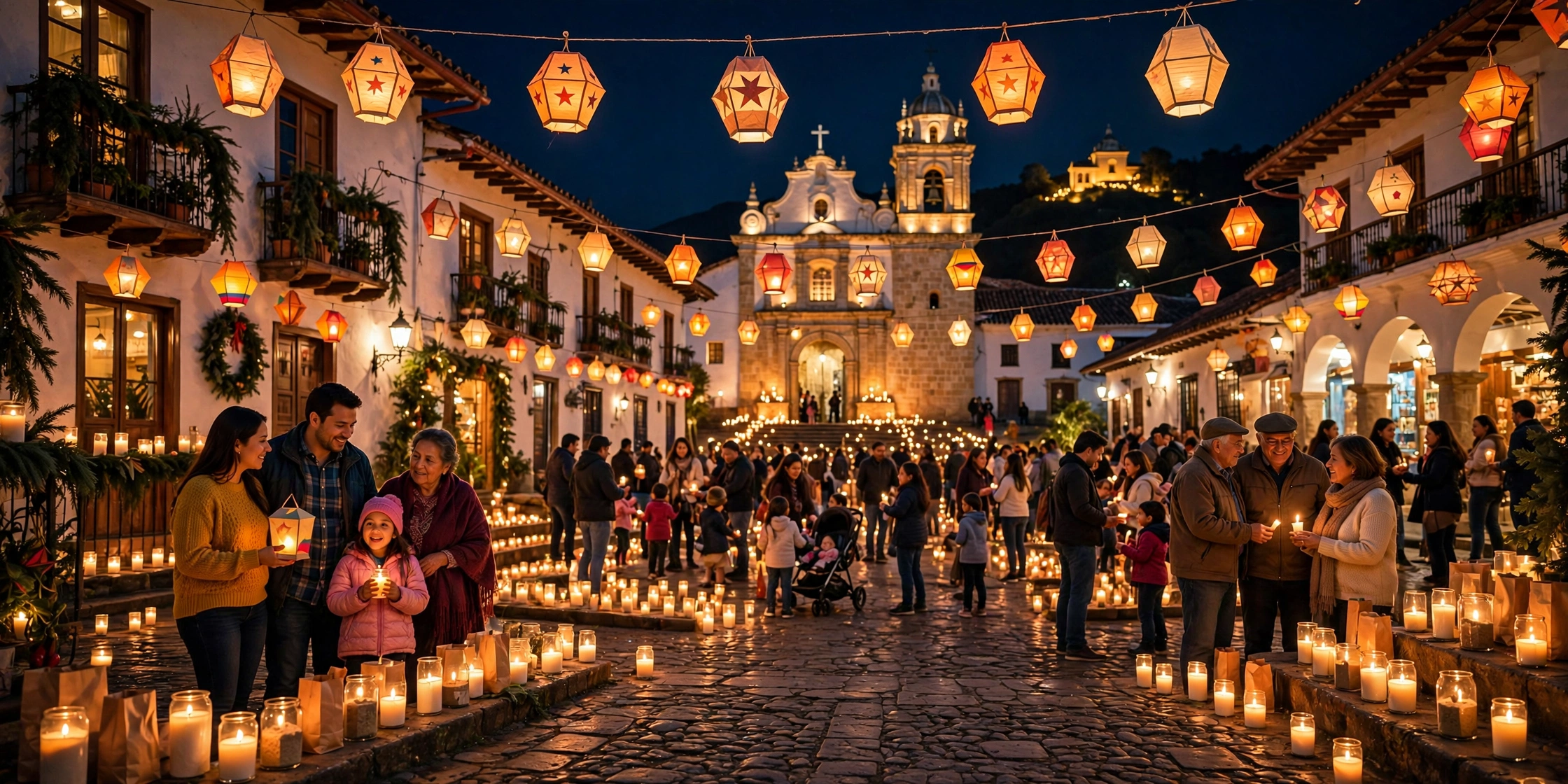
The cornerstone of Christmas traditions in Colombia is Día de las Velitas, celebrated on the night of December 7th, the eve of the Feast of the Immaculate Conception. On this night, Colombians place lit candles and colorful paper lanterns (faroles) in their windows, on their balconies, along sidewalks, and in parks and plazas. The effect is magical: whole neighborhoods glow with thousands of flickering flames, families stroll the streets admiring the displays, and the country collectively marks the beginning of the Christmas season.
The Meaning Behind the Candles
The tradition honors the Virgin Mary and the Catholic dogma of the Immaculate Conception, proclaimed in 1854. According to custom, each candle is lit with a wish or a prayer, and families often light one candle per family member. Children delight in the ritual, and the evening has the feel of a nationwide block party — neighbors chat on sidewalks, street vendors sell hot chocolate and treats, and the usual bustle of Colombian cities softens into something reverent and joyful.
Where the Velitas Shine Brightest
While the Day of the Little Candles is celebrated everywhere in Colombia, certain places have become famous for their displays. Villa de Leyva, the colonial town in Boyacá, hosts one of the country’s most renowned celebrations, with its vast cobblestone plaza filled with candles and lanterns. Quimbaya in Quindío is famous for its elaborate faroles — intricate candle-lit lantern displays that draw visitors from across the region. In Bogotá and Medellín, the night brings out entire neighborhoods, with parks and main avenues glowing. If you’re in Colombia on December 7th, simply walking your neighborhood after dark is an unforgettable experience.
Decorating with Light: A Colombian Specialty
The Colombian love of Christmas light extends far beyond a single night. Homes are decorated with elaborate light displays, and the tradition of the alumbrado — the Christmas lighting — reaches its apex in the great municipal displays. For ideas on bringing festive illumination into your own home, our Christmas decoration ideas offer inspiration from classic to creative.
The Alumbrados: Medellín’s World-Famous Christmas Lights
If Día de las Velitas opens the season with candlelight, the alumbrados carry it with electric brilliance. Medellín’s Christmas light display — strung along the Medellín River and through the city’s parks and avenues — is among the most famous in the world, drawing millions of visitors each December. Each year brings a new theme: past editions have celebrated Colombian biodiversity, the region’s rivers, and the country’s cultural heritage, rendered in millions of LED lights shaped into dazzling figures and scenes.
The alumbrados typically shine from early December into early January (check official dates for 2026, as the schedule is announced each year), and the best viewing is along the river parks, where families picnic beneath the glowing installations. Bogotá’s own displays — along the city’s main avenues and in parks like Simón Bolívar — are equally beloved, and Cali, Barranquilla, and Cartagena all mount impressive lightings. These displays are free, open to all, and represent the Colombian Christmas at its most communal: millions of people, from all walks of life, sharing wonder under the lights.
La Novena de Aguinaldos: Nine Nights of Prayer and Song
From December 16th to 24th, Colombian families gather each evening to pray the Novena de Aguinaldos — nine days of prayers, readings, and villancicos (Christmas carols) preparing for the birth of Christ. This is the devotional spine of Christmas traditions in Colombia, and it is observed with remarkable faithfulness across generations.
How the Novena Works
Each evening, family and friends assemble — often rotating between houses — and follow the traditional novena booklet: opening prayers, daily meditations, the rosary-like prayers, and the singing of beloved villancicos like “Los Peces en el Río” and “Mi Burrito Sabanero.” Children play a central role, often leading songs or placing figures in the pesebre (nativity scene). The prayers conclude with refreshments: natilla (a cinnamon custard dessert), buñuelos (fried cheese fritters), hot chocolate, and empanadas are the classic novena snacks.
The novena is as social as it is spiritual. It brings extended families together nightly for over a week, strengthens neighborhood bonds, and gives children a daily dose of Christmas anticipation. For Colombians abroad, recreating the novena — even via video call with family back home — is one of the most important ways of keeping the season authentic. The nightly gathering, the familiar prayers, the taste of natilla: together, they are home.
Nochebuena: The Colombian Christmas Eve Feast
Christmas Eve — Nochebuena — is the main celebration in Colombia, bigger than Christmas Day itself. Families gather for a late dinner, exchange gifts at midnight (traditionally brought by El Niño Dios, the Christ Child, though Papá Noel has joined the tradition in many homes), and many attend the Misa de Gallo (Midnight Mass).
Natilla and Buñuelos: The Essential Pair
No Colombian Christmas table is complete without natilla and buñuelos. Natilla is a thick, cinnamon-scented custard, traditionally made with panela (unrefined cane sugar) and cornstarch, served cold in slices. Buñuelos are golden, crispy-chewy fritters made from cheese and yuca or corn flour, fried to perfection. Together they are the definitive taste of Colombian Christmas — served at novenas, at Nochebuena, and at every December gathering. Families make them in enormous batches, and the first natilla of the season is a genuine event.
The Regional Feast: Tamales, Lechona, and Ajiaco
The Nochebuena main course varies by region, reflecting Colombia’s extraordinary culinary diversity. Tamales — corn dough stuffed with pork, chicken, and vegetables, wrapped in plantain leaves — are a holiday staple across much of the country. In Tolima and Huila, lechona (whole roast pig stuffed with rice and peas) is the celebratory centerpiece. In Bogotá and the highlands, ajiaco (the hearty chicken and potato soup) warms Christmas tables. Pernil (roast pork leg), turkey, and chicken appear everywhere, alongside rice, salads, and the ever-present natilla and buñuelos for dessert.
Like the Venezuelan hallaca tradition detailed in our guide to Christmas traditions in Venezuela, Colombia’s Christmas cooking is a communal labor of love — and the resulting feast is the delicious reward. For more holiday menu inspiration from around the world, browse our Christmas dinner ideas.
El Pesebre and Christmas Decorating
The pesebre (nativity scene) holds pride of place in Colombian homes, often elaborate affairs with mountains, lakes, villages, and dozens of figures. Children traditionally arrange the figurines, and the Christ Child is placed in the manger at midnight on Christmas Eve — a moment of genuine ceremony in many families. Christmas trees are also universal, decorated with lights and ornaments, and homes glow with the season’s lights from early December.
Colombian decorating has a distinctive warmth: it favors abundance over minimalism, color over restraint. Balconies drip with lights, doorways are framed in garlands, and neighborhoods engage in friendly competition over the most spectacular displays. The overall effect — especially combined with the alumbrados — is a country that quite literally shines through December.
Día de los Inocentes and the Season’s Playful Side
On December 28th, Colombia observes the Día de los Santos Inocentes — the Day of the Holy Innocents — with a tradition of pranks and jokes similar to April Fools’ Day in other countries. Newspapers publish fake stories, friends play tricks on each other, and the phrase “inocente palomita” accompanies the reveal. It’s a lighthearted interlude in the season’s final week, a reminder that Colombian Christmas makes room for laughter alongside devotion.
Año Nuevo: Burning the Old Year
Colombian New Year’s Eve brings its own rich set of rituals. At midnight, twelve grapes are eaten — one per chime — each with a wish for the new year. Then comes the quema del Año Viejo: the burning of an effigy representing the old year, stuffed with straw, old clothes, and fireworks, symbolically incinerating the year’s troubles. It’s cathartic, dramatic, and deeply satisfying.
The agüeros (good-luck rituals) continue: yellow underwear for prosperity, running around the block with an empty suitcase for travel luck, toasting with champagne, and embracing loved ones as fireworks fill the sky. New Year’s Day is for recovery — family lunches, beach trips for those near the coast, and the contented exhaustion of a season fully celebrated. Colombia’s Christmas season, which began with the candles of December 7th, ends nearly a month later in a blaze of fireworks and hope.
Christmas in Colombia’s Regions: A Country of Many Christmases
Colombia’s regional diversity means Christmas wears different clothes in different places. On the Caribbean coast — Cartagena, Barranquilla, Santa Marta — the holiday is tropical and outdoor, with beach gatherings, champeta and vallenato music, and warm-night parrandas. In the Andean highlands — Bogotá, Medellín, Tunja — the season feels more traditional, with chilly evenings (by Colombian standards), wool ruanas, and steaming hot chocolate. In the Pacific region, Afro-Colombian traditions infuse the season with distinctive music and cuisine; in the Llanos, the cowboy culture adds its own flavor.
Vallenato — the accordion-driven folk music of the Caribbean coast — provides the soundtrack in much of the country, with Christmas vallenatos as beloved as any carol. Salsa, champeta, and reggaeton fill December parties. This regional richness is part of what makes Christmas traditions in Colombia so endlessly fascinating: travel a few hundred miles, and the holiday transforms.
Keeping Colombian Christmas Alive Abroad
Colombia’s large diaspora — in the United States, Spain, and beyond — recreates these traditions with devotion. December 7th sees candles lit in apartment windows in Queens and Madrid; novenas are prayed over video calls; natilla and buñuelos are made with ingredients hunted down in Latin groceries; and Medellín’s alumbrados are admired via livestream. For Colombians abroad, the season is the year’s most powerful connection to home — proof that Christmas traditions in Colombia are portable, resilient, and endlessly renewable.
The Colombian Christmas also shares deep roots with its neighbors: the novena tradition, the midnight grapes, and the Año Viejo burning echo across the Andes. Readers interested in the wider region’s celebrations will enjoy our guides to Christmas traditions in Venezuela and Christmas traditions in Brazil.
The Music of a Colombian Christmas: Villancicos and Vallenato
Christmas traditions in Colombia have a soundtrack as rich as their lights. The villancicos — Spanish Christmas carols — are the season’s sacred music, sung at novenas, Masses, and family gatherings. Classics like “Los Peces en el Río,” “Campana Sobre Campana,” and “Mi Burrito Sabanero” are known by every Colombian child, and the nightly novena singing keeps them alive across generations. “Mi Burrito Sabanero,” the beloved Venezuelan-composed carol about a little donkey trotting to Bethlehem, has been adopted with particular affection in Colombia, its cheerful rhythm irresistible to young singers.
Beyond the carols, each region contributes its own festive music. Vallenato — the accordion-driven folk music of the Caribbean coast — produces Christmas songs that dominate December airwaves; artists release holiday vallenatos the way American artists release Christmas albums. In the interior, bambucos and pasillos add Andean flavor; on the Pacific coast, currulao rhythms infuse the season with Afro-Colombian energy. December parties feature salsa, merengue, and reggaeton alongside the traditional sounds. The result is a holiday playlist of extraordinary diversity — sacred and secular, ancient and brand-new, often playing simultaneously from neighboring houses.
Gift-Giving: El Niño Dios and the Midnight Exchange
In Colombia, Christmas gifts are traditionally exchanged at midnight on Nochebuena, after the Christmas Eve dinner. Children are told that El Niño Dios (the Christ Child) brings the gifts — a tradition that gives the exchange a gentle, sacred character distinct from the Santa Claus narrative. Families gather around the tree or the pesebre, and the moment the clock strikes twelve, the celebration erupts: hugs, the traditional Christmas embrace (el abrazo de Navidad), and the joyful chaos of unwrapping.
The gift-giving customs include the beloved juego del amigo secreto (Secret Santa), played in workplaces, schools, and extended families throughout December, often with daily small gifts leading to a final reveal. New clothes for Nochebuena — the estrenar tradition shared across Latin America — mean December shopping is both practical and festive. For visitors, Colombian artisan markets in December overflow with gift-worthy crafts: mochilas (woven bags), filigree jewelry, ceramics, and leather goods. If you need inspiration for presents with a personal touch, our Christmas wishes and messages collection pairs beautifully with any gift.
December Markets, Shopping, and the Estrenar Tradition
December transforms Colombian commerce. The tradition of estrenar — wearing brand-new clothes on Christmas Eve — sends millions shopping, and cities respond with extended market hours, special ferias, and street vendors selling everything from children’s outfits to Christmas decorations. In Bogotá, the traditional markets and the artisan fairs of Usaquén bustle; in Medellín, the commercial districts glow with both lights and shoppers.
Christmas markets in the European sense are less common, but Colombia has its own equivalents: the ferias artesanales (craft fairs) that pop up in December, selling handmade gifts, nativity figurines, and holiday sweets. Street food vendors do their best business of the year, selling buñuelos, empanadas, and hot chocolate to shoppers. The shopping itself is a social ritual — families go together, friends meet for the purpose, and the crowds are part of the pleasure.
Visiting Colombia at Christmas: A Traveler’s Guide
Experiencing Christmas traditions in Colombia firsthand is unforgettable, and December is an excellent time to visit — with the caveat that it’s also peak domestic travel season. If you can time your trip for early December, you’ll catch Día de las Velitas (December 7th) and the lighting of the alumbrados with slightly smaller crowds than the Christmas week itself.
Medellín’s alumbrados are the headline attraction: plan several evenings to walk the river parks and explore the themed installations. Bogotá offers the historic Candelaria district dressed for the season, plus the city’s own light displays. Cartagena provides the tropical alternative — Christmas on the Caribbean coast, with warm nights, outdoor dining, and the walled city’s colonial beauty strung with lights. Villa de Leyva’s Velitas celebration is worth a special trip for its sheer beauty.
Practical tips: book accommodations well in advance, as domestic tourism peaks in December; be prepared for crowds at major attractions; and embrace the local rhythm — dinners are late, celebrations run past midnight, and the best experiences (a neighborhood novena, a street parranda) are the unplanned ones. Colombians are famously welcoming, and visitors who show genuine interest in the traditions are often swept into the celebrations. Pack layers for Bogotá’s cool mountain evenings and light clothing for the coast, learn a villancico or two before you go, and arrive hungry: December in Colombia is a feast in every sense. For more destination inspiration, see our roundup of the best places to spend Christmas around the world.
In Pictures: Christmas in Colombia
Colombia's Christmas opens with a night of candles and runs through nine nights of novenas to one of the world's great light displays.
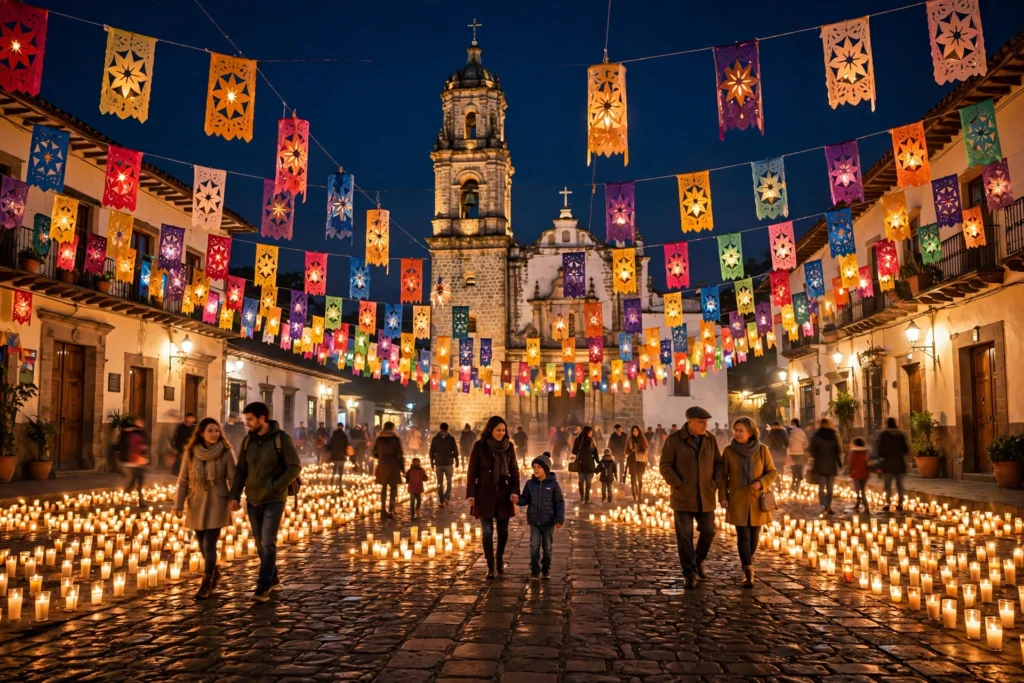
Día de las Velitas: thousands of candles and colourful faroles lining a colonial plaza, families strolling between the flames.
Watch: Christmas in Colombia
A tour of Medellín's alumbrados at Parques del Río — the headline light display covered in this guide.
At a Glance: Christmas in Colombia
Colombia's Christmas season, from the night of candles to New Year's Eve.
| Tradition | Date | Key detail |
|---|---|---|
| Día de las Velitas | Night of 7 December | The eve of the Immaculate Conception; candles and colourful faroles light up the whole country, a tradition tracing to the 1854 dogma |
| Novena de Aguinaldos | 16–24 December | Nine nightly family gatherings of prayers, gozos readings and villancicos |
| Alumbrados, Medellín | December to early January | EPM's display along the Medellín River, running since the 1950s–60s, with millions of bulbs — one of the world's largest Christmas light displays |
| Nochebuena regional feast | 24 December | Tamales nationwide, lechona (stuffed roast pig) in Tolima and Huila, ajiaco soup in Bogotá |
| Twelve grapes at midnight | 31 December | One grape per chime, each eaten with a wish for the new year |
| Quema del Año Viejo | 31 December, midnight | An effigy of the old year — old clothes stuffed with fireworks — is burned to leave the past behind |
| Yellow underwear | 31 December | Worn for prosperity and luck in the new year |
Frequently Asked Questions
What is Día de las Velitas in Colombia?
Día de las Velitas (Day of the Little Candles) is celebrated on the night of December 7th, the eve of the Feast of the Immaculate Conception. Colombians light candles and colorful paper lanterns in windows, on balconies, and along streets nationwide, honoring the Virgin Mary and marking the unofficial start of the Christmas season. Each candle is traditionally lit with a wish or prayer.
What is the Novena de Aguinaldos?
The Novena de Aguinaldos is nine days of evening prayers, readings, and Christmas carols observed from December 16th to 24th in preparation for Christmas. Families and friends gather nightly — often rotating between homes — to pray from traditional booklets, sing villancicos, and share festive snacks like natilla, buñuelos, and hot chocolate.
What do Colombians eat at Christmas?
The essential Colombian Christmas foods are natilla (cinnamon custard) and buñuelos (fried cheese fritters), served throughout December. The Nochebuena (Christmas Eve) dinner varies by region: tamales, lechona (stuffed roast pig), ajiaco soup, pernil (roast pork), turkey, and chicken are all traditional, accompanied by rice, salads, and festive desserts.
What are the alumbrados in Medellín?
The alumbrados are Medellín’s world-famous Christmas light displays, installed along the Medellín River and through city parks each December. Featuring millions of lights in elaborate themed installations, they draw millions of visitors annually. The displays typically run from early December into early January — check official announcements for 2026 dates.
Who brings Christmas gifts in Colombia?
Traditionally, El Niño Dios (the Christ Child) brings Christmas gifts to Colombian children on Christmas Eve night, with gifts opened at midnight after the Nochebuena dinner. Papá Noel (Santa Claus) has become increasingly familiar, and many families now blend both traditions.
What happens on New Year’s Eve in Colombia?
Colombian New Year’s Eve features eating twelve grapes at midnight (one per chime, each with a wish), burning the Año Viejo effigy to symbolically destroy the old year’s troubles, and good-luck rituals like wearing yellow underwear for prosperity and running with an empty suitcase for travel luck in the new year.