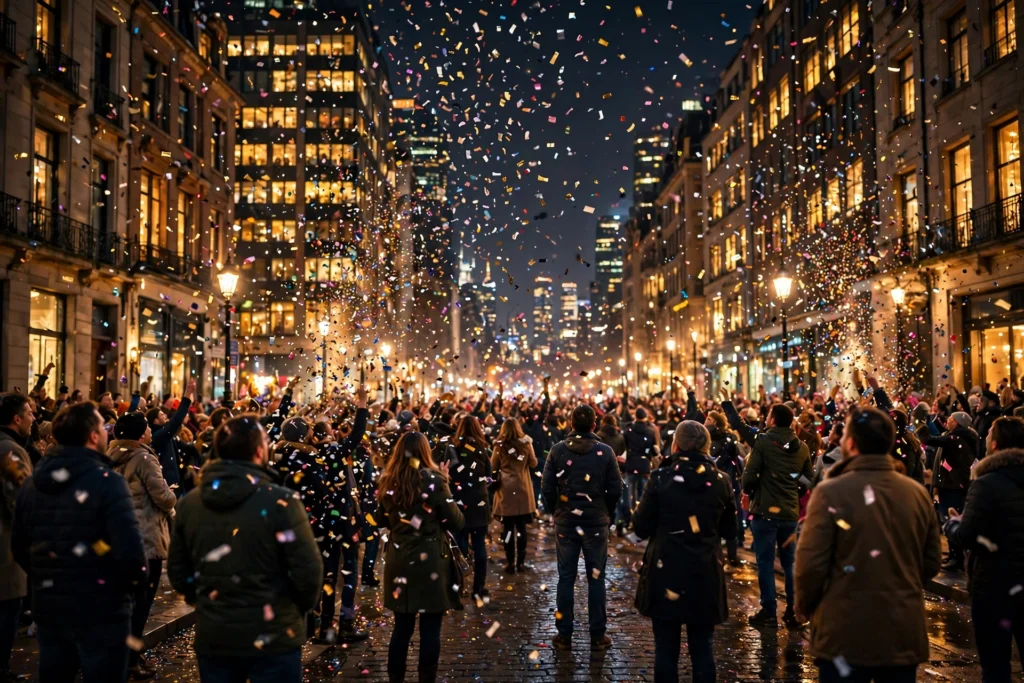
Chinese New Year 2027 arrives on Saturday, February 6, 2027, opening the Year of the Fire Goat and one of the most widely celebrated festivals on the planet. More than a single day of fireworks, it is a fifteen-day season of family reunions, symbolic foods, temple fairs, and rituals meant to sweep away the old year’s misfortune and welcome prosperity. Whether you are planning a trip to Asia, curious about what your zodiac sign says about the year ahead, or simply want to understand the world’s biggest annual human migration, this guide walks through everything that matters: the exact date, why the date moves each year, what the Goat year means, and how the festival unfolds day by day.
Known in Mandarin as Chunjie (春节), or the Spring Festival, Chinese New Year marks the first day of the first month of the traditional Chinese lunisolar calendar. In mainland China it is the longest public holiday of the year — a seven-day statutory break that most workers stretch into two weeks — and it is observed with equal enthusiasm across Taiwan, Hong Kong, Singapore, Malaysia, Vietnam (where it is called Tet), South Korea (Seollal), and in Chinatowns on every continent. The scale is hard to overstate: the annual Spring Festival travel rush, or chunyun, is routinely described as the largest yearly movement of people in the world, as hundreds of millions of workers return to their hometowns for the reunion dinner.
When Is Chinese New Year 2027? The Exact Dates
Here are the dates that anchor the 2027 Spring Festival season:
- New Year’s Eve (除夕): Friday, February 5, 2027 — the all-important reunion dinner
- Chinese New Year (正月初一): Saturday, February 6, 2027 — the first day of the Fire Goat year
- Lichun, the Start of Spring solar term (立春): Thursday, February 4, 2027 — the moment Chinese astrology considers the zodiac year to change
- Lantern Festival (元宵节): Saturday, February 20, 2027 — the fifteenth and final day of celebrations
- China’s statutory holiday: February 5–11, 2027
The 2027 lunar year runs from February 6, 2027 to January 25, 2028, when the Year of the Monkey begins. Note the small but meaningful wrinkle in the dates above: in 2027, Lichun arrives two days before Chinese New Year. Traditional Chinese astrology holds that the zodiac year changes at Lichun, not at the lunar New Year itself. That means anyone born on February 4 or 5, 2027 is considered a Goat by the astrological calendar but is still counted in the Year of the Horse by the lunar calendar — a quirk worth knowing if you are calculating a baby’s zodiac sign or planning a wedding date around the new year.
Why the Date Changes Every Year
If Chinese New Year seems to drift around the calendar, that is because it follows a lunisolar calendar rather than the solar Gregorian calendar most of the world uses day to day. Each Chinese month begins on a new moon, and the new year begins on the second new moon after the winter solstice — which is why the festival always falls somewhere between January 21 and February 20. Twelve lunar months add up to about 354 days, roughly eleven days short of a solar year, so an extra leap month is inserted about every three years to keep the seasons aligned. The 2027 lunar year has no leap month, which is one reason it arrives relatively early in February.
This drifting date is not unique to China. Lunar and lunisolar new years shape celebrations across Asia and beyond — from the Persian New Year of Nowruz, timed to the March equinox, to Thailand’s Songkran festival in April. Each is anchored to a different astronomical or cultural logic, which is why “New Year” can legitimately fall in half a dozen different months depending on whose calendar you consult.
| Year | Chinese New Year Date | Zodiac Animal | Element |
|---|---|---|---|
| 2024 | February 10 | Dragon | Wood |
| 2025 | January 29 | Snake | Wood |
| 2026 | February 17 | Horse | Fire |
| 2027 | February 6 | Goat | Fire |
| 2028 | January 26 | Monkey | Earth |
| 2029 | February 13 | Rooster | Earth |
| 2030 | February 3 | Dog | Metal |
Notice how 2028’s New Year falls unusually early, on January 26 — a reminder that the “drift” is real and that travel and business planning around the Spring Festival needs to be checked year by year. Factories in China typically shut for two to four weeks around the holiday, which is why global supply chains feel the ripple every winter.
2027: The Year of the Fire Goat
2027 is the Year of the Goat — specifically the Yin Fire Goat, or Ding Wei (丁未) in the sixty-year stem-branch cycle. The Chinese zodiac pairs each of its twelve animals with one of five elements (Wood, Fire, Earth, Metal, Water) in both yin and yang forms, producing a full cycle that takes sixty years to repeat. The last Fire Goat year was 1967; the next will not arrive until 2087. In English the animal is translated interchangeably as Goat, Sheep, or Ram — all refer to the same branch (未), so do not be confused if you see “Year of the Sheep” on a calendar and “Year of the Goat” in a horoscope column.
Traditionally, people born in Goat years are described as gentle, creative, compassionate, and quietly persistent — the artists and peacemakers of the zodiac, with a reputation for kindness and a strong aesthetic sense. Fire adds warmth, expressiveness, and a more outward-facing energy to the Goat’s typically calm nature, so popular horoscope writing tends to frame 2027 as a year favoring creativity, relationships, and thoughtful collaboration over loud ambition. As with all zodiac predictions, treat these as cultural storytelling rather than forecasts: the value of the tradition lies in the reflection it prompts, not in any predictive power.
The Goat’s “allies” in the zodiac are traditionally said to be the Rabbit and the Pig, with the Horse as a compatible partner, while the Ox sits opposite the Goat and is considered its least compatible sign. Again, these are folk customs — millions of happily married Goat-Ox couples would surely object — but they add color to the year’s conversation and show up in everything from dating app bios to Lunar New Year marketing campaigns across Asia.
What the Fire Goat year means for celebrations
Each zodiac year shapes the festival’s visual language. Expect 2027’s decorations, red envelopes, and temple fair merchandise to feature goat motifs rendered in warm reds and golds, playing on the Fire element. Families with a Goat-year member may give them particular attention during the reunion dinner, and jewelers, fashion brands, and gift sellers across China, Hong Kong, and Singapore will build entire collections around the theme. If you are buying gifts for Chinese friends or business partners in early 2027, goat-themed items in auspicious red and gold are a safe, culturally literate choice.
The Legend Behind the Festival: Nian the Beast
Like many great festivals, Chinese New Year carries an origin story. The most famous tells of Nian (年), a mythical beast that would emerge from the mountains or sea each winter to terrorize villages — devouring crops, livestock, and, in some tellings, people. After generations of suffering, the villagers discovered that Nian feared three things: the color red, bright firelight, and loud noise. So on the eve of the new year they hung red banners and lanterns, lit bonfires and firecrackers, and stayed awake banging drums and gongs until dawn. The beast never returned.
Whether or not you take the legend literally, it explains nearly everything you see during the Spring Festival: the red couplets pasted on doorways, the red lanterns strung across streets, the marathon firecracker sessions, and the tradition of staying up late on New Year’s Eve (守岁, “guarding the year”). The festival’s Chinese name for the beast, Nian, is also the word for “year” itself — a linguistic fossil of the story embedded in the language.
The 15-Day Celebration, Day by Day
Chinese New Year is not a single day but a fortnight of observances, each day with its own customs. The full traditional calendar runs as follows:
| Day | Date in 2027 | Name & Custom |
|---|---|---|
| Eve | Feb 5 (Fri) | New Year’s Eve (除夕): the reunion dinner; staying up past midnight; fireworks at the stroke of twelve |
| 1 | Feb 6 (Sat) | New Year’s Day: honoring elders, giving and receiving red envelopes; no sweeping, no harsh words |
| 2 | Feb 7 (Sun) | Welcoming the son-in-law: married daughters visit their birth families; offerings to the God of Wealth |
| 3 | Feb 8 (Mon) | Day of the Red Dog: traditionally a quiet day at home — visiting is considered bad luck |
| 4 | Feb 9 (Tue) | Welcoming the Kitchen God: businesses reopen; the Kitchen God returns from reporting to heaven |
| 5 | Feb 10 (Wed) | Birthday of the God of Wealth (破五): shops reopen fully; taboos of the first days are lifted |
| 6 | Feb 11 (Thu) | Sending off the spirits of poverty: thorough cleaning; bonfires in some regions |
| 7 | Feb 12 (Fri) | Everyone’s birthday (人日): the day humans were created; longevity noodles and a seven-vegetable soup |
| 8 | Feb 13 (Sat) | Gathering day: family banquets resume; in some regions the eve of the Jade Emperor’s birthday |
| 9 | Feb 14 (Sun) | Birthday of the Jade Emperor (天公生): major offerings, especially in Fujian and Taiwan |
| 10–12 | Feb 15–17 | Feasting with friends: dinners with extended family and friends; preparations for the Lantern Festival |
| 13 | Feb 18 (Thu) | Customs day: eating mustard greens to “cleanse” after rich festival food |
| 14 | Feb 19 (Fri) | Lantern preparations: final rehearsals for dragon and lion dances |
| 15 | Feb 20 (Sat) | Lantern Festival (元宵节): lantern displays, riddles, tangyuan; the festival’s finale |
In practice, few families outside rural China observe every single day with its full traditional ritual. Urban celebrations concentrate the intensity into New Year’s Eve, the first three days, and the Lantern Festival — but knowing the full calendar helps you understand why the “holiday feeling” in China stretches across two full weeks, and why your Chinese colleagues may be unreachable well into mid-February.
Core Customs and Traditions
The reunion dinner (年夜饭)
The emotional heart of the festival is the reunion dinner on New Year’s Eve, the one meal of the year that scattered families make every effort to share. Tables groan under symbolic dishes (more on those below), multiple generations squeeze around the table, and the evening often stretches past midnight with the CCTV Spring Festival Gala playing in the background — a variety show watched by a sizable fraction of the country’s population. Missing the reunion dinner is felt the way missing Christmas dinner is felt in the West: it is the year’s non-negotiable gathering.
Red envelopes (红包)
Elders give children — and often unmarried younger adults — red envelopes containing money, a gesture that passes good fortune to the next generation. The amount matters less than the symbolism, though crisp new banknotes are preferred and the number four is avoided (it sounds like “death” in Mandarin). In recent years digital red envelopes sent through WeChat and Alipay have exploded in popularity, turning the tradition into a social-media game of grabbing virtual hongbao in group chats.
Decorations
Homes are dressed in red and gold: paper cuttings (剪纸) on windows, the character 福 (fu, “good fortune”) pasted — often deliberately upside down, since “upside down” (倒, dao) sounds like “arrived” (到, dao), making it a pun for “fortune has arrived” — and spring couplets (春联) flanking doorways with poetic wishes for the year. Kumquat trees and blooming branches symbolize prosperity and new beginnings, while fresh flowers are considered essential for a properly festive home.
Fireworks, firecrackers, and lion dances
Noise and light remain central, just as in the Nian legend. Lion and dragon dance troupes perform in streets, malls, and temple fairs, accompanied by drums and cymbals. Fireworks policy varies: many Chinese cities have restricted or banned personal fireworks in recent years for safety and air-quality reasons, concentrating displays into organized municipal shows. If you are visiting, check local rules — lighting firecrackers in a restricted zone can mean a fine rather than good fortune.
Temple fairs (庙会)
From the first day of the new year, parks and temple grounds in cities like Beijing, Chengdu, and Taipei transform into temple fairs: folk performances, calligraphy stalls, sugar figurines, acrobats, and endless snack vendors. They are the festival’s great public living rooms — loud, crowded, delicious, and absolutely worth planning a trip around.
Lucky Foods: Eating Your Wishes
Chinese New Year food is edible symbolism — nearly every dish is chosen because its name, shape, or color puns on prosperity, unity, or advancement. The must-have dishes include:
- Dumplings (饺子): shaped like old silver ingots, symbolizing wealth. In northern China, families gather to wrap them together on New Year’s Eve, sometimes hiding a coin in one for luck.
- Fish (鱼): the word for fish (yu) sounds like “surplus” (余), expressing the wish for abundance year after year (年年有余). It is served whole — head and tail intact — for completeness.
- Niángāo (年糕): glutinous rice cake whose name sounds like “year high,” symbolizing rising fortunes and promotions.
- Spring rolls: golden, cylindrical, and resembling gold bars — wealth you can eat.
- Longevity noodles (长寿面): extra-long noodles that must not be cut, symbolizing a long life. They feature on the seventh day, everyone’s birthday.
- Tangyuan (汤圆): sweet glutinous rice balls served at the Lantern Festival; their roundness symbolizes family unity and wholeness.
- Mandarins and oranges: the words sound like “luck” and “wealth” — the easiest edible good-luck charm of the season.
Regional tables vary enormously: southern families center the feast on a steaming hotpot or a whole roasted goose, Shanghainese tables feature eight-treasure rice pudding, and in the northeast, the dumpling reigns supreme. The common thread is abundance — the table should look like prosperity itself.
Taboos: What Not to Do During the New Year
Traditional belief holds that the year’s beginning sets the tone for everything that follows, so the first days come wrapped in taboos. Many families still observe them, at least lightly:
- Do not sweep or take out the trash on New Year’s Day — you would sweep your good fortune out the door. Cleaning is done thoroughly before the new year instead.
- Do not wash your hair or clothes on the first day — the Chinese word for hair (发) sounds like the word for prospering.
- Do not use sharp objects like scissors or knives on the first day, lest you “cut” your good luck.
- Do not break anything — and if you do, quickly say 岁岁平安 (“peace year after year”), since “broken” (碎) sounds like “year” (岁).
- Avoid negative words: death, sickness, poverty, and ghosts are not mentioned; even “four” is sidestepped.
- Do not lend money or demand debts — start the year clean, with old accounts settled beforehand.
These customs belong to a much wider world of January 1st folk beliefs. For a tour of how other cultures handle the first day’s do’s and don’ts — from Danish plate-smashing to Spanish midnight grapes — see our guide to New Year’s Day superstitions around the world.
How the World Celebrates
Chinese New Year is a global festival, and some of the most spectacular celebrations happen far from China:
- San Francisco: home to the largest Chinese New Year parade outside Asia, with its famous 28-foot Golden Dragon, and the oldest Chinatown in North America.
- London: Europe’s biggest celebration centers on Trafalgar Square, Chinatown, and Shaftesbury Avenue, drawing hundreds of thousands of spectators.
- Singapore and Kuala Lumpur: entire districts transform; Singapore’s Chingay Parade is a riot of multicultural floats and street performance.
- Sydney: the Lunar Festival lights up the harbor city with giant zodiac lanterns — fittingly, goat-themed installations will dominate in 2027.
- Vancouver and New York: massive parades in Flushing, Manhattan’s Chinatown, and Richmond, BC, reflecting deep-rooted diaspora communities.
- Vietnam (Tet) and Korea (Seollal): distinct but related lunar new year traditions with their own foods, games, and ancestral rites.
If you cannot travel, many cities’ celebrations are free to attend and genuinely welcoming to outsiders — the parades, in particular, are built for crowds. Check local Chinatown business associations for 2027 schedules, which are typically published in December or January.
Planning a Trip for Chinese New Year 2027
Visiting Asia during the Spring Festival is unforgettable — and requires planning. Book flights and hotels three to six months ahead; prices on routes into China, Hong Kong, Singapore, and Vietnam spike sharply in the final weeks. Within China, high-speed rail tickets for the days around the holiday sell out within minutes of release, and the chunyun crush means even standing-room-only trains are packed.
Time your visit thoughtfully. Arriving a few days before New Year’s Eve lets you watch cities decorate and markets fill; the first three days of the new year itself can be surprisingly quiet, as shops close and locals stay home with family. The Lantern Festival weekend (February 19–20, 2027) is the celebratory bookend and a superb time to be in a major city. Pack layers — early February is genuinely cold across northern China, Korea, and Japan — and carry cash for temple fairs and street vendors. Finally, a small cultural note: if you are invited to a reunion dinner, bring a gift (fruit, sweets, or something red and gold), greet elders first, and accept red envelopes with both hands if offered.
In Pictures: Chinese New Year 2027: Year of the Goat
February 6, 2027 brings the Year of the Fire Goat — lanterns, reunion dinners, and red envelopes. Here's the celebration, glowing.

A vibrant Chinese New Year 2027 street scene: red lanterns, a lion dance, and fireworks welcoming the Year of the Goat.
Watch: Chinese New Year 2027: Year of the Goat
2027 Red Fire Goat predictions — Lunar New Year, the ring-of-fire eclipse, and the 12 zodiac forecasts.
At a Glance: Chinese New Year 2027: Year of the Goat
The key facts of Chinese New Year 2027.
| Fact | Detail | Note |
|---|---|---|
| New Year's Day | Saturday, February 6, 2027 | The Lunar New Year falls on the second new moon after the winter solstice |
| The animal | Goat (Sheep/Ram) | The 8th animal of the 12-year zodiac cycle |
| The element | Yin Fire — the Fire Goat | One of five elements cycling with the animals |
| 60-year cycle | Ding-Wei year | The last Fire Goat year was 1967 |
| Festival length | 15 days | Celebrations traditionally end with the Lantern Festival |
| Solar eclipse | February 6, 2027 | An annular 'ring of fire' eclipse coincides with New Year's Day |
| Greeting | Gong Xi Fa Cai | The Mandarin wish for a prosperous new year |
Frequently Asked Questions
What animal is 2027 in the Chinese zodiac?
2027 is the Year of the Goat (also called the Sheep or Ram) — specifically the Yin Fire Goat, or Ding Wei, in the sixty-year cycle. It is the eighth animal in the twelve-year zodiac rotation.
What is the exact date of Chinese New Year 2027?
Chinese New Year 2027 falls on Saturday, February 6, 2027. New Year’s Eve — the reunion dinner — is Friday, February 5, and celebrations conclude with the Lantern Festival on Saturday, February 20.
Is 2027 a lucky year for Goats?
Traditionally, your own zodiac year (本命年, benmingnian) is considered a year to tread carefully rather than a guaranteed lucky one — folk belief holds that you may offend Tai Sui, the year’s guardian deity. The customary protection is wearing red: red underwear, red socks, or a red bracelet, often gifted by elders. Take it as playful tradition rather than a rule for life decisions.
How long does Chinese New Year last?
The traditional celebration runs fifteen days, from New Year’s Eve to the Lantern Festival. China’s official public holiday in 2027 is February 5–11, but the festive atmosphere, travel rush, and business closures stretch across roughly two weeks.
What should I say to wish someone a Happy Chinese New Year?
In Mandarin: “Xīnnián kuàilè” (新年快乐 — Happy New Year) or “Gōngxǐ fācái” (恭喜发财 — wishing you prosperity). In Cantonese: “Gung hay fat choy.” For written greetings and social captions, our 100 New Year wishes, messages, and captions for 2027 has ready-to-use options.
Why do Chinese New Year decorations use red and gold?
Red symbolizes joy, vitality, and protection against evil (per the Nian legend), while gold represents wealth and prosperity. Together they are the festival’s visual shorthand for a fortunate year — which is why red envelopes, red lanterns, and gold-accented decorations dominate every celebration.
Chinese New Year 2027 is more than a date on the calendar — it is a two-week reminder that renewal is a communal project, celebrated with food, noise, light, and family. Whether you are watching lanterns rise over a temple fair in Taipei, catching the parade in San Francisco, or simply sharing dumplings with friends at home, the Fire Goat year offers the same invitation it always has: sweep out the old, welcome the new, and start the year together.