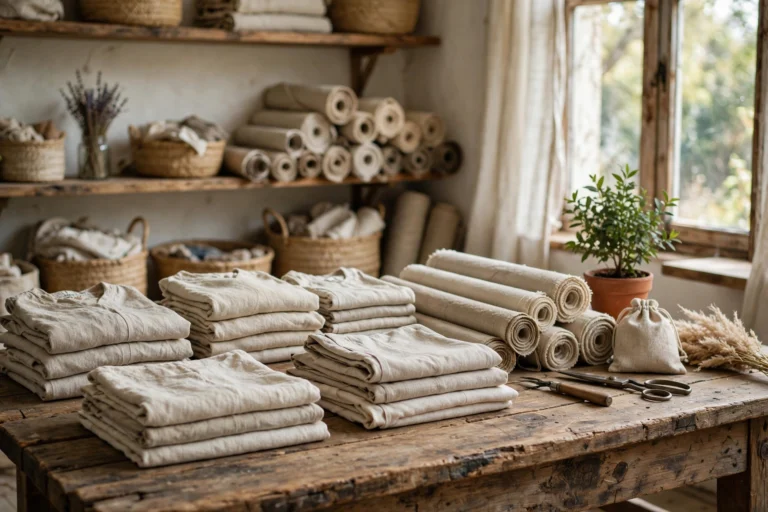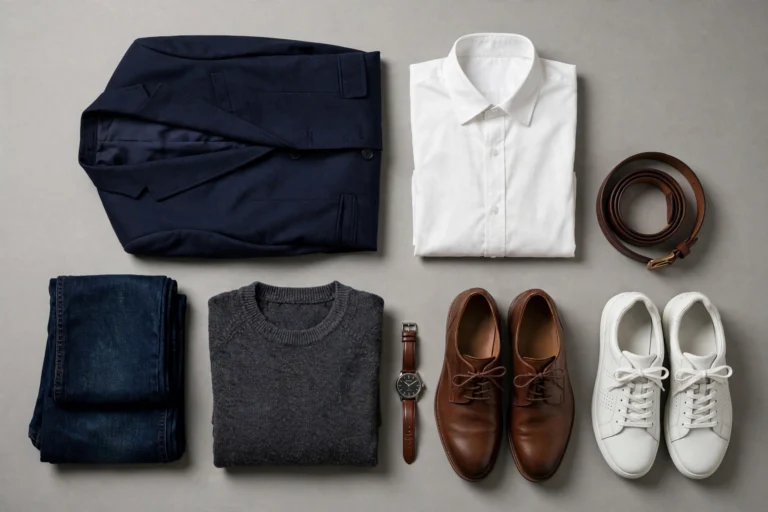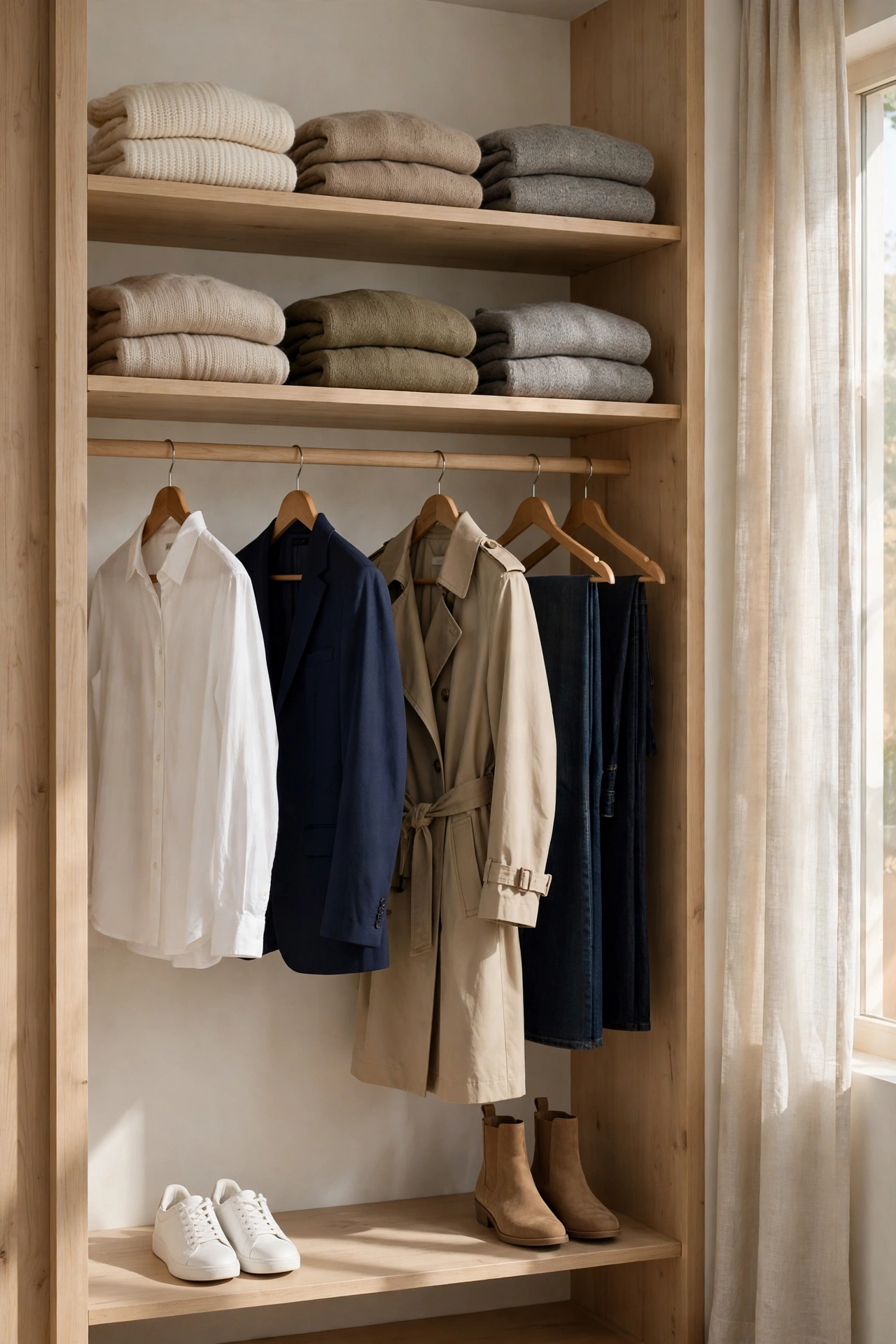
A capsule wardrobe is the simplest answer to the most common morning problem: a closet full of clothes and nothing to wear. Instead of chasing trends or buying random pieces on sale, you build a small, deliberate collection of versatile clothing where nearly everything works with everything else. The result is less decision fatigue, less money wasted on clothes you never wear, and a personal style that looks put together without effort.
This guide walks you through the whole process, from auditing the closet you already own to choosing your color palette, picking the essential pieces, and maintaining your capsule season after season. Whether you want a year-round capsule of 30 to 40 pieces or a smaller seasonal capsule of 20 to 25, the method below will get you there.
What Exactly Is a Capsule Wardrobe?
A capsule wardrobe is a limited set of clothing — usually between 20 and 40 pieces, not counting underwear, workout gear, or occasion-specific formalwear — chosen so that the pieces coordinate with each other. Every top works with every bottom. Every layer works over every top. Shoes and accessories complete any combination. The concept was popularized in the 1970s by London boutique owner Susie Faux, who argued that a wardrobe built from a few high-quality essentials could carry a person through years of dressing well, and it was later championed by designer Donna Karan with her “Seven Easy Pieces” collection.
The modern version of the idea goes further. It is not just about owning less; it is about owning right. The average American buys roughly 68 garments per year and wears many of them fewer than seven times. A capsule wardrobe flips that ratio: fewer pieces, worn far more often, with a dramatically lower cost per wear. It also happens to be one of the most practical entry points into sustainable fashion, because wearing clothes longer is the single biggest lever a consumer has to reduce fashion waste.
Capsule Wardrobe vs. Minimalist Wardrobe
The terms get used interchangeably, but there is a useful distinction. Minimalism is a lifestyle philosophy about owning less overall. A capsule wardrobe is a method — a specific, structured way of organizing what you own so outfits assemble themselves. You can have a capsule wardrobe without being a minimalist, and you can be a minimalist without ever building a capsule. If you love fashion and enjoy owning beautiful things, a capsule simply channels that love toward pieces that earn their place.
Why Build a Capsule Wardrobe? The Real Benefits
1. You Spend Less Time Deciding What to Wear
Decision fatigue is real. Studies on choice overload show that every extra decision drains a small amount of mental energy, and mornings are when that energy matters most. With a capsule, the question “what should I wear today?” stops being a 20-minute production. Grab any clean top, any bottom, add a layer and shoes — it works. People who adopt capsule wardrobes consistently report that getting dressed takes under five minutes.
2. You Spend Less Money on Clothes
Impulse purchases are the enemy of a good wardrobe. Most closets contain a “graveyard” category: items bought on sale, worn once, and never touched again. A capsule gives you a shopping list instead of a shopping habit. When you do buy, you buy with intention — usually higher quality, which lowers the cost per wear over time. A $150 pair of jeans worn 200 times costs $0.75 per wear. A $40 pair worn twice costs $20 per wear.
3. Your Style Becomes More Consistent
Looking at a well-dressed person’s outfits over a month, you will notice patterns: a defined color palette, repeated silhouettes, familiar proportions. That consistency reads as personal style. Capsule wardrobes enforce that consistency structurally. When every piece was chosen to coordinate, your outfits naturally look intentional — which is, functionally, what “having great style” means to most observers.
4. It Is Better for the Planet
The fashion industry generates enormous waste, and the average garment’s useful life has shortened dramatically over the past two decades. Wearing each piece more times is the most effective individual action. A capsule wardrobe typically keeps garments in active rotation for years rather than months, cutting your clothing consumption by a third or more without feeling like a sacrifice..
Step 1: Audit the Closet You Already Own
Do not buy a single thing yet. The first step of building a capsule wardrobe is an honest inventory of what you already have, because most people already own 60 to 80 percent of a great capsule.
The Three-Pile Sort
Take everything out of your closet — yes, everything — and sort it into three piles:
- Love and wear constantly: These are your anchors. Notice what they have in common: probably similar colors, similar fits, similar comfort levels. This pile tells you what your actual style is, not your aspirational one.
- Never wear or wear with guilt: Wrong size, uncomfortable fabric, needs repairs you will never do, was a trend that passed, was bought for someone else’s opinion. These leave the capsule (donate, sell, or recycle).
- Sometimes wear: This is the interesting pile. For each piece, ask why it is not in pile one. If the answer is “it doesn’t go with anything I own,” it is a coordination problem — and it might become a pile-one piece once the capsule’s color palette is defined.
Track Your Actual Wear for Two Weeks
If the sort feels too subjective, try this experiment: for two weeks, every time you wear something, note it in your phone. At the end you will have hard data — and it almost always reveals that you rotate through 20 to 30 pieces while the rest sits idle. Those rotated pieces are your de facto capsule already.
Step 2: Define Your Color Palette
Color is the glue of a capsule wardrobe. When everything shares a palette, everything matches — which is the whole trick.
The 3-2-1 Palette Formula
Most successful capsules use three neutrals, two accent colors, and one or two patterns:
- Neutrals (3): The foundation. Pick three from black, white, navy, gray, beige, cream, brown, or olive. Your neutrals should suit your skin tone and lifestyle. A good default set is black, white, and navy — or cream, camel, and gray if you prefer a softer look.
- Accents (2): Colors you love that bring the palette to life: burgundy, forest green, mustard, dusty blue, rust. These show up in tops, sweaters, and accessories so the wardrobe does not feel monotonous.
- Patterns (1–2): Stripes, a subtle plaid, or a small floral — kept within the palette so they mix with the solids.
Before finalizing, do the mirror test: hold each color near your face in natural light. Colors that make your skin look even and your eyes look bright are keepers. Colors that make you look washed out or tired get cut, no matter how much you like them on the hanger.
Example Palettes
| Palette Name | Neutrals | Accents | Best For |
|---|---|---|---|
| Classic Navy | Black, white, navy | Burgundy, camel | Office workers, polished everyday style |
| Soft Earth | Cream, camel, gray | Olive, rust | Creative professionals, relaxed dressers |
| Monochrome Plus | Black, white, charcoal | Forest green | Minimalists, city commuters |
| Warm Neutrals | Navy, tan, white | Mustard, dusty blue | Warm skin tones, casual lifestyles |
Step 3: Choose Your Essential Pieces
With your palette set, build the capsule around proven essentials — pieces that have survived decades of trend cycles. Adjust counts to your climate and lifestyle; someone working from home in a warm climate needs fewer layers than a commuter in a four-season city.
The Core Checklist
| Category | Pieces | Suggested Count |
|---|---|---|
| Tops | 2–3 plain tees, 2 button-downs or blouses, 1–2 sweaters or knits, 1 statement top in an accent color | 6–8 |
| Bottoms | 2 jeans (one dark, one medium wash), 1–2 trousers or tailored pants, 1 skirt or shorts for warmer weather | 4–5 |
| Layers | 1 blazer, 1 denim or utility jacket, 1 coat for your climate, 1 cardigan or vest | 3–4 |
| Dresses / One-pieces | 1 day dress, 1 dressier option (optional but useful) | 1–2 |
| Shoes | 1 white sneaker, 1 everyday boot or loafer, 1 dressier shoe, 1 sandal (seasonal) | 3–4 |
| Accessories | Everyday bag, belt, scarf, sunglasses, simple jewelry or watch | 4–6 |
Total: roughly 21–33 pieces, squarely in the classic capsule range. Notice what is missing: nothing in this list goes out of style. That is the point.
Prioritize Fit and Fabric
In a small wardrobe, every piece gets worn often, so quality matters more than quantity. Two rules:
- Fit beats brand. A $40 pair of trousers tailored for $25 looks better than $200 trousers that bunch at the waist. Learn a tailor’s basics: hemming, taking in a waist, shortening sleeves. In a capsule, alterations pay for themselves many times over.
- Fabric determines longevity. Natural fibers and good blends — cotton, wool, linen, Tencel — outlast cheap synthetics both in appearance and comfort. Check seams, buttons, and zippers before buying; these are the failure points of fast-fashion garments.
When filling gaps, start with versatile, high-quality pieces from trusted retailers. Our roundup of the best online clothing stores covers where to find durable basics at every price point.
Step 4: Build Outfit Formulas
Outfit formulas are the payoff of the capsule wardrobe: repeatable combinations you can assemble half asleep. Write down 10 to 15 formulas using your actual pieces, photograph them, and save the photos in a phone album labeled “outfits.” On busy mornings, scroll and pick.
Classic formulas that work in almost any capsule:
- Dark jeans + white tee + blazer + loafers (smart casual, endless contexts)
- Trousers + knit sweater + ankle boots (fall/winter workhorse)
- Day dress + denim jacket + white sneakers (weekend uniform)
- Skirt + button-down tucked in + belt + flats (polished, comfortable)
- Jeans + sweater + long coat + boots (cold-weather default)
Each formula is a template: swap the colors and textures within your palette and one formula becomes five outfits. This is why fashion influencers can post “30 outfits from 15 pieces” — the math of mix-and-match is genuinely that generous when the palette is disciplined.
Step 5: Handle the Seasons
You have two options for seasonal dressing: one year-round capsule with seasonal swaps, or four seasonal capsules rotated quarterly.
Option A: The Year-Round Capsule with Swaps
Keep 25–30 core pieces that work year-round (jeans, tees, blazer, boots) and swap 8–10 seasonal items: linen and shorts in summer, wool and heavy coats in winter. This is the lower-effort approach and works well in mild climates.
Option B: Seasonal Capsules
Four times a year, box up the off-season clothes and build a fresh capsule of 20–25 pieces for the current season. Advantages: your closet always feels fresh, and stored clothes feel “new” when they return. The classic 3-month rotation also naturally surfaces pieces you never reach for — if something survives two full rotations unworn, it is safe to let go.
Seasonal Swap Checklist
- Store off-season clothes clean, in breathable containers, with cedar or lavender to deter moths.
- When unboxing a season, try on everything. Bodies change; a capsule that does not fit is not a capsule.
- Identify gaps before shopping — write the list, then shop the list.
- One in, one out: every new purchase replaces something outgoing. This is the rule that keeps a capsule a capsule.
Common Capsule Wardrobe Mistakes (and How to Avoid Them)
Going Too Minimal Too Fast
Jumping from 150 pieces to 20 overnight usually ends in a rebound shopping spree. Start with 40–45 pieces and pare down over two or three seasons as you learn which pieces you actually reach for.
Ignoring Your Real Life
A capsule built from an aspirational Pinterest board fails. If you work from home, you need elevated loungewear, not five blazers. If you attend weddings every summer, the dressier pieces earn their place. Build for the life you have, with 10 percent aspirational room.
Forgetting Laundry Math
A 25-piece capsule only works if your laundry rhythm supports it. Two pairs of trousers with a biweekly laundry habit is a recipe for rewearing dirty clothes. Either adjust the piece count to your laundry cycle or adjust the cycle to the piece count.
Buying “Capsule-Approved” Items You Do Not Love
The beige trench is a capsule cliché — but if you hate beige, you will never wear it, and it becomes expensive closet decor. Every piece must pass two tests: it coordinates with the palette and you genuinely like wearing it.
Counting Shoes and Accessories Wrong
Most capsule frameworks exclude shoes, bags, and accessories from the piece count — or count them separately. Decide your own rules and be consistent; the number is a tool, not a law.
Capsule Wardrobe on a Budget
Building a capsule does not require a shopping spree. In fact, the cheapest path is the audit-first path described above:
- Shop your closet first. Most people already own most of a capsule; the gaps are usually 3–5 specific items.
- Thrift the gaps. Blazers, wool coats, leather bags, and denim are abundant secondhand in excellent condition — often better quality than new fast fashion at the same price.
- Upgrade gradually. Replace one worn-out piece at a time with the best quality you can afford. A capsule built over two years beats a capsule bought in a weekend.
- Track cost per wear. Before buying, estimate honestly: will you wear this 50 times? If yes, a higher price is justified. If it is a “maybe,” skip it.
Capsule Wardrobes for Specific Lifestyles
The Work Capsule
If your office is business casual, anchor the capsule with tailored trousers, blazers, blouses or button-downs, and closed-toe shoes in your neutrals. Twelve to fifteen pieces can cover a five-day week with zero repeats, because 4 tops × 3 bottoms × 2 layers yields dozens of combinations.
The Work-From-Home Capsule
Video calls show shoulders up, so invest in good tops: structured knits, collared shirts, one blazer for important calls. Below the desk, comfortable trousers or dark jeans. The capsule is smaller — 15 to 20 pieces — but the same coordination rules apply.
The Parent-On-The-Go Capsule
Washability and durability outrank everything. Dark colors hide stains, stretch fabrics survive playground duty, and slip-on shoes save minutes that matter. Keep one “nice” outfit in the capsule for the occasions that need it.
Maintaining Your Capsule Wardrobe Long-Term
A capsule is not a one-time project; it is a system. A light quarterly review keeps it working:
- Remove anything damaged, ill-fitting, or unworn for a full season.
- Note gaps that emerged (the boots wore out, you need a summer layer).
- Resist trend purchases unless they fit the palette and pass the three-outfit test: can you wear it three ways with pieces you own? If not, it does not enter the capsule.
- Repair before replacing: re-heel shoes, mend seams, replace buttons. A $15 repair beats a $150 replacement.
Frequently Asked Questions
How many pieces should a capsule wardrobe have?
Most frameworks suggest 20–40 pieces, excluding underwear, sleepwear, workout clothes, and occasion-specific formalwear. Seasonal capsules tend toward 20–25; year-round capsules toward 30–40. The right number is whatever covers your life with every piece earning its place.
Do I have to get rid of most of my clothes?
No. Start by identifying your capsule within your current closet and box up the rest for a season. If you never miss the boxed items, donate them with confidence. The purge is the last step, not the first.
Can a capsule wardrobe include colors and patterns?
Absolutely. The 3-2-1 palette formula includes two accent colors and one or two patterns. A capsule of only black, white, and gray works, but it is not required — earth tones, jewel tones, and prints all work as long as they coordinate.
How much does it cost to build a capsule wardrobe?
If you audit first, most people need only 3–8 new pieces, which can cost anywhere from $100 (thrifted) to $800+ (premium). Building gradually — one quality piece per month — spreads the cost and results in a better wardrobe than a single spree.
Does a capsule wardrobe work for men?
Yes, and arguably better — menswear is already built around a narrower set of interchangeable pieces. For brand-level guidance on building that foundation, see our guide to the best clothing brands for men.
How do I stop impulse buying after building my capsule?
Keep a running “want list” in your phone instead of buying immediately. Revisit it after 30 days; most urges fade. For what remains, apply the rules: it must fit the palette, work in three outfits, and replace something outgoing.
A capsule wardrobe will not solve every clothing frustration overnight, but it solves the big ones: the morning paralysis, the money drain, the closet full of almost-right pieces. Start with the audit this weekend, define your palette, and build slowly. In three months, getting dressed will feel like the easiest part of your day.