An open house is the most generous format a business anniversary can take: instead of a private party for insiders, you throw open the doors and invite the world in. Customers see how things are made, neighbors meet the team, kids press the big red button (supervised), and everyone leaves with a deeper connection to the business than any advertisement could create. These business anniversary open house ideas turn a simple “come visit” into a full-scale experience — with station designs, tour formats, crowd-flow planning, and promotion strategies that fill the room.
Open houses work because transparency builds trust. In an era of faceless commerce, showing your work — the kitchen, the workshop, the studio, the warehouse — is a radical act of confidence. It says: we have nothing to hide and everything to show off. This guide covers 25+ open house ideas organized by station type, a complete operations playbook (staffing, flow, safety, timing), promotion tactics that actually drive foot traffic, and the follow-up system that converts visitors into customers.
Why Open Houses Outperform Parties
A traditional anniversary party preaches to the choir — the people already closest to the business. An open house reaches everyone else: the curious neighbors, the prospective customers, the families, the community. The audience is bigger, warmer, and full of people experiencing the business for the first time. For customer acquisition, no anniversary format competes.
Open houses also demystify. A bakery’s customers taste the difference when they have watched the ovens. A manufacturer’s clients trust the quality when they have walked the floor. A studio’s prospects convert when they have met the team. The “how it’s made” fascination is universal — lean into it hard. And because the event is inherently educational and family-friendly, it earns the kind of community goodwill and press coverage that private parties never do.
If foot traffic is the goal, the open house deserves the same strategic thinking as any marketing campaign. Digital marketing for small business covers the online promotion that fills the room, and networking effectively helps the team turn casual visitors into lasting relationships. More event and growth strategy lives in our Career & Success hub.
25 Open House Ideas, Organized by Station
Design the open house as a series of stations, not a single room. Stations give visitors a journey, prevent bottlenecks, and let different team members shine. Mix these to fit your space and business:
Behind-the-Scenes Stations (1–8)
- The guided tour. The backbone of every open house: a 15–20 minute guided walk through the operation, led by enthusiastic staff. Run tours on a schedule (every 30 minutes) so crowds stay manageable.
- Meet the makers. Station the actual craftspeople, engineers, chefs, or designers at their workstations, doing their thing and answering questions. People love meeting the hands behind the product.
- The “how it’s made” demo. A live demonstration of the core process — dough being shaped, code being deployed, furniture being joined. Live process is mesmerizing.
- Then-and-now display. The company’s evolution in photos and artifacts, from founding to today. Visitors love the story almost as much as the tour.
- Quality lab. Let visitors test the product themselves: taste tests, durability demos, try-before-you-buy stations. Experiencing quality beats hearing about it.
- The founder’s corner. A dedicated spot where the founder (or veteran staff) tells the origin story and answers questions. Personal access is the draw.
- Future preview. A sneak peek at what’s coming — new products, new spaces, new plans. Exclusivity makes visitors feel like insiders.
- Kids’ discovery zone. A supervised hands-on activity for children: decorating, building, simple experiments. Parents stay longer when kids are happy.
Interactive and Fun Stations (9–17)
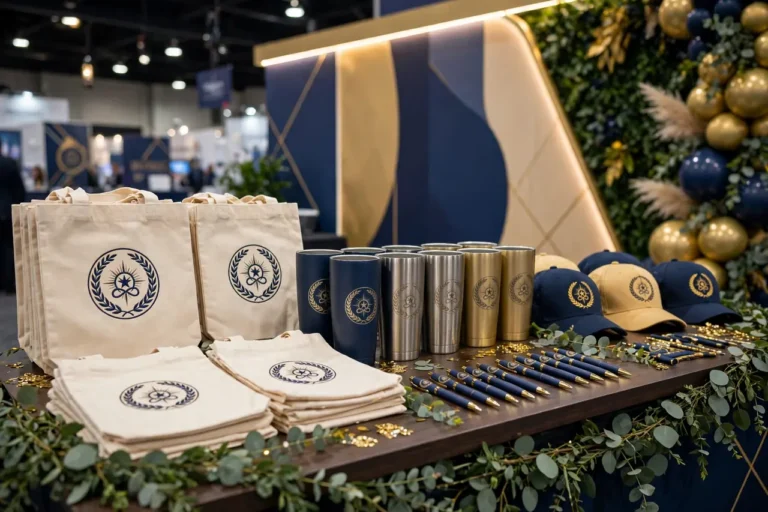
- Photo opportunities. Two or three designed photo spots: the anniversary backdrop, the “I toured the factory” frame, the product throne. Branded, well-lit, irresistible.
- Hands-on workshop. A 20-minute mini-class where visitors make something to take home. The keepsake markets the business for months.
- Tasting or sampling bar. For food, beverage, or cosmetic businesses: guided tastings with staff explaining what makes each special.
- Trivia challenge. Company-history trivia with small prizes. Competitive, fun, and educational about the brand.
- Scavenger hunt. A stamp card guiding visitors through every station, completed cards entered in the grand prize draw. Guarantees full exploration.
- VR or video experience. For businesses with impressive remote sites or processes: a virtual reality or video station showing what visitors cannot see in person.
- Customer story wall. Testimonials and photos from long-time customers, displayed prominently. Social proof in physical form.
- Live art or build. An artist creating anniversary art live, or the team assembling something impressive during the event. Process as performance.
- Petting zoo / family fun. For outdoor space: face painting, balloon artists, or local performers. Family-friendly draws the biggest crowds.
Commercial Stations (18–25)
- Anniversary exclusive shop. Limited-edition products available only at the open house. Scarcity plus occasion drives sales.
- Special offer station. An open-house-only deal, clearly explained and time-bound. Convert the goodwill while it is warm.
- Consultation bookings. For service businesses: free 10-minute consultations bookable on the spot, scheduled for later. The open house becomes a lead machine.
- Loyalty program signup. A staffed station enrolling visitors in the rewards program with an instant anniversary bonus.
- Feedback wall. “What should we do in our next 10 years?” — visitors contribute ideas. Engagement plus genuine insight.
- Partner showcase. Invite key suppliers or partners to exhibit. Their presence validates the business and their networks expand the crowd.
- Charity tie-in. A donation station or charity raffle benefiting a local cause. Generosity elevates the whole event.
- VIP preview hour. An early-access hour for best customers and VIPs before general opening. Exclusivity rewards loyalty and creates buzz for the main event.
Watch: A 50th Anniversary Open House in Action
Want to see what a great anniversary open house actually feels like? This video goes inside a company’s 50th anniversary open house — the crowds, the displays, the behind-the-scenes access, and the community celebration that five decades of business earns:
Open House Operations: The Complete Playbook
An open house is part party, part facility tour, part retail event — which makes operations more complex than a standard party. Plan it like a professional venue manager.
Design the Flow
Map the visitor journey before anything else: entrance → welcome → station circuit → food/rest → commercial stations → exit with favor. The flow should be intuitive without staff direction — use signage, floor markings, and sight lines. Avoid dead ends and backtracking, which create congestion and frustration. Place the highest-draw stations (tours, demos) away from the entrance to pull traffic through the whole space, and put food and seating at the natural midpoint where energy dips.
Capacity-plan honestly. A comfortable open house handles roughly one visitor per 15–20 square feet of public space at a time; beyond that, it feels crowded rather than festive. If demand exceeds comfortable capacity, use timed entry tickets (free, via online RSVP) to spread arrivals across the day. Timed entry also gives you the contact list for follow-up — the most valuable open house asset.
| Time Block | Focus | Staffing Notes |
|---|---|---|
| First hour | VIP preview (best customers, press) | Senior staff present; founder greeting at the door |
| Hours 2–3 | General opening surge | Full staffing; tours running every 20 min; greeters at entrance |
| Midday | Peak flow | All stations active; food service at full speed; crowd monitors circulating |
| Afternoon | Families & steady traffic | Kids’ zone fully staffed; demos continue; restock supplies |
| Final hour | Winding down | Last tours announced; special offers emphasized; thank-yous at exit |
Staff Every Station
Every station needs an owner — someone whose only job is that station’s experience. Brief staff on three things: their station’s purpose (what should visitors feel and learn?), the key messages (two or three points, not a script), and the handoff (where to send visitors next). Rotate staff through breaks; exhausted hosts create exhausted guests. And put your most enthusiastic people — not necessarily your most senior — at the welcome and tour stations. Energy is contagious at the door.
Safety and Logistics
Open houses invite the public into working spaces, so safety planning is non-negotiable. Walk the entire visitor route identifying hazards: wet floors, trip points, restricted areas, equipment that must be guarded or shut down. Mark restricted zones clearly with barriers, not just signs. Have a first-aid kit and a designated safety lead. Check insurance coverage for public events on the premises — most business policies need a rider or notification. For food service, follow local health regulations; for children’s activities, ensure proper supervision ratios. None of this is exciting, and all of it is what separates professionals from amateurs.

Promoting the Open House: Filling the Room
An open house with no visitors is just a decorated building. Promotion needs to start 4–6 weeks out and work every channel:
- Neighbors first. Door-hangers, flyers, and personal invitations to surrounding businesses and residences. The neighborhood is your highest-converting audience — and the one most likely to become regulars.
- Existing customers. Email (2–3 sends), in-store signage, checkout invitations, and social posts. Your current customers are also your best promoters — give them something to share.
- Local media. An anniversary open house is a ready-made community story. Pitch it 3 weeks out with the human angle and great photos.
- Community calendars. Submit to every local events calendar, neighborhood group, and community board — most are free and widely read.
- Schools and family networks. If the event is family-friendly, parent groups and schools are powerful distribution. The kids’ zone is your headline for this audience.
- Partners’ audiences. Ask suppliers, partners, and neighboring businesses to promote to their lists. Cross-promotion multiplies reach at zero cost.
- Paid (if budget allows). Hyper-local social ads ($100–$300) targeted to a tight radius around the business. Geo-targeting makes small budgets effective.
The RSVP mechanism matters: use free timed-entry tickets even if the event is free and open. Timed entry smooths crowds, and the registration list becomes your follow-up gold — every visitor is a warm lead who has now experienced the business firsthand. For promotion tactics that compound beyond the event, see small business ideas for growth inspiration.
Converting Visitors: The Follow-Up System
The open house’s real ROI is not the day’s sales — it is the relationships started. Design the conversion funnel deliberately:
- Capture at entry. The timed-entry RSVP list is the foundation. Add a prize-draw entry (name, email, phone) at the welcome station for walk-ins — the draw incentive typically captures 60–80% of visitors.
- Engage during. The scavenger hunt stamp card, the feedback wall, and the consultation bookings all create natural data-capture moments. Every interaction is a permission to follow up.
- Convert at exit. The open-house-only offer, the loyalty signup with instant bonus, and the take-home favor (with a QR code to the offer page) turn interest into action before visitors reach their cars.
- Follow up in 48 hours. A thank-you email with event photos, the offer reminder, and a review request. Warmth decays fast — strike while the experience is fresh.
- Nurture for 30 days. A short welcome sequence for new contacts: the company story, the best of what they missed, an invitation to return. Open house visitors convert at multiples of cold leads — treat them accordingly.

Open House Mistakes to Avoid
- No crowd plan. Hope is not a capacity strategy. Timed entry, flow mapping, and staffing ratios are the difference between festive and chaotic.
- Understaffing. The most common open house failure. Every station needs an owner, plus floaters for breaks and surges. Tired staff = poor experience.
- Skipping safety. Public + working space = real risk. Walk the route, barrier the hazards, brief the team, check insurance.
- All sizzle, no substance. Decorations without genuine behind-the-scenes access disappoint. The tour and the makers are the point — everything else is support.
- Forgetting the regulars. In the rush to impress newcomers, do not neglect loyal customers. The VIP preview hour exists for exactly this.
- No data capture. An open house that collects no contacts wastes its highest-value asset. Build capture into every station.
- Weak follow-up. The 48-hour email and 30-day nurture are where ROI lives. No follow-up = expensive party with no return.
- Ignoring the neighbors. The surrounding community should be the first invited, not an afterthought. They are your future regulars — and your current reputation.
Measuring Open House Success
| Metric | How to Track | Strong Result |
|---|---|---|
| Attendance | Timed-entry scans + walk-in count | 70%+ of RSVPs attend; healthy walk-in flow |
| Contacts captured | RSVP list + draw entries + signups | 60–80% of visitors leave contact info |
| Engagement depth | Completed scavenger hunts; tour participation | 50%+ complete the full circuit |
| Day-of sales | POS vs. normal day | 2–4× a typical day |
| 30-day conversion | New-customer tracking from captured list | 10–20% become customers |
| Reviews & social | Review count; tagged posts; shares | 20–50 new reviews; 100+ social posts |
| Press | Media pickups | 1–3 local stories |
Your Open House Checklist
- Define the goal: acquisition, goodwill, sales — pick the primary.
- Design the station circuit and map the visitor flow.
- Plan capacity: timed entry, staffing ratios, safety walkthrough.
- Recruit and brief station owners; schedule breaks.
- Build the promotion plan 4–6 weeks out; launch RSVP ticketing.
- Prep the experience: tours scripted, demos rehearsed, kits ready.
- Set up data capture at entry, stations, and exit.
- Execute with a single operations lead and a radio/chat channel.
- Follow up in 48 hours; nurture for 30 days; debrief the team.
The Open House for Service Businesses (No Showroom Required)
Consultants, agencies, plumbers, and accountants often assume open houses are for businesses with impressive physical spaces. Wrong — service businesses can run some of the most compelling open houses by making the invisible visible. Turn the office into an experience: live “ask us anything” stations where visitors get free mini-consultations, a “day in the life” video loop showing real projects, before-and-after galleries of client work, and a workshop where attendees learn one valuable skill in 20 minutes.
The format that works best for services is the expertise showcase. A law firm runs “know your rights” mini-sessions. An agency does live website teardowns (volunteers only, kindly). A plumbing company demonstrates common fixes visitors can do themselves — the generosity seems counterintuitive until the complex jobs start flowing in from people who now trust the brand. Pair the expertise with hospitality: good coffee, a welcoming space, and staff who genuinely enjoy teaching. Service-business open houses convert at extraordinary rates because the visitor has already experienced the product — your knowledge — firsthand.
Weather, Parking, and Other Unglamorous Essentials
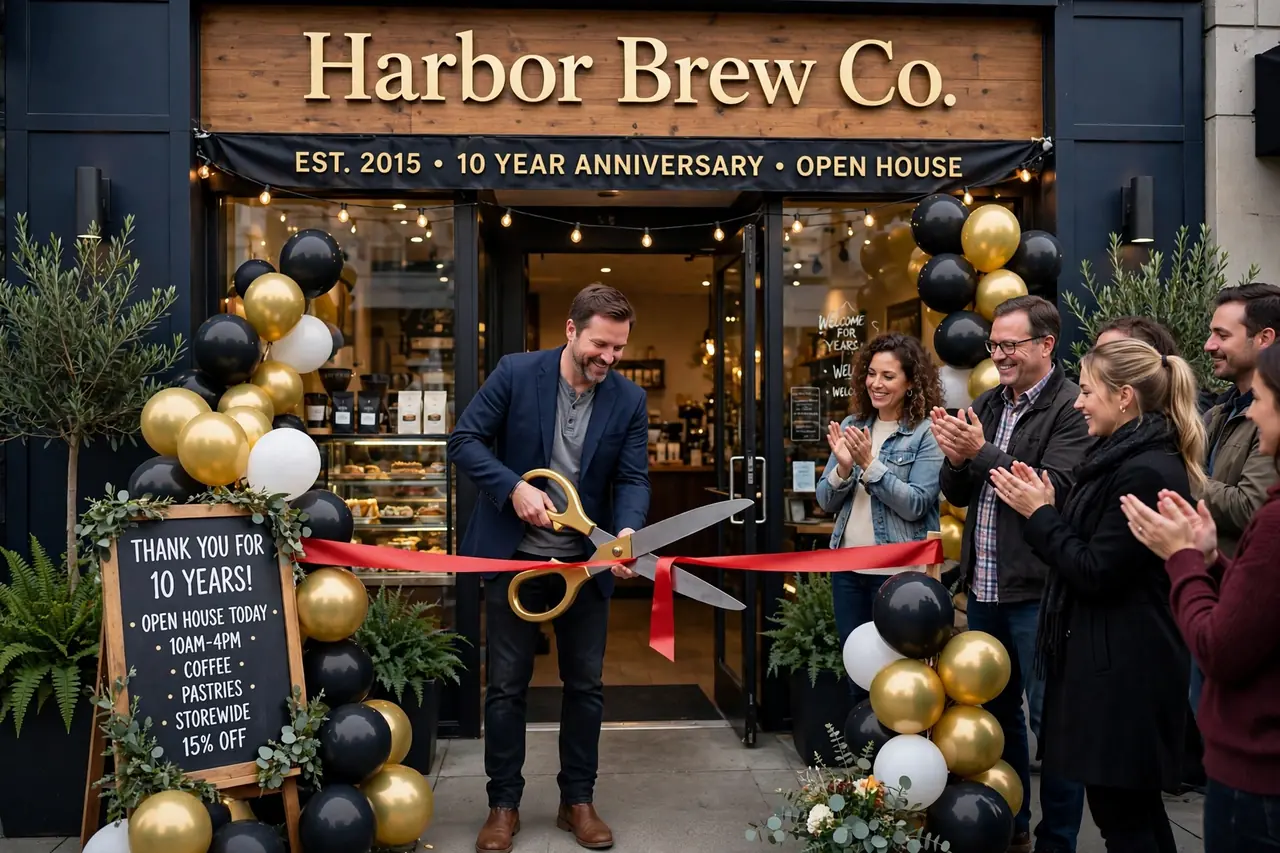
The unglamorous logistics determine whether the brilliant plan survives contact with reality. Parking: survey available spots within a 5-minute walk, arrange overflow with a neighboring lot or street plan, and station someone to direct — visitors who circle for 20 minutes arrive frustrated. Signage: from the street, the entrance must be unmistakable — balloons, banners, and a greeter visible from 50 feet. Nothing kills attendance like a visitor who cannot find the door.
Weather: for any outdoor component, decide the rain plan at booking — tents, indoor rerouting, or a communicated rain date — and check forecasts at 7 days, 3 days, and 24 hours. Restrooms: ensure capacity for peak crowds, including accessible facilities; portable units are worth it beyond 150 guests. Noise: brief neighbors in advance, keep amplified sound within local ordinances, and end outdoor programming at a respectful hour. None of these details appear in the photos, but every one of them appears in the reviews. Professionalism is mostly logistics done right.
The Day-Before Walkthrough: Your Final Rehearsal
Twenty-four hours before doors open, walk the entire visitor journey as a guest — not as the planner. Park where visitors will park and check the signage from the street. Enter through the visitor entrance: is the welcome obvious and warm? Walk the full station circuit at a guest’s pace, checking sight lines, signage clarity, and flow bottlenecks. Test every interactive element personally: does the demo work, is the tasting stocked, does the photo backdrop actually photograph well on a phone?
Then check the invisible systems: confirm every vendor’s arrival time in writing, charge all devices and pack backups, print the staff roster with roles and phone numbers, and brief the team one final time — not on logistics they already know, but on the spirit: “Tomorrow, every person who walks in should leave feeling like they matter to us.” The walkthrough catches the small failures that become big regrets, and it lets the planning team sleep the night before. Professionals rehearse; amateurs hope.
Turning Open-House Visitors Into Long-Term Customers
An open house is not just a celebration — it is your single best lead-generation day of the year. Treat every visitor like a future customer, not just a guest, and the event pays for itself many times over. The celebration is the magnet; the follow-through is the business case.
Make conversion effortless. Set out a simple newsletter sign-up sheet or QR code at every station, offer a one-day-only anniversary discount code, and have staff gently mention both during tours. No hard sells — just make saying yes easy while goodwill is at its peak. The visitors who are smiling are the visitors most likely to buy.
Capture stories as well as contacts. Ask happy visitors for a quick photo testimonial or a two-sentence quote about why they came; with their permission, these become social proof that powers your marketing for months. Real faces beat stock photos every time.
Follow up within three days while the memory is fresh — a thank-you email with the anniversary offer enclosed. Visitors who met your team in person convert at dramatically higher rates than cold leads, because they have already experienced what makes your business different. The open house opens the door; the follow-up walks them through it.
Frequently Asked Questions
How long should an anniversary open house last?
Four to six hours is ideal for a single-day open house — long enough for visitors to come at their convenience, short enough to staff well. Add a one-hour VIP preview before general opening for best customers and press. Multi-day open houses work for large operations but double the staffing burden; most businesses do better with one excellent day.
How many staff do we need?
Plan one dedicated owner per station plus greeters, crowd floaters, and food service — typically 1 staffer per 15–25 expected concurrent visitors, with a minimum to cover all stations regardless of crowd size. Schedule breaks explicitly; a six-hour event without relief produces exhausted hosts and poor experiences in the final hours.
Should the open house be free?
Yes — free entry maximizes attendance, which is the point. Monetize through the anniversary-exclusive shop, the open-house-only offer, consultation bookings, and loyalty signups rather than admission. The lifetime value of a new customer dwarfs any ticket revenue, and “free” is itself a powerful promotional message.
How do we handle safety with the public in our workspace?
Walk the visitor route in advance, barrier or shut down anything hazardous, mark restricted areas with physical barriers (not just signs), designate a safety lead, keep a first-aid kit accessible, and verify insurance coverage for public events. For food, follow local health rules; for children’s activities, maintain proper supervision. Professional preparation here is what separates real businesses from amateurs.
What if our space is not impressive — should we still do an open house?
Yes, with honest framing. Visitors are fascinated by real working spaces, not showrooms — authenticity beats polish. Clean thoroughly, organize visibly, light well, and lean into the “real work happens here” narrative. Some of the most beloved open houses are in gritty workshops and tiny kitchens. What matters is the access and the people, not the square footage.
How do we get people to actually show up?
Promote 4–6 weeks out across every channel: neighbors (door-to-door works), existing customers (email + in-person), local media, community calendars, and partner networks. Make the invitation specific — “tour the bakery, decorate a cupcake, meet the bakers” beats “come to our open house.” Timed-entry tickets create commitment; a prize draw creates incentive.
What is the best way to capture visitor information?
Layer it: timed-entry RSVP (pre-event), prize-draw entry at welcome (day-of, 60–80% capture), scavenger hunt cards, consultation bookings, and loyalty signups. Each layer catches people the others miss. Always explain the value exchange clearly — “enter to win” and “get the open-house offer” are honest reasons to share an email.
Should we serve food at an open house?
Yes — food extends visits, and longer visits mean deeper engagement. It does not need to be elaborate: tastings of your own product (ideal), simple refreshments, or a local food partner. Position food at the natural midpoint of the visitor flow, where energy dips. And keep water everywhere.
How do we include people who cannot attend in person?
Run a parallel virtual layer: livestream the tour at scheduled times, post real-time stories and videos, and create a digital version of key stations (the timeline, the story wall) online. Offer the open-house-exclusive deal to online followers too — exclusion breeds resentment, inclusion breeds loyalty.
What do we do with the contact list afterward?
Everything: the 48-hour thank-you email with photos, the 30-day welcome nurture sequence, segmentation (customers vs. prospects vs. neighbors) for relevant future messaging, and review requests while the experience is fresh. An open house contact list is the warmest lead list the business will ever own — treat it like the asset it is, with prompt, valuable, non-spammy follow-up.
The Bottom Line
An anniversary open house is the business at its most generous and most confident: doors open, work on display, team on stage, community welcomed in. It acquires customers, builds goodwill, generates content, and reminds everyone — including the team — what the business actually does all day. Plan the flow like an engineer, staff it like a host, promote it like a marketer, and follow up like a salesperson. Do that, and the open house will not just celebrate the anniversary — it will build the next chapter’s customer base, one genuine handshake at a time.