

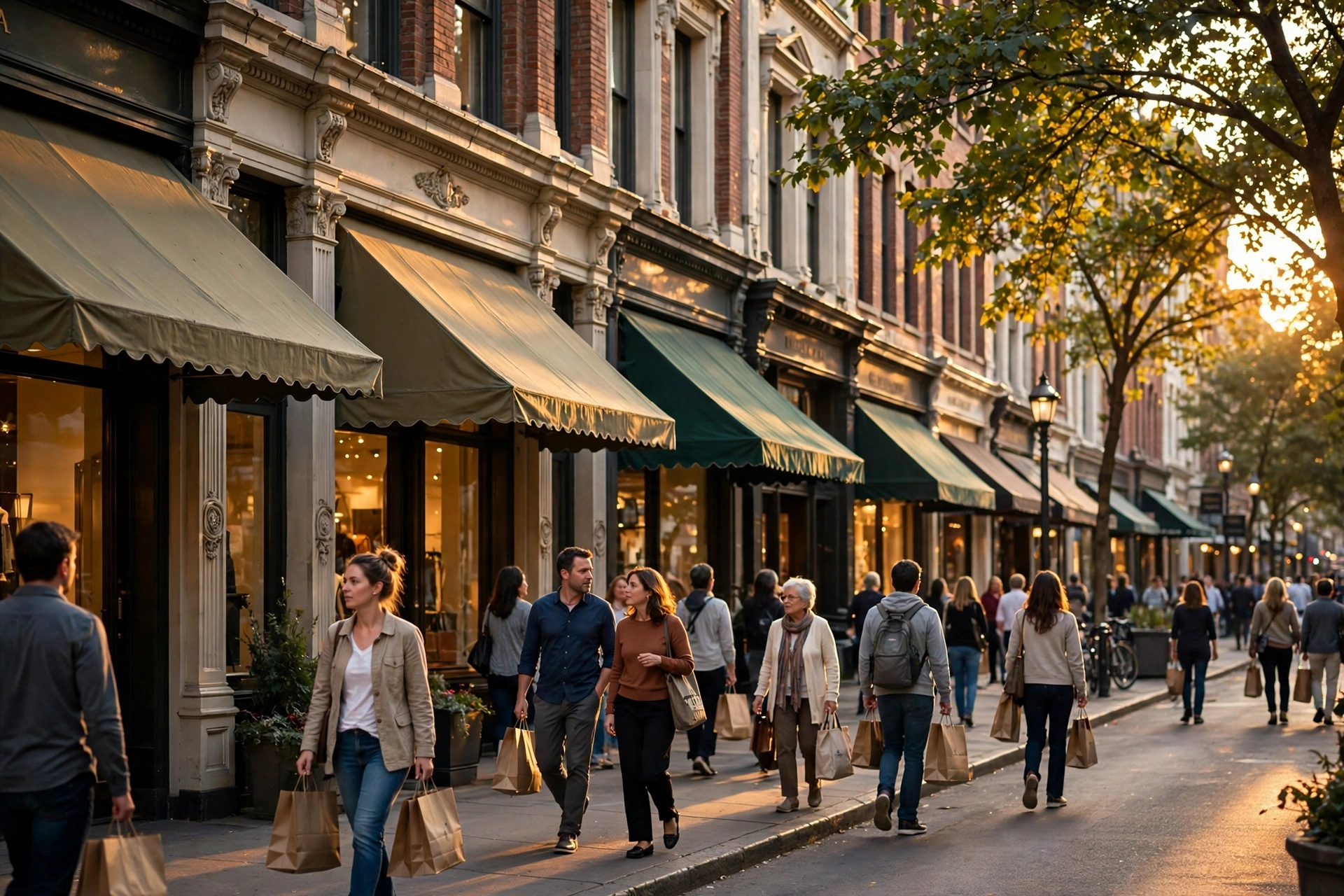
Every great American city has one — that stretch of street where the shopping feels like an event, not an errand. This roundup of the best shopping districts in the USA covers twelve iconic neighborhoods and avenues across the country, from luxury flagships to indie boutiques and historic markets. Whether you’re planning a shopping-focused trip or just want to know where the locals actually shop, here’s where to point your feet (and your wallet).
How We Picked These Districts
A great shopping district is more than a cluster of stores. We looked for walkability, a mix of local boutiques and notable flagships, distinctive character you can’t find at a suburban mall, and enough food and culture nearby to make a full day of it. Each entry below includes what the district is known for and who will love it most.
1. Fifth Avenue, New York City
The most famous shopping street in America needs little introduction. The stretch from 49th to 60th Street packs in flagship luxury houses, the grand department stores, and people-watching that rivals any show in town. Even if your budget tops out at window shopping, the architecture and energy are worth the trip — then duck into Central Park or grab a slice nearby. Planning a NYC trip? Our NYC food guide covers where to eat between shopping sprees, from classic delis to food halls near Midtown.
Best for: Luxury flagships, iconic department stores, bucket-list window shopping.
Local tip: Go on a weekday morning to avoid the worst crowds, and walk the side streets off the avenue for smaller boutiques.
2. Rodeo Drive, Beverly Hills, Los Angeles
Three blocks of the world’s most concentrated luxury shopping, Rodeo Drive is as much a landmark as a retail destination. The people-watching is elite, the window displays are art installations, and the surrounding streets hold excellent restaurants for a long lunch. Pair it with our Los Angeles food guide to plan the food half of your Beverly Hills day.
Best for: High-end designer shopping, celebrity spotting, special-occasion splurges.
Local tip: The via Rodeo pedestrian walkway and the Beverly Hills Farmers Market (Sundays) add local flavor beyond the boutiques.
3. The Magnificent Mile, Chicago
North Michigan Avenue’s “Mag Mile” blends Midwestern friendliness with big-city retail: flagship department stores, international brands, and the historic Water Tower at its heart. It’s one of the few great American shopping streets that’s genuinely pleasant in winter, thanks to connected indoor walkways. Warm up afterward with deep dish — our Chicago food guide has you covered.
Best for: Flagship stores, department-store shopping, all-weather retail.
Local tip: The side streets east toward the lake hold smaller galleries and shops with fewer tourists.
4. Union Square, San Francisco
San Francisco’s retail heart combines grand department stores with the city’s famous hills as a backdrop. The surrounding blocks — Post Street, Grant Avenue, and the Westfield centre — create a dense, walkable shopping zone. The city’s boutique neighborhoods (Hayes Valley, Fillmore Street) are a short ride away for indie finds.
Best for: Department stores, tech-adjacent gadget shopping, boutique day trips nearby.
Local tip: Ride a cable car to the square for the full San Francisco experience, and check Hayes Valley for the indie boutiques locals prefer.
5. Newbury Street, Boston
Eight blocks of brownstones housing a mile of shops, Newbury Street is Boston’s answer to the great shopping avenues — but with a distinctly local, collegiate character. High-end designers mix with bookstores, galleries, and cafes in buildings that are attractions in themselves. It’s at its best in fall, when the Back Bay looks like a postcard.
Best for: Boutique browsing, bookstores, a scenic stroll that happens to include shopping.
Local tip: The cross streets hold excellent smaller shops; don’t just walk the main drag.
6. South Congress (SoCo), Austin, Texas
“Keep Austin Weird” lives on South Congress Avenue, where vintage shops, cowboy-boot stores, quirky boutiques, and food trucks create one of America’s most fun shopping streets. This is the anti-mall: independent, eccentric, and proud of it. It’s also one of the best districts in the country for vintage and one-of-a-kind finds.
Best for: Vintage, boots, quirky souvenirs, people-watching.
Local tip: Go hungry — the food truck scene here is legendary, and many visitors plan their day around eating as much as shopping.
7. King Street, Charleston, South Carolina
Charleston’s King Street divides neatly into three personalities: antiques at the top, fashion in the middle, and design shops at the bottom. The historic streetscape — gas lamps, ironwork balconies, pastel facades — makes shopping feel like time travel. It’s consistently ranked among America’s most beautiful shopping streets.
Best for: Antiques, Southern fashion, home decor, romantic getaways that include retail therapy.
Local tip: The Second Sunday events (seasonal) close upper King Street to cars for strolling, music, and open-air shopping.
8. Pearl District, Portland, Oregon
Portland’s Pearl District transformed from industrial warehouses into the city’s gallery and boutique hub. Independent designers, art galleries, Powell’s-adjacent book culture, and the famous Saturday Market nearby make it a haven for shoppers who value local and handmade over mass-market.
Best for: Independent designers, art galleries, handmade goods, tax-free shopping (Oregon has no sales tax).
Local tip: First Thursday art walks turn the district’s galleries into a free evening event with wine and new exhibitions.
9. 12South, Nashville, Tennessee
Nashville’s 12South neighborhood went from sleepy residential street to one of the South’s coolest shopping destinations, with dressed-up boutiques, the famous “I Believe in Nashville” mural, and Reese Witherspoon’s flagship store drawing visitors. It’s compact, walkable, and pairs perfectly with the city’s music scene.
Best for: Southern-chic boutiques, Instagram-famous backdrops, a half-day outing.
Local tip: Parking is tight — rideshare in, then walk the full strip and nearby Sevier Park.
10. Abbot Kinney Boulevard, Venice, Los Angeles
Venice’s Abbot Kinney Boulevard is LA’s coolest shopping street: a mile of indie boutiques, surf shops, art galleries, and some of the city’s best casual restaurants. It captures California beach culture without the tourist-trap feel of the boardwalk, and it’s one of the best places in the country to discover emerging designers.
Best for: Emerging designers, beach lifestyle brands, gallery hopping.
Local tip: The Abbot Kinney Festival (usually fall) shuts the boulevard to cars for a massive street fair — check dates before your trip.
11. The Plaza, Kansas City, Missouri
The Country Club Plaza is America’s oldest planned shopping district (opened in 1923), modeled on Seville, Spain — and it shows in the tilework, towers, and fountains. It’s proof that great shopping districts don’t require a coastal zip code: 150+ shops and restaurants in genuinely beautiful surroundings, with free parking and Midwestern prices.
Best for: A full day of shopping and dining, holiday lights (the Plaza’s Christmas lighting tradition is famous).
Local tip: Visit during the Plaza Art Fair weekend for local artists alongside the regular shops.
12. Pike Place Market, Seattle, Washington
Part farmers market, part craft market, part Seattle institution, Pike Place has been operating since 1907. The flower stalls, fish throwers, and original Starbucks are the tourist draws, but the lower levels hide comic shops, vintage dealers, magic stores, and tiny specialty retailers you won’t find anywhere else. No sales tax on… well, Washington has sales tax, but the experience is priceless.
Best for: Flowers, local crafts, specialty foods, one-of-a-kind small shops.
Local tip: Go early on a weekday morning for the full market energy without the cruise-ship crowds, and explore the DownUnder levels most visitors miss.
Shopping Districts at a Glance
| District | City | Vibe | Best for |
|---|---|---|---|
| Fifth Avenue | New York City | Iconic luxury | Flagships, bucket-list browsing |
| Rodeo Drive | Beverly Hills | Ultra-luxury | Designer splurges |
| Magnificent Mile | Chicago | Big-city classic | Department stores, all-weather shopping |
| Union Square | San Francisco | Urban grand | Department stores, nearby boutiques |
| Newbury Street | Boston | Brownstone chic | Bookstores, galleries, boutiques |
| South Congress | Austin | Weird and wonderful | Vintage, boots, food trucks |
| King Street | Charleston | Historic Southern | Antiques, fashion, decor |
| Pearl District | Portland | Indie arts | Local designers, no sales tax |
| 12South | Nashville | Southern cool | Boutiques, murals, music-city side trip |
| Abbot Kinney Blvd | Venice / LA | Beach indie | Emerging designers, surf culture |
| Country Club Plaza | Kansas City | Spanish revival | Full-day shopping, holiday lights |
| Pike Place Market | Seattle | Historic market | Crafts, flowers, hidden small shops |
Tips for Shopping-Trip Planning
- Wear comfortable shoes and easy layers. You’ll walk miles and try things on; dress for it.
- Set a district budget, not just a trip budget. Great shopping streets are designed to tempt you — decide your number before you arrive.
- Ship big purchases home. Most stores will ship, which beats dragging bags through airports. Ask at checkout.
- Eat strategically. The best districts have great food nearby — plan a lunch stop so hunger doesn’t cut your day short. Our city food guides for NYC, LA, and Chicago are built for exactly this.
- Check for local events. Art walks, street fairs, and holiday markets can turn a good shopping day into a great one — or crowd it beyond enjoyment. A quick search before you go pays off.
- Explore the side streets. Rents are lower one block off the main drag, which is where the interesting independent shops can afford to be.
More Great Shopping Neighborhoods Worth Your Time
Twelve districts barely scratch the surface. Here are six more neighborhoods that locals love and visitors remember:
SoHo, New York City
Cast-iron architecture, cobblestone streets, and a dense mix of flagship boutiques and designer stores. SoHo is where fashion-forward shopping meets art-gallery browsing — pricier than it used to be, but still the definitive NYC boutique neighborhood. Go early on weekends before the crowds peak.
The Grove and Melrose Avenue, Los Angeles
Melrose Avenue stretches from high-end design through vintage and streetwear — one of the few streets where a $20 vintage tee shop sits near designer flagships. The Grove’s outdoor mall nearby offers the polished, family-friendly counterpoint. Together they cover every LA shopping mood.
Wicker Park, Chicago
Chicago’s indie heart: Milwaukee Avenue through Wicker Park and Bucktown holds vintage stores, independent boutiques, record shops, and bookstores with a distinctly local flavor. Less touristy than the Mag Mile, more rewarding for browsers.
Fillmore Street, San Francisco
Pacific Heights’ main street mixes upscale boutiques with long-standing local shops in a beautiful neighborhood setting. It’s the San Francisco shopping experience locals actually use — refined without the Union Square crowds.
Cherry Creek, Denver
Denver’s premier shopping district pairs an upscale outdoor mall with the surrounding Cherry Creek North streets, where independent boutiques and galleries cluster. The mountain views from the rooftop restaurants don’t hurt, and Colorado’s relatively low sales tax is a quiet bonus.
Music Row and East Nashville, Nashville
Beyond 12South, East Nashville’s Five Points area offers vintage, local designers, and some of the city’s most interesting small shops — with a grittier, more local feel than the polished 12South strip. Pair it with the area’s celebrated food scene for a full day.
How to Save Money in Famous Shopping Districts
Great districts don’t have to mean full-price pain. A few tactics:
- Shop the sales calendar. Even luxury flagships run seasonal sales — typically end-of-season (January, July) and holiday events. Visiting during these windows can cut 30–50% off.
- Ask about tax refunds. International visitors can often reclaim sales tax; some states and stores make this easier than others — ask at the register.
- Hit the outlets on day two. Many cities pair a famous shopping district with nearby outlet centers (Woodbury Common near NYC, Camarillo near LA, Chicago Premium Outlets). Do the flagship browsing day one, the deal hunting day two.
- Eat like a local, not a tourist. Restaurant prices on main shopping drags carry a tourist premium. Walk two blocks off the avenue — the food gets better and cheaper simultaneously.
- Set a souvenir budget. The most dangerous purchases are unplanned ones. Decide your discretionary number before you arrive and track it loosely through the day.
Building a Shopping-Focused Trip Itinerary
For travelers building a trip around retail, structure beats spontaneity. Dedicate mornings to the headline district (fewer crowds, fresh energy), afternoons to a secondary neighborhood or market, and evenings to food and rest — shopping fatigue is real, and tired shoppers make expensive mistakes. Alternate heavy shopping days with non-shopping days so the trip doesn’t blur into one long transaction. Book hotels near your primary district to enable midday drop-offs; hauling bags all day kills the fun by 3 p.m. And always leave one unscheduled half-day — the best finds are the ones you stumble into, and a rigid itinerary leaves no room for serendipity.
Practical Tips: Safety, Comfort, and Logistics
A few practical notes for enjoying famous shopping districts fully: keep valuables secure and bags zipped in crowded areas — pickpockets favor distracted tourists on busy retail streets. Stay hydrated and take breaks; shopping districts reward stamina, and a coffee stop every couple of hours keeps decision-making sharp. Download offline maps of the area in case cell service gets spotty in dense downtown cores. If you’re buying fragile or valuable items, ask about shipping immediately rather than carrying them all day. And check sunset times — many districts are loveliest (and best photographed) in late-afternoon light, and you’ll want to be heading to dinner, not starting your shopping, as stores begin closing.
Frequently Asked Questions
What is the most famous shopping street in the USA?
Fifth Avenue in New York City is generally considered the most famous, followed closely by Rodeo Drive in Beverly Hills. Both are globally recognized luxury shopping destinations and major tourist attractions in their own right.
Which US city is best for shopping?
New York City offers the greatest sheer variety, from Fifth Avenue luxury to SoHo boutiques to market halls. Chicago, Los Angeles, and San Francisco also rank highly for distinct, walkable shopping districts, while cities like Portland and Austin shine for independent and vintage shopping.
Are there good shopping districts without luxury prices?
Absolutely. South Congress in Austin, Abbot Kinney in Venice, the Pearl District in Portland, and Pike Place Market in Seattle all emphasize independent shops, vintage, and local makers at moderate prices — plus Oregon has no sales tax.
When is the best time to visit these shopping districts?
Weekday mornings are least crowded almost everywhere. Fall offers pleasant weather in most cities, the holiday season brings decorations and extended hours (but bigger crowds), and many districts host seasonal street fairs worth planning around.
How do I avoid tourist traps in famous shopping areas?
Walk one or two blocks off the main street, where rents drop and local shops cluster. Ask boutique staff where they shop, check whether prices seem consistent with the neighborhood, and be wary of aggressive hawkers — the best districts rarely need them.
Can I visit these shopping districts on a budget?
Yes. Window shopping is free, and districts like South Congress, Abbot Kinney, and Pike Place Market are built around affordable independent shops and food. Set a spending cap, enjoy the atmosphere, and remember that the experience — the architecture, the people-watching, the street food — costs nothing.


