This Chicago Food Guide 2026 is the definitive plan for eating in America’s most underrated great food city. Chicago’s reputation rests on deep dish pizza, Italian beef, and hot dogs — and all three deserve their fame — but the Chicago Food Guide 2026 below goes much deeper. You will find the Polish and Mexican kitchens of the Northwest and Southwest sides, the fine-dining corridor that rivals any in the country, the neighborhood taverns serving the city’s true pizza (more on that controversy below), and honest budgets for eating very well in 2026. Come hungry, dress for the weather, and trust the locals.
Chicago’s food story is an immigrant story written in layers: German and Irish taverns, Polish delis, Italian beef stands born in the Depression, Mexican taquerias that now define whole neighborhoods, and a Chinese and Vietnamese presence that keeps growing. The city’s dining culture is unpretentious at its core — Chicago chefs win James Beard Awards and still serve you like a neighbor. That combination of excellence and lack of pretense is what makes eating here special.
The Deep Dish Question: A Field Guide
Let us settle this. Deep dish pizza — the buttery, biscuit-like crust, the chunky tomato sauce on top of the cheese, the 45-minute bake — is real, it is delicious, and you should eat it once per trip. The classic rooms downtown and on the North Side still draw lines in 2026, and the experience (the wait, the sizzle, the cheese pull) is part of Chicago’s edible heritage.
But here is the local truth: Chicagoans eat tavern-style pizza far more often. Thin, cracker-crisp, cut into squares (“party cut”), built for beer and conversation. The tavern-style joints in the neighborhoods — Bridgeport, Logan Square, the Northwest Side — are where the city actually eats pizza, and many visitors who try both prefer the tavern cut. Our verdict: do both. One deep dish dinner for the experience, and tavern-style everywhere else. Order the sausage — Chicago’s fennel-heavy Italian sausage is the correct topping.
Italian Beef: Chicago’s True Signature Sandwich
If deep dish is the tourist icon, Italian beef is the local’s love language. Thin-shaved roast beef, slow-simmered in seasoned jus, piled on a Turano roll, ordered with a code you must learn:
- “Wet” or “dipped”: the whole sandwich dunked in jus (wet) or baptized fully (dipped, also called “baptized”)
- “Sweet”: with sweet peppers
- “Hot”: with giardiniera, the oily Chicago-style pickled vegetables — non-negotiable for purists
- The combo: beef plus Italian sausage in the same sandwich, for the committed
The classic beef stands — the ones with fluorescent lighting, cash registers from 1985, and lines at lunch — serve the definitive versions for $10–$14 in 2026. Eat it over the wrapper. Wear dark clothing. This is not a sandwich; it is a baptism.
The Chicago Hot Dog: Rules and Rituals
A Chicago hot dog is “dragged through the garden”: all-beef frank, poppy seed bun, yellow mustard, neon-green relish, chopped onion, tomato wedges, pickle spear, sport peppers, celery salt. Never ketchup. This is not snobbery; it is civic law. The great hot dog stands — the ones with Vienna Beef signs and picnic tables — also serve the essential supporting cast: char-grilled Polish sausage, tamales (a Chicago oddity, simmered in chili), and Italian ice for dessert. A proper stand lunch runs $10–$12.
Neighborhood-by-Neighborhood Eating
The Loop and River North
Downtown is for the classics and the splurges. The old-school steakhouses and the deep dish institutions anchor the Loop, while River North holds the city’s fine-dining corridor — tasting menus, chef’s counters, and some of the best restaurants in America. The lunch play downtown: the basement food halls and the historic delis. If you are here for a show, our best concert venues in the USA guide covers the city’s legendary rooms to pair with dinner.
West Loop and Fulton Market
The West Loop is Chicago’s restaurant row — Restaurant Row, literally, along Randolph Street. This is where the James Beard winners and the ambitious newcomers cluster: tasting menus, wine bars with serious kitchens, and some of the city’s best brunch. Fulton Market’s old meatpacking warehouses now hold food halls and breweries. It is the splurge neighborhood; budget $75–$150 per person for dinner, and book ahead.
Logan Square and Wicker Park
Logan Square is where Chicago’s young chefs cook without West Loop prices. The boulevard restaurant strips mix natural wine bars, tasting-menu bargains, some of the city’s best tacos, and legendary cocktail bars with kitchens. Wicker Park and Bucktown add vintage shopping and excellent brunch. This is the neighborhood to stay in if you want to eat dinner somewhere great every night without a reservation three weeks out.
Pilsen and Little Village
The Lower West Side is Chicago’s Mexican heart. Pilsen’s 18th Street holds some of the city’s best tacos, tamales, and tortas, plus murals worth the trip alone. Further southwest, Little Village’s 26th Street — the second-busiest commercial strip in the city after Michigan Avenue — is a taqueria and bakery corridor where $15 buys a feast. The carne asada fries, the elote, the pan dulce: this is essential Chicago eating that most visitors miss entirely.
Argyle and Uptown (Little Saigon)
The Argyle Street corridor in Uptown is Chicago’s Southeast Asian kitchen: Vietnamese pho and banh mi, Chinese barbecue, Thai boat noodles, and some of the city’s best value eating. The banh mi shops sell $7 sandwiches that embarrass $15 ones elsewhere. The surrounding blocks hold Ethiopian, Nigerian, and Middle Eastern restaurants — Uptown is the city’s most diverse eating per square block.
Devon Avenue and the Northwest Side
Devon Avenue is the South Asian corridor — Indian, Pakistani, and Bangladeshi restaurants, sweet shops, and groceries stretching for blocks. The thali lunches and the kebab houses are outstanding values. Further northwest, the Polish delis and restaurants of the old Polish Downtown (around Milwaukee Avenue) serve pierogi, bigos, and paczki that honor the city’s deep Polish roots. Chicago’s Polish food scene is among the best outside Poland.
Chinatown
Chicago’s Chinatown, centered on Cermak Road, is compact but serious: dim sum halls, Cantonese barbecue, Sichuan dry-pot, and some excellent bakeries. The nine-dragon gate and the plaza make it a pleasant half-day, and the food rewards the trip south of the Loop. The dim sum here rivals bigger cities’ at gentler prices.
Hyde Park and the South Side
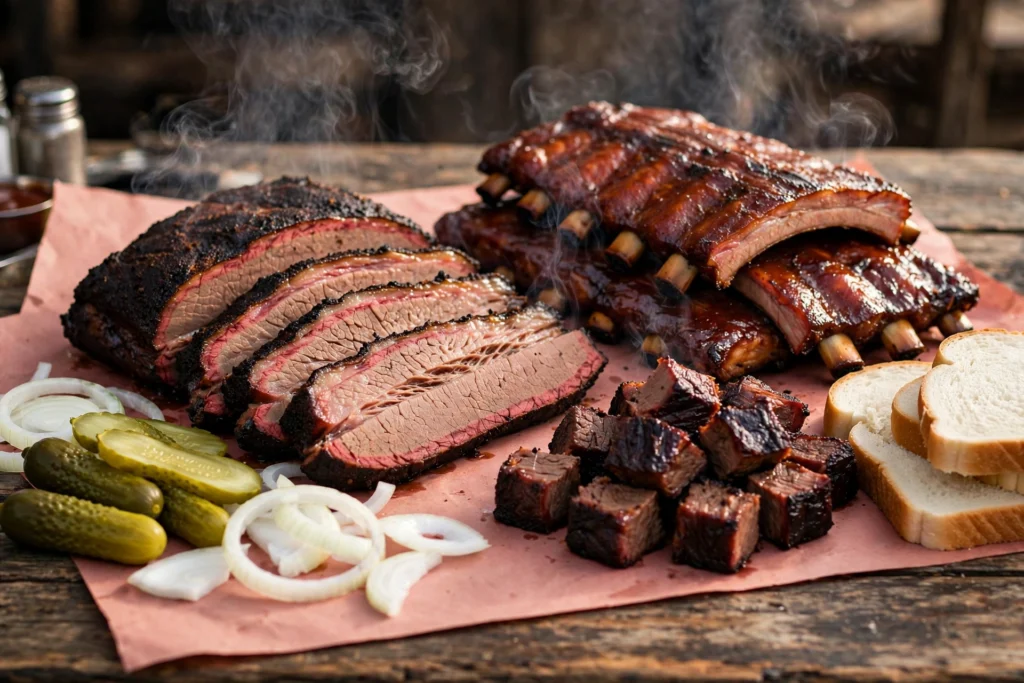
Hyde Park’s food scene blends university-town eclecticism with South Side soul: the rib tips and hot links at the barbecue institutions, the soul food kitchens, and some excellent bookshop cafes. The South Side’s barbecue tradition — aquarium-style smokers, rib tips with mild sauce — is distinct from every other American barbecue region and deserves pilgrimage status. Do not leave Chicago without rib tips.
Chicago’s Essential Dishes: The Master Table
| Dish | The Order | Where | Price |
|---|---|---|---|
| Deep dish pizza | Sausage, 45-min bake | Downtown institutions | $25–$35 (whole) |
| Tavern-style pizza | Sausage, party cut | Neighborhood taverns | $15–$22 (whole) |
| Italian beef | Dipped, hot giardiniera | Classic beef stands | $10–$14 |
| Chicago hot dog | Dragged through the garden | Vienna Beef stands | $5–$8 |
| Rib tips | Mild sauce, fries | South Side BBQ joints | $12–$18 |
| Jibarito | Plantain “bread” sandwich | Humboldt Park (Puerto Rican) | $12–$16 |
| Polish combo | Pierogi + bigos | Northwest Side delis | $12–$16 |
| Tamales (Chicago-style) | Simmered in chili | Hot dog stands | $4–$6 |
| Rainbow cone | Five flavors, one cone | South Side institution | $6–$8 |
| Garrett-style popcorn | Cheese + caramel mix | Downtown shops | $8–$14 (tin) |
Fine Dining: Chicago’s Other Reputation
Chicago’s fine dining punches absurdly above its price point. The city’s tasting-menu restaurants — including multiple three-Michelin-star rooms — charge hundreds less than their New York or San Francisco equivalents for cooking of equal ambition. The molecular-gastronomy pioneers put Chicago on the culinary map, and the current generation mixes that technical brilliance with Midwestern hospitality. If you do one splurge dinner in the Midwest, do it here: book 3–4 weeks out, expect $200–$350 per person with pairings, and prepare to be converted.
Chicago Food Budgets in 2026
| Style | Breakfast | Lunch | Dinner | Daily Total |
|---|---|---|---|---|
| Stand-and-tavern maximalist | $7 | $13 | $20 | $40–$55 |
| Smart mid-range | $12 | $18 | $55 | $85–$110 |
| Splurge day | $15 | $25 | $250 | $290–$350 |
Three-Day Chicago Eating Itinerary
Day 1: The Classics
- Breakfast: Polish bakery — paczki and coffee on the Northwest Side
- Lunch: Italian beef, dipped with hot giardiniera, at a classic stand
- Afternoon: Chicago hot dog + tamale at a Vienna Beef stand
- Dinner: Deep dish, sausage, at a downtown institution
Day 2: Neighborhoods
- Breakfast: Jibarito-adjacent brunch in Humboldt Park or Logan Square
- Lunch: 26th Street in Little Village — tacos, elote, pan dulce
- Afternoon: Argyle Street — banh mi and Vietnamese iced coffee
- Dinner: Logan Square — chef-driven dinner without the West Loop price
- Late night: Tavern-style pizza, party cut, with a local beer
Day 3: Markets, Museums, and the South Side
- Breakfast: Rainbow cone for breakfast (no judgment — you are on vacation)
- Lunch: Chinatown dim sum on Cermak
- Afternoon: Devon Avenue — samosas and chai
- Dinner: South Side barbecue — rib tips with mild sauce
Practical Tips for Eating in Chicago in 2026
- Weather: Winter is real. The food is worth it year-round, but summer and early fall are peak patio season. Many stands are cash-friendly; carry some.
- Reservations: West Loop and fine dining need 2–4 weeks; neighborhood spots are mostly walk-in friendly.
- Tipping: 18–22% sit-down; tip jars at stands are customary ($1–$2).
- Transit: The L reaches most food neighborhoods; the South and Southwest sides are easier with a car or rideshare.
- Festivals: Summer brings the city’s legendary food festivals — if your dates are flexible, check our best food festivals in the USA guide for timing.
Chicago Food Guide 2026: FAQs
What food is Chicago most famous for?
Deep dish pizza, Italian beef, and the Chicago hot dog are the big three. But locals will tell you the city’s soul food is tavern-style pizza, rib tips, and the taquerias of 26th Street — and this Chicago Food Guide 2026 covers all of them.
Is deep dish or thin crust the real Chicago pizza?
Both are real. Deep dish is the icon; tavern-style thin crust (cracker-crisp, party cut) is what Chicagoans actually eat weekly. Eat both and decide for yourself.
How do you order an Italian beef?
“Dipped, with hot” — meaning dunked in jus with giardiniera. Add “combo” if you want Italian sausage in the same sandwich. Eat it leaning over the wrapper.
Where do locals eat in Chicago?
The neighborhoods: Logan Square, Pilsen, Little Village, Argyle, Devon Avenue, and the South Side barbecue joints. Downtown is for visitors and splurges; the neighborhoods are for eating.
Is Chicago expensive for food?
It is one of America’s best food values. A stand-and-tavern day runs $40–$55, and even fine dining costs notably less than coastal equivalents. Chicago is where your food dollar stretches furthest among major US cities.
What is the best time to visit Chicago for food?
Late May through October for patios and festivals. Winter visitors get shorter lines and the same great beef stands — just dress like you mean it.
Chicago’s Drink Culture: Beer, Malort, and the Tavern
Chicago’s food story is inseparable from its drink story. The city’s brewing heritage — once the domain of giant lager breweries, now a thriving craft scene — means the default beverage with tavern pizza and Italian beef is a cold local lager or pilsner. The brewery taprooms in the West Loop, Logan Square, and along the Chicago River serve excellent beer with food-truck or in-house kitchens, and many allow you to bring in food from nearby spots.
Then there is Malort: the bitter wormwood liqueur that is Chicago’s civic shot. It tastes, famously, like punishment — grapefruit pith, gasoline, regret — and Chicagoans love it with an intensity outsiders find baffling. Ordering a Malort at a neighborhood bar is a rite of passage; the bartender’s nod of respect is real. It is also, against all odds, an excellent digestif after Italian beef. Try it once. You will either understand Chicago or need a chaser.
The cocktail scene has matured well beyond the speakeasy cliché. Logan Square and the West Loop hold some of the country’s best bars, many with kitchens doing genuinely good food. The move: dinner in the West Loop, cocktails in Logan Square, Malort wherever the night takes you.
Breakfast and Brunch: The Chicago Way
Chicago does breakfast with Midwestern seriousness. The classic order at the old-school diners and griddles: a horseshoe-adjacent stack of pancakes, corned beef hash, or the city’s beloved combination of eggs, sausage, and hash browns — portions sized for people who work with their hands. The Polish bakeries on the Northwest Side do paczki (filled doughnuts) that sell out by 9 a.m. on Fat Tuesday and most weekends.
Brunch is a competitive sport in Wicker Park, Logan Square, and the West Loop. The 2026 scene favors the bottomless-adjacent deals (where legal), chilaquiles that honor the city’s Mexican kitchens, and biscuit sandwiches with sausage gravy. Arrive before 10:30 a.m. or embrace the waitlist — the popular rooms run 45-minute waits by 11.
Sweet Endings: Chicago Desserts Worth the Trip
Chicago’s dessert canon is proudly old-school. The Rainbow Cone — five flavors (chocolate, strawberry, Palmer House vanilla with cherries and walnuts, pistachio, orange sherbet) sliced, not scooped, onto one cone — has been a South Side institution for nearly a century and remains non-negotiable. The Palmer House brownie, invented at the downtown hotel in 1893, is still served there with walnuts and apricot glaze. Italian bakeries in the old neighborhoods do cannoli and sfogliatelle; the Mexican panaderías on 26th Street do tres leches and conchas; and the popcorn shops downtown — cheese and caramel mixed — are the edible souvenir.
What to Bring Home: The Chicago Food Souvenir List
- Popcorn tins: The cheese-and-caramel mix travels perfectly and disappears in days.
- Giardiniera: Jars of Chicago-style hot giardiniera from Italian delis — your sandwiches will never be the same.
- Italian beef kits: Several classic stands ship beef, jus, and rolls nationwide.
- Deep dish (frozen): The big names ship frozen pizzas that reheat shockingly well.
- Malort: Bring a bottle home. Your friends will hate you, then ask for another round.
Chicago rewards the eater who plans by neighborhood and orders like a local. The deep dish is real, the beef is better, and the tavern pizza is the secret handshake. Whether you are here for a weekend or a week, this Chicago Food Guide 2026 has you covered — and if you are continuing your Midwest eating tour, our best food festivals in the USA guide will help you time the summer festival season.
One last piece of advice from this Chicago Food Guide 2026: talk to the people next to you at the counter. Chicago’s food culture is a conversation — the regular arguing about sausage grind at the pizzeria, the line cook recommending the tamale place two blocks over — and joining it is half the meal.