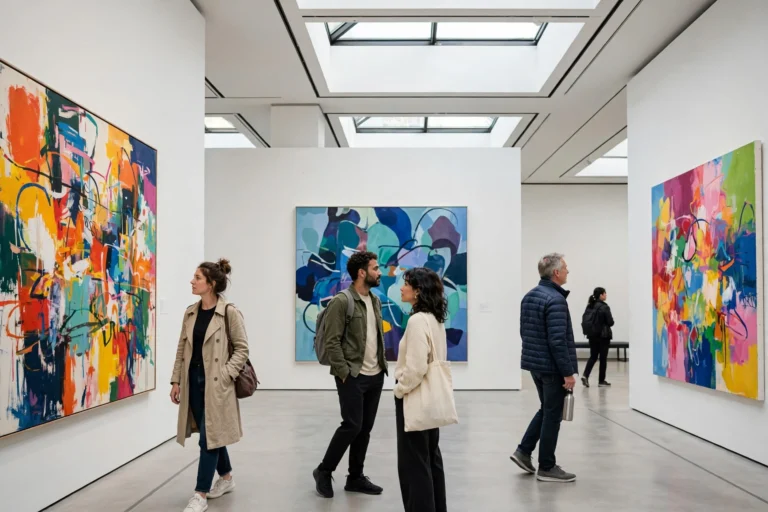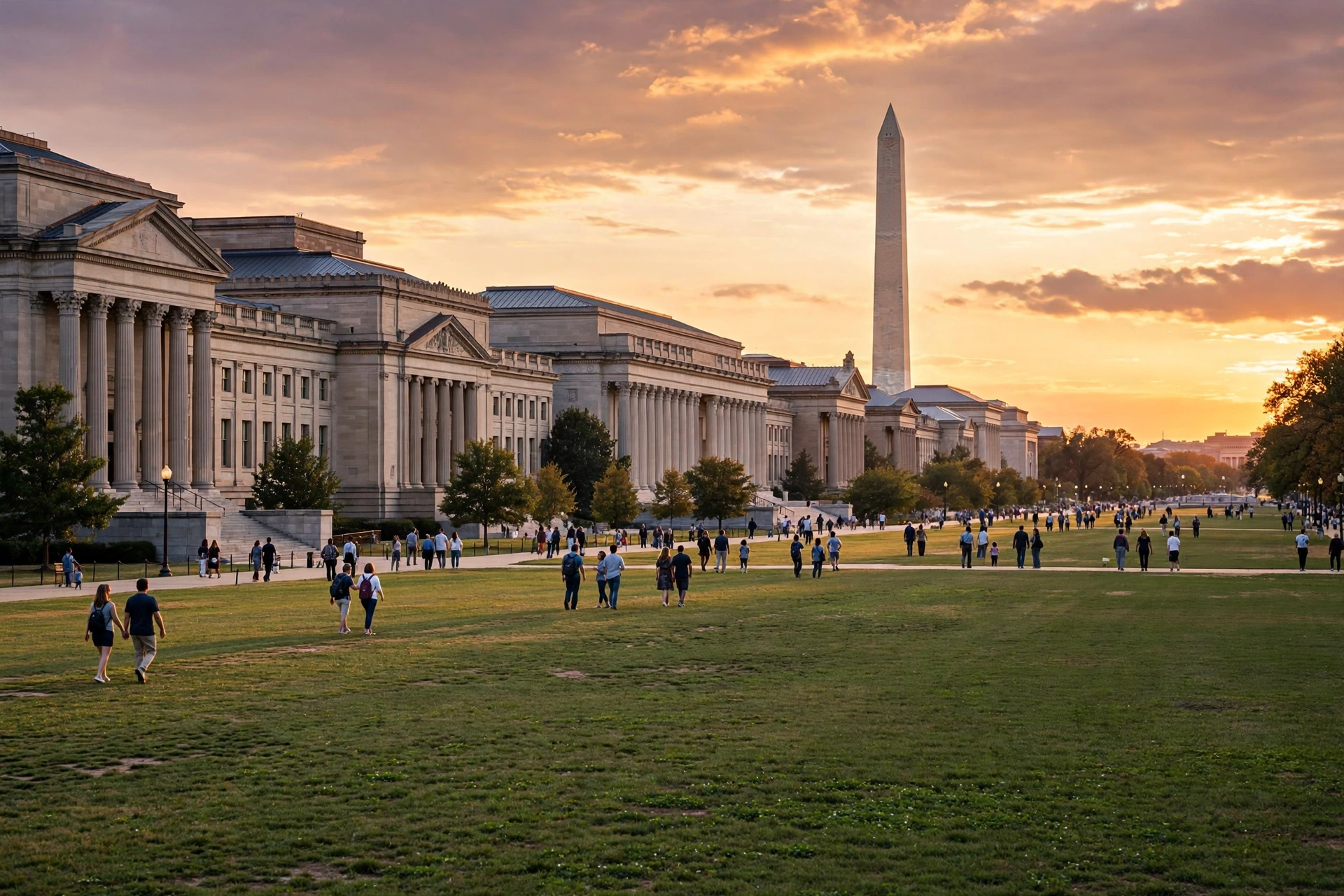
The Best Museums in Washington DC share one unbeatable trait: most of them are free. Nowhere else in America can you walk from dinosaur fossils to the Hope Diamond to the original Star-Spangled Banner without spending a dollar on admission — all within a mile of each other on the National Mall. But DC’s museum scene runs far deeper than the Smithsonian giants. The capital also holds the country’s most moving memorial museum, world-class private art collections, a spy museum with real gadgets, and neighborhood gems most tourists never find. This 2026 guide covers 25 essential DC museums, mapped into smart day plans so you can see the best of them without backtracking across the city.
A note on scope: the Smithsonian museums get their own deep dive in our Smithsonian Museums Guide — here they’re summarized in context so you can plan full DC days that mix Smithsonian icons with the non-Smithsonian museums that make the city special.
The National Mall Icons
These are the reasons people come to DC. They’re all free, all on or steps from the Mall, and all worth planning your trip around.
National Museum of Natural History (Smithsonian)
The most-visited museum in America: the Hope Diamond, the Nation’s T. rex, the Sant Ocean Hall’s 45-foot right whale, and Henry the 11-ton elephant in the rotunda. Free. Arrive at the 10 a.m. opening and pick three halls — it’s too big to improvise.
National Air and Space Museum (Smithsonian)
The Wright Flyer, the Spirit of St. Louis, the Apollo 11 command module, and a touchable Moon rock — freshly reimagined after a massive renovation. Free, but timed-entry passes are typically required; book at si.edu as soon as your dates are set.
National Museum of American History (Smithsonian)
The original Star-Spangled Banner, Dorothy’s ruby slippers, the First Ladies’ gowns, and Julia Child’s kitchen. Free, no timed passes needed. The American Presidency exhibition is a must for history lovers.
National Museum of African American History and Culture (Smithsonian)
The Mall’s newest and most emotionally powerful museum — a descent through slavery and the civil rights movement rising into celebrations of Black culture. Free timed-entry passes required; book weeks ahead. Allow at least three hours.
National Gallery of Art
Not technically a Smithsonian, but free and on the Mall — and one of the world’s great art museums. The West Building holds European masters from da Vinci to Degas; the East Building (I.M. Pei’s geometric icon) covers modern art; the underground concourse with its light sculptures connects them; and the Sculpture Garden’s fountain becomes an ice rink in winter.
Memorial Museums: The Essential, Emotional Core
United States Holocaust Memorial Museum
One of the most important museums in the world. The permanent exhibition’s chronological descent through the Holocaust — told through artifacts, film, and survivor testimony — is harrowing and essential. Free, but timed passes are required and the content is recommended for ages 11+. The Hall of Remembrance at the end offers space for quiet reflection. Allow three unhurried hours.
National Archives Museum
The Declaration of Independence, the Constitution, and the Bill of Rights — the actual documents, in the Rotunda, under armed guard and low light. Free. Lines form before opening in peak season, so arrive early or book a timed entry. The “Records of Rights” exhibition downstairs is an underrated gem.
National Museum of the American Indian (Smithsonian)
The golden curved building at the Mall’s eastern end, with the Mitsitam Native Foods Café — widely considered DC’s best museum restaurant. The “Americans” exhibition, on how Native imagery permeates American culture, surprises everyone.
Art Beyond the Mall
The Phillips Collection
America’s first museum of modern art, in a Dupont Circle mansion: Renoir’s “Luncheon of the Boating Party,” Rothkos, Diebenkorns, and one of the most intimate great-art experiences in the country. The Sunday concert series in the music room is a beloved DC tradition. Ticketed, but worth every penny.
Smithsonian American Art Museum & National Portrait Gallery
Sharing the grand former Patent Office Building in Penn Quarter, open until 7 p.m. daily — your evening museum option. The Portrait Gallery’s “America’s Presidents” is the only complete presidential portrait collection outside the White House, and the glass-canopied Kogod Courtyard is DC’s loveliest indoor public space.
Hirshhorn Museum and Sculpture Garden (Smithsonian)
The donut-shaped Mall museum for modern and contemporary art, plus the sunken sculpture garden across the street — one of the Mall’s quietest corners. Check for late-night programs.
National Museum of Women in the Arts
Fresh off a major renovation, the world’s first museum dedicated to women artists — now with reimagined galleries and a acclaimed reopening exhibition program. A short walk from the White House and an essential stop that most itineraries miss.
Kreeger Museum
A Philip Johnson-designed mansion in Foxhall with Monets, Picassos, and Washington Color School painters, set in sculpture-filled gardens. Small, serene, and open limited hours — check the schedule. It feels like a private discovery.
History, Espionage, and the Offbeat
International Spy Museum
Real spy gadgets, the history of espionage from ancient times to cyberwarfare, and the interactive “Operation Spy” experience. Ticketed and proud of it — the one DC museum where the admission fee is unambiguously worth it, especially for teens.
Ford’s Theatre and the Petersen House
The theater where Lincoln was assassinated, still a working playhouse, paired with the museum in its basement and the house across the street where he died. The ranger talks connect the artifacts to the night that changed America. Book the timed entry tickets in advance.
National Museum of African Art & National Museum of Asian Art (Smithsonian)
The quiet south-Mall pair: the Freer’s serene courtyard galleries and Whistler’s Peacock Room, the Sackler’s underground Asian art, and the African Art museum’s blend of traditional and contemporary work. The peaceful counterpoint to a hectic Mall day.
National Postal Museum (Smithsonian)
By Union Station: vintage mail trucks, a stagecoach, rare stamps, and hands-on mail-sorting exhibits that kids love. Almost never crowded — the Smithsonian’s best-kept family secret.
Planet Word
The museum of language in the historic Franklin School: a giant speaking globe, karaoke-style speech exhibits, and the famous “Where Do Words Come From?” word wall. Free, interactive, and unlike any other museum in DC. Book timed passes ahead.
Museum of the Bible
Eight floors near the Mall covering the history and impact of the Bible, with ancient manuscripts and immersive exhibits. Ticketed. Even for the non-religious, the artifact collection and the building’s scale impress.
Free vs. Ticketed: The Money Table
| Museum | Admission | Timed Pass Needed? |
|---|---|---|
| All Smithsonian museums | Free | Usually only African American History & Air and Space |
| National Gallery of Art | Free | No |
| Holocaust Memorial Museum | Free | Yes, for permanent exhibition |
| National Archives | Free | Recommended in peak season |
| Planet Word | Free | Yes |
| International Spy Museum | Ticketed (~$30) | Timed ticket with purchase |
| The Phillips Collection | Ticketed | Timed ticket recommended |
| Museum of the Bible | Ticketed | No |
| National Museum of Women in the Arts | Ticketed | Timed ticket recommended |
| Ford’s Theatre | Ticketed (small fee) | Yes, book ahead |
Three Perfect Museum Days in DC
Day 1: The Classic Mall
Morning: National Museum of Natural History at opening (dinosaurs, Hope Diamond, ocean hall). Lunch: Mitsitam Café at the American Indian Museum. Afternoon: National Museum of African American History and Culture (3 hours). Sunset: walk the Mall to the Lincoln Memorial. Dinner in Penn Quarter — and if you have energy, the Portrait Gallery is open until 7.
Day 2: History and Memory
Morning: Holocaust Memorial Museum at opening (timed pass, 3 hours — heavy, plan a quiet lunch after). Afternoon: National Archives (the Charters of Freedom) and the National Museum of American History (Star-Spangled Banner). Late afternoon: Ford’s Theatre. This is an emotionally full day; don’t overschedule the evening.
Day 3: Art, Spies, and Neighborhoods
Morning: The Phillips Collection in Dupont Circle, then stroll Embassy Row. Lunch in Dupont or Adams Morgan. Afternoon: International Spy Museum (2–3 hours). Late afternoon: Renwick Gallery near the White House or the Hirshhorn’s sculpture garden. Evening: dinner on 14th Street.
Beyond the Big Names
- National Zoo (Smithsonian): free, in Woodley Park, needs its own half-day. The giant pandas are the headliners; the Amazonia and Elephant Trails exhibits are excellent.
- Udvar-Hazy Center: the Air and Space Museum’s Virginia annex with the Space Shuttle Discovery — a half-day trip, worth it for aviation fans.
- Dumbarton Oaks: Georgetown mansion with Byzantine and Pre-Columbian collections and famously beautiful gardens (ticketed in season).
- Anacostia Community Museum: the Smithsonian’s community-rooted museum in Southeast DC, for repeat visitors who want the full picture.
- National Building Museum: architecture and design in a breathtaking Great Hall; the Building Zone delights young kids.
- Tudor Place: a Federal-era Georgetown mansion with 200 years of one family’s history — intimate and uncrowded.
Practical Tips for Museum Days in DC
- Metro over driving. The Smithsonian, Archives, and Federal Triangle stations serve the Mall. Downtown parking is expensive and scarce.
- Book timed passes first — African American History and Culture, Air and Space, Holocaust Museum, Planet Word, Ford’s Theatre — then build days around those slots.
- Two museums a day is the max. The Mall is two miles long; you’ll walk farther than you expect between buildings.
- Eat strategically. Mitsitam Café and the Sweet Home Café are destination lunches. Otherwise, the food trucks on the Mall are fine, and Penn Quarter has the best sit-down options near the museums.
- Security at every door. Pack light, bring a refillable water bottle, and allow 15–20 minutes for screening at the popular museums.
- Check si.edu and each museum’s calendar for late nights, new exhibitions, and festivals — the Smithsonian Folklife Festival on the Mall each summer is a trip-maker.
- Stretching the trip? Our free museums USA guide covers more no-cost culture, and museum after-hours events lists the best evening programs.
Where to Stay for Museum Days
Location matters enormously in DC — the right neighborhood can save you an hour of transit a day.
Penn Quarter / Chinatown
The best base for museum lovers: walkable to the Mall, the Portrait Gallery (open till 7 p.m.), Ford’s Theatre, and the Spy Museum, with the city’s densest restaurant row for dinners. Archives and Gallery Place Metro stations connect everywhere.
Capitol Hill / Eastern Market
Quieter and more residential, with the Library of Congress and the Folger Shakespeare Library as bonus culture, plus the Eastern Market food hall. Great for travelers who want a neighborhood feel and easy Mall access via Capitol South station.
Dupont Circle
The classic choice: the Phillips Collection on your doorstep, Embassy Row strolls, and lively dining. The Red Line gets you to the Mall with one transfer, or it’s a pleasant 25-minute walk.
Foggy Bottom / West End
Close to the Lincoln Memorial end of the Mall and the Kennedy Center, with generally calmer streets. A good pick if your itinerary leans toward the memorials and the State Department-area museums.
What to Eat Near the Museums
Museum days run on good fuel. Beyond the destination museum cafés (Mitsitam and Sweet Home, both genuinely excellent), here’s how to eat well without losing an hour.
- On the Mall: the food truck lines along Madison and Jefferson Drives are fast and decent — the half-smoke carts are a DC rite of passage. The museum cafés at Natural History and American History are fine for a quick refuel.
- Penn Quarter: the densest good-eating near the museums — everything from quick ramen to white-tablecloth dining within blocks of the Portrait Gallery and the Spy Museum.
- Eastern Market: if you’re based on Capitol Hill, the market’s food hall and weekend vendors beat any museum café for lunch variety.
- Union Station: the food court is a reliable fallback near the Postal Museum and the Capitol, and the station’s main hall is worth seeing in itself.
- Picnic option: grab sandwiches and eat on the Mall lawn between museums — it’s allowed, it’s pleasant, and it saves 45 minutes over a sit-down lunch.
Free Sights to Pair With Museum Days
DC’s greatest trick is how much world-class sightseeing costs nothing. Build these free pairings into your museum days and the trip feels twice as rich.
- Memorials at sunset. After a Mall museum day, walk to the Lincoln, Vietnam Veterans, and Korean War Veterans Memorials as the light fades. The Lincoln Memorial at dusk, looking down the Reflecting Pool toward the Washington Monument, is the single most beautiful free view in American travel.
- The Library of Congress. The Thomas Jefferson Building’s Great Hall — with its murals, mosaics, and the Gutenberg Bible — rivals any museum interior, and it’s free with a timed pass. Pair it with the Capitol Visitor Center next door.
- The Tidal Basin. Between museum days, the walk around the Tidal Basin past the Jefferson, FDR, and MLK memorials is the city’s best free stroll — spectacular in cherry blossom season (late March to early April).
- Georgetown’s waterfront. After the museums close, the walk along the Potomac from Georgetown’s historic streets to the Kennedy Center’s free Millennium Stage performances ( nightly at 6 p.m.) makes a perfect museum-day evening.
- Eastern Market on weekends. The outdoor vendors, food stalls, and flea market around the historic market hall are a lively Saturday or Sunday morning before an afternoon museum session.
Frequently Asked Questions
What is the best museum in Washington DC?
The National Museum of Natural History (most-visited in the US, free) and the National Museum of African American History and Culture (most powerful) top most lists. For art, the National Gallery of Art; for emotional weight, the Holocaust Memorial Museum.
Are DC museums free?
All 17 Smithsonian museums in DC plus the National Zoo are free, as are the National Gallery of Art, the Holocaust Memorial Museum, the National Archives, and Planet Word. The Spy Museum, Phillips Collection, and Museum of the Bible charge admission.
How many days do I need for DC museums?
Three full days cover the essentials: one for the big Mall museums, one for history and memorial museums, one for art and offbeat picks. Five days let you add the Zoo, Udvar-Hazy Center, and neighborhood museums at a relaxed pace.
Which DC museums need timed-entry tickets?
The National Museum of African American History and Culture, the National Air and Space Museum, the Holocaust Memorial Museum’s permanent exhibition, Planet Word, and Ford’s Theatre. Book all of them as soon as your dates are fixed.
What is the best museum in DC for kids?
The National Air and Space Museum, the Natural History Museum, the National Zoo, and Planet Word. See our best museums for kids guide for more family picks.
Can you do DC museums in one day?
You can sample two — the Natural History Museum in the morning and one more in the afternoon — but one day only scratches the surface. Two to three days is the realistic minimum for a satisfying visit.
What’s open late?
The Smithsonian American Art Museum and National Portrait Gallery are open until 7 p.m. daily. Others host occasional evening programs — check our after-hours guide.
Is Washington DC good for a museum trip with teenagers?
It’s one of the best cities in the world for it. Teens love the International Spy Museum’s interactive missions, the Air and Space Museum’s spacecraft, the Holocaust Museum’s unflinching honesty, and Planet Word’s playful language exhibits — and the fact that most of it is free removes the “was that worth the ticket?” pressure entirely.