American traditions are the rituals that turn 330 million diverse people into something recognizable as a culture — from Thanksgiving turkeys and Fourth of July fireworks to prom nights, tailgate parties, and the small-town Friday night football game. Some are centuries old, others were invented by television; all of them reveal what Americans value: community, optimism, reinvention, and a good excuse to gather. This guide explains 25 essential American traditions — where each one came from, how it is celebrated today, and the unwritten rules newcomers should know.
American Traditions at a Glance
| Tradition | When | Origin |
|---|---|---|
| Thanksgiving dinner | 4th Thursday of November | 1621 harvest feast; national holiday since 1863 |
| Independence Day fireworks | July 4 | 1776 Declaration of Independence |
| Halloween trick-or-treating | October 31 | Irish/Scottish immigrants, 1800s |
| Super Bowl Sunday | February | First championship, 1967 |
| Prom | Spring | Mid-1800s college proms; high school by 1930s |
| Tailgating | Football season | 1869 college football; Green Bay popularized it |
| Baby showers | Before birth | Post-WWII baby boom |
| Black Friday shopping | Day after Thanksgiving | 1950s–60s Philadelphia |
| New Year’s Eve ball drop | December 31 | Times Square, 1907 |
| Mardi Gras | Before Lent | French Catholic roots, New Orleans 1700s |
Holiday Traditions
1. Thanksgiving Dinner
The most universally observed of all American traditions: on the fourth Thursday of November, families gather for roast turkey, stuffing, mashed potatoes, cranberry sauce, and pumpkin pie. The story traces to a 1621 harvest feast shared by Pilgrims and the Wampanoag people; Abraham Lincoln declared it a national holiday in 1863 during the Civil War, hoping a shared meal might heal a divided nation. Modern rituals include the presidential turkey pardon, the Macy’s Thanksgiving Day Parade (since 1924), and three NFL games. Unwritten rule: never show up empty-handed — bring a side dish or wine.
2. Fourth of July Fireworks
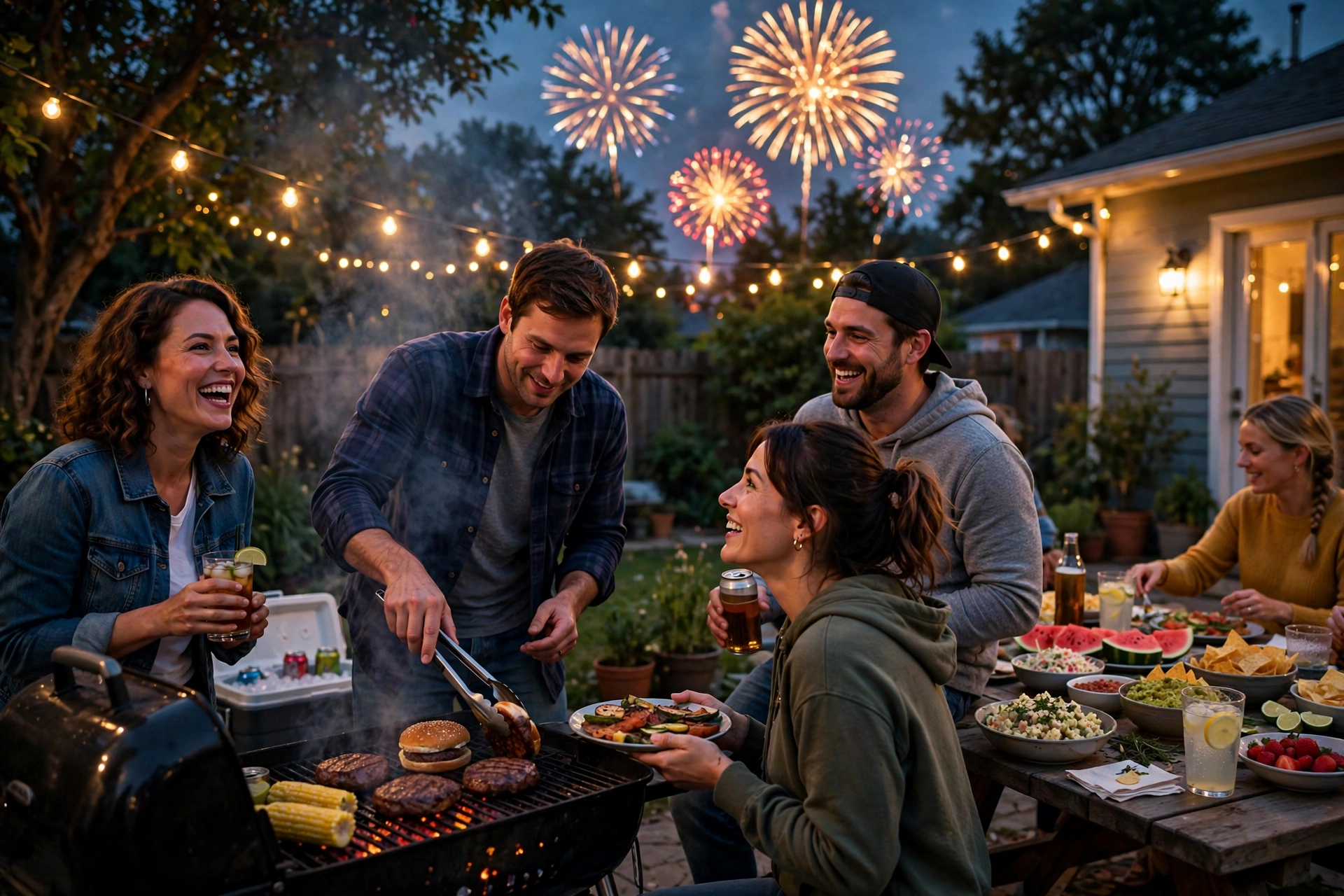
Americans celebrate independence from Britain with fireworks, parades, barbecues, and patriotic display — a tradition John Adams himself predicted in a 1776 letter, calling for “illuminations” every anniversary. An estimated 16,000+ public displays light up the skies each July 4, from small-town shows to the Macy’s extravaganza over New York’s East River. Backyard grilling (burgers, hot dogs, corn) is as essential as the pyrotechnics.
3. Halloween Trick-or-Treating
On October 31, some 40+ million American children don costumes and go door to door chanting “trick or treat!” The custom descends from Irish and Scottish immigrants’ Samhain traditions, commercialized in the early 1900s and standardized after WWII. Americans now spend billions on costumes, candy, and decorations each year — only Christmas outspends it. Adults join in with costume parties, haunted houses, and elaborate yard displays.
4. Memorial Day and Labor Day Weekends
These two Mondays bookend summer. Memorial Day (last Monday of May) honors fallen service members with parades, cemetery visits, and moments of silence — though for many it doubles as summer’s kickoff cookout. Labor Day (first Monday of September) celebrates workers and marks summer’s end. Both are among the biggest travel and grilling weekends of the year.
5. New Year’s Eve Ball Drop
Since 1907, crowds have packed Times Square to watch a giant crystal ball descend at midnight, a tradition now watched by over a billion people globally on television. Regional variants include the peach drop in Atlanta and countless local countdowns. The accompanying customs — champagne toasts, midnight kisses, and resolutions — are observed in living rooms nationwide.
6. Black Friday
The day after Thanksgiving kicks off the holiday shopping season with doorbuster deals and predawn lines — the term originated in 1960s Philadelphia to describe post-Thanksgiving traffic chaos. It has evolved into a full weekend (Small Business Saturday, Cyber Monday) and increasingly into weeks of online deals, but the ritual of deal-hunting remains one of the most commercial of American traditions.
7. Mardi Gras
New Orleans’ pre-Lenten carnival — French for “Fat Tuesday” — features parades, bead-throwing, king cake, and jazz-fueled street parties. Rooted in French Catholic tradition dating to the early 1700s, it now draws over a million visitors annually. The colors (purple for justice, green for faith, gold for power) were chosen in 1872.
Milestone Celebrations
8. Prom
The formal high-school dance — tuxedos, gowns, corsages, limousines, and the “promposal” — is a defining teenage rite of passage. Proms began at 19th-century colleges; by the 1930s they had moved to high schools, and postwar prosperity turned them into the elaborate affairs depicted in countless movies. For many Americans, prom photos remain among their most treasured images.
9. Homecoming
Each fall, high schools and colleges welcome alumni back with a football game, pep rally, parade, and homecoming dance — often crowning a homecoming court. The tradition began at the University of Missouri in 1911 and remains strongest in the Midwest and South, where homecoming mums (giant decorated chrysanthemum corsages) are an art form in Texas.
10. Sweet Sixteen and Quinceañera
Coming-of-age birthdays carry deep cultural weight: the Sweet Sixteen party marks a girl’s 16th birthday (often with a first car), while the Quinceañera celebrates a Latina girl’s 15th with Mass, a formal gown, and a waltz with her court — a tradition blending Catholic and indigenous Mesoamerican roots. Both reflect how American traditions absorb and honor immigrant heritage.
11. Baby Showers
Friends gather before a birth to “shower” the expectant mother with gifts, games, and advice — a custom that exploded during the post-WWII baby boom. Modern versions include co-ed “sip and sees” after birth and elaborate themed décor. The unwritten rule: the guest of honor never hosts her own shower.
12. Graduation Rituals
Cap-and-gown commencement ceremonies — with the tassel moved from right to left, the throwing of caps, and “Pomp and Circumstance” — mark educational milestones from kindergarten to PhD. The traditions descend from medieval European universities but feel distinctly American in their scale: stadium ceremonies, class rings, and yearbook signings.
Food and Gathering Traditions
13. Tailgating
Hours before kickoff, stadium parking lots transform into open-air feasts: grills, coolers, cornhole, team flags. Born with college football in 1869 and perfected by Green Bay Packers fans, tailgating is now a core American tradition spanning NFL Sundays, college Saturdays, and even concerts. The etiquette: bring enough to share, respect neighboring setups, and clean up completely.
14. The Backyard Barbecue
Slow-smoked brisket in Texas, pulled pork in the Carolinas, ribs in Memphis and Kansas City — regional barbecue is edible heritage, with rivalries as fierce as any sports feud. The broader backyard cookout (burgers, hot dogs, potato salad) is the default American social gathering from Memorial Day to Labor Day.
15. Apple Pie (and Diner Culture)
“As American as apple pie” isn’t just a saying — the dessert, brought by English colonists and perfected with New World apples, became a national symbol, especially during WWII when soldiers cited it as what they were fighting for. The classic diner — pie case, bottomless coffee, chrome stools — remains the beloved stage for this tradition.
16. Potlucks and Block Parties
The potluck dinner, where every guest brings a dish, embodies American communal pragmatism — it likely descends from 16th-century English “potluck” hospitality and thrives in churches, offices, and neighborhoods. Summer block parties, with closed-off streets, grills, and kids’ games, keep the same spirit alive at the neighborhood level.
Sports Traditions
17. Super Bowl Sunday
America’s unofficial national holiday: over 100 million viewers watch the NFL championship, but the traditions around it — the party spread (an estimated 1.4 billion chicken wings), the halftime show, and above all the commercials, which many viewers rank above the game — make it a cultural event beyond sports. First played in 1967, it now anchors the American winter calendar.
18. Baseball’s Opening Day
“America’s pastime” opens each spring with ceremonial first pitches (a presidential tradition since Taft in 1910), bunting-draped stadiums, and renewed hope for all 30 teams. The seventh-inning stretch and “Take Me Out to the Ball Game” (written in 1908 by two men who had never attended a game) are sung in every park.
19. March Madness Brackets
Each spring, the NCAA basketball tournament turns offices into betting pools as tens of millions fill out brackets predicting 67 games — despite the astronomical odds (1 in 9.2 quintillion for a perfect bracket). The ritual of the busted bracket is as beloved as the Cinderella upsets themselves.
20. Friday Night Lights
In thousands of small towns, especially across Texas and the South, high-school football on Friday nights is the week’s social centerpiece — whole communities filling bleachers, marching bands, homecoming mums. The tradition inspired the book, film, and TV series that exported it worldwide.
Everyday Customs Newcomers Should Know
21. Tipping Culture
One of the most confusing American traditions for visitors: tipping 18–25% at restaurants is effectively mandatory, since servers’ base wages assume tips. Bartenders ($1–2 per drink), hotel housekeeping, taxi and rideshare drivers, and food delivery all expect gratuities. When in doubt, tip — undertipping is a genuine social offense.
22. Small Talk and Friendliness
Americans chat with strangers — in elevators, checkout lines, and rideshares. “How are you?” is a greeting, not a question (answer: “Good, you?”). This informality extends to first-name use with colleagues and a general expectation of smiling customer service. It can surprise visitors from more reserved cultures, but it is genuine social currency here.
23. The Great American Road Trip
Route 66 mythology, national parks, roadside diners, and the freedom of the open highway — the road trip is America’s defining travel tradition, enabled by the Interstate Highway System (1956) and car culture. Summer road trips, with their playlists, gas-station snacks, and quirky roadside attractions, remain a rite of passage for families and friends.
24. Garage Sales and Yard Sales
On any spring Saturday, suburban driveways become open-air markets as families sell everything from baby clothes to vintage vinyl. Part decluttering, part treasure hunt, part neighborhood social hour, the garage sale is a thrifty, communal tradition — and the early bird truly gets the worm.
25. Volunteering and Community Service
From food-bank shifts to park cleanups to coaching Little League, volunteering is woven into American civic life — over 75 million Americans volunteer annually. Many high schools require service hours for graduation, and corporate volunteer days are standard. It reflects the tradition of neighbors solving problems themselves rather than waiting for institutions.
Regional Traditions Worth Knowing
America’s size breeds local color: New England’s town meetings (direct democracy since the 1600s), the South’s front-porch culture, Hawaii’s aloha spirit and lei-giving, Alaska’s Iditarod, Louisiana’s crawfish boils, Pennsylvania Dutch barn raisings. These regional American traditions remind us that “American culture” is really a federation of cultures — which is exactly the point. For festival-style celebrations across the country, see our guide to the best cultural festivals in the USA, and for experience-based travel ideas, browse the best cultural experiences in the USA.
Frequently Asked Questions
What are the most important American traditions?
The most widely observed American traditions are Thanksgiving dinner, Fourth of July fireworks, Halloween trick-or-treating, Christmas celebrations, and Super Bowl Sunday. Milestone rituals like prom, graduations, and baby showers, plus everyday customs like tipping and tailgating, round out the picture.
Where did American traditions come from?
American traditions blend English colonial roots, immigrant contributions (Irish Halloween, German Christmas trees, Latino quinceañeras), African American culture, Native American heritage, and homegrown inventions (Thanksgiving as a national holiday, tailgating, the Super Bowl). The mix is the message.
What is the oldest American tradition still celebrated?
Thanksgiving traces to 1621, town meetings to the 1630s, and Mardi Gras in New Orleans to the early 1700s. Among annual national observances, Thanksgiving (national since 1863) and Independence Day (celebrated since 1777) are the oldest continuous American traditions.
How do American traditions differ from European ones?
American traditions tend to be more commercial, more informal, and more centered on sports and food gatherings than European ones, which often retain deeper religious and folk roots. America’s immigrant history also makes its traditions more visibly blended — St. Patrick’s Day is bigger in the U.S. than in Ireland.
What should newcomers know about American etiquette?
Tip 18–25% at restaurants, bring a dish or gift to gatherings, respect personal space in lines (“queues”), make small talk, and RSVP to invitations. Americans value punctuality for business, directness in communication, and enthusiasm — “awesome!” is a complete sentence.
The Bottom Line
American traditions are less a fixed canon than a living argument about what it means to belong here — argued over turkey dinners, in stadium parking lots, and on front porches. They endure because they do what rituals have always done: turn strangers into neighbors and moments into memories. Whether you were born into them or are adopting them fresh, participating is the whole point. Pick one you have never tried — a tailgate, a town meeting, a Mardi Gras parade — and go. That is how traditions stay alive.
American Traditions: Frequently Asked Questions
What are the most widely shared traditions across the United States?
A handful of traditions genuinely cross regional, ethnic, and political lines. Thanksgiving dinner is the closest thing America has to a universal ritual — the vast majority of households gather for turkey, sides, and pie on the fourth Thursday of November, regardless of background. The Fourth of July brings fireworks and barbecues to nearly every town. Halloween trick-or-treating, Christmas gift-giving, and New Year’s Eve countdowns are practiced coast to coast. Beyond holidays, shared rituals include the national anthem before sporting events, high school proms, backyard barbecues, and road trips. These are the customs that make a continent-sized country feel like one culture — even as each region, faith, and family layers its own variations on top.
How have American traditions changed over the last fifty years?
They’ve diversified and informalized. The classic nuclear-family holiday dinner now shares space with Friendsgiving, chosen-family gatherings, and multicultural fusions — tamales at Christmas in the Southwest, Lunar New Year celebrated well beyond Asian American communities. Gender roles in traditions have loosened: men cook the holiday meal, women watch the game, nobody blinks. Technology reshaped rituals too — video calls include far-flung relatives, and social media turned everything from gender reveals to promposals into public performances. What hasn’t changed is the underlying function: traditions still mark time, bind families, and give a fast-moving culture moments to pause. The forms evolve; the needs they serve don’t.
Which American traditions are unique to specific regions?
Plenty. The South has Mardi Gras in New Orleans, crawfish boils, and college football Saturdays treated as holy days. New England keeps town meeting traditions and clam bakes. The Midwest is synonymous with state fairs, Friday fish fries, and casseroles at every gathering. The Southwest blends Mexican and American customs — Día de los Muertos celebrations, quinceañeras, and rodeo culture. The Pacific Northwest has its own outdoorsy rituals around salmon, coffee, and hiking. Alaska and Hawaii each preserve Indigenous traditions alongside mainstream American ones. These regional customs are often what visitors remember most — they give each part of the country its distinct flavor within the national mix.
Do immigrants adopt American traditions, and do they change them?
Both, constantly — that’s the engine of American culture. Immigrant families typically adopt the big national holidays within a generation while keeping their own customs alongside them: Diwali fireworks next to Fourth of July ones, dumplings on the Thanksgiving table. The exchange runs the other way too — tacos, sushi, and St. Patrick’s Day parades all entered mainstream American tradition through immigrant communities. Sociologists call it the “melting pot” versus “salad bowl” debate, but lived reality is simpler: families keep what they love, add what their neighbors love, and the tradition keeps evolving. American culture has always been a remix, and each wave of newcomers adds new tracks.