The best places to visit in Florida depend on whether you want a beach base, a theme-park holiday, historic streets or time in the state’s waterways and wetlands. This guide compares 25 destinations across South Florida, the Keys, both coasts, Central Florida and the Panhandle. It includes major visitor centers and smaller places with a specific reason to go, rather than calling every quieter town a hidden gem.
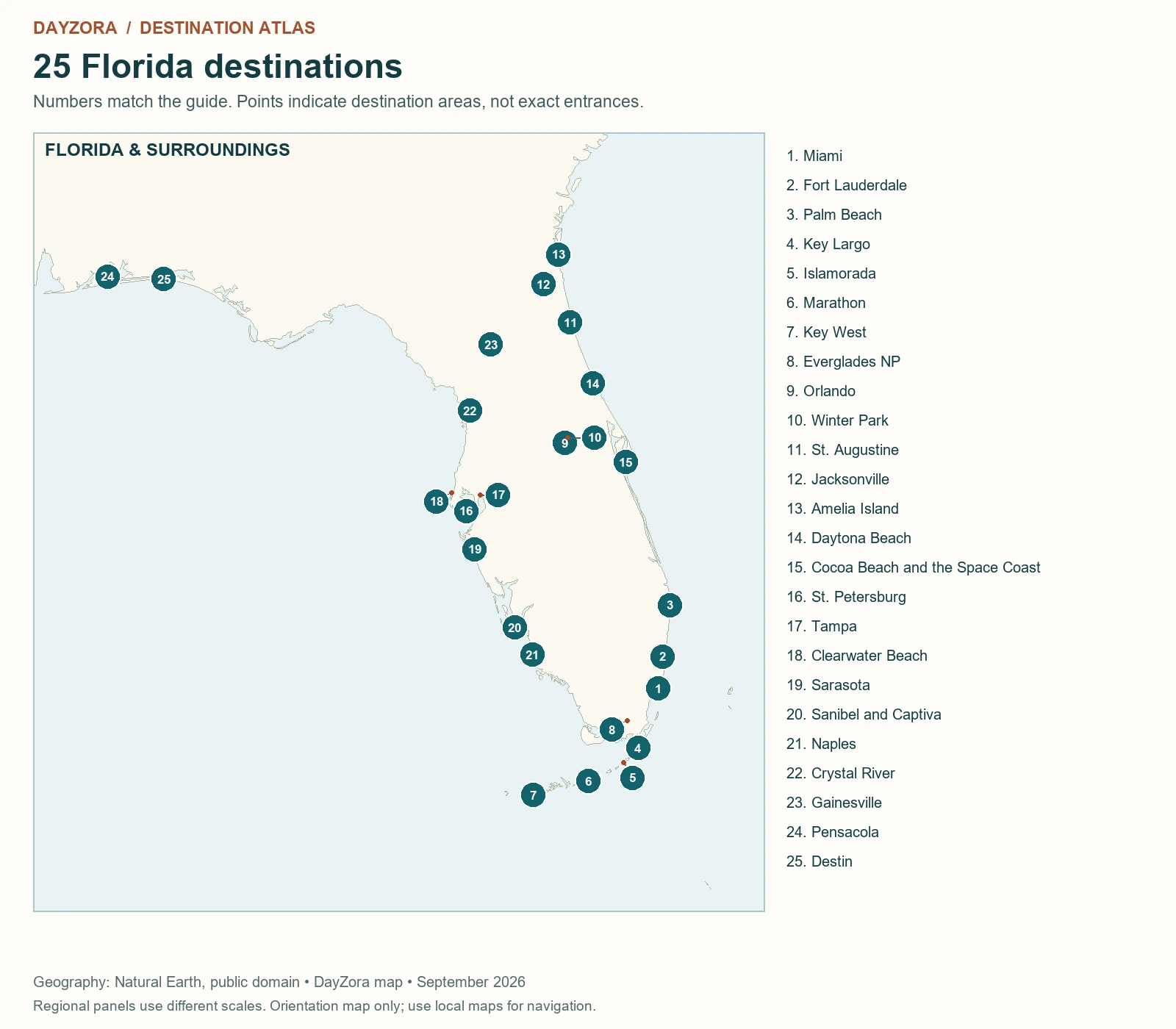
Start with the decision guide and comparison table, then use the numbered map to see which places belong in the same trip. Each entry explains the main experiences, suitable stay length, lodging areas, airport access and the practical difference between staying car-free and exploring farther afield. DayZora selected these places for variety and useful trip-planning choices; the numbering is not an objective ranking. Beach access, wildlife restrictions and storm-recovery work can change, so the entries link to official information where those details affect the visit.
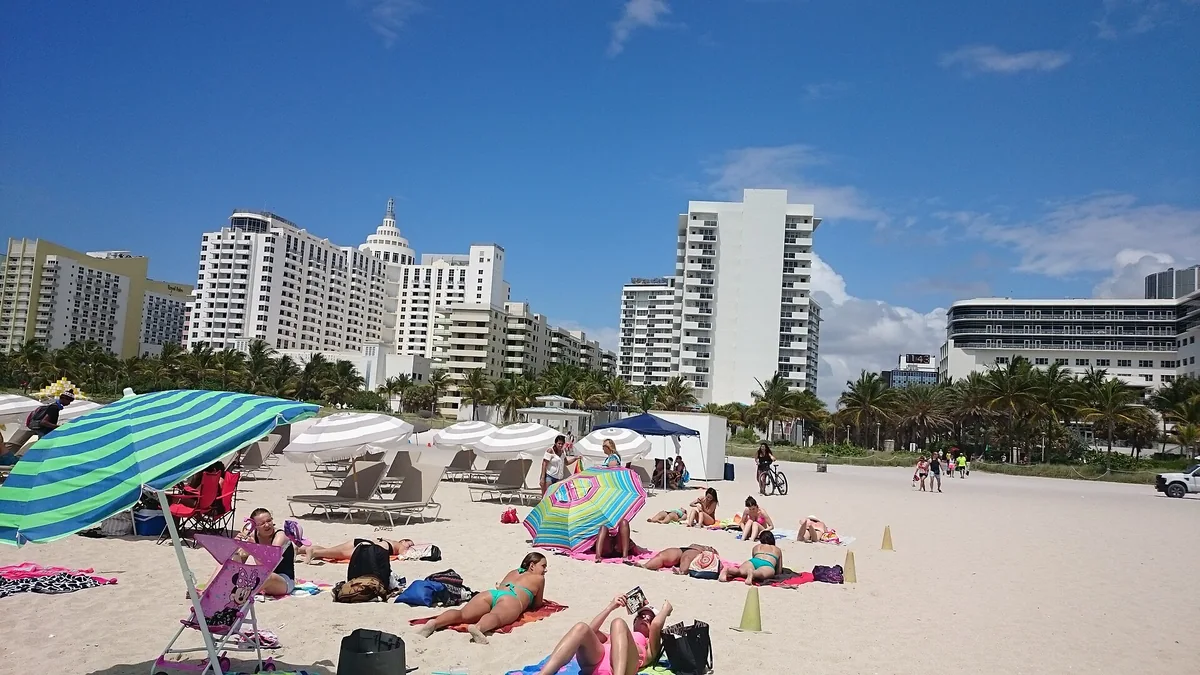
Featured image: South Beach sand, umbrellas and waterfront buildings in Miami Beach. Madison L. Pereira · Wikimedia Commons source · CC BY-SA 3.0. Cropped/resized; WebP conversion.
Planning review: September 26, 2026. Confirm live access, tickets and transport before booking.
Which Destination Is Right for You?
- A first Florida beach-and-city trip: Miami for art and urban energy, or St. Petersburg for museums with nearby Gulf beaches.
- Theme-park families: Orlando is the natural base; Winter Park offers a separate, slower day away from the parks.
- Keys scenery: Key Largo for a shorter mainland connection, Marathon for a Middle Keys base, or Key West for a walkable town stay.
- History: St. Augustine and Amelia Island offer different versions of a northeast Florida trip.
- Wildlife and wetlands: Everglades for broad wetland landscapes; Crystal River for seasonally managed spring and manatee experiences.
- A Gulf beach holiday: Clearwater Beach, Sarasota-area beaches or Destin, chosen according to season and arrival route.
- A less obvious inland stop: Gainesville combines gardens, museums and access to north-central Florida nature.
- Car-light stays: Central Key West, a carefully chosen Miami Beach hotel or a compact beach base can work; regional exploration usually needs transport.
Quick Comparison: Destinations, Seasons and Stays
Stays are suggested nights at the destination. Seasonal windows are general planning guidance, not weather guarantees. Budget symbols compare typical on-the-ground costs for an independent leisure trip: $ lower-cost, $$ moderate, $$$ expensive, $$$$ very expensive. They exclude your long-haul airfare and are not quoted prices; dates, rooms, transfers and activity choices can change the result.
On a small screen, swipe the table sideways. Select a destination name to jump to its details.
| Destination | Region / country | Best for | Ideal stay | Best time | Budget |
|---|---|---|---|---|---|
| 1. Miami | South Florida | Beach-and-culture travelers | 4 nights | December–April | $$$ |
| 2. Fort Lauderdale | South Florida | Waterways and a beach-city balance | 3–4 nights | December–April | $$$ |
| 3. Palm Beach | Southeast Atlantic Coast | Architecture, gardens and an occasion stay | 3 nights | December–April | $$$$ |
| 4. Key Largo | Upper Florida Keys | Reef trips and a shorter Keys escape | 3 nights | December–April | $$$ |
| 5. Islamorada | Upper Florida Keys | Fishing, paddling and a slower water-focused stay | 3 nights | December–April | $$$ |
| 6. Marathon | Middle Florida Keys | Families and a central Keys base | 3–4 nights | December–April | $$$ |
| 7. Key West | Lower Florida Keys | Walkable island history and lively evenings | 3–4 nights | December–April | $$$$ |
| 8. Everglades National Park | South Florida wetlands | Wildlife and ecosystem-focused travel | 2 nights nearby | December–March | $$ |
| 9. Orlando | Central Florida | Theme-park families and multigeneration trips | 5–7 nights | January–February; selected autumn weekdays | $$$ |
| 10. Winter Park | Central Florida | Art, lakes and a quieter Orlando-area stay | 2 nights or a full-day visit | November–April | $$$ |
| 11. St. Augustine | Northeast Florida | History with an optional beach extension | 3 nights | March–May; October–November | $$$ |
| 12. Jacksonville | Northeast Florida | Neighborhood dining, riverfront and Atlantic beaches | 3 nights | March–May; October–November | $$ |
| 13. Amelia Island | Northeast Florida | Couples, families and a quieter Atlantic stay | 3–4 nights | March–May; October | $$$ |
| 14. Daytona Beach | Atlantic Coast | Motorsport and a traditional beach trip | 3 nights | March–May; October | $$ |
| 15. Cocoa Beach and the Space Coast | Atlantic Coast | Families, surfing and space history | 3–4 nights | March–May; October–November | $$$ |
| 16. St. Petersburg | Tampa Bay | Art, waterfront walking and a city base | 3–4 nights | November–April | $$$ |
| 17. Tampa | Tampa Bay | Families, riverfront attractions and urban food | 3–4 nights | November–April | $$$ |
| 18. Clearwater Beach | Gulf Coast | A beach-first family vacation | 3–4 nights | March–May; October–November | $$$ |
| 19. Sarasota | Southwest Gulf Coast | Art, gardens and nearby barrier-island beaches | 4 nights | November–April | $$$ |
| 20. Sanibel and Captiva | Southwest Gulf islands | Shelling, wildlife and a quiet island stay | 4 nights | December–April | $$$ |
| 21. Naples | Southwest Gulf Coast | Gardens, dining and a relaxed beach base | 3–4 nights | December–April | $$$ |
| 22. Crystal River | Nature Coast | Manatee viewing and spring-fed landscapes | 2–3 nights | November–March for wintering manatees | $$ |
| 23. Gainesville | North Central Florida | Art, wetlands and a university-town break | 2–3 nights | February–April; October–November | $$ |
| 24. Pensacola | Western Panhandle | Beach-and-history trips with a city base | 4 nights | April–May; September–October | $$ |
| 25. Destin | Emerald Coast | Family beach stays and fishing | 4–5 nights | May–June; September–October | $$$ |
Map of the Featured Destinations
25 Destinations to Consider
1. Miami
Choose Miami when beach time should share the trip with art, architecture and Latin American and Caribbean food. It is the most urban choice here, with very different experiences on the mainland and across the bay in Miami Beach.
Region: South Florida · Best for: Beach-and-culture travelers
Suggested stay: 4 nights · Season: December–April · Budget: $$$
Airport access: Miami International · Car / transport: Helpful
What to do: Walk South Beach’s Art Deco streets, explore Little Havana, visit Pérez Art Museum Miami and spend a morning at a lifeguarded beach. Choose one area for the afternoon rather than crossing the bay repeatedly.
When to go and how long: Four nights allows both beach and city days. Winter and early spring are popular for milder conditions; summer brings heat, frequent showers and hurricane-season planning.
Where to stay and get around: South Beach suits a sand-first stay; Downtown or Brickell works for mainland culture and dining. Miami International is the main gateway. Walking and transit work locally, while rides or a car help with dispersed plans.
Planning tip: Check whether the hotel’s advertised beach access is walkable and what parking costs. A lower room rate far from your main activities can disappear into daily transfers.
For a deeper neighborhood and sightseeing plan, use the Miami travel guide.
Official planning sources: visitflorida.com — miami · pamm.org
2. Fort Lauderdale
Fort Lauderdale suits travelers who want a beach base with an active waterfront city behind it. Its canals and riverfront give you ways to explore beyond the sand without making Miami the default excursion every day.
Region: South Florida · Best for: Waterways and a beach-city balance
Suggested stay: 3–4 nights · Season: December–April · Budget: $$$
Airport access: Fort Lauderdale–Hollywood International · Car / transport: Helpful
What to do: Walk the beachfront promenade, take a water taxi, explore Las Olas Boulevard and visit the NSU Art Museum or Stranahan House according to their current schedules. The water taxi is both an outing and a transport choice, with specific stops.
When to go and how long: Three or four nights supports beach, canal and cultural time. Winter is popular and often expensive; the humid summer requires shade breaks and weather flexibility.
Where to stay and get around: Choose the beach for ocean access or the Las Olas area for restaurants and riverfront activity. The airport is nearby, but hotel transfers vary. A car helps beyond the center; central days can combine walking, rides and boats.
Planning tip: Cruise departure days can add demand around hotels and airport transfers. Compare the actual water-taxi stop and operating hours with your hotel before relying on it for the evening return.
Official planning sources: visitflorida.com — fort lauderdale
3. Palm Beach
Palm Beach works for travelers who enjoy landscaped streets, historic architecture and a polished coastal stay. The island is a distinct destination from mainland West Palm Beach, although the two can be combined easily with a sensible transport plan.
Region: Southeast Atlantic Coast · Best for: Architecture, gardens and an occasion stay
Suggested stay: 3 nights · Season: December–April · Budget: $$$$
Airport access: West Palm Beach airport, now President Donald J. Trump International · Car / transport: Helpful
What to do: Visit the Flagler Museum, walk a section of the Lake Trail, explore Worth Avenue’s courtyards and spend time at a public beach. The Society of the Four Arts adds gardens and cultural programming when scheduled.
When to go and how long: Three nights suits an unhurried break. Winter and early spring attract high demand; warmer months can change the value equation, with humidity and storm-season considerations.
Where to stay and get around: An island stay puts the beach and historic streets close; West Palm Beach offers a broader urban hotel choice across the water. Use walking locally and rides or a car for the wider area.
Planning tip: The airport officially changed its name in July 2026; its operator announced an August switch from PBI to DJT. Search West Palm Beach and verify the airport shown on your airline booking during the transition.
Official planning sources: visitflorida.com — palm beach · pbia.org
4. Key Largo
Key Largo is the practical Keys choice when snorkeling, diving or a boat outing matters more than a broad sandy beach. It is closer to the mainland than the Lower Keys, making a focused three-night stay realistic.
Region: Upper Florida Keys · Best for: Reef trips and a shorter Keys escape
Suggested stay: 3 nights · Season: December–April · Budget: $$$
Airport access: Miami International; onward drive · Car / transport: Yes
What to do: Arrange a suitable reef excursion through John Pennekamp Coral Reef State Park’s operators, walk an open trail at Dagny Johnson park, consider an African Queen canal cruise and leave time for a waterfront meal.
When to go and how long: Three nights gives boat plans a little weather flexibility. Winter and spring are popular, but wind can cancel marine trips even on sunny days. Summer brings greater heat and storm-season considerations.
Where to stay and get around: Choose lodging around your departure marina rather than expecting a walkable island center. A car is useful along the Overseas Highway. Miami is the usual scheduled-flight gateway; Marathon’s airport should not be mistaken for an equivalent major-airline option.
Planning tip: A glass-bottom boat, snorkeling trip and scuba dive have different fitness and sea-condition requirements. Confirm the actual product and cancellation policy before deciding it is suitable for every member of the group.
Official planning sources: visitflorida.com — key largo · fla-keys.com · floridastateparks.org — john pennekamp coral reef state park
5. Islamorada
Islamorada is a good match for a vacation built around the water, with more emphasis on fishing and quiet resort time than Key West’s nightlife. It is a group of islands, so the precise hotel location matters.
Region: Upper Florida Keys · Best for: Fishing, paddling and a slower water-focused stay
Suggested stay: 3 nights · Season: December–April · Budget: $$$
Airport access: Miami International; onward drive · Car / transport: Yes
What to do: Book an appropriate guided fishing or paddling outing, visit the History of Diving Museum, explore Windley Key Fossil Reef Geological State Park and browse the Morada Way arts area. These land-based stops make useful alternatives when wind changes a boat plan.
When to go and how long: Three nights gives two full days without requiring a move farther down the Keys. Winter and spring are popular; warm-season humidity and tropical-weather forecasts need attention.
Where to stay and get around: Upper Matecumbe Key is useful for many visitor services; other resorts can be more self-contained. Miami International is a practical gateway followed by a drive. A car is useful because attractions and marinas are spread along the highway.
Planning tip: Ask whether a fishing trip is offshore or backcountry, and match it to your experience and seasickness tolerance. The two are not interchangeable versions of the same day.
Official planning sources: visitflorida.com — islamorada · fla-keys.com — how to get here
6. Marathon
Marathon offers a useful middle-Keys base for families who want nature attractions, a beach and manageable excursions in both directions. Its services are spread across several islands rather than concentrated in a compact old town.
Region: Middle Florida Keys · Best for: Families and a central Keys base
Suggested stay: 3–4 nights · Season: December–April · Budget: $$$
Airport access: Key West International; Miami alternative · Car / transport: Yes
What to do: Reserve a Turtle Hospital tour, spend time at Sombrero Beach, explore an open trail or paddling route at Curry Hammock State Park and walk the accessible public section of Old Seven Mile Bridge.
When to go and how long: Three or four nights gives room for a quieter day between activities. Winter and spring are popular; summer heat, thunderstorms and hurricane-season conditions call for flexible outdoor plans.
Where to stay and get around: Vaca Key and nearby resort areas provide varied lodging. Key West has scheduled commercial flights, while Miami is an alternative with a longer drive. Marathon’s airport primarily serves charter and private aviation. A car is the practical default.
Planning tip: Use the designated pedestrian access for Old Seven Mile Bridge. The active highway bridge is a transport corridor, not a place to stop the car for photographs.
Official planning sources: visitflorida.com — marathon · fla-keys.com — marathon · fla-keys.com · turtlehospital.org
7. Key West
Key West is the best fit here for travelers who want an island stay with a walkable historic center and evening activity. It is less compelling if the only priority is a long resort beach; other Florida coastlines offer that more directly.
Region: Lower Florida Keys · Best for: Walkable island history and lively evenings
Suggested stay: 3–4 nights · Season: December–April · Budget: $$$$
Airport access: Key West International · Car / transport: No for Old Town
What to do: Visit the Hemingway Home and Museum, explore Old Town’s streets, spend time at Fort Zachary Taylor Historic State Park and watch the evening waterfront atmosphere around Mallory Square. Add a boat trip only if the weather and your interests justify it.
When to go and how long: Three or four nights lets you settle into the island rather than spending most of the trip arriving. Winter is popular and expensive; summer brings humid weather and tropical-storm considerations.
Where to stay and get around: Old Town puts dining and many sights within walking distance; quieter residential edges can reduce nightlife noise. Fly to Key West International or drive the Keys with proper stops. Walking, bikes and local rides usually beat keeping a car for every outing.
Planning tip: If planning Dry Tortugas, treat it as a separately booked full-day or overnight excursion with weather-dependent transport. It is not a quick add-on between Old Town attractions.
Official planning sources: visitflorida.com — key west · floridastateparks.org — fort zachary taylor historic state park · nps.gov
8. Everglades National Park
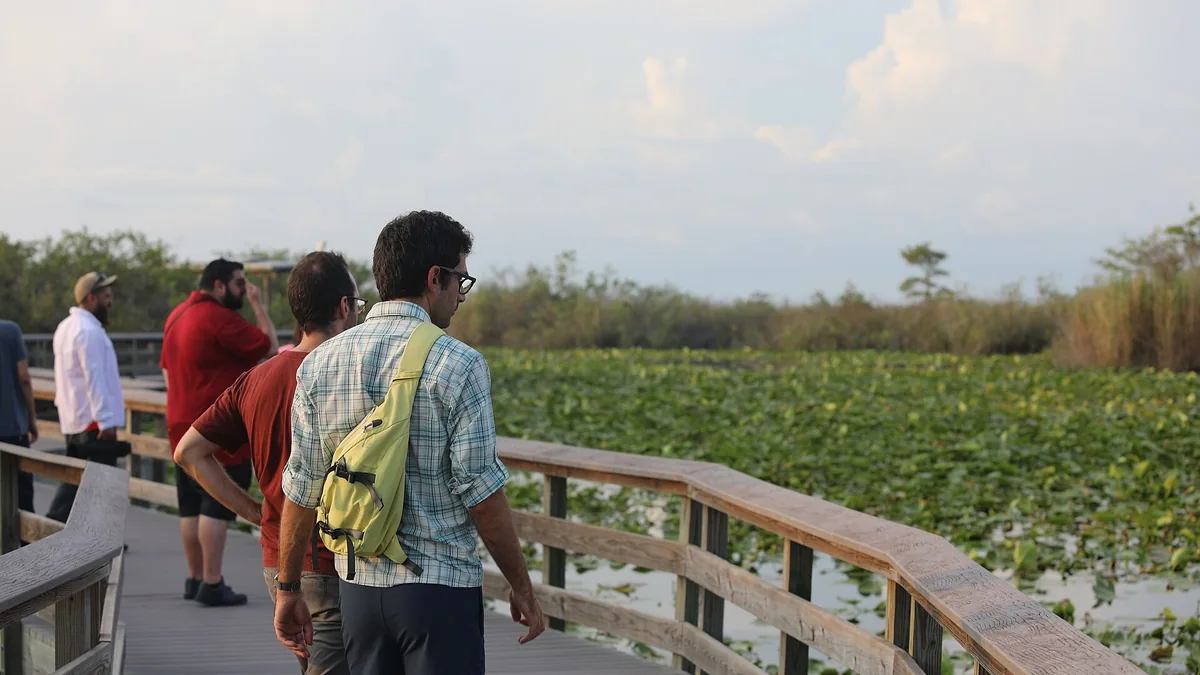
The Everglades is a landscape of water, sawgrass, mangroves and wildlife that rewards patient observation. Choose it for a nature trip with modest walking options, rather than expecting mountain-style viewpoints or a single road connecting every entrance.
Region: South Florida wetlands · Best for: Wildlife and ecosystem-focused travel
Suggested stay: 2 nights nearby · Season: December–March · Budget: $$
Airport access: Miami International for Homestead access · Car / transport: Yes
What to do: From the Homestead side, walk the Anhinga Trail, explore Gumbo Limbo Trail, stop at suitable roadside habitats and consider a ranger program or a booked Flamingo-area boat outing. Check the specific operation before driving the full park road.
When to go and how long: Two nearby nights gives you an early start and time for more than one habitat. The drier winter months are the useful first-visit choice; the wet season brings heat, mosquitoes and afternoon storms.
Where to stay and get around: Homestead or Florida City is practical for the main southern entrance. Miami International is the airport gateway for this plan. A car is important; do not depend on finding an on-demand return ride from a remote trailhead.
Planning tip: Shark Valley, Homestead/Flamingo and the Gulf Coast side are separate access areas. Pick one for a short visit and consult NPS conditions and current fees, including any residency-based charges.
Official planning sources: nps.gov — conditions · nps.gov — directions · nps.gov — fees
9. Orlando
Orlando is most effective as a focused theme-park vacation, with the hotel chosen around the resort complex you will use most. Downtown Orlando and the theme-park districts are different places with different transport needs.
Region: Central Florida · Best for: Theme-park families and multigeneration trips
Suggested stay: 5–7 nights · Season: January–February; selected autumn weekdays · Budget: $$$
Airport access: Orlando International · Car / transport: Helpful
What to do: Choose days at Walt Disney World or Universal Orlando, leave time for Disney Springs or CityWalk and add Lake Eola or a neighborhood meal if you want a city break from the resorts. Avoid making every day a dawn-to-closing park day.
When to go and how long: Five to seven nights permits rest time. Cooler school-term dates can be appealing, but holidays and major events alter demand. Summer heat and thunderstorms make midday breaks especially valuable.
Where to stay and get around: Stay near or within the main park system for convenient transport; International Drive offers variety but requires checking hotel shuttles carefully. Orlando International is the principal gateway. A car helps for a mixed-region trip, while resort transport may cover a focused stay.
Planning tip: Compare ticket rules, transfers and optional queue products as a complete package. The cheapest room is not always the cheapest holiday if it adds parking and long daily travel.
Official planning sources: visitflorida.com — orlando · disneyworld.disney.go.com · universalorlando.com
10. Winter Park
Winter Park offers a different Central Florida experience: art museums, lakes and a walkable shopping-and-dining street. It is a useful choice for adults who want to avoid organizing every day around large attractions.
Region: Central Florida · Best for: Art, lakes and a quieter Orlando-area stay
Suggested stay: 2 nights or a full-day visit · Season: November–April · Budget: $$$
Airport access: Orlando International · Car / transport: Helpful
What to do: Visit the Charles Hosmer Morse Museum of American Art, explore Park Avenue and Central Park, take a scheduled scenic boat tour and learn about the historic Black community at Hannibal Square Heritage Center.
When to go and how long: Two nights makes a relaxed small-city break, while a full day works from Orlando. The cooler months favor walks and boat trips; summer heat and lightning can change outdoor plans.
Where to stay and get around: Stay near Park Avenue for a genuinely walkable center. Orlando International is the airport gateway; a car or arranged ride helps reach town and explore beyond it. Rail can serve specific journeys, but check the schedule rather than assuming late-evening service.
Planning tip: Museum hours and boat departures differ. Reserve or confirm the one activity that matters most, then use the compact downtown for flexible time between appointments. This is a destination in its own right, not a beach suburb.
Official planning sources: visitflorida.com — winter park
11. St. Augustine
St. Augustine is a strong choice when Florida’s history matters as much as its coastline. Its compact center supports walking, while nearby Anastasia Island gives you an easy change of pace without moving to a different region.
Region: Northeast Florida · Best for: History with an optional beach extension
Suggested stay: 3 nights · Season: March–May; October–November · Budget: $$$
Airport access: Jacksonville International; onward drive · Car / transport: Helpful
What to do: Visit Castillo de San Marcos, explore the historic streets, learn about the city’s civil-rights history and spend time at Anastasia State Park. A lighthouse visit adds another perspective if its stairs suit your group.
When to go and how long: Three nights balances the center and coast. Spring and autumn are useful walking seasons; winter evenings can be cool, while summer brings humidity. Holiday light events create a separate period of heavy demand.
Where to stay and get around: Stay in the historic district for evenings on foot or on Anastasia Island for beach access. Jacksonville International is the practical major-airport gateway. A car helps connect beach and town, though parking it for central sightseeing is sensible.
Planning tip: Check the fort’s NPS hours and entry arrangements separately from commercial trolley or attraction passes. Describe the city’s European settlement history alongside the longer Indigenous history of the region.
Official planning sources: visitflorida.com — st augustine · nps.gov
12. Jacksonville
Jacksonville works for travelers who want a large, spread-out city with beach access and less pressure to follow a fixed attraction circuit. Its scale is the key tradeoff: the riverfront, neighborhoods and oceanfront require deliberate grouping.
Region: Northeast Florida · Best for: Neighborhood dining, riverfront and Atlantic beaches
Suggested stay: 3 nights · Season: March–May; October–November · Budget: $$
Airport access: Jacksonville International · Car / transport: Yes
What to do: Walk a riverfront section, explore the Riverside/Avondale area, spend time at Jacksonville Beach and choose a nature outing around the Timucuan preserve’s open sites. Local seafood adds a useful theme for the dining plan.
When to go and how long: Three nights gives time for a city day and a coast day. Spring and autumn generally suit outdoor activity; winters are cooler than South Florida, and summer is hot and storm-prone.
Where to stay and get around: Riverside or Downtown suits an urban stay; Jacksonville Beach shifts the priority to the ocean. Jacksonville International is the main airport. A car is useful because the destinations are widely separated, with neighborhood walks once you arrive.
Planning tip: Do not choose a hotel simply because its address says Jacksonville. Compare it with your actual beach or riverfront plans, and verify individual museum openings rather than relying on old city lists.
Official planning sources: visitflorida.com — jacksonville · nps.gov
13. Amelia Island
Amelia Island combines broad Atlantic beaches with Fernandina Beach’s historic center. It is a good fit for travelers who want a coastal base with a small-town evening option, rather than a large-city nightlife scene.
Region: Northeast Florida · Best for: Couples, families and a quieter Atlantic stay
Suggested stay: 3–4 nights · Season: March–May; October · Budget: $$$
Airport access: Jacksonville International · Car / transport: Helpful
What to do: Explore downtown Fernandina Beach, visit Fort Clinch State Park, walk a beach and arrange a guided boat or paddling outing suited to conditions. Choose a nature-focused excursion if you want more than resort time.
When to go and how long: Three or four nights supports a relaxed pace. Spring and autumn are appealing for outdoor time; winter can be cool and windy, and the summer is humid. Ocean swimming depends on current conditions.
Where to stay and get around: Fernandina’s historic district suits restaurants on foot; beachfront areas suit a sand-first trip. Jacksonville International is the scheduled-flight gateway. A car is helpful between the island’s northern historic area and southern resorts.
Planning tip: Fort Clinch’s entrance facilities and the fort itself can have different renovation or access notices. Check the state park page before arrival; a temporary ranger-station closure does not necessarily close the historic fort.
Official planning sources: visitflorida.com — amelia island · floridastateparks.org — fortclinch
14. Daytona Beach
Daytona Beach is distinctive for the connection between motorsport and its Atlantic beachfront. Choose it if that combination interests you, and check the event calendar because a race weekend feels very different from an ordinary beach week.
Region: Atlantic Coast · Best for: Motorsport and a traditional beach trip
Suggested stay: 3 nights · Season: March–May; October · Budget: $$
Airport access: Daytona Beach International · Car / transport: Helpful
What to do: Take an available Daytona International Speedway tour, spend time on the beach, explore the boardwalk area and visit nearby Ponce Inlet Lighthouse if climbing is suitable. These activities give the stay a focus beyond another resort pool.
When to go and how long: Three nights is useful for a beach break with one major attraction day. Spring and autumn often suit outdoor plans, but race, motorcycle and school-holiday periods can sharply change crowds and rates.
Where to stay and get around: A beachfront hotel works for beach days; the Speedway area is practical for event-focused visits. Daytona Beach International is the local gateway. A car helps for Ponce Inlet and dispersed attractions.
Planning tip: Beach driving is regulated by designated zones, conditions and local rules. Do not assume you can drive onto any stretch of sand. Families who prefer vehicle-free beach time should choose their access point accordingly.
Official planning sources: visitflorida.com — daytona beach · daytonainternationalspeedway.com — tours · ponceinlet.org
15. Cocoa Beach and the Space Coast
This is one of Florida’s most useful combinations for families: a beach base with a substantial space-history visit nearby. It also works as a slower coastal extension after Orlando, provided you leave time for the transfer and a full attraction day.
Region: Atlantic Coast · Best for: Families, surfing and space history
Suggested stay: 3–4 nights · Season: March–May; October–November · Budget: $$$
Airport access: Orlando International; Melbourne Orlando alternative · Car / transport: Helpful
What to do: Spend a day at Kennedy Space Center Visitor Complex, take a surf lesson matched to ability, explore Cocoa Village and consider a guided Indian River Lagoon outing. A rocket launch is a possible bonus rather than the foundation of the holiday.
When to go and how long: Three or four nights lets you separate the visitor complex from beach days. Spring and autumn are good starting points; summer thunderstorms can interrupt outdoor and water activities.
Where to stay and get around: Cocoa Beach puts you near the ocean; Cape Canaveral can be useful for cruise or space-focused plans. Orlando and Melbourne Orlando airports both require road transfers. A car helps connect the visitor complex, lagoon and town.
Planning tip: Launch dates, viewing access and even same-day departure times can change. Book the trip for activities you will enjoy without a launch, and use the official visitor-complex calendar for any special viewing ticket.
Official planning sources: visitflorida.com — cocoa beach · kennedyspacecenter.com — launches and events
16. St. Petersburg
St. Petersburg is the Tampa Bay choice for a trip centered on art and a walkable downtown waterfront. Its Gulf beaches are a separate outing, so choose it over a beach resort when museums and evening dining deserve equal time.
Region: Tampa Bay · Best for: Art, waterfront walking and a city base
Suggested stay: 3–4 nights · Season: November–April · Budget: $$$
Airport access: Tampa International or St. Pete–Clearwater International · Car / transport: Helpful
What to do: Visit The Dalí, explore the Chihuly Collection, walk St. Pete Pier and spend time along Central Avenue’s arts and dining corridor. Add a beach day only after deciding how much city time you want.
When to go and how long: Three or four nights gives room for both museums and coast. The cooler months are popular for walking; summer humidity and afternoon storms favor an indoor midday plan.
Where to stay and get around: Downtown is convenient for museums and restaurants. St. Pete Beach offers a different, beach-first base with a drive back to the city. Tampa International and St. Pete–Clearwater are the main flight options; a car helps for mixed city-and-beach plans.
Planning tip: Check the address before booking accommodation advertised broadly as St. Pete. Downtown, St. Pete Beach and Clearwater Beach offer different trips and are not interchangeable walking bases.
Official planning sources: visitflorida.com — st petersburg · thedali.org
17. Tampa
Tampa suits a family city break with several substantial attractions and a growing riverfront district. It is a better base for those activities than for spending every morning on a Gulf beach across the bay.
Region: Tampa Bay · Best for: Families, riverfront attractions and urban food
Suggested stay: 3–4 nights · Season: November–April · Budget: $$$
Airport access: Tampa International · Car / transport: Helpful
What to do: Walk the Riverwalk, visit the Florida Aquarium, explore Ybor City’s history and choose either a museum day or Busch Gardens according to your group’s interests. Keep a theme-park day separate from a crowded downtown schedule.
When to go and how long: Three or four nights supports a varied stay. Cooler months are comfortable for walking; summer requires breaks from heat and a plan for thunderstorms. Major sports or convention dates can raise hotel demand.
Where to stay and get around: Downtown and the Channel District are convenient for riverfront attractions; Ybor gives a different evening atmosphere. Tampa International is the main airport. A car helps for outlying attractions, while central days can use walking, streetcar service and rides.
Planning tip: Do not assume a Tampa hotel provides convenient beach access. If sand is the main purpose, stay on the coast or split the trip rather than making a bridge crossing every day.
Official planning sources: visitflorida.com — tampa · flaquarium.org
18. Clearwater Beach
Clearwater Beach is the more direct choice when sand, a beachfront hotel and sunset time define the vacation. The tradeoff is demand: its compact visitor area can feel busy, especially around school holidays and popular weekends.
Region: Gulf Coast · Best for: A beach-first family vacation
Suggested stay: 3–4 nights · Season: March–May; October–November · Budget: $$$
Airport access: Tampa International or St. Pete–Clearwater International · Car / transport: Helpful
What to do: Spend time on the beach, explore the Pier 60 area when open, visit Clearwater Marine Aquarium and consider an appropriate boat outing. A performance at a mainland venue can add variety if you want an evening away from the beach.
When to go and how long: Three or four nights works for a short resort break. Spring and autumn are useful comparisons, with water temperature and conditions varying by date. Summer brings warm water, humidity and storms; winter can be too cool for some swimmers.
Where to stay and get around: Stay on Clearwater Beach for walkable sand access; mainland Clearwater may cost less but changes the daily transport requirement. Both Tampa and St. Pete–Clearwater airports require a road transfer. A car helps for wider outings but adds parking costs.
Planning tip: Verify the exact beach access and current pier status before choosing a hotel for a specific feature. After severe weather, regional recovery does not mean every boardwalk or attraction has reopened.
Official planning sources: visitflorida.com — clearwater · cmaquarium.org
19. Sarasota
Sarasota is a strong choice for travelers who want culture to be a substantial part of a beach holiday. The city and nearby islands offer different bases, so decide whether museum access or walking onto the sand matters more.
Region: Southwest Gulf Coast · Best for: Art, gardens and nearby barrier-island beaches
Suggested stay: 4 nights · Season: November–April · Budget: $$$
Airport access: Sarasota Bradenton International · Car / transport: Helpful
What to do: Visit The Ringling, explore Marie Selby Botanical Gardens, spend time on Siesta Key or Lido Key and choose a currently accessible nature outing at Myakka River State Park. A theater or music performance can add another dimension.
When to go and how long: Four nights allows separate culture and beach days. Winter and spring attract strong demand; summer is hot and humid with frequent storms. Beach conditions can also change with water-quality and red-tide advisories.
Where to stay and get around: Downtown suits restaurants and arts; Siesta Key or Lido Key suits beach access. Sarasota Bradenton is the convenient airport. A car helps connect the city, barrier islands and inland park, though bridge traffic can add time.
Planning tip: Check which Ringling components your ticket includes: art museum, mansion tours and other experiences may have different arrangements. Build the visit around the part you most want to see.
Official planning sources: visitflorida.com — sarasota · ringling.org · selby.org · floridastateparks.org — myakka river state park
20. Sanibel and Captiva
Sanibel and neighboring Captiva suit travelers who prefer nature and low-key beach time to a busy entertainment strip. They are grouped because they share an island approach, but choosing one lodging base avoids unnecessary daily driving.
Region: Southwest Gulf islands · Best for: Shelling, wildlife and a quiet island stay
Suggested stay: 4 nights · Season: December–April · Budget: $$$
Airport access: Southwest Florida International, Fort Myers · Car / transport: Helpful
What to do: Walk a currently open shelling beach, explore J.N. “Ding” Darling National Wildlife Refuge, visit the Bailey-Matthews National Shell Museum & Aquarium and consider a guided paddling trip. Leave living shells and wildlife undisturbed.
When to go and how long: Four nights gives a slow beach-and-nature rhythm. Winter and spring are popular; summer brings heat and storm-season considerations. Recovery work can affect individual properties and access points independently.
Where to stay and get around: Stay on Sanibel for convenient access to the refuge and island services, or Captiva for a smaller beach-focused base. Southwest Florida International is the airport gateway. A car helps on arrival, with cycling or walking for suitable local trips.
Planning tip: The refuge’s Wildlife Drive closes on Fridays. Check both attraction status and your lodging’s currently operating facilities before booking; an island-wide reopening statement does not confirm every amenity.
Official planning sources: visitflorida.com — sanibel island · fws.gov — visit us · shellmuseum.org · fortmyers-sanibel.com
21. Naples
Naples works for a slower coastal stay with gardens, dining and optional nature excursions. It is especially useful for travelers who value comfortable lodging and a manageable evening center over nightlife or a packed attraction schedule.
Region: Southwest Gulf Coast · Best for: Gardens, dining and a relaxed beach base
Suggested stay: 3–4 nights · Season: December–April · Budget: $$$
Airport access: Southwest Florida International, Fort Myers · Car / transport: Helpful
What to do: Explore Naples Botanical Garden, walk Fifth Avenue South and Third Street South, use an open public beach access and consider a guided nature outing toward the Ten Thousand Islands. Match any boat trip to conditions and your group’s comfort.
When to go and how long: Three or four nights suits the city and beach, with another day needed for a substantial wetlands excursion. Winter is popular and often costly; summer is hotter, wetter and within hurricane season.
Where to stay and get around: Old Naples is convenient for dining and selected beach access; farther-north resorts create a more self-contained stay. Southwest Florida International provides the main scheduled-flight gateway. A car helps with gardens and nature outings.
Planning tip: Naples Pier is closed during its rebuilding project, including associated facilities. Use the city’s current public-beach-access information and do not plan a pier walk until an official reopening is confirmed.
Official planning sources: visitflorida.com — naples · naplesgov.com — naples pier rebuild project · naplesgarden.org · flylcpa.com
22. Crystal River
Crystal River offers a nature-focused alternative to Florida’s resort coasts. Its strongest seasonal attraction is wintering manatees, but the springs, estuary and archaeological history make the area worthwhile without promising a particular wildlife encounter.
Region: Nature Coast · Best for: Manatee viewing and spring-fed landscapes
Suggested stay: 2–3 nights · Season: November–March for wintering manatees · Budget: $$
Airport access: Tampa International; onward drive · Car / transport: Yes
What to do: Use Three Sisters Springs’ boardwalk for land-based viewing, explore Crystal River Archaeological State Park, take a suitable guided boat outing and wander the historic downtown shops. Wildlife viewing should be passive and follow refuge rules.
When to go and how long: Two or three nights allows an early nature outing and a slower afternoon. Winter cold fronts influence where manatees gather; sightings are not guaranteed. Warm-season trips have a different focus and need heat and storm planning.
Where to stay and get around: Stay near Kings Bay or downtown for convenient access to operators and restaurants. Tampa is the practical major-airport gateway, followed by a drive. A car is useful for the springs, parks and coastal access points.
Planning tip: The Three Sisters Springs land ticket does not provide water access. The refuge distinguishes boardwalk entry from on-water approaches, which may be restricted seasonally or for manatee protection. Confirm the exact activity before paying.
Official planning sources: visitflorida.com — crystal river · fws.gov — activities · crystalriverfl.org — ticket information
23. Gainesville
Gainesville is a useful inland choice for travelers interested in art, wetlands and a less resort-driven Florida trip. University events shape the atmosphere, with quieter dates offering a different experience from a major football weekend.
Region: North Central Florida · Best for: Art, wetlands and a university-town break
Suggested stay: 2–3 nights · Season: February–April; October–November · Budget: $$
Airport access: Gainesville Regional · Car / transport: Yes
What to do: Visit the Harn Museum of Art, explore Kanapaha Botanical Gardens, walk at Sweetwater Wetlands Park and choose an open route at Paynes Prairie Preserve State Park. Keep distance from wildlife and check heat and trail conditions.
When to go and how long: Two or three nights gives time for art and several short outdoor visits. Cooler months favor walking and birding; summer heat makes early starts worthwhile. Football and graduation dates can increase lodging demand substantially.
Where to stay and get around: Downtown suits restaurants and evening walks; the university area is practical for campus visits. Gainesville Regional is the local airport gateway. A car is useful because the gardens, wetlands and prairie are spread around the city.
Planning tip: The Florida Museum’s main public exhibition building remains closed for expansion at this review. Do not build a family day around its reopening until the museum confirms it; the Harn provides a separate art option.
Official planning sources: visitflorida.com — gainesville · floridamuseum.ufl.edu — expansion · harn.ufl.edu · sweetwaterwetlands.org
24. Pensacola
Pensacola gives you a Panhandle beach vacation with a historic mainland city and protected coastal landscapes nearby. It suits travelers who want more variety than staying inside one resort development for the whole trip.
Region: Western Panhandle · Best for: Beach-and-history trips with a city base
Suggested stay: 4 nights · Season: April–May; September–October · Budget: $$
Airport access: Pensacola International · Car / transport: Yes
What to do: Explore downtown’s historic streets, spend time at Pensacola Beach, visit an open Gulf Islands National Seashore area and consider Fort Pickens when access permits. Aviation attractions are another option after checking current base-entry requirements.
When to go and how long: Four nights allows both city and coast. Spring and autumn are useful comparisons for a less crowded stay; summer is popular but hot and storm-prone. Winter is generally too cool to promise a conventional swimming holiday.
Where to stay and get around: Downtown suits dining and history; Pensacola Beach puts sand close to the hotel. Pensacola International is the local gateway. A car helps connect the mainland, barrier islands and national seashore.
Planning tip: Check the NPS alerts for Fort Pickens access and beach flags before the outing. The Panhandle uses Central Time in this area, a practical detail if arriving from most of the rest of Florida.
Official planning sources: visitflorida.com — pensacola · nps.gov — conditions · nps.gov — basicinfo
25. Destin
Destin is the beach-first Panhandle choice here, with a large range of vacation rentals and a strong fishing identity. It works best as a settled coastal stay, rather than a base for crossing much of northern Florida every day.
Region: Emerald Coast · Best for: Family beach stays and fishing
Suggested stay: 4–5 nights · Season: May–June; September–October · Budget: $$$
Airport access: Destin–Fort Walton Beach Airport · Car / transport: Yes
What to do: Spend time at Henderson Beach State Park, explore the harborfront, book a fishing trip suited to your experience and choose a guided water outing only when conditions are appropriate. A quieter beach day can be more valuable than another excursion.
When to go and how long: Four or five nights supports a family holiday with room for weather changes. Late spring and early autumn can be attractive, while summer brings heavy demand and storms. Winter is quieter but cooler, especially for swimming.
Where to stay and get around: Choose a beachfront property if direct access matters, or stay near the harbor for boating priorities. Destin–Fort Walton Beach Airport is the scheduled-flight gateway. A car helps, though traffic along the coastal corridor can be slow.
Planning tip: Confirm whether a rental includes legal access to the beach you expect to use. Also distinguish the commercial airport from Destin Executive Airport when arranging flights or a transfer. Always follow local beach flags.
Official planning sources: visitflorida.com — destin · floridastateparks.org — henderson beach state park · flyvps.com
How to Plan the Trip
Keep a week geographically coherent
Miami–the Upper Keys–Everglades, Orlando–Winter Park–the Space Coast, or Tampa Bay–Sarasota are more workable starting points than a Keys-to-Panhandle sprint. Use the seven-day Florida itinerary for a South Florida example. A beach stay with one excursion can be more restful than changing hotels every night.
Plan around heat, storms and water conditions
Summer brings heat, humidity and thunderstorms. The Atlantic hurricane season runs June 1–November 30, though storms can occur outside it. Check local forecasts, lifeguard flags and official beach or water-quality advisories; a sunny photograph is not a guarantee of swimming conditions on your dates.
Check the facility you actually want
A city can welcome visitors while an individual pier, museum, trail or beach access remains closed. Naples Pier rebuilding, Sanibel access and wildlife-management restrictions are examples where the specific operator matters. Verify current notices before making a single attraction the reason for a nonrefundable trip.
Compare destinations before buying flights
For the wider choice, use the USA destination guide. For shorter driving breaks, compare weekend road trips. The packing checklist helps separate beach, boat and theme-park needs once you have chosen the trip.
For children’s ages and a more specific beach shortlist, use the family beach vacations guide. For a property-centered holiday, compare the family-friendly resorts guide.
How DayZora Selected These Destinations
We balanced distinctive attractions, variety of experiences, practical airport or onward access, accommodation areas and suitability for different trip styles. We also considered whether a destination could support the suggested stay without an unrealistic schedule. Official tourism, park, attraction, airport and transport sources informed access and planning details; the recommendations and budget categories are editorial judgments, not a survey score or a paid ranking.
The numbers organize the selections and match the map. They do not imply that destination 1 is objectively better than destination 2. This guide does not claim firsthand visits to every place. Conditions and operating arrangements can change after the review date; follow the official links within each entry for the details that affect your dates.
Frequently Asked Questions
Which Florida destination is best for a first visit?
Choose Orlando for a theme-park priority, Miami for a beach-and-city trip, or a Gulf Coast base for a slower beach holiday. The best choice is the one that matches your daily plans and airport access.
Can I combine Orlando and Key West in a week?
It is possible to travel between them, but the long transfer competes with the time each deserves. For most first trips, keep Orlando with Central Florida and give the Keys a separate South Florida itinerary.
Is winter beach weather the same everywhere in Florida?
No. The Panhandle and northeast can feel much cooler than South Florida, and water temperature, wind and fronts affect comfort. A winter beach view is not the same promise as warm swimming conditions.
Choose your Florida beach
Compare 20 Florida beaches across the Gulf, Atlantic, Panhandle and Keys for current access considerations, facilities, accommodation bases and a numbered planning map.