The best places to visit in California span much more than its three largest visitor cities. This guide includes Pacific coast towns, wine country, northern redwoods, Sierra parks and mountain bases, desert landscapes and family-focused Anaheim. It helps you choose the kind of California vacation that fits your season and available days before you start joining distant places into a road trip.
Each destination includes distinctive experiences, a realistic stay, suitable hotel areas, airport options and advice on whether a car is useful. The comparison table and numbered map make the geographic tradeoffs visible: a coast trip, a Sierra trip and a desert trip can each fill a holiday on their own. These 20 places were selected for variety, character and practical planning value, not as a ranked checklist. Where access changes quickly—mountain roads, park reservations or Highway 1—use the linked official information before fixing a route or paying for nonrefundable stays.
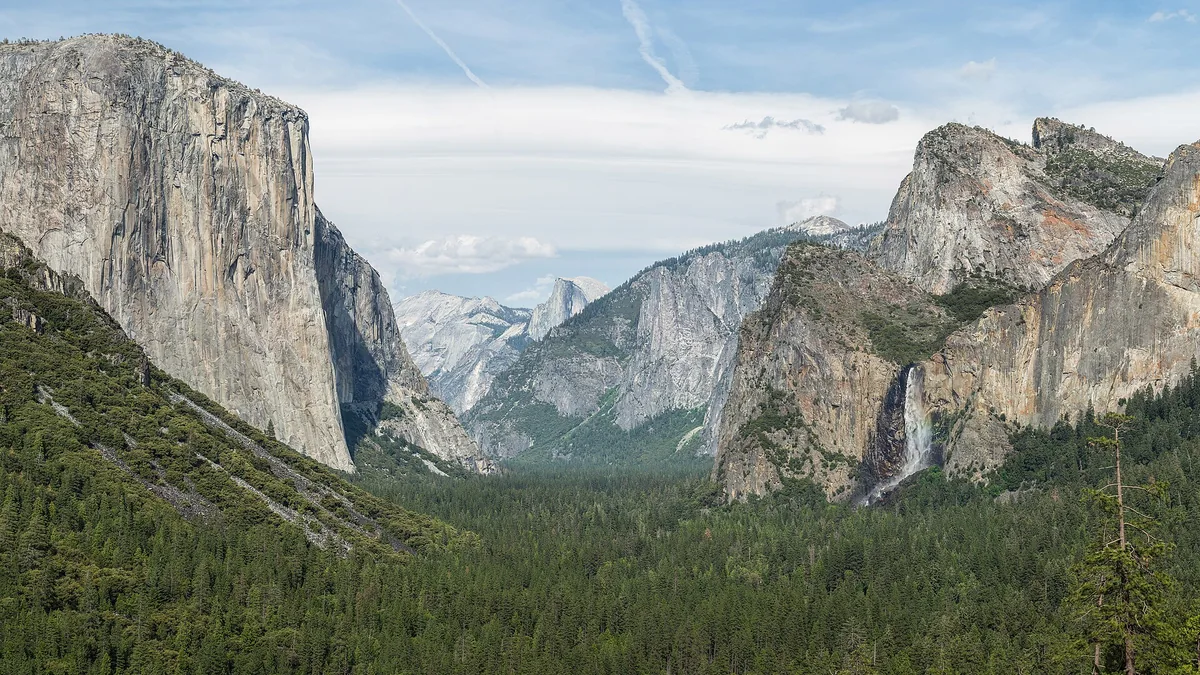
Featured image: El Capitan, Half Dome and Bridalveil Fall from Tunnel View in Yosemite Valley. Diliff · Wikimedia Commons source · CC BY-SA 3.0. Cropped/resized; WebP conversion.
Planning review: September 26, 2026. Confirm live access, tickets and transport before booking.
Which Destination Is Right for You?
- First California trip: San Francisco for a walkable city start; San Diego for an easier coast-and-city mix.
- Beaches and coastal towns: Santa Barbara, Carmel-by-the-Sea and San Diego offer different scales of beach holiday.
- Families: Anaheim for theme parks, Monterey for marine-life interest, and San Diego for a varied city stay.
- Couples: Carmel, Sonoma and Mendocino suit slower trips where the hotel base is part of the experience.
- Big landscapes: Yosemite, the redwood parks and Death Valley are distinctive but have very different seasonal constraints.
- Summer mountain time: Lake Tahoe and Mammoth Lakes work when roads and chosen trails are open.
- Cool-season desert travel: Joshua Tree and Palm Springs can pair well; avoid treating desert summer heat as ordinary sightseeing weather.
- Food and wine: San Francisco for neighborhood variety; Sonoma or Napa for a focused wine-country stay with a driver plan.
Quick Comparison: Destinations, Seasons and Stays
Stays are suggested nights at the destination. Seasonal windows are general planning guidance, not weather guarantees. Budget symbols compare typical on-the-ground costs for an independent leisure trip: $ lower-cost, $$ moderate, $$$ expensive, $$$$ very expensive. They exclude your long-haul airfare and are not quoted prices; dates, rooms, transfers and activity choices can change the result.
On a small screen, swipe the table sideways. Select a destination name to jump to its details.
| Destination | Region / country | Best for | Ideal stay | Best time | Budget |
|---|---|---|---|---|---|
| 1. San Francisco | Bay Area | A first California city visit | 4 nights | April–May; September–October | $$$$ |
| 2. Los Angeles | Southern California | Film, art and contrasting neighborhoods | 4–5 nights | March–May; October–November | $$$ |
| 3. San Diego | Southern California | A family city-and-beach base | 4–5 nights | May–June; September–October | $$$ |
| 4. Santa Barbara | Central Coast | Couples, architecture and a compact coast break | 2–3 nights | April–June; September–October | $$$ |
| 5. Monterey | Central Coast | Marine life and families | 2–3 nights | April–May; September–October | $$$ |
| 6. Carmel-by-the-Sea | Central Coast | Couples, galleries and coastal walking | 2–3 nights | April–May; September–October | $$$ |
| 7. Big Sur | Central Coast | Coastal landscapes and a quiet nature stay | 2 nights | April–May; September–October | $$$$ |
| 8. Sonoma and Sonoma Valley | Wine Country | Wine, small-town history and a relaxed base | 3 nights | April–June; September–October | $$$ |
| 9. Napa Valley | Wine Country | A food-and-wine occasion trip | 3 nights | April–June; September–October | $$$$ |
| 10. Mendocino | North Coast | Quiet coastal walks and a small-village stay | 3 nights | May–October | $$$ |
| 11. Redwood National and State Parks | North Coast | Coast redwoods and forest walking | 3–4 nights | May–September | $$ |
| 12. Yosemite National Park | Sierra Nevada | Granite scenery and a first mountain-park visit | 3–4 nights | May–June; September–October | $$$ |
| 13. Sequoia and Kings Canyon National Parks | Southern Sierra Nevada | Giant trees and a slower mountain stay | 3–4 nights | June–September | $$$ |
| 14. Joshua Tree National Park | Southern California desert | Desert scenery, short walks and night skies | 2 nights | March–April; October–November | $$ |
| 15. Death Valley National Park | Eastern California desert | Desert geology and a cool-season road trip | 2 nights | November–March | $$$ |
| 16. Palm Springs | Coachella Valley | Design, pools and a warm winter break | 3 nights | November–April | $$$ |
| 17. Lake Tahoe | Northern Sierra Nevada | Alpine water and a seasonal outdoor stay | 4 nights | July–September; winter for skiing | $$$ |
| 18. Mammoth Lakes | Eastern Sierra | Mountain lakes and a ski-or-hike base | 3–4 nights | July–September; winter for skiing | $$$ |
| 19. Sacramento | Central Valley | History, museums and a lower-cost urban stop | 2–3 nights | March–May; October–November | $$ |
| 20. Anaheim | Orange County | A focused Disneyland family trip | 3–4 nights | Selected January–February or autumn weekdays | $$$ |
Map of the Featured Destinations
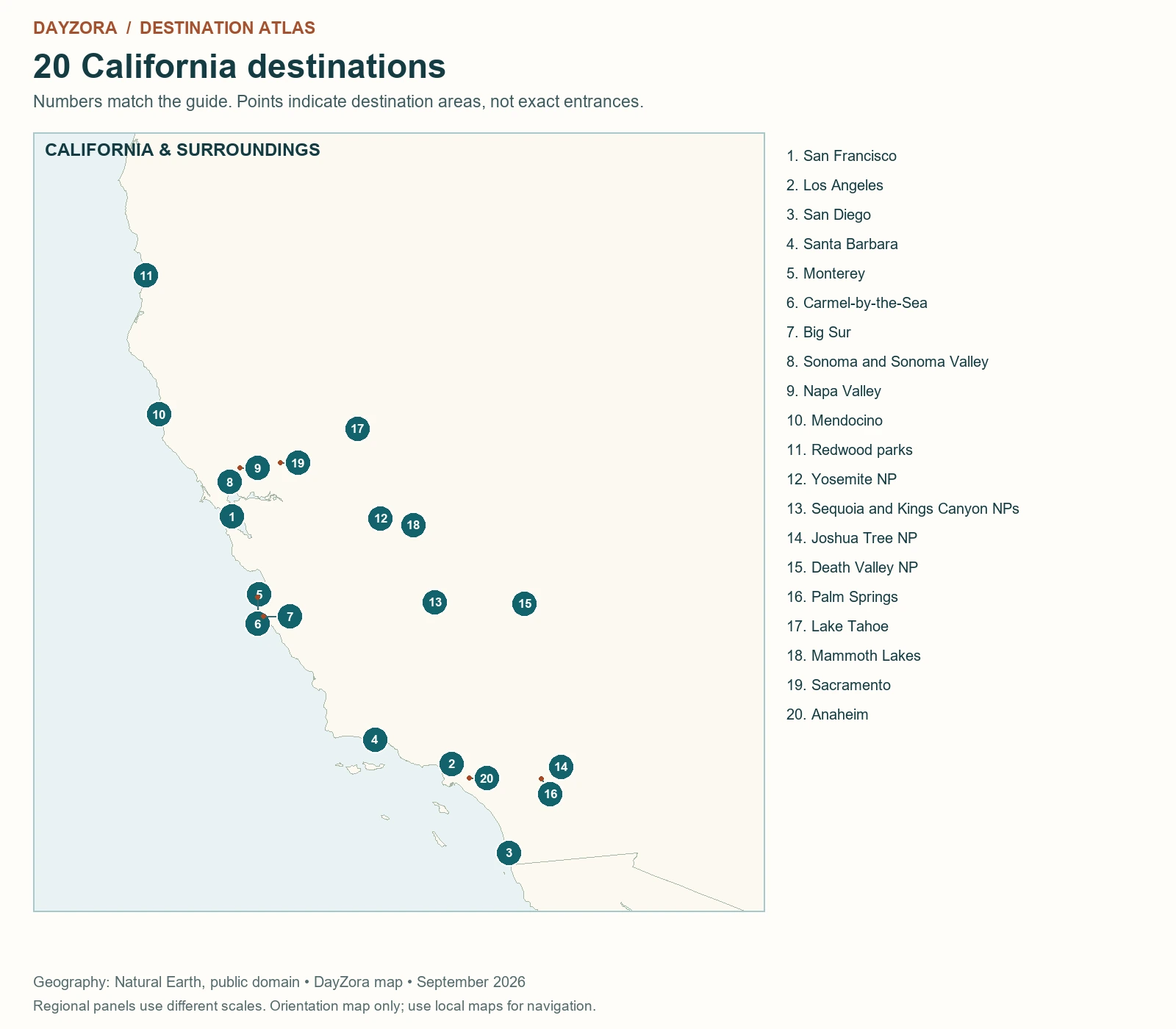
20 Destinations to Consider
1. San Francisco
Start here when a California vacation needs a walkable cultural city before the driving begins. San Francisco’s appeal comes from the contrast between bayfront landmarks, steep residential streets and neighborhoods with their own food traditions.
Region: Bay Area · Best for: A first California city visit
Suggested stay: 4 nights · Season: April–May; September–October · Budget: $$$$
Airport access: San Francisco International · Car / transport: No
What to do: Reserve Alcatraz, walk the Golden Gate waterfront, explore Chinatown and choose a Golden Gate Park museum or garden. Group nearby activities rather than crossing the city several times to tick off individual landmarks.
When to go and how long: Four nights gives three full days and a more forgiving arrival. Early autumn is a useful outdoor choice; summer fog can make the coast feel surprisingly cold. Winter rain calls for an indoor alternative.
Where to stay and get around: The Embarcadero works for waterfront access, while Union Square offers many hotels and transit connections. SFO connects by BART. Use Muni and walking in town, then collect a rental car for the next leg instead of paying to park it throughout the city stay.
Planning tip: An Alcatraz landing requires the authorized ferry ticket. A sightseeing cruise around the bay is a different product. Keep the island reservation fixed and build the surrounding day around it.
For a deeper neighborhood and sightseeing plan, use the San Francisco travel guide.
Official planning sources: nps.gov · visitcalifornia.com — san francisco · flysfo.com — ground transportation
2. Los Angeles
Los Angeles is a collection of very different places rather than one compact sightseeing center. It rewards travelers who choose two or three priorities—film, art, food or the coast—and stay somewhere that reduces daily cross-city travel.
Region: Southern California · Best for: Film, art and contrasting neighborhoods
Suggested stay: 4–5 nights · Season: March–May; October–November · Budget: $$$
Airport access: Los Angeles International; Hollywood Burbank alternative · Car / transport: Helpful
What to do: Visit Griffith Observatory, reserve the Getty Center, explore a neighborhood such as Little Tokyo and spend a separate coastal half-day around Santa Monica. Museum interiors, grounds and planetarium shows can have different opening or ticket arrangements.
When to go and how long: Four or five nights provides time for the city’s spread. Spring and autumn are good starting points; beach weather differs from inland heat, and winter can bring rain. Traffic remains a planning factor in every season.
Where to stay and get around: Hollywood suits film-and-Griffith plans; Downtown works for cultural institutions and transit, while Santa Monica suits a beach-first stay. LAX is the major gateway; Burbank can be useful for northern areas. Metro, rides and a selectively rented car can be combined.
Planning tip: Map your hotel against your actual activities before booking. Saving on a room can be poor value if it produces two long transfers every day. Check current fire, road and trail notices for any hillside excursion.
For a deeper neighborhood and sightseeing plan, use the Los Angeles travel guide.
Official planning sources: discoverlosangeles.com — discover la your way hollywood and griffith park · griffithobservatory.org · getty.edu — center
3. San Diego
Choose San Diego when the vacation should combine beach time with substantial activities away from the sand. Balboa Park gives families and culture-focused travelers a useful alternative to another full theme-park day.
Region: Southern California · Best for: A family city-and-beach base
Suggested stay: 4–5 nights · Season: May–June; September–October · Budget: $$$
Airport access: San Diego International · Car / transport: Helpful
What to do: Explore Balboa Park’s museums and gardens, visit the San Diego Zoo if it matches your interests, walk the La Jolla coastline and spend an evening in Little Italy. A harborfront walk is an easy addition without another major ticket.
When to go and how long: Four or five nights allows separate park, coast and city days. Coastal cloud can linger in late spring and early summer; a warm air forecast does not mean warm ocean water. Autumn often suits a more relaxed beach-and-city balance.
Where to stay and get around: Little Italy or Downtown works for dining and central access. Mission Bay suits a water-focused family stay, while La Jolla changes the emphasis toward the coast. The airport is close to the city, but a car helps connect widely separated beaches and attractions.
Planning tip: The Zoo and Safari Park are in different locations. Keep them separate in both your ticket comparison and daily planning; the Safari Park requires a trip inland toward Escondido.
Official planning sources: zoo.sandiegozoo.org — plan your visit · visitcalifornia.com — san diego · san.org
4. Santa Barbara
Santa Barbara is a good choice when you want coastal scenery with a walkable center and a strong dining scene. Its scale supports a restorative short stay without needing a new excursion every morning.
Region: Central Coast · Best for: Couples, architecture and a compact coast break
Suggested stay: 2–3 nights · Season: April–June; September–October · Budget: $$$
Airport access: Santa Barbara Airport · Car / transport: Helpful
What to do: Explore the County Courthouse’s public areas, walk State Street, visit the waterfront and sample the Funk Zone’s galleries or tasting rooms. Beach time and a harbor walk can fill the quieter part of the day.
When to go and how long: Two or three nights is enough for an unhurried introduction. Spring and autumn balance outdoor appeal with fewer peak-summer visitors, though coastal cloud and rain remain possible. Weekend room demand can be high throughout much of the year.
Where to stay and get around: Stay near the waterfront for beach access or near lower State Street for dining on foot. Santa Barbara Airport provides a local gateway, and rail can suit a coast-only trip. A car is helpful for surrounding communities but unnecessary for every central outing.
Planning tip: If wine tasting is part of the plan, choose walkable urban tasting rooms or arrange transportation. The inland Santa Ynez Valley is a separate excursion, not a short stroll from the waterfront.
Official planning sources: visitcalifornia.com — santa barbara · santabarbaraca.com — plan your trip · flysba.santabarbaraca.gov
5. Monterey
Monterey is the practical choice on this stretch of coast when marine life, an aquarium visit and waterfront walking are central to the trip. Its visitor infrastructure makes it easier for families than a remote Big Sur lodge.
Region: Central Coast · Best for: Marine life and families
Suggested stay: 2–3 nights · Season: April–May; September–October · Budget: $$$
Airport access: Monterey Regional; San José broader gateway · Car / transport: Helpful
What to do: Give the Monterey Bay Aquarium substantial time, walk the Coastal Recreation Trail, explore Cannery Row and the historic waterfront, and consider a whale-watching trip with a reputable operator. Wildlife sightings and sea conditions are variable.
When to go and how long: Two or three nights lets you separate the aquarium from a boat outing. Spring and autumn are useful choices, but cool foggy weather can occur in any coastal season. Keep a flexible indoor plan if rough seas change a departure.
Where to stay and get around: Cannery Row puts you close to the aquarium; Downtown Monterey provides another dining-and-history base. Monterey Regional is the local airport, with San José offering a longer-drive alternative. A car helps beyond town; walking the coastal trail reduces repeated parking.
Planning tip: Check the aquarium’s current online ticket arrangements before arrival. If motion sickness is a concern, choose the boat trip cautiously rather than assuming a calm harbor means calm open water.
Official planning sources: seemonterey.com — monterey · seemonterey.com — coastal trail · montereybayaquarium.org · montereyairport.com
6. Carmel-by-the-Sea
Carmel is a smaller, quieter alternative to Monterey for travelers drawn to galleries, village streets and beach walks. The two towns are close enough to share excursions, but their atmosphere and lodging experience differ.
Region: Central Coast · Best for: Couples, galleries and coastal walking
Suggested stay: 2–3 nights · Season: April–May; September–October · Budget: $$$
Airport access: Monterey Regional · Car / transport: Helpful
What to do: Walk Carmel Beach, browse the village’s galleries, visit Carmel Mission and explore suitable trails at nearby Point Lobos State Natural Reserve. Leave room for wandering courtyards and a slow meal rather than filling the day with driving.
When to go and how long: Two or three nights works as a standalone couples’ break or a coastal-road-trip base. Spring and autumn can be appealing, but fog and wind make layers useful year-round. Ocean conditions require care even when the beach looks inviting.
Where to stay and get around: Stay within the village to walk to dinner and the beach; more distant properties change the trip into a car-based stay. Monterey Regional is the nearby airport. A car helps for Point Lobos and surrounding coast, while the village itself is best explored on foot.
Planning tip: Point Lobos has limited parking and sensitive habitat. Check current access instructions and choose designated trails; do not use roadside parking or cliff edges as a shortcut to a photograph.
Official planning sources: visitcalifornia.com — carmel sea · parks.ca.gov · carmelmission.org · montereyairport.com
7. Big Sur
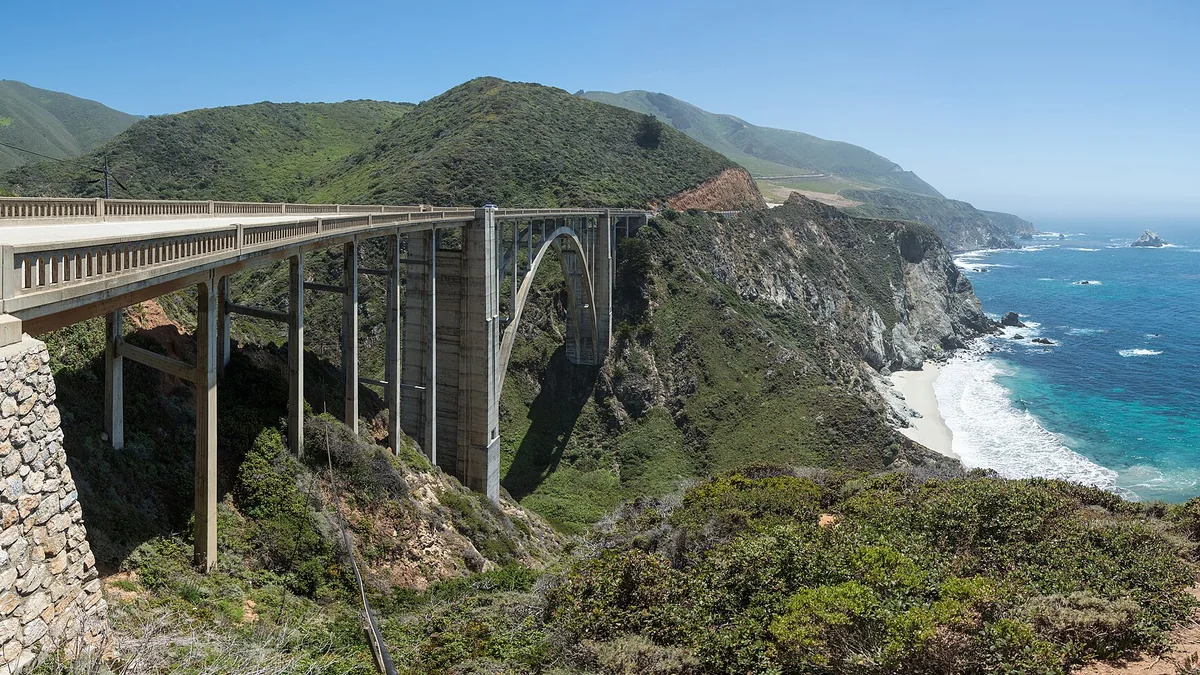
Big Sur is a landscape destination, not a conventional town with a concentrated set of attractions. Choose it for redwoods, ocean views and the pleasure of staying close to the coast after day visitors leave.
Region: Central Coast · Best for: Coastal landscapes and a quiet nature stay
Suggested stay: 2 nights · Season: April–May; September–October · Budget: $$$$
Airport access: Monterey Regional; onward drive · Car / transport: Yes
What to do: Walk an open trail in Pfeiffer Big Sur State Park, visit permitted coastal overlooks, spend time around the Big Sur River and explore an accessible section of Andrew Molera State Park. Make park status, weather and safe pullouts determine the day.
When to go and how long: Two nights gives a better experience than rushing through the entire coast. Spring and autumn are useful starting points, although rain can damage roads and summer brings fog and heavy demand. Lodging is limited and often expensive.
Where to stay and get around: A lodge in the Big Sur valley reduces local driving. Monterey or Carmel offers more services but means returning north after each outing. The local airport gateway is Monterey; a car is necessary for this dispersed region.
Planning tip: Highway 1 conditions can change quickly. At the September 26 review, Caltrans listed controlled traffic at Rocky Creek rather than a full through-route closure. Check QuickMap immediately before travel and verify each park trail separately; a road reopening does not reopen every overlook.
Official planning sources: visitcalifornia.com — big sur · quickmap.dot.ca.gov · roads.dot.ca.gov · parks.ca.gov · parks.ca.gov
8. Sonoma and Sonoma Valley
Sonoma Valley works for travelers who want wine tasting alongside a real town center and outdoor time. Focusing on this valley avoids treating the much larger Sonoma County as though every winery and coastal stop were neighbors.
Region: Wine Country · Best for: Wine, small-town history and a relaxed base
Suggested stay: 3 nights · Season: April–June; September–October · Budget: $$$
Airport access: Charles M. Schulz–Sonoma County; SFO/Oakland alternatives · Car / transport: Helpful
What to do: Explore Sonoma Plaza, visit sites within Sonoma State Historic Park, reserve a winery tasting and walk an appropriate trail at Jack London State Historic Park near Glen Ellen. These choices keep the trip interesting for companions who are less focused on wine.
When to go and how long: Three nights allows two full days without a rushed tasting schedule. Spring is green; harvest-season visits can be atmospheric but busy, with heat and smoke possible. Winter can offer a quieter stay, balanced against rain and shorter daylight.
Where to stay and get around: Stay near Sonoma Plaza for evenings on foot or in Glen Ellen for a smaller village setting. STS is a regional airport option; Bay Area airports require longer transfers. A car helps for the valley, but book a driver or tour for tasting days.
Planning tip: Reserve fewer wineries and allow time between them. A walkable town tasting room can be a better fit than another appointment far up a rural road, especially if nobody wants to be the designated driver.
Official planning sources: sonomacounty.com — sonoma · parks.ca.gov · jacklondonpark.com
9. Napa Valley
Napa Valley is a good match for travelers who want a carefully planned food-and-wine vacation and are comfortable reserving key experiences in advance. Its towns have different personalities, so the right base is as important as the winery shortlist.
Region: Wine Country · Best for: A food-and-wine occasion trip
Suggested stay: 3 nights · Season: April–June; September–October · Budget: $$$$
Airport access: San Francisco, Oakland or Sacramento; onward drive · Car / transport: Yes, or prearranged driver
What to do: Book a winery experience that matches your interests, browse Oxbow Public Market in Napa, spend time in Yountville and consider the di Rosa Center for Contemporary Art. A non-tasting activity helps keep several days from becoming repetitive.
When to go and how long: Three nights gives two full days, with room for a longer meal or art visit. Spring and early summer are useful alternatives to the busy harvest period. Autumn can bring heat and wildfire-smoke concerns; winter visits trade quieter conditions for rain risk.
Where to stay and get around: Napa offers a larger downtown dining base; Yountville suits a compact occasion stay, and Calistoga shifts the focus north. Major airport choices include SFO, Oakland and Sacramento, all requiring a road transfer. Arrange a driver if wine tasting is central.
Planning tip: Do not schedule the whole valley as one easy tasting circuit. Put appointments in a compact area, confirm cancellation terms and compare the full tasting-and-transport cost before committing.
Official planning sources: visitnapavalley.com — getting to napa valley · visitcalifornia.com — wine country ramble · dirosaart.org
10. Mendocino
Mendocino is suited to travelers who value a slow coastal stay more than a long list of ticketed attractions. The village’s position above the Pacific makes headland walks part of ordinary daily life rather than a special excursion.
Region: North Coast · Best for: Quiet coastal walks and a small-village stay
Suggested stay: 3 nights · Season: May–October · Budget: $$$
Airport access: Sonoma County regional; SFO/Sacramento longer-drive gateways · Car / transport: Yes
What to do: Walk Mendocino Headlands State Park, explore the village’s galleries, arrange a suitable Big River paddling outing and visit the Mendocino Coast Botanical Gardens near Fort Bragg. The gardens add a distinct landscape experience without another strenuous hike.
When to go and how long: Three nights justifies the winding approach roads and leaves a full day without driving far. Late spring through autumn generally offers more outdoor flexibility, but fog and wind are normal possibilities. Winter can be atmospheric if you accept rain and storm-related changes.
Where to stay and get around: Stay in or near Mendocino village for walking access; Fort Bragg offers a different range of services to the north. Airport gateways all require onward driving, with Sonoma County a regional option. A car is essential for the broader area.
Planning tip: Do not judge the drive by mileage alone. Coastal and inland approach roads are winding, so plan to arrive in daylight and check Caltrans if storms or road work affect your chosen route.
Official planning sources: parks.ca.gov · gardenbythesea.org · sonomacounty.com
11. Redwood National and State Parks
This park partnership protects coast redwoods, not the giant sequoias of the Sierra Nevada. Choose it for forest walks, a cool coastal climate and the opportunity to spend several days in a landscape that changes with fog and filtered light.
Region: North Coast · Best for: Coast redwoods and forest walking
Suggested stay: 3–4 nights · Season: May–September · Budget: $$
Airport access: Arcata–Eureka; Crescent City regional alternative · Car / transport: Yes
What to do: Explore a ranger-recommended grove in Prairie Creek, drive open sections of Newton B. Drury Scenic Parkway, visit the coast and consider Fern Canyon if its access suits your vehicle and plans. Leave space for short walks rather than measuring the visit by driving distance.
When to go and how long: Three or four nights lets you explore more than one part of the long park corridor. Late spring through early autumn is a useful starting point, but the coast remains cool and can be wet. Winter storms may change road and trail access.
Where to stay and get around: Crescent City suits the northern parks; Trinidad or Arcata provides a southern base. Arcata–Eureka and Crescent City have regional airports, with service that should be checked for your dates. A car is the practical choice for dispersed groves.
Planning tip: Fern Canyon and Gold Bluffs Beach vehicle access requires an online reservation during the posted summer season; Tall Trees has separate arrangements. NPS currently lists May 15–September 15 for the former. Do not assume a park pass replaces these reservations.
Official planning sources: nps.gov — directions · nps.gov — ferncanyonpermits · nps.gov — conditions
12. Yosemite National Park
Yosemite is the strongest choice here for travelers drawn to monumental granite landscapes and a mix of easy viewpoints and more demanding hikes. The Valley is only one part of the park, but it is the sensible center of a first visit.
Region: Sierra Nevada · Best for: Granite scenery and a first mountain-park visit
Suggested stay: 3–4 nights · Season: May–June; September–October · Budget: $$$
Airport access: Fresno Yosemite International; onward transfer · Car / transport: Helpful
What to do: See Tunnel View, walk suitable Valley paths, visit Yosemite Falls when seasonal flow remains and explore Mariposa Grove when its access is open. Higher-country outings depend on Tioga Road and trail conditions, not simply the month on a calendar.
When to go and how long: Three or four nights provides flexibility for crowds and weather. Late spring often favors waterfalls; autumn emphasizes quieter walking and changing colors, with lower waterfall flow. Snow can close high roads well beyond winter.
Where to stay and get around: Valley lodging minimizes daily driving if available. El Portal is a western alternative; other gateway towns can involve much longer trips than their map distance suggests. Fresno is a useful airport gateway. YARTS and in-park shuttles can support a carefully planned car-light visit.
Planning tip: No entrance reservation is required in 2026, but that does not guarantee parking or replace lodging, camping, wilderness or Half Dome permits. Check the current NPS rules and road status before each visit.
Official planning sources: nps.gov — reservations · nps.gov — airports · nps.gov — conditions
13. Sequoia and Kings Canyon National Parks
These neighboring parks are a distinct alternative to Yosemite, with giant sequoia groves and deep mountain landscapes as their defining attractions. They are grouped here because one well-planned stay can include both, without pretending every area is close together.
Region: Southern Sierra Nevada · Best for: Giant trees and a slower mountain stay
Suggested stay: 3–4 nights · Season: June–September · Budget: $$$
Airport access: Fresno Yosemite International · Car / transport: Yes; seasonal shuttles supplement
What to do: Visit the General Sherman Tree, explore Giant Forest, walk the General Grant Tree trail and choose a safe viewpoint along the open mountain roads. Add Cedar Grove only if its seasonal road is open and your stay has enough time.
When to go and how long: Three or four nights allows more than a rushed tree stop. Summer offers the broadest access, with possible heat in the foothills and smoke at any elevation. Winter brings snow and chain requirements, and the connection between the parks can close.
Where to stay and get around: Three Rivers suits the Sequoia approach; Grant Grove lodging suits Kings Canyon. In-park rooms reduce driving when available. Fresno is the practical airport gateway. A car is useful, with seasonal shuttle services helping around some busy Sequoia stops.
Planning tip: Check vehicle-length restrictions before renting a large RV. The Generals Highway is a winding mountain road, and a route that looks short can take considerable time. Fill up outside the parks and review the current road map.
Official planning sources: nps.gov — road information · nps.gov — conditions · nps.gov — directions
14. Joshua Tree National Park
Joshua Tree is a good introduction to California’s desert landscapes when visited in a suitable season. The attraction is the relationship between sculpted rock, distinctive vegetation and open sky, with short walks often more rewarding than a long driving-only loop.
Region: Southern California desert · Best for: Desert scenery, short walks and night skies
Suggested stay: 2 nights · Season: March–April; October–November · Budget: $$
Airport access: Palm Springs International; onward drive · Car / transport: Yes
What to do: Explore Hidden Valley, visit the Cholla Cactus Garden, stop at designated viewpoints and spend a clear evening looking at the night sky from a permitted location. Choose walks according to heat and current closures, not their short distance alone.
When to go and how long: Two nights gives you an evening and early morning in the park. Spring and autumn are useful choices; spring weekends can be crowded. Summer heat makes ambitious daytime hiking a poor default, while winter nights can be very cold.
Where to stay and get around: Joshua Tree town or Twentynine Palms works for northern entrances. Palm Springs has a broader resort base but adds driving. Palm Springs International is a useful airport gateway. You need a car unless joining an organized trip.
Planning tip: Carry water before entering and download the park map. Services and mobile coverage are limited; check fire restrictions and trail notices before planning an evening outing or a cookout.
Official planning sources: nps.gov — conditions · nps.gov — summer · nps.gov — directions
15. Death Valley National Park
Death Valley is best chosen as a cool-season landscape trip. Its scale, exposed terrain and temperature extremes make preparation part of the experience, rather than a place to improvise a long hike after seeing a roadside viewpoint.
Region: Eastern California desert · Best for: Desert geology and a cool-season road trip
Suggested stay: 2 nights · Season: November–March · Budget: $$$
Airport access: Harry Reid International, Las Vegas; onward drive · Car / transport: Yes
What to do: Visit accessible viewpoints around Badwater Basin, Zabriskie Point and Mesquite Flat Sand Dunes, and learn about the park at Furnace Creek. Choose short walks based on current heat, wind and road conditions; no single route is appropriate in every season.
When to go and how long: Two nights allows early and late light without a very long same-day return drive. November through March is the useful default for a first visit. Even then, weather can be variable and flash-flood damage can close roads.
Where to stay and get around: Furnace Creek is central for many first-visit sights; Stovepipe Wells suits the western valley. Outside-park lodging increases daily driving. Las Vegas is a practical major-airport gateway, followed by a substantial road transfer. A reliable car is essential.
Planning tip: Use the live NPS road-status map before choosing sights. Do not follow a navigation app onto a damaged or unsuitable back road, and never treat summer as simply a cheaper version of the winter itinerary.
Official planning sources: nps.gov — conditions · nps.gov — directions · nps.gov — safety
16. Palm Springs
Palm Springs is the better choice when desert scenery should come with art, architecture and pool time. It is a city-and-resort stay with optional outdoor excursions, rather than a substitute for spending several days in a national park.
Region: Coachella Valley · Best for: Design, pools and a warm winter break
Suggested stay: 3 nights · Season: November–April · Budget: $$$
Airport access: Palm Springs International · Car / transport: Helpful
What to do: Visit the Palm Springs Art Museum, explore a guided architectural route, see Moorten Botanical Garden and consider an open Indian Canyons trail appropriate to conditions. These choices make a varied stay without requiring all-day hiking.
When to go and how long: Three nights works for a relaxed break. Late autumn through spring is the useful outdoor season, with high demand around holidays and major events. Summer heat changes the trip substantially and limits comfortable outdoor activity.
Where to stay and get around: Downtown puts restaurants and shops within walking distance; a more remote resort may be better for pool-focused days. Palm Springs International is close to town. A car helps for canyon outings and neighboring communities, while central evenings can stay walkable.
Planning tip: Indian Canyons is on Agua Caliente tribal land and has its own access rules. Check the current hours, closures and hiking guidance rather than assuming a federal park pass or a city hotel booking includes entry.
Official planning sources: visitcalifornia.com — palm springs · indian-canyons.com · flypsp.com
17. Lake Tahoe
Lake Tahoe is a choice between seasons and shorelines, not one standard vacation. Summer brings lake access and hiking, while winter centers on snow sports. Stay on the California side if that is the focus, while remembering the lake also extends into Nevada.
Region: Northern Sierra Nevada · Best for: Alpine water and a seasonal outdoor stay
Suggested stay: 4 nights · Season: July–September; winter for skiing · Budget: $$$
Airport access: Reno–Tahoe International; onward drive · Car / transport: Helpful
What to do: Visit an accessible Emerald Bay viewpoint, spend time at Kings Beach or a suitable south-shore beach, walk a current open trail and choose a lake outing matched to conditions. Skiing requires a separate winter plan with resort-specific arrangements.
When to go and how long: Four nights lets you enjoy one part of the lake without circling it every day. Summer weekends bring heavy demand; autumn can be quieter but colder. Winter storms can disrupt arrival and departure, while smoke can affect warm-season trips.
Where to stay and get around: South Lake Tahoe offers a large range of services; Tahoe City or Kings Beach suits a north-shore stay. Reno–Tahoe is the practical airport gateway. A car helps, although local transport and shuttles can reduce parking pressure once based in one area.
Planning tip: Choose one shore and build around it. A full-lake driving circuit adds congestion and takes time away from the water. Check road and chain controls before winter travel and keep a flexible departure plan.
Official planning sources: visitcalifornia.com — lake tahoe · visitinglaketahoe.com — directions · visitlaketahoe.com — beaches · quickmap.dot.ca.gov
18. Mammoth Lakes
Mammoth Lakes is a useful Eastern Sierra base for travelers who want several outdoor days without changing accommodation. Its high elevation and pronounced seasons mean the summer lake-and-trail trip is very different from a winter ski stay.
Region: Eastern Sierra · Best for: Mountain lakes and a ski-or-hike base
Suggested stay: 3–4 nights · Season: July–September; winter for skiing · Budget: $$$
Airport access: Bishop Eastern Sierra Regional; limited Mammoth Yosemite service · Car / transport: Helpful
What to do: Explore open parts of the Lakes Basin, walk to a lake suited to your ability, use a currently operating mountain lift or gondola and consider the June Lake Loop when conditions allow. Build in a low-effort arrival day to adjust to elevation.
When to go and how long: Three or four nights gives you two full mountain days plus some weather flexibility. Summer access depends on snowmelt; autumn can bring early snow. Winter requires checking resort operations and road conditions rather than assuming every scenic road remains open.
Where to stay and get around: The Village is useful for resort transport and dining; central town offers another range of lodging. Bishop’s airport has scheduled service and an onward road transfer; Mammoth Yosemite has more limited regional service. Town shuttles help, though a car broadens summer options.
Planning tip: Mammoth is near Yosemite’s eastern approach only when Tioga Road is open. A winter map shortcut across the Sierra is not a usable route. Confirm the airport, flight schedule and ground transfer before reserving a short stay.
Official planning sources: visitmammoth.com — travel info · visitmammoth.com · visitcalifornia.com — mammoth lakes
19. Sacramento
Sacramento adds a different California story: state government, railroads, river trade and an inland food scene. It is a worthwhile destination for families and history-minded travelers, rather than merely a place to pass through on the way to the mountains.
Region: Central Valley · Best for: History, museums and a lower-cost urban stop
Suggested stay: 2–3 nights · Season: March–May; October–November · Budget: $$
Airport access: Sacramento International · Car / transport: Helpful
What to do: Visit the California State Railroad Museum, explore Old Sacramento Waterfront, choose the California Museum or Crocker Art Museum and spend time in Midtown’s dining streets. The range makes it easy to adapt an afternoon to weather or children’s interests.
When to go and how long: Two or three nights supports a compact visit. Spring and autumn generally suit walking; summer afternoons can be extremely hot. Winter rain makes the museum choices particularly useful, with outdoor river plans kept flexible.
Where to stay and get around: Downtown works for Old Sacramento and central institutions; Midtown is a good dining-focused base. Sacramento International is the airport gateway, with ground transport into town. A car helps for a wider regional trip but is not needed for every central outing.
Planning tip: If combining Sacramento with Tahoe, leave a separate transfer allowance and check mountain road conditions. A mild day in the Central Valley says little about the weather at the pass.
Official planning sources: visitcalifornia.com — sacramento · californiarailroad.museum · crockerart.org · sacramento.aero — smf
20. Anaheim
Anaheim is the practical California choice when Disneyland is the main purpose of the vacation. Staying nearby lets you manage early starts, midday rests and late finishes without repeatedly crossing the Los Angeles region.
Region: Orange County · Best for: A focused Disneyland family trip
Suggested stay: 3–4 nights · Season: Selected January–February or autumn weekdays · Budget: $$$
Airport access: John Wayne Orange County; LAX alternative · Car / transport: No for a resort-focused stay
What to do: Choose days at Disneyland Park and Disney California Adventure, explore Downtown Disney and make time for the Anaheim Packing District. A sports game or performance can be added if the schedule and your group’s energy allow.
When to go and how long: Three or four nights is more comfortable than rushing both parks between long driving days. Selected school-term weekdays may be appealing, but holidays, special events and ticket calendars affect demand. Summer brings heat and long outdoor waits.
Where to stay and get around: Stay in the Anaheim Resort area and compare the actual walk to the entrance, not just a hotel’s distance from the property boundary. John Wayne is a useful airport gateway; LAX offers broader flight options with a longer transfer. A car is optional for a park-focused stay.
Planning tip: Check both ticket validity and the current park-reservation requirement before purchase. A nearby hotel does not automatically include admission, parking or transport. Plan at least one lower-effort evening for younger children.
Official planning sources: visitanaheim.org — top things to do · disneyland.disney.go.com — park reservations · visitanaheim.org — john wayne airport
How to Plan the Trip
Choose a regional trip
For seven nights, consider San Francisco with Monterey/Carmel, Los Angeles with Santa Barbara, or San Diego with a carefully chosen desert extension in a suitable season. A Sierra-focused trip needs a different route. Our seven-day California itinerary provides a worked example; use the California road-trip guide to compare a longer driving plan.
Treat passes and coastal highways as live conditions
Tioga Road, Sierra passes and individual park roads can close seasonally or after weather events. Highway 1 can have works, controlled traffic or closures that change the practical route. Check Caltrans QuickMap and the relevant park’s current conditions immediately before driving; a destination being open does not mean every approach road is open.
Balance hotel price against driving
A lower room rate far outside Yosemite, the redwoods or a major city may add a long daily return drive. Compare parking, fuel and time alongside the room. In San Francisco, collecting the car after the city stay is often more convenient than storing it for several days.
Compare California with the wider USA
If the state is still one option among several, return to the USA destination guide. For scenery-led planning, the scenic road-trip guide and national parks road-trip guide help distinguish a destination holiday from a driving itinerary.
For a trip with children, compare our family road trips before fixing daily driving lengths. The family beach guide helps assess coastal stays by practical access and nearby activities.
How DayZora Selected These Destinations
We balanced distinctive attractions, variety of experiences, practical airport or onward access, accommodation areas and suitability for different trip styles. We also considered whether a destination could support the suggested stay without an unrealistic schedule. Official tourism, park, attraction, airport and transport sources informed access and planning details; the recommendations and budget categories are editorial judgments, not a survey score or a paid ranking.
The numbers organize the selections and match the map. They do not imply that destination 1 is objectively better than destination 2. This guide does not claim firsthand visits to every place. Conditions and operating arrangements can change after the review date; follow the official links within each entry for the details that affect your dates.
Frequently Asked Questions
Can I see California in one week?
You can see one region well or make a selective two-base trip. Trying to include San Francisco, Los Angeles, San Diego, Yosemite and the far north in one week spends too much time in transit.
What is the best season for California?
It depends on the destination. Summer can suit open high-country roads but brings heat and crowds; desert sightseeing is often better in cooler months; the coast has its own fog and rain patterns. Use the table for the places you actually want to visit.
Do California national parks require reservations?
Rules differ by park and activity. Yosemite does not require an entrance reservation in 2026, but lodging, camping and certain permits are separate. Redwood’s specific permit areas and other park activities have their own rules; verify the official page before travel.
Plan a California beach day
Use our 20-beach California guide to compare San Diego, Orange County, Los Angeles, the Central Coast and northern beaches by access, facilities, scenery and water conditions.