
City information last reviewed: September 26, 2026.
Miami and Miami Beach offer different versions of a South Florida trip. On the mainland, museums, neighborhood food and Biscayne Bay shape the day. Across the causeways, Miami Beach adds the Atlantic shoreline, Art Deco streets and resort life. Choosing which side to sleep on is one of the most useful decisions you can make before booking anything else.
This Miami travel guide is for first-time visitors who want both the beach and a clearer sense of the city beyond it. It explains South Beach, Downtown/Brickell, Wynwood, Little Havana and the southern neighborhoods, with practical notes on transport, humidity, hotel costs and realistic day trips. Start with the area comparison and map, then pick a beach or mainland emphasis. The three-day outline groups activities to reduce repeated causeway crossings and leaves an indoor alternative for unsettled weather. If Miami is part of a Florida trip, use the linked state itinerary for the longer journey rather than turning Key West into an exhausting add-on to a short city break.
Miami at a Glance
On mobile, swipe the table sideways to see every column.
| Planning question | DayZora recommendation |
|---|---|
| Best for | Beaches, Latin American and Caribbean food, art, architecture and bayfront time |
| Ideal stay | 3–4 nights for a balanced first visit; longer for a dedicated beach holiday |
| Best time to visit | Winter and spring often favor outdoor plans, with higher demand and event exceptions |
| Main airports | Miami International (MIA); Fort Lauderdale-Hollywood (FLL) only when the full transfer works |
| Getting around | Walking within areas, Metrorail/Metromover, buses/trolleys and selected rideshare |
| Car needed | Optional for a focused city/beach visit; useful for some regional trips |
| Budget level | Moderate to high; waterfront hotels, parking and nightlife can raise costs |
| First-time bases | South Beach for beach access; Downtown/Brickell for mainland plans |
City Map: Miami Is Not Miami Beach
Swipe within the map or open the full-size map. Numbers identify locations, not a visit sequence.
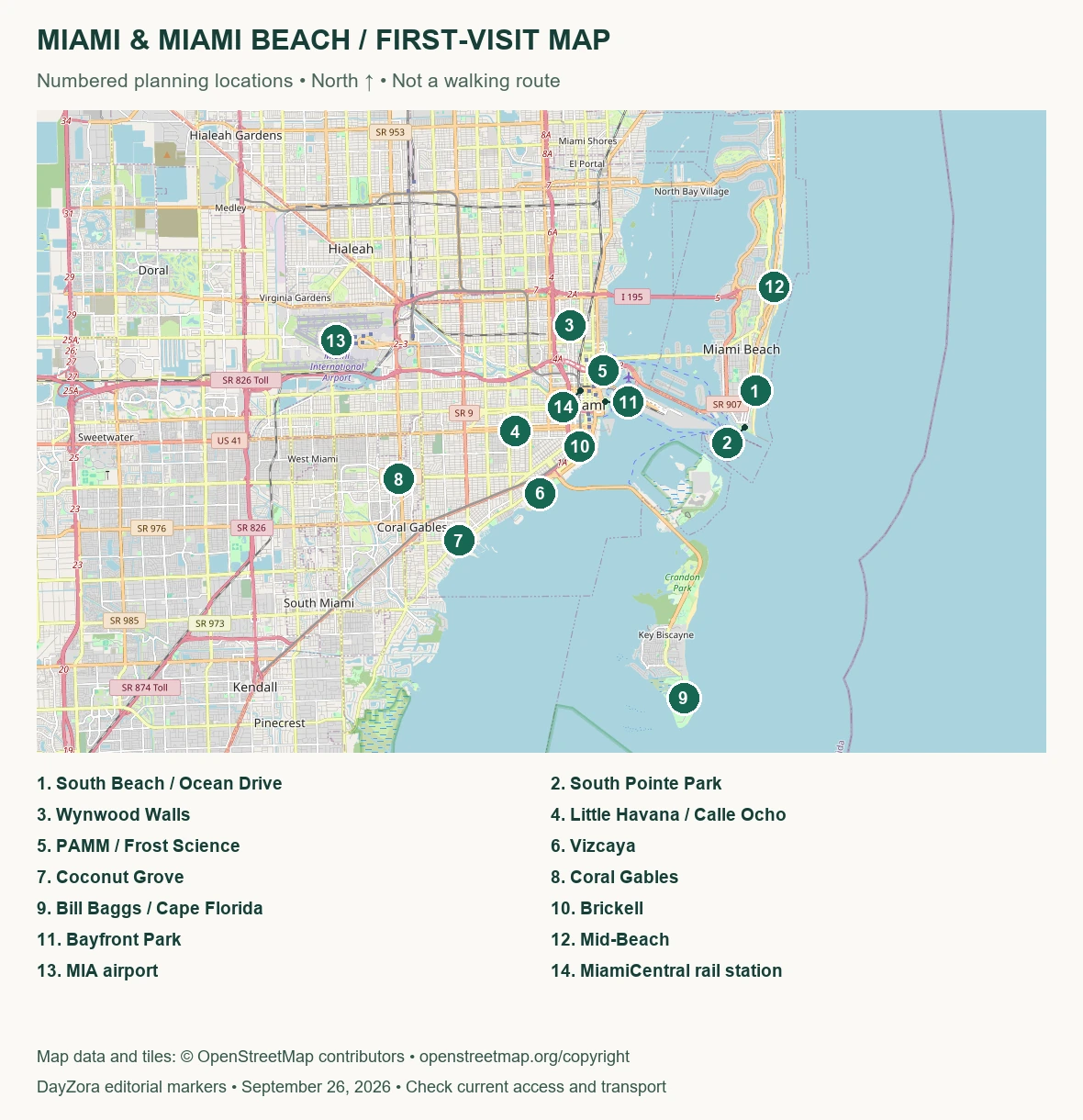
Miami is the mainland city. Miami Beach is a separate city on the barrier island, and South Beach is the southern part of Miami Beach. Downtown and Brickell do not have the same Atlantic beach access as South Beach. Wynwood and Little Havana are mainland neighborhoods, while Coconut Grove lies farther south and Coral Gables is a separate municipality. These distinctions help prevent a hotel bargain from becoming a series of unwanted transfers.
Best Things to Do in Miami and Miami Beach
1. Make time for South Beach itself
The beach is most enjoyable when treated as a real block of time rather than a photo stop between museums. Choose a public access point, check the day's conditions and decide how much equipment you actually need. A morning on the sand can be followed by lunch and a rest before an evening walk. Ocean conditions, lifeguard instructions and weather should determine swimming plans, not the appearance of a travel photograph.
Best for: Beach-first visitors and a relaxed introduction to Miami Beach. Time: 2–4 hours or a half day. Area: South Beach, Miami Beach. Tickets: Public beach access is free; chairs, umbrellas, parking and hotel facilities may charge. See the official South Beach guide and posted beach notices.
2. Walk Ocean Drive and the Art Deco streets
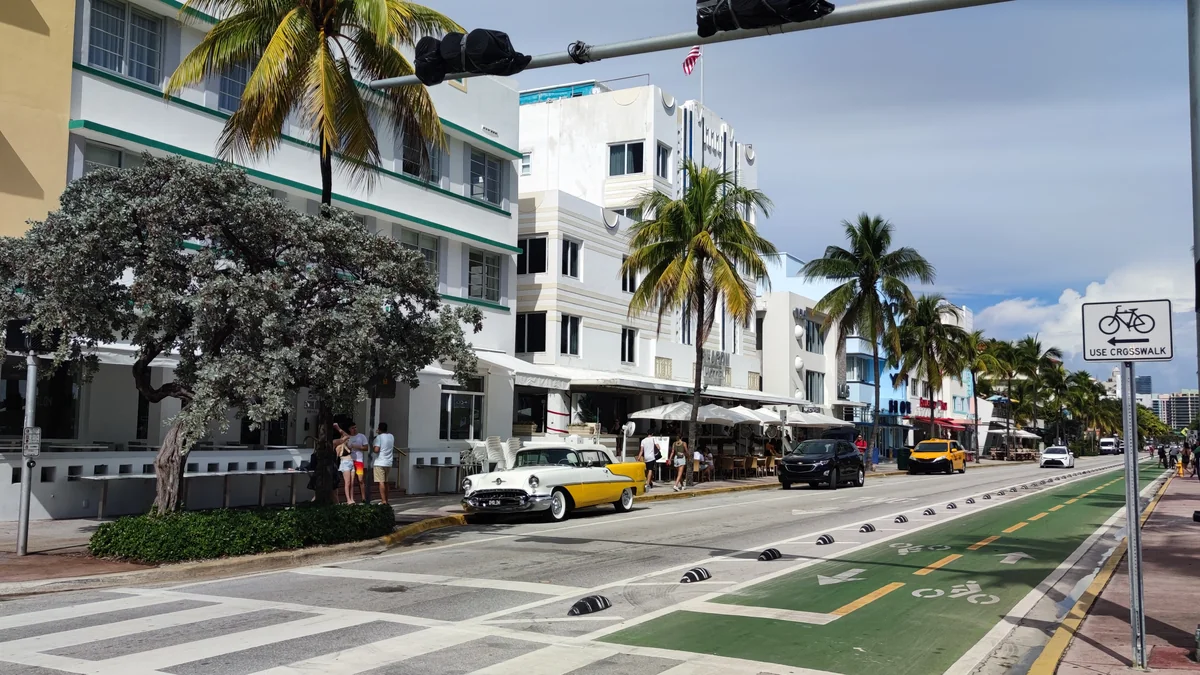
The architecture gives South Beach a sense of place beyond its shoreline. A self-guided walk lets you notice façades and street details at your own pace; a guided tour adds historical context. Plan this for a comfortable part of the day, since a short distance can feel longer in heat and humidity. The street is a living hospitality area, so respect private interiors and guests.
Best for: Architecture, photography and a low-commitment first-day outing. Time: 1–2 hours. Area: South Beach, around Ocean Drive and nearby streets. Tickets: Public sidewalk viewing is free; organized tours and museums can charge. Check the Miami Design Preservation League for current official tours and visitor information.
3. Pause at South Pointe Park
At the southern end of Miami Beach, South Pointe offers a landscaped waterfront setting and views toward the channel and surrounding shore. It is useful as a gentler alternative to another paid attraction, particularly when the group needs room to pause. Pair it with the southern beach area rather than crossing the island just for a short stop. Shade and weather still matter during a midday visit.
Best for: Families, couples and a waterfront walk. Time: 45–90 minutes. Area: Southern tip of South Beach. Tickets: General park access is free; food and parking are separate. The official visitor listing describes the setting and facilities.
4. Visit Pérez Art Museum Miami
PAMM provides a contemporary-art anchor on the mainland waterfront. Its exhibitions and setting make it useful for a trip that might otherwise focus entirely on sand and nightlife. Choose the current exhibitions that interest you and leave time for the surroundings rather than trying to add every museum next door. It can be especially valuable when the weather makes a long outdoor afternoon unattractive.
Best for: Contemporary art, architecture and an indoor cultural stop. Time: 1½–2½ hours. Area: Downtown waterfront, Maurice A. Ferré Park area. Tickets: General admission is paid, with specific free-admission programs and dates that have conditions. Verify the official visitor page rather than assuming daily free access.
5. Explore Phillip and Patricia Frost Museum of Science
Frost Science combines several kinds of science experience, making it a strong family anchor and a worthwhile visit for curious adults. Review the daily program before arrival so a timed presentation does not conflict with another booking. Children often benefit from time to linger with one favorite subject instead of being moved rapidly through everything. Keep enough energy for the outdoor portions of the complex if conditions are hot.
Best for: Families, science interests and an alternative to a beach day. Time: 3–4 hours. Area: Downtown, beside PAMM. Tickets: Paid admission; inspect current inclusions, planetarium arrangements and special experiences on the official planning page. The two museums are nearby, but most families should choose one major museum per day.
6. Distinguish Wynwood Walls from the wider neighborhood
Wynwood Walls is a curated outdoor street-art museum within a broader district of murals, shops and dining. The distinction matters for both budget and expectations: a neighborhood walk is not the same as entering the ticketed attraction. Visit the museum if its current artists and program interest you, then leave time for a meal nearby. Murals change, so do not plan around an old photograph alone.
Best for: Street art, photography and a food-and-art afternoon. Time: 1–2 hours at the attraction, longer for the district. Area: Wynwood. Tickets: Wynwood Walls requires paid admission under its current general visitor offer. Check official tickets and hours; public street murals elsewhere do not automatically share that ticket requirement.
7. Explore Little Havana through food and local context
Little Havana adds an important mainland perspective, particularly around Calle Ocho. A thoughtful visit combines a meal or café stop with time to understand the neighborhood, rather than treating residents' daily life as a staged performance. A guided cultural walk can be useful if you want more context; an independent visit can stay simple and respectful. Ask before close-up photographs of people.
Best for: Cuban cultural history, food and neighborhood exploration. Time: 2–3 hours with a meal. Area: Little Havana on the mainland. Tickets: Public street access is free; tours, performances and purchases cost extra. Start with Greater Miami's official neighborhood resources and confirm specific venue hours before travel.
8. Visit Vizcaya Museum and Gardens
Vizcaya offers a historic estate and formal garden experience beside Biscayne Bay. It is a different kind of outing from Downtown contemporary art or South Beach architecture. Allow time for both the interiors and grounds, adjusting the outdoor portion for heat or rain. Paths, steps and historic-building access deserve a check when mobility is a concern; a garden photograph alone does not explain the visit's practical demands.
Best for: Architecture, gardens and history. Time: 2–3 hours. Area: South of Brickell, near Coconut Grove. Tickets: Paid admission; closed Tuesdays. Restoration work is underway, so check affected areas before booking through Vizcaya's official visitor information. Choose the correct daytime ticket rather than assuming an evening event includes the same access.
9. Slow down in Coconut Grove
Coconut Grove can provide a more neighborhood-centered half day, combining a meal, browsing and selected waterfront park time. It is useful when the trip needs space between large attractions. Decide on a compact walking area rather than assuming every waterfront point is connected by a continuous public path. A lunch and short park visit can be enough; there is no need to invent a checklist for every stop.
Best for: Cafés, a slower pace and a mainland alternative to South Beach. Time: 2–3 hours with a meal. Area: Coconut Grove, south of central Miami. Tickets: Public streets and general public-park access are free; individual historic sites and activities may charge. Use official neighborhood information to choose current venues and access.
10. Consider Bill Baggs Cape Florida State Park
The park at the southern end of Key Biscayne is a separate beach-and-landscape outing, not another block of Miami Beach. It suits visitors who want a different setting and can allow time for the journey. Choose a beach, walking or lighthouse-oriented plan according to what is open; do not assume every facility or tour operates daily. A state-park visit can take most of a relaxed half day.
Best for: Beach variety, park time and coastal scenery. Time: Half a day including access. Area: Key Biscayne. Tickets: Park entry fees apply, and the causeway journey may add transport costs. The park currently lists renovations affecting restroom #2, beach access #3 and pavilions A8/A9. Verify current conditions, facilities and lighthouse access with Florida State Parks.
Best Neighborhoods and Areas to Explore
On mobile, swipe the table sideways to see every column.
| Area | Best fit | Main tradeoff |
|---|---|---|
| South Beach | First-time beach and Art Deco focus | Noise, parking and room costs vary greatly by block |
| Mid-Beach | Resort-oriented beach stays | More transport for South Beach and mainland outings |
| Downtown / Brickell | Museums, dining, rail and bayfront city views | Bayfront is not Atlantic beachfront |
| Wynwood | Art and dining | Plan shade, transport and actual venue hours |
| Little Havana | Food and cultural context | A purposeful outing rather than a beach base |
| Coconut Grove | Cafés, parks and a slower mainland stay | Longer trips to Miami Beach |
| Coral Gables | Architecture, dining and a quieter trip emphasis | Separate municipality; coast access requires travel |
South Beach is a practical first choice if waking up near the sand matters most. It also provides architecture and evening dining within a relatively compact area. Check the hotel's exact block and room orientation; nightlife noise is not uniform across the neighborhood. Families may prefer a room and route that make midday breaks easy.
Mid-Beach often suits travelers who want to spend more time at the property and beach. It is less convenient when every day includes multiple South Beach or mainland stops. Verify which beach services are included in the room rate and whether pool access rules fit your group.
Downtown and Brickell offer a mainland city base with useful transport and dining. PAMM and Frost Science fit the northern waterfront portion of a Downtown day, while Brickell has its own evening focus. A bay view can be attractive, but do not book it expecting to step directly onto an Atlantic swimming beach.
Wynwood and Little Havana reward separate visits for different reasons. Wynwood combines curated art and changing street murals with dining; Little Havana adds food and cultural context around Calle Ocho. Neither is an interchangeable “Miami neighborhood experience.” Choose the time of day and venue according to your interests, and allow for road travel between them.
Coconut Grove and Coral Gables suit travelers willing to trade immediate beach access for a different mainland pace. They are useful for dining and architectural exploration, with selected parks and cultural stops. Consider the full trip pattern before choosing a hotel: a pleasant local evening can be offset by repeated long journeys if the beach remains the main priority.
Where to Stay in Miami
For first-time beach access, South Beach is the clearest starting point. For families, consider a quieter exact location and room layout in Miami Beach or a mainland base close to the attractions you will actually use. For nightlife, choose the relevant South Beach or Brickell venue cluster and check the noise tradeoff before booking. For luxury, compare the specific room, beach/pool service and property experience rather than the hotel name alone.
For budget-conscious travelers, a mainland room can be worth comparing with Miami Beach, but add the cost and time of causeway trips. A property described as “Miami” may be far from both the beach and the museums. An airport-area hotel may suit a late arrival or early flight; it is not automatically an economical sightseeing base after daily transport is counted.
Use $ to $$$$ only as relative budget-to-luxury bands. Room prices vary with dates, events and cancellation terms. Check taxes, resort or destination charges, parking, deposits, breakfast and beach-equipment inclusions. A beach chair benefit may have guest-count limits, and an attractive room price may not include the view pictured in advertising.
What to Eat in Miami
Food is one of the strongest reasons to cross between beach and mainland. Cuban sandwiches, croquetas, pastelitos and coffee make a useful entry point, while the wider region also offers substantial Caribbean and Latin American dining traditions. Plan a Little Havana meal for its cultural and culinary interest, not just a photograph, and allow time to sit rather than eat everything while rushing onward.
Seafood can be part of a coastal trip, but availability and pricing vary. Do not assume every menu's signature item is local or in season. Wynwood, Brickell, Coconut Grove and Coral Gables offer different dining settings; choose one that fits the day's geography. A popular beachfront location is not inherently the best value or the best representation of the city's food.
Reserve an important dinner, particularly on busy weekends, while leaving casual breakfasts and café stops flexible. Check for an included service charge before adding a tip automatically. For a group, compare menu prices and transport rather than deciding only by a rating. A simple beach picnic can be useful where permitted, but follow local rules and leave no waste behind.
Getting Around and Airport Arrivals
MIA is the most direct airport to consider for this guide. Official airport transport information explains the connection to the airport's transport center and onward services. Metrorail can be useful for mainland destinations, but it does not cross the bay to Miami Beach. Check the exact station-to-hotel route and luggage practicality before choosing rail solely on price.
Metrorail, the free Downtown/Brickell Metromover system and buses serve different purposes. A Metromover loop can help with a mainland day; it is not an airport-to-beach train. Miami Beach operates a free citywide trolley with defined routes. Use current route maps and arrival information, since service frequency and the final walk affect whether it is convenient.
Walking works within selected areas, but heat and causeway geography limit a purely walking itinerary. Rideshare and taxis help connect neighborhoods; repeated crossings at busy times can be slow. If the trip is mostly South Beach plus one mainland day, a rental car may add more parking effort than value. A car becomes more useful for regional trips, provided hotel parking and the return plan are included.
FLL can be an alternative when flights and the complete ground transfer justify it. It is not another terminal of MIA, and a lower airfare may be offset by a longer transfer. Check Fort Lauderdale-Hollywood airport information for current connections. Bike rentals can suit a designated coastal route, but check the permitted riding areas and your comfort with traffic; they are not a universal substitute for cross-city transport.
Best Time to Visit and Weather Planning
On mobile, swipe the table sideways to see every column.
| Season | Typical planning pattern | Crowds and prices | Best use |
|---|---|---|---|
| Winter | Often less humid, with occasional cool or windy spells | Strong visitor demand around holidays/events | Outdoor city and beach mix |
| Spring | Warming conditions; dates matter | Holiday and event peaks can be substantial | A balanced first visit with advance lodging research |
| Summer | Heat, humidity and frequent showers/thunderstorms | Compare total value, not only room deals | Early outdoor time and indoor afternoon options |
| Fall | Warm/humid periods and tropical-weather considerations continue | Event demand varies; flexible plans help | Culture, dining and condition-dependent beach time |
Atlantic hurricane season runs June 1–November 30. That is a planning consideration, not a prediction that your trip will encounter a storm. Read cancellation terms and follow National Weather Service hurricane guidance and local advisories. Ordinary summer rain also deserves flexibility; do not assume every shower is brief or harmless. Beach flags, lightning and water conditions take priority over the planned itinerary.
For an autumn trip, the Miami Halloween guide offers seasonal ideas; confirm organizer dates and tickets before making a nonrefundable booking.
3-Day Miami Itinerary
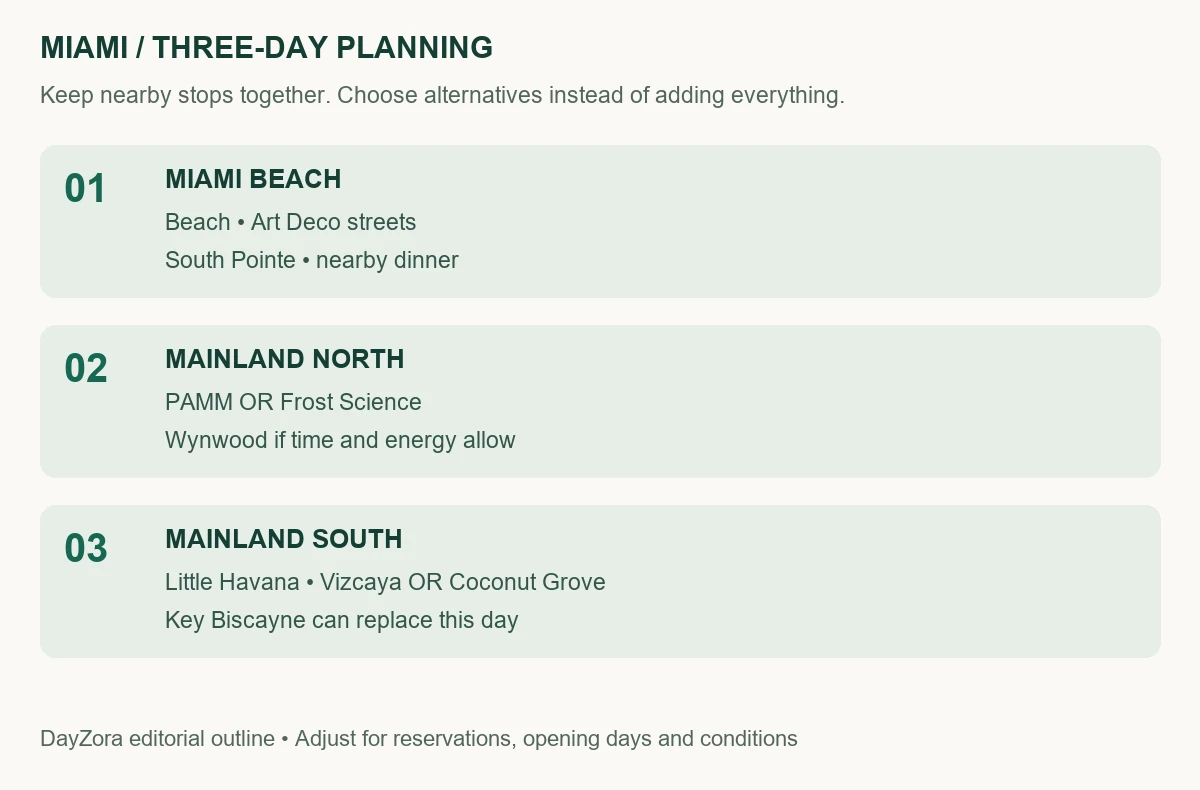
Day 1 — South Beach and architecture
Morning: Beach time under suitable conditions. Afternoon: Lunch, a rest and a selective Art Deco walk. Evening: South Pointe or dinner nearby. Keep this day on the Miami Beach side instead of repeatedly crossing for meals.
Day 2 — Mainland museums and Wynwood
Morning: Choose PAMM or Frost Science. Afternoon: Lunch and, if the group has energy, Wynwood with the appropriate Walls ticket. Evening: Dinner in the same district or Brickell. Families spending longer at Frost should shorten the art portion rather than rush both.
Day 3 — Little Havana and the southern neighborhoods
Morning: Little Havana with a food or cultural focus. Afternoon: Choose Vizcaya or Coconut Grove, allowing transport time and checking operating days. Evening: A relaxed mainland dinner. A Key Biscayne beach/park day can replace this day if more coast time is the priority.
For the wider region, use our 7-day Florida itinerary rather than stretching this city plan to include every Florida highlight.
Trip Budget: Beach Base or Mainland Base?
On mobile, swipe the table sideways to see every column.
| Expense | Budget-oriented | Mid-range | Higher-end |
|---|---|---|---|
| Accommodation | Compare connected mainland and modest beach rooms | Base close to the main trip emphasis | Premium beachfront category or resort |
| Food | Cafés, casual meals and simple breakfast | Casual days plus reserved dinner | Destination dining and nightlife |
| Transport | Walk within areas, trolley/transit where useful | Selected rideshare connections | Frequent private transport, car and parking |
| Activities | Public beach, parks and neighborhood walks | One main museum or paid attraction per day | Private tours and premium beach services |
These are choices for building a personal budget, not invented local averages. Compare complete room totals, actual tickets, meals and transport for the same dates. Include beach equipment if needed and check whether it is already part of the hotel charge. A mainland saving is meaningful only after counting the crossings your itinerary requires.
Best Free Things to Do
- Visit public South Beach access areas; rentals and parking remain extra.
- Walk the Art Deco streets and view façades from public sidewalks.
- Spend time in South Pointe Park.
- Explore public street murals in Wynwood; the named Wynwood Walls museum is ticketed.
- Walk a selected stretch of Calle Ocho in Little Havana.
- Explore public streets and general public-park areas in Coconut Grove.
The attraction profiles explain the relevant limits. Greater Miami's free family activities provide additional official suggestions, but check the individual venue's current access before assuming all facilities are included.
Visiting Miami With Kids
Match the base to the children: beach-focused families benefit from an easy hotel break, while museum-focused plans can work from the mainland. Frost Science can fill a substantial part of a day; combining it with several distant stops may be counterproductive. Plan shade, indoor time and short walking sections in humid weather. Check current beach conditions each day, and verify child restraints for any arranged road transport. Compare options in our family beach vacations guide and family travel pillar.
Miami for Couples
Choose a beach-and-dinner evening, an architecture walk or a Vizcaya visit according to your interests. A premium room is most worthwhile when the trip leaves time to enjoy it. Nightlife can be part of the plan, but a quieter meal in Coconut Grove or Coral Gables offers a different style of evening. Compare more options in our romantic weekend getaways guide.
Best Day Trips from Miami
Allowances below are approximate one-way estimates from Downtown Miami, excluding activities and significant traffic. Leaving from Miami Beach adds another variable.
On mobile, swipe the table sideways to see every column.
| Destination | Approximate distance/time | Best for | Car needed? |
|---|---|---|---|
| Everglades: Shark Valley | Roughly 40 miles; allow 1–1½ hours | A focused wetlands visit | Car or organized transport; consult NPS for access and conditions |
| Fort Lauderdale | Roughly 30 miles; allow 45–90 minutes by road | A different waterfront city day | Optional with a planned rail/local transfer; consult Visit Lauderdale |
| Key Largo | Roughly 65–75 miles; allow 1½–2 hours | A specific upper-Keys activity | Car or tour usually simplest; check official Keys visitor information and activity conditions |
Shark Valley is a specific Everglades access area, not the same as every airboat business advertised near Miami. Select an official or clearly identified operator and check exactly what the excursion includes. Key West is much farther along the Keys and is better given an overnight stay in a relaxed Florida itinerary. A day trip should replace a city day, not be inserted before an evening flight.
Practical Miami Travel Tips
- Decide whether beach access or mainland sightseeing should drive the hotel choice.
- Check the exact address: Miami, Miami Beach and South Beach are not synonyms.
- Group activities on one side of the bay when possible.
- Reserve paid Wynwood Walls admission separately from a general neighborhood walk.
- Use the correct museum calendar before assigning days.
- Check beach flags and weather even when the sky looked clear at breakfast.
- Leave an indoor afternoon option in hot or unsettled conditions.
- Read hotel beach-equipment inclusions and mandatory charges carefully.
- Check for a restaurant service charge before adding more automatically.
- Treat a Keys or Everglades outing as a substantial day with its own transport plan.
Frequently Asked Questions
Should I stay in Miami or Miami Beach?
Choose Miami Beach when the Atlantic beach is central to the trip. Choose Downtown/Brickell or another mainland base for a city-focused plan. Compare actual daily journeys rather than just room prices.
Is South Beach a separate city?
South Beach is part of Miami Beach. Miami Beach itself is a separate municipality from Miami on the mainland.
Do I need a car?
A focused beach/city stay can work with local walking, transit and selected rides. Regional excursions may make a car more useful, but parking and causeway travel belong in the comparison.
Is Wynwood Walls free?
The named museum is ticketed. Viewing public murals elsewhere in the neighborhood is a different activity and does not automatically require that ticket.
Can I visit Key West as an easy day trip?
It is a long journey for a brief visit. This guide recommends giving Key West an overnight component in a broader Florida trip rather than treating it as an easy Miami side trip.
More DayZora planning resources
Compare other city guides or use our travel planning tips for the practical steps around a U.S. trip.
How this guide was researched
DayZora reviewed official attraction, transit, airport, tourism and government information and added editorial neighborhood comparisons, suggested visit durations and a selective itinerary. Recommendations are research-based, not claims of firsthand visits. Approximate travel allowances are planning estimates, not live schedules or traffic predictions. Linked operator pages provide current prices and conditions; recheck them before booking and before travel.


Pingback: 25 Best Places to Visit in Florida | DayZora
Pingback: 2027 Sports Calendar: Major Events, Dates & Venues