Valentine’s Day in Switzerland looks different from the holiday celebrated in much of the English-speaking world. There are no grand public gestures, no aisle-blocking flower stalls in every train station, and no national obsession with over-the-top romance. Instead, the Swiss celebrate February 14 with their characteristic discretion: excellent chocolate, a thoughtfully chosen card, a quiet dinner for two, and an almost allergic reaction to sentimentality that feels performative. This guide explains exactly how the Swiss celebrate, where their customs differ across the German, French, and Italian regions, and what visitors and couples should expect from a Swiss Valentine’s Day.
The first thing to understand is that Valentine’s Day is an imported holiday in Switzerland, as it is across much of continental Europe. It gained traction in the second half of the twentieth century through retail, advertising, and media rather than through deep-rooted folk tradition. But the Swiss did not simply copy the American model. They adapted it to their own temperament: quality over quantity, understatement over spectacle, and substance over show. A single, perfect praline from a local chocolatier carries more weight than a dozen long-stemmed roses bought at a kiosk. A reservation at a restaurant you both love means more than a weekend trip booked for the gram. Understanding this sensibility is the key to understanding how the Swiss celebrate Valentine’s Day.
How Valentine’s Day Arrived in Switzerland
Valentine’s Day has no ancient roots in Swiss folk culture. Unlike harvest festivals, alpine spring festivals, or the many saint’s days still observed in Catholic cantons, February 14 entered Swiss life quietly, mostly from the 1970s onward, riding on the back of international advertising and the growing influence of American popular culture. Retailers saw an opportunity: February is otherwise a quiet month for gift spending, sitting between the Christmas season and the Easter sales. Florists, chocolatiers, and restaurateurs began promoting the holiday, and by the 1990s it was firmly established as a recognized occasion, particularly in the cities.
What the holiday never became in Switzerland is a mandatory, high-pressure event. Surveys of Swiss consumers over the years have consistently suggested a lukewarm embrace: a meaningful minority celebrates, many acknowledge it casually, and a sizable share ignores it entirely. There is no stigma attached to any of these positions, which is itself a cultural statement. In the United States, forgetting Valentine’s Day can feel like a relationship emergency; in Switzerland, it is more likely to prompt a shrug and a fondant truffle on the fifteenth. The holiday’s imported status means it carries less emotional baggage, and that is precisely why many Swiss couples say they prefer their version: it is a choice, not an obligation.
The commercial calendar did its work anyway. By the 2000s, Swiss department stores, Coop and Migros supermarkets, and every florist in the country were running Valentine’s promotions. The holiday now generates noticeable retail activity, especially in chocolate and flowers, but it has never approached the scale of Mother’s Day, which remains the more significant gift-giving occasion in Switzerland. This relative modesty shapes everything about how the Swiss celebrate: February 14 is a lovely excuse for a small gesture, not a referendum on a relationship.
Three Countries in One: Regional Valentine’s Customs
Switzerland is not one culture but several, and Valentine’s Day reflects that diversity. The customs of German-speaking Zurich differ from those of French-speaking Geneva, which differ again from Italian-speaking Ticino. The language regions even have different names for the day: Valentinstag in German, Saint-Valentin in French, and San Valentino in Italian. Each name carries the cultural flavor of the neighboring country whose media the region consumes.
German-speaking Switzerland: Restrained and Practical
In Zurich, Basel, Bern, and the German-speaking cantons generally, Valentine’s Day is at its most understated. The archetypal gesture is small and high-quality: a box of pralines from a trusted chocolatier, a single rose or a modest bouquet, a card with a genuine message rather than a flowery poem. Couples who go out typically book dinner somewhere they already like rather than somewhere that is staging a “romantic special.” The word gemütlich (cozy, comfortable) describes the ideal Swiss Valentine’s evening far better than the word “passionate.”
German-speaking Swiss couples also tend to be the most likely to skip the holiday altogether, and to do so without friction. Many view it as a retail invention and see no reason to participate. Among those who do celebrate, the emphasis falls on reciprocity and equality: both partners give, and gifts of roughly equal value are the norm. The one-sided, man-courts-woman dynamic that still colors Valentine’s Day in some countries sits awkwardly with Swiss expectations of partnership. If you are celebrating with a Swiss partner from this region, match their scale: thoughtful, excellent, and calm.
French-speaking Switzerland: The Romance of Romandie
The French-speaking cantons of Geneva, Vaud, Neuchâtel, and Valais celebrate Valentine’s Day with somewhat more Gallic warmth. The influence of France is visible in restaurant culture: Geneva’s bistros and lakeside restaurants take February 14 seriously, with special menus and packed dining rooms. Flowers carry more ceremony here, and the card tradition is closer to the French model, where a well-chosen card with a personal message is genuinely appreciated rather than treated as an obligation.
That said, Romandie is still Switzerland, and the Swiss temperament tempers French exuberance. The celebrations are more elegant than extravagant. A couple in Lausanne might spend the evening at a wine bar in the old town rather than at a theatrical prix-fixe production. Jewellery is exchanged more commonly here than in the German-speaking cantons, but it still tends toward the tasteful rather than the ostentatious. The French-speaking Swiss have essentially found the midpoint between French romance and Swiss restraint, and their Valentine’s Day is arguably the most balanced in the country.
Italian-speaking Switzerland: Ticino’s Warmer Heart
Ticino, the Italian-speaking canton south of the Alps, celebrates San Valentino in the warmest register of the three regions. Proximity to Italy shows: the emphasis on flowers is stronger, restaurant dinners are more of an event, and the whole occasion feels a touch more festive. Lugano’s lakeside promenades and grottos give couples natural settings for a romantic evening that the German-speaking north would consider almost indecently picturesque.
Ticino also benefits from geography: while February north of the Alps can be grey and biting, the southern canton is often mild enough for an evening passeggiata. Couples stroll along the lake, stop for an aperitivo, and treat Valentine’s Day as a small festival of the senses rather than a transaction. If you want the most “romantic” Swiss Valentine’s experience in the traditional sense, Ticino is where you will find it.
Key Facts: Valentine’s Day Across Switzerland
Switzerland’s three language regions give the holiday three distinct characters. This table summarizes the regional differences:
| Region | Local name | Language | Typical celebration style |
|---|---|---|---|
| German-speaking Switzerland (Zurich, Bern, Basel) | Valentinstag | German | Most restrained; small, high-quality gifts; many couples skip the day |
| French-speaking Switzerland (Geneva, Lausanne, Neuchâtel) | Saint-Valentin | French | More elegant; restaurant dinners and special menus |
| Italian-speaking Switzerland (Ticino, Lugano) | San Valentino | Italian | Warmest; flowers, lakeside walks, festive dinners |
Across all three regions, the common threads hold: chocolate is the signature gift, both partners typically give, extravagance is frowned upon, and the nearest weekend often matters more than February 14 itself.
Chocolate: The True Heart of a Swiss Valentine’s Day
It will surprise no one that chocolate is the centerpiece of how the Swiss celebrate Valentine’s Day. Switzerland’s per-capita chocolate consumption is among the highest in the world, and the country hosts both industrial giants and a dense network of artisanal chocolatiers. On February 14, chocolate is not just a gift; it is the gift, the gesture, and often the whole point.
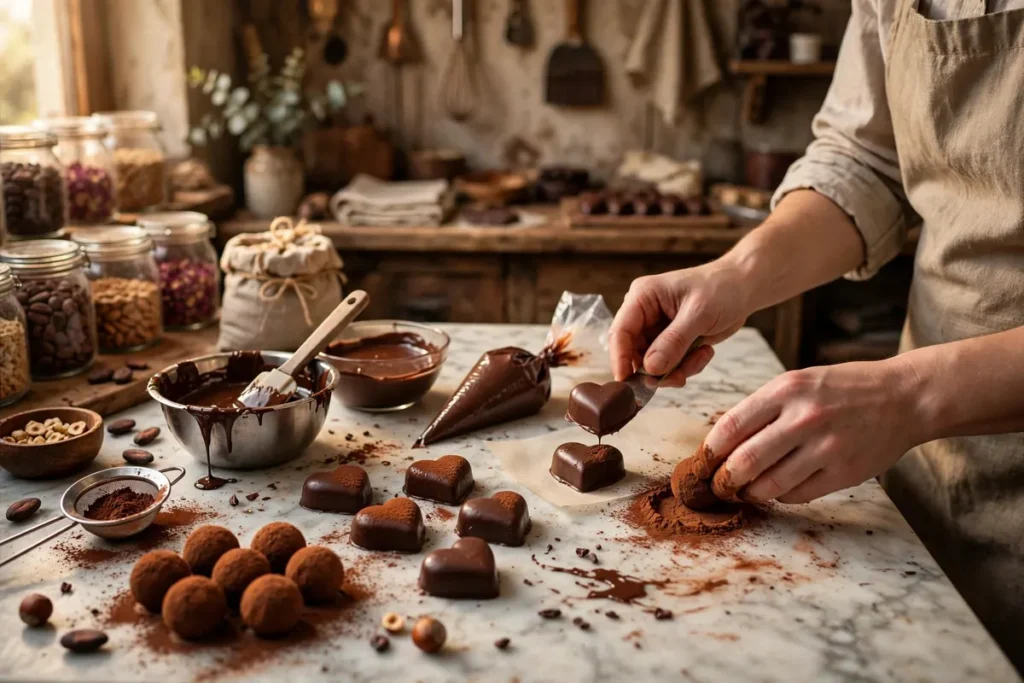
The Swiss chocolate gift has a hierarchy, and understanding it matters. At the top are the handcrafted pralines from local confiseries: single-origin truffles, champagne pralines, hazelnut gianduja made with Piedmont hazelnuts. A box of a dozen from a respected local shop, chosen with knowledge of the recipient’s tastes, is the gold standard. Below that sit the premium branded boxes, and at the bottom the mass-market heart-shaped boxes from the supermarket aisle, which carry an unmistakable whiff of last-minute panic. The Swiss can read this hierarchy instantly, so if chocolate is your gesture, make it count.
Timing matters too. The days immediately before February 14 see chocolatiers producing Valentine’s editions: heart-shaped pralines, boxes with romantic packaging, and limited flavors. Serious buyers order ahead or visit early; the best pieces sell out. And there is a lovely Swiss custom worth noting: because February 14 is about quality rather than theater, many couples buy chocolate together, tasting and choosing as a shared pleasure rather than presenting a sealed box as a surprise. The gift becomes an experience, which suits the Swiss temperament perfectly.
One more chocolate note for visitors: Swiss chocolate is not the same product as what passes for chocolate elsewhere. Swiss milk chocolate, made with condensed milk since Daniel Peter’s invention in the nineteenth century, is creamier and milder than most. If you are bringing Valentine’s chocolate back home from Switzerland, buy from a chocolatier rather than a souvenir shop, keep it cool, and eat it within a few weeks. And if you want broader chocolate gift inspiration beyond the Swiss tradition, our guide to the best Valentine’s Day chocolates covers gift boxes worth giving anywhere.
Flowers, Cards, and the Art of Understatement
Flowers are the second pillar of a Swiss Valentine’s Day, but the Swiss approach to bouquets differs from the international norm. Red roses dominate globally on February 14, and they sell well in Switzerland too, but they are far from the whole story. Swiss florists report strong demand for mixed bouquets, spring flowers like tulips and ranunculus, and elegant single-variety arrangements. A hand-tied bouquet of seasonal flowers often impresses more than the standard dozen roses, which can read as generic.
Flower buying in Switzerland is also notably egalitarian. It is completely normal for women to buy flowers for men, for friends to exchange small bouquets, and for the gift to flow in both directions within a couple. The Swiss florist trade has adapted with arrangements marketed to men and gender-neutral designs. And because Switzerland is expensive, flower prices on Valentine’s Day reflect the market: expect to pay a premium in the days around February 14, and order ahead if you want something specific.
Cards occupy an interesting middle ground. The Swiss are not a card-obsessed culture in the Anglo-American sense; elaborate verse-filled cards are uncommon. But a simple, beautiful card with a handwritten personal message is highly valued. Many Swiss couples skip commercial cards entirely and write a note or letter instead, which aligns with the broader cultural preference for sincerity over ceremony. If you are writing to a Swiss partner, keep it genuine and specific: a particular memory, a particular quality, a particular plan. That will land better than any sonnet.
Dinner Out: The Valentine’s Restaurant Rush
For couples who go out, the Valentine’s dinner is the main event, and Swiss restaurants know it. In Zurich, Geneva, Basel, and Bern, popular restaurants book out for February 14 well in advance, many offering special multi-course menus. These menus are typically excellent but also typically expensive, and the Swiss being the Swiss, many couples weigh the cost against the experience with clear eyes.
This has produced a distinctly Swiss pattern: a significant share of couples deliberately dine out on a different night. They might celebrate on the Friday or Saturday nearest February 14, or simply have their usual favorite restaurant night and attach the Valentine’s label to it. There is no shame in this; it is considered sensible. Restaurants are quieter, service is better, prices are normal, and the evening feels more genuinely theirs. If you are visiting Switzerland and want a romantic dinner around Valentine’s Day without the February 14 markup and crowds, this is the local playbook: book the 13th or the 15th.
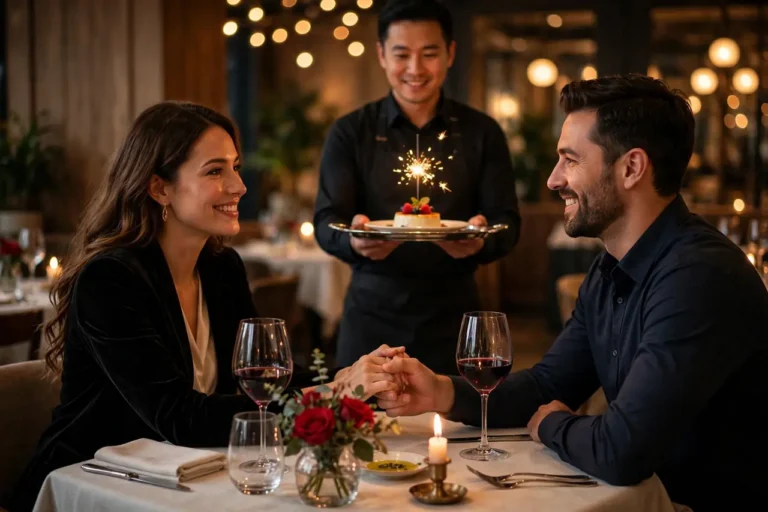
For those who do dine on the 14th, the style tends toward the intimate rather than the spectacular. Candlelit wine bars, small bistros, and restaurants with views (of the lake in Geneva, of the old town in Bern, of the Limmat in Zurich) are the classic choices. Fondue deserves a special mention: a shared pot of melted cheese is convivial, unpretentious, and deeply Swiss, and plenty of couples consider a fondue dinner the perfect Valentine’s meal. It is warm, it is interactive, and it is the opposite of stiff formality.
Cooking at home is equally common and arguably more Swiss. A couple might prepare a favorite meal together, open a good bottle, and treat the evening as quality time rather than a production. For inspiration on that front, our collection of Valentine’s Day dinner ideas offers romantic recipes designed for date night at home.
Weekend Getaways: The Swiss Valentine’s Upgrade
Switzerland’s compact geography makes the Valentine’s weekend getaway almost frictionless. From Zurich you can be in the Engadin, Ticino, or the Valais in a few hours by train; from Geneva, the Alps or the Lavaux vineyards are at your doorstep. Many Swiss couples treat Valentine’s Day as the anchor for a short trip rather than a single evening, and this is where the Swiss version of the holiday arguably surpasses all others.
The classic options read like a tourism brochure because they are genuinely that good: a spa hotel in the mountains with thermal baths, a lakeside hotel in Montreux or Lucerne, a weekend in Zermatt with the Matterhorn as the backdrop, a wine weekend in the Lavaux terraces above Lake Geneva. Thermal spas deserve emphasis: Switzerland’s spa culture is superb, and a day moving between hot pools, saunas, and steam rooms is a Valentine’s experience that needs no decoration. Bad Ragaz, Leukerbad, Yverdon-les-Bains, and the spas of the Valais all see Valentine’s traffic.
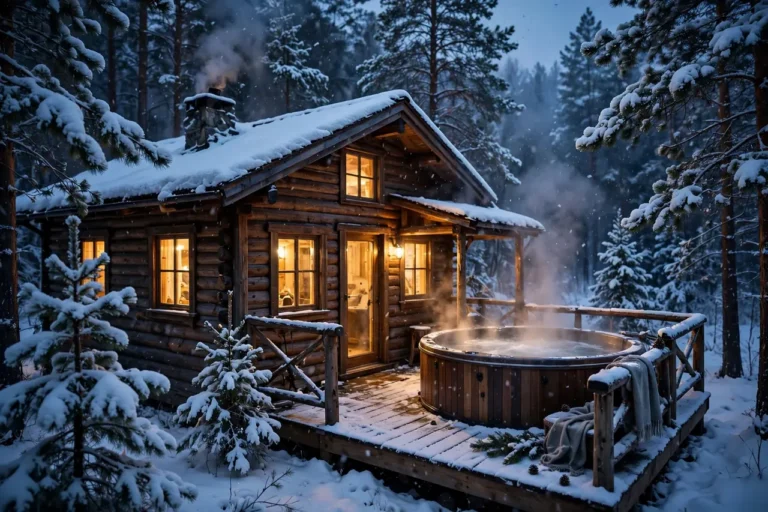
Winter adds its own dimension. February is peak ski season, and a Valentine’s weekend built around skiing, snowboarding, or simply a mountain hotel with a fireplace is a thoroughly Swiss celebration. Non-skiers can take panoramic train journeys, winter hiking trails, or sledging runs. The point is that the Swiss Valentine’s getaway is usually active and outdoorsy rather than purely indulgent, reflecting the national love of the mountains. If a romantic trip is on your mind, our guide to romantic getaways covers the planning principles, even if its destinations are American.
What the Swiss Don’t Do
Understanding a Swiss Valentine’s Day also means understanding what it is not. Public proposals on February 14 are rare and generally considered a bit much. Grand gestures, flash mobs, and sky-written messages are essentially nonexistent; the Swiss would find them embarrassing rather than romantic. Valentine’s gifts at the office are uncommon, and the holiday is not widely used as an occasion for friend-gifting the way it increasingly is in some countries.
Expensive jewellery as a Valentine’s gift exists but is less central than in the American tradition. Swiss couples who exchange jewellery tend to do so for anniversaries or engagements rather than Valentine’s Day, keeping February 14 in the realm of the small and sweet. Similarly, the pressure to post about Valentine’s Day on social media is low; Swiss couples are relatively private, and a couple that posts a gushing tribute is the exception rather than the rule.
This is not coldness. It is a different philosophy of romance: love demonstrated through attention, quality, and consistency rather than through annual performance. Visitors from more demonstrative cultures sometimes misread Swiss restraint as indifference, but within the culture it reads as respect. The Swiss show love by choosing well, not by showing off.
A Swiss Valentine’s Day at a Glance
For quick reference, here is the distilled version of how the Swiss celebrate:
- The gesture: Small, excellent, personal. Artisanal chocolate, a modest bouquet, a handwritten card.
- The scale: Understated. Quality over quantity, sincerity over spectacle.
- The dinner: Often on a nearby weekend night rather than the 14th itself, at a favorite restaurant rather than a Valentine’s production.
- The regions: German-speaking areas are the most restrained, French-speaking areas the most elegant, Ticino the warmest.
- The upgrade: A mountain or spa weekend getaway is the classic Swiss Valentine’s splurge.
- The skip: Ignoring the day entirely is socially acceptable and common.
- The reciprocity: Both partners give; the one-sided dynamic is out of place.
- The chocolate rule: Buy from a chocolatier, not a kiosk, and know the recipient’s tastes.
Celebrating Valentine’s Day the Swiss Way: Practical Tips
If you want to celebrate in the Swiss style, whether you are in Switzerland or simply inspired by it, a few practical principles will get you there. First, invest in one excellent thing rather than several adequate things: a single perfect gift beats a basket of fillers. Second, personalize it: the Swiss gift succeeds or fails on whether it shows you know the person. Third, keep the evening intimate: a favorite restaurant, a home-cooked meal, a walk somewhere beautiful.
Fourth, consider the weekend rather than the day: the Swiss habit of celebrating on the nearest Friday or Saturday is genuinely better in almost every way. Fifth, if chocolate is involved, treat it with respect: buy early, buy well, and present it as the main event rather than an afterthought. And sixth, write something real: a few honest sentences in a card will outlast any gift.
For couples on a budget, the Swiss model is actually liberating: because the culture does not demand extravagance, a modest celebration reads as tasteful rather than cheap. A homemade dessert, a walk, and a good bottle of wine is a complete Swiss Valentine’s Day. Our guide to planning a thoughtful Valentine’s Day on a budget aligns well with this philosophy.
For visitors, the main logistical notes are to book restaurants and hotels early if you insist on February 14 itself, to expect premium flower prices that week, and to remember that shops in Switzerland close on Sundays, so buy your chocolate and flowers on Saturday at the latest. Also note that February 14 is an ordinary working day in Switzerland; there are no closures and no public festivities. The romance is private, which is rather the point.
Watch: A Romantic Winter Weekend in Zurich
To see what a Swiss Valentine’s-season city break actually looks like, this travel guide walks through a winter weekend in Zurich: the old town, lakeside views, the Lindt Home of Chocolate, and the city’s cozy cold-weather atmosphere. It is a useful preview if you are planning a February getaway.
Frequently Asked Questions
Do the Swiss celebrate Valentine’s Day?
Yes, but modestly. Valentine’s Day is a recognized occasion in Switzerland, especially in cities, but it is an imported holiday without deep folk roots. Many Swiss couples celebrate with small, high-quality gestures like artisanal chocolate or flowers, many acknowledge it casually, and many ignore it entirely. All three positions are socially normal, and there is far less pressure around the day than in the United States or the United Kingdom.
What do Swiss couples typically give each other for Valentine’s Day?
Chocolate is the classic gift, ideally handcrafted pralines from a local chocolatier rather than mass-market boxes. Flowers, especially seasonal bouquets rather than only red roses, are the second most common gift. Cards with personal handwritten messages are appreciated, and both partners typically give. Expensive jewellery is less central to Valentine’s Day in Switzerland than in some other countries; it is more associated with anniversaries and engagements.
Is Valentine’s Day different in French, German, and Italian Switzerland?
Yes. German-speaking Switzerland celebrates most restrainedly, with an emphasis on quality and understatement. French-speaking Switzerland (Romandie) is somewhat more elegant and restaurant-focused, influenced by France. Italian-speaking Ticino celebrates most warmly, closer to the Italian style, with flowers, lakeside dinners, and a more festive feel. The day’s name even differs: Valentinstag, Saint-Valentin, and San Valentino respectively.
Should I book a restaurant in Switzerland for February 14?
Book well ahead if you want the 14th itself, as popular restaurants in Zurich, Geneva, Basel, and Bern fill up. However, many Swiss couples deliberately dine on a nearby weekend night instead, when restaurants are quieter, service is better, and prices are normal. If you are flexible, the 13th or 15th is the savvier local choice.
What is a typical Swiss Valentine’s weekend getaway?
The classic Swiss Valentine’s splurge is a short trip rather than a single evening: a spa hotel with thermal baths (Bad Ragaz, Leukerbad, Yverdon-les-Bains), a mountain hotel in Zermatt or the Engadin during ski season, a lakeside stay in Montreux or Lucerne, or a wine weekend in the Lavaux terraces. Switzerland’s train network makes these trips easy, and the active, outdoorsy style suits the national temperament.
Is it acceptable to skip Valentine’s Day in Switzerland?
Completely. Because the holiday is imported and relatively recent, skipping it carries no stigma in Switzerland. Many couples simply treat February 14 as an ordinary day, and no one will think less of the relationship for it. If anything, the Swiss respect the choice: celebrating because you want to, not because the calendar demands it, is considered the healthier attitude.