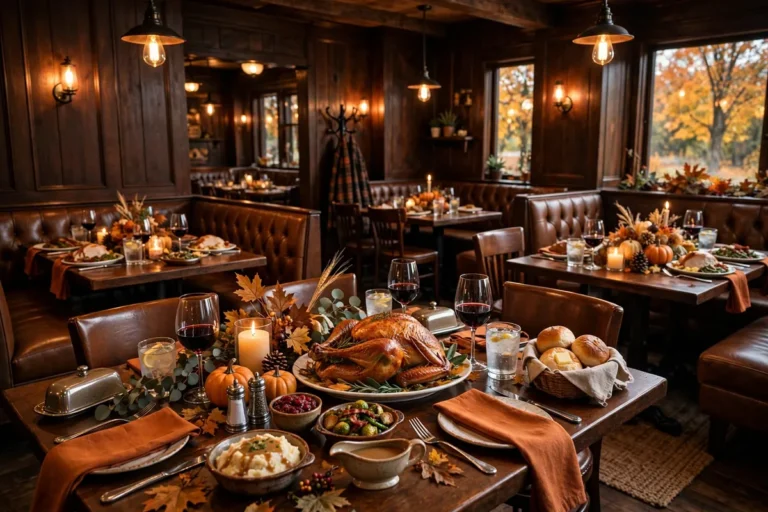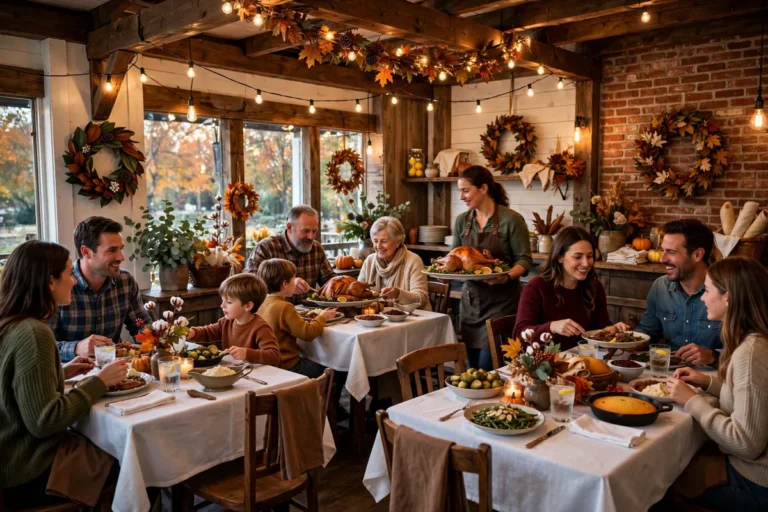
A prime rib roast for Thanksgiving is the ultimate power move for hosts who want a holiday centerpiece without the all-day anxiety of poultry. This magnificent cut — a standing rib roast from the primal rib section — delivers what turkey cannot: rich marbling, a deeply beefy flavor, and a rosy, edge-to-edge medium-rare interior that carves into thick, juicy slices. It roasts in a fraction of the time a turkey needs, requires almost no basting or fussing, and arrives at the table looking like the cover of a food magazine.
Prime rib has long been the celebratory roast of steakhouses and Christmas dinners, but it belongs at Thanksgiving too — especially for smaller gatherings, beef-loving families, or tables where half the guests quietly prefer red meat. This guide covers everything: choosing the right roast (grade, bones, size), the foolproof reverse-sear method that guarantees even doneness, a temperature chart for every preference, classic au jus and horseradish cream, and troubleshooting for the mistakes that ruin expensive beef. Pair it with creamy mashed potatoes and Thanksgiving sides, and you have a feast no one will forget.
What Exactly Is Prime Rib?
Despite the name, “prime rib” does not necessarily mean USDA Prime grade — it refers to the cut: a roast from the primal rib section of the steer, ribs six through twelve. Butchers also call it a standing rib roast (when bone-in and roasted upright on its rib bones) or a ribeye roast (when boneless). The rib bones serve as a natural roasting rack, insulating the meat and adding flavor, which is why bone-in is the traditional and recommended choice for a holiday roast.
USDA Grades: Prime, Choice, and Select
Beef grading measures marbling — the intramuscular fat that makes meat juicy and flavorful. USDA Prime is the top grade, with abundant marbling; it is the steakhouse standard, harder to find in supermarkets, and priced accordingly. USDA Choice is the sweet spot for most holiday cooks: well-marbled, widely available, and significantly less expensive than Prime. USDA Select is leaner and less forgiving — it can still roast nicely with careful temperature control, but it lacks the richness that makes prime rib special. If your budget allows, buy Choice at minimum; if you find Prime at a fair price, it is worth the splurge for a once-a-year roast.
Bone-In vs. Boneless
Bone-in is the classic holiday presentation and the better roast. The bones insulate the meat, promote even cooking, and make the roast easy to carve — you simply slice the bones away in one piece, then slice the meat across the grain. Boneless ribeye roasts are easier to slice uniformly and slightly easier to find, but they cook a touch faster and lack the dramatic tableside presentation. For Thanksgiving, buy bone-in. Ask the butcher to cut the bones away and tie them back on (“cradled”) — you get the flavor and insulation of the bones with the easy carving of a boneless roast.
How Much to Buy
Plan on 1 pound per person for a bone-in roast (the bones account for much of the weight) or 3/4 pound per person for boneless. A 3-bone roast (about 7 to 9 pounds) serves 6 to 8; a 4-bone roast (9 to 11 pounds) serves 8 to 10. Prime rib is rich, so portions can be slightly smaller than turkey — but buy a little extra, because leftover prime rib is one of the great pleasures of the holiday weekend. Count one rib bone per two generous servings as a quick rule of thumb.
Choosing and Preparing Your Roast
What to Look For
Choose a roast with a bright red color, creamy-white (not yellow) fat, and visible marbling — thin white flecks and veins running through the meat. Avoid roasts with a large, thick fat cap exceeding an inch; you want a cap of about 1/2 to 3/4 inch, which bastes the meat without leaving a greasy rim on every slice. The roast should feel firm and smell fresh and clean. If buying from a butcher counter, ask for the “large end” (ribs 6 through 9) for the most marbling, or the “small end” (ribs 10 through 12) for a leaner, more uniform eye of meat.
Dry-Brining: The Single Best Prep Step
Salt your roast 24 to 48 hours before cooking — this dry-brine seasons the meat deeply through osmosis and dries the exterior for superior browning, exactly as with poultry. Use 1 teaspoon of kosher salt per pound of meat (Diamond Crystal; reduce slightly for Morton), coating all surfaces including the ends. Rest the salted roast uncovered on a rack in the refrigerator. This one step improves the final result more than any marinade or injection ever could.
Bringing to Room Temperature
Take the roast out of the refrigerator 2 to 3 hours before cooking. A cold roast cooks unevenly — the exterior overcooks before the center comes to temperature. While it tempers, pat the surface dry, rub it with a thin coat of olive oil or softened butter, and apply your seasoning blend: coarse black pepper, garlic, and fresh herbs are the classics. A simple, perfect seasoning is 2 tablespoons each of coarsely ground black pepper and minced garlic, 1 tablespoon each of chopped rosemary and thyme, mixed into 3 tablespoons of softened butter and smeared over the entire roast.
The Reverse Sear Method: Foolproof Prime Rib
The reverse sear — roasting low and slow first, then finishing with a blast of high heat — is the most reliable way to cook prime rib. The low roast brings the entire roast to temperature gently, producing an even rosy interior from edge to edge with no gray overcooked band. The final sear builds the deeply browned, flavorful crust. It is nearly impossible to overcook with this method as long as you use a thermometer.
Ingredients:
- 1 bone-in prime rib roast, 7 to 11 pounds (3 to 4 bones), dry-brined 24 to 48 hours
- 3 tablespoons softened butter or olive oil
- 2 tablespoons coarsely ground black pepper
- 2 tablespoons minced garlic (about 6 cloves)
- 1 tablespoon chopped fresh rosemary
- 1 tablespoon chopped fresh thyme
- 2 teaspoons kosher salt (in addition to the dry-brine)
Instructions:
- Remove the roast from the refrigerator 2 to 3 hours before cooking. Preheat the oven to 250°F — yes, that low. Position a rack in the lower third of the oven.
- Pat the roast dry. Mix the butter, pepper, garlic, rosemary, thyme, and salt into a paste and smear it evenly over the entire roast, including the ends.
- Place the roast bone-side down (the bones are your rack) in a roasting pan. Insert a leave-in probe thermometer into the center of the eye, avoiding bone and large fat pockets.
- Roast at 250°F until the internal temperature reaches 120°F for medium-rare (about 3 to 4 hours for a 9-pound roast — roughly 22 to 25 minutes per pound, but trust the thermometer, not the clock).
- Remove the roast and tent loosely with foil. Rest for 30 to 45 minutes. During this rest, the temperature will rise about 5 to 8 degrees through carryover cooking.
- About 15 minutes before serving, increase the oven to its maximum — 500°F to 550°F. Return the roast to the blazing oven for 8 to 12 minutes, until the exterior is deeply browned and crisp.
- Carve immediately after the sear: cut the bones away in one slab (save them — roasted rib bones are a cook’s treat), then slice the meat across the grain into 1/2 to 3/4 inch slices. Serve with au jus and horseradish cream.
Temperature and Timing Chart
Temperature is everything with prime rib. These are final serving temperatures — pull the roast 5 to 8 degrees below your target to account for carryover cooking during the rest.
Doneness Guide
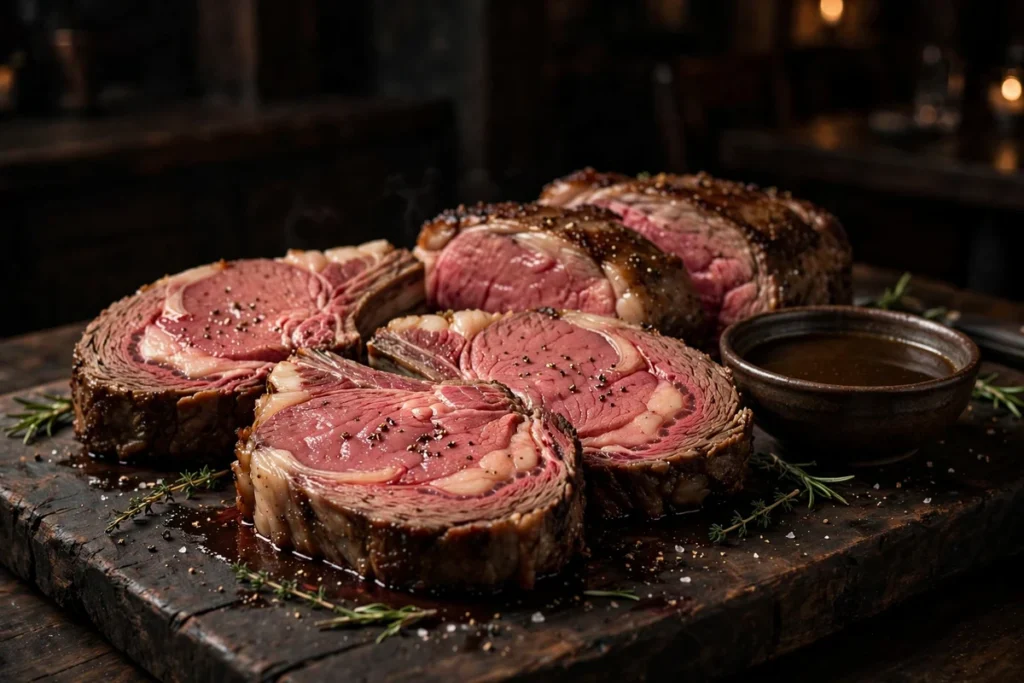
Rare: pull at 115°F, serve at 120 to 125°F — cool red center. Medium-rare: pull at 120 to 125°F, serve at 130 to 135°F — warm red center, the ideal for prime rib. Medium: pull at 130°F, serve at 135 to 140°F — warm pink center. Medium-well: pull at 140°F, serve at 145°F — slightly pink center. Well-done: pull at 150°F, serve at 155°F+ — we do not recommend this for prime rib; the marbling and texture that justify the cut’s price are lost.
Managing Mixed Preferences
Every holiday table has one guest who wants well-done. The elegant solution: roast the whole prime rib to medium-rare, then sear individual slices in a hot skillet with a little butter for 60 to 90 seconds per side for those who want them more done. The end cuts are also naturally more cooked than the center — serve the ends to the well-done crowd and the rosy center slices to the purists. Everyone is happy, and the roast itself is never compromised.
Au Jus and Horseradish Cream: The Classic Pair
Simple Au Jus
Prime rib roasted at 250°F produces less fond (browned drippings) than high-heat roasting, but what it gives is concentrated and delicious. After removing the roast, pour off all but 2 tablespoons of fat from the pan, set the pan over medium heat, and deglaze with 1 cup of dry red wine, scraping up every browned bit. Add 2 cups of rich beef stock, a sprig of thyme, and simmer until reduced by a third — about 15 minutes. Strain, season with salt and pepper, and serve warm. Unlike turkey gravy, au jus is never thickened; it should be a thin, intensely savory broth for dipping.
Horseradish Cream
Stir together 1 cup of sour cream (or half sour cream, half mayonnaise), 3 to 4 tablespoons of prepared horseradish (drained), 1 tablespoon of Dijon mustard, 1 teaspoon of white wine vinegar, and salt and white pepper to taste. Make it at least an hour ahead so the flavors meld, and taste before serving — horseradish potency varies wildly by brand. This cool, pungent sauce against rich, warm beef is one of the great pairings in all of cooking.
Side Dishes That Love Prime Rib
Prime rib’s richness calls for sides with brightness and bite. Creamy mashed potatoes are the natural partner — a raft for the au jus. Yorkshire pudding, the traditional English companion, is worth the effort: the batter puffs dramatically in hot beef drippings and soaks up juices like nothing else. Roasted root vegetables, a sharp bitter-green salad, and creamed horseradish-dressed greens all balance the beef’s richness. Our full Thanksgiving side dish collection has plenty of candidates — lean toward the vegetable-forward options and let the beef be the star. For dessert, something bright like a citrus or apple dessert finishes the meal better than anything heavy.
Troubleshooting Prime Rib
The Roast Cooked Faster Than Expected
Ovens vary, roasts vary — a thermometer is the only truth. If the roast hits temperature early, extend the foil-tented rest: a large prime rib holds its heat for a full hour without any quality loss, and the rest only improves juiciness. Do not sear early and hold; sear just before serving for the crispest crust.
The Exterior Is Gray Instead of Browned
The low roast never browns the surface — that is the sear’s job. If your final blast did not produce a deep crust, the surface was too wet (pat drier next time after tempering) or the oven was not fully preheated to maximum. A ripping-hot oven and a dry surface are the two requirements; 10 minutes at 550°F on a dry roast produces a magnificent crust.
The Center Is Underdone for Some Guests
See the mixed-preferences solution above: sear individual slices in a hot skillet. It takes 90 seconds and produces a beautifully caramelized slice that the well-done enthusiast will genuinely enjoy — better than any overcooked whole roast.
There Are No Drippings for Au Jus
Low-temperature roasting yields modest drippings. Supplement with a rich store-bought or homemade beef stock, and enrich it by simmering with the roasted rib bones for 30 minutes — they release gelatin and flavor that mimic true drippings. A splash of red wine and a knob of butter at the end add the depth that drippings would have provided.
Storage, Reheating, and Leftover Magic
Refrigerate leftover prime rib within two hours, wrapped tightly, for up to 4 days; slice only what you will eat, since whole pieces retain moisture better. To reheat without overcooking, warm slices gently in a 250°F oven with a splash of au jus until just heated through — never microwave, which turns rosy beef gray and tough. Better yet, serve leftovers cold or at room temperature: thin-sliced cold prime rib on crusty bread with horseradish cream is a legendary sandwich. Dice leftovers for a steak-and-egg hash, slice thin for French dip sandwiches dipped in reheated au jus, or chop into a hearty beef and barley soup. The roasted bones simmer into a stock of remarkable depth.
Slicing Against the Grain
How you slice matters as much as how you roast. After cutting the bones away, identify the direction of the muscle fibers in the eye of the roast and slice perpendicular to them — across the grain — in 1/2 to 3/4 inch slices. Slicing with the grain produces long, chewy fibers; slicing across it shortens them, making each bite noticeably more tender. Use a long, sharp carving knife and let the blade do the work with smooth strokes rather than sawing. Arrange the slices overlapping on a warmed platter, spoon over a little warm au jus, and serve immediately — prime rib waits for no one.
Your Thanksgiving Prime Rib Timeline
One of prime rib’s great advantages is how little Thanksgiving Day it demands. Here is a schedule for a 9-pound roast served at 5 PM.
Two Days Before: Salt
Unwrap the roast, salt all surfaces with 1 teaspoon of kosher salt per pound, set it on a rack over a sheet pan, and refrigerate uncovered. This 48-hour dry-brine is the highest-return prep step in the recipe.
Thanksgiving Morning: Temper
At 10 AM, move the roast to the counter. Pat dry, apply the butter-herb paste, and insert the probe thermometer. A 9-pound roast needs a full 2 to 3 hours to lose its refrigerator chill — do not rush this, or the center will lag.
1:00 PM: The Low Roast
The roast goes into a 250°F oven. It needs roughly 3 to 3.5 hours to reach 120°F. This is your free window: make the horseradish cream, prep sides, set the table. Check the thermometer at 3:30 — ovens and roasts vary.
4:30 PM: Rest, Then Sear
Pull the roast at 120°F and tent loosely with foil. At 4:45, blast the oven to its maximum. Sear the roast 8 to 12 minutes until deeply browned. While it sears, warm the au jus. Carve at 5:00 and serve immediately — prime rib waits for no one, but the whole active process took you less than 30 minutes of actual work.
In Pictures: Prime Rib Roast
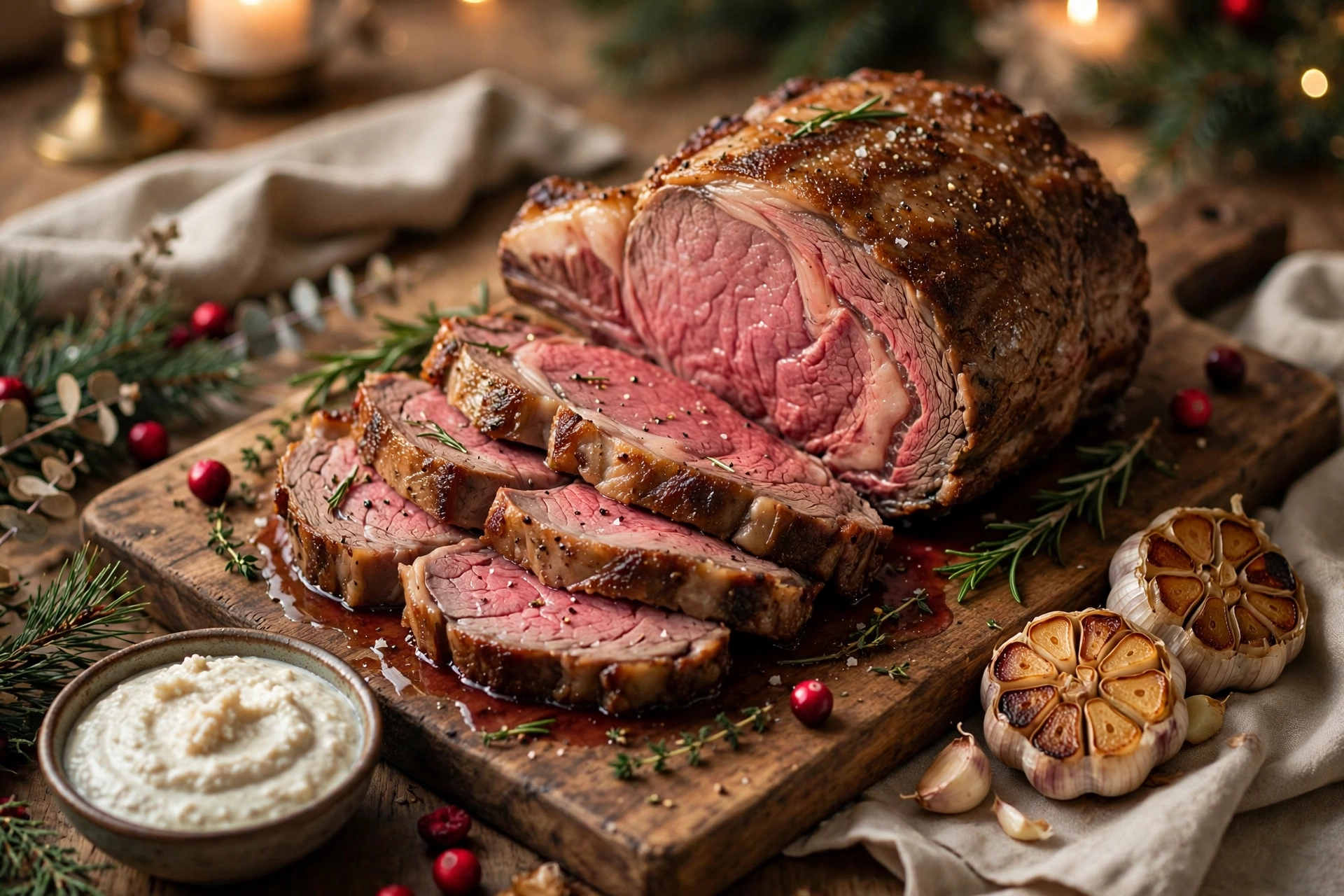
Prime rib is the beef-lover’s answer to the holiday table — a standing rib roast with a burnished crust and a blushing center. The roast, tied and crusted with herbs.
A standing prime rib roast with a garlic-herb crust, tied with twine and ready for the oven.
Watch: Prime Rib Roast
This tutorial demonstrates a savory garlic-herb crusted prime rib from rub to rest — including the high-heat-then-low roasting method and a full temperature chart for every doneness.
At a Glance: Prime Rib Roast
Buying, prepping, and roasting prime rib, from the guide.
| Topic | Notes |
|---|---|
| What it is | A standing rib roast cut from the primal rib — the same cut as ribeye, roasted whole |
| USDA grades | Prime is the most marbled, Choice is excellent and widely available, Select is leaner |
| Bone-in vs. boneless | Bone-in insulates the roast and makes a dramatic presentation; boneless is easier to carve |
| How much to buy | About ½ to ¾ pound per person as a rule of thumb, depending on appetite and sides |
| Best prep step | Dry-brine with salt a day ahead — it seasons deeply and dries the surface for a better crust |
| Serving temperatures | Pull at 120°F for rare, 130°F for medium-rare, 140°F for medium; rest 30 minutes before carving |
Frequently Asked Questions
Is prime rib the same as ribeye?
They come from the same primal cut. A ribeye is a steak cut from the rib section; prime rib (standing rib roast) is the whole roast from that section, typically bone-in. The name “prime rib” refers to the primal cut, not the USDA grade — though the finest examples are USDA Prime grade.
Can I cook prime rib without a thermometer?
You should not try. Prime rib is an expensive cut, and the difference between perfect medium-rare and disappointing medium is 10 degrees — impossible to judge by time alone, since every roast’s shape, starting temperature, and oven are different. A $15 instant-read thermometer is the cheapest insurance for a $100+ roast. A leave-in probe thermometer is even better for the long, slow roast.
Should I cook prime rib at high heat the whole time?
The old-fashioned method — blasting at 450°F then lowering — works, but it produces a thick gray band of overcooked meat under the crust. The reverse sear (low first, sear last) gives you edge-to-edge rosy meat with an equally good crust. For a holiday roast you want to serve with confidence, reverse sear is the superior method.
How far ahead can I salt the roast?
Salt 24 to 48 hours ahead for the best results — the salt penetrates deeply and the surface dries for better browning. Even 12 hours helps. Do not salt more than 3 days ahead, as the texture can begin to change. If you forgot entirely, salt generously 2 to 3 hours before cooking at room temperature; you will still get good surface seasoning.
Can I make prime rib ahead of time?
Yes — and this is a secret weapon for stress-free hosting. Roast low to 120°F a day ahead, cool, and refrigerate. On Thanksgiving, let the roast temper for 2 hours, then do the high-heat sear just before serving. The sear reheats the exterior while the already-cooked interior warms gently. It works beautifully and frees your oven on the big day.
What wine pairs with prime rib?
Bold reds with structure: Cabernet Sauvignon is the classic steakhouse pairing, and a Napa or Bordeaux-style blend is perfect for Thanksgiving. Syrah, Malbec, or a robust Zinfandel all work. The wine’s tannins cut through the beef’s richness — the same principle as the horseradish cream, in a glass.
Conclusion
A prime rib roast for Thanksgiving trades poultry anxiety for beef confidence: salt it two days ahead, roast it low and slow to a perfect 130 to 135°F, sear it blazing hot, and carve thick slices of rosy, juicy beef that no turkey can rival. It is faster, more forgiving, and more dramatic than the traditional bird — and the leftovers are arguably better than the roast itself. Whether this becomes your new tradition or a one-year experiment, serve it with creamy mashed potatoes, bright sides from our Thanksgiving collection, and a bold red wine. Plan the rest of your feast with our complete Thanksgiving dinner menu.