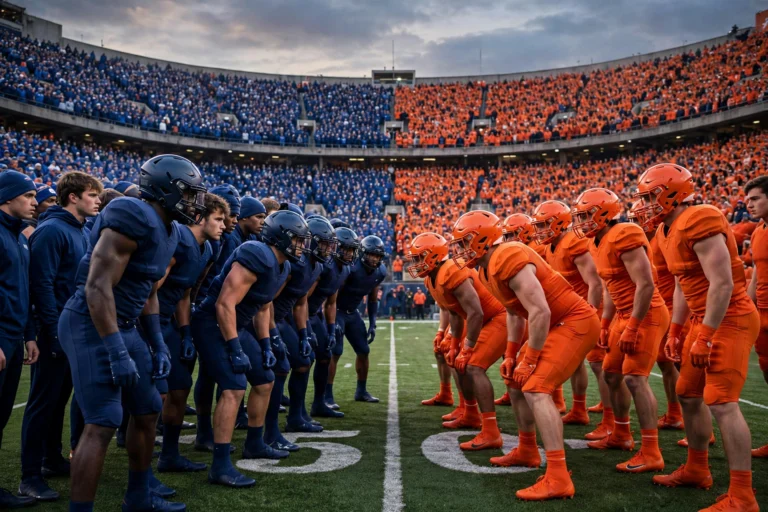
The Best College Sports Traditions are the rituals, songs, and spectacles that turn games into cultural events. Every program has them: the rock players touch, the song 100,000 people sing, the entrance that raises goosebumps. These traditions are passed down through generations of students and alumni, and they are what separate college sports from every professional league — no franchise relocation, no roster turnover can erase a century-old ritual. This guide tours the greatest traditions in college sports, explains how they started, and tells you which ones belong on every fan’s bucket list.
Why Traditions Matter More in College Sports
Professional teams are businesses that can relocate, rebrand, and rebuild rosters annually. College programs are rooted institutions: the stadium sits on the same campus it occupied a century ago, the student section refreshes every four years but never leaves, and alumni carry rituals from their youth into old age. That permanence lets traditions compound — a ritual performed for the 500th time carries a weight no new tradition can match.
Traditions also solve college sports’ central challenge: rosters turn over completely every few years. The players change, but the traditions give each new team an instant identity and each new student an instant inheritance. A freshman touching Howard’s Rock or singing the alma mater joins a chain stretching back generations.
The Greatest Traditions in College Football
Dotting the “i” — Ohio State
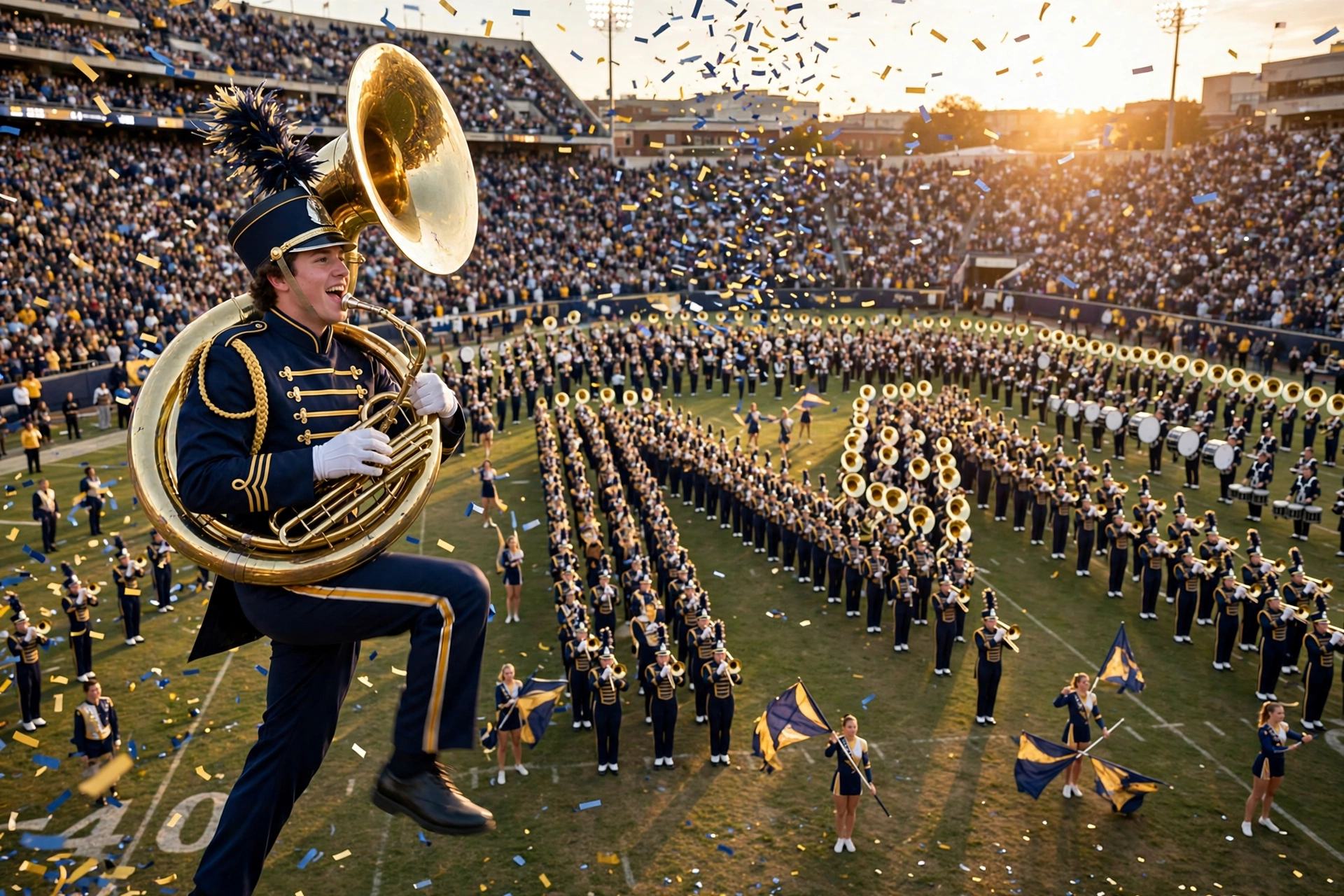
The Ohio State marching band’s Script Ohio formation ends with a sousaphone player strutting out to dot the “i” — an honor reserved for senior band members. The crowd’s roar when the dotter high-steps into place is one of the sport’s signature sounds. It began in 1936 and remains the gold standard of marching band traditions.
Howard’s Rock — Clemson
Before every home game, Clemson players rub Howard’s Rock — a stone from Death Valley, California, mounted on a pedestal — and run down the hill into Memorial Stadium. The rock bears the inscription of legendary coach Frank Howard’s warning: “Give me 110% or keep your filthy hands off of my rock.” Touching it is a rite of passage for every Tiger.
Jump Around — Wisconsin
Between the third and fourth quarters at Camp Randall Stadium, the song “Jump Around” plays and the entire student section — and much of the stadium — bounces in unison. The tradition once shook the stadium so violently that engineers were called in to verify structural safety. It remains the most famous fourth-quarter ritual in sports.
Enter Sandman — Virginia Tech
As Metallica’s “Enter Sandman” blares, Virginia Tech’s team storms onto the field through a tunnel of jumping fans at Lane Stadium. The entrance is so seismic that it has registered on nearby seismographs. Few moments in sports match its raw electricity.
The 12th Man — Texas A&M
At Texas A&M, the entire student body stands for the entire game as the “12th Man,” ready to support the team. The tradition dates to 1922, when a student was called from the stands to suit up. The 12th Man statue, the standing student section, and the unmatched noise make Kyle Field one of the sport’s most intimidating venues.
War Eagle — Auburn
Before Auburn games, a golden eagle circles Jordan-Hare Stadium and lands at midfield as the crowd roars “War Eagle!” The tradition’s origins are delightfully murky — involving a Civil War veteran’s pet eagle, by legend — but the spectacle is undeniably real.
The Wave at Iowa — The Hawkeye Wave
College football’s most moving tradition: at the end of the first quarter of every Iowa home game, the entire stadium — fans and both teams — turns and waves to the children’s hospital overlooking Kinnick Stadium. It began in 2017 and instantly became the sport’s emotional centerpiece.
Chief Osceola and Renegade — Florida State
A student portraying the Seminole leader Osceola rides the Appaloosa horse Renegade to midfield and plants a flaming spear in the turf before kickoff. The university developed the tradition in consultation with the Seminole Tribe of Florida, and it remains one of the most visually stunning entrances in sports.
Ralphie’s Run — Colorado
A live 1,300-pound buffalo named Ralphie leads Colorado’s team onto Folsom Field, sprinting the length of the field with student handlers. It is equal parts thrilling and terrifying — and utterly unforgettable.
The Sooner Schooner — Oklahoma
Oklahoma’s covered wagon, pulled by two white ponies, races across the field after every score. The Schooner once famously tipped over on the field (everyone was fine), adding to its legend.
The Greatest Traditions in College Basketball
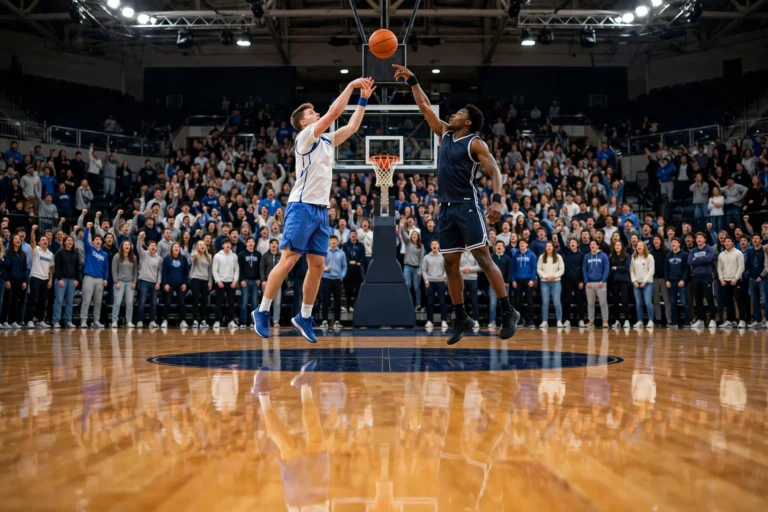
The Cameron Crazies — Duke
Duke’s student section is the most famous in college basketball: coordinated chants, creative signs, and relentless noise in the intimate Cameron Indoor Stadium. Tenting for weeks to earn seats (Krzyzewskiville) is itself a tradition.
Midnight Madness — Kentucky and Beyond
Kentucky’s Big Blue Madness — the program’s preseason kickoff event — fills Rupp Arena with player introductions, scrimmages, and spectacle. The concept, born in the 1980s, has been adopted nationwide as the ceremonial start of basketball season.
The Izzone — Michigan State
Named for coach Tom Izzo, Michigan State’s student section is renowned for its coordinated chants and deafening support, making the Breslin Center one of the toughest road venues in the sport.
Allen Fieldhouse Atmosphere — Kansas
“The Phog” — Kansas’s historic arena — pairs the “Rock Chalk, Jayhawk” chant with one of the longest home-court advantages in sports. The pregame video and chant ritual give newcomers chills.
Traditions Across Other College Sports
- College baseball: Mississippi State’s Left Field Lounge — elaborate tailgate setups beyond the outfield fence at Dudy Noble Field — turned college baseball tailgating into legend.
- College hockey: North Dakota’s student section traditions and the Hobey Baker-era pageantry make college hockey atmospheres uniquely intense.
- Softball: Oklahoma’s dynasty-era traditions, from the home-run celebrations to the record crowds at Love’s Field, elevated the sport’s profile.
- Lacrosse: Syracuse’s traditions at the Carrier Dome connect the modern game to its Indigenous origins with genuine reverence.
- Volleyball: Nebraska’s volleyball program draws football-sized crowds, with Memorial Stadium once hosting a record-breaking outdoor match.
Bucket-List Traditions: A Fan’s Itinerary
- Dot the “i” in Columbus — arrive early for the marching band’s pregame show; the Script Ohio moment is worth the trip alone.
- Experience Jump Around in Madison — a night game in October, when the student section is at full power.
- Watch the eagle fly at Auburn — the pregame flight never gets old, no matter how many times you see it.
- Wave at Iowa — bring tissues; the Hawkeye Wave gets everyone.
- Attend an Army–Navy game — the march-ons, the flyover, and the alma maters sung by both corps.
- Visit Cameron Indoor — the smallest venue with the biggest reputation; every seat feels like courtside.
- Run with the Grove at Ole Miss — the most civilized tailgate in sports before a Saturday game.
Planning these pilgrimages uses the same skills as any big-event trip — our guide to finding local events and free outdoor events guide cover the research and planning tactics that make bucket-list trips happen.
How New Traditions Are Born
Traditions rarely emerge by committee — they accrete. A spontaneous student-section chant catches on; a memorable moment gets repeated until it becomes ritual; a coach’s quirk becomes institutional lore. The Hawkeye Wave began when a fan suggested it on social media. Virginia Tech’s entrance started when a stadium operations choice (playing “Enter Sandman” before a big game) electrified the crowd and was never abandoned.
The lesson: traditions are fan-made. The best thing a program can do is notice what its people already love and give it a permanent home. The worst thing is manufacturing one — fans can smell inauthenticity, and forced traditions wither.
Bringing Traditions Home: Starting Your Own
You do not need 100,000 seats to build tradition. Families create game-day rituals — the same breakfast, the same seats, the same postgame stop — that children carry into adulthood. Friend groups develop bracket-pool customs and rivalry-week parties. Our best family events in the USA and family movie night guide offer frameworks for turning shared viewing into lasting ritual — because every great tradition started as someone’s small habit.
Marching Band Traditions: The Soundtrack of Saturdays
No tradition list is complete without the marching bands — the soul of the college game-day soundtrack:
- Ohio State’s Script Ohio: The most famous formation in marching, ending with the dotting of the “i” — covered above, but worth repeating as the pinnacle of the art.
- Texas A&M’s Fightin’ Texas Aggie Band: The nation’s largest military marching band, executing precision drills with a discipline that mirrors the Corps of Cadets.
- LSU’s Tiger Marching Band: Pregame performances of “Pregame Salute” and the crowd’s deafening “Geaux Tigers” make Death Valley’s soundtrack iconic.
- Michigan’s Marching Band: Among the oldest and most storied, with the “M Fanfare” and a tradition of musical excellence spanning generations.
- USC’s Trojan Marching Band: “The Spirit of Troy” performs at games, Hollywood events, and even the Olympics — the most recorded college band in history.
- Tennessee’s Pride of the Southland: The circle drill and the “T” formation entrance through which the football team runs are Neyland Stadium staples.
Band traditions extend beyond formations: drumline battles, fifth-quarter postgame concerts (Wisconsin’s is famous), and alma mater performances that hush 100,000 people. For many alumni, the band’s halftime show is as anticipated as the game.
Student Section Traditions: Organized Chaos
Student sections are the emotional engine of college sports, and their traditions are gloriously unhinged:
- Card stunts: Coordinated card displays spelling messages or images — a mid-20th-century art form kept alive by dedicated student groups.
- White-outs and color-outs: Entire stadiums wearing one color, pioneered to intimidating effect at Penn State’s White Out games.
- Coordinated chants: From “Rock Chalk, Jayhawk” to the Gator Chomp, student sections develop chants that become program signatures.
- Camping for seats: Duke’s Krzyzewskiville (weeks of tenting for basketball seats) and similar campouts turn ticket scarcity into community.
- Newspaper traditions: Some sections historically held up newspapers while the opponent’s lineup was announced — a “we don’t care who you are” statement.
- Zombie Nation and sing-alongs: Whole-stadium sing-alongs between quarters (Wisconsin’s “Jump Around,” Iowa State’s “Sweet Caroline”) blur the line between crowd and choir.
Pregame Rituals: The Walks, Runs, and Gatherings
Before the band plays and the ball kicks, teams and fans share pregame rituals:
- Tiger Walk (Auburn) and similar team walks: Fans line the team’s path to the stadium hours before kickoff, creating a gauntlet of support.
- The Vol Walk (Tennessee): The team walks through a sea of fans down Peyton Manning Pass to Neyland Stadium.
- Ramblin’ Wreck parade (Georgia Tech): The vintage 1930 Ford leads the team into the stadium — one of the sport’s great vehicular traditions.
- Sailgating (Washington, Tennessee, others): Fans arrive by boat to waterfront stadiums, turning lakes and rivers into floating tailgates.
- Midnight yell (Texas A&M): A midnight pep rally before home games, led by the Yell Leaders — part pep rally, part revival meeting.
Fight Songs and Alma Maters: The Music of Belonging
Every program has a fight song, and the great ones are cultural artifacts:
- “The Victors” (Michigan): Written in 1898, among the most recognizable fight songs in sports.
- “Rocky Top” (Tennessee): A bluegrass standard adopted as an unofficial anthem, played relentlessly at Neyland Stadium.
- “Boomer Sooner” (Oklahoma): Derived from “Boola Boola” (Yale), it soundtracks every Sooner score.
- “On, Wisconsin!”: The state song doubling as the university fight song — sung with gusto statewide.
- “Notre Dame Victory March”: Called the greatest college fight song by some; its opening bars are instantly iconic.
Alma maters carry the emotional weight: sung arm-in-arm after games, win or lose, they bind generations. Learning your school’s alma mater is the first rite of belonging — and hearing 100,000 people sing it after a rivalry win is unforgettable.
Live Mascots: The Furriest Traditions
- Uga (Georgia): The English bulldog dynasty — now on its eleventh iteration — reigns from an air-conditioned doghouse on the sideline.
- Reveille (Texas A&M): The collie is the highest-ranking member of the Corps of Cadets, outranking the students who handle her.
- Mike the Tiger (LSU): The live Bengal tiger’s habitat sits across from the stadium; his roar before games is stadium legend.
- Ralphie (Colorado): The buffalo run covered above — equal parts tradition and controlled chaos.
- Bevo (Texas): The longhorn steer has presided over Texas sidelines for over a century.
Homecoming: The Week That Started It All
Homecoming — the fall week of parades, pep rallies, bonfires, and the football game welcoming alumni back — is itself one of college sports’ greatest traditions, originating in the early 1900s (Missouri claims the first, in 1911). Modern homecoming weeks include spirit competitions, royalty courts, mum and garter traditions in Texas, and bonfires that light up campuses. For many alumni, homecoming is the annual pilgrimage that keeps their connection to the school alive decades after graduation.
Traditions That Didn’t Survive (and Why)
Not every tradition lasts. Some faded for good reasons: goalpost teardowns were banned after injuries, bonfires were discontinued after a tragic collapse, and certain mascot or chant traditions were retired as cultural sensibilities evolved. Others died of realignment — when conferences reshuffled, annual matchups (and their rituals) vanished overnight. The lesson is that traditions are living things: the strongest adapt (goalpost celebrations moved to symbolic replicas), while the weakest become nostalgia. Programs that steward their rituals thoughtfully — preserving meaning while updating form — keep the chain unbroken for the next generation of students.
Frequently Asked Questions
What is the most famous tradition in college football?
Ohio State’s Script Ohio and dotting the “i,” Clemson’s Howard’s Rock, and Wisconsin’s Jump Around are the most widely recognized, each with nearly a century (or decades) of history.
What is the Hawkeye Wave?
At the end of the first quarter of Iowa home games, the entire stadium turns and waves to patients at the children’s hospital overlooking Kinnick Stadium. It began in 2017.
Why do college sports have more traditions than pro sports?
Permanence: campuses, stadiums, and alumni communities stay fixed for generations, letting rituals compound. Pro teams relocate and rebuild rosters, which disrupts tradition-building.
What is the 12th Man at Texas A&M?
A tradition dating to 1922 in which the student body stands throughout the game as the symbolic 12th player, honoring a student once called from the stands to play.
Can fans participate in traditions?
Absolutely — most traditions are fan-driven: singing, waving, jumping, and chanting. Visiting fans should learn the home traditions and respect them, just as home fans respect visitors.
How do new traditions start?
Organically: a spontaneous chant, a memorable moment repeated until ritual, or a fan suggestion that catches fire. The best traditions are adopted from the crowd, not imposed from above.
What is sailgating?
Tailgating by boat: fans anchor near waterfront stadiums (Washington’s Husky Stadium, Tennessee’s Neyland Stadium) and turn lakes and rivers into floating pregame parties.
Which school has the best marching band tradition?
Ohio State’s Script Ohio is the most famous single formation, while Texas A&M’s military band and USC’s “Spirit of Troy” have their own devoted followings — band excellence is a point of deep alumni pride.