Nothing says childhood like wheels. The Best Ride-On Toys for Kids span a wonderful range — from a toddler’s first push-powered coupe to a ten-year-old’s electric ATV — and choosing well means matching the vehicle to your child’s age, size, and space. This buying guide covers every major ride-on type, the safety rules that matter, realistic price ranges, and how to pick a ride-on your child will actually use instead of admire from the driveway.
You’ll learn which ride-ons suit each developmental stage, what separates quality from junk (battery specs, weight limits, and build quality decoded), the safety gear and rules every family needs, and maintenance tips that keep wheels rolling for years — including through hand-me-downs to younger siblings.
Why Ride-Ons Are Developmental Powerhouses
Ride-on toys do far more than entertain. Push-powered ride-ons build leg strength, balance, and coordination in toddlers. Balance bikes teach the single hardest cycling skill before pedals complicate things. Scooters develop core strength and bilateral coordination. Even electric ride-ons — often dismissed as passive — teach steering, spatial judgment, and (with rules) responsibility.
Ride-ons also uniquely motivate outdoor time. A child who won’t “go play outside” will happily ride for an hour. They build independence (the first solo trip to the end of the driveway is a milestone), encourage neighborhood socializing, and burn the kind of energy that leads to good sleep. Few toy categories deliver this much developmental return.
Ride-On Types by Age
Ages 1–2: Push-Powered Basics
At this stage, the child powers the vehicle with their feet (or gets pushed by a parent). Look for low, wide, stable designs: classic foot-to-floor coupes, push wagons, and sturdy ride-on animals. Key features: no pedals or motors, wide wheelbase to prevent tipping, smooth edges, and indoor-friendly wheels. Weight limits matter even here — check them. These are primarily indoor or smooth-pavement toys, and they’re wonderful for rainy-day energy burning.
Ages 2–4: Balance Bikes and Trikes
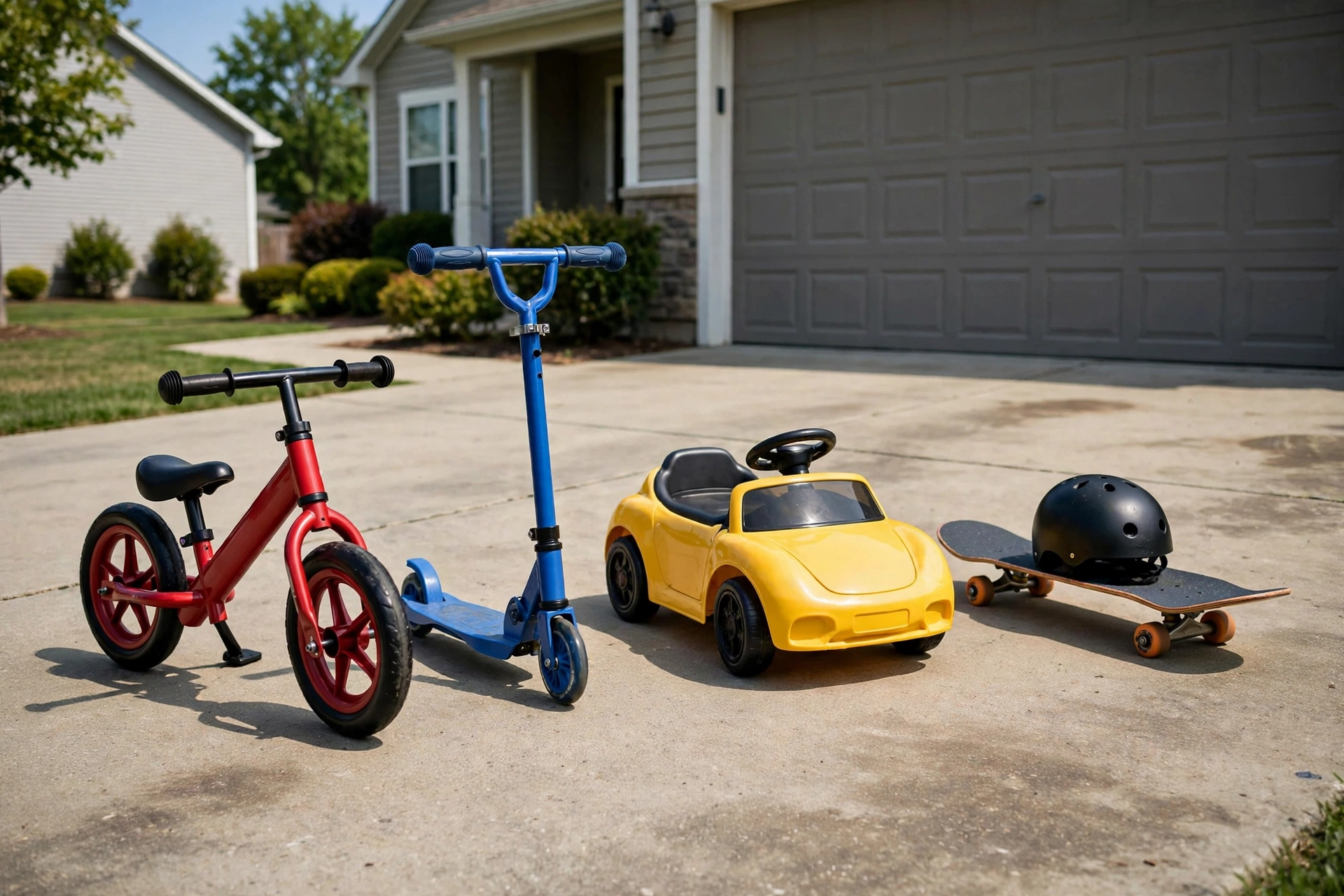
The balance bike is arguably the best ride-on innovation of the century: no pedals, just scooting with feet, teaching balance — the actual hard part of cycling. Most kids transition to pedal bikes by 4–5 with zero training wheels needed. For variety, tricycles offer stability for cautious kids, and three-wheeled scooters (two wheels front, one back) are nearly untippable and wildly popular. Fit matters enormously: your child should stand over the frame with feet flat on the ground.
Ages 3–6: Kick Scooters and First Pedal Bikes
Two-wheeled kick scooters become neighborhood staples at this age — lightweight, portable, and fast enough to thrill. For bikes, skip training wheels if your child did the balance-bike route; otherwise, they’re a fine bridge. Look for lightweight frames (heavy bikes discourage riding), hand brakes introduced around age 5, and proper sizing: the “stand over the top tube” test beats age charts every time. A bike shop fitting is worth it for a first real bike.
Ages 3–8: Electric Ride-Ons
Battery-powered cars, ATVs, and motorcycles are pure wish-fulfillment — and genuinely fun. The key specs: voltage (6V for toddlers on flat surfaces, 12V for ages 3–6, 24V for older kids and grass/hills), weight limits (check honestly — many kids outgrow the stated limit fast), and speed settings (parental remote control or speed locks are essential features). Realistic expectations help: range is typically 1–2 hours per charge, and these are fair-weather, flat-surface toys. Buy from reputable brands — cheap electrics have unreliable batteries and flimsy construction.
Ages 5–10: Skateboards, Pogo Sticks, and Thrill Gear
As coordination matures, kids graduate to more challenging wheels: beginner skateboards (with helmets, knee pads, elbow pads, and wrist guards — all of it), stunt scooters for skate parks, pogo sticks for bouncing maniacs, and wave boards. These teach persistence through falling — literally. Start on smooth, traffic-free surfaces, consider a lesson or two for skateboarding, and never skimp on protective gear. The gear isn’t optional equipment; it’s part of the sport.
Ages 6+: Go-Karts and Big Adventures
Pedal go-karts (no motors, pure leg power) are fantastic for ages 6+: fast, steerable, and great exercise. Electric go-karts and youth ATVs exist for older kids but demand serious safety infrastructure — helmets, supervised areas away from traffic, and strict rules. These are “family decision” purchases: discuss where they’ll be ridden, who supervises, and what the rules are before buying, not after.
How to Choose: The Buyer’s Checklist
- Size it to the child, not the age chart. Inseam and height matter more than age. For bikes and scooters, the stand-over test (feet flat on the ground) is the gold standard. Too-big vehicles are dangerous; too-small ones get outgrown in months.
- Check the weight limit honestly. Add your child’s weight plus growth room. Electric ride-ons especially are often outgrown faster than parents expect — buy with at least a year of headroom.
- Match the vehicle to your terrain. Small plastic wheels are for smooth pavement only; grass, gravel, and hills need bigger wheels, higher voltage (electric), or sturdier builds. Be realistic about where your child will actually ride.
- Prioritize brakes and speed control. For anything motorized, parental speed locks or remote controls are must-haves. For bikes, coaster brakes suit beginners; hand brakes come with coordination around age 5–6.
- Read battery specs for electrics. Higher voltage = more power and speed (not always desirable). Check charge time (often 8–12 hours), run time (1–2 hours typical), and whether replacement batteries are available — they extend the toy’s life enormously.
- Inspect build quality. Wobble the handlebars, check welds and fasteners, spin the wheels. Quality ride-ons feel solid; cheap ones feel rickety out of the box and only get worse. Read reviews focusing on durability after months of use.
- Factor in the gear. Budget for a helmet with every wheeled purchase, plus pads for skateboards and scooters. The gear is part of the price — not an optional add-on.
Safety Rules for Every Ride-On
| Rule | Why It Matters |
|---|---|
| Helmet on every ride, every time | Head injuries are the serious risk in ride-on accidents; helmets prevent the vast majority of them |
| Ride away from traffic | Driveways, sidewalks, parks, and bike paths — never streets; teach road awareness early |
| One rider per vehicle | Most ride-ons are engineered for one child’s weight and balance; doubling up causes tip-overs |
| Supervise young riders | Kids under 6 need active supervision on any ride-on; under 3, within arm’s reach |
| Check the vehicle before riding | Tires, brakes, loose parts, battery charge — a 30-second check prevents most mechanical failures |
| Right size, right speed | Oversized vehicles and unlocked max speeds are the two most common parent errors |
| Visible and predictable | Bright clothing, no riding at dusk without lights, and predictable paths around pedestrians |
Typical Price Ranges
| Ride-On Type | Typical Price Range |
|---|---|
| Push-powered toddler ride-ons | Typically $20–$50 |
| Balance bikes | Typically $40–$100 |
| Tricycles and 3-wheel scooters | Typically $30–$70 |
| Kick scooters (2-wheel) | Typically $40–$120 |
| First pedal bikes | Typically $80–$250 |
| Electric ride-on cars (12V) | Typically $100–$300 |
| Electric ride-on cars (24V) | Typically $250–$500 |
| Pedal go-karts | Typically $150–$400 |
| Beginner skateboards (+ safety gear) | Typically $50–$150 |
Always verify current prices — ride-ons go on deep sale in late summer and before holidays. Don’t forget to budget helmets ($20–$50 for a good kids’ helmet) and, for electrics, eventual battery replacement.
Maintenance and Longevity
A little care doubles a ride-on’s life: keep tires properly inflated (bikes and scooters), charge electric batteries after each use and never store them fully depleted over winter, tighten bolts monthly (vibration loosens everything), wipe down and store under cover (UV and rain degrade plastic and fade paint), and lubricate chains on bikes and go-karts. Teach kids to do basic checks with you — vehicle maintenance is a life skill, and pride of ownership starts with a wrench. Well-maintained ride-ons also make excellent hand-me-downs: clean them up, replace worn parts, and the younger sibling gets a “new” vehicle.
Making Ride-Ons Part of Family Life
Ride-ons shine brightest as social, family activities. Plan neighborhood rides, family bike outings on local trails, scooter trips to the park — movement together beats movement alone. Set up simple obstacle courses or timed “races” (everyone wins categories: fastest, silliest, most creative line). For travel, many ride-ons go along: scooters and balance bikes fit in most cars and transform rest stops. Our Family Road Trip Ideas includes tips for active stops, and Free Family Events often lists community bike rides and outdoor festivals perfect for young riders. Little ones not yet riding? Our Toddler Activities guide has push-toy ideas for the youngest wheel fans.
Teaching Road Safety Alongside Riding
Every ride is a chance to build traffic safety instincts that will matter for life. Start early and layer it in:
- Sidewalk fundamentals (ages 2–5): stay on the sidewalk, stop at every driveway and curb, look both ways even on quiet streets. Narrate your own behavior when walking together — kids absorb what you model.
- Driveway danger (all ages): teach kids that driveways are roads: cars back out without seeing small children. The rule is stop, look, listen at every driveway crossing, and never ride behind a car with its reverse lights on.
- Hand signals (ages 6+): once kids ride bikes on bike paths, teach left/right/stop signals. Practice in the driveway until they’re automatic — signaling while balancing is a genuine coordination challenge.
- Visibility habits: bright clothing, bike lights for dusk, and reflectors aren’t optional accessories — they’re how drivers see your child. Make “be seen” part of the pre-ride checklist alongside the helmet.
- Intersection protocol (ages 8+): when kids start riding more independently, drill the sequence: stop, look left-right-left, make eye contact with drivers, then go. Walk through real intersections together before solo rides.
- The buddy principle: young riders go with an adult or older sibling; no child rides alone near traffic until they’ve demonstrated consistent rule-following. Independence is earned through demonstrated judgment, not granted by birthday.
Frame safety as skill, not fear: “good riders know the rules” motivates far better than scary stories. And audit your own behavior — kids who see parents roll through stop signs on bikes learn exactly that lesson.
FAQs
Can kids ride scooters and bikes in the rain?
Light rain is fine with precautions: wet brakes work poorly, so teach kids to brake earlier and gentler; metal surfaces get slippery, so slow down on turns; and visibility drops, so bright clothing matters even more. Avoid riding in heavy rain, standing water (hidden hazards, splash into eyes), or thunderstorms — lightning and riding don’t mix. After wet rides, dry the bike or scooter and wipe the chain to prevent rust. Honestly, many kids find rainy riding thrilling — with the right gear and rules, it’s safe fun.
Should I buy new or used ride-ons?
Used works wonderfully for push toys, balance bikes, scooters, and pedal bikes — kids outgrow them fast, so the secondhand market is full of barely-used gems. Inspect carefully: check frames for cracks, wheels for wear, brakes for function, and helmets — never buy a used helmet (you can’t verify its crash history). For electric ride-ons, used is riskier: batteries degrade, and replacement parts may be unavailable. If buying used electric, test the full run time before paying and factor in a likely battery replacement.
How do I store ride-ons in winter?
Clean everything, then store indoors — garage or shed beats outdoors under a tarp. For electrics: charge the battery to about half, disconnect it, and store it somewhere that won’t freeze (extreme cold damages batteries); top it up every couple of months. Inflate bike tires slightly over normal (they’ll lose pressure), lubricate chains, and hang bikes to save floor space. A spring tune-up — tire pressure, brakes, bolt check — takes twenty minutes and prevents the season’s first-ride surprises.
Balance bike or tricycle for a 2-year-old?
Balance bikes, for most kids. They teach balance — the actual skill of cycling — and most balance-bike graduates skip training wheels entirely. Tricycles suit cautious kids who want stability, and they’re fine; there’s no wrong answer. The key is fit: feet flat on the ground when seated. Start on flat, smooth surfaces and let your child scoot at their own pace.
Are electric ride-on cars safe?
With the right setup, yes. Choose age-appropriate voltage (6V for toddlers, 12V for preschool/early elementary), use parental speed locks and remote controls, restrict riding to flat areas away from traffic and water, enforce the one-rider rule, and supervise actively. Buy reputable brands — battery and build quality vary enormously. They’re recreational toys, not transportation; treat them that way.
What size bike does my child need?
Ignore age charts and use the stand-over test: your child should stand over the bike’s top tube with feet flat on the ground and a couple of inches of clearance. When seated, they should reach the handlebars comfortably with slightly bent elbows. Bike shops will size for free, and it’s worth the trip — a well-fitted bike gets ridden; a poorly fitted one gathers dust (or causes crashes).
How do I teach my child to ride a bike?
The modern method: start with a balance bike (or remove the pedals from a pedal bike), let them glide until confident, then add pedals. Find a gentle grassy slope or empty parking lot, hold the back of the seat (not the handlebars), run alongside, and let go when they’re balanced — they’ll often not even notice. Keep sessions short and fun, celebrate loudly, and expect a few wobbles. Most kids get it within a handful of sessions.
Do kids really need helmets for scooters?
Yes — absolutely. Scooter falls are among the most common causes of childhood head injuries treated in emergency departments. Helmets should be worn for scooters, bikes, skateboards, skates, and anything else with wheels. Make it non-negotiable from the very first ride: “no helmet, no wheels” stated cheerfully and enforced consistently becomes simply how your family does things.
How long do electric ride-on batteries last?
Typically 1–2 hours of run time per full charge, with charge times of 8–12 hours. Battery lifespan is usually 1–3 years depending on care: charge after each use, don’t store depleted over winter, and keep the vehicle dry. Replacement batteries are available for most major brands and cost far less than a new vehicle — replacing the battery is often the smart move when performance fades.
What’s the best ride-on for a small apartment?
Foldable kick scooters (they hang on a hook), balance bikes (light and lean against a wall), and indoor-friendly push toys with soft wheels. Skip electric ride-ons and anything bulky. Focus instead on portable wheels for park trips — the park becomes your backyard. Many apartment families keep one compact scooter per kid and call it done.
When should kids wear pads in addition to helmets?
For skateboards, always: knee pads, elbow pads, and wrist guards are standard safety gear, not optional extras. For scooters and bikes, pads are wise for beginners and for any trick riding. Wrist guards deserve special mention — broken wrists are among the most common ride-on injuries, and guards prevent most of them. Make gearing up part of the ritual, like buckling a seatbelt.
The Best Ride-On Toys for Kids give children something precious: independent motion. Size it right, gear up every time, match the vehicle to your terrain, and maintain what you buy — then watch your driveway become the neighborhood’s favorite destination. For community rides and outdoor events to enjoy together, check Free Family Events in your area.