It is a fair question — and one more people ask each February than you might think. Amid the roses, the cards, and the restaurant prix-fixe menus, it is worth pausing to ask: why do we celebrate Valentine’s Day at all? Why does February 14, of all dates, belong to love? The answer stretches back nearly two thousand years, winds through Roman fertility rites, martyred saints, medieval poetry, Victorian industry, and modern marketing — and ends, surprisingly, with something deeply human that has nothing to do with greeting cards.
This article gives you both versions of the answer: the short one you can share at dinner, and the long one that traces the holiday from ancient Rome to your mailbox. You will learn how a wild pagan festival became a saint’s feast day, how a 14th-century poet accidentally invented romantic Valentine’s Day, how the holiday conquered the globe, who celebrates it beyond couples, and what psychologists say about why rituals like this actually matter for relationships.
By the end, you will not just know why we celebrate Valentine’s Day — you will have twelve meaningful ways to celebrate it this year, answers to the questions everyone asks, and a story worth retelling over candlelight.

The Short Answer
We celebrate Valentine’s Day on February 14 because, over two millennia, that date accumulated layers of meaning: a Roman mid-February fertility festival, a Christian martyr’s feast day established in 496 AD, a medieval poet’s association of the date with mating birds and courtly love, and finally a Victorian-era commercial tradition of cards, flowers, and chocolates. Each era kept the date and rewrote the reason. Today the holiday endures because it serves a real human need: a shared, scheduled moment to express affection deliberately in the middle of winter. That is the one-paragraph version. The full story is far more interesting.
The Long Answer: 2,000 Years in Eight Chapters
Here is how February 14 became the world’s day of love, one era at a time.
Chapter 1: Lupercalia (ancient Rome). Long before Valentine’s Day, mid-February belonged to Lupercalia, a Roman fertility festival honoring Faunus and the legendary founders Romulus and Remus. Priests sacrificed goats, then ran through the streets striking women with strips of hide — believed to promote fertility. A matchmaking lottery paired young men and women for the festival. It was raucous, physical, and about vitality and spring’s return — the distant ancestor of our modern celebration. The festival’s name lives on in the Lupercal cave on the Palatine Hill, and its spirit — midwinter revelry as an antidote to the dark — may be the oldest continuous thread in the Valentine’s story.
Chapter 2: The martyrs named Valentine (3rd century). The Church recognizes multiple Saint Valentines, all martyred in Rome. Legend says one was a priest who secretly married young couples against Emperor Claudius II’s ban, and who signed a farewell note to his jailer’s daughter “from your Valentine” before his execution on February 14. Historians caution that details are unverifiable — but the legend gave the date a hero associated with love’s defiance. Modern scholars suspect the various Valentines may have been conflated over centuries, with details migrating between accounts. What survived was not biography but archetype: the figure who suffers for love.
Chapter 3: The feast day (496 AD). Pope Gelasius I formally established February 14 as the Feast of Saint Valentine — around the same time Lupercalia was suppressed. Whether deliberate or coincidental, the old festival’s calendar slot was absorbed by the new feast. For the next thousand years, Valentine’s Day was simply a martyr’s day on the Church calendar, with no romantic meaning whatsoever. For context, this was standard practice: Christmas absorbed winter solstice festivals, and All Saints’ Day absorbed Celtic Samhain. The Church rarely erased popular observances; it baptized them.
Chapter 4: Chaucer invents romance (1380s). Geoffrey Chaucer’s poem Parlement of Foules described birds choosing their mates on “seynt valentynes day.” Medieval aristocracy loved the idea, and within a generation February 14 was linked with courtly love. The earliest known written valentine — a 1415 poem by Charles, Duke of Orléans, to his wife from his prison in the Tower of London — dates to this era. Romance was a poet’s invention that became tradition. It is worth pausing on how extraordinary this is: a single poem, by a single author, permanently redefined a 900-year-old feast day. Culture is more fragile — and more poetic — than we imagine.
Chapter 5: Handmade valentines (1400s–1700s). Across Europe, lovers exchanged handwritten poems, decorated letters, and small tokens. Shakespeare referenced the custom in Hamlet. The tradition stayed artisanal for centuries — personal, laborious, and limited to those with time and literacy. These early valentines were often genuinely literary efforts — acrostics, riddles, verses in the style of courtly love poetry. Receiving one signaled not just affection but education and wit.
Chapter 6: The industrial valentine (1840s–1860s). Printing advances made mass-produced cards possible. Esther Howland built an American empire on ornate lace valentines; Richard Cadbury introduced the heart-shaped chocolate box in 1861; improved postal systems carried hundreds of millions of cards. Love became an industry — and the industry needed Valentine’s Day as much as lovers did. The economics were irresistible: a card that cost pennies to print could sell for many times that, and demand was guaranteed annually. Valentine’s Day became one of the first holidays to be truly industrialized.
Chapter 7: Hallmark and Hollywood (1913–2000s). Hallmark’s mass-produced cards (from 1913), florists’ February campaigns, and Hollywood’s endless romantic films standardized and globalized the holiday. Valentine’s Day became one of the biggest retail events of the year and exported itself worldwide through popular culture. Film did as much as commerce: decades of Valentine’s-themed movies taught global audiences not just to celebrate, but how — the dinner, the flowers, the grand gesture, all scripted in Hollywood.
Chapter 8: The modern holiday (2000s–today). The internet era both amplified and diversified Valentine’s Day: e-cards, social media proposals, Galentine’s Day, self-love movements, and global adaptations from Japan’s White Day to South Korea’s Black Day. The holiday is now celebrated on every continent — and constantly renegotiated by each generation. Social media added a performative layer — the viral proposal, the elaborate surprise — that the holiday’s earlier eras never imagined. Each generation keeps reinventing the ritual while keeping the date.
Valentine’s Day Timeline at a Glance
| Era | What happened | Why it matters |
|---|---|---|
| Ancient Rome | Lupercalia fertility festival, mid-February | The calendar slot and themes of vitality |
| c. 270 AD | St. Valentine martyred (legend) | The name and the love-defying legend |
| 496 AD | Feast of St. Valentine established; Lupercalia suppressed | February 14 becomes a Christian observance |
| 1380s | Chaucer links the date to romance in poetry | The romantic meaning is invented |
| 1415 | Earliest surviving written valentine | The card tradition begins |
| 1840s | Mass-produced valentines (Esther Howland) | Love goes industrial |
| 1861 | First heart-shaped chocolate box (Cadbury) | Chocolate joins the ritual |
| 1913 | Hallmark begins mass-producing valentines | The modern commercial holiday takes shape |
| 2000s–today | Global spread + Galentine’s, self-love, digital valentines | The holiday diversifies beyond couples |
How a Roman Feast Conquered the World
Valentine’s Day is now observed on every inhabited continent — a remarkable journey for a date that started as a Roman street festival. The conquest happened in waves. First, Christianity carried the saint’s feast across Europe. Then medieval courtly love culture, spread by troubadours and poets, gave it romantic meaning from England to Italy. Then British and American commercial culture — cards, then film, then advertising — exported the packaged holiday worldwide in the 20th century.
But here is what makes the story interesting: the world did not just accept Valentine’s Day; it remade it. Japan split it into two holidays (women give chocolate on February 14, men reciprocate on White Day, March 14). South Korea added Black Day (April 14) for singles to commiserate over noodles. Brazil moved it to June 12. Finland and Estonia turned it into Friend’s Day. Ghana made it National Chocolate Day. Each culture kept the skeleton — a midwinter day for affection — and dressed it in local clothes. A holiday that rigid would have died; a holiday this adaptable conquered the world.
The engine of that conquest deserves honesty: commerce. Greeting card companies, florists, chocolatiers, and jewelers have spent over a century convincing each new market that love requires their products. It worked — Valentine’s spending now runs to tens of billions of dollars annually in the US alone. But commerce only succeeds by attaching itself to something real, and the real thing here is ancient: humans want rituals that mark love. The industry did not invent the need; it just monetized the calendar date where the need already lived.
Beyond Romance: Who Else Celebrates Valentine’s Day
One of the most significant shifts in recent decades is who Valentine’s Day is for. The couples-only version is giving way to something broader — and arguably closer to the holiday’s deeper roots as a general celebration of warmth in midwinter.
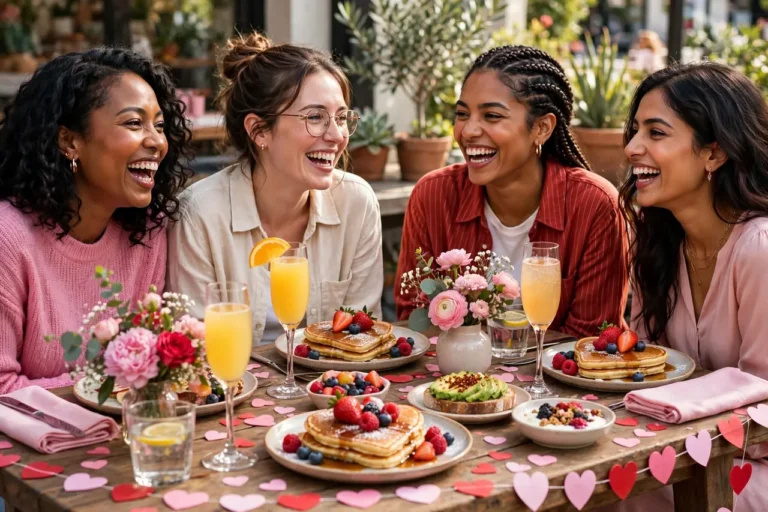
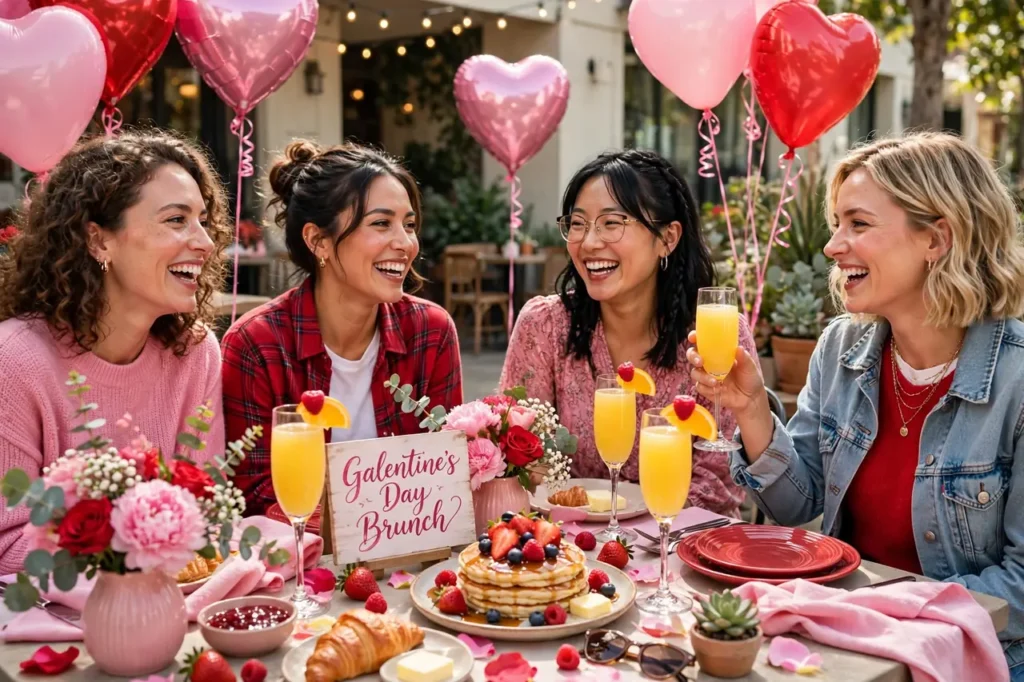
Friends: Galentine’s Day (February 13), popularized by television but now genuinely observed, celebrates female friendship with brunches, gifts, and unapologetic affection. Palentine’s extends the idea to all friendships. In Finland and Estonia, the holiday has always been Friend’s Day — Ystävänpäivä — with cards and gifts exchanged platonically. There is no reason romance should monopolize affection.
Family: Parents exchange valentines with children; classrooms hold valentine exchanges that teach generations of kids their first lessons in expressing kindness. Grandparents receive cards from grandchildren. The family valentine is one of the holiday’s most wholesome traditions — love without any romantic complication.
Yourself: The self-love movement has claimed February 14 as a day for personal kindness: a solo spa day, a favorite meal, a letter to yourself. Critics call it a consolation prize; practitioners call it the foundation — you cannot pour from an empty cup, and a day dedicated to love is a fine day to include yourself.
Your community: Some couples and singles alike spend the day volunteering, visiting nursing homes, or performing random acts of kindness. Love directed outward, at strangers, might be the most Valentine’s thing of all — it echoes the holiday’s oldest layer, when mid-February was about communal vitality rather than private romance.
Legends vs. Facts: What Historians Actually Say
With a story this old, it is worth separating what we know from what we merely repeat. Here is the honest accounting. What is solid: Lupercalia was a real mid-February Roman festival with fertility rituals and matchmaking elements. Multiple Christians named Valentine were martyred in third-century Rome. Pope Gelasius I established February 14 as Saint Valentine’s feast in 496 AD, around the time Lupercalia was suppressed. Chaucer linked the date to romance in the 1380s. Mass-produced valentines, heart-shaped chocolate boxes, and Hallmark’s entry are all documented 19th- and 20th-century facts.
What is uncertain: Nearly every romantic detail of Saint Valentine’s legend — the secret weddings, the jailer’s daughter, the first “from your Valentine” note. These stories appear in accounts written centuries after the events, and historians treat them as pious legend rather than biography. The direct causal link between Lupercalia and Valentine’s Day is also debated: the timing is suggestive, but no surviving document says “we are replacing Lupercalia with Valentine’s feast.” It is an inference — a strong one, given the Church’s well-documented habit of absorbing pagan calendar slots, but an inference nonetheless.
What is myth: That Valentine’s Day was “invented by greeting card companies” — the romantic tradition predates Hallmark by 500 years. That the holiday has a single origin — it has at least half a dozen, layered. And that any one country’s customs are the “original” ones — the holiday has been reinvented in every era and every culture that adopted it. The truth is messier and more interesting than any single story: Valentine’s Day is a palimpsest, a manuscript written over many times, with every layer still faintly visible.
A Closer Look: How Different Cultures Made It Their Own
Japan’s version is perhaps the most elaborate adaptation. On February 14, women give chocolate to men — distinguishing honmei-choco (true-feeling chocolate for a loved one) from giri-choco (obligation chocolate for colleagues). A month later, on White Day (March 14), men reciprocate, traditionally with gifts worth more than what they received. The system, heavily promoted by confectioners from the 1960s onward, turned a foreign import into a deeply Japanese social ritual with its own etiquette and anxieties.
South Korea took the Japanese model and extended it into a year-round romantic calendar: Valentine’s Day, White Day, and then Black Day (April 14), when singles gather to eat black bean noodles and commiserate — a celebration of singlehood as joyful as the couples’ holidays. Brazil moved the lovers’ day to June 12 (Dia dos Namorados), adjacent to Saint Anthony’s feast — Saint Anthony being the patron of marriage — and celebrates with music festivals in the Southern Hemisphere’s winter. Wales largely ignores February 14 in favor of Saint Dwynwen’s Day on January 25, honoring the Welsh patron saint of lovers with hand-carved wooden love spoons, a craft tradition centuries old.
What these adaptations share is revealing: none of them kept the holiday unchanged, and all of them kept its essence. Cultures adopt Valentine’s Day the way languages adopt loanwords — reshaping it to fit local grammar. That adaptability is the real answer to why the holiday survived global transmission while countless other customs faded: it is less a fixed tradition than a template, and templates travel.
The Future of Valentine’s Day
Where is the holiday headed? The trends are visible already. Digital valentines — video messages, playlists, AR filters — are supplementing paper cards, especially among younger celebrants. The gendered scripts are loosening: mutual gift-giving is replacing the old men-buy-jewelry model, and the holiday’s expansion to friends, family, and self-care shows no sign of reversing. Sustainability is reshaping the material side, with growing interest in experiences over objects, locally grown flowers, and ethically sourced chocolate.
Meanwhile, the commercial core is not going anywhere — if anything, social media has intensified the pressure to perform romance publicly. The healthiest future for the holiday is the one its history suggests: keep reinventing it. Every generation so far has taken Valentine’s Day and made it theirs — from Chaucer’s readers to Howland’s customers to today’s Galentine’s brunches. The date is fixed; the meaning is, and always has been, up for negotiation. Your celebration this year is the next chapter.
The Psychology: Why Rituals Like This Matter
Strip away the history and the commerce, and a real question remains: does a designated day of love actually do anything for relationships? Psychologists who study rituals say yes — and the reasons are instructive.
First, rituals solve the problem of inertia. Most couples intend to be romantic; busy lives erode the intention. A culturally enforced date removes the need to decide — the calendar decides for you, the way birthdays and anniversaries do. Researchers find that couples with regular rituals of connection report higher satisfaction, not because the rituals are grand, but because they are regular: repeated small investments compound.
Second, shared rituals create shared identity. When a couple has “their” Valentine’s traditions — the same restaurant, the annual letter, the walk — those rituals become part of the couple’s story about itself. Relationship psychologists call this “shared meaning,” and it is one of the strongest predictors of long-term stability. Valentine’s Day hands every couple a ready-made framework for building shared meaning, once a year, on schedule.
Third, the act of expressing affection — saying it, writing it, showing it — has measurable effects. Studies on gratitude and expressed appreciation consistently show that voicing love strengthens bonds for both the speaker and the hearer. Valentine’s Day is, functionally, a societal nudge to do what the research recommends: say the thing out loud. The holiday’s deepest justification is not historical or commercial — it is psychological. We celebrate Valentine’s Day because scheduled, shared, expressed affection works.
The caveat matters too: one day cannot carry a relationship. Couples who are attentive only on February 14 do not benefit; the ritual works when it punctuates an ongoing practice of care, not when it substitutes for one. Think of Valentine’s Day as the exclamation point, not the sentence.
12 Meaningful Ways to Celebrate This Year
Knowing why we celebrate is only useful if it changes how. Here are twelve ways to honor the holiday’s real meaning — connection, expressed deliberately — without falling into the commercial script.
- 1. Write the letter. A real, handwritten letter beats any purchased card. Say one true thing you have never quite said out loud.
- 2. Recreate a memory. Return to where you first met, first kissed, or first said “I love you.” Place matters to memory.
- 3. Cook together. Choose a recipe neither of you has tried. The collaboration is the date.
- 4. Take the walk. No destination, no phones. Let conversation go where it goes.
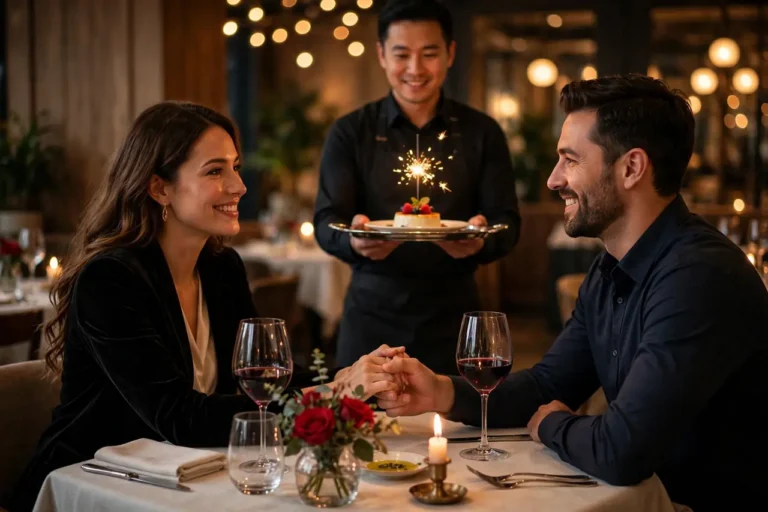
- 5. Ask a big question. Over dinner, ask something you have never asked: What are you most proud of this year? What do you dream about lately? Valentine’s Day is for depth.
- 6. Make the playlist. Each pick ten songs that say something about your relationship, and listen together. (Our couples’ traditions guide pairs beautifully with a music night.)
- 7. Celebrate friendship. Host a Galentine’s or Palentine’s brunch. Love is bigger than romance.
- 8. Volunteer together. Serve a meal, visit a shelter, shovel a neighbor’s walk. Shared kindness bonds as surely as shared candlelight.
- 9. Unplug completely. Phones off from dinner until morning. Attention is the rarest gift.
- 10. Start a tradition. Pick one small ritual — the toast, the walk, the letter — and commit to repeating it yearly. Traditions are just celebrations that survived.
- 11. Learn the story. Share this article’s history over dinner. Knowing the 2,000-year backstory makes the evening feel part of something larger.
- 12. Say it plainly. Look at your person and say “I love you” like you mean it — slowly, specifically, with eye contact. Everything else is decoration.
If distance separates you this year, none of this is out of reach — our guide to celebrating Valentine’s Day long-distance adapts every one of these ideas for couples apart.
Watch: Is Valentine’s Day Just a Calm Lupercalia?
This engaging video explores the holiday’s strangest question: how much of wild, raucous Lupercalia survives inside modern Valentine’s Day? From goat-hide whips to greeting cards, it traces the transformation with wit and solid history — a perfect watch to share with your valentine.
FAQs About Why We Celebrate Valentine’s Day
Why is Valentine’s Day on February 14?
February 14 was the feast day of Saint Valentine, established in 496 AD — likely placed to absorb the mid-February Roman festival of Lupercalia. The date gained romantic meaning in the 1380s when Chaucer linked it with birds choosing mates, and the association stuck for 600+ years.
Was Valentine’s Day originally a pagan holiday?
Partly. The mid-February slot belonged to Lupercalia, a Roman fertility festival. When the Church established Saint Valentine’s feast on February 14 and suppressed Lupercalia around the same time, the old festival’s timing — and faint echoes of its themes — carried over. But the romantic meaning came much later, from medieval poetry, not pagan ritual.
Why do we give valentines, flowers, and chocolate?
Handwritten valentines date to the 1400s; mass-produced cards took off in the 1840s. Red roses became standard through Victorian flower language, where each bloom carried meaning. Richard Cadbury’s 1861 heart-shaped chocolate box made candy central. Each tradition was a commercial innovation that stuck because it expressed something real.
Do people in other countries celebrate Valentine’s Day?
Yes — on every continent, though often differently. Japan and South Korea add White Day (March 14); Brazil celebrates in June; Wales honors its own love saint in January; Finland treats it as Friend’s Day. The core idea travels; the customs localize.
Is Valentine’s Day just a commercial invention?
Not exactly. Commerce amplified and standardized the holiday, especially from the Victorian era onward — but it attached itself to traditions centuries older: the saint’s feast, Chaucer’s poetry, handmade valentines. The industry monetized the date; it did not invent the human need behind it. Our Valentine’s Day facts and trivia collection has more surprising details.
What should Valentine’s Day actually be about?
Deliberate affection. The holiday works best as a scheduled ritual of connection — a day to express love on purpose, whether romantic, platonic, familial, or directed at yourself. Keep it personal rather than commercial, make it a tradition rather than a transaction, and let the day mean whatever love means in your life. New to celebrating as a couple? Our Valentine’s Day etiquette guide for new relationships takes the pressure off.
Two Thousand Years of Saying “I Love You”
So why do we celebrate Valentine’s Day? Because two thousand years ago, Romans marked mid-February as a time of vitality. Because a martyred priest became a legend of love’s defiance. Because a medieval poet imagined birds choosing mates on that date, and the image was too beautiful to abandon. Because Victorians industrialized affection, and the modern world globalized it. And because underneath all of that history, the need never changed: humans want a day — one day, mid-winter, on the calendar where everyone can see it — to stop and say you matter to me, deliberately and out loud. That is why we celebrate. That is why it endures. Happy Valentine’s Day.