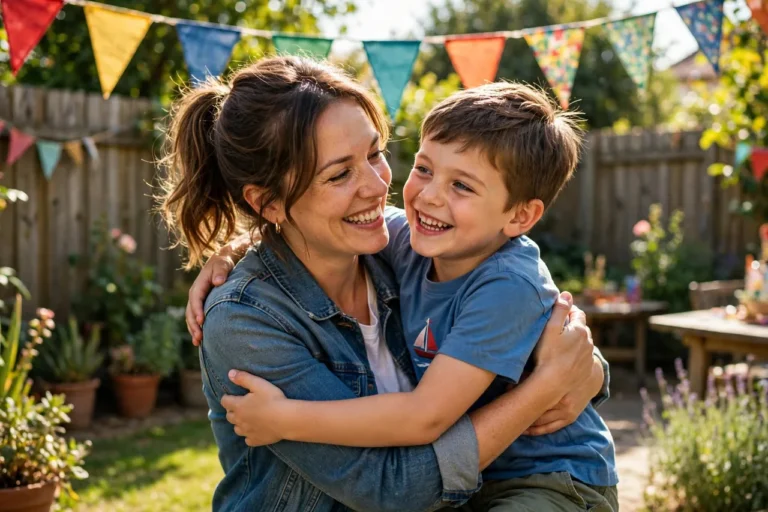
The Short Answer: Why Family Day Exists
We celebrate Family Day for a reason so simple it is easy to overlook: modern life pulls families apart, and we need a designated moment to pull them back together. Work schedules, school commitments, commutes, extracurricular activities, and the glowing rectangles in every pocket have fragmented the family day into slivers. A holiday dedicated to family is society’s way of saying that the people who share your name, your home, and your history deserve protected time.
At its core, Family Day is an intentional pause. It takes the abstract value most of us claim to hold — “family comes first” — and gives it a date on the calendar, a day off work, and a cultural permission slip to ignore everything else. Without that structure, “spending more time with family” remains a vague intention that loses to the inbox every single time.
But the holiday is about more than a day off. Across the countries and cultures that observe some version of Family Day, the celebration carries layers of meaning: gratitude for the people who raised us, recognition of the work of caregiving, a chance to strengthen bonds across generations, and a public statement that families — in all their diverse forms — are the foundation of a healthy society. If you want to turn the sentiment into action, our Mother’s Day celebration ideas and rainy day family activities guides are full of ways to make any family day special.
The Deeper Reasons We Celebrate Family Day
Beneath the surface of a statutory holiday lies a set of human needs that Family Day answers. Understanding these reasons transforms the day from a mere long weekend into something you celebrate with genuine intention.
To Protect Time Together
The average family today spends less unstructured time together than any previous generation. Both parents work in most households, children shuttle between school and activities, and even meals are increasingly eaten in shifts. Family Day creates a rare synchronized pause — a day when the usual excuses evaporate because everyone, from the office to the school, has stopped at once. That synchronization matters: togetherness is only possible when schedules align, and a public holiday aligns them by force.
To Honor the Work of Family
Raising children, caring for aging parents, maintaining a household, holding a family together through hard times — this is real work, and much of it is unpaid and invisible. Family Day is one of the few public acknowledgments that caregiving matters. It says to the parent who packed a thousand lunches, the adult child who checks on an elderly mother, the grandparent who provides after-school care: what you do counts, and the culture sees it.
To Strengthen Bonds Across Generations
Families are one of the few places where a five-year-old and an eighty-five-year-old regularly share a table. Those cross-generational connections are precious and increasingly rare. Family Day encourages the kind of gatherings — the big Sunday-style dinners, the group outings, the photo sessions — where generations mix. Research consistently shows that children with close relationships with grandparents and extended family develop stronger resilience and a deeper sense of identity.
To Practice Gratitude Deliberately
Gratitude is easy to feel and hard to practice. Family Day builds the practice into the calendar. Whether it takes the form of a toast at dinner, a letter to a parent, or simply saying “I am glad you are my family” out loud, the holiday prompts expressions of appreciation that might otherwise go unsaid for years. Many families report that these small rituals become the emotional highlights of the day.
To Pass On Values and Stories
Every family has a mythology: the story of how the grandparents met, the legendary holiday disaster, the recipe nobody writes down. Family Day gatherings are where these stories get told and retold, transmitting values, humor, and identity to the next generation. Anthropologists call this “narrative inheritance,” and it is one of the strongest predictors of a child’s sense of belonging.
A Brief History of Family Day
The Family Day most North Americans know began in Canada, and its origin story is refreshingly human. In 1990, Alberta’s Lieutenant Governor Helen Hunley signed the Family Day Act, establishing the third Monday of February as a provincial holiday. The idea is often credited to then-Premier Don Getty, who wanted to create a mid-winter break that emphasized family values and gave working families a day to reconnect during the long stretch between New Year’s and Easter.
Saskatchewan followed in 2007, Ontario in 2008, and British Columbia in 2013, each adopting the third Monday of February (British Columbia initially chose the second Monday before aligning with the rest). Other provinces mark the same date differently — Manitoba celebrates Louis Riel Day, Nova Scotia and Prince Edward Island have their own heritage-themed holidays — but the underlying impulse is the same: a winter pause for rest and togetherness.
Internationally, the United Nations established the International Day of Families in 1993, observed every May 15. The UN’s version is less about a day off and more about raising awareness of family-related issues — work-family balance, intergenerational solidarity, family-oriented policies. Each year carries a theme, from “Families and Climate Action” to “Demographic Change,” connecting the intimate world of the household to global concerns.
Many other cultures have their own family-centered celebrations with much older roots: China’s Mid-Autumn Festival reunites families under the full moon, Korea’s Chuseok sends millions home to honor ancestors, and Mexico’s Día de los Muertos gathers families across the boundary of life and death. The specific dates and rituals differ, but the human need they serve is universal. For a look at how another beloved family holiday evolved, see our history of Mother’s Day.
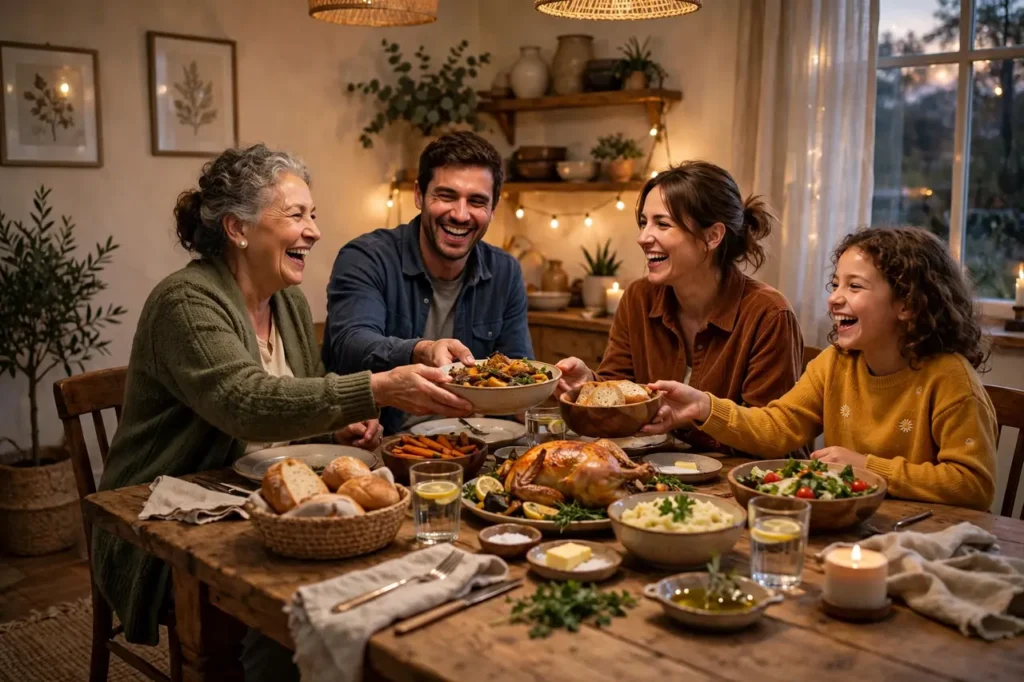
Family Celebrations Around the World
Family Day is not a single holiday but a global impulse expressed in dozens of forms. This table compares some of the world’s major family-centered observances.
| Celebration | When | Where | Origin | How Families Celebrate |
|---|---|---|---|---|
| Family Day | 3rd Monday of February | Canada (several provinces) | 1990, Alberta | Day off work; outings, skating, family dinners |
| International Day of Families | May 15 | Worldwide (UN) | 1993, UN resolution | Community events, policy discussions, family activities |
| Respect for the Aged Day | 3rd Monday of September | Japan | 1966 (roots in 1947) | Honoring elders; family visits and gifts |
| Chuseok | Autumn (lunar calendar) | Korea | Ancient harvest festival | Ancestral rites, family feasts, traditional games |
| Mid-Autumn Festival | Autumn (lunar calendar) | China and diaspora | Ancient moon worship | Mooncakes, lanterns, family reunions |
| Grandparents Day | 1st Sunday after Labor Day | United States | 1978, presidential proclamation | Honoring grandparents; school activities |
| Children’s Day | Varies by country | Many countries | 1925 Geneva declaration | Gifts and outings centered on children |
What unites these diverse celebrations is the recognition that family bonds need tending. No culture assumes togetherness happens automatically — every one of them built a ritual to protect it.
What Science Says About Celebrating Family
The case for Family Day is not just sentimental; it is empirical. Decades of research in psychology, sociology, and public health converge on a striking finding: strong family connections are among the most powerful predictors of human well-being.
Family Rituals Build Resilience
Researchers who study family rituals — the repeated, meaningful practices like holiday dinners, bedtime stories, and annual trips — find that children in families with strong rituals show greater emotional resilience, better academic outcomes, and stronger identity formation. The ritual itself matters less than its regularity and meaning. A Family Day tradition, repeated yearly, becomes exactly the kind of anchor researchers describe.
Shared Meals Matter More Than You Think
One of the most replicated findings in family research is the power of shared meals. Children who regularly eat dinner with their families show lower rates of substance use, better mental health, and stronger vocabularies. Family Day, with its emphasis on unhurried togetherness, is an ideal occasion for the kind of long, lingering meal that everyday schedules rarely allow.
Intergenerational Contact Benefits Everyone
Studies of grandparent-grandchild relationships show benefits flowing both ways: children gain wisdom, storytelling, and unconditional affection, while older adults show slower cognitive decline and greater life satisfaction. Family Day gatherings that bring generations together are, quite literally, good for everyone’s health.
Play Is Serious Business
Developmental psychologists emphasize that unstructured play — the backyard games, the silly contests, the made-up adventures — is essential for children’s creativity and emotional regulation. A Family Day spent playing together is not frivolous; it is developmental. Our family movie guide can help you plan the cozy evening half of the day.
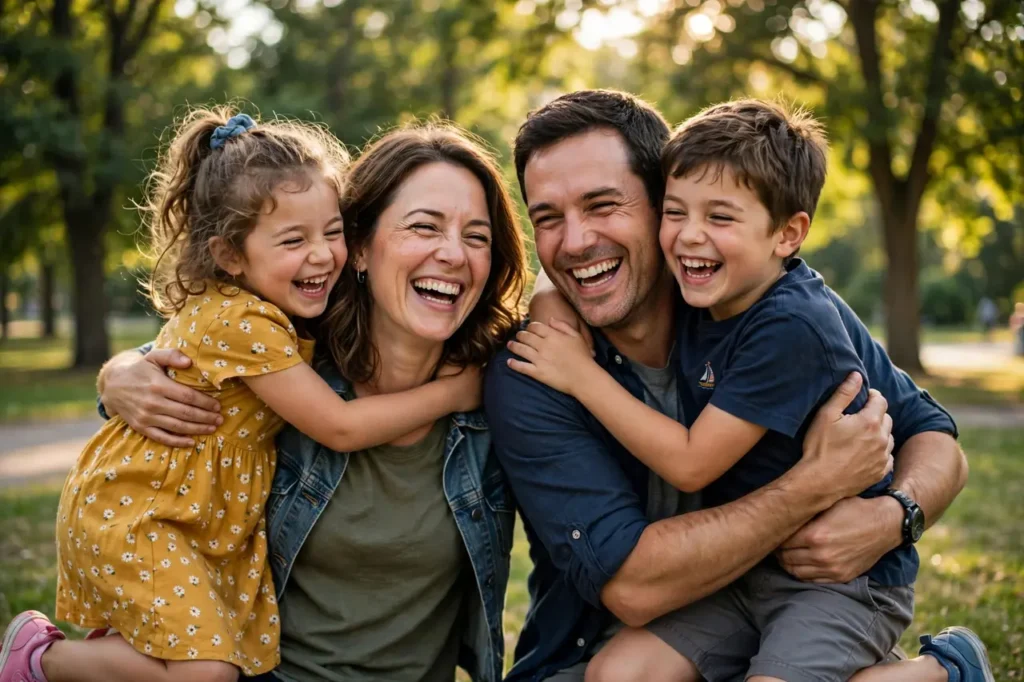
Meaningful Ways to Celebrate Family Day
Knowing why we celebrate is only half the equation. Here are ways to make the day genuinely meaningful rather than just another day off.
- Start a family interview tradition: Each Family Day, record a short video interview with each family member asking the same three questions: What was the best part of your year? What are you grateful for? What do you hope for next year? Over the years, these become priceless.
- Cook a heritage meal together: Choose a recipe from your family’s cultural background and cook it as a team, with the oldest generation teaching the youngest. Food is memory made edible.
- Take the annual photo: Same spot, same arrangement, every year. The series becomes a visual timeline of your family’s story.
- Write appreciation notes: Everyone writes a short note to another family member expressing something they appreciate. Read them aloud after dinner.
- Do something for another family: Volunteer together, deliver a meal to a neighbor, or donate to a family shelter. Generosity practiced together bonds families deeply.
- Unplug for the day: Put the phones in a basket from morning to evening. The initial discomfort fades fast, replaced by the forgotten pleasure of undivided attention.
- Revisit a family story: Ask the oldest person present to tell a story from their childhood. Record it. You will be grateful you did.
How Different Regions Celebrate Family Day
While the idea of Family Day is universal, its expression varies beautifully by place. In Alberta, where it all began, the third Monday of February often means outdoor winter festivals — communities organize skating parties, sleigh rides, and hot chocolate stands in local parks. Edmonton’s Silver Skate Festival, for example, has become a beloved Family Day weekend tradition, blending winter sports, art installations, and live music into a celebration the whole city shares.
In Ontario, Family Day weekend coincides with the height of winter carnival season in many towns. Families head to ski hills, which typically offer special Family Day lift-ticket deals, or visit one of the province’s many conservation areas for snowshoeing and tobogganing. Toronto’s museums and the Royal Ontario Museum often run special family programming, turning the day into an educational outing disguised as fun.
British Columbia’s version leans into the province’s milder coastal climate. Vancouver families might spend Family Day hiking the seawall, visiting the aquarium, or taking the ferry to one of the Gulf Islands. In the interior, it is prime ski season, and resorts from Whistler to Big White welcome families with torchlight parades and fireworks.
In Saskatchewan and New Brunswick, the holiday has a distinctly community feel — small-town winter carnivals, community center open houses with free skating and swimming, and church and neighborhood potlucks. These grassroots celebrations capture something essential about Family Day: it was never meant to be a commercial holiday. There are no Family Day sales blitzes, no greeting-card industrial complex. It remains, stubbornly and wonderfully, about people rather than purchases.
South of the border, where no official Family Day exists, the spirit finds other outlets. Many American families have adopted the third Monday of February — already a day off for Presidents Day — as their own informal family day. Others anchor their celebration to the UN’s May 15 observance, using the spring weather for picnics and park days. The lesson is clear: you do not need legislation to protect family time. You need intention.
The Economics of Togetherness: Why a Paid Day Off Matters
It is worth pausing on something we take for granted: Family Day is, in most observing jurisdictions, a paid statutory holiday. That detail matters enormously, because time together is not equally available to everyone. Research on work-family balance consistently shows that lower-income workers — the people who would benefit most from protected family time — are the least likely to get it voluntarily.
A statutory holiday changes the equation. When the day off is universal, the retail worker, the bus driver, and the office manager all get the same gift: a synchronized pause. No one has to request it, justify it, or fall behind for taking it. The universality is the point. It removes the class divide from togetherness and declares, as a matter of public policy, that family time is not a luxury good.
Economists have also noted the holiday’s gentle economic wisdom. Family Day weekends boost local tourism — the ski hills, the restaurants, the museums, the small towns within driving distance all see a welcome mid-winter lift. Money spent on a family outing circulates locally in a way that online shopping never does. The holiday is, in this sense, an investment: in families, in communities, and in the local economies that serve them.
But the deepest economic argument is about human capital. Children who grow up with strong family connections become healthier, more productive adults. Marriages strengthened by protected time together are more stable. Communities woven from strong families are more resilient. A single paid day off is a remarkably cheap way to buy all of that.
What Family Day Teaches Children About Life
Children learn more from what we protect than from what we preach. When a society sets aside a day and says “this day is for family,” children absorb a powerful lesson about priorities — one that no lecture could deliver as effectively.
First, they learn that rest is legitimate. In a culture that often treats busyness as a virtue, a holiday dedicated to slowing down teaches children that their worth is not measured by their productivity. A day spent building a snowman or playing cards is not a day wasted; it is a day invested in the people who matter.
Second, they learn that relationships require maintenance. By watching their parents deliberately clear the calendar for family, children internalize the idea that love is not just a feeling but a practice — something you schedule, protect, and show up for. This is one of the most valuable lessons a parent can model.
Third, they learn their own history. Family Day gatherings are where children hear the stories that root them: how their parents met, what their grandparents were like as children, where the family came from. Psychologists call this “intergenerational narrative,” and children who know their family’s stories show measurably higher self-esteem and resilience.
Finally, they learn joy. Not the fleeting joy of a new toy, but the deep, warm joy of belonging — of being known, accepted, and delighted in by the people who have known them longest. That feeling becomes an inner compass, guiding them toward healthy relationships for the rest of their lives.
Watch: Why Family Day Matters
This short reflection captures the heart of Family Day beautifully — a reminder that strong families are built not in grand gestures but in small, daily moments of presence and love.
Frequently Asked Questions
Why do we celebrate Family Day in February?
The February date originated in Alberta, Canada, where legislators wanted a holiday to break up the long winter stretch between New Year’s Day and Easter. Placing it in mid-February gave families a day of rest and togetherness during the darkest, coldest part of the year — precisely when morale needs the biggest boost.
Is Family Day celebrated in the United States?
There is no federal Family Day holiday in the United States, though Americans observe the UN’s International Day of Families on May 15 and celebrate family-centered holidays like Thanksgiving, Mother’s Day, and Father’s Day with great enthusiasm. Many American families also create their own family day traditions independent of any official calendar.
What is the difference between Family Day and the International Day of Families?
Family Day (third Monday of February) is a statutory holiday in several Canadian provinces — a day off work focused on rest and togetherness. The International Day of Families (May 15) is a United Nations observance focused on raising awareness of family issues and promoting family-friendly policies worldwide. One is a pause; the other is a platform.
Why is celebrating family important for children?
Celebrations give children a sense of belonging, continuity, and identity. Rituals like Family Day teach children that they are part of something larger than themselves, provide predictable moments of joy, and create the shared memories that become the foundation of lifelong family bonds.
Do all cultures celebrate something like Family Day?
Nearly every culture has family-centered celebrations, though they take different forms — harvest reunions, ancestor-honoring festivals, religious feasts, or dedicated holidays for parents, children, or grandparents. The universality of these celebrations suggests that honoring family is a fundamental human impulse, not a modern invention.
How can busy families celebrate Family Day meaningfully?
Meaning does not require elaborate plans. A single shared meal with phones put away, a walk together, or an hour of uninterrupted conversation can be more meaningful than an expensive outing. The key is intention: choose one activity, protect the time, and be fully present.
What if my family is small or far apart?
Family Day is for every kind of family — including families of two, chosen families of friends, and families separated by distance. A video call with a shared meal, letters exchanged by mail, or a gathering of close friends all honor the spirit of the day. Family is defined by love and commitment, not by headcount or proximity.
How is Family Day different from Thanksgiving?
Thanksgiving is centered on gratitude and traditionally involves a specific feast with historical associations. Family Day is simpler and more open-ended: its only agenda is togetherness. There is no prescribed meal, no historical narrative — just protected time with the people who matter most.
Can Family Day help families going through difficult times?
Yes — and sometimes it matters most precisely then. For families navigating divorce, illness, grief, or estrangement, a designated day of togetherness can provide a gentle, low-pressure reason to reconnect. It does not fix deep problems, but it creates an opening. Therapists often note that rituals give struggling families a structure to lean on when emotions are complicated. Even a brief, imperfect gathering on Family Day can be a first step back toward each other.
How do single-parent families celebrate Family Day?
Beautifully and completely. Family Day belongs to every family configuration, and single-parent families often develop the richest traditions because every ritual is intentionally built rather than inherited. Many single parents use the day for special one-on-one or one-on-few outings with their children, invite close friends who function as chosen family, or join community celebrations. The day honors the family you have, whatever shape it takes.
Carrying the Spirit Beyond the Holiday
The quiet risk of any holiday is that we confine its values to a single date. We are grateful on Thanksgiving, generous at Christmas, reflective on New Year’s Day — and then return to business as usual. Family Day deserves better than that. Its real power lies not in what happens on the third Monday of February or on May 15, but in what those days teach us about the other 364.
Consider adopting a miniature version of the holiday each week: a device-free family dinner every Sunday, a monthly outing with no agenda, a yearly weekend trip that everyone protects on the calendar. These smaller rituals compound. A family that practices togetherness weekly does not need a holiday to remind them — but the holiday is what taught them how.
You might also extend the spirit outward. Family Day is an ideal moment to check on the family that is struggling — the new parents running on empty, the widow spending the holiday alone, the neighbors whose kids have moved far away. An invitation extended on Family Day can change someone’s whole season. Togetherness, it turns out, is one of the few things that grows when you give it away.
Ultimately, we celebrate Family Day for the same reason we celebrate anything that matters: to remember, in the middle of ordinary life, what is most important. The holiday will come and go each year. The people it honors are the reason every other day is worth living well.
Celebrate the People Who Made You
We celebrate Family Day because families are where we learn to love and be loved, where we discover who we are, and where we return — in person or in memory — when the world feels uncertain. A single day on the calendar cannot contain everything family means, but it can remind us to notice it, honor it, and protect it.
This Family Day, resist the urge to treat it as just another day off. Call the person you have been meaning to call. Cook the meal that tastes like childhood. Take the photo. Say the thing you have been meaning to say. The holiday exists for exactly this — and the people you share it with are the reason it matters.