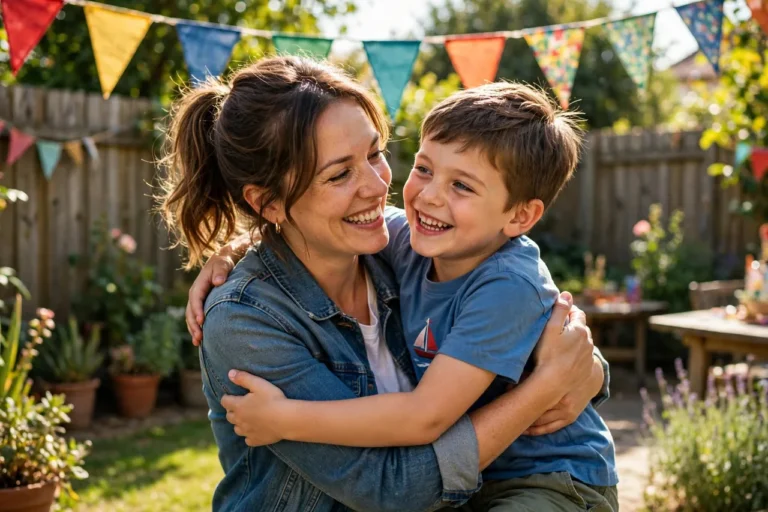
Your sister is in Seattle, your brother is in Austin, and you are in Chicago — but Siblings Day is April 10 and distance is not an excuse. These virtual siblings day ideas for long distance prove that a celebration over video call can feel just as real, just as warm, and just as memorable as being in the same room. Different zip codes, same bond.
Here is what most people get wrong about virtual celebrations: they treat the video call as the event. It is not — it is the venue. A great virtual Siblings Day has a plan, an activity, and a shared experience, the same as any in-person party. “Let’s Zoom sometime” fizzles; “Saturday at 7, we’re doing a cook-together, here’s the ingredient list” becomes a tradition.
This guide covers everything: the tech setup (platforms compared, camera and audio tips), 18 virtual activities organized by energy level, mail-ahead celebration kits that make the call feel physical, timezone wrangling for scattered families, and troubleshooting for the inevitable tech hiccups. By the end, you will have a complete plan for a Siblings Day that bridges any distance.
The Tech Setup: Get This Right First
Bad tech kills virtual celebrations faster than anything. Fifteen minutes of setup prevents an hour of “can you hear me?”
| Platform | Best for | Free limits | Standout feature |
|---|---|---|---|
| Zoom | Large family calls, games | 40 min (free tier) | Breakout rooms for team games |
| Google Meet | Quick, no-install calls | 60 min (free tier) | Runs in browser, easiest for grandparents |
| FaceTime | All-Apple families | Unlimited | Best video quality on Apple devices |
| Discord | Gaming siblings | Unlimited | Voice channels + screen share while gaming |
| WhatsApp Video | International families | Unlimited | Everyone already has it; low bandwidth needs |
- Camera at eye level. Prop the laptop on books. Nobody looks good from the nostril angle.
- Light your face. Sit facing a window or lamp. Backlighting turns you into a silhouette.
- Use headphones. It eliminates echo and makes side conversations possible.
- Test 15 minutes early. The host joins first, tests screen share and audio, and greets people as they arrive.
- Have a backup plan. If video fails, the phone call still works. Agree on the fallback in advance.
- Designate a tech helper. One patient person (usually the youngest) on standby for anyone struggling.
Shared-Experience Activities: 8 Ideas That Feel Like Being Together
The best virtual activities involve doing the same thing at the same time. Synchronized experience is what makes distance disappear.
1. The Virtual Cook-Together
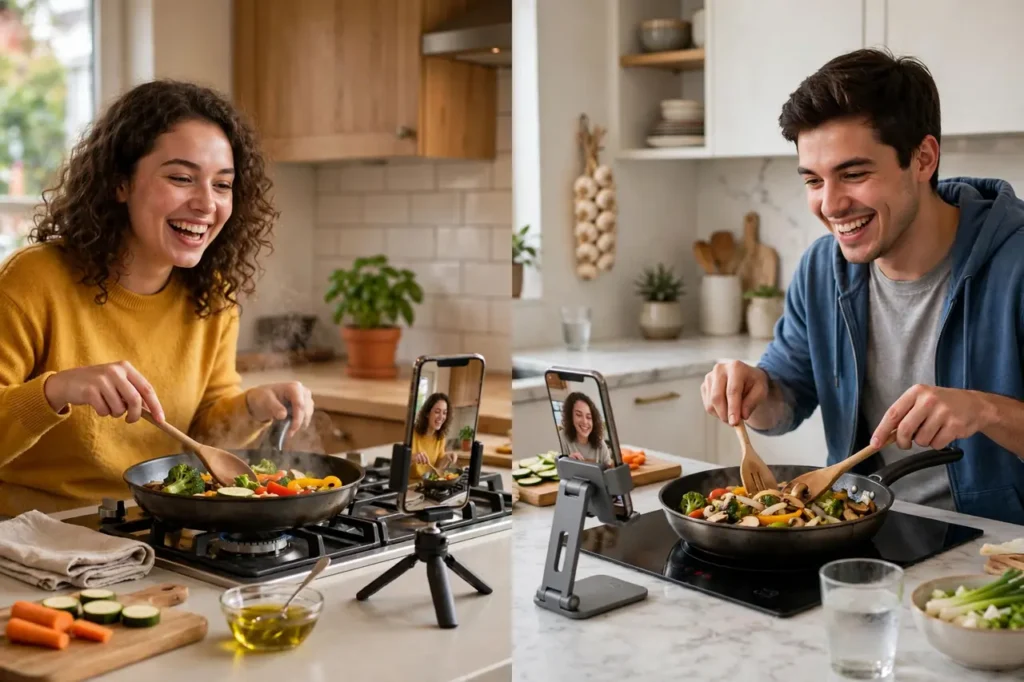
Everyone shops for the same ingredients from a shared list, then cooks the same recipe over video. Prop phones where everyone can see the “kitchen,” and eat the finished meal together on camera. Pick something interactive — homemade pizza, tacos, dumplings — where the process is the fun. This is the number-one virtual Siblings Day activity for a reason. Time: 1.5–2 hours.
2. Synchronized Movie Night
Use a watch-party extension (Teleparty, Disney+ GroupWatch) to sync playback, keep a video or chat window open for commentary. Pick a childhood favorite for maximum nostalgia. The running commentary from siblings is always better than the movie. Our family movie night guide has the full setup. Time: 2 hours.
3. Online Game Tournament
Jackbox Party Packs (one person buys, everyone plays free on their phone), online Codenames, or video-call charades. Run a bracket across 3–4 games with a silly digital trophy. Competitive siblings thrive here. For more options, our best family video games and cozy video games lists have picks for every group. Time: 1–2 hours.
4. Virtual Wine / Coffee / Hot Chocolate Tasting
Mail everyone the same tasting kit (3 mini bottles, 3 coffee samples, or 3 chocolate bars), then taste together on camera with a scoring sheet. It feels sophisticated, it is genuinely fun, and the mail-ahead kit makes it physical. Time: 1 hour + mailing lead time.
5. The PowerPoint Party
Each sibling makes a 5-minute presentation on an absurd topic — “Ranking Our Childhood Pets,” “A Statistical Analysis of Who Mom Loved Most,” “Why My Sibling Owes Me Money: A Timeline.” Present over screen share, vote on winners. Unhinged in the best way. Time: 1 hour.
6. Virtual Craft Session
Mail everyone the same simple craft kit (or a supply list), then make it together on camera — friendship bracelets, paint-along canvases, card-making. It is calm, chatty, and everyone ends up with a matching keepsake. Time: 1–1.5 hours.
7. Online Escape Room
Many companies run virtual escape rooms for remote groups; or try free puzzle-hunt sites. Siblings who grew up solving problems together (usually by arguing) will fall right back into roles. Time: 1 hour.
8. The “Couch Concert”
Each sibling performs something — a song, a poem, a dramatic reading of old diary entries, a magic trick learned from YouTube that afternoon. Low talent required; enthusiasm mandatory. Record it. Future you will be grateful. Time: 45 minutes.

Heartfelt & Low-Key: 6 Meaningful Virtual Ideas
9. The Video Letter Chain
Each sibling records a 2-minute video message for another sibling — specific memories, genuine appreciation — and you watch them together on the call. It is the virtual equivalent of reading letters aloud, and it hits harder than anyone expects. Time: 30 minutes on the call + recording time.
10. Shared Photo Album Night
Everyone uploads 10 favorite sibling photos to a shared album beforehand. On the call, screen-share through them one by one with stories. The “I forgot about this!” moments come rapid-fire. End by ordering prints of the best ones as gifts. Time: 1 hour.
11. The Interview Game
Prepare questions for each sibling — “What’s your earliest memory of me?”, “What should I be prouder of?”, “What do you wish we did more of as kids?” — and take turns answering on camera. It is part game show, part therapy, entirely bonding. Time: 45 minutes.
12. Virtual Toast & Memory Share
Everyone pours their drink of choice, and each person toasts with one favorite memory of the group. Simple, short, and surprisingly emotional. Do this at the start or end of any other activity to anchor the day. Time: 20 minutes.
13. The Care Package Unboxing
Everyone mails everyone else a small box of inside jokes and treats, timed to arrive before Siblings Day. Open them together on camera. The reactions — laughter, confusion, tears — are the entire point. Time: 30 minutes + mailing.
14. Digital Time Capsule
Create a shared document or video: each sibling adds a letter to the group, predictions for next year, and a current photo. Seal it (set a calendar reminder) until next Siblings Day. A tradition that compounds. Time: 30 minutes.
Playful & Silly: 4 Ideas for Maximum Laughs
15. Virtual Costume Contest
Theme: “dress as a sibling” — everyone shows up dressed as another sibling, doing their best impression. Voting for best costume and best impression. The impressions will be terrible and therefore perfect. Time: 30 minutes.
16. The Background Challenge
Everyone sets the most ridiculous virtual background they can find; vote on categories (funniest, most confusing, most likely to be real). Screenshot the grid — it becomes the group chat avatar for a month. Time: 15 minutes.
17. Remote Scavenger Hunt
One person calls out items (“something older than you,” “proof Mom has a favorite,” “the weirdest thing in your fridge”) and everyone races to find them on camera. First back with each item scores. Chaos, laughter, and surprising discoveries about how your siblings live. Time: 30 minutes.
18. Lip-Sync Battle
Each sibling performs a lip-sync to a song meaningful to the group, full commitment required. Vote on showmanship. Record it — this becomes legendary family footage. Time: 30 minutes.
The Mail-Ahead Kit: Making Virtual Feel Physical
The secret weapon of great virtual celebrations: everyone opens the same box at the same time on camera. It turns a video call into a shared physical experience.
What to include: matching snacks or candy, a printed photo of the group, party hats or silly props, a handwritten note, and anything the activity needs (craft supplies, tasting samples, game pieces). Timing: mail 7–10 days before Siblings Day; confirm arrival the day before. Cost: $10–20 per box plus shipping.
Kit ideas by activity: a “tasting kit” for the virtual tasting, a “craft kit” for the craft session, a “movie night kit” with popcorn and candy, or a “mystery kit” where nobody knows what’s inside until the call. The unboxing moment — everyone ripping into identical boxes on camera — is pure joy.
Timezone Wrangling for Scattered Siblings
When siblings span time zones, scheduling is the hardest part. Solve it like this:
- Find the overlap window. Use a world-clock tool to find hours that work for everyone — even a 90-minute window is enough for a great call.
- Rotate the sacrifice. If someone always takes the 6 AM call, rotate it yearly. Fairness keeps resentment out of the tradition.
- Consider splitting the celebration. Two shorter calls (one for each hemisphere’s convenience) beat one call where half the group is half-asleep.
- Go async for the heartfelt stuff. Video letters, photo albums, and care packages do not need real-time — collect them in the days before, then share on the call.
- Lock the date early. Send a calendar invite 3–4 weeks out. “Sometime in April” becomes never; “Saturday April 11, 4 PM ET” becomes a plan.
Watch: Virtual Party Games That Actually Work
Ten tested Zoom games for families — steal the format, adapt the questions to your siblings, and your virtual Siblings Day plans itself.
Troubleshooting: When Tech Fights Back
| Problem | Fix |
|---|---|
| Someone can’t join the call | Send a one-tap phone dial-in number as backup; or switch the whole group to a simpler platform |
| Terrible audio/echo | Everyone mutes when not speaking; the offender switches to headphones |
| Video keeps freezing | Everyone turns off video except the speaker; audio-only still works for most activities |
| Screen share won’t work | Have a backup: email the slides/photos ahead so everyone can follow along locally |
| Grandparents are lost | Do a 10-minute practice call the day before; write down 3 steps on paper for them |
| Time runs out (free Zoom 40-min limit) | Plan a natural break at 35 minutes; everyone rejoins a fresh call — or upgrade for one month |
Virtual Siblings Day FAQ
How do you celebrate Siblings Day virtually?
Schedule a real video-call event (not a casual chat) with a planned shared activity: a cook-together, synchronized movie night, online game tournament, or virtual tasting. Mail-ahead kits with matching snacks or supplies make it feel physical and special.
What are the best virtual activities for siblings?
The highest-rated are the virtual cook-together, synchronized movie night, Jackbox-style game tournaments, and the PowerPoint party. All involve doing the same thing simultaneously, which is what makes distance disappear.
How do you make a video call feel special, not just another meeting?
Dress up (or coordinate costumes), mail matching kits everyone opens on camera, start with a toast, and ban multitasking. Ceremony — a planned opening and closing — transforms a call into an event.
What if siblings are in very different time zones?
Find the overlap window, rotate who takes the inconvenient hour, or split into two shorter calls. Collect heartfelt contributions (video letters, photos) asynchronously beforehand so the live call can focus on fun.
What should I put in a virtual celebration mail-ahead kit?
Matching snacks, a printed group photo, a silly prop, a handwritten note, and any supplies the activity needs. Mail 7–10 days ahead and confirm arrival before the call.
Can older relatives join a virtual Siblings Day?
Absolutely — do a practice call the day before, use the simplest platform (Google Meet in a browser, or WhatsApp video), and assign one person as their tech buddy. Grandparents often become the highlight of the call.
Distance Is a Detail
Eighteen ideas, a tech playbook, mail-ahead kits, and timezone strategies — everything you need to make April 10 feel close no matter how far apart you are. The siblings who celebrate across distances often end up with the strongest traditions, precisely because every virtual Siblings Day takes intention. Nobody accidentally has a great video-call celebration; the planning itself is proof of love.
So send the calendar invite today, pick one shared activity, and mail the kits. When you are all on screen together — toasting, laughing, cooking the same meal in four different kitchens — the miles will feel very small indeed. That is the quiet magic of virtual siblings day ideas for long distance: same bond, new format, zero excuses. Happy Siblings Day, wherever you all are.
Async Celebrations: When Time Zones Make Live Impossible
Sometimes a live call genuinely cannot work — a 12-hour time difference, a sibling on night shifts, a new parent on no schedule at all. Async virtual siblings day ideas for long distance keep everyone included without requiring simultaneity:
- The video letter chain. Sibling A records a 3-minute message and sends it to B; B adds their own and sends to C; the chain grows all week and everyone watches the full compilation on April 10. It is slow, personal television starring your family.
- The shared photo project. A prompt per day for the week of Siblings Day (“day 1: your view right now,” “day 2: something that reminds you of us”) — everyone posts to a shared album. By April 10 you have a week-long documentary of each other’s lives.
- The collaborative playlist. Everyone adds songs all week with annotations explaining each pick. On Siblings Day, everyone presses play on their own time and texts reactions. Music discussion threads are surprisingly bonding.
- The recipe relay. Each sibling cooks the same recipe on their own schedule, photographing each step, and posts to the group chat. You compare results, mock the failures, and praise the wins — a cook-together without the coordination.
- The voice-note toast. Everyone records a 60-second toast as a voice note and sends them to arrive on April 10 morning. Waking up to a string of toasts in your siblings’ voices is genuinely moving.
- The digital scrapbook. A shared document or slideshow everyone adds to all week: photos, memories, jokes, predictions. “Published” on Siblings Day. It becomes a keepsake you revisit for years.
Including Kids and Grandparents in Virtual Celebrations
Multi-generational virtual calls are wonderful and chaotic. Manage them:
- Give kids a role. Official greeter, show-and-tell presenter, game scorekeeper, or “DJ” (they pick the background music). A kid with a job is a kid who stays engaged.
- Keep kid segments short. Plan 15–20 minute blocks for kid-heavy activities, then let them wander off to play. Forcing toddlers through a 2-hour call helps no one.
- Grandparent tech prep. Do a practice call the day before. Write three steps on paper: 1) click the link, 2) click “join,” 3) unmute when you want to talk. Tape it to their device. Assign one patient person as their on-call tech buddy.
- The grandparent spotlight. Give grandparents a dedicated 10 minutes to share a story or show something. They are often the highlight of the call — and recording it preserves family history.
- Mail them a kit too. Grandparents opening the same celebration box as everyone else on camera is pure joy. Include large-print instructions for any activity.
Sample 2-Hour Virtual Siblings Day Run of Show
| Time | Segment | Notes |
|---|---|---|
| 0:00–0:15 | Hellos + kit unboxing | Everyone opens mail-ahead boxes on camera together |
| 0:15–0:25 | Toast + memory share | Each person toasts with one favorite memory |
| 0:25–1:10 | Main activity | Cook-together, game tournament, or PowerPoint party |
| 1:10–1:25 | Break | Stretch, refill drinks — or keep chatting; breaks are optional |
| 1:25–1:50 | Heartfelt segment | Video letters, photo album tour, or interview game |
| 1:50–2:00 | Closing + next-year planning | Group screenshot, lock next year’s date, goodbyes |
The structure matters: open with energy (unboxing), anchor with meaning (toast), play in the middle (activity), go deep near the end (heartfelt), close with logistics (next year). It mirrors the arc of great in-person parties — because the format changed, not the feelings.
Level Up: Making Next Year Even Better
- Debrief for 5 minutes. Right after the call, note what worked and what did not in the group chat while it is fresh. Next year’s planner will thank you.
- Rotate the host. A different sibling plans each year — new activities, new energy, shared ownership.
- Build the archive. Save the screenshots, the playlist, the recording (with everyone’s permission) in a shared folder. Year-over-year, it becomes a family treasure.
- Consider one in-person year. Many long-distance families alternate: virtual most years, one reunion year. The virtual celebrations keep the bond warm between the big ones.
- Budget for it. Even $10 per person for kits and ingredients, planned annually, removes all friction. The “sibling fund” tradition — everyone contributes yearly — works beautifully here.
More Virtual Celebration FAQ
What is the best platform for a virtual Siblings Day?
For most families: Zoom (best for games and large groups) or Google Meet (easiest, no install). All-Apple families should use FaceTime; international families often prefer WhatsApp video. Pick whatever the least tech-savvy participant can handle.
How do you celebrate Siblings Day when siblings are in different countries?
Combine async and live: collect video letters and photos throughout the week, then hold one shorter live call in the overlap window. Mail kits early (international shipping needs 2–3 weeks). WhatsApp is usually the most reliable cross-border option.
What are good virtual games for adult siblings?
Jackbox Party Packs, online Codenames, video-call trivia with sibling-themed questions, the PowerPoint party, and remote scavenger hunts. Our family video game picks include more options.
How do I make a virtual celebration feel like a real party?
Mail matching kits everyone opens on camera, start with a real toast, dress up or coordinate costumes, plan one main activity (not just chatting), and end with a group screenshot. Ceremony transforms a call into an event.
10 More Rapid-Fire Virtual Game Ideas
Need to fill time or want options? These all work over video with zero setup:
- Two truths and a lie, sibling edition — childhood stories only; siblings are the hardest audience to fool.
- The Wikipedia race — start on the same article, first to reach a target page by clicking links wins. Screen-share the chaos.
- Drawful / skribbl.io — free online drawing-guessing games; sibling inside jokes make the prompts legendary.
- Heads Up! over video — one person holds the phone to their forehead, everyone else shouts clues. Works perfectly on camera.
- The newlywed game, sibling version — “What would your sibling say is their most annoying habit?” Match answers for points.
- Story building — one person starts a story with one sentence; each sibling adds one sentence. Record it; the plot twists are unhinged.
- Show and tell — each person grabs the weirdest object within arm’s reach and explains why they own it. Surprisingly revealing.
- The accent challenge — read a paragraph in an assigned accent; everyone votes on best and worst. Simple, devastatingly funny.
- 20 questions, family edition — think of a family member, a shared memory, or an inside joke; others ask yes/no questions.
- The compliment battle — two siblings trade increasingly elaborate compliments about a third; the group votes on the winner. Wholesome with a competitive edge.
Recording, Privacy & Practicalities
- Ask before recording. Always get explicit consent from everyone before recording any part of the call — especially the heartfelt segments. A quick “is everyone okay if I record the toasts?” at the start covers it.
- Watch the background. Remind everyone to check what is visible behind them (open doors, sensitive documents, the mess they swore they cleaned). Virtual backgrounds are fine for the silly segments; use real backgrounds for the heartfelt ones.
- Mind the data. Video calls eat bandwidth — if someone is on mobile data or a slow connection, offer the audio-only option without judgment. Inclusion beats resolution.
- Have the phone numbers. If someone drops off the call, a quick text (“we lost you, rejoin when you can”) beats 10 minutes of “can you hear me?” directed at an empty square.
- End deliberately. Do not let the call fizzle into awkward 20-minute goodbyes. The host announces the closing (“okay, final toast!”), everyone says goodnight, and the call ends on a high. Fizzle-free exits are a host skill worth developing.
When Virtual Becomes the Tradition (and That’s Okay)
Some families discover that virtual Siblings Day works better than in-person — no travel stress, no hosting burden, everyone in their own comfortable space, and the activities are genuinely fun. If that is your family, own it: invest in the kits, refine the run-of-show, and make the virtual celebration a point of pride rather than a consolation prize.
The families with the strongest long-distance traditions share three habits: they schedule early (the calendar invite goes out weeks ahead), they commit fully (costumes on, kits opened, phones away), and they debrief honestly (what worked, what flopped, what is next year). Do those three things and your virtual Siblings Day will outperform most in-person parties — because intention always beats proximity.
Miles are just logistics. The bond is the point — and it transmits perfectly well over video, through the mail, and across time zones. See you on screen this April 10.