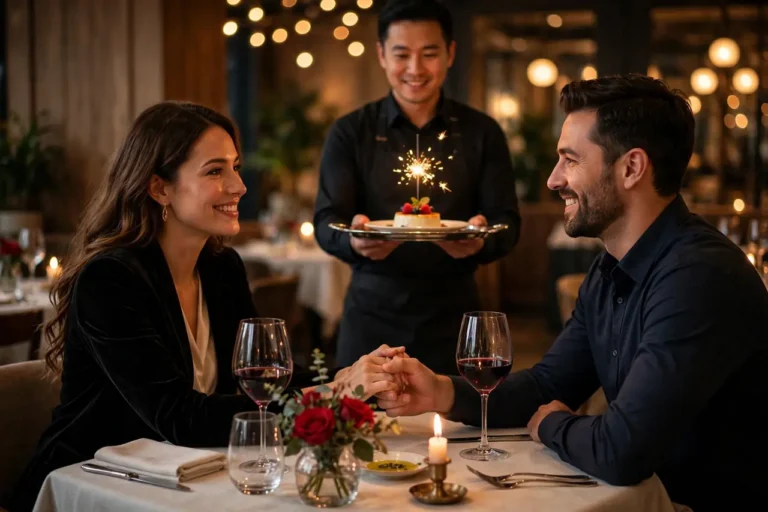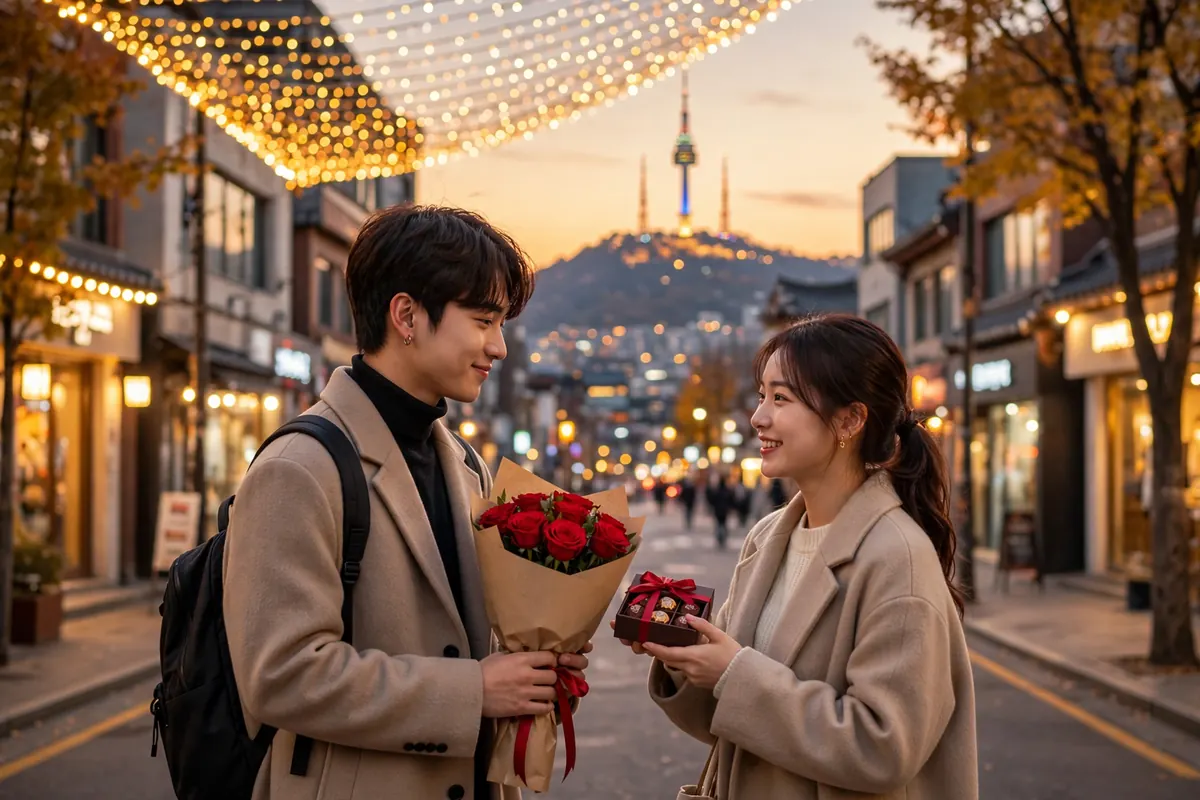
Most countries get one Valentine’s Day. South Korea gets twelve — one on the 14th of every month. Welcome to Korea’s famous “love calendar,” a year-round cycle of romance-themed observances that turns the 14th into a monthly checkpoint for couples, a monthly reckoning for singles, and a monthly sales event for everyone selling flowers, jewelry, noodles, or wine. At the heart of the calendar sits the famous trio: Valentine’s Day (February 14), White Day (March 14), and Black Day (April 14) — three consecutive months, three acts of the same romantic drama.
But the calendar doesn’t stop in April. Rose Day, Kiss Day, Silver Day, Wine Day, Hug Day — each month has its theme, its customs, and its commercial sponsors, some heartfelt and some transparently invented by marketers. This guide walks the full twelve-month cycle, explains how the big three work, and explores what the love calendar reveals about modern Korean dating culture. For deep dives on the individual holidays, see our guides to Black Day and Pepero Day vs Valentine’s Day — and for the Japanese origins of the whole system, our story of Valentine’s Day in Japan.
The Big Three: February, March, April
Everything in Korea’s love calendar radiates outward from three consecutive 14ths. Korea imported the Japanese Valentine’s structure — women give chocolate to men on February 14; men reciprocate on White Day, March 14 — and then added a twist entirely its own.
February 14 — Valentine’s Day. As in Japan, it’s the woman’s turn: chocolates and gifts for boyfriends, husbands, and crushes, plus the obligatory rounds for coworkers. Korean Valentine’s marketing leans heavily romantic — department stores, flower shops, and jewelry brands compete for couples’ spending, and the day is a major date night.
March 14 — White Day. The men’s reply: candy, chocolates, and gifts for the women who gave on Valentine’s Day. Korean White Day has its own local flavor — Chupa Chups lollipop bouquets are famously popular — and K-pop groups often mark the day with special content for fans, blending celebrity culture into the romantic calendar.
April 14 — Black Day. Here’s where Korea diverges from Japan. Those who received nothing on Valentine’s Day or White Day — the singles, the overlooked, the unattached — get their own holiday: Black Day. The custom is to gather with single friends, dress in black, and eat jajangmyeon (noodles in black bean sauce) together. Is it a celebration of single life or a commiseration? Delightfully, it’s both — a wry, communal shrug at the whole romance industry, conducted over Korea’s most beloved comfort food. Our Black Day guide covers it in full.
The three-month arc is the calendar’s narrative engine: hope in February, reciprocation in March, and solidarity (or self-pity, depending on your table) in April. Everything after April riffs on the theme.
The Full Twelve-Month Love Calendar
Here is the complete cycle as it’s commonly described in Korea. A note on authenticity: the big three (February–April) are genuinely, widely observed; the later months range from popular to obscure, and some are more marketing concept than lived tradition. That’s part of the fun — and part of the critique.
| Date | Day | Theme & customs |
|---|---|---|
| January 14 | Diary Day / Candle Day | Couples and friends exchange planners and diaries — a fresh start; some versions emphasize candles and cozy dates |
| February 14 | Valentine’s Day | Women give chocolate to men — romantic or obligatory |
| March 14 | White Day | Men return gifts (candy, not chocolate, traditionally) to women — worth more than what they received |
| April 14 | Black Day | Singles gather in black to eat jajangmyeon (black bean noodles) — celebration or commiseration |
| May 14 | Rose Day | Couples exchange roses; florists and amusement parks run promotions |
| June 14 | Kiss Day | Public displays of affection get a nudge; popular with young couples |
| July 14 | Silver Day | Exchanging silver jewelry; a quieter, growing observance |
| August 14 | Green Day | Outdoor and eco-friendly dates; sometimes associated with drinking soju (in green bottles) |
| September 14 | Music Day / Photo Day | Sharing playlists, exchanging photos — romance for the digital age |
| October 14 | Wine Day | Romantic dinners with wine; the most adult-oriented of the monthly days |
| November 14 | Movie Day | Couples’ cinema dates; theaters run pair discounts (note: Pepero Day, Nov 11, is the bigger November event) |
| December 14 | Hug Day | Warm embraces before winter; affection as the year’s closing theme |
Month by Month: How the Quieter Days Work
January — Diary Day. The year’s soft opening. Lovers and close friends exchange blank diaries and planners, symbolically committing to record the year together. It’s a gentle, stationery-flavored romance — very Korean in its love of beautiful paper goods — and it sets the calendar’s tone: the love year is a project you plan.
May — Rose Day. Timed for rose season, this is the florists’ holiday. Couples exchange bouquets; singles feel the familiar pressure. Amusement parks and restaurants court young customers with pair pricing. Of all the post-April days, Rose Day is among the most visibly celebrated.

June — Kiss Day. Exactly what it sounds like, and not a marketer’s invention so much as a cultural nudge — Korea’s public culture around affection is relatively reserved, so a day that licenses a little boldness has its fans among young couples.
July — Silver Day. The jewelry industry’s entry: couples exchange silver rings, necklaces, and bracelets. It’s a lesser-known observance, but “couple jewelry” (couple items — matching accessories) is a genuine phenomenon in Korean dating culture, and Silver Day gives it a date.
August — Green Day. The most ambiguously themed month: officially about nature and outdoor dates, unofficially associated (by the color of the bottle) with sharing soju. Either way, it’s summer, and the calendar wants you outside — with someone.
September — Music/Photo Day. The digital-native entry: share playlists, exchange photos, make the relationship content. In the age of the couple Instagram account, this one feels less invented than observed.
October — Wine Day. The grown-up month: romantic dinners, wine bars, the full adult date-night apparatus. Restaurants lean in with pair menus.
November — Movie Day. Cinema dates with couple discounts — though November’s real romantic heavyweight is Pepero Day on the 11th, the snack-box exchange that dwarfs Movie Day commercially. (See our Pepero Day comparison.)
December — Hug Day. The year closes with warmth: embraces, cozy dates, and affection as insulation against the Korean winter. It’s a sweet coda — twelve months of scheduled romance, ending in a hug.
Where Did the 14th-of-Every-Month Come From?
The calendar’s origin is a braid of import, invention, and marketing opportunism. The February–March core was imported from Japan (Valentine’s Day’s women-give-chocolate custom, White Day’s 1978 “answer day”), Black Day grew organically in Korea as singles’ wry response, and the remaining months were filled in over the years by a mix of florists, jewelers, restaurateurs, and confectioners — each industry claiming a month. Korean media has long noted the pattern: every “Day” needs a product, and every product wants a day.
But it’s too cynical to call the whole calendar a corporate fiction. The big three are genuinely lived traditions — Valentine’s and White Day move serious retail volume and shape real social behavior, and Black Day’s jajangmyeon gatherings are a beloved, self-aware ritual. The lesser months function more as suggestions than obligations: a couple might note Rose Day with flowers or ignore it entirely, and nobody’s social standing hinges on Kiss Day. The calendar is best understood as a menu, not a mandate — twelve themed prompts for romance, of which any couple or single might observe two or three.
Korea’s love of “Day” marketing extends well beyond romance, which is worth noting for context: the same commercial logic produced Pepero Day (November 11), Samgyeopsal Day (March 3, pork belly — because “sam” sounds like the number three), and a long list of snack-themed observances that never quite caught on. The love calendar is simply the most successful flowering of a national habit: if there’s a date, there’s a way to celebrate it, and if there’s a celebration, there’s something to sell.
The Critique: Romance on a Schedule
Not everyone loves the love calendar. Critics make three main charges. First, commercialism: the calendar converts affection into a monthly purchasing obligation, with each industry taking its turn at couples’ wallets. Second, pressure: the relentless 14ths can make single people feel perpetually behind — there’s always a holiday you’re not celebrating “correctly,” a dynamic Black Day both mocks and embodies. Third, performativity: scheduled romance risks crowding out spontaneous affection, turning love into a compliance exercise.
Defenders counter that the calendar is mostly playful — that nobody takes Green Day as seriously as Valentine’s Day, and that having regular, low-stakes excuses for a date night is genuinely good for relationships. There’s truth in both views. The healthiest relationship to the love calendar is probably the one most Koreans actually have: enthusiastic about the big three, amused by the rest, and free to opt in or out month by month. For couples who prefer quality over quantity in their celebrations, our romantic getaways guide offers the opposite philosophy — one big trip instead of twelve small holidays.
How to Do the Love Calendar as a Visitor
Traveling in Korea and want to play along? The calendar is visitor-friendly. February 14: if you’re a woman with a Korean partner, chocolate is expected; if you’re a man, prepare for White Day. March 14: men give return gifts — candy and thoughtful presents, scaled generously. April 14: single? Find the nearest Chinese-Korean restaurant, order jajangmyeon, wear black if you’re feeling theatrical, and enjoy the most delicious consolation ritual on earth. May 14: roses from any flower shop. October 14: book a wine bar. The rest you can improvise — the calendar rewards participation, not perfection.
A practical tip: Korean convenience stores and department stores mark every 14th with themed displays and promotions, so you’ll never wonder what month it is — the retail environment will tell you. And if you’re shopping for a partner, gifts for her and gifts for him translate across the calendar’s months.
Watch: Korea’s Quirky Holiday Calendar
Black Day, Pepero Day, White Day and more — a tour of the holidays foreigners find most surprising:
The Business of the 14th: Who Profits from the Love Calendar
Twelve romance-themed days a year is a marketer’s dream and a sociologist’s case study. Follow the money through Korea’s love calendar and a clear pattern emerges: every month has a sponsor.
February belongs to chocolatiers, florists, and jewelers — the classic Valentine’s industrial complex, with department stores running their biggest romantic campaigns of the year. March (White Day) spreads the wealth to candy makers, accessory brands, and restaurants, with the sanbai-gaeshi expectation pushing average spending above February’s. April (Black Day) is the contrarian’s payday: Chinese-Korean restaurants, noodle brands, and black-themed dessert shops. May (Rose Day) is the florists’ month, with amusement parks and outdoor venues running couple promotions. July (Silver Day) serves jewelers and the “couple items” market — matching rings, bracelets, and phone cases, a genuine Korean dating-culture phenomenon. October (Wine Day) belongs to restaurants and wine importers; November splits between cinemas (Movie Day, the 14th) and Lotte (Pepero Day, the 11th — the 800-pound gorilla of day-marketing).
The calendar’s commercial genius is segmentation: instead of one Valentine’s fighting for attention, twelve themed days let twelve industries each own a month. Nobody has to compete with the chocolate lobby in February; the wine lobby gets October to itself. It’s a cartel of romance, divvied up by calendar.
But the deeper story is how Korean consumers co-author the calendar. Black Day wasn’t invented by a company — it bubbled up from singles’ wry self-awareness and was only later embraced by restaurants. Pepero Day, by Lotte’s own account, started with consumers (schoolgirls, by legend) before the company amplified it. Even the industry-invented days only survive if people actually observe them — and several “Day” marketing attempts (triangle gimbap day, whale rice biscuit day) flopped outright, proving the calendar has a democratic veto. Koreans don’t celebrate what they’re told to; they celebrate what amuses them, and marketers follow the laughter.
This dynamic explains the calendar’s global exportability. K-pop and K-dramas have carried White Day, Black Day, and Pepero Day to international audiences, and Korean diaspora communities observe them worldwide. Lotte’s Times Square Pepero Day campaigns and Stray Kids’ “November 11th” single are explicit export plays — the love calendar as soft power, one snack box at a time.
The critique writes itself — a monthly purchasing obligation dressed as romance — but the defense is stronger than it looks: the calendar’s best days are the ones people chose, and the freedom to ignore the rest is absolute. Nobody’s grandmother is disappointed about Green Day. The love calendar works as commerce precisely because it works as play — and Koreans, who invented the game, remain its most amused players.
The 14th-Day Starter Pack: Which Days Should You Actually Celebrate?
Twelve love days is a lot. Here’s a practical guide to building your own observance — the essential, the fun, and the skippable.
The essentials (don’t skip these): Valentine’s Day (Feb 14) and White Day (Mar 14) are the load-bearing holidays — the ones with real social expectations, real retail machinery, and real consequences for ignoring them. If you’re single, add Black Day (Apr 14): it’s the most fun per won of any day on the calendar and the best story at parties.
The delightful extras: Rose Day (May 14) is an easy win — flowers are never wrong. Wine Day (Oct 14) is the best date-night excuse of the autumn. Hug Day (Dec 14) is free and lovely. Pepero Day (Nov 11, not a 14th but essential) is pure joy — buy the sticks, decorate some, hand them out.
The connoisseur’s picks: Diary Day (Jan 14) is genuinely sweet for planners and stationery lovers. Movie Day (Nov 14) pairs perfectly with awards-season cinema. Kiss Day (Jun 14) is what you make of it.
The skippable: Silver Day, Green Day, Music/Photo Day — observe if the theme happens to fit your plans; ignore without guilt. Nobody, anywhere, has ever had a relationship end over Green Day.
The meta-rule: the calendar is a menu, not a mandate. The couples who enjoy it most treat it as twelve excuses — for a date, a gift, a laugh — not twelve obligations. Pick your three or four, celebrate them well, and let the rest pass like weather. That’s not disrespecting the tradition; that’s exactly how most Koreans actually use it.
Love Calendar Glossary: Korean Dating Terms to Know
The calendar makes more sense with the vocabulary. Sogaeting (소개팅): the blind date, often arranged by friends — the classic Korean relationship launchpad, and the event most likely to produce a Valentine’s Day debut. Some (썸): the delicious ambiguous stage between friendship and dating — “something” — when two people are clearly more than friends but haven’t confessed; much of the love calendar’s February drama plays out in the some zone. Couple items: matching accessories (rings, shoes, phone cases) that announce coupledom — Silver Day’s raison d’être. Golbin (single, from “solo” slang): the Black Day constituency, worn as a badge. 100-day anniversary: Korea’s real relationship milestone — couples celebrate 100 days together with more seriousness than many Western couples give anniversaries, and the love calendar’s monthly 14ths serve as countdown markers toward it. Learn these five terms and the whole calendar clicks into focus.
Frequently Asked Questions
What are the three main love holidays in South Korea?
Valentine’s Day (February 14, women give chocolate to men), White Day (March 14, men return gifts to women), and Black Day (April 14, singles eat jajangmyeon together). These three consecutive months form the core of Korea’s love calendar.
Does Korea really celebrate something on the 14th of every month?
In a sense, yes — there’s a named theme for each month’s 14th, from Diary Day (January) to Hug Day (December). But observance varies enormously: the February–April trio is widely and genuinely celebrated, while months like Silver Day or Green Day are known but lightly observed, functioning more as fun suggestions than social obligations.
What is Black Day?
Black Day (April 14) is Korea’s singles’ answer to Valentine’s and White Day. People who received nothing on the previous two holidays gather with single friends — often dressed in black — to eat jajangmyeon (noodles in black bean sauce). It’s equal parts celebration of single life and gentle commiseration. Full details in our Black Day guide.
Where did Korea’s Valentine’s customs come from?
The women-give-chocolate Valentine’s and the March 14 White Day were adapted from Japan, where confectionery companies built both holidays (Valentine’s chocolate campaigns from the 1930s–60s; White Day formalized in 1978). Korea then extended the system with Black Day and the monthly calendar — a characteristically Korean escalation.
What happens on White Day in Korea?
Men give return gifts to the women who gave them chocolate on Valentine’s Day — traditionally candy rather than chocolate, often with local twists like Chupa Chups bouquets. K-pop groups frequently mark the day with special fan content. The expectation, as in Japan, is a gift exceeding the original in thoughtfulness and value.
Is Pepero Day part of the love calendar?
Pepero Day (November 11) isn’t one of the 14th-days, but it’s arguably the biggest single romantic-commercial holiday in Korea after Valentine’s — the exchange of Pepero chocolate sticks, driven by the date 11/11 resembling the sticks. Our Pepero Day vs Valentine’s Day comparison breaks down how the two stack up.
Twelve months, twelve 14ths, twelve excuses to celebrate love — or to laugh at its absence over black noodles. Korea’s love calendar is excessive, commercial, occasionally absurd, and completely charming: a year-long reminder that romance, like everything else in modern Korea, is better with a schedule, a theme, and excellent snacks. Whether you observe all twelve days or just the big three, the calendar’s real lesson is the one every culture eventually learns — love deserves more than one day a year.