Valentine’s Day in Ecuador has a secret the rest of the world should know: the roses in your Valentine’s bouquet were very likely grown here. Ecuador is one of the world’s largest exporters of roses, and its flowers — grown under equatorial sun at Andean altitudes — are famous among florists for their enormous heads, vivid colors, and long vase life. On February 14, the country that supplies the world’s Valentines celebrates its own Día del Amor y la Amistad with homegrown abundance: roses everywhere, at prices the rest of the world can only dream of.
This guide covers Ecuador’s Valentine’s customs and traditions: the rose industry behind the romance, how the Day of Love and Friendship is celebrated from Quito to Guayaquil, serenatas and amigo secreto rituals, gift ideas with an Ecuadorian accent, and practical tips for February 14 in the middle of the world.
The Rose Capital of Valentine’s Day
To understand February 14 in Ecuador, start in the flower fields. In the highlands around Cayambe, Tabacundo, and Cotopaxi — at altitudes of 2,800 meters and more, directly on the equator — vast greenhouses grow the roses that fill Valentine’s bouquets across the United States, Europe, and beyond. The combination is horticultural magic: twelve hours of intense equatorial sunlight nearly every day of the year, cool Andean nights, and rich volcanic soil produce roses with exceptionally large blooms, thick stems, and intense color.
The Valentine’s season is the industry’s Super Bowl. In the weeks before February 14, Ecuador’s flower farms harvest around the clock, pack roses into refrigerated boxes, and fly them out of Quito’s airport in a logistical operation of extraordinary scale. Tens of millions of stems move in the Valentine’s window; the farms hire seasonal workers by the thousand; and the whole highland economy leans into the harvest.
For Ecuadorian couples, this abundance has a delightful consequence: world-class roses at local prices. While a dozen premium roses might strain a budget in New York or London, in Quito or Cuenca they are an everyday-affordable grand gesture. Ecuadorian Valentine’s bouquets are famously lavish — two dozen, three dozen, arrangements of a scale that elsewhere would require a second mortgage. The rose is not just the symbol of the day here; it is the local crop, the national pride, and the obvious choice.
Customs and Traditions: The Día del Amor y la Amistad
Ecuador celebrates February 14 as the Day of Love and Friendship — the inclusive Latin American framing that honors romance and friendship together. The day’s customs will feel familiar to anyone who knows the region, with Ecuadorian inflections throughout.
Roses, roses, roses
The flower exchange is the day’s central ritual, and Ecuador does it at a scale few countries can match. Beyond romantic partners, roses go to mothers, teachers, friends, and colleagues — the friendship half of the holiday expressed in the national flower. Street vendors multiply in every city; flower markets run extended hours; and the scent of roses seems to hang over the whole country.
Serenatas: love songs at the window
The serenata — a musical serenade delivered beneath a loved one’s window — survives in Ecuador as Valentine’s grand gesture. Hiring a trio or mariachi-style group to perform romantic ballads (pasillos, the Ecuadorian romantic song form, are the classic choice) outside a partner’s home in the evening is a tradition that turns heads and melts hearts. It is public, it is old-fashioned, and it is unforgettable — the kind of gesture that becomes a family story.
Amigo secreto and the friendship exchanges
Schools and workplaces run amigo secreto (secret friend) exchanges in the days around February 14: names drawn, small gifts given, identities revealed at the celebration. The custom makes the day genuinely collective — even the unattached participate fully — and generates the week’s cheerful background hum of speculation and surprise. Chocolates, mugs, small crafts, and humorous gifts are the standard currency.
Dinners, dances, and the evening out
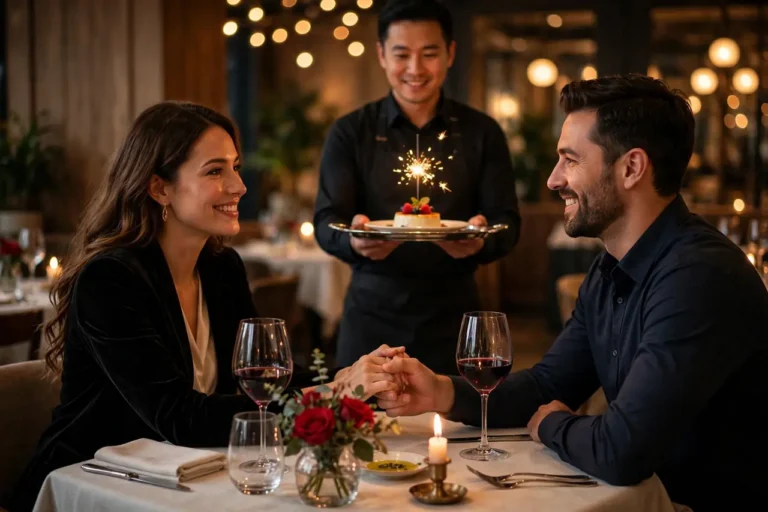
Restaurants in Quito, Guayaquil, and Cuenca run Valentine’s promotions — special menus, live music, decorated tables — and the evening dance culture gives February 14 a festive late-night dimension. Shopping malls stage events and promotions; parks fill with strolling couples; and the day stretches from morning flower deliveries to midnight celebrations.
Quito vs. Guayaquil: Two Cities, Two Valentines
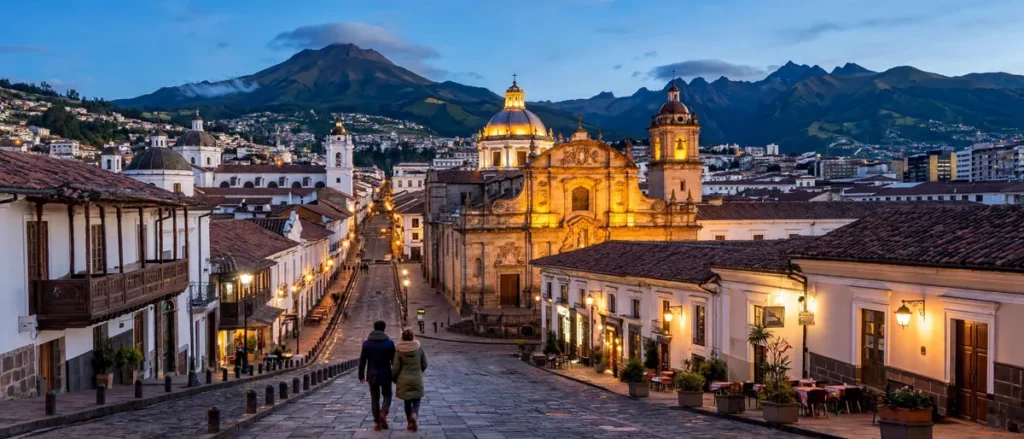
Quito, the highland capital at 2,850 meters, celebrates with Andean elegance. The colonial Old Town — a UNESCO World Heritage site of churches, plazas, and candlelit streets — provides one of South America’s most atmospheric Valentine’s backdrops. Couples dine in the historic center’s restaurants, ride the TelefériQo cable car for sunset views over the city, and stroll the illuminated plazas. February evenings in Quito are cool — a jacket is part of the Valentine’s outfit — which only adds to the cozy romance.
Guayaquil, the tropical port city, celebrates bigger and louder. The Malecón 2000 waterfront promenade fills with couples; the city’s restaurants and clubs run full Valentine’s programs; and the warm, humid evening air keeps the celebration outdoors and late. Guayaquil’s Valentine’s is the extrovert to Quito’s introvert — equally romantic, differently energized.
The coast and Galápagos: For the ultimate Ecuadorian Valentine’s, couples escape to the Pacific beaches — Montañita, Salinas, Canoa — or, for the once-in-a-lifetime tier, the Galápagos. A February 14 among giant tortoises and blue-footed boobies is not traditional, but it is unforgettable.
Watch: San Valentín Ecuatoriano
How does an Ecuadorian actually celebrate February 14? This Valentine’s vlog from Ecuador shows the day’s preparations, gifts, and festivities — the Día del Amor y la Amistad as lived, not as marketed.
Valentine’s Day in Ecuador at a Glance
| Detail | What to know |
|---|---|
| Name of the day | Día del Amor y la Amistad (Day of Love and Friendship) |
| Date | February 14 |
| Signature flower | Roses — Ecuador is among the world’s top exporters; local prices are a bargain |
| Grand gesture | The serenata — hired musicians performing beneath a loved one’s window |
| Friendship ritual | Amigo secreto gift exchanges in schools and workplaces |
| Top settings | Quito’s colonial Old Town; Guayaquil’s Malecón 2000; Pacific beaches |
| Climate note | Cool evenings in Quito (bring a layer); warm and humid on the coast |
Gift Guide: The Ecuadorian Valentine’s
Ecuador’s gift customs reward thinking local. Here is how to give like an Ecuadorian.
Go big on roses. This is the one place on earth where rose extravagance is the economical choice. A lavish bouquet — two dozen-plus stems, premium varieties, elaborate presentation — costs a fraction of its Northern Hemisphere equivalent. Do not be shy: in Ecuador, rose abundance is the love language.
Add the artisanal layer. Beyond flowers: Panama hats (woven in Ecuador, despite the name — the Montecristi fino is the world’s finest), tagua-nut jewelry, handwoven textiles from Otavalo market, and single-origin Ecuadorian chocolate — some of the world’s finest cacao grows here. A gift pairing world-class local roses with world-class local chocolate is the definitive Ecuadorian Valentine’s.
Consider the serenata. For milestone Valentines, nothing in the gift catalog competes with musicians at the window. Arrange it through local contacts or your hotel; specify pasillos for the authentic romantic repertoire. It is the grand gesture that becomes legend.
For friends: the amigo secreto economy runs on small, thoughtful, often humorous gifts — artisanal soaps, local coffee, a funny mug, a book. Thoughtfulness over price, always. For the universal gift repertoire, our guides to Valentine’s gifts for her and gifts for him translate well with an Ecuadorian filter.
Planning Tips for February 14 in Ecuador
Buy roses early — even here. Local abundance does not mean infinite supply on the day itself; the export harvest prioritizes foreign orders, and domestic florists still sell out of premium arrangements. Order by February 12 for the best selection.
Dress for altitude. Quito’s Valentine’s evenings are cool — layers are essential, and an elegant jacket is part of the local Valentine’s look. Guayaquil and the coast are warm and humid; dress accordingly. Check which city you are celebrating in before choosing the outfit.
Book the Old Town dinner. In Quito, a Valentine’s dinner in the colonial center — with its churches floodlit and plazas glowing — is the definitive experience; reserve ahead. In Guayaquil, waterfront tables go first.
Join the friendship half. If you are invited into an amigo secreto, say yes — it is the warmest door into Ecuadorian Valentine’s culture. And if you are single on February 14, take the day’s own advice: celebrate friendship. Plan a friends’ celebration alongside the romance.
Beyond the Roses: Ecuador’s Romantic Regions
Ecuador packs extraordinary romantic diversity into a country the size of Colorado. Beyond Quito and Guayaquil, these regions offer Valentine’s experiences found nowhere else.
Otavalo and the northern Andes: The famous Otavalo market — one of South America’s great craft markets — is a Valentine’s gift-hunter’s paradise: handwoven textiles, tagua jewelry, Panama hats, and artesanía at local prices. Pair a Saturday market morning with an afternoon at Cuicocha crater lake or the Peguche waterfall, and you have a highland Valentine’s of rare charm. The region’s haciendas, converted into boutique hotels, offer some of Ecuador’s most atmospheric romantic stays.
Cuenca: Ecuador’s most beautiful colonial city — a UNESCO World Heritage site of churches, plazas, and riverside promenades — is the connoisseur’s Valentine’s choice. Quieter than Quito, more elegant than Guayaquil, Cuenca does February 14 with old-world grace: dinners in colonial courtyards, evening walks along the Tomebamba river, and the city’s famous Panama-hat workshops for the definitive local gift. Couples who prefer their romance with architecture choose Cuenca.
Baños: The adventure capital at the edge of the Amazon basin offers the adrenaline Valentine’s: hot springs (the town’s namesake baños), waterfall routes, the famous “swing at the end of the world” at Casa del Árbol, and canyoning for the bold. A couples’ hot-spring soak after a day of adventure, with the Tungurahua volcano looming, is romance with a pulse.
The Galápagos: For the once-in-a-lifetime tier: February 14 among giant tortoises, marine iguanas, and blue-footed boobies. A Galápagos Valentine’s cruise — the islands at their greenest in the warm season — is the ultimate splurge, and the wildlife provides the entertainment. It is not traditional, but no couple forgets it.
The Business of Love: Ecuador’s Valentine’s Economy
February is one of the most important months in Ecuador’s economy, and understanding the scale adds depth to the celebration. The flower industry’s Valentine’s harvest is a national event: tens of millions of rose stems cut, graded, packed, and flown out in a matter of weeks, with the farms of Cayambe and Cotopaxi operating around the clock. The seasonal employment — thousands of harvest and packing workers, many of them women from highland communities — makes Valentine’s Day a significant livelihood event, not just a romantic one.
The domestic Valentine’s economy mirrors it: florists, chocolatiers, restaurants, hotels, and gift shops all report February 14 among their peak days. Shopping malls run Valentine’s campaigns; the amigo secreto tradition drives a cheerful trade in small gifts; and the serenata musicians — trios and groups who work the Valentine’s circuit — earn a meaningful share of annual income in a single week.
For the thoughtful celebrant, this is worth knowing: the Ecuadorian Valentine’s rose carries a supply chain of real people and real livelihoods. Buying local — from the neighborhood florist rather than the supermarket chain, from the artisan rather than the importer — keeps the day’s economy as warm as its sentiment. The most romantic purchase is often the most local one.
A Valentine’s Day, Hour by Hour, Ecuadorian Style
February 14 in Ecuador has its own rhythm. Here is the day as Quito lives it.
Early morning — the flower deliveries. The day begins with roses at the door: florists’ vans crisscross the cities from dawn, delivering the orders placed in the preceding days. Offices receive a steady stream of bouquets — the morning’s great theater is watching colleagues’ desks accumulate flowers.
Mid-morning — the school and office exchanges. The amigo secreto reveals happen: names drawn weeks ago are unmasked, small gifts change hands, and the week’s speculation ends in laughter. Classrooms and workplaces buzz with the friendship half of the holiday.
Afternoon — the city in love. Parks fill with strolling couples; shopping malls run Valentine’s events; the historic centers host street performers and flower sellers. In Quito, the afternoon light on the colonial churches is at its most photogenic — the day’s golden hour for the plazas.
Evening — dinner and the serenatas. Restaurants serve their Valentine’s menus as the city’s trios and musical groups begin their rounds — the serenata hour, when love songs drift up to windows across the city. It is Ecuador’s most romantic sound: music, evening air, and someone singing for exactly one person.
Late night — the dance floors. Ecuador’s dance culture gives February 14 a late finish: salsa, pasillos, and the night’s slow songs in the clubs and peñas. The Día del Amor y la Amistad ends dancing — which, in Ecuador, is exactly right.
The Chocolate Story: Ecuador’s Other Valentine’s Crop
Roses get the glory, but Ecuador’s second Valentine’s crop deserves its fame: cacao. Ecuador grows some of the world’s finest fine-flavor cacao — the Nacional variety, with its distinctive floral notes — and the country’s bean-to-bar chocolate makers have won international awards. A box of single-origin Ecuadorian chocolate, made from cacao grown within sight of the Andes, is a Valentine’s gift of genuine distinction.
The chocolate route makes a superb Valentine’s excursion: the cacao farms of the coast and Amazon offer tours from pod to bar, and Quito’s artisanal chocolatiers run tastings. Pair the farm visit with the rose fields, and you have the definitive Ecuadorian Valentine’s day trip: from flower to chocolate, the country’s two great romantic crops in a single day.
Useful Spanish for February 14 in Ecuador
A little Spanish goes a long way on the Día del Amor y la Amistad. The essentials:
Feliz Día del Amor y la Amistad — the day’s greeting, for partners, friends, and colleagues alike.
Mi amor / mi vida — my love / my life: the standard terms of endearment.
¿Quieres ser mi enamorado/a? — Will you be my sweetheart?
Te amo — I love you (the deep declaration; te quiero is the lighter everyday form).
Una serenata, por favor — A serenade, please. The phrase that starts the grand gesture — musicians will know exactly what you mean.
¡Salud! — Cheers. Best delivered with a canelazo (the hot spiced drink of the highlands) in hand on a cool Quito evening.
Frequently Asked Questions
Why is Ecuador famous for Valentine’s roses?
Ecuador is one of the world’s largest rose exporters. Roses grown on the equator at high Andean altitudes develop exceptionally large blooms, thick stems, and vivid colors thanks to intense year-round sunlight and cool nights — making them prized by florists worldwide for Valentine’s Day.
What is Día del Amor y la Amistad in Ecuador?
Ecuador’s name for February 14: the Day of Love and Friendship. It celebrates romantic love and friendship together, with amigo secreto gift exchanges in schools and workplaces ensuring everyone participates — not just couples.
What is a serenata?
A traditional romantic serenade: hired musicians performing love songs beneath a loved one’s window, typically in the evening. In Ecuador, pasillos (the national romantic song form) are the classic repertoire. It remains the country’s grandest Valentine’s gesture.
Are roses expensive in Ecuador on Valentine’s Day?
By global standards, no — local prices are a fraction of what the same roses cost abroad, since Ecuador grows them. Lavish bouquets are the norm. Still, order by February 12, as domestic florists sell out of premium arrangements and prices rise in the final days.
Where is the most romantic place in Ecuador for Valentine’s Day?
Quito’s colonial Old Town at night is the classic pick; Guayaquil’s Malecón 2000 offers waterfront romance; and the Pacific beaches (or the Galápagos, for the ultimate splurge) provide the escape tier. Each suits a different couple — historic atmosphere, lively waterfront, or wild nature.
How does Ecuador’s celebration compare to Peru’s?
Both celebrate the Día del Amor y la Amistad on February 14 with the friendship dimension central. Ecuador’s signature is the rose abundance and the serenata; Peru’s is the orchid tradition and Lima’s Parque del Amor gatherings. The two make a natural pair for travelers.
The Bottom Line
Valentine’s Day in Ecuador is the day the world’s rose capital keeps the best blooms for itself: lavish bouquets at local prices, serenatas under Andean stars, and a celebration that makes room for friends alongside lovers. It is generous, musical, and deeply rooted — a Valentine’s that could only happen here.
Give the roses — extravagantly. Hire the musicians — fearlessly. And remember that in Ecuador, February 14 was never only about couples: call your friends too. Long after the bouquets have faded, what you will remember is the feeling of a whole country deciding, for one day, that affection is the main event — the roses in every doorway, the songs under every window, the amigo secreto revealed with laughter. That is the Ecuadorian Valentine’s: generous to a fault, musical to its core, and grown — quite literally — from the equatorial soil. No other country can offer you the flower that conquered the world’s Valentines at the price of a coffee; no other celebration weaves friendship so tightly into romance. Come for the roses, stay for the serenata, and leave understanding why Ecuador does February 14th bigger, louder, and warmer than almost anywhere else. And next year, when the roses arrive in your own country — flown in from Cayambe, arranged by a foreign florist, priced like treasure — remember where they came from, and the celebration they left behind. Somewhere in the Andes, the music is still playing — and somewhere in your heart, a little of Ecuador’s February will stay. For the global picture, see our Valentine’s Day traditions around the world.