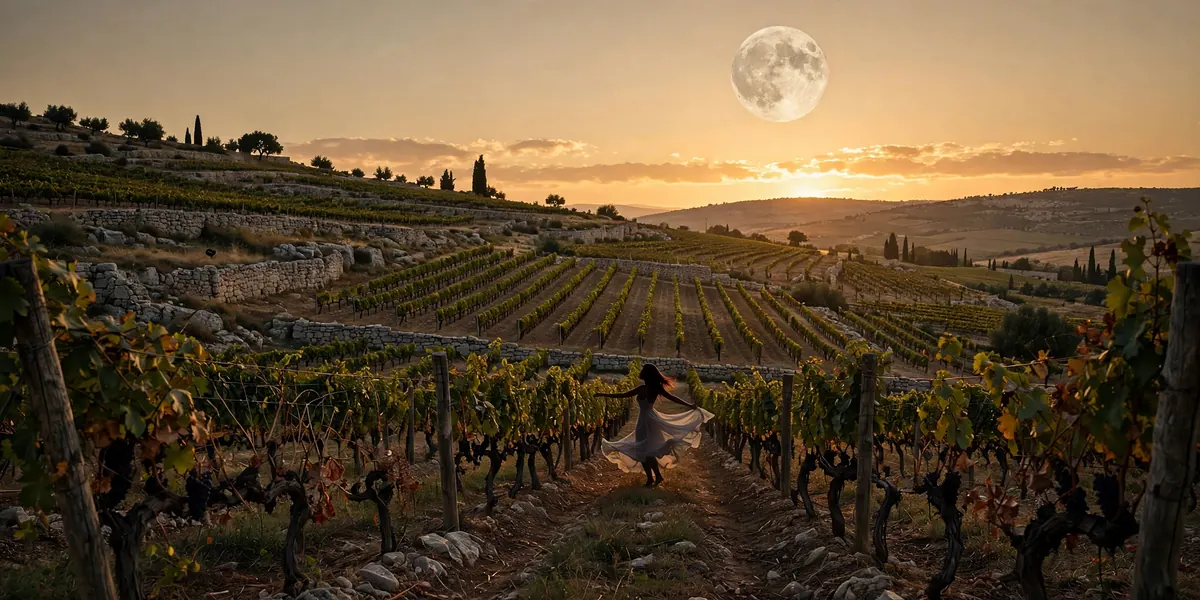
Tu B’Av — the 15th day of the Hebrew month of Av — is often called the Jewish Valentine’s Day. But the comparison undersells it: this is a holiday with roots stretching back to the Second Temple era, when young women in borrowed white dresses danced in the vineyards outside Jerusalem and young men came to choose brides. After centuries of near-obscurity, Tu B’Av has been reborn in modern Israel as Chag HaAhava, the Festival of Love — a day of weddings, proposals, flowers, and music festivals. This guide explores the ancient origins, the reasons for joy, the modern revival, and how Tu B’Av is celebrated today.
What Is Tu B’Av?
Tu B’Av (Hebrew: ט״ו באב, literally “the 15th of Av”) is a minor Jewish holiday falling on the full moon of the summer month of Av — usually in July or August. The name comes from Hebrew numerology: the letters tet (9) and vav (6) combine to make 15, pronounced “tu.” (The alternative combination would spell part of the Divine Name, so it’s avoided.)
It’s a minor holiday in the technical sense: a regular workday with no special prayers or restrictions, except that the penitential Tachanun prayer is omitted. But the Talmud calls it one of the two happiest days of the Jewish year — the other being Yom Kippur, of all days. That startling pairing is the key to understanding Tu B’Av: it’s joy that arrives right after mourning, love that blooms in the shadow of loss.
Ancient Origins: Dancing in the Vineyards
The Mishnah (Taanit 4:8) records the scene: “Rabban Shimon ben Gamliel said: The Israelites had no greater holidays than the 15th of Av and Yom Kippur, for on those days the maidens of Jerusalem would go out in white garments, borrowed so as not to put to shame any who had none… and dance in the vineyards. And the young men would go there, and the maidens would say: ‘Young man, lift up your eyes and see what you will select. Pay no attention to beauty but to one of good family.'”
The details are telling. The dresses were borrowed — rich and poor indistinguishable. They were ritually purified. The setting was the vineyards, at the grape harvest. And the maidens’ reported speech subverts the expected script: don’t choose for beauty, choose for family and character. Some traditions place these vineyards around Jerusalem; others point to Shiloh, Israel’s first capital. Either way, the image is vivid: a moonlit night, white dresses among the vines, and the community’s future being woven in public.
Six Reasons for Joy: Why the 15th of Av?
The Talmud offers several historical reasons why this date became joyous — each marking the resolution of a national crisis:
- Inter-tribal marriage permitted: A Torah restriction on marriages between tribes (to preserve land inheritance) was understood by the sages as applying only to the generation that entered Israel — lifting it on Tu B’Av and enabling national unity.
- The tribe of Benjamin reintegrated: After the tragedy at Giv’ah (Judges 19–21), the other tribes had sworn not to intermarry with Benjamin, threatening the tribe’s survival. The oath was interpreted as binding only its swearers, and on Tu B’Av the tribe was welcomed back.
- The wilderness generation’s deaths ceased: As punishment for the sin of the spies, members of the desert generation died each year on Tisha B’Av for 40 years. In the 40th year, none died — and the full moon of Tu B’Av confirmed the calendar, proving the decree had ended.
- The fallen of Beitar were buried: After the Bar Kokhba revolt’s catastrophic end, the dead of Beitar were finally permitted burial — a closure of national grief.
- The wood offering ended: The annual cutting of wood for the Temple altar concluded, marking the turn from summer labor toward the season of study as nights lengthened.
The common thread, as modern teachers note, is nechama — comfort: each reason marks a moment when mourning turned to renewal. Tu B’Av falls just six days after Tisha B’Av, the year’s darkest day of mourning. The calendar itself tells the story: grief, then love.
The Long Sleep and the Modern Revival
After the Temple’s destruction, Tu B’Av faded. For nearly two millennia it survived mainly as a calendar footnote — the omission of Tachanun, a line in the prayer book. The vineyard dances were a memory.
The revival began with the modern State of Israel. As Hebrew culture sought authentic roots, Tu B’Av was rediscovered and rebranded as Chag HaAhava — the Festival of Love, Israel’s Valentine’s Day. Florists, chocolatiers, and restaurants embraced it; the press covered it; and a generation of Israelis adopted it as their own romantic holiday — one with ancient credentials no Hallmark invention could match.
Tu B’Av in Modern Israel
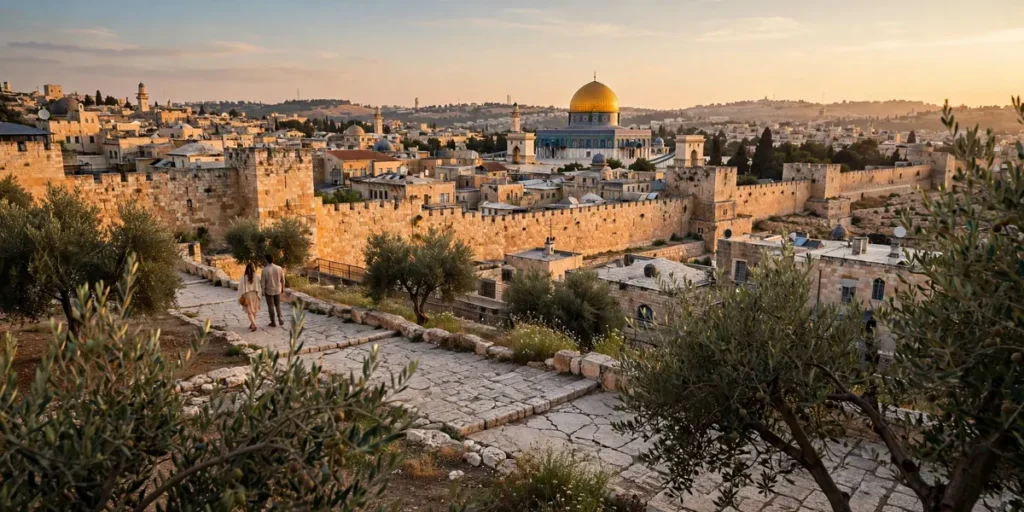
Today Tu B’Av is one of Israel’s most beloved unofficial holidays. Couples exchange flowers, chocolates, and cards much like Valentine’s Day — Israeli florists report sales rivaling February 14. It’s considered an especially auspicious day for weddings and proposals, and wedding halls book up. Singles events — speed dating, mixers, parties — proliferate, particularly in Tel Aviv.
The cultural programming is rich: music festivals, outdoor concerts, and community dances echo the ancient vineyard celebrations. Some communities organize actual vineyard events — dancing among the vines under the full moon, in conscious imitation of the Mishnah’s scene. Religious Jews may visit the graves of tzadikim (righteous figures) — notably Rabbi Yonatan ben Uziel in Amuka, traditionally believed to help singles find their soulmate.
Outside Israel, Tu B’Av is observed more quietly: Jewish communities worldwide mark it with social events, study sessions on love and relationships, and romantic gestures. It’s growing as a “second Valentine’s” for Jewish couples — and as a meaningful alternative for those who find February 14 too commercial.
How to Celebrate Tu B’Av
For couples: Exchange flowers or a thoughtful gift; share a romantic dinner; take a moonlit walk (the full moon is the point); renew your vows or get engaged — the date’s auspiciousness is the tradition. Some couples wear white, echoing the ancient dancers.
For singles: Attend a community event or singles mixer; visit Amuka if you’re in Israel; host a vineyard-themed gathering with friends — wine, dancing, and the ancient story retold.
For the reflective: Study the Mishnah’s text (Taanit 4:8) and the Talmud’s reasons; consider the holiday’s theme — love after loss, renewal after mourning — and what it means in your own life. The rabbis’ pairing of Tu B’Av with Yom Kippur invites a deeper reading: both are days when masks come off and essentials show. If the holiday inspires a gift, our gifts for her and last-minute gifts guides can help.
For more on love celebrations worldwide, see our Valentine’s Day traditions around the world, and for romantic planning ideas, our date ideas collection.
Tu B’Av vs. Valentine’s Day: A Comparison
The “Jewish Valentine’s Day” nickname is useful shorthand, but the two holidays differ in illuminating ways. Valentine’s Day (February 14) is a global commercial romantic holiday with murky Christian-martyrdom origins, celebrated in winter in the Northern Hemisphere. Tu B’Av is a summer full-moon festival with documented ancient roots, a minor religious status, and a built-in theme of renewal after mourning.
The practical differences matter for celebrants. Tu B’Av’s summer timing means outdoor celebration — vineyard dances, moonlit walks, festivals — where February 14 often means indoor dinners. Its minor-holiday status means no religious obligations compete with the romance. And its ancient pedigree gives it a depth that the commercial Valentine’s sometimes lacks: when you celebrate Tu B’Av, you’re joining a chain of dancers stretching back two millennia.
Many Jewish couples celebrate both — February 14 as the global day, Tu B’Av as the heritage day. They complement rather than compete: winter roses and summer moonlight.
Love in Jewish Thought: What the Holiday Teaches
Tu B’Av’s pairing with Yom Kippur in the Mishnah is the holiday’s deepest teaching. Both are days when, in the ancient ritual, social masks came off: on Yom Kippur through fasting and repentance, on Tu B’Av through borrowed dresses that erased class distinctions. The message: love, like atonement, requires seeing past surfaces.
The maidens’ reported speech — “pay no attention to beauty but to one of good family” — is quoted to this day in discussions of Jewish dating values. Modern teachers expand it: choose character over chemistry, values over veneer. The “Love Rabbi” tradition (exemplified by contemporary teachers like Rabbi Yisroel Bernath) draws directly on Tu B’Av to teach that love is built, not found — through giving, commitment, and the daily work of relationship.
The holiday’s placement after Tisha B’Av adds the theme of hope: the Jewish calendar insists that the deepest mourning is followed, within days, by the year’s greatest joy. It’s a theology of resilience — and a surprisingly romantic one.
Tu B’Av Around the World
Israel: The full celebration — flowers, proposals, weddings, festivals, singles events. Tel Aviv’s beachfront parties and Jerusalem’s concerts make it a national date night.
North America: Growing observance — synagogues host Tu B’Av dinners, study sessions, and singles mixers; Jewish summer camps often mark it with special programming (it’s the perfect camp holiday: summer, moonlight, young people). Couples exchange gifts much like Valentine’s Day.
Europe: Communities in London, Paris, and Berlin mark it with cultural events; the SHIUR project in Hamburg has staged Tu B’Av performances exploring its themes through music and text.
Elsewhere: Australian and South African Jewish communities host dinners and events; the holiday’s summer timing suits the Southern Hemisphere too.
Planning a Tu B’Av Wedding
Tu B’Av is considered one of the most auspicious wedding dates in the Jewish calendar, and Israeli wedding halls book up far in advance. Planning notes:
- Book early: Venues, photographers, and caterers are in peak demand — reserve a year ahead for popular dates.
- Lean into the theme: Vineyard venues, white dress codes for guests (echoing the ancient dancers), full-moon timing for the ceremony or photos.
- Summer logistics: It’s hot — in Israel, late July/August evenings are warm. Plan the ceremony for after sunset when the full moon rises; provide shade, water, and fans for earlier events.
- The ketubah: Some couples commission ketubah art referencing the vineyard dance — a beautiful, thematic touch.
- Diaspora weddings: Summer in the Northern Hemisphere makes Tu B’Av ideal for outdoor weddings anywhere — the full moon is the free decoration.
The Vineyard Dances: History and Debate
Scholars debate the details of the ancient Tu B’Av ritual. Was it really about matchmaking, or was the Mishnah describing something more symbolic? Some read the vineyard dance as a ritual of social leveling — the borrowed dresses erasing class, the public setting erasing privacy. Others note the parallel with Yom Kippur’s dance and see both as expressions of communal joy at spiritual renewal.
The location is debated too: Jerusalem’s surrounding vineyards vs. Shiloh, the ancient capital. The date’s connection to the grape harvest is agricultural fact — mid-August is harvest time — which grounds the ritual in the farming year regardless of the symbolic readings. What’s not debated: the Mishnah’s testimony that the day was experienced as one of the year’s greatest joys, and that love — public, communal, celebrated — was at its center.
Tu B’Av in Art, Music, and Culture
The holiday has inspired a modest but growing cultural footprint. Israeli musicians release Tu B’Av singles; the SHIUR project in Hamburg staged a full Tu B’Av performance evening blending ancient texts with contemporary music. The vineyard-dance image — white dresses, moonlight, vines — recurs in Israeli art and photography, and Tu B’Av-themed weddings lean into the aesthetic deliberately.
Literature, too: modern Hebrew poetry has returned to the holiday, and children’s books retell the vineyard story. The revival is self-conscious — celebrants know they’re reconstructing as much as continuing — but that awareness is part of the joy. Tu B’Av is a holiday about choosing to begin again, and its modern celebrants embody that.
Celebrating as an Interfaith Couple
Tu B’Av’s universal themes make it one of the more accessible Jewish holidays for interfaith couples. There’s no dietary restriction, no synagogue obligation, no insider knowledge required — just the story and the moon. Many interfaith couples use it as a bridge holiday: a way to share Jewish heritage romantically, without the weight of the High Holy Days.
Suggestions: read the Mishnah’s vineyard passage together; take a moonlit walk; cook a Middle Eastern feast; exchange something meaningful. The holiday’s emphasis on looking past surfaces — “pay no attention to beauty” — is a fine text for any couple’s conversation.
Tu B’Av Dates: When to Celebrate
Tu B’Av begins at sundown on the 15th of Av and ends at nightfall the following day. Upcoming dates:
| Year | Begins (sundown) | Ends (nightfall) |
|---|---|---|
| 2025 | August 8 | August 9 |
| 2026 | July 28 | July 29 |
| 2027 | August 17 | August 18 |
| 2028 | August 6 | August 7 |
| 2029 | July 26 | July 27 |
Note: Hebrew-calendar dates shift yearly against the Gregorian calendar; always confirm with a current Jewish calendar as the date approaches.
Watch: What Is Tu B’Av?
Rabbi Daniel Rowe of Aish unpacks Tu B’Av’s strange and wonderful history — the six Talmudic reasons, the vineyard dances, and why this ancient day became Israel’s Festival of Love. It’s the perfect 15-minute introduction to the holiday.
Frequently Asked Questions
What is Tu B’Av?
Tu B’Av (the 15th of Av) is a minor Jewish holiday, often called the Jewish Valentine’s Day. In ancient times it was a day of matchmaking when young women danced in the vineyards; today it’s celebrated in Israel as Chag HaAhava, the Festival of Love, with flowers, proposals, weddings, and music.
When is Tu B’Av?
It falls on the full moon of the Hebrew month of Av — usually late July or August. In 2026 it begins at sundown on July 28 and ends at nightfall on July 29. The date shifts yearly, so check a Jewish calendar.
Why is Tu B’Av considered so joyful?
The Talmud gives several reasons, all marking national renewal: the permission of inter-tribal marriage, the reintegration of the tribe of Benjamin, the end of the wilderness generation’s punishment, the burial of Beitar’s fallen, and the completion of the Temple wood offering. It falls just after Tisha B’Av, the year’s saddest day — joy after mourning.
How is Tu B’Av celebrated today?
In Israel: like Valentine’s Day — flowers, chocolates, romantic dinners, proposals, and weddings (it’s considered an auspicious wedding date), plus music festivals and singles events. Some visit the tomb of Rabbi Yonatan ben Uziel in Amuka to pray for a soulmate. Outside Israel, observance is quieter: community events and romantic gestures.
Is Tu B’Av a public holiday in Israel?
No — it’s a regular workday with no formal religious restrictions. Its celebration is cultural rather than legal, which is part of its charm: a folk revival rather than a state occasion.
Can non-Jews celebrate Tu B’Av?
The holiday is Jewish in origin, but its themes — love after loss, renewal, choosing character over beauty — are universal. Anyone can appreciate the story, and interfaith couples often find it a meaningful addition to their calendar. For the global picture, see our Valentine’s Day traditions around the world.
Why do people wear white on Tu B’Av?
Echoing the ancient maidens’ borrowed white dresses. White symbolizes purity and new beginnings — and the borrowed-dress detail carries an egalitarian message: on this day, rich and poor are indistinguishable. Some modern celebrants adopt white dress codes for Tu B’Av events.
What’s the connection between Tu B’Av and Yom Kippur?
The Mishnah pairs them as the year’s two happiest days — both featured the vineyard dance. The connection is thematic: both are days of stripped-away pretense (fasting on Yom Kippur, borrowed dresses on Tu B’Av) and renewed relationship — with God on Yom Kippur, with each other on Tu B’Av.
What should I read to learn more about Tu B’Av?
Start with the primary source: Mishnah Taanit 4:8 (available in English translation online) — it’s short and vivid. For depth, the Talmudic discussion in Taanit 30b–31a covers the six reasons. Modern introductions from Aish, Reform Judaism, and My Jewish Learning all offer accessible overviews, and Rabbi Daniel Rowe’s video (embedded above) is an excellent 15-minute primer.
How can I explain Tu B’Av to someone unfamiliar with it?
Try this: “It’s an ancient Jewish festival of love, 2,000 years old — older than Valentine’s Day. It started with young women dancing in the vineyards under the full moon, and today Israelis celebrate it with flowers, proposals, and weddings. It’s like Valentine’s Day with ancient roots and a summer moon.”
Is Tu B’Av mentioned in the Torah?
Not by name — it’s a rabbinic holiday rooted in the Mishnah and Talmud rather than the biblical text. Its authority comes from the sages’ testimony about its ancient observance and joy. That rabbinic origin is part of why it could fade and be revived: it’s a holiday of the people as much as of the law.
What foods are traditional for Tu B’Av?
There’s no prescribed Tu B’Av menu — it’s not that kind of holiday. But the vineyard origins inspire the theme: wine, grapes, and harvest foods feature at Tu B’Av gatherings. In Israel, it’s simply a night for a good romantic dinner, whatever that means to the couple.
Tu B’Av is a reminder that love is ancient, resilient, and always finding its way back — six days after the year’s darkest mourning, under a full summer moon, in white dresses among the vines. Whether you celebrate it with flowers in Tel Aviv, a quiet dinner anywhere, or simply by learning its story, the 15th of Av offers something February 14 rarely does: a Valentine’s with 2,000 years of depth behind it. Six days after mourning, under a full moon, the calendar insists on joy — and after two millennia, that insistence still works. Whether you’re lighting candles in Tel Aviv or learning the story for the first time tonight, the 15th of Av is an invitation: to choose love deliberately, to look past surfaces, and to begin again — under the full moon, like the dancers before you.