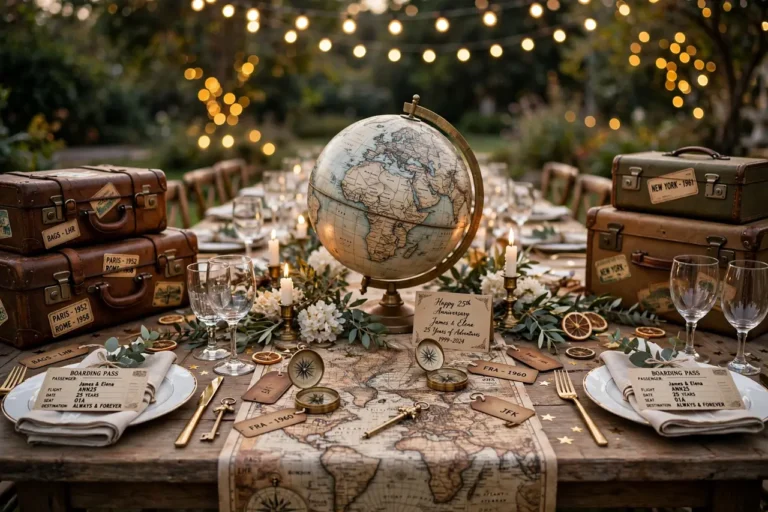
Your phone holds 40,000 photos of your travels together — and exactly zero of them are doing anything. They sit in the cloud, unviewed, while the adventures they captured fade from vivid memory to vague nostalgia. A travel anniversary photo book changes that. It’s the difference between having photos and reliving them: a tangible, hold-in-your-hands story of everywhere you’ve been and everything you’ve meant to each other along the way. Whether you’re celebrating your first anniversary or your fiftieth, these 25 travel anniversary photo book ideas will help you design a keepsake you’ll actually open — plus planning timelines, layout secrets from professional designers, and printing guidance to make every page worthy of the memories it holds. By the time you finish this guide, you’ll have a theme, a timeline, and the confidence to turn that overflowing camera roll into the most meaningful gift you’ll ever give.
Why a Photo Book Beats a Photo Album (and Your Camera Roll)
Let’s settle this first. Your camera roll is a warehouse; a photo book is a gallery. The difference is curation — the deliberate act of choosing, sequencing, and storytelling that transforms 400 beach snapshots into a narrative arc with a beginning, middle, and emotional payoff. Studies on memory consistently show that we remember experiences better when we revisit them in structured form, and a photo book you flip through on the couch together does something no scrolling session can: it creates a shared ritual of remembering.
For anniversaries specifically, a photo book hits differently than any other gift. It’s proof — proof of the trips, the laughter, the years. It says “our story matters enough to print.” And unlike flowers or dinner reservations, it appreciates: every year you add to the shelf, the collection becomes more precious. Start with this anniversary’s book, and you’re really starting a tradition.
25 Travel Anniversary Photo Book Ideas
The Classics: Tried, True, and Timeless
- The Year in Review: Every trip from the past twelve months, chronological, with ticket stubs and short journal entries. The most popular anniversary book format for a reason.
- Then and Now: Side-by-side spreads pairing early-trip photos with recent ones from the same destinations. The visual aging — of you, not the places — is profoundly moving.
- Our Greatest Hits: The 50 best photos from all your travels ever, ruthlessly curated. Think “greatest hits album” energy.
- One Trip, One Book: Dedicate the entire book to a single epic journey — the honeymoon, the sabbatical, the once-in-a-lifetime safari. Depth over breadth.
- The Map Book: Organized geographically instead of chronologically, with map graphics marking each destination. Perfect for couples who’ve covered serious ground.
Creative Themes That Stand Out
- Food-First: Every meal worth remembering, from Michelin stars to gas-station tacos. Food photos tell travel stories with delicious honesty.
- Doors and Windows: An artsy concept — every beautiful door, window, and archway you’ve photographed, paired with reflections on thresholds crossed together.
- The People We Met: Portraits of guides, hosts, fellow travelers, and new friends, with the stories of how each crossed your path.
- Sunrises and Sunsets: Every dawn and dusk you’ve watched together, in chronological order. Simple, stunning, surprisingly emotional.
- Hands and Feet: The classic couple-travel motif — holding hands in front of landmarks, feet in oceans worldwide. Intimate without showing faces.
- Signs and Street Art: Funny signs, beautiful murals, and graffiti from your travels — a book with built-in humor and color.
- Hotel Views: The view from every window you’ve woken up to together. An unexpectedly poetic concept.
- Transportation: Trains, tuk-tuks, ferries, camels — every way you’ve moved through the world together.
- Festivals and Celebrations: Every local festival, parade, and celebration you’ve stumbled into abroad.
- Wildlife Encounters: Every animal you’ve met on your travels, from safari elephants to that one aggressive seagull.
“A photo book isn’t about the photos. It’s about the evenings you’ll spend turning its pages together, remembering who you were when each picture was taken.”
Deeply Personal Concepts
- Love Notes Across the Map: Each spread features a photo plus a short love note written during that trip — real notes, real handwriting, real feelings.
- The Bucket List Book: Photos organized around your shared bucket list, with completed items celebrated and upcoming dreams previewed on the final pages.
- Anniversaries Through the Years: Every anniversary celebration you’ve had, in order — the trips, the at-home years, all of it. A meta-anniversary book.
- In Their Words: A book built around quotes from travel companions, family, and friends about your adventures together.
- The Sensory Book: Organized by senses — things you tasted, heard, smelled, touched. Include fabric swatches, pressed flowers, or scent strips for full immersion.
Playful and Fun Formats
- Bloopers and Outtakes: All the terrible photos — eyes closed, wind disasters, photobombs. Often the most-loved book on the shelf.
- The Passport Book: Designed to look like a giant passport, with “stamps” for each destination and “visa pages” of photos.
- Travel Bingo: A book structured as a bingo card of travel experiences you’ve completed together, with photo evidence for each square.
- Before Coffee / After Coffee: A humorous concept pairing your grumpy morning travel photos with the glowing afternoon versions.
- The Alphabet Book: A is for the Amalfi Coast, B is for Bangkok — 26 letters, 26 destinations, one delightful constraint.
Planning Your Book: The 4-Week Timeline
Great photo books aren’t made in a weekend — they’re made in calm, unhurried stages. Here’s the timeline professionals recommend:
| Week | Task | Time Needed | Pro Tip |
|---|---|---|---|
| Week 1 | Gather and curate photos | 3–4 hours | Pull 3x more than you need; cull ruthlessly later. Create one folder per trip or chapter. |
| Week 2 | Write captions and journal entries | 2–3 hours | Write while looking at the photos — memories surface faster. Keep entries under 50 words each. |
| Week 3 | Design layouts | 4–6 hours | Do it in two sittings to keep fresh eyes. Vary layouts: full-bleed, grids, single hero images. |
| Week 4 | Review, order, and buffer | 1–2 hours | Order 2+ weeks before the anniversary. Proof on a big screen, not your phone. |
Starting late? Many services offer rush printing, but you’ll pay for it — and rushed design shows. Even a simple, well-curated book beats an elaborate, frantic one. For gift-wrapping inspiration and handmade touches to pair with the book, see our DIY wedding gift ideas and personalized gifts for couples.

Design Secrets From Professional Photo Book Designers
The difference between an amateur-looking book and a stunning one comes down to a handful of design principles:
- White space is your friend. Cramming every page edge-to-edge with photos looks chaotic. Give images room to breathe — one hero photo per spread with generous margins reads as luxurious.
- Vary your layouts rhythmically. Alternate between full-bleed drama pages, clean grid pages, and quiet single-image pages. Rhythm keeps the eye engaged across 80 pages.
- Limit yourself to two fonts. One elegant serif or script for headings, one clean sans-serif for captions. More fonts = visual noise.
- Color-correct as a batch. Photos from different cameras and years clash. Apply consistent warmth and contrast so the book feels cohesive.
- Tell stories in spreads, not pages. Design each two-page spread as a unit — the left and right pages should converse with each other.
- Include non-photo elements. Maps, ticket stubs, boarding passes, handwritten notes, pressed flowers — texture makes books unforgettable.
- End with intention. The final spread should feel like a closing chapter: a favorite photo, a short note about the future, maybe a blank-ish page inviting “to be continued.”
Watch: Design a Beautiful Photo Book in Canva
Before you commit to a printing service, learn the design fundamentals. This step-by-step tutorial from a certified photo manager walks through creating a gorgeous photo book in Canva — choosing sizes, applying templates, organizing travel photos, customizing layouts, and exporting print-ready files. Even if you ultimately use a dedicated book service, these design principles transfer directly.
Choosing Your Book Style: Sizes, Papers, and Covers
The physical object matters as much as the design. Here’s what to know:
| Decision | Options | Best For | Budget Note |
|---|---|---|---|
| Size | 8×8″, 10×10″, 12×12″, 11×14″ landscape | Landscape orientation for travel; 12×12″ for maximum drama | Larger = pricier; 10×10″ is the sweet spot |
| Cover | Hardcover, softcover, layflat, leather | Layflat for panoramic spreads; hardcover for shelf presence | Softcover saves 30–40%; layflat costs premium |
| Paper | Standard, lustre, matte, pearl, thick layflat | Lustre for vibrant travel colors; matte for artsy feel | Upgraded paper is worth it — it’s what fingers feel |
| Page count | 20–120 pages typical | 60–80 pages for a year of travel; 100+ for multi-year retrospectives | Extra pages usually $1–2 each |
| Binding | Perfect bound, layflat, flush mount | Layflat for seamless panoramas across the gutter | Flush mount is the luxury pick for milestone years |

7 Mistakes That Ruin Photo Books (And How to Avoid Them)
- Including every photo. The #1 killer. If a photo doesn’t earn its place — no story, no beauty, no emotion — cut it. Your book should be the highlight reel, not the raw footage.
- Chronological rigidity. Strict date order often makes for boring pacing. Group by theme or emotion; use chronology loosely within chapters.
- Forgetting the words. A book of pure photos is a gallery catalog. Even short captions (“The night we got lost and found this place”) transform images into memories.
- Inconsistent photo quality. Mixing professional shots with blurry phone pics is fine — but don’t place them side by side at the same size. Give weaker photos smaller slots.
- Skipping the proof. Always preview the full book on a large screen before ordering. Phone previews hide layout sins.
- Ordering too late. Standard printing takes 1–3 weeks plus shipping. For an anniversary gift, order a full month early.
- Making it a surprise with zero input. A photo book is deeply personal — sneak-peek the concept (“I’m thinking a book of our Italy trip…”) to make sure the theme resonates.
Selecting which photos make the cut is half the battle. Our couple photo ideas guide can remind you of the shot types worth featuring — and our anniversary celebration guide pairs perfectly with a book-reveal moment at home.
10 More Photo Book Ideas: The Advanced Collection
For couples who’ve already made the classic book — or who want something nobody else has:
- The Then/Now/Next Book: Three acts — where you started (early trips), where you are (this year’s adventures), and where you’re dreaming of (bucket-list destinations with stock photos and your plans). The final act makes it a living document, not just a retrospective.
- Letters to Future Us: Each chapter ends with a sealed-style letter page — write to yourselves five years from now about this trip, this year, this love. Reading them at the next milestone anniversary becomes its own tradition.
- The Guest Book: Leave blank-bordered pages and bring the book on your next trip, asking fellow travelers, hosts, and new friends to add photos and notes. It becomes a collaborative artifact of your journey.
- Recipe Roadbook: Every memorable meal recreated: the photo of the dish, the story of where you ate it, and the recipe you tracked down (or invented) afterward. Cook your way back through your travels.
- The Night Sky Book: Astrophotography and night shots from your travels — star trails over deserts, city lights from rooftops, bioluminescent bays. An unexpectedly gorgeous theme.
- Reflections: Every photo featuring a reflection — mirrors, windows, puddles, sunglasses. A photographer’s concept that produces a stunningly cohesive book.
- The Soundtrack Book: Each spread pairs photos with the song that defined that leg of the trip, with QR codes linking to a playlist. Scan, listen, remember.
- Weather Diaries: Organized by the weather you traveled through — monsoons survived, blizzards embraced, perfect days catalogued. A fresh lens on familiar trips.
- The Kindness Book: Every act of kindness you witnessed or received while traveling — the stranger who helped with bags, the host who went above and beyond. Restores faith in humanity, page by page.
- One Second Every Day: The video-diary concept in print — one representative photo from every day of a long trip or a full year, in relentless chronological march. The accumulation is the art.
The Photo Curation Masterclass: From 5,000 to 200
Curation is where good books are born, and it’s a skill with a method. Round one: the gut pull. Scroll fast through your trip folders and star anything that makes you feel something — don’t think, just react. You’ll star 800–1,000. Round two: the story cut. Now think in chapters: does this photo advance a story, or is it the seventh near-identical beach shot? Keep the best two of any series. You’re down to 400. Round three: the spread test. Imagine each remaining photo at book size — does it hold up? Is it sharp, well-composed, emotionally loaded? This is where you get ruthless: 200 survive. Round four: the partner veto. Show the 200 to your partner. They’ll cut 30 you loved and rescue 10 you cut — and the book will be better for it, because it’s yours, not yours-alone. What remains is a collection where every single image earned its place, and that selectivity is exactly what makes the finished book feel precious rather than exhaustive.
Writing Captions That Make People Cry (In a Good Way)
The caption is the soul of the spread. Forget “Day 3 in Rome” — write the thing you’d whisper to your partner looking at that photo ten years from now. The formula: concrete detail + honest feeling, under 40 words. “The waiter brought us limoncello on the house because he said we looked ‘innamorati.’ We were.” — that’s 18 words and a whole memory. Avoid explaining what’s visible (“us at the Colosseum”) and reveal what’s invisible (what you were thinking, what happened right after, what you didn’t know then). Write captions in one sitting per chapter while the photos are in front of you; memory is state-dependent, and the images will pull words out of you that blank-page writing never could. And include at least one caption that makes you laugh out loud — future you will need it.
The Anniversary Book Reveal: Making the Moment Magical
A photo book deserves better than being handed over with the wrapping paper. Stage the reveal: cook a meal from one of your trips, play the trip playlist, pour the wine you brought home from that vineyard — then present the book. Let your partner turn pages at their own pace while you watch; resist narrating, and let the captions do the talking. Many couples report the reveal evening becomes as cherished as the trips themselves. For couples who want to build a full celebration around the moment, our anniversary-at-home guide offers dozens of ways to extend the magic, from themed décor to memory-lane playlists.
Digital vs. Printed: The Hybrid Approach Smart Couples Use
Here’s a secret from prolific memory-keepers: make both. Design the full book once, then order one gorgeous printed heirloom copy for the shelf and keep a digital flip-through version on a shared drive or tablet. The printed copy is for anniversary evenings, showing parents, and the deep satisfaction of physical pages. The digital version is for sharing with far-flung family, for browsing on actual trips (“remember when we were here last?”), and as a backup against coffee spills and house moves. Most major book services generate a digital preview automatically — save it deliberately instead of letting it vanish. And consider a yearly digital-only “director’s cut” with the outtakes and extras that didn’t make the printed edition. The shelf holds the masterpiece; the cloud holds everything.
Photo Book Ideas for Every Budget
A meaningful book doesn’t require a luxury budget — it requires curation and care. Here’s how the same anniversary book concept scales:
| Budget Tier | What You Get | Best Strategy | Realistic Cost |
|---|---|---|---|
| Under $40 | Softcover, 20–40 pages, standard paper | One-trip mini book; ruthless curation makes small feel intentional | $25–$40 |
| $40–$80 | Hardcover, 40–60 pages, standard lustre paper | The sweet spot for yearly anniversary volumes | $50–$75 |
| $80–$150 | Hardcover, 60–100 pages, upgraded paper | Multi-trip retrospectives and milestone years | $90–$140 |
| $150+ | Layflat, premium papers, large format, gift box | Once-a-decade heirloom editions (10th, 25th, 50th) | $150–$300+ |
Money-saving moves that don’t cheapen the result: design during sale seasons (book services discount heavily around holidays), keep page counts tight (every cut page saves $1–2), and choose standard sizes where coupons apply. What never to skimp on: paper quality. It’s the thing fingers touch on every page, and cheap paper makes expensive design feel disposable. For more ways to celebrate grandly without overspending, our budget anniversary celebration ideas pair perfectly with a book reveal at home.
Involving Your Partner: The Co-Creation Approach
Should the book be a solo surprise or a joint project? The happiest answer is usually both: one partner leads the design, but builds in co-creation moments. Have your partner write the captions for their five favorite photos — their voice in the book makes it unmistakably ours. Ask them to choose the cover image from three finalists. Let them veto anything that doesn’t feel true. These small collaborations take an hour total and transform the book from “a gift I made” into “a story we told.” Some couples go further and design alternate chapters each — his version of the road trip, her version of the same days — bound together. The dueling perspectives are hilarious, touching, and the most honest thing on your shelf. Whatever you choose, remember the book’s real audience is the two of you, decades from now, remembering. Design for them.
Quick-Start: The 7-Day Express Book
Anniversary in a week and no book yet? It’s doable. Day 1–2: gut-pull 120 photos into one folder. Day 3: write 30 one-line captions while looking at the photos. Day 4–5: use a service’s auto-layout templates (they’re genuinely good now) and just swap photos into place. Day 6: proof on a laptop screen and order rush printing. Day 7: breathe. An express book with honest curation beats a late perfect book every time — and most recipients never know it was a sprint. The secret is constraining scope: one trip, one theme, no perfectionism.
Frequently Asked Questions
How many photos should go in an anniversary photo book?
For a year of travel, 150–250 photos across 60–80 pages is ideal. For a single trip, 80–120 photos across 40–60 pages. Fewer, better-curated photos always beat more mediocre ones — cull ruthlessly and let each image earn its spread.
How far in advance should I start an anniversary photo book?
Start 4 weeks before the anniversary: one week each for gathering, writing, designing, and review/ordering buffer. Standard printing takes 1–3 weeks plus shipping, so order at least 2–3 weeks before you need it in hand.
What’s the best size for a travel photo book?
Landscape orientation (11×14″ or 12×12″) showcases travel photography best, especially panoramas. The 10×10″ square is the most popular all-rounder — substantial on the shelf without the premium price of larger formats.
Should photo books be chronological or thematic?
Thematic organization almost always makes a better book. Group by destination, experience type, or emotion, using loose chronology within chapters. Strict date order tends to create boring pacing and awkward juxtapositions.
How do I choose between hardcover, softcover, and layflat?
Hardcover offers the best shelf presence and durability for keepsakes. Layflat binding is worth the premium for panoramic spreads that cross the gutter seamlessly. Softcover works for casual yearly volumes or when budget matters.
Can I include memorabilia like tickets and maps in a printed book?
Yes — scan or photograph tickets, boarding passes, maps, and notes at high resolution and place them as design elements on pages. For physical items like pressed flowers, use archival photo corners on a dedicated page after printing.
What’s the ideal number of pages?
60–80 pages suits a year of travel; 40–60 for a single trip; 100+ for multi-year retrospectives. Most services charge $1–2 per extra page beyond the base, so plan your page count during design, not after.
How do I handle photos of different quality levels?
Give weaker photos smaller slots and stronger photos hero treatment — never place a blurry phone pic at full-bleed next to a professional shot. Batch color-correct for cohesion, and remember: an emotionally important blurry photo still earns its place, just at a modest size.
Should the photo book be a surprise?
Sneak-peek the concept but keep the design a surprise. Confirm the theme resonates (“a book of our Japan trip?”) without revealing layouts, captions, or the final object. Total surprises risk missing the emotional mark.
How much does a quality anniversary photo book cost?
Expect $50–$150 for a standard 60–80 page hardcover from major services, $150–$300+ for layflat or premium papers. The design time is the real investment — budget 8–12 hours across a month for a book you’ll treasure for decades.
Start Your Book Tonight
Here’s your first step, and it takes ten minutes: create a folder called “Anniversary Book” and drag in twenty photos that make your heart skip — not the technically perfect ones, the ones that make you feel something. That’s your book’s soul; everything else is arrangement. Then pick one idea from the 35 above that made you smile, and sketch three chapter titles on a napkin tonight. The trips will blur, the details will soften, but the book will hold them — page after page of proof that you went, you saw, and you loved every mile together. Happy anniversary, and happy book-making — your future selves are already grateful.