There is a reason every romantic movie ends with rose petals. A single rose is a gift; a hundred scattered petals is an atmosphere. Petals turn ordinary rooms into scenes, ordinary evenings into memories, and ordinary partners into people who plan things. The good news: romantic rose petal decoration ideas are the cheapest, easiest, and most forgiving form of Rose Day decorating there is. Petals do not need arranging skills, they do not wilt in an hour, and a “mistake” just looks like a natural scatter. This guide covers everything — how many petals you need, the classic designs step by step, fresh versus silk, timing, and the cleanup nobody talks about.
First, the mindset: petals are not flowers. Do not think like a florist; think like a painter. You are working with color, texture, and scent across a surface — a bed, a floor, a table, a bath. The petal’s job is to transform the surface it lands on. Once you see petals as a medium rather than as “lots of little flowers,” every idea in this guide becomes intuitive.
Why Petals Work: The Psychology of Scattered Roses
Scattered petals trigger something primal. A bouquet is contained, civilized, expected. Petals everywhere signal abundance, spontaneity, and delicious excess — the visual language of celebration across cultures, from wedding aisles in India to festival streets in ancient Rome — the visual language of celebration across cultures, from wedding aisles to festival streets. When your partner walks into a room covered in petals, the brain reads it before the conscious mind catches up: someone went overboard for me. That feeling of being delighted beyond reason is the entire point of romance.
Petals also engage senses a bouquet cannot. They crunch softly underfoot, they release scent when disturbed, they can be touched, gathered, thrown. A petal trail invites movement — follow it, step by step, anticipation building with every petal. A petal-covered bed invites collapse — fall in, surrounded. A bath strewn with petals invites surrender — sink in and let the day go. — follow it. A petal-covered bed invites collapse — fall in. Good petal decoration is interactive in a way no vase arrangement can be. And practically: petals are forgiving. A rose arrangement shows every flaw; a scatter of petals shows none. If you have never decorated anything in your life, petals are your medium — the one romantic material that rewards enthusiasm more than expertise.
How Many Petals Do You Actually Need?
The number one question, answered honestly. One fresh rose yields roughly 25–35 usable petals (fewer for tight hybrid teas, more for full garden roses). Here is the math for common projects: a loose petal trail from front door to bedroom (about 30 feet): 200–300 petals, or 8–12 roses. A generous bed scatter: 300–500 petals, or 12–18 roses. A dense heart shape on the bed: 400–600 petals, or 15–20 roses. A petal-filled bath: 150–250 petals, or 6–10 roses. A dining table runner of petals: 150–200 petals, or 6–8 roses.
The budget secret: you do not need perfect roses for petals. Buy what I call “petal roses” — blooms florists cannot sell as bouquets because they opened a day early. Ask for them directly; the discount is often dramatic — florists and wholesale clubs sell slightly tired, short-stemmed, or fully-open roses at a steep discount, and they are ideal because open blooms release petals easily. One step better: ask your florist on February 6 for the roses they are clearing out. You can often get two dozen for the price of half a dozen perfect stems. For the designs where petals are the star (trails, scatters, baths), imperfect roses are not a compromise — they are the smart buy.
The Classic Petal Heart on the Bed: Step-by-Step
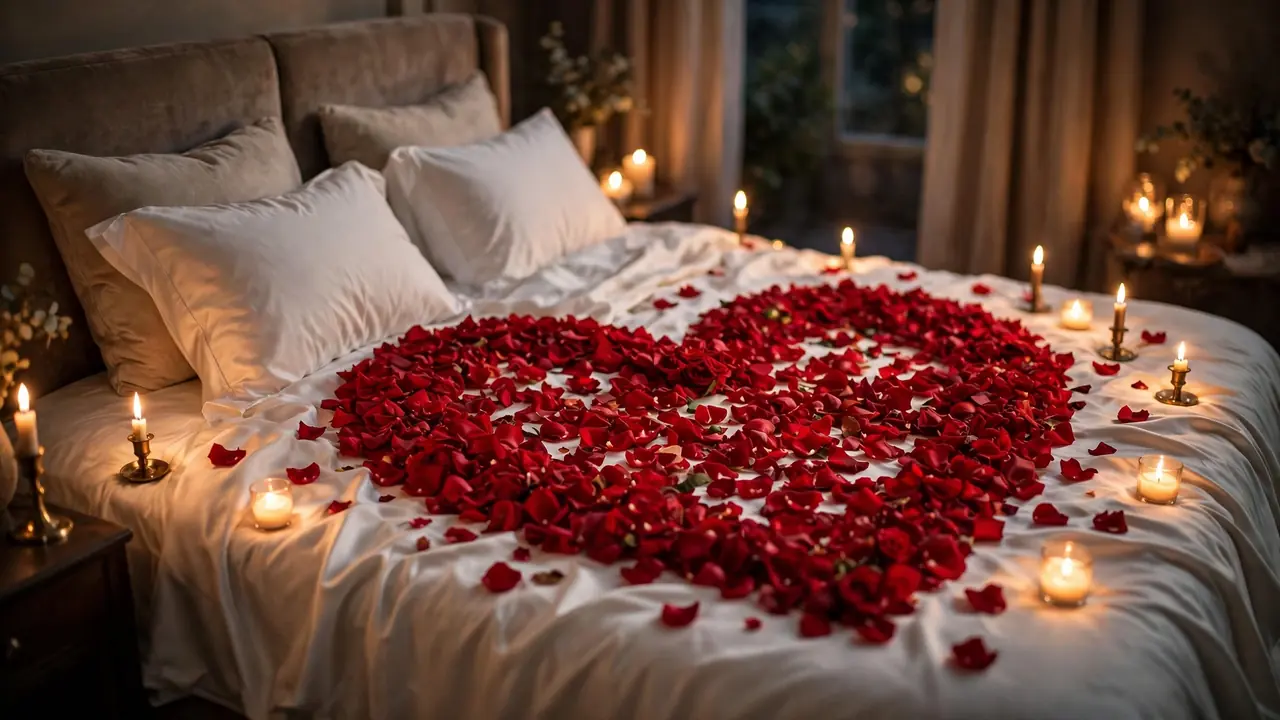
The heart on the bed is classic because it works — it photographs beautifully, it reads instantly, and it takes fifteen minutes. Here is the method. One: start with light-colored bedding; white or cream makes red petals pop. Smooth the duvet flat — wrinkles show through the design. Two: find the center of the bed and place one petal there as your anchor. Three: build the heart’s outline first, working outward from the center — two arcs at the top, tapering to a point at the bottom. Step back frequently; the outline is everything. Four: fill the interior loosely, not densely — a filled heart reads as a blob; a heart with visible bedding inside the outline reads as elegant.
Five: vary the petal orientation — some face-up, some angled — so light catches them differently and the heart has texture. Six: place a single perfect rose at the center of the heart, or a small card. Seven: photograph it before your partner sees it (you will want the photo). Size guide: a heart about two feet wide is romantic, and late-afternoon sun through a window turns every petal into stained glass; bigger than three feet starts to look like a craft project. And the advanced move: build the heart from mixed shades — deep red outline, pink interior — for a two-tone effect that looks professionally designed.
Petal Trails: From Door to Destination
The petal trail is storytelling in flower form. It says: follow me, something wonderful is happening. The classic version runs from the front door to the bedroom, but creative variations abound: from the bedroom to a candlelit dinner table, from the front door to a petal-filled bath, or — for maximum drama — from the car in the driveway all the way through the house. The trail’s power is anticipation; every step builds it, and by the final turn your partner’s heart is already racing before the surprise even appears.
Technique matters. Scatter loosely — a petal every 4–6 inches, drifting slightly side to side like a natural path, not a straight military line. At decision points (hallway junctions, staircases), cluster a few extra petals to signal the direction. On stairs, place 3–5 petals per step along one side. The trail should feel discovered, not installed. Time it so the trail is laid within an hour of your partner’s arrival — petals on the floor dry out and curl at the edges after a few hours, and fresh petals photograph far better.
Pair the trail with notes for the ultimate version: small cards at intervals — “keep going,” “almost there,” “you’re beautiful” — ending at the destination with the main surprise. It turns a decoration into an experience, and experiences are what get retold to friends for years. Planning a bigger surprise? Our proposal ideas at home show how trails lead to life-changing moments.
The Petal Bath: Doing It Right
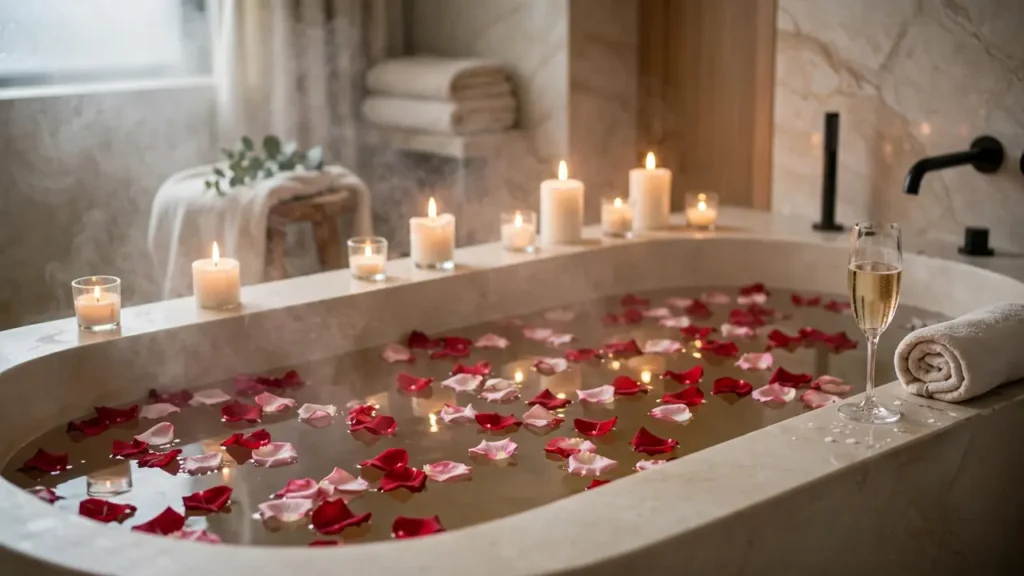
A petal bath done well is the single most luxurious Rose Day gesture in this guide; done poorly, it is a plumbing incident. Here is how to do it well. Fill the tub with comfortably warm (not hot) water first, then scatter 150–250 petals across the surface — they float beautifully. Add candles around the tub’s edge (battery-operated if the tub edge is narrow — real flames and slippery edges are a bad combination), dim the bathroom lights, and lay out a folded towel, their favorite bath products, and a glass of something nice within arm’s reach.
The details that elevate it: a bath tray or small stool across the tub holding the drink and a book; a few drops of rose essential oil in the water (not too much — a little goes far); and petals not just in the water but scattered on the bath mat and the closed toilet lid. Temperature timing is critical — run the bath no more than 20 minutes before your partner will use it, and cover the tub with a towel to hold the heat if you must wait. The note on the edge — “your turn, take your time” — is mandatory. Handwrite it; a printed card cannot carry the same weight. Prop it where it will be seen first, then give them the room alone and return when the water cools. It transforms a nice bath into a gift of pure, unhurried indulgence.
Table and Floor Designs Beyond the Heart
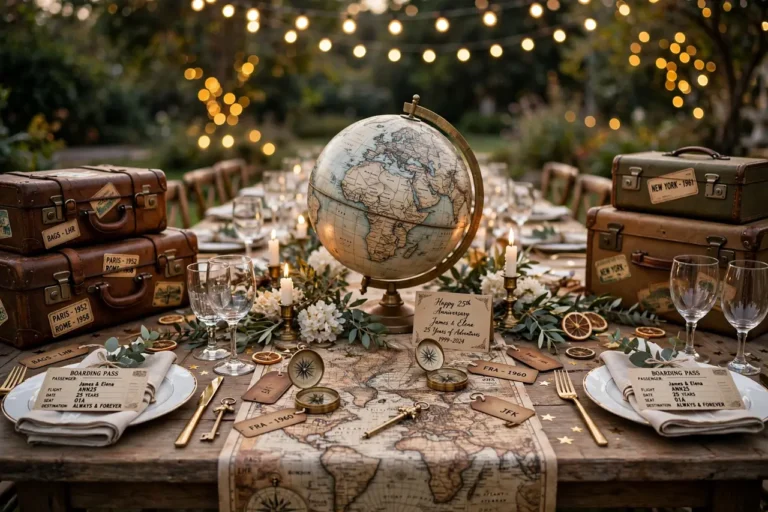
Once you have mastered the heart and the trail, expand your repertoire. The petal runner: instead of a fabric table runner, lay a 6-inch-wide band of petals down the center of the dining table, denser in the middle and feathering at the edges, with candles rising from within it. It is stunning and costs nothing beyond the petals. The petal circle: a large ring of petals on the living room floor with cushions inside and candles around it — an instant picnic spot, meditation nook, or proposal stage.
The petal monogram: spell your initials (or a short word like “love”) in petals on the bed or floor. It takes patience — sketch the letters lightly first, then fill — but the personalization is unmatched. The petal frame: outline a mirror, a window, or a doorway with petals stuck lightly with removable adhesive dots. And the confetti moment: keep a bowl of petals by the door to shower over your partner when they arrive, or to toss during a toast. Petals in the air, caught in a photo, are pure joy frozen in time. For table-specific inspiration, see our romantic table-setting ideas.
Fresh vs. Silk vs. Freeze-Dried Petals: An Honest Comparison
| Type | Look & Feel | Scent | Cost (per 500) | Best For |
|---|---|---|---|---|
| Fresh petals | Perfect — soft, vivid, natural variation | Real rose scent | $15–$30 (from discount roses) | Beds, baths, trails — anything touched or smelled |
| Silk petals | Good at distance; flat and uniform up close | None | $8–$12 | High installations, outdoor use, allergy households |
| Freeze-dried petals | Excellent — real petals, preserved color | Faint | $20–$35 | Mailing, keepsakes, confetti that must last |
| Biodegradable paper petals | Decorative; clearly not real | None | $6–$10 | Outdoor tosses where cleanup is hard |
The verdict: use fresh petals for everything your partner will touch, smell, or lie on — the sensory experience is the point. Use silk for anything high up, outdoors in wind, or in homes with allergies. Freeze-dried is the specialist choice for mailing petals to a long-distance partner or saving them as keepsakes. Never mix fresh and silk in the same design — the difference is obvious side by side.
Keeping Petals Fresh: Timing and Storage
Fresh petals are perishable — treat them like the produce they are. Petals pulled from roses stay vibrant for about 24–36 hours at room temperature before edges brown and curl. The timeline that works: buy roses February 5, pull petals the morning of February 7 (or the evening of the 6th), store pulled petals in a sealed plastic bag or container in the refrigerator with a lightly damp paper towel, and lay your designs within 1–2 hours of the reveal. Refrigerated petals hold beautifully for up to 48 hours.
Do not pull petals too early — a rose keeps its petals fresher than a bag does. Do not store petals wet — dampness breeds brown spots; the paper towel should be barely moist, not wet. And keep pulled petals away from fruit, especially apples and bananas, whose ethylene gas ages them fast. If you must prepare designs hours ahead (a bed heart before work, revealed after), mist the finished design lightly with water and close the bedroom door — still air and slight humidity buy you several extra hours of freshness.

Cleanup Without Killing the Mood
Let us address the unglamorous truth: 500 petals are romantic at 9pm and a chore at midnight. Plan cleanup like you planned the decor. First, choose your battlefield: lay designs on washable surfaces where possible, and avoid white carpets unless you have tested that your petals do not stain (dark red petals on light carpet can leave marks when wet — do a test press on a hidden spot). Second, keep a small attractive basket or bag discreetly nearby; gathering petals into it takes five minutes and feels like part of the ritual rather than janitorial work.
Third, save the best petals. Scoop a handful of the freshest into a keepsake envelope with the date — pressed between book pages, they become a permanent memento. The rest can go into a bath the next morning (a second use!) or be composted. Fourth, vacuum the stragglers the next day, not that night. Nothing deflates romance like a vacuum cleaner. The rule: the night belongs to the petals; the morning belongs to the cleanup. And honestly? Waking up to a few stray petals on the floor the next morning is its own kind of lovely — a reminder that last night was real.
Petal Color Meanings: Choosing Your Palette
Not all petals say the same thing, and your color choice is a message in itself. Deep red petals are the classic — passionate, unmistakable, the color of grand romance. Blush pink petals whisper rather than shout: admiration, sweetness, new love — perfect for new relationships where deep red might feel like too much too soon. White petals bring elegance and reverence; a white-petal design feels almost ceremonial, beautiful for anniversaries and proposals.
For advanced palettes, mix with intention. Red and pink together create depth and warmth — the most photogenic combination. Red with white is dramatic and high-contrast, stunning on dark bedding. An ombre effect — deep red at the edges fading to blush pink at the center — looks breathtaking in a heart design and takes no extra skill, just sorting petals by shade before you begin. Avoid mixing in yellow or orange unless the whole design is warm-toned; cool pinks and warm oranges clash in a way cameras cruelly reveal.
The practical note: darker petals show better on light surfaces and photograph with more drama, while pale petals glow in candlelight. If your reveal happens in daylight, go bold and dark. If it happens at night by candlelight, softer shades catch the flicker beautifully. Match the palette to the light and your design will look twice as good.
Outdoor Petal Designs: Gardens, Balconies, and Proposals
Petals outdoors behave differently — wind is your enemy and your collaborator. For balconies and patios, work with wind, not against it: heavier, slightly damp petals stay put better than dry ones, and designs with a defined edge (a heart, a circle, initials) read clearly even when a breeze rearranges the interior. Weigh down key petals with small candles or stones at the design’s anchor points.
The garden proposal is the pinnacle of outdoor petal design: a large heart or circle of petals on the lawn, candles in hurricane jars around the perimeter (open flames outdoors need wind protection — hurricane jars or LED candles are essential), and the question asked at the center. Time it for dusk, when the light is golden and the candles begin to glow against the darkening sky. Photographers call this the golden window, and it makes petal designs look incandescent.
For public proposals — parks, beaches, rooftops — check two things: permission (many parks require permits for setups) and cleanup (biodegradable fresh petals are fine almost everywhere; silk petals outdoors are litter — never use them where they can blow away). A petal design that respects the place is part of the romance. And the beach variant deserves mention: petals scattered on sand at sunset, leading to a blanket with champagne — wind will move them, and that is fine; the impermanence is part of the beauty.
Petal Crafts: What to Make After the Romance
The morning after Rose Day, you will have bowls of slightly tired petals — and throwing them away feels wrong. Good news: petals have a rich second life. Press the best ones between wax paper in heavy books for two weeks; pressed petals become bookmarks, card decorations, and framed art. A shadow-box frame with pressed petals and the date written beneath is a genuinely beautiful keepsake that costs nothing — start one this year and add to it every Rose Day, and in a decade you will own a museum of your love story.
Simmer a cup of petals in two cups of water for 20 minutes, strain, and you have homemade rose water — use it as a facial toner, a linen spray, or a cocktail ingredient. Dry petals on a windowsill for a week and they become potpourri; add a few drops of rose oil to revive the scent. Crafty types can embed dried petals in clear resin for coasters and jewelry, or fold them into handmade paper. And the simplest craft of all: tuck dried petals into envelopes with love letters throughout the year. Every future note arrives with a fragment of Rose Day inside it.
Watch: 3 Romantic Table Looks for Any Budget
See petal styling in professional action — this table-setup walkthrough shows three complete romantic looks using roses and petals at different budget levels, with techniques you can steal for beds, baths, and floors too.
Frequently Asked Questions
How many roses do I need for 500 petals?
About 15–20 roses, since one fresh rose yields roughly 25–35 usable petals. Buy slightly open or “petal-grade” roses from a florist or wholesale club — they release petals easily and cost far less than perfect long-stemmed blooms.
Will rose petals stain my sheets or carpet?
Fresh petals can leave marks on light fabrics when wet or crushed, especially dark red varieties. Use light-colored but washable bedding, do a test press on hidden carpet spots first, and avoid laying wet petals on anything you cannot wash. Silk petals eliminate the risk entirely for high-stakes surfaces.
How far in advance can I pull petals off roses?
Pull petals the morning of the reveal (or the night before at earliest). Store them in a sealed container in the refrigerator with a barely-damp paper towel, and they stay vibrant up to 48 hours. Never pull petals days ahead — the rose preserves them better than any storage method.
Are rose petals safe in the bathtub?
Yes, with two cautions: use pesticide-free petals (ask your florist for unsprayed blooms) since you will be soaking in the water, and use a drain catcher — petals can clog drains. Scoop petals out before draining the tub, and your plumbing will thank you.
Can I use silk petals for a petal bath?
You can, but fresh is far better for baths — the scent, the softness, and the way real petals float and move in water cannot be replicated. Reserve silk petals for dry designs, high installations, and allergy-friendly homes.
What is the most romantic petal design for beginners?
The loose bed scatter. It requires zero skill — just toss petals generously across light bedding — yet it transforms the room completely. Add a single rose on the pillow and a candle on each nightstand, and you have a professional-looking result in ten minutes.
How do I make petals last through the whole evening?
Lay designs within 1–2 hours of the reveal, mist lightly with water, keep rooms cool, and close doors to still the air. Petals on the bed under a closed bedroom door stay fresh for many hours; petals on a sunny floor will curl by afternoon.
Can I scatter petals at a restaurant or hotel?
Always ask first. Many restaurants welcome it if you arrange ahead — some even help — but surprise petal-scattering can violate health codes or venue policies. Hotels are generally delighted to prepare petal turndown service if you call the concierge a day ahead; it is a common honeymoon request. The rule: arranged in advance, always; sprung as a surprise, never.
Do rose petals attract bugs indoors?
Fresh petals can attract tiny fruit flies if left for more than a day, especially in warm rooms. The fix is simple: enjoy the design on the night, then gather petals the next morning. Do not leave petal designs up for multiple days — they brown, they curl, and they invite pests. One glorious night is the design’s lifespan; plan for it.
What should I do with leftover petals?
Press the best ones as keepsakes, toss a handful into the next morning’s bath for an encore, simmer some into homemade rose water, or dry them for potpourri. Petals are too beautiful for the trash — give them a second act. For whole-home ideas beyond petals, browse our Valentine’s Day home decoration guide.
Petals are the great equalizer of romance — democratic, forgiving, and astonishingly powerful for something that costs pennies apiece — no skill required, no fortune spent, no way to get it wrong. A handful scattered with love beats a florist’s masterpiece delivered without feeling, every single time, without exception. This Rose Day, buy the discount roses, pull the petals, and paint your home red. Lay the trail, build the heart, fill the bath. Then stand back and watch your partner’s face — that look is why petals have been the language of love for a thousand years, and why they always will be.