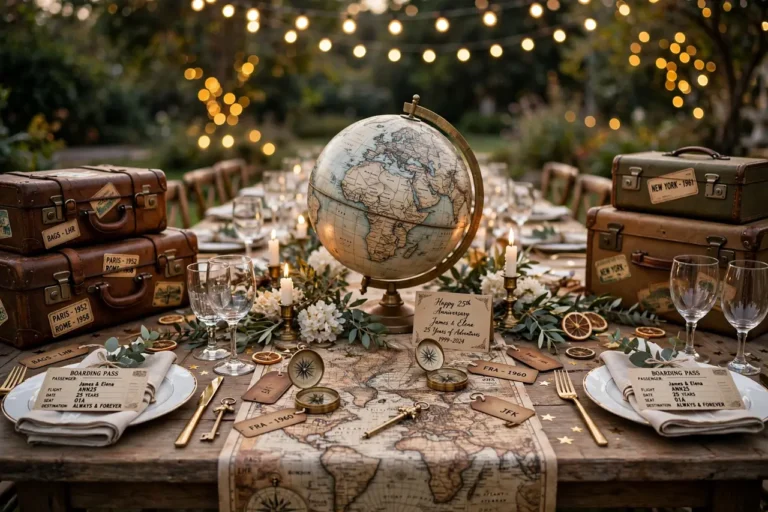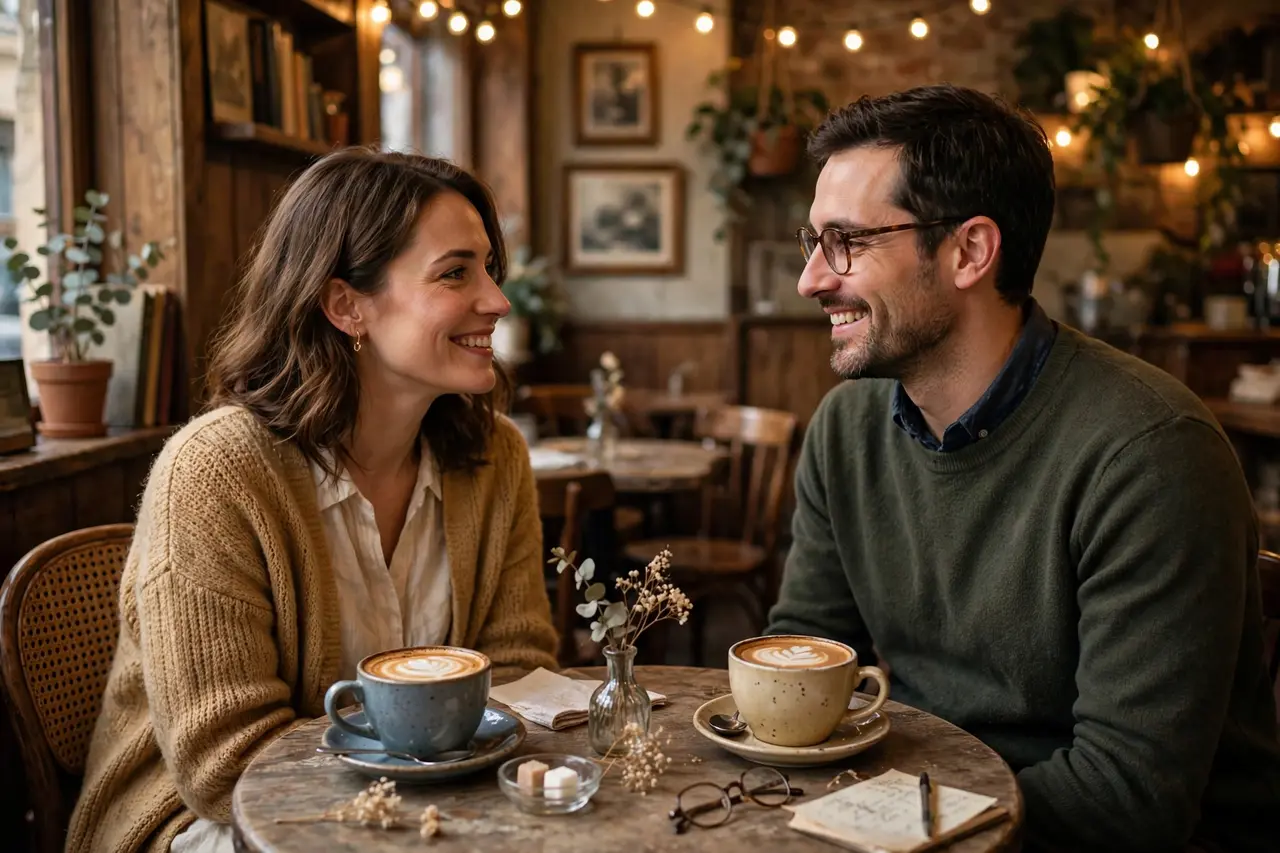
Of all the ways to celebrate the anniversary of the day you met, recreating your first date in photographs might be the most powerful. It is part detective work, part theater, part time travel — and the resulting images, showing who you were beside who you are, tell your love story more eloquently than words ever could. These recreate first date photo ideas will guide you through every step: researching the original, planning the recreation, shooting it beautifully, and presenting the then-and-now results.
Why does recreating a first date photograph resonate so deeply? Because it makes visible something we usually only feel: the distance traveled. Standing in the same spot, striking the same pose, wearing the echo of the same clothes — you can see, literally see, how much has changed and how much has stayed exactly the same. Couples who do this often report an unexpected emotional impact. The recreation starts as a fun project and ends as a profound experience, because you are not just taking pictures; you are visiting your younger selves.
This guide covers the full process. We will start with the research phase — excavating the details of your first date from memory, photos, and messages. Then we will walk through twenty specific recreation concepts organized by the kind of first date you had. Then the technical side: how to shoot, pose, and edit for the most striking then-and-now effect. And finally, creative ways to display and share the results.
Phase One: Research Your Own Love Story
Before you recreate anything, become an archaeologist of your own beginning. The more specific details you recover, the more powerful the recreation.
Start with your photo archives. Scroll back to the earliest photos of the two of you — not just the posed ones, but the backgrounds: the restaurant interior, the street, the outfits, the weather visible through windows. Screenshot or print the three to five images that show the most environmental detail. These are your reference frames.
Next, mine your messages. If you still have early texts, DMs, or emails, search them for the planning of that first date: “meet at 7?”, “the place on 5th street”, “wear something warm”. These fragments contain logistical gold — times, places, and the casual tone of your early communication. Some couples print their funniest early exchanges to include in the final presentation.
Interview each other. Separately, write down everything you remember about the first date: what you wore, what you ordered, what you talked about, what went wrong, what you thought on the way home. Then compare notes. The discrepancies are delightful — he remembers the rain, she remembers the song — and together your two versions reconstruct a fuller picture than either alone.
Finally, scout the location. Visit it in advance, at the same time of day if possible. Note what has changed and what has not. Take test shots to check the light. If the original venue closed, identify the closest alternative — sometimes a similar-type location (another diner, another park bench) works even better, because the slight difference becomes part of the story.
Restaurant and Cafe First Dates: Recreation Concepts
Food-based first dates are the most common and the most recreatable, because restaurants preserve their rituals even as decor changes.
1. The Same Table, Same Order
Call ahead, explain the mission, and request the same table. Order the same dishes. Photograph yourselves from the same angle as the original photo — or, if no photo exists, from the perspective of a diner watching two people fall in love. Ask the staff to take the shot; they witness love stories nightly and usually delight in helping.
2. The Menu Then-and-Now
Hold up the current menu beside a photo of yourselves from that era (or a printed screenshot of your early messages planning the date). This meta-composition — present hands holding past evidence — is a favorite of recreation photographers because it collapses time in a single frame.
3. The Across-the-Table Series
Shoot a sequence: the empty table as you arrive, the two of you mid-conversation, the cleared plates, the check. Presented as a four-frame series, it mirrors the arc of the date itself — anticipation, connection, satisfaction, and the reluctant end. Shoot from a fixed position (a tripod at the next table) for visual consistency.
4. The Bar Seat Reunion
If you met at a bar, recreate the bar-seat photo: same stools, same drinks, same body language — leaning in, laughing. Bar lighting is naturally flattering (dim, warm, forgiving), and the setting carries the energy of that first electric conversation.
5. The Dessert Toast
End the recreated meal the way you wish the first one had ended — or the way it actually did. Photograph the dessert course with a toast: two spoons, two smiles, and the unspoken knowledge of everything that followed. This shot works as the emotional climax of the series.
Outdoor First Dates: Parks, Walks, and City Streets
Outdoor locations change the most over time — trees grow, buildings rise — which makes outdoor recreations especially poignant.
6. The Bench Where It Happened
Find the bench, the overlook, or the corner where you first really talked. Sit in the same positions. The photograph practically composes itself: two people, one meaningful spot, years of invisible history in the space between then and now.
7. The Walking Route, Rewalked
Walk the exact route of your first stroll — same streets, same park paths — and have someone photograph you from ahead, the way a memory looks back at you. Walking shots feel alive and unposed; the movement masks camera shyness and the background tells the geographic story.
8. The Seasonal Echo
If your first date was in autumn, recreate it in autumn. Matching the season (and ideally the weather) creates an uncanny continuity between the images. Falling leaves, spring blossoms, summer light, winter coats — seasons are the most powerful visual time-markers we have.
9. The Landmark Framing
Use a landmark visible in your original photo — a building, a statue, a distinctive tree — as the anchor of the recreation. Frame the new photo to include it identically. Landmarks that have not changed become the still point in your turning world; ones that have changed become a meditation on impermanence.
10. The Golden Hour Return
Time your outdoor recreation for golden hour regardless of when the original happened. The warm light flatters, the long shadows add drama, and the photographs will be objectively beautiful — which matters, because these are images you will frame. Beauty and meaning are not enemies.
Activity First Dates: Movies, Games, and Adventures
Activity dates give you built-in props and actions, which makes them the most fun to recreate.
11. The Movie Theater Seats
Return to the same theater (or any vintage theater) and photograph yourselves in the seats — popcorn, shared armrest negotiation, the glow of the screen. If the original movie is streaming, watch it again afterward and photograph the credits rolling over your intertwined hands.
12. The Mini-Golf Rematch
Mini-golf, bowling, arcade games — competitive first dates beg for a rematch. Photograph the scorecards side by side (then and now), the victory pose, the gracious defeat. Playfulness photographs as joy, and joy is the whole point.
13. The Museum Pose
If you met at a museum or gallery, recreate the photo in front of the same artwork — or the same type of artwork. Museums are visually rich environments, and the contrast between the timeless art and your changing selves is quietly profound.
14. The Concert Crowd
Harder to recreate exactly, but the spirit can be captured: photograph yourselves at a show by the same artist, or in the same venue, hands up, faces lit by stage light. Concert photos radiate energy; they show the couple as they are when fully alive.
15. The Sports Game Ritual
Same teams, same seats if possible, same snacks. Photograph the scoreboard, the high-five, the shared groan at a bad call. Sports fandom is a shared identity, and documenting its rituals honors a real dimension of your partnership.
At-Home Recreations: When the Original Was Simple
Not every first date was a production. If yours was coffee on a porch, a walk that ended at someone’s apartment, or a long phone call, the recreation can happen at home — which is often more intimate anyway.
16. The Living Room Time Capsule
Rearrange your living room to echo the space where your early dates happened — the same kind of couch, the same movie queued up, the same snacks. Photograph yourselves in the recreated scene. The slight artificiality is charming; it is clearly a loving reconstruction, not a deception.
17. The Phone Call Reenactment
If your early relationship lived on the phone, photograph yourselves on a call together — back to back, in different rooms, the way you were in different places then. It is a conceptual image about connection across distance, and it honors the unglamorous infrastructure of falling in love.
18. The Recipe Recreation
Cook the meal from your early days — the first dinner one of you cooked for the other, however humble — and photograph the process and the result. Kitchens produce honest, warm photographs, and the meal itself becomes part of the anniversary celebration.
19. The Playlist Portrait
Photograph yourselves with the physical or visual representation of your early-days playlist — vinyl, a printed tracklist, phones showing the queue. Music was the soundtrack of your beginning; making it visible honors its role.
20. The Front Porch Then-and-Now
The simplest and often the most moving: sit on your own front porch or stoop, in the same positions as an early photo, and have someone capture it. Home is the ultimate then-and-now location, because it represents everything the first date made possible.
Shooting and Editing for Maximum Then-and-Now Impact
The recreation is only half the project; the presentation creates the emotional punch. These techniques maximize the contrast-and-continuity effect.
| Technique | How to Do It | Effect |
|---|---|---|
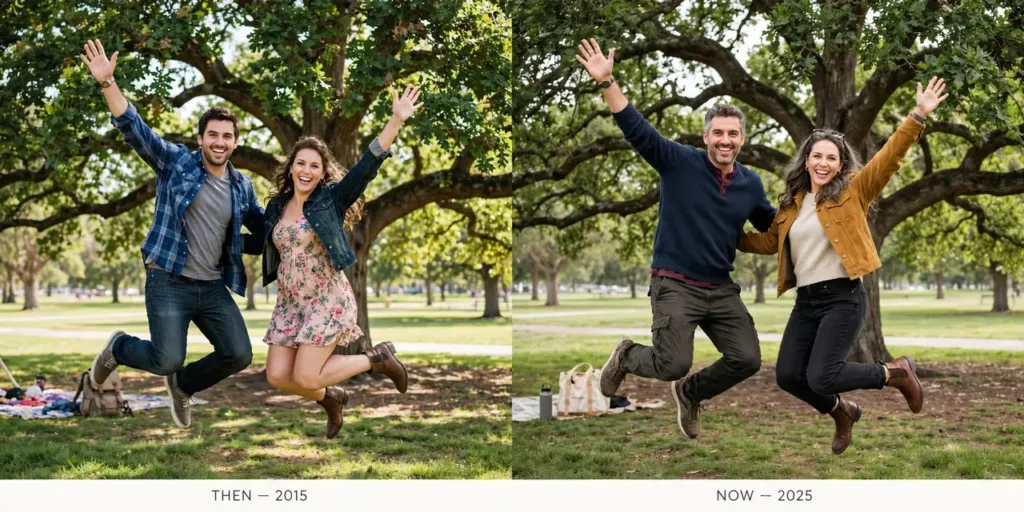
| Side-by-side diptych | Place original left, recreation right, matched for framing | The classic; instant, powerful comparison |
| Hold-up composite | Hold the printed original photo within the new shot | Layers time physically in one frame |
| Blended fade | Overlay the two images at 50% opacity in an editing app | Ghostly merging of past and present selves |
| Split-screen video | Recreate a video moment side-by-side with the original clip | Motion makes the time travel visceral |
| Consistent grading | Apply the same color preset to all new photos | Visual unity makes the series feel intentional |
| Caption pairing | Add the same caption style to each pair (“Table 12, then / Table 12, now”) | Words anchor the visual comparison |
Posing Guide: Matching the Original
The details of the pose make or break a recreation. Study the original photo like an actor studying a role: where are the hands, which way do the bodies lean, who is looking at the camera and who is looking away? Rehearse the pose before the shoot so it feels natural rather than contorted. Small adjustments are fine — you are older, the light is different — but the closer the match, the stronger the frisson when the two images sit side by side. If the original was candid, do not over-pose the recreation; instead, recreate the activity and let the photographer capture the genuine moment. And remember the cardinal rule of recreation photography: the differences are the point. Do not hide the gray hair, the laugh lines, or the extra decade. They are the story.
Presenting Your Recreation Series
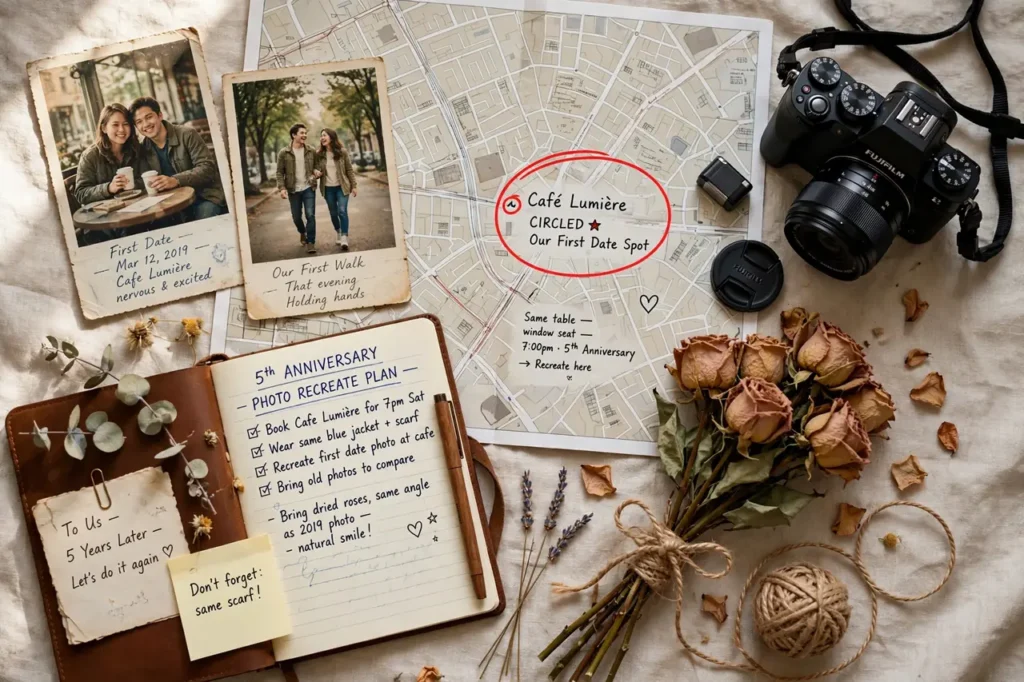
Once you have your then-and-now pairs, presentation transforms them from files into heirlooms. Print a small book — many services produce beautiful lay-flat albums from a phone upload — with each spread showing one pair and a short caption about the memory. Frame the single strongest diptych for your wall. Create a social media carousel with the then-and-now pairs; these consistently become couples’ most-shared posts, and our marriage anniversary photo captions for couples has perfect captions for them. Or go private: a handmade album, assembled together on the anniversary evening, becomes a ritual object you will return to every year. However you present them, back up the digital files in two places — these images will only grow more precious.
For broader anniversary photo inspiration beyond recreations, explore our wedding day photo ideas for couples, and if the recreation inspires a full date-night redo, our wedding day date ideas for married couples will help you plan the evening around the shoot.
Watch: An Anniversary Surprise Full of Photos and Memories
This couple’s anniversary surprise — a room transformed into a gallery of memories — shows how powerful photographs become when they are part of the celebration itself. Watch for ideas on displaying your own then-and-now series as the centerpiece of the day.
Advanced Editing: Creating Seamless Then-and-Now Composites
Once you have your recreation shots, editing transforms good pairs into stunning composites. You do not need professional software — free and low-cost apps handle every technique below — but you do need patience and a clear vision of the effect you want.
Aligning the frames. The single most important editing step is alignment: scaling and positioning the new photo so key elements match the original. Open both images as layers, reduce the top layer’s opacity to 50%, and nudge, rotate, and scale until landmarks, horizons, or faces line up. Perfect alignment creates the uncanny feeling that time itself has shifted; even small misalignments break the illusion. Take your time here — this step determines everything.
Matching color and tone. Photos taken years apart will have different color profiles — film versus digital, different white balance, different fading. Apply a unifying grade: convert both to black and white for a timeless feel, or push both toward a warm vintage tone. Matching the grade makes disparate images feel like intentional pairs rather than accidental collisions. Most editing apps offer one-tap vintage or film presets that work beautifully for this.
The blended transition. For the most artistic effect, create a single image that fades from past to present: place the original on the left and the recreation on the right, then blend the seam with a gradient mask so one dissolves into the other. The result looks like memory itself — the past bleeding into the present. This technique works especially well for location shots where the background provides continuity.
Text and dating. Add minimal text directly on the composite: the location and the two years (“Riverside Cafe — 2015 / 2026”). Use a clean, classic font, small and unobtrusive, placed in a quiet area of the image. Dating the images transforms them from pretty pictures into historical documents — which, for your family, is exactly what they are.
Print preparation. Composites destined for print need higher resolution than screen images. Export at the largest size your files allow, and use a reputable print service rather than a drugstore kiosk for anything larger than 8×10. For wall displays, consider metal or canvas prints — the then-and-now contrast looks striking at large scale. And always keep an unedited backup of every original; editing trends change, but the raw files are forever.
Troubleshooting Common Recreation Challenges
Recreation projects rarely go exactly as planned. Here is how to solve the problems that come up most often.
The location is unrecognizable. Renovations, new ownership, or complete demolition can erase the original setting. Solution: recreate the experience rather than the place. If the cafe is now a bank, find another cafe with a similar vibe and recreate the table setup, the order, and the poses. Photograph yourselves holding a printed photo of the original location — the image then documents both the change and your persistence. The story becomes “the place changed, we did not,” which is arguably more poignant.
You have no original photos. Many couples, especially those who met before the smartphone era, have few or no photos from the early days. Solution: work from memory and messages. Recreate the scene as you remember it, and present the new photos alongside written descriptions of the original (“The table by the window, rain outside, you laughing at my terrible joke”). The absence of an original becomes a feature: these photos are the visual record, created retroactively with love.
The weather will not cooperate. Rain on recreation day when the original was sunny (or vice versa) feels like failure but is actually an opportunity. Shoot anyway — dramatic weather creates dramatic photos — and lean into the contrast in your captions (“Then: sunshine. Now: storm. Still us.”). If conditions are truly impossible, reschedule rather than forcing it; the recreation deserves good faith effort, not suffering.
You feel silly. Almost everyone does, at first. The self-consciousness fades the moment you commit — striking the pose fully, laughing at the absurdity, letting the photographer direct. Remind yourselves: the silliness is visible only to you; what the camera captures is two people brave enough to honor their story playfully. The photos of you laughing at yourselves mid-recreation are often the best of the series.
The poses do not match. Bodies change, flexibility fades, and the exact angle proves elusive. Solution: match the spirit, not the geometry. If the original shows you leaning on a railing that no longer exists, lean on whatever is there. Approximate with confidence — viewers respond to the evident intention, not to millimetric accuracy. And remember: the differences between then and now are the entire point of the project.
Sharing Your Recreation Series Online
Then-and-now recreation series are among the most beloved things couples share online — they celebrate love publicly while inspiring others. Share yours thoughtfully for maximum joy.
Choose your format. The carousel (swipeable multi-image post) is ideal: lead with the strongest diptych, then sequence through the pairs chronologically. Alternatively, a short video that crossfades between then and now, set to your song, creates a genuinely moving minute of content. For stories or reels, the “hold up the old photo in the new location” format performs beautifully — it is interactive, clever, and instantly understandable.
Write captions that tell the story. Do not just post the images; narrate them. “Photo 1: the bench where we talked for four hours on our first date, 2015. Photo 2: the same bench today.” The then-and-now captions from our marriage anniversary photo captions for couples collection give you ready-made lines. Include the date you met and the number of years — context transforms pretty pictures into a love story.
Mind your privacy. Decide in advance what you are comfortable sharing: exact locations, children’s faces, personal details in captions. Once posted, images travel beyond your control. Most couples find a middle path — sharing the romance while keeping specific locations and private details offline. And get your partner’s enthusiastic consent before posting anything; the recreation was a shared project, and the sharing should be too.
Frequently Asked Questions
What if the place where we had our first date no longer exists?
Recreate the type of place rather than the specific one — another diner, another park bench, another theater. The emotional truth of the recreation comes from the ritual (same order, same seats, same walk), not the exact address. You can also composite digitally: photograph yourselves now and blend with the original photo for a then-and-now diptych that transcends location.
How do we pose if our original photos were candid?
Do not pose — recreate the situation instead. If the original shows you laughing over coffee, sit with coffee and talk until you laugh, and have the photographer shoot continuously. The goal is a genuine moment in a recreated context, not a frozen imitation of spontaneity.
What should we wear for the recreation?
Echo the original without costuming it: same colors, same level of formality, same vibe. If you wore jeans and a red shirt, wear jeans and a red shirt — not a costume, just a rhyme. The visual echo triggers recognition; exact replication can feel like a theme party.
Can we do this with just our phones?
Absolutely. Use the rear camera (higher quality than selfie mode), a small tripod or a propped-up phone with a timer, and shoot in the best light available. The emotional content of a recreation matters far more than technical perfection — a slightly grainy then-and-now diptych still delivers the full emotional impact.
How many recreations should we do?
Three to five strong pairs beat fifteen rushed ones. Choose the moments with the clearest original photos and the most accessible locations. Quality of concept matters more than quantity — one perfect diptych on your wall outweighs a hundred forgettable ones in a folder.
Should we hire a photographer for the recreation shoot?
If budget allows, yes — a photographer frees both of you to be present in the recreation instead of managing a tripod, and professionals excel at matching angles and light to reference images. Brief them with your original photos in advance. If not, a trusted friend with a good eye works wonderfully; the direction (“match this angle”) is simple enough for anyone.
What is the best way to display then-and-now photos?
The diptych — original left, recreation right, identically framed — is the gold standard, whether as a wall frame, an album spread, or a social media carousel. For a single statement piece, the “hold-up” composite (holding the old photo within the new shot) is striking. However you display them, print at least one physically; screens do not do justice to time travel.
Our first date was awkward — should we recreate the awkward parts?
Yes — lovingly. The spilled drink, the wrong turn, the terrible movie choice: these are the details that make your story yours. Recreating the imperfections with humor shows how far you have come and how comfortable you are with the whole truth of your beginning. The best recreations include at least one gloriously imperfect moment.