The proposal lasts minutes. The photos last forever — they are the save-the-dates, the framed print on the wall, the image your grandchildren will point at and ask about. But here is what nobody tells you while you are planning: great proposal photos are not an accident. They are the result of a dozen small decisions made before the knee hits the ground. These proposal photo ideas for couples cover the full playbook — the iconic shots, the creative setups, the candid moments most couples miss, and the planning details that separate stunning photos from blurry disappointments.
Whether you have hired a professional photographer hiding in the bushes or you are handing your best friend an iPhone with strict instructions, the principles are the same: think about light, think about background, and think about the story — because the best proposal photos do not just show what happened. They show what it felt like.
Below: 20 photo ideas organized by style, a planning timeline, the essential shot list every couple should get, posing tips for people who hate posing, and answers to the questions couples ask most. Let’s make sure your “she said yes” looks as good as it felt.
Before the Ideas: The 4 Decisions That Make or Break Proposal Photos
1. Light first, location second
Photographers have a saying: amateurs worry about location, professionals worry about light. The dreamiest proposal photos share one thing — beautiful light. The golden hour (the hour before sunset) wraps everything in warm, flattering glow and is the single best time for outdoor proposals. Overcast days are secretly excellent too: clouds act as a giant softbox, eliminating harsh shadows. The worst light is midday sun (raccoon-eye shadows) and mixed indoor lighting. When choosing your proposal spot and time, choose the light first and let the location follow.
2. Background discipline
Your eyes will be on each other; the camera sees everything behind you. Scout the exact proposal spot in advance and look at what the lens will see: trash cans, parked cars, construction, crowds. The best proposal backgrounds are simple — open sky, water, trees, architecture with clean lines. A good rule: the background should be beautiful but boring enough not to compete with you. If you are proposing somewhere busy, position yourselves so the camera shoots toward the prettiest, emptiest direction.
3. The photographer question
You have three options, and all are valid. Hidden professional: a photographer poses as a tourist or hides nearby, capturing the genuine surprise. Best photos, highest cost, requires coordination. Designated friend: a trusted friend with a decent phone or camera, briefed in advance. Free, but the photos depend entirely on their skill — and they miss being “in the moment” with you. Planned shoot: you tell your partner about the photos but not the proposal (“let’s do a couples shoot”), so the photographer is openly present and the proposal itself is still a surprise. This hybrid is increasingly popular: relaxed, high-quality photos plus a genuine surprise moment. Choose based on budget and how much the surprise matters versus photo quality.
4. Tell the photographer the plan — all of it
Whoever is shooting needs to know: the exact spot, the exact signal for “it’s happening,” where to stand, and what happens after. Share your location pin, do a walkthrough if possible, and agree on a cue (a phrase, a gesture, a text). The number one cause of missed proposal shots is not bad equipment — it is miscommunication about timing. Over-communicate. Then communicate once more.
Iconic Proposal Photo Ideas (The Classics)
These are the shots every couple wants — the ones that define the genre. Get these right and you have the essentials covered.
1. The knee-drop wide shot
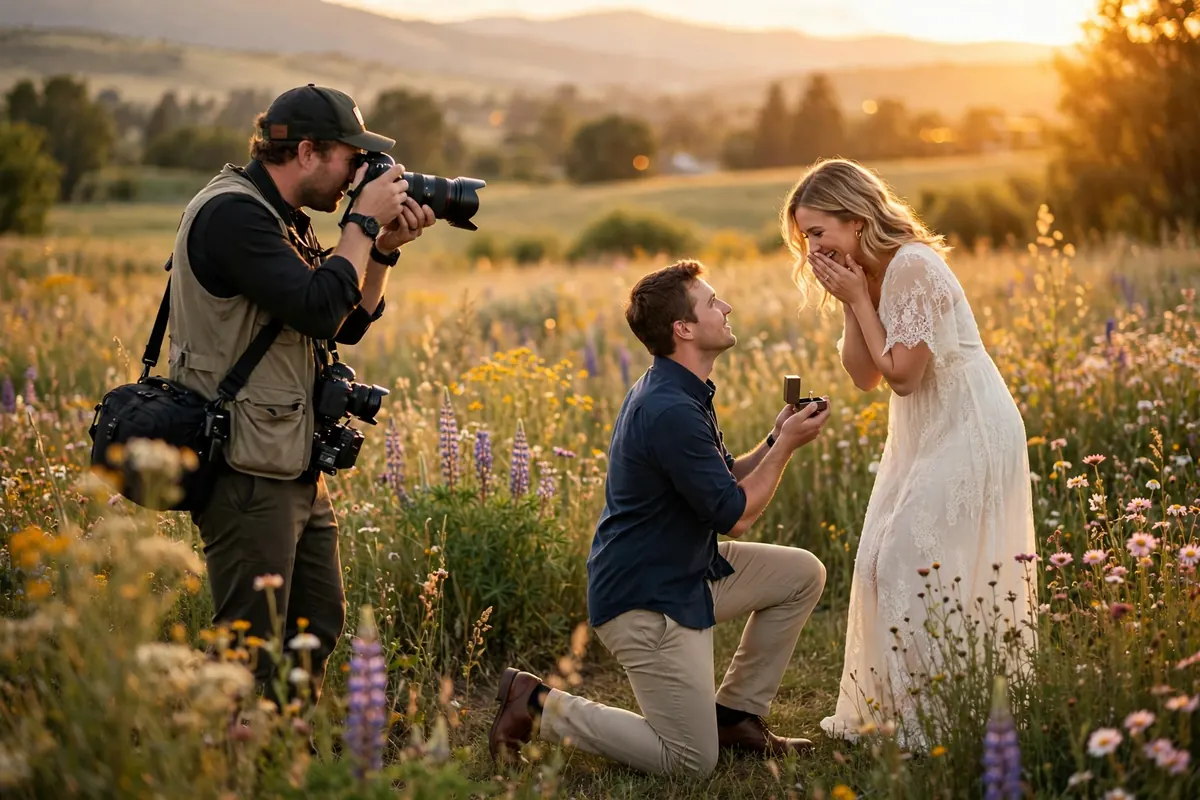
The defining image: one partner on one knee, the other reacting, captured wide enough to show the setting. This is the photo that goes on the announcement. For it to work, the photographer needs to be positioned to see both faces — a three-quarter angle beats a straight side view. The proposer should angle slightly toward the camera (not stare into it — just open the body a touch). Pro tip: hold the knee-drop for a full three seconds before speaking. It feels eternal to you; it gives the photographer the shot of a lifetime.
2. The reaction close-up
Hands over mouth, tears, disbelief, joy — the raw reaction in tight close-up. This shot is why hidden photographers earn their fee: genuine surprise cannot be restaged. If a friend is shooting, brief them explicitly: “When it happens, zoom in on their face first, wide shot second.” The reaction close-up is the photo couples say they treasure most, because it shows what the moment felt like from the inside.
3. The ring reveal
The open box, the ring sliding onto the finger, hands intertwined with the new ring catching light. These detail shots are the jewelry campaign version of your proposal. For the ring-on-finger shot, hold hands naturally — do not stiffen the fingers into a claw. A slight curl of the fingers looks elegant; splayed stiff fingers look like a mugshot. Photographers: shoot this in the minute after the yes, while hands are still trembling with adrenaline — the emotion reads in the frame.
4. The embrace
The first hug as an engaged couple — lift, spin, bury-face-in-shoulder, all of it. Tell the photographer to keep shooting through the embrace, not stop at the yes. The thirty seconds after the question are pure, unguarded joy, and they produce the most alive photos of the day. Do not pose the embrace; just hold each other. Movement and genuine emotion beat choreography every time.
5. The “we did it” walk-away
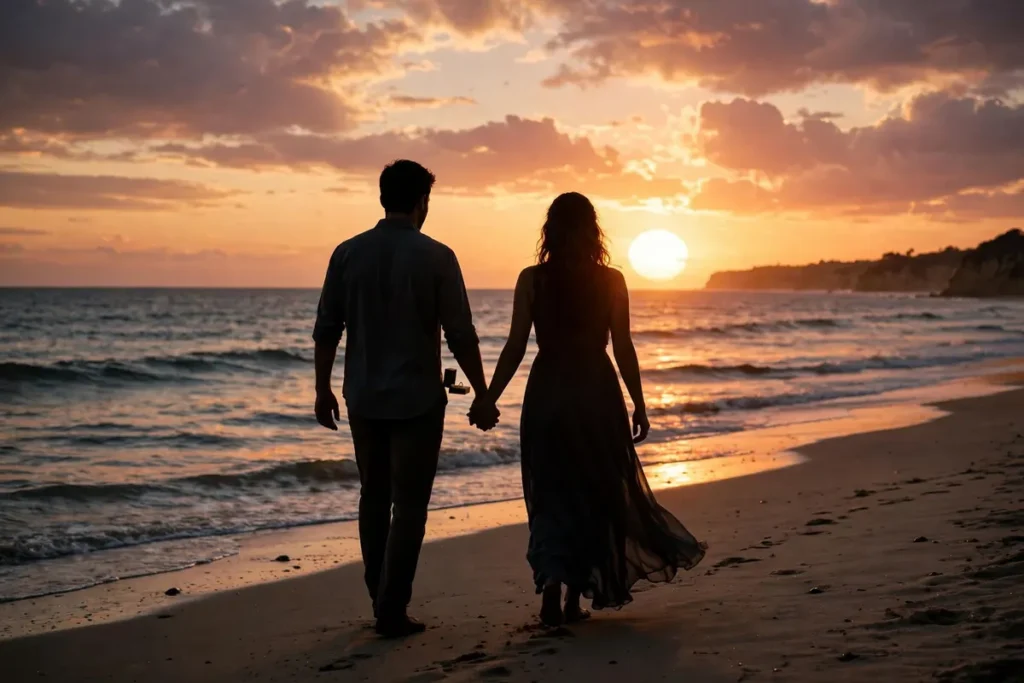
Holding hands, walking away from the camera toward the sunset / the city / the rest of your lives. It is a cliché because it works — it is the closing shot of the movie. Walk naturally, swing the joined hands slightly, and do not look back at the camera. This shot also makes a perfect save-the-date image because the composition has clean space for text.
Creative Proposal Photo Ideas (Beyond the Basics)
6. The first-look style reveal
Have your partner face away (watching the sunset, “admiring the view”) while you get into position behind them. The photographer captures the turn — the exact second of realization. This works brilliantly because it manufactures a clean “before and after”: calm anticipation, then the world tilting. Brief your partner with a plausible reason to look away (“close your eyes, I have a surprise” also works and adds to the moment).
7. The proposal picnic flat-lay
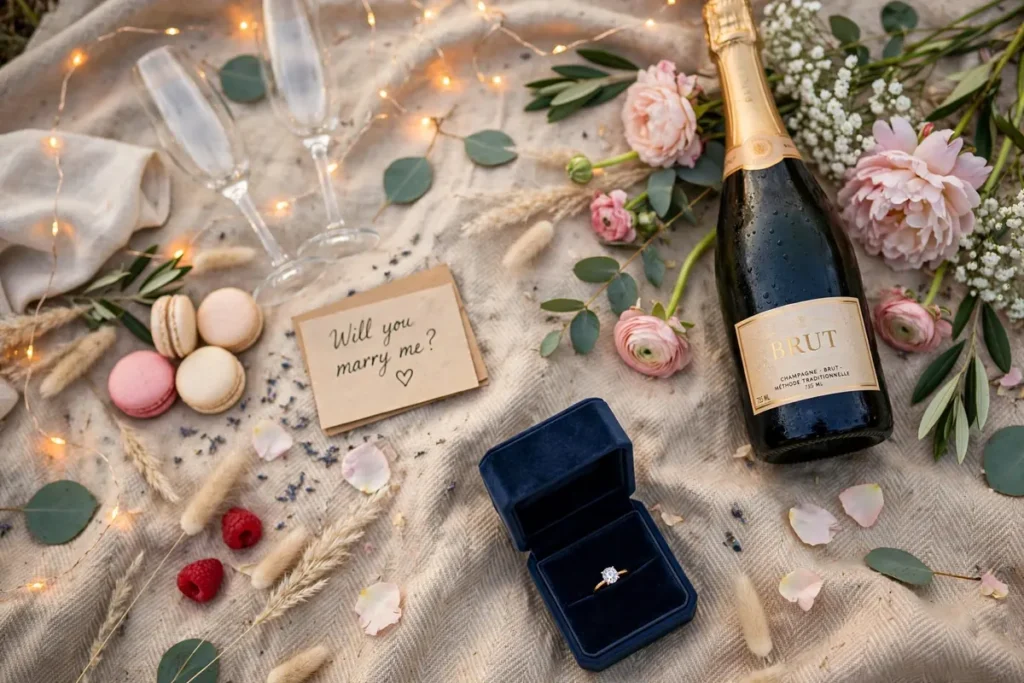
Style a picnic — blanket, champagne, flowers, the ring box nestled among the details — and photograph it from above before your partner arrives. Then capture the proposal in the scene. The flat-lay gives you a gorgeous detail image for announcements, and the styled setting elevates every other photo. Keep the styling simple and personal (their favorite snacks beat generic props) so it feels like you, not a photo shoot.
8. The city-lights night proposal
Proposing after dark — rooftop, bridge, city overlook — with bokeh city lights behind you. Night proposals photograph dramatically but need planning: the photographer will need a fast lens or a phone’s night mode, and you will want some light on your faces (string lights, a nearby lamp, even phone flashlights held by a friend). The result is cinematic: two people glowing against a galaxy of city light. Bring a small LED light panel if a friend is shooting — it is the difference between moody and muddy.
9. The pet co-star
Dogs with “will you marry me” bandanas, cats reluctantly wearing bow ties, the ring tied (securely!) to a collar. Pets add chaos and charm in equal measure — the photos are irresistible. Practical notes: have a handler for the pet (not the proposer), keep treats ready, and accept that the pet will not cooperate on schedule. The outtakes are often better than the planned shots. And never attach the actual ring to a pet unsupervised — use the box, held by the handler, for the real moment.
10. The drone proposal
A drone capturing the proposal from above — the two of you small in a vast landscape, or a top-down shot on a beach with “marry me” written in the sand. Drone shots add epic scale that ground-level photos cannot. Check local drone regulations (many parks, beaches, and cities restrict or ban drones), hire an experienced drone operator rather than DIY-ing it on the day, and keep the drone high and quiet during the actual question — buzzing ruins romance.
11. The reenactment series
After the yes, revisit the spots that built your story: the bar where you met, the first apartment, the park bench. Photograph the newly engaged you in the places where it all happened. This series tells your whole love story in a single carousel and makes extraordinary anniversary content. It works best as a relaxed walk-and-shoot in the hour after the proposal, while the glow is fresh.
12. The champagne pop
The cork flying, the spray catching golden-hour light, both of you laughing — the champagne pop is the exclamation point of proposal photography. Shoot it in burst mode; the best frame is usually mid-spray. Aim the bottle away from faces (and the photographer), and accept getting a little wet — the photos are worth it. This is the image that screams celebration, perfect for the announcement post.
Candid & Detail Shots Most Couples Miss
13. The hands series
A sequence of hand details: the nervous hand in the pocket holding the box, the box opening, the ring on the finger, your hands intertwined afterward. Hands tell the proposal’s story in miniature. Photographers: get low and close for these. Couples: moisturize that morning and consider a fresh manicure — your hands are about to be famous.
14. The laughing in-between
The unposed moments — doubled over laughing, wiping happy tears, the disbelieving “did that really happen” look. Tell your photographer (or friend) the golden rule: keep shooting after the yes. Most people stop at the question. The five minutes after are where the real album lives.
15. The witness reactions
If family or friends are secretly watching, their reactions are gold — the mom crying, the best friend fist-pumping. Station the photographer to catch both the couple and the witnesses, or assign a second shooter (even a phone) to the crowd. These photos become treasured by the witnesses themselves.
16. The detail still-life
The ring on the proposal spot’s distinctive surface — on the picnic blanket, against the sunset, on the restaurant’s menu. One artful still-life of the ring in context is the photo that gets framed. Take it while the light is good, before the celebration chaos begins.
17. The “just engaged” portraits
Ten minutes after the yes, take proper portraits — you are glowing, the adrenaline is still there, and you have the best “just happened” energy you will ever have. These do not need to be stiff: forehead to forehead, the almost-kiss, walking hand in hand. Change nothing about your outfits; the just-as-you-were authenticity is the point.
Seasonal & Location-Based Ideas
18. The golden-field / flower-season proposal
Time your proposal to a landscape at its peak — wildflower superbloom, autumn color, cherry blossoms, a sunflower field. Nature does the styling for free. Research peak timing for your area (it shifts yearly), go on a weekday to avoid crowds, and have a backup date in case of weather. The photos look like a film still because, essentially, they are.
19. The snowy winter proposal
Snow is nature’s reflector — it bounces soft, flattering light onto faces and turns the world into a clean white studio. Falling snow in the frame is pure magic. Dress warmly but photogenically (coordinated coats, no ski-mask energy), keep the shoot short (cold kills smiles), and bring hand warmers. The ring-against-snow detail shot is iconic.
20. The hometown / meaningful-place proposal
The coffee shop where you met, the college quad, the overlook from your first road trip. Meaningful places photograph with an emotional resonance that pretty-but-random locations cannot match — because every future viewing carries the story. If the place is not conventionally photogenic, shoot at golden hour and frame tightly; emotion covers a multitude of backgrounds.
The Friend-Photographer Briefing (Copy-Paste This to Them)
If a friend is shooting your proposal instead of a pro, send them this briefing a few days before. It covers everything a non-photographer needs to know:
Arrival: Be in position 30 minutes early. Text me “in position” — I will reply with a thumbs-up when we are five minutes out. If anything changes, I will text; otherwise assume the plan holds.
Position: Stand [exact spot we agreed on] — you should see both of our faces at a three-quarter angle. Do not stand directly behind me (you will only get the back of my head) or directly in front of her (she will spot you).
Settings: Wipe your lens. Turn on burst mode (hold the shutter for the key 10 seconds). Lock focus on our faces by tapping and holding. Shoot horizontally. Turn your flash OFF — it will ruin the surprise and the mood. If it is getting dark, turn on night mode and brace against something solid.
The sequence: (1) A few candid shots of us arriving — she looks happy and unaware; these are gold. (2) When I [say the code phrase / touch my ear / get down on one knee], start burst mode and do not stop until I stand up. (3) First priority: HER face — zoom in on her reaction. Second priority: wide shot of both of us. (4) After she says yes, KEEP SHOOTING for five full minutes — the hug, the tears, the laughter. Everyone stops too early; do not be everyone.
After: Do not post anything until we say so. AirDrop me your 10 best shots within the hour. Then enjoy the party — you have earned it, and we owe you dinner.
That briefing, followed to the letter, will get you 80% of a professional result at 0% of the cost. The remaining 20% is luck and light — and you have already planned the light.
The Essential Shot List (Give This to Your Photographer)
| When | The shot | Notes |
|---|---|---|
| Before | The setup / flat-lay | Styled details, ring box, location establishing shot |
| Before | Candid “unaware” portraits | Your partner enjoying the moment, not knowing what’s coming |
| The moment | Wide knee-drop shot | Both faces visible, setting in frame |
| The moment | Reaction close-up | Zoom to their face the instant they realize |
| The moment | Ring reveal / ring on finger | Get low, get close, shoot the hands |
| After (0–5 min) | The embrace + laughter | Keep shooting — do not stop at the yes |
| After (5–15 min) | “Just engaged” portraits | Forehead-to-forehead, almost-kiss, walking shots |
| After | Witness reactions | Family/friends’ faces if present |
| After | Champagne / celebration | Burst mode for the pop |
| After | Ring still-life detail | The ring in context — sunset, blanket, menu |
Posing Tips for People Who Hate Posing
Move, don’t pose. The best “posed” photos are actually movement: walk toward the camera, spin, whisper something funny. Motion creates natural expressions and kills the deer-in-headlights look.
The almost-kiss. Lean in like you are about to kiss, then pause just short. It creates intimacy and anticipation in the frame without the awkwardness of a staged kiss.
Forehead to forehead. Close your eyes, touch foreheads, breathe. It photographs as pure tenderness and gives you a genuine quiet moment in a hectic day.
Show the ring naturally. Rest your hand on their chest, their arm, their cheek — the ring visible but the gesture natural. The “hand shoved at the camera” ring shot always looks forced; the “hand resting where hands rest” version always looks right.
Laugh for real. If the photographer wants laughter, have your partner whisper something genuinely funny or absurd in your ear. Fake laughter photographs as pain. Real laughter photographs as joy. There is no filter for the difference.
Watch: How to Pose a Proposal Photoshoot
Seeing posing in action beats reading about it. This video covers proposal photoshoot posing from the knee-drop through the post-yes portraits — including where the photographer should stand and how to keep couples looking natural.
FAQs About Proposal Photos
How much does a surprise proposal photographer cost?
It varies widely by market, but expect roughly $300–$800 for a short proposal session (30–60 minutes) in most US cities, more in major metros or for elaborate setups. Many proposal photographers offer packages including the hidden shoot plus a mini portrait session afterward. Always confirm exactly what is included: hours, number of edited photos, turnaround time, and travel fees. Book 4–8 weeks out for popular seasons.
How do I keep the photographer hidden without ruining the surprise?
The most reliable methods: the photographer poses as a tourist with a long lens (works in scenic public spots), hides at a pre-scouted position (behind a pillar, in a café across the street), or is openly present under a cover story (“my friend is building their portfolio — let’s do a fun couples shoot”). The cover-story approach is increasingly popular because it eliminates hiding stress entirely while preserving the proposal surprise.
What should we wear for proposal photos?
Coordinate without matching: complementary colors, similar formality levels. The proposer should dress one notch above the setting (if she is dressed up and he looks like he just mowed the lawn, the photos suffer). Solid colors photograph better than busy patterns. And the partner being proposed to should look like themselves on a great day — if a full styling surprise is impossible, a “let’s get dressed up for a nice dinner” cover story solves it.
What if it rains on proposal day?
Have a plan B location scouted in advance — a covered overlook, a beautiful interior, a museum. Some of the most dramatic proposal photos ever taken were in rain (a clear umbrella is a classic prop for a reason). Brief the photographer on the rain plan ahead of time so nobody is improvising. And remember: overcast light is flattering light. Rain is only a disaster if you let it be.
Phone or camera — does it matter?
A modern phone in good light, wielded by someone who understands composition, produces genuinely excellent proposal photos. Where dedicated cameras win: low light, fast action (the surprise moment), and zoom without quality loss. If a friend is shooting on a phone, brief them on the essentials: wipe the lens, shoot in burst mode for the key moment, lock focus on faces, and for heaven’s sake shoot horizontally for the announcement shots.
How do I get the photos quickly for the announcement?
Agree on turnaround before the proposal. Many photographers offer a same-day “sneak peek” of 5–10 edited images within 24 hours — ask for this explicitly if you want to announce quickly. If a friend shot it, have them AirDrop/dropbox the best frames immediately; you can post a great unedited photo now and the polished versions later. The world will wait a day for perfect edits; it will not wait a week for any photo at all.
What time of day is best for proposal photos?
The hour before sunset — golden hour — is the unanimous professional pick: warm, flattering, directional light that makes everyone look their best. Sunrise offers the same quality with fewer crowds (ideal for popular public spots). If you must propose midday, seek open shade — the shadow side of a building, under a tree canopy — which eliminates harsh shadows. And do not fear overcast days: cloud cover is nature’s softbox, producing soft, even light that flatters skin beautifully.
Should we do a video too?
If budget allows, yes — even a simple phone-on-tripod video. Photos capture how it looked; video captures how it sounded — the shaking voice, the laugh-cry, the exact words. Many couples say the video is what they rewatch. A hidden photographer plus a discreet tripod camera is the gold standard; a friend’s phone propped on a bag is the budget version that still works.
Plan the Photos Like You Planned the Question
The proposal is a moment. The photos are the memory of the moment — the thing you will actually look at for the next fifty years. Give them the same care you gave the ring and the words: scout the light, brief the shooter, work the shot list, and keep the camera rolling after the yes. Do that, and your proposal photo ideas will not just be ideas — they will be the album.
And once the photos are taken and the news is out, the celebration continues in words: our happy wedding day messages for your fiancée and romantic wedding day quotes for her will help you announce it beautifully, and sweet wedding day messages for couples will carry the joy all the way to the wedding day.