If dogs could vote on their favorite flavor, peanut butter would win in a landslide. The roasted, savory-sweet aroma hits a dog’s nose like a dinner bell, and the sticky, lickable texture turns eating into an activity — which is exactly why a peanut butter dog birthday cake recipe is the most requested dog cake on the internet. This guide gives you a complete peanut butter birthday cake built specifically for dogs: rich and celebratory in flavor, safe in every ingredient, and structured so it actually slices like a cake instead of collapsing like a muffin.
You will get the full master recipe with step-by-step instructions, a deep dive on choosing peanut butter that will not harm your dog (this part matters more than the recipe itself), five flavor variations that keep peanut butter as the star, frosting and decorating ideas, portion guidance, storage tips, and answers to the most common questions — including the one about xylitol that every dog owner should be able to answer in their sleep.
Why Peanut Butter Is the Ultimate Dog Cake Flavor
Dogs experience the world through their noses first, and roasted peanuts produce hundreds of volatile aroma compounds that register as intensely interesting to a canine brain. Peanut butter also delivers what dogs are biologically wired to seek: fat for energy, protein for muscle, and a sticky texture that makes eating slow and satisfying. Licking peanut butter off a cake releases the same kind of contented focus you see when a dog works a stuffed Kong — it is enrichment disguised as dessert.
From the baker’s side, peanut butter is a dream ingredient. It adds moisture and structure to the crumb, carries other flavors beautifully, and doubles as both a batter ingredient and a frosting base. A peanut butter cake looks the part too: the warm tan crumb and creamy frosting photograph gorgeously against party decorations, and the flavor is universally loved by dogs in a way that, say, carrot cake is not. If you are baking for a multi-dog party with unknown tastes, peanut butter is the safe crowd-pleaser — provided every jar in your kitchen passes the safety check below.
The Xylitol Warning: The Most Important Section in This Guide
Before any recipe talk, internalize this: xylitol is lethally toxic to dogs, and it hides in peanut butter. Xylitol (also labeled as “birch sugar,” “birch bark extract,” “E967,” or “sugar alcohol”) is a sugar substitute used in “sugar-free,” “no sugar added,” “light,” and some “natural” peanut butters, as well as sugar-free gum, candies, and some yogurts. In humans it is harmless. In dogs, even a small amount triggers a rapid, massive release of insulin, crashing blood sugar within 10 to 60 minutes — causing weakness, stumbling, collapse, and seizures. Larger amounts can cause acute liver failure, which is frequently fatal.
The terrifying part is how little it takes: as little as a fraction of a gram per kilogram of body weight can cause hypoglycemia in a sensitive dog, meaning a few tablespoons of xylitol-sweetened peanut butter can endanger a small dog. This is not a “maybe avoid” ingredient — it is a “read the label every single time” ingredient, because manufacturers reformulate products without fanfare. A peanut butter that was safe last year may not be safe today.
How to buy safe peanut butter: flip the jar and read the ingredient list, not the front label. Safe peanut butter lists peanuts and possibly salt — two ingredients, maybe three. If you see xylitol, birch sugar, sugar alcohol, or any sweetener you do not recognize, choose another jar. Natural-style peanut butters with oil separation on top are almost always safe, but verify anyway. Store-brand “creamy” peanut butters are the most common hiding place for xylitol. When in doubt, peanut butter sold specifically for dogs is guaranteed safe — but a plain human jar with a clean label works identically and costs less.
If you ever suspect your dog ate xylitol, treat it as an emergency: call your veterinarian or an animal poison hotline immediately, note the product name and estimated amount eaten, and do not wait for symptoms to appear. Fast action saves lives with xylitol exposure.
Choosing the Right Peanut Butter: A Comparison
| Type | Typical ingredients | Dog-safe? | Best use in this recipe |
|---|---|---|---|
| Natural (oil on top) | Peanuts, salt | Yes — verify label | Batter and frosting; best flavor |
| Classic creamy (national brand) | Peanuts, sugar, oils, salt | Usually yes — verify label | Batter; slightly sweeter crumb |
| “No-stir natural” | Peanuts, palm oil, sugar, salt | Usually yes — verify label | Frosting; holds shape well |
| Sugar-free / light | Peanuts, sugar alcohols, sweeteners | No — xylitol risk | Never use |
| Dog-specific peanut butter | Peanuts, sometimes honey | Yes | Any use; premium price |
| Powdered peanut butter | Peanuts (defatted), sugar, salt | Check label — usually yes | Flavor boost; reconstitute per package |
The Master Peanut Butter Dog Birthday Cake Recipe
This recipe goes all-in on peanut butter flavor while keeping the cake structurally sound and the sugar minimal. The crumb is moist and tender with a pronounced roasted-peanut taste, and the peanut butter-yogurt frosting whips up thick enough to pipe simple borders. It is the cake to make when the birthday dog is a known peanut butter fanatic — which is to say, nearly every dog.
Yield: one 6-inch two-layer cake (serves 6–8 medium dogs) | Prep: 20 minutes | Bake: 25–30 minutes at 350°F (175°C) | Cool: 30 minutes
Ingredients
- 1 cup whole wheat flour
- ½ cup oat flour (or additional whole wheat flour)
- 1 teaspoon baking soda
- ½ teaspoon baking powder
- ⅔ cup creamy peanut butter, xylitol-free (plus ½ cup for frosting)
- ¼ cup coconut oil, melted (or unsweetened applesauce)
- 2 large eggs
- 1 large ripe banana, mashed
- ½ cup shredded carrots
- ½ cup water or low-sodium chicken broth
- ¾ cup plain Greek yogurt (for frosting)
- 2 tablespoons honey (optional, for frosting)
- Crushed dog biscuits and banana slices, for decorating
Step-by-Step Instructions
Step 1: Preheat and prep. Heat the oven to 350°F (175°C). Grease two 6-inch round pans and line with parchment. Peanut butter batter is sticky — thorough greasing matters.
Step 2: Whisk dry ingredients. Combine both flours, baking soda, and baking powder in a large bowl. The baking powder gives extra lift to counteract the density peanut butter adds.
Step 3: Blend wet ingredients. In a second bowl, whisk the peanut butter, melted coconut oil, eggs, mashed banana, and water or broth until as smooth as you can get it. Small peanut butter lumps are fine — they melt into pockets of flavor. Fold in the shredded carrots.
Step 4: Combine. Pour wet into dry and stir just until no flour streaks remain. The batter will be thick — thicker than human cake batter. That is correct; peanut butter batters are dense by nature.
Step 5: Bake. Divide between pans, smooth the tops, and bake 25 to 30 minutes until a toothpick comes out with moist crumbs. Peanut butter cakes darken quickly — tent with foil if the tops brown before the centers set.
Step 6: Cool completely. Ten minutes in the pans, then turn out onto a rack for 30 minutes minimum. Peanut butter cake is fragile when warm; patience here prevents crumbling layers.
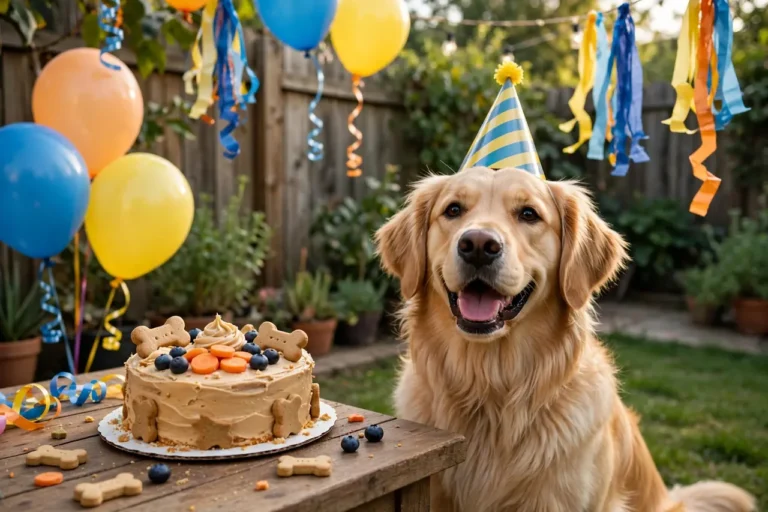
Step 7: Frost. Beat the Greek yogurt with ½ cup peanut butter and honey until smooth and thick. If it is too soft to spread, chill 15 minutes. Frost between layers and over the cake, press crushed biscuits around the base, and top with banana slices arranged in a ring. Add the birthday candle for photos, then remove before serving.

Five Peanut Butter Variations
1. Peanut Butter Banana Bliss (extra banana)
Double the banana to two large mashed bananas and reduce the water to ¼ cup. The extra banana adds natural sweetness and an even moister crumb — this is the variation for dogs who go crazy for banana. The cake browns faster due to the fruit sugars, so start checking at 22 minutes.
2. Peanut Butter Apple Crunch
Replace the banana with ¾ cup unsweetened applesauce and fold in ½ cup finely diced apple along with the carrots. The apple pieces create little juicy pockets in the crumb. A pinch of cinnamon (¼ teaspoon) in the dry ingredients complements the apple beautifully. This version is slightly lighter and works well for dogs who find banana too rich.
3. Peanut Butter Pumpkin Harvest
Replace the banana with ½ cup plain pumpkin puree and keep everything else the same. Pumpkin’s soluble fiber makes this the easiest-digesting peanut butter variation — the one to choose for dogs with sensitive stomachs or for a first birthday. The crumb turns a lovely warm orange that looks fantastic under the tan frosting.
4. Double Peanut Butter Cupcake Party (pupcakes)
Pour the batter into a lined muffin tin, filling cups ⅔ full, and bake 18 to 22 minutes for 12 pupcakes. Frost each with a swirl of the peanut butter frosting and top with half a dog biscuit. Pupcakes are the ultimate party format: no slicing, no serving utensils, built-in portion control, and every dog gets their own. For a full pupcake masterclass, see our dedicated pupcake recipe guide.
5. Peanut Butter Carob Chip Celebration
Fold ⅓ cup carob chips into the batter. Carob looks and tastes somewhat like chocolate but contains no theobromine, making it the dog-safe “chocolate chip” alternative. Verify the chips are 100% carob with no cocoa blended in — read the package. The chips create melty pockets that drive dogs wild and make the cake look wonderfully indulgent in photos.
Frosting Options for Peanut Butter Cakes
The yogurt-peanut-butter frosting in the master recipe is the everyday winner, but peanut butter pairs with several dog-safe frostings for different occasions and dietary needs.
- Classic yogurt-PB frosting: the master recipe version — tangy, thick, protein-rich. Best all-around choice.
- Whipped cream cheese: beat 4 oz softened plain cream cheese with ¼ cup xylitol-free peanut butter. Richer and pipeable; holds decorative borders for hours. Use for the “fancy” birthday photos.
- Peanut butter drizzle: warm ¼ cup peanut butter with 1 tablespoon coconut oil until pourable and drizzle over an unfrosted chilled cake. Sets into a soft shell with a bakery look and half the effort.
- Mashed sweet potato: whip baked sweet potato flesh until silky for a naturally orange frosting that contrasts beautifully with the tan cake. Lower in protein but beloved by dogs.
- Banana “nice cream”: blend frozen banana chunks until smooth and spread immediately — serve within the hour. A fun summer-party option that doubles as a cooling treat.
Decorating a Peanut Butter Birthday Cake
Peanut butter cake is a decorator’s friend because the tan-on-tan palette looks intentional and the sticky frosting grabs toppings firmly. Write the dog’s name across the top with peanut butter in a squeeze bottle — it reads clearly in photos. Press mini dog biscuits around the sides in a overlapping shingle pattern. Arrange banana slices in concentric rings, or make a paw print from four small biscuit “toes” and one larger “pad” of banana. Crumble crispy bacon (real, cooked, used sparingly) over the top for a savory-sweet confetti that sends dogs into orbit.
For the candle moment, a single number candle matching the dog’s age is classic. Light it, sing, photograph, blow it out, and remove it before the dog gets near the cake — melted wax and curious noses are a bad combination. For the best photos, shoot in natural window light with the cake at the dog’s eye level, and have a helper hold a treat just above the lens to get that perfect alert, ears-up expression. Take the “clean” cake photo before the dog touches it, then the action shots — the before-and-after pair tells the whole birthday story. If the party includes small children, do the candle photo before the kids arrive at the cake table; little hands and open flames need no introduction.
For caption inspiration once the photos are taken, our dog quotes collection has hundreds of lines that pair perfectly with a frosting-covered muzzle.
Portions, Calories, and the Peanut Butter Reality Check
Here is the honest math: peanut butter has about 100 calories per tablespoon, and this cake contains roughly a cup and a half across batter and frosting — around 2,400 calories of peanut butter in the whole cake before the other ingredients. That sounds alarming until you remember the cake serves 6 to 8 dogs, putting each slice at roughly 300 to 400 calories from peanut butter plus another 100 or so from flour, banana, and yogurt. For a 50-pound dog eating 1,000 calories daily, one slice is a substantial treat that fits the 10-percent rule only if you trim the day’s meals and skip other treats.
| Dog size | Weight | Sensible PB cake portion | Meal adjustment |
|---|---|---|---|
| Extra small | Under 10 lbs | 1–2 tablespoons (a taste) | Reduce dinner by ¼ |
| Small | 10–25 lbs | One thin slice | Reduce dinner by ¼ |
| Medium | 25–50 lbs | One standard slice | Reduce both meals slightly |
| Large | 50–90 lbs | One generous slice | Reduce both meals slightly |
| Giant | Over 90 lbs | Up to two slices | Skip other treats that day |
Dogs with a history of pancreatitis should celebrate with a non-peanut-butter cake — the fat load here is too high for them even in small portions. Diabetic dogs need veterinary approval before any cake. And every dog, regardless of size, gets fresh water alongside cake; peanut butter’s salt and richness drive thirst.

Storage, Make-Ahead, and Transport
Make-ahead: bake layers up to 2 days ahead, cool, wrap tightly, refrigerate. The peanut butter crumb stays moist beautifully. Frost the day of serving.
Leftovers: refrigerate frosted cake in an airtight container up to 3 days. The yogurt frosting enforces the 2-hour room-temperature rule. Freeze unfrosted layers up to 3 months; freeze frosted slices up to 1 month, separated by parchment.
Transport: chill the frosted cake for an hour before traveling so the frosting firms up, then carry it flat in a box slightly larger than the cake plate. In warm weather, a cooler with ice packs is non-negotiable — peanut butter frosting softens fast above 75°F.
Troubleshooting Peanut Butter Cake Problems
Dry, crumbly cake: the most common issue, usually from overbaking or overmeasuring flour. Peanut butter batters go from perfect to dry quickly — start toothpick-testing at 22 minutes. Spoon flour into the cup instead of scooping.
Soggy center: underbaking, or banana pieces too large. Mash banana thoroughly and trust the toothpick in the absolute center.
Frosting too runny: yogurt too thin or cake too warm. Strain yogurt through a coffee filter for 30 minutes, chill the cake, and chill the frosting 15 minutes before spreading.
Cake stuck to pan: peanut butter batter is sticky by nature. Be generous with greasing, always use parchment rounds, and run a knife around the edge while warm.
Dog won’t eat it: rare, but it happens with dogs who have never had peanut butter. Offer a pea-sized taste of plain xylitol-free peanut butter a few days before the party to introduce the flavor. If the dog remains unimpressed, they are a statistical marvel — serve the apple variation instead.
Scaling the Recipe for a Multi-Dog Party
One 6-inch cake serves 6 to 8 medium dogs, which covers most home parties. But if you are hosting the neighborhood pack, you need to scale up — and peanut butter batter scales beautifully as long as you respect pan math. Doubling the recipe fills two 8-inch pans or one 9×13 sheet pan; tripling it fills three 8-inch pans for a proper tiered showpiece. Do not simply triple the leavening without thought: for a triple batch, increase baking soda and powder by 2.5× rather than 3×, since oversized batches of leavening create a soapy taste in dense batters.
| Batch size | Pan configuration | Bake time at 350°F | Dogs served |
|---|---|---|---|
| Single (as written) | Two 6-inch rounds | 25–30 min | 6–8 medium dogs |
| Double | Two 8-inch rounds or 9×13 sheet | 30–38 min | 12–16 medium dogs |
| Triple | Three 8-inch rounds (tiered) | 32–40 min | 18–24 medium dogs |
| Single as pupcakes | 12-cup muffin tin | 18–22 min | 12 dogs (one each) |
| Double as pupcakes | 24-cup muffin tin(s) | 18–22 min | 24 dogs (one each) |
For parties over a dozen dogs, strongly consider the pupcake format instead of sheet cake. Individual pupcakes eliminate the serving bottleneck — no slicing, no waiting, no disputes over who got the bigger piece — and they bake faster and more evenly than a deep sheet. Set up a “pupcake bar” where each dog’s human collects one pupcake on a paper plate; it keeps the chaos organized and guarantees every guest leaves with exactly the right portion. Whatever format you choose, bake a day ahead: peanut butter cake’s flavor deepens overnight, and party-day you will be grateful for one less task.
Watch: Peanut Butter Dog Cakes in Action
Watching the batter come together helps you nail the famously thick peanut butter consistency. This video bakes peanut butter birthday cupcakes for dogs from start to finish — the same batter science as the full cake:
Frequently Asked Questions
Everything owners ask before baking with peanut butter — safety checks, allergies, portions, storage, and substitutions.
How can I tell if peanut butter contains xylitol?
Read the ingredient list on the jar — not the front label. Xylitol may appear as “xylitol,” “birch sugar,” “birch bark extract,” “E967,” or “sugar alcohol.” Safe peanut butter lists only peanuts and possibly salt. Check every new jar, because manufacturers reformulate without notice. When in doubt, choose a different product.
Is peanut butter fattening for dogs?
Yes, relatively — about 100 calories per tablespoon, mostly from fat. Small amounts as flavoring are fine for most dogs, but peanut-butter-heavy recipes are calorie-dense by design. That is why this guide emphasizes portion sizes and same-day meal adjustments. For overweight dogs, use the apple or pumpkin variation with less peanut butter, or choose a lighter cake style.
Can dogs be allergic to peanuts?
True peanut allergies in dogs are uncommon but real. Signs include itchy skin, ear inflammation, vomiting, or diarrhea after eating peanut butter. If your dog has never had peanut butter, offer a tiny taste a few days before baking the cake and watch for reactions. Dogs with known peanut issues should celebrate with a carob or pumpkin cake instead.
Can I use crunchy peanut butter in dog cake?
Yes, as long as it is xylitol-free. Crunchy peanut butter adds pleasant texture to the crumb. For frosting, stick with creamy — peanut chunks make spreading difficult and look lumpy in photos. Some dogs prefer the crunch; most do not care as long as it smells like peanuts.
What is carob and is it really safe?
Carob is a pod fruit that tastes somewhat like chocolate but contains no theobromine or caffeine, the compounds that make chocolate toxic to dogs. Pure carob chips and carob powder are safe for dogs in the amounts used in baking. Always verify the product is 100% carob with no cocoa blended in.
How long does peanut butter dog cake last?
Unfrosted layers keep 2 days at room temperature or 5 days refrigerated in airtight wrapping. Frosted cake must be refrigerated and eaten within 3 days, with no more than 2 hours at room temperature. Freeze unfrosted layers up to 3 months and frosted slices up to 1 month.
My dog ate an entire peanut butter cake. What now?
Stay calm but act promptly. A whole cake is a large load of fat and calories — expect vomiting or diarrhea within hours. Withhold food for a few hours, offer water, then feed a bland meal of boiled chicken and rice. Call your vet if vomiting persists, the dog seems lethargic or in pain (pale gums, bloated belly, restlessness can signal pancreatitis), or if there is any chance the peanut butter contained xylitol — in which case treat it as an emergency and call immediately.
Can puppies have peanut butter cake?
Puppies over 12 weeks can have a tiny taste — a teaspoon or two of the cake. Their digestive systems are immature and rich peanut butter cake can cause diarrhea. Introduce plain xylitol-free peanut butter separately first, in a pea-sized amount, to check tolerance. Puppies under 12 weeks should skip cake.
Is honey necessary in the frosting?
No — it is entirely optional. The frosting is delicious without it, and skipping it reduces sugar. Keep it only if you want a slightly sweeter frosting for the human photographers’ sake (dogs cannot tell the difference). Never use honey for puppies under one year or diabetic dogs.
Can I make this cake without banana?
Yes. Replace the mashed banana with ½ cup unsweetened applesauce or ½ cup plain pumpkin puree. The cake will be slightly less sweet and a touch less moist — add a tablespoon of extra coconut oil if using pumpkin. The apple and pumpkin variations in this guide are built exactly this way.
A peanut butter dog birthday cake recipe is popular for the simplest reason: it works. Dogs love it, it bakes reliably, it photographs beautifully, and the safety rules — while non-negotiable — are easy to follow once you know them. Check your labels, measure your portions, and let the birthday dog enjoy the flavor they were born to love. Years from now you will not remember the exact crumb texture, but you will remember the face they made at the first bite — and that is the whole point of baking it yourself. For more ways to celebrate your pup, explore our Christmas gifts for pet lovers guide and our flying with pets guide for taking the birthday show on the road.