In Turkey, New Year’s Eve is called Yılbaşı — literally “year head” — and it is one of the most beloved family holidays in the country. The celebration is warm, home-centered, and built around rituals found nowhere else: a raucous family bingo game called tombala, the smashing of a pomegranate on the doorstep for abundance, red underwear worn for luck, and a decorated New Year tree that looks like Christmas but is emphatically not. Add the year’s biggest lottery draw and a Bosphorus lit with fireworks, and you have one of the world’s most distinctive New Year traditions.
This guide explains how Turkey celebrates: the games, the rituals, the food, and the Istanbul countdown — plus how to bring a little Yılbaşı magic into your own celebration.
Yılbaşı: What New Year Means in Turkey
Turkey is a predominantly Muslim country, and the Islamic calendar has its own new year — but Yılbaşı on December 31/January 1 is a fully embraced national holiday, celebrated across religious and secular lines. January 1 is an official public holiday, and New Year’s Eve is a major social occasion: families gather, cities light up, and the country’s biggest lottery draw of the year takes place.
The Turkish New Year has a particular character because it absorbed Western-style Christmas imagery — the decorated tree, the gift exchange, the festive lights — while remaining a New Year celebration rather than a religious one. Turks call the decorated tree a “New Year tree” (yılbaşı ağacı), and the figure associated with gifts is not Santa Claus but a New Year gift-bringer. The result feels familiar to Western visitors but is distinctly Turkish in its rituals and meanings.
Celebrations divide roughly into two modes: the family Yılbaşı at home, centered on dinner, tombala, and the lottery; and the city Yılbaşı out on the town, centered on restaurants, Bosphorus cruises, and midnight fireworks. Many Turks do a bit of both across the holiday week. What follows covers both — starting with the tradition no Turkish New Year is complete without.
Tombala: Turkey’s Beloved New Year Bingo
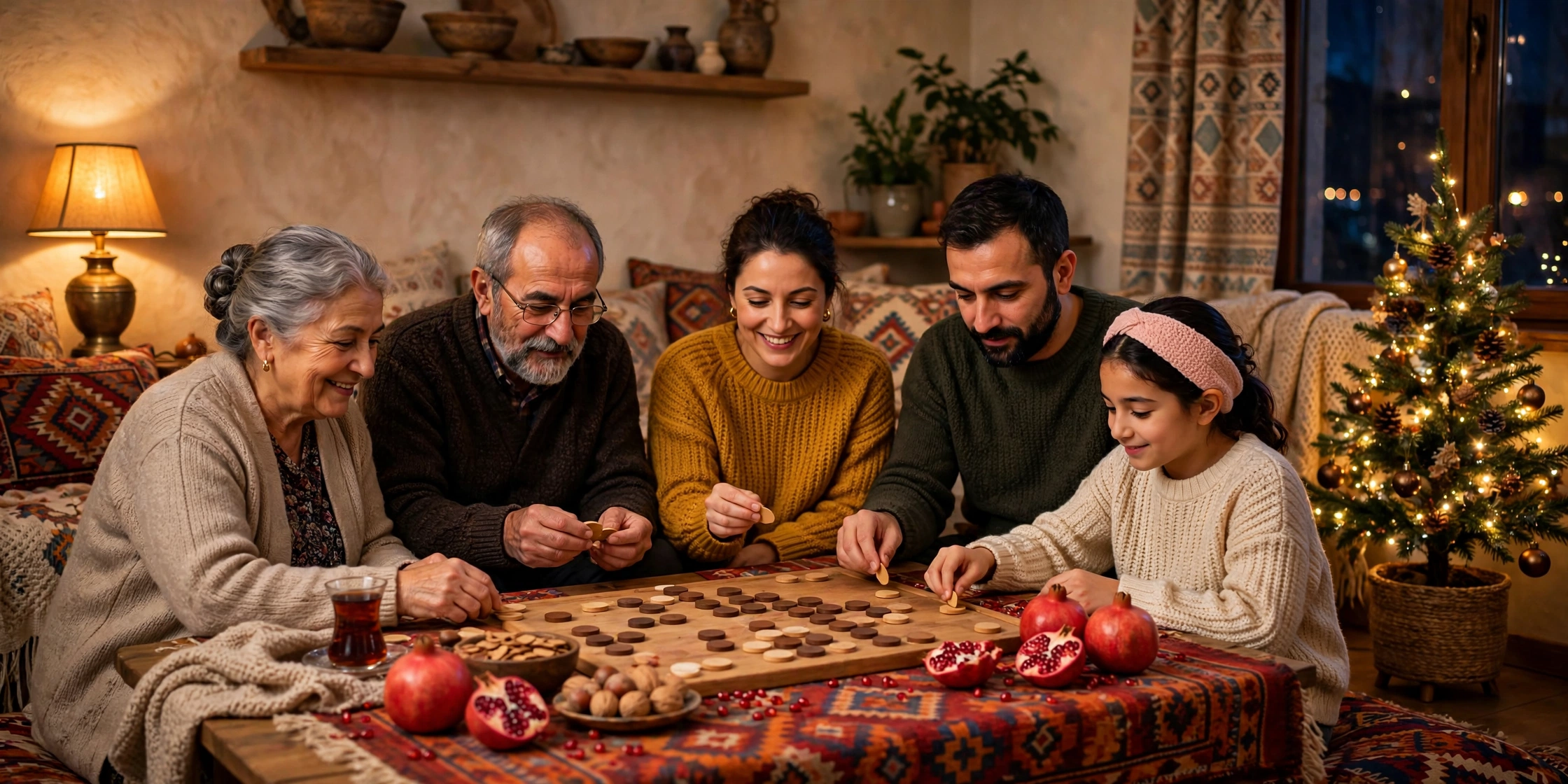
If there is one ritual that defines the Turkish New Year, it is tombala — a bingo-style game played by the whole family after dinner on New Year’s Eve. Tombala sets are sold everywhere in December: in supermarkets, bookshops, street stalls, and markets. The game is simple, loud, and deeply traditional, and it is the rare custom that unites toddlers and grandparents at the same table.
How to Play Tombala
Tombala is played with numbered cards and small tokens. Each player gets one or more cards printed with grids of numbers from 1 to 90. A caller draws numbered tokens (traditionally from a cloth bag) and announces each number. Players cover the matching numbers on their cards with chips or beans.
The winning milestones have their own Turkish names and their own drama:
- Çinko (pronounced “chinko”): Completing one full row on a card. The first player to do it shouts “Çinko!” The second row completed is the second çinko. Each çinko typically wins a small prize or a share of the pot.
- Tombala: Completing all numbers on a card — the full house. The winner shouts “Tombala!” and takes the main prize.
The game is played for stakes — usually small amounts of money contributed by all players, or a pile of small gifts. The shouting, the accusations of cheating, the dramatic near-misses: tombala night is controlled chaos, and Turkish families would not have it any other way. Games often run for hours, fueled by tea, snacks, and the year’s accumulated family gossip.
Why Tombala Endures
In an age of smartphones and streaming, tombala’s persistence is remarkable — and instructive. The game works because it is radically inclusive: a five-year-old and an eighty-five-year-old play on equal terms, luck erases all hierarchies, and the whole family is physically present, undistracted, for hours. Turkish New Year is a family holiday first, and tombala is its engine. If you are building your own New Year’s Eve at home plan, a bingo-style family game is one of the best Turkish ideas to borrow.
The Pomegranate Ritual: Breaking for Abundance
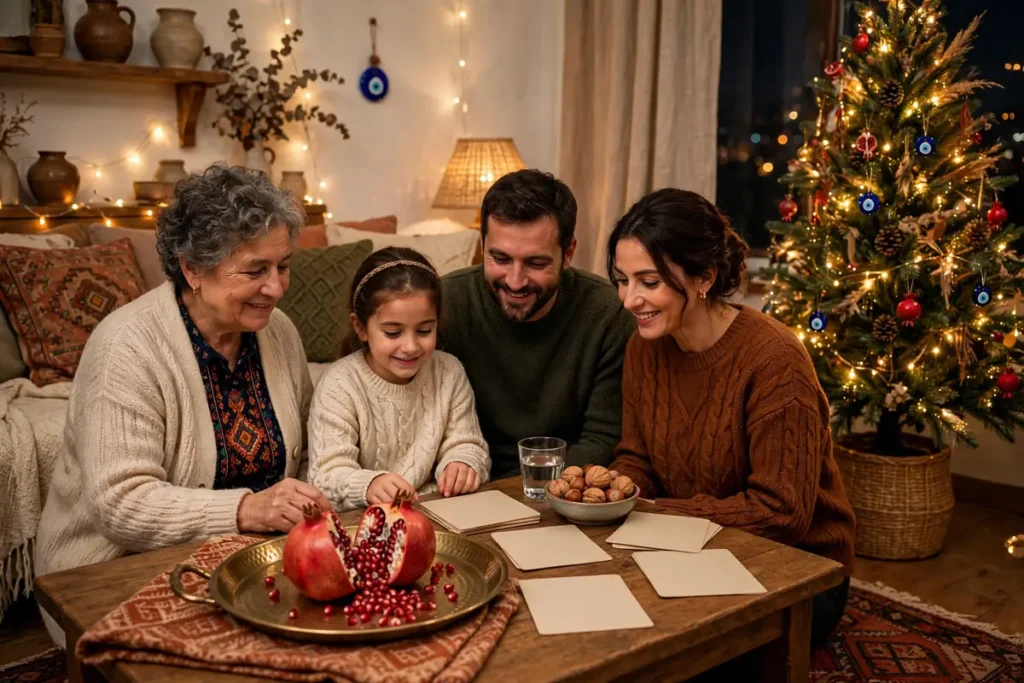
One of Turkey’s most photogenic New Year traditions is the pomegranate ritual. As the new year begins — at midnight or on New Year’s morning, depending on the family — a pomegranate is smashed on the ground at the doorstep or in front of the home’s entrance. The more seeds that scatter, the more abundance the coming year will bring.
The symbolism is ancient. The pomegranate, with its hundreds of seeds, has represented fertility, prosperity, and abundance across the Mediterranean and Middle East for millennia — it appears in Greek myth, in Jewish tradition, and in Persian culture. The Turkish New Year version is a folk ritual rather than a religious one: a physical, satisfying act of inviting plenty. Children love it; the red juice staining the doorstep is considered a good omen, not a mess to clean.
Variations exist across the country. Some families hang a pomegranate above the door instead of smashing it; some break it inside the home over a tray to catch the seeds, which are then eaten for luck. In some regions, the ritual is combined with throwing water or breaking other objects — the common thread is a decisive, physical break with the old year. If you try this at home, do it outside or over a washable surface: pomegranate juice stains with real commitment.
Red Underwear and Lucky Beliefs
Ask a Turk about New Year luck and you will likely hear about red underwear. Wearing red undergarments on New Year’s Eve is a widely observed tradition, believed to bring luck, love, and prosperity in the coming year. The custom is so established that shops and street vendors do a brisk trade in red underwear throughout December — it is also one of the most common New Year gifts, given with a wink among friends and couples.
The origins are murky — some trace it to Mediterranean folk beliefs about red warding off evil, others to more recent commercial invention — but the observance is genuine and widespread. It sits alongside a cluster of smaller lucky practices: starting the year with money in your wallet, avoiding debts on the first day, and wearing something new. None of it is taken with deep seriousness; all of it is taken with genuine affection. Turkish New Year luck is playful rather than anxious.
The New Year Tree (Yılbaşı Ağacı)
Walk through Istanbul or Ankara in December and you will see decorated evergreen trees in homes, shops, hotels, and public squares — but they are New Year trees, not Christmas trees. The distinction matters to Turks. The tree is decorated in the days before December 31, often as a family activity, and it stays up through the New Year celebrations.
The decorations mirror Western Christmas trees — lights, ornaments, tinsel, a star or angel on top — but the context is secular and calendrical. Gifts are exchanged at New Year rather than Christmas, placed under the yılbaşı ağacı. For Turkish children, the excitement of the tree and the presents belongs entirely to Yılbaşı. Visitors from the West sometimes find this confusing; Turks find the confusion confusing. It is simply how the holiday works: the tree marks the turning of the year, full stop.
The Milli Piyango: Turkey’s Giant New Year Lottery
No account of the Turkish New Year is complete without the Milli Piyango — the National Lottery’s special New Year’s Eve draw, the biggest lottery event of the Turkish year. The grand prize is enormous by Turkish standards, and ticket sales in December are a national phenomenon: street vendors sell full, half, and quarter tickets; offices organize syndicates; families buy tickets together.
The draw takes place on the evening of December 31 and is broadcast live on television — it is traditional for families to watch together after dinner, tickets in hand, during or after the tombala games. The combination of the lottery broadcast and the family games makes the Turkish New Year’s Eve a uniquely suspenseful evening: at any moment, someone at the table might become wealthy.
A note of realism: the odds are lottery odds. Turks know this perfectly well; the tickets are bought for the shared dreaming, not as financial planning. The fun is in the “what would you do” conversations that fill the hours before the draw. If your office or family runs a New Year lottery pool, you are participating in a very Turkish tradition.
Istanbul on New Year’s Eve: The Bosphorus Countdown
For those who celebrate out rather than at home, Istanbul on New Year’s Eve is spectacular. The city’s celebration centers on the Bosphorus: waterfront restaurants and clubs host gala dinners, party boats cruise the strait, and at midnight, fireworks light up the water between Europe and Asia — one of the few places in the world where the new year arrives across two continents at once.
Where the City Celebrates
Nişantaşı and Bebek are the classic upscale districts for New Year’s Eve dinners and parties; Taksim and Beyoğlu offer the liveliest street atmosphere; and the Bosphorus shoreline — from Ortaköy to Kuruçeşme — hosts the premium waterfront events. The bridges themselves are floodlit, and the midnight fireworks reflect off the strait in a display that draws crowds to every vantage point with a view of the water.
Book well ahead: Istanbul’s top New Year’s Eve venues sell out, and prices for the night are the year’s highest. Bosphorus dinner cruises are the signature splurge — several hours on the water with dinner, music, and a front-row view of midnight. Check operators’ current offerings and safety credentials, as the market changes year to year.
Beyond Istanbul
Ankara’s celebration centers on its hotels and the Kızılay district; Izmir’s on the Kordon waterfront, where the Aegean setting gives the countdown a Mediterranean feel; Antalya’s resort hotels run gala programs for the many visitors escaping colder climates. Across the country, municipalities organize public fireworks and concerts in central squares — the civic, family-friendly complement to the private parties.
The Family Dinner: What Turks Eat on Yılbaşı
The Yılbaşı dinner is the culinary anchor of the holiday. The centerpiece for many families is hindi — roast turkey, the same bird Americans eat at Thanksgiving, adopted as the Turkish New Year roast. A whole roast turkey with stuffing, served to a crowded family table, is the defining image of the Turkish New Year’s table.
Around the turkey: içli köfte, börek, stuffed grape leaves (yaprak sarma), various mezes, pilav, and an array of salads. Dessert is non-negotiable — baklava above all, plus sütlaç (rice pudding) and ayva tatlısı (quince dessert) in winter. The meal is long, abundant, and followed by fruit, nuts, and endless tea as the tombala games begin. Turkish hospitality means no one leaves hungry; on New Year’s Eve, no one leaves at all until well past midnight.
Champagne and rakı appear at adult celebrations, though many family dinners are alcohol-free. The toast at midnight is typically with whatever is at hand — the words are what matter: “Mutlu yıllar!” (Happy years!) and “Nice mutlu yıllara!” (To many happy years!).
How to Celebrate a Turkish-Style New Year at Home
The Turkish Yılbaşı translates beautifully to a home celebration anywhere in the world:
- Cook a feast: Roast a turkey or your own celebratory centerpiece, with plenty of sides and baklava (store-bought is fine) for dessert.
- Decorate a New Year tree: Put it up as a family activity in the days before the 31st. Explain to guests that it is a New Year tree — a great conversation starter.
- Play tombala: Buy or print bingo cards numbered 1–90, use a bag of numbered tokens, and play for small prizes. Teach everyone to shout “Çinko!” and “Tombala!”
- Smash a pomegranate: At midnight, take a pomegranate to the doorstep and smash it for abundance. Do it outside.
- Wear red: Red underwear, red socks, a red accessory — luck loves a dress code.
- Watch or run a lottery draw: Organize a small family raffle with fun prizes to recreate the Milli Piyango suspense.
- Toast at midnight: “Mutlu yıllar!” — then eat cake, call relatives, and settle in for the long, happy night.
New Year’s Day in Turkey: Rest, Visits, and Leftovers
January 1 in Turkey is a public holiday, and it is observed the way public holidays should be: slowly. After the late night of tombala, lottery draws, and midnight toasts, New Year’s Day is for sleeping in, grazing on leftovers, and making the rounds of family visits. The previous night’s roast turkey reappears in sandwiches; the baklava, miraculously, is somehow half gone by noon; and the television plays the previous night’s lottery results for those who fell asleep before the draw.
The visits are the day’s real structure. Families call on elders — parents, grandparents, older relatives — to wish them a happy new year in person. These visits follow a familiar choreography: remove shoes at the door, accept the offered tea and sweets (refusal is not an option), exchange wishes for health and prosperity, and stay just long enough to be warm but not so long as to overstay. Children receive pocket money (harçlık) from elders — a beloved tradition that makes the rounds genuinely exciting for the young.
In Istanbul and the big cities, January 1 also sees the year’s first promenades: families stroll the Bosphorus shoreline, couples walk through parks, and the city’s cafes fill with people recovering over Turkish coffee and menemen. The New Year tree stays up for a few more days, the red underwear gets quietly retired, and the tombala set goes back in the cupboard — until next December, when the whole joyful cycle begins again.
Yılbaşı on Television: The Night’s Broadcast Rituals
Turkish New Year’s Eve has a televised dimension that shapes the home celebration. The evening’s viewing follows a familiar arc: family-oriented variety shows and music programs in the early evening, the live Milli Piyango lottery draw as a centerpiece, and then the countdown coverage — live shots from Taksim Square, the Bosphorus, and city centers across the country as midnight approaches.
The television is rarely the focus — tombala and conversation dominate — but it provides the night’s ambient structure: the draw everyone watches with tickets in hand, the countdown everyone counts along with, the first news bulletins of the new year playing as the games resume. For Turks living abroad, the Turkish television coverage — streamed online — is a lifeline: the familiar presenters, the familiar lottery ritual, the Bosphorus fireworks from thousands of kilometers away. The broadcast turns a private family night into a shared national moment, one living room at a time — and for the diaspora, it is the closest thing to being home for Yılbaşı — proof that a holiday lives wherever its people gather to mark it.
In Pictures: New Year Traditions in Turkey
Turkey’s Yılbaşı blends family feasts, bingo, red underwear, and the famous New Year’s lottery draw.
A Bosphorus dinner cruise on New Year’s Eve, with Istanbul’s skyline and fireworks over the strait.
Watch: New Year Traditions in Turkey
Cruise the Bosphorus on New Year’s Eve — Istanbul’s most glamorous way to welcome the year.
At a Glance: New Year Traditions in Turkey
Turkey’s New Year (Yılbaşı) traditions.
| Tradition | Detail | What to know |
|---|---|---|
| Milli Piyango (National Lottery) | 31 December draw | The year’s biggest lottery draw; buying a ticket for the family is a beloved ritual |
| Red underwear | New Year’s Eve | Wearing something new and red is widely believed to bring luck for the year ahead |
| Family bingo night | 31 December | Tombala (bingo) with family and friends is a classic at-home tradition, often with money or gold prizes |
| Yılbaşı dinner | 31 December evening | A lavish family feast — roast turkey or lamb with iç pilav (pine nut and currant rice), meze, and baklava |
| Bosphorus cruises | 31 December, Istanbul | Gala dinner cruises along the strait with live music and midnight fireworks views |
| Pomegranate smashing | Midnight | Some families smash a pomegranate at midnight and share the seeds for good fortune |
Frequently Asked Questions
What is tombala?
Tombala is the traditional Turkish New Year bingo game, played by families on New Year’s Eve with numbered cards (1–90) and tokens drawn from a bag. Players shout “Çinko!” when completing one or two rows and “Tombala!” for a full card. It is played for small stakes — usually a pooled pot of money or a pile of small gifts — and the game often runs for hours, fueled by tea, snacks, and the year’s accumulated family gossip. Its magic is its radical inclusivity: a five-year-old and a grandparent play on equal terms, and luck erases every hierarchy at the table.
Why do Turks break a pomegranate on New Year?
Smashing a pomegranate at the doorstep scatters its many seeds, symbolizing abundance and prosperity for the coming year — the more seeds scattered, the more luck. It is a folk ritual with ancient Mediterranean roots, practiced at midnight or on New Year’s morning.
Do Turks celebrate Christmas or New Year?
New Year (Yılbaşı). The decorated trees, gifts, and festive lights that look like Christmas to Western visitors are New Year traditions in Turkey, celebrated on December 31/January 1 as a secular national holiday. The distinction is well understood locally.
What is the Milli Piyango New Year draw?
The National Lottery’s special December 31 draw, the biggest lottery event of the Turkish year, broadcast live on television. Families traditionally watch together with tickets in hand. It is a beloved ritual of shared dreaming rather than a serious financial pursuit.
Is Istanbul a good place for New Year’s Eve?
Yes — the Bosphorus fireworks, waterfront galas, and the Europe-Asia setting make it one of the world’s distinctive countdown cities. Book venues and cruises well ahead, dress for cold December weather, and plan transport carefully as central areas get crowded.
How does the Turkish New Year compare to other regional celebrations?
Turkey’s home-centered, game-driven Yılbaşı is quite different from the street-party countdowns of Western Europe or the temple-centered observances of Asia. For contrast, see New Year traditions in Japan or, for another distinctive Middle Eastern celebration, New Year traditions in Lebanon. And if you are setting goals for the year ahead, our New Year reset guide can help.
What gifts do Turks exchange on New Year?
Gift-giving on Yılbaşı resembles Western Christmas exchanges: presents are placed under the New Year tree and opened on New Year’s Eve or New Year’s Day. Red underwear — given as a joking-but-serious lucky gift — is a classic, alongside lottery tickets, sweets, and personal gifts. In offices and among friends, small gift exchanges and Secret-Santa-style draws are common throughout December.
A Final Word
The Turkish New Year is a reminder that the best holiday traditions are the ones that get everyone in the same room: a bingo game that toddlers and grandparents play as equals, a pomegranate smashed laughing on the doorstep, a lottery ticket that funds an evening of shared daydreams. Yılbaşı is not the loudest New Year in the world or the most spectacular — it is one of the warmest. Borrow its rituals freely: play tombala, wear red, break the pomegranate, watch the lottery draw with tickets in hand. And when midnight comes, raise your glass and say it like a Turk: Mutlu yıllar — to happy years, plural, because one is never enough. If you need the right words for the people you love, our New Year wishes and messages for 2027 has you covered.