Somewhere in Bolivia, on the night of December 31st, a child is biting carefully into a golden buñuelo — not just for the taste, but because there might be a coin inside. Across the country, families bake or buy New Year pastries with small coins hidden in the dough, and finding one is the sweetest omen of the year: prosperity, luck, and a year that pays. This is New Year traditions in Bolivia: finding sweet coins in New Year pastries — the delicious centerpiece of a celebration that also includes yellow underwear, twelve grapes, lentils for wealth, and fireworks over the Andes.
Bolivia’s New Year is a feast-first celebration. The rituals are edible as much as symbolic: the fortune you seek is one you can taste. The coin-in-the-pastry tradition — shared in spirit with Greece’s famous vasilopita coin cake (see New Year traditions in Greece) — turns dessert into divination and the family table into the night’s main stage. This guide covers the pastries, the coins, the full midnight table, the rituals around them, and how the celebration changes from the high plains of La Paz to the tropical lowlands of Santa Cruz.
The Sweet Coins: Bolivia’s Edible Fortune-Telling
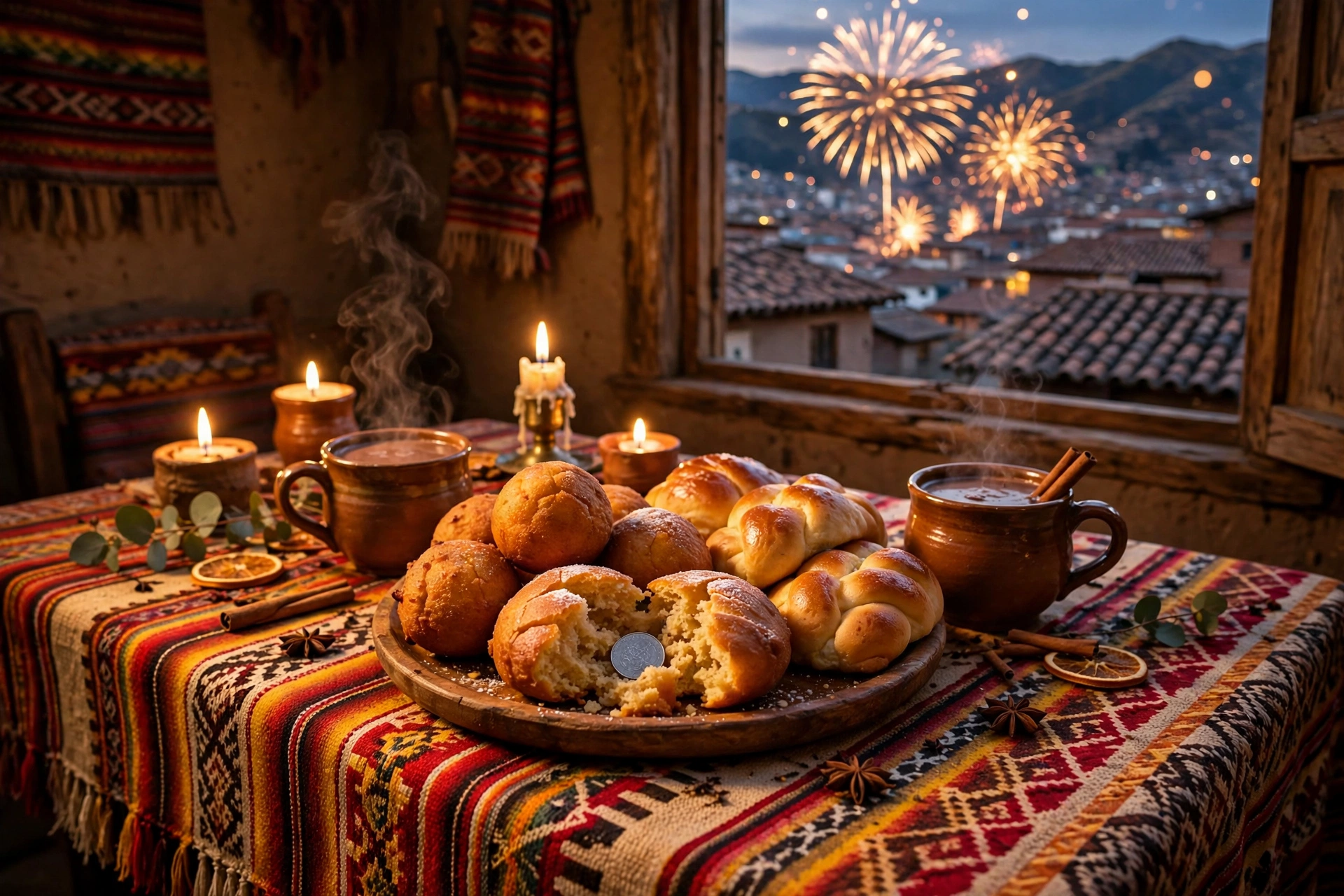
The tradition works like this: on New Year’s Eve or New Year’s Day, the family serves sweet pastries — buñuelos, fried or baked — with a few small coins hidden inside the dough before cooking. The pastries are served warm, everyone takes one, and the search begins. Find a coin, and the year is yours: money will come, luck will hold, prosperity is (literally) in your hands.
The details vary by family, but the common threads are:
- The coins are small and clean. Low-denomination coins, washed thoroughly. Some families wrap them in a twist of food-safe paper or foil for hygiene — a sensible modern adaptation.
- Only a few pastries get coins. In a batch of twenty buñuelos, maybe three or four hide treasure. Scarcity makes the finding meaningful.
- The finder gets more than luck. In many families, finding a coin comes with a small prize, the honor of the first toast, or the playful obligation to share the year’s good fortune — buying the next round, hosting the next gathering.
- Children are the traditional hunters. The ritual is engineered for kids’ delight, though adults compete with complete seriousness.
What the coin means
The symbolism is direct: a coin hidden in sweetness means the year will hide sweetness in its work — that effort will pay, that money will come from unexpected places. It’s the edible cousin of the prosperity rituals found across Latin America: the lentils eaten for wealth, the bills tucked into shoes at midnight, the yellow underwear worn for gold. Bolivia just makes its prosperity ritual the most fun to eat.
The custom has cousins worldwide. The Greeks hide a coin in the vasilopita for St. Basil’s Day; the French hide a fève in the galette des rois; the British once baked coins into Christmas pudding. The instinct — to let dessert decide the year’s luck — seems to be universal. Bolivia’s version, served at New Year with Andean warmth, is among the most charming.
The Pastries: A Baker’s Tour of Bolivia’s New Year Sweets
The coin needs a vehicle, and Bolivia’s holiday baking provides several. The pastries of the season are rich, fried or baked golden, and built for sharing:
- Buñuelos: the star. Puffy fritters of wheat dough — sometimes enriched with cheese, sometimes sweetened with anise — fried until golden and often drizzled with honey or chancaca (panela syrup). Crisp outside, airy inside: the ideal coin-hider.
- Empanadas dulces: sweet turnovers filled with dulce de leche, custard, or fruit preserves, crimped by hand (repulgue) and baked or fried. A coin tucks neatly into the filling.
- Tawa tawas / pastelitos: thin, crisp fried pastries dusted with sugar — light, shattering, festive.
- Panettone (panetón): the Italian Christmas bread, fully adopted in Bolivia as in much of South America, appears on nearly every year-end table — studded with dried fruit, sliced thick, and served with hot chocolate or coffee.
- Rosca de reyes–style rings and assorted masitas (little festive biscuits and cakes) round out the spread, especially in the highlands.
Most families buy from neighborhood bakeries — December is the bakeries’ superbowl — but the coin pastries are often a home project, made together on the 30th or 31st, with children assigned to the all-important coin-placing step (under supervision, and with the strict rule that the baker doesn’t get to “remember” which ones).
A note on the coins and food safety
Tradition meets common sense here: use clean, low-value coins; wash them well; consider wrapping each in a small twist of food-safe foil or parchment so no one bites metal unexpectedly. Warn guests — especially small children — that coins are hidden in the batch, and count the coins in versus the coins found. The ritual is about luck, not dental bills.
How to Make Coin Pastries at Home: A Home-Style Buñuelo Guide
Want to bring the Bolivian tradition to your own New Year? Here’s a home-style approach to coin-hiding buñuelos. This is a festive home recipe in the spirit of the tradition — quantities are typical for a family batch, and you should adjust to your own kitchen’s standards.
What you’ll need: 2 cups flour, 2 eggs, ½ cup milk, 2 tablespoons sugar, 1 teaspoon baking powder, a pinch of salt, 1 teaspoon aniseed or vanilla, oil for deep frying, honey or panela syrup for drizzling, and 3–4 small clean coins (washed, optionally wrapped in tiny twists of food-safe foil).
Step 1 — Make the dough. Mix the dry ingredients, then work in the eggs, milk, and flavoring until you have a soft, slightly sticky dough. Rest it 20–30 minutes; this relaxes the gluten and makes puffier buñuelos.
Step 2 — Shape and hide. With oiled hands, pull off golf-ball-sized pieces, flatten each in your palm, place a wrapped coin in the center of a few of them (remember how many!), and seal the dough firmly around it. Roll smooth — no coin should peek out.
Step 3 — Fry golden. Heat oil to about 170–175°C (340°F). Fry a few at a time, turning, until deep golden and puffed — about 2–3 minutes. Drain on paper.
Step 4 — Serve warm with ceremony. Drizzle with warm honey or chancaca syrup. Serve on a platter, announce the rules — coins hidden, finders honored — and let the hunt begin. Keep count: coins in must equal coins found.
Safety notes: supervise children closely (hot oil, hidden coins), warn every eater before they bite, and never leave frying unattended. The ritual is joyful; the kitchen rules are serious.
The Midnight Table: What Bolivians Eat on the 31st
The coin pastries are the ritual’s sweet center, but the New Year’s Eve dinner is a full Andean feast, served late — often 10 or 11 PM — so the family is at the table as midnight approaches:
- Picana: Bolivia’s great festive soup — a rich broth with beef, chicken, and pork, potatoes, carrots, and peas, traditionally associated with Christmas but gracing many New Year tables too, especially in La Paz.
- Lechón / roast pork: slow-roasted pork is the classic year-end centerpiece across the highlands, marinated with local spices and served with potatoes and salads.
- Pollo al horno and turkey: roast chicken or turkey appear on many tables, often with rice, salads, and plátano.
- Panetón and hot chocolate: the Italian-Bolivian pairing — thick slices of panettone with steaming cups of hot chocolate, sometimes spiked for the adults — is the late-night fuel of the celebration.
- Drinks: singani (Bolivia’s signature grape brandy) for toasts, wine, beer, and chicha or api (the hot purple-corn drink) in the highlands.
At midnight: the toast, the grapes (twelve, one per chime, one wish each — the Spanish custom embraced across the continent), the hugs, and then the pastries — or the pastries first and the toast after, depending on the family. There is no wrong order; there is only the right company.
The Supporting Rituals: Yellow, Grapes, Lentils, and Fire
The coin pastries share the night with a full cast of Latin American New Year rituals, each with a Bolivian accent:
- Yellow underwear: worn new at midnight for prosperity — a custom Bolivia shares with Peru, Venezuela, and Colombia. See New Year traditions in Peru for the tradition’s southern-Andean heartland.
- Twelve grapes: twelve grapes, twelve chimes, twelve wishes — counted out into bowls before midnight.
- Lentils: eaten or carried for wealth — a handful of lentils in the pocket at midnight, or lentils on the table, symbolizing coins and abundance.
- The suitcase run: popular with younger Bolivians — around the block with luggage for a year of travel, a ritual shared with Colombia’s suitcase walk.
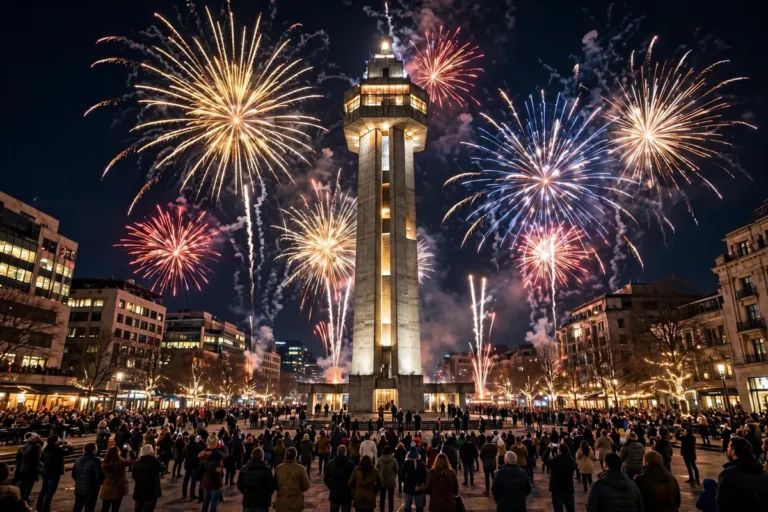
- Fireworks: at midnight the sky fills — most spectacularly over La Paz, where the bowl-shaped city amplifies every burst.
- Burning the old year: in some neighborhoods, straw effigies of the old year burn in the street, a custom shared with Ecuador and Panama.
Regional Tour: One Country, Several New Years
La Paz and El Alto: fireworks over the world’s highest capital
At 3,650 meters, La Paz celebrates the New Year in thin, cold mountain air — and the setting is unbeatable. At midnight, fireworks launched across the bowl-shaped city reflect off the surrounding peaks, with Illimani looming over it all. Families gather indoors against the chill (hot api and singani help), then spill onto terraces and rooftops for the midnight sky. The coin pastries are often served with steaming hot chocolate, and the highland table leans hearty: picana, roast pork, potatoes in every form. El Alto, the vast sister city above, adds its own massive street celebrations.
Santa Cruz: the tropical New Year
In the lowlands, December 31st is hot, and the celebration moves outdoors. Santa Cruz parties sprawl across patios and gardens; the midnight table might include majao, grilled meats, and tropical fruits alongside the panetón. Fireworks compete with the stars. The eastern celebration is looser, louder, and more street-oriented — closer in spirit to the Brazilian and Paraguayan New Years across the nearby borders.
Cochabamba: the food capital’s feast
Cochabamba — Bolivia’s self-declared gastronomic capital — treats New Year’s Eve as a culinary exam. Expect the most elaborate tables in the country: multiple roasts, the full pastry spread, and fierce family debates about whose buñuelos achieved the perfect puff. If you want to taste Bolivia’s New Year at its best, wangle an invitation here.
Sucre, Potosí, and Tarija
In the colonial cities of Sucre and Potosí, the celebration has an old-world grace — candlelit patios, church bells at midnight, traditional sweets. Tarija, the wine region, toasts the new year with its own vintages and a distinctive chapaca warmth. Every region keeps the coin pastries; every region serves them slightly differently.
Where Did the Coins Come From? A Short History
Hidden-treasure baking is one of the world’s oldest party tricks. The Romans baked tokens into Saturnalia breads; medieval Europeans hid beans, coins, and figurines in Twelfth Night cakes to choose the “king” of the feast; the British baked silver sixpences into Christmas pudding well into the 20th century. The logic is always the same: chance, made edible, decides who the year’s luck favors — and everyone at the table shares the suspense.
Bolivia’s version arrived with Spanish colonial baking traditions and took root in Andean soil, merging with Indigenous hospitality customs where feeding guests generously is itself a blessing. The buñuelo — a fritter with roots in Spanish and Moorish frying traditions — became the ideal vessel: cheap to make in quantity, dramatic when fried golden, and perfectly shaped for concealment. Over generations, the coin pastry settled into its New Year slot, distinct from Christmas sweets, becoming the specific taste of December 31st. Today it survives because it does what the best traditions do: it gives children a game, adults a superstition, and everyone dessert.
New Year’s Day: Starting the Year Sweet
January 1st in Bolivia is deliberately gentle. The morning belongs to sleep and to the recalentado — leftovers reheated and arguably improved. Any unfound coins from the night before become a breakfast treasure hunt for the kids. Families visit, neighbors exchange plates of food, and in many towns the day includes a slow communal meal that stretches into the afternoon. The first day of the year is for sweetness without effort — the pastries did their work at midnight; now you just enjoy them.
The Night, Hour by Hour
Afternoon: The coin pastries are made or collected from the bakery. The dinner cooks. Children are warned — repeatedly — about the coins, and warned again.
Evening: Family arrives. The table is laid with the full spread. Someone is in charge of music — cumbia, morenada and saya rhythms, salsa, reggaetón.
10:00 – 11:30 PM: Dinner, long and abundant. Toasts. The grapes are counted. Yellow underwear is confirmed (or changed into). The pastries wait under a cloth, the night’s delicious secret.
Midnight: The countdown, the grapes, the toast, the hugs — and then the pastries are unveiled. The hunt begins: careful bites, triumphant shouts, the clink of a coin on a tooth (gently, hopefully). Finders are celebrated; the year’s luck is distributed.
After: Fireworks, dancing, the recalentado in the small hours. January 1st is for sleeping late and reheating everything.
Celebrating the Bolivian Way, Wherever You Are
The beauty of the coin-pastry tradition is its portability — you need only dough, oil, coins, and people you love. A few tips for doing it right:
- Make it a group project. The dough-making, the coin-hiding, the frying — every step is better with many hands, and the secrecy about which pastries hold coins is half the fun.
- Warn everyone, twice. Especially guests who don’t know the tradition. A surprise coin should be a delight, never a shock.
- Pair it with the full ritual kit: twelve grapes at midnight, something yellow worn new, a handful of lentils in the pocket.
- Keep the count. Know exactly how many coins went in. The night isn’t over until they’re all found — which, tradition holds, means the year’s luck has been fully distributed.
Hosting at home? Our practical New Year’s Eve at home celebration plan gives you the evening’s structure — slot the pastry-making into the afternoon and the coin hunt at midnight. And if the new year has you thinking about fresh starts more broadly, the New Year reset guide is a good January 1st companion.
Quick Myth vs. Fact
Myth: “The coins have to be valuable to bring luck.” Fact: low-denomination coins are traditional — the luck is symbolic, not monetary. Some families use chocolate coins for children and keep real coins for the adults’ batch.
Myth: “Only the finder gets good luck.” Fact: the finder gets the honor, but the ritual is understood to bless the whole table. A year where all the coins are found is a year where the luck was fully shared — which is the point.
Myth: “You must eat the pastry that hides your coin.” Fact: finders often trade, gift, or save their coin as a pocket charm for the year. The luck is in the finding, not the chewing.
In Pictures: New Year in Bolivia
Bolivia’s New Year hides sweet coins in festive pastries — and greets the dawn with coca leaves for Pachamama.

Fireworks over La Paz with the Illimani silhouetted behind — Bolivia’s New Year in the Andes.
Watch: New Year in Bolivia
New Year’s Eve fireworks from Copacabana, Bolivia, on the shores of Lake Titicaca.
At a Glance: New Year in Bolivia
Bolivia’s essential New Year facts — the coins, the leaves and the high-altitude sky.
| Fact | Detail |
|---|---|
| Sweet coins | Festive pastries hide sweet coins — finding one promises luck |
| Coca leaves for Pachamama | Offerings of coca leaves honour Mother Earth at the New Year |
| Copacabana | The Lake Titicaca town is a popular New Year destination |
| Fireworks | La Paz and El Alto light up the high-altitude sky at midnight |
| Yellow and red | Colourful underwear customs are shared with neighbouring countries |
Frequently Asked Questions
What is the sweet coin tradition in Bolivia?
On New Year’s Eve or New Year’s Day, Bolivian families serve sweet pastries — often buñuelos — with small coins hidden inside the dough. Finding a coin is believed to bring prosperity and good luck for the coming year. Only a few pastries in each batch contain coins, and the finder is traditionally honored.
What pastries are used for the coin tradition?
Buñuelos (golden fried fritters, sometimes drizzled with honey or panela syrup) are the classic choice, but families also use sweet empanadas, crisp tawa tawas, and other festive masitas. The key requirements are simply that the pastry can conceal a small coin and is delicious enough to be worth the hunt.
Is it safe to bake coins into pastries?
With sensible precautions, yes: use clean low-denomination coins, wash them thoroughly, consider wrapping each in food-safe foil or parchment, warn all eaters (especially children) before serving, and count coins in versus coins found. Supervise children closely around both hot oil and hidden coins.
What do Bolivians eat on New Year’s Eve besides the pastries?
The classic dinner includes picana (a festive mixed-meat soup), roast pork or turkey, rice and salads, panetón with hot chocolate, and toasts of singani — Bolivia’s signature grape brandy — wine, or beer. Twelve grapes at midnight, one per chime, accompany the wishes.
Do Bolivians wear yellow underwear on New Year’s Eve?
Yes — wearing brand-new yellow underwear at midnight for prosperity is widely observed in Bolivia, as in Peru, Venezuela, and Colombia. It’s part of a broader set of midnight rituals that also includes lentils for wealth and, among younger celebrants, the suitcase run for travel luck.
Can non-Bolivians adopt the coin-pastry tradition?
Absolutely — it’s one of the most welcoming rituals in this whole series. You need no special equipment beyond a frying pan, no cultural credentials beyond respect and appetite. Make the pastries, hide the coins, warn your guests, and explain the meaning before the hunt begins. Traditions like this survive by being shared, and your table becomes part of the story the moment the first coin is found.
Where is the best place to experience New Year in Bolivia?
La Paz offers the most dramatic setting — midnight fireworks over the Andean bowl of the city. Santa Cruz gives you the tropical outdoor party. Cochabamba, the food capital, serves arguably the finest tables. All keep the coin-pastry tradition; the setting is a matter of taste.
Bolivia’s New Year understands that hope is better when you can taste it. A coin in a buñuelo is a small, golden promise: that the year ahead holds sweetness, that effort will be rewarded, that luck can be found by anyone willing to take a careful bite. So fry the batch, hide the coins, count them twice, gather the people you love around the table — and may your first bite of the new year be the lucky one. ¡Feliz Año Nuevo!