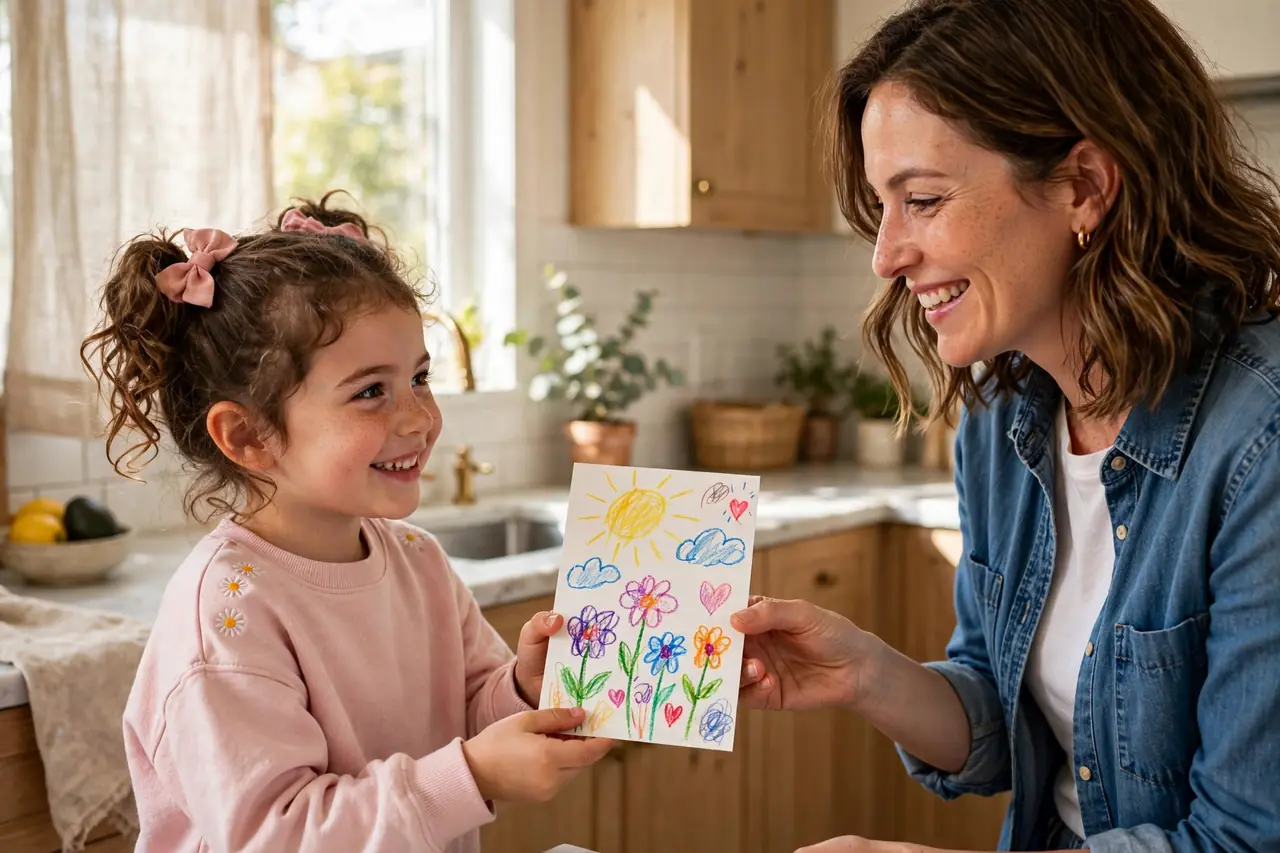
There’s a special category of Mother’s Day magic that only children can create: the wobbly handwriting, the backwards letters, the poem recited at double speed while bouncing on the bed. These Mother’s Day poems from kids are written for every age — from toddlers who can barely say the words to teenagers who pretend they’re too cool to care (they’re not). Below you’ll find 18 original poems organized by age group, plus a parent’s guide to helping kids pick, learn, and present a poem, and creative ways to turn a simple verse into a keepsake she’ll treasure for decades.
Why do poems from kids hit so hard? Because they’re unfiltered. A child doesn’t write “I appreciate your sacrifices” — they write “you make the best pancakes and you smell like flowers,” and somehow that’s more moving. Childlike specificity is the secret ingredient of every great Mother’s Day poem from kids. Whether you’re a parent helping a little one, a teacher planning a classroom activity, or a grown “kid” writing to your mom, the poems below give you a starting point — and the guide shows you how to make them personal.
A Parent’s Guide: Helping Your Child Choose and Learn a Poem
Picking the right poem matters less than how it’s given, but a little strategy helps. Match the poem to the child’s age, not their reading level. A confident reader who’s shy will do better with a short, funny poem than a long, emotional one. A toddler does best with a two-to-four-line verse they can “read” from memory while holding the card. Learn it in layers. Read the poem together at bedtime for three nights; by night three, most kids know it. Add a simple action per stanza — a hug on the last line, a flower handed over mid-poem — and suddenly it’s a performance. Let them own it. If your child wants to change a word (“pancakes” to “waffles”), let them. Ownership turns recitation into expression, and moms can tell the difference instantly.
One more tip from teachers: practice the ending. Kids nail the beginning and mumble the end. Rehearse the last two lines five times in a row, and the poem will land with a confident finish instead of trailing off.
Mother’s Day Poems From Toddlers & Preschoolers (Ages 2–5)
Short, bouncy, and built for tiny attention spans. These Mother’s Day poems from kids use simple words and strong rhythms — perfect for little ones to memorize or “read” from a card:
1. I Love You, Mommy
I love you, Mommy, this is true —
More than my toys, I love you!
You give me hugs both big and small.
Mommy, I love you most of all!
2. My Mommy’s Smile
My mommy’s smile is like the sun,
It makes me happy, makes me run
Right to her arms for a great big squeeze —
Mommy’s hugs are the best, oh please!
3. Thank You Song
Thank you, Mommy, for my food,
For making me feel oh-so-good.
Thank you for my cozy bed,
And kisses on my sleepy head.
4. Flowers for Mommy
I picked a flower, pink and sweet,
The prettiest on our street.
It’s not as lovely as can be —
It’s almost pretty, just like thee!
Tip: have your toddler hand over a real flower on the last line.
5. Super Mommy
My mommy’s strong, my mommy’s fast,
She makes the yucky feelings pass.
She lifts me up so high, so high —
My mommy helps me touch the sky!
Mother’s Day Poems From Elementary Kids (Ages 6–10)
Old enough for longer verses and real jokes, young enough for total sincerity. These Mother’s Day poems from kids balance humor and heart — ideal for school recitations and handmade cards:
6. The Best Mom Award
If there was a contest for the best mom in town,
You’d win first place — I’d wear the crown
And give it to you with a great big cheer,
Because you’re the best mom of the year!
You help with homework, pack my lunch,
You always know just what to munch.
So here’s your trophy, here’s your prize:
The world’s best mom — no compromise!
7. What My Mom Does
My mom drives me to soccer practice,
She helps me when I need to act-ish
Brave for the school play’s opening night —
She’s in the front row, beaming bright.
She bandages my scrapes and cuts,
She never says “but”s, only “what’s
The matter, honey?” — then it’s fine.
My mom’s the best. I’m glad she’s mine.
8. Sorry, Mom
I’m sorry for the muddy shoes,
The markers that I let you lose,
The frog I hid inside your purse,
(The screaming made it ten times worse).
I’m sorry for the broken lamp —
“It was the dog” — okay, I cramp
Under pressure. Here’s the truth:
You’re the best mom — that’s the proof!
9. Mom’s Kitchen
Mom’s kitchen smells like cinnamon,
Like cookies and like fun.
She lets me stir, she lets me taste,
No ingredient goes to waste.
Her pancakes flip up in the air,
Her spaghetti’s beyond compare.
I’d eat her cooking every day —
Happy, happy Mother’s Day!
10. When I Grow Up
When I grow up, I want to be
As kind and strong as you, you’ll see.
I’ll pack the lunches, drive the car,
And love my kids no matter how far
They roam. I’ll tuck them into bed
And kiss each sleepy little head.
You’ve shown me how — you’ve led the way.
I love you, Mom, this Mother’s Day.
Mother’s Day Poems From Tweens & Teens (Ages 11–17)
Teenagers feel everything deeply and say almost nothing — which makes a poem the perfect vehicle. These Mother’s Day poems from kids are written in a voice teens will actually use: honest, a little funny, zero cheese:
11. Real Talk
Okay, Mom, real talk for a sec —
I know I act like you’re a wreck
When you embarrass me at school.
But honestly? You’re pretty cool.
You drive me places, feed me well,
You know me better than I tell.
So thanks for putting up with me.
You’re the best. That’s all. (Don’t cry.)
12. The Wi-Fi Password
You know the Wi-Fi password’s changed,
My room’s been thoroughly rearranged,
My friends are loud, my music’s worse,
My attitude could fill a hearse.
And yet you’re here, you never quit,
You love me through the worst of it.
So thanks for never giving in —
You’re the realest. That’s a win.
13. What I Notice
I notice how you stay up late,
How you make sure my lunch is great,
How you pretend you’re not that tired,
How you keep going, uninspired
By thanks. Well, here’s your thank-you note:
I see it all. That’s all she wrote.
You’re the reason I’m okay.
I love you, Mom. Happy Mother’s Day.
14. The Lecture (A Love Poem)
“When I was your age,” you begin —
I roll my eyes, but then I grin,
Because I know what’s coming next:
A story, and I’m oddly vexed
To find I’m listening. It’s true:
Your lectures shaped the me in you.
So lecture on — I’ve come around.
Your wisdom’s actually pretty sound.
Mother’s Day Poems From Grown-Up “Kids”
You’re thirty-five with a mortgage, but you’ll always be her kid. These Mother’s Day poems from kids are written for adults — nostalgic, grateful, and honest about the full journey:
15. Looking Back
I used to think you knew it all —
Then I grew up and watched you fall
And get back up, and laugh, and try,
And never once ask “but why
Me?” You just kept going strong.
It took me years to catch along,
But now I see what you went through.
Mom, I’m in awe. I love you.
16. The Phone Call
I call you now for recipes,
For “how do I get stains out, please?”
For “is this rash a big deal?”
For “how do normal adults feel?”
You answer every single time,
Your wisdom worth its weight in rhyme.
The student has become the pest —
But you’re still simply the best.
17. Full Circle
Now I have kids who test my will,
Who never, ever sit still,
Who ask me “why” a thousand times —
I hear your voice in all my rhymes.
I say the things you used to say,
I parent in your patient way.
I finally get it, through and through:
Mom, I’m becoming you. Thank you.
18. The Real Gift
You’d tell me gifts don’t matter much,
It’s not the price, it’s not the such-
And-such. It’s showing up, it’s care,
It’s being present, being there.
So here’s my gift: I’m listening now.
I’ll call more often — that’s my vow.
The years go fast, I’ve come to see.
Happy Mother’s Day. It’s you and me.
7 Ways to Present a Poem She’ll Keep Forever
The poem is only half the gift — the presentation makes it unforgettable. Here are seven ideas, from simplest to most elaborate:
1. The Breakfast Performance
Serve breakfast in bed, then have the kids recite the poem before she takes her first bite. Film it. She’ll watch that video more than any gift you could buy.
2. The Framed Print
Type the poem in a pretty font, print it on cardstock, and frame it with a photo of the kids. Total cost: under $15. Emotional value: priceless.
3. The Video Montage
Record each family member reading one stanza, then edit the clips together. Even a simple phone edit works — the charm is in the different voices, not the production value.
4. The Handprint Card
For toddlers: paint their hand, press it on cardstock, and write the poem beside it. Date it. In ten years, that tiny handprint will undo her completely.
5. The Scavenger Hunt
Hide one stanza in each room and let Mom find them in order. The final stanza leads to the gift (or to brunch). Kids love running the hunt almost as much as Mom loves the poem.
6. The Phone Call Poem
For long-distance families: schedule a video call, have the kids read the poem together, then mail the handwritten original so it arrives a few days later as a second surprise.
7. The Time Capsule
Write this year’s poem on archival paper, seal it in an envelope marked with the date, and start a yearly tradition. Reading a decade of kids’ poems at once is a Mother’s Day she’ll never forget.

Poem Picker by Age and Occasion
| Child’s age | Best poems | Length | Best presentation | Practice time |
|---|---|---|---|---|
| 2–5 (toddler/preschool) | 1–5 | 4 lines | Handprint card + spoken together | 2–3 bedtime readings |
| 6–10 (elementary) | 6–10 | 8 lines | Handmade card + breakfast recitation | 3–4 practice sessions |
| 11–17 (tween/teen) | 11–14 | 8 lines | Video message or phone call | Read-through twice |
| 18+ (grown kids) | 15–18 | 8 lines | Framed print or dinner toast | One confident read-through |
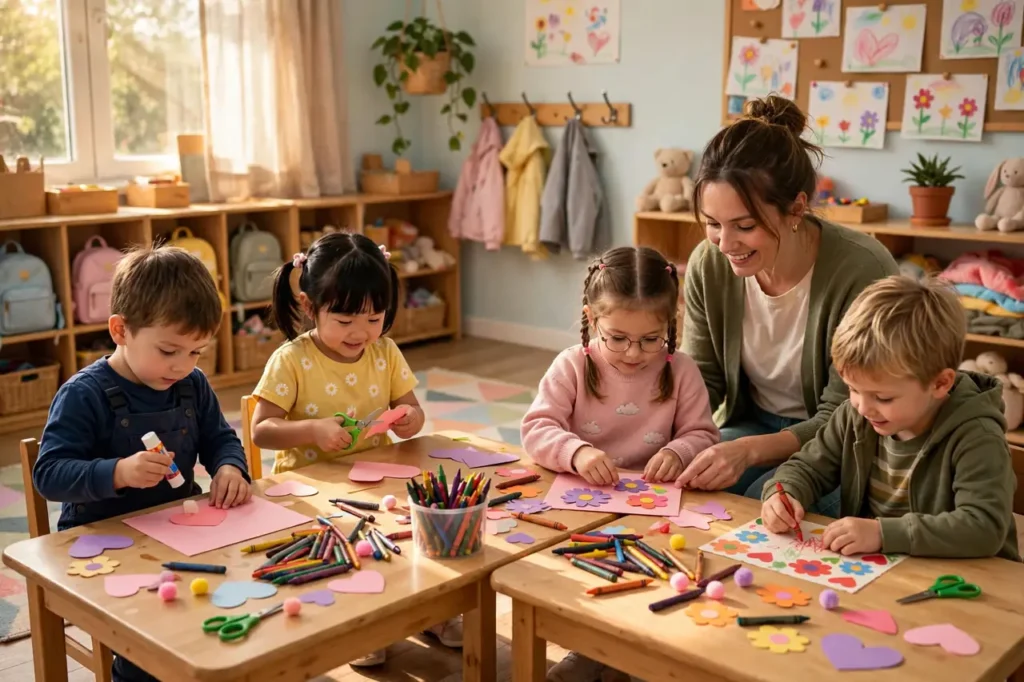
| Classroom activity | 1–5, 9 | 4–8 lines | Decorated cards to take home | Group choral reading |
| Long-distance | 15, 17, 18 | 8 lines | Video call + mailed original | Record a practice take |
Watch: A Sweet Kids’ Poem for Mom
Hearing a children’s poem performed is the best way to catch its rhythm before your own recitation. This gentle animated poem celebrates everything moms do, from morning hugs to bedtime stories — watch it with your kids and let them pick their favorite verse style:
Looking for the perfect gift to pair with the poem? Our guide to Mother’s Day gifts for Mom has 75+ ideas for every budget — and our Mother’s Day quotes collection offers beautiful lines to add after the poem in any card.
Frequently Asked Questions
What is a good short Mother’s Day poem from a child?
The best Mother’s Day poems from kids are short (4–8 lines), use simple vivid words, and end warmly. For toddlers, try “I Love You, Mommy”; for elementary kids, “The Best Mom Award”; for teens, “Real Talk.” Match the poem to the child’s age and personality rather than their reading level.
How can a toddler “give” a poem if they can’t read?
Read it together at bedtime for a few nights — toddlers memorize through repetition remarkably fast. On Mother’s Day, let them hold the card and “read” it from memory, or say it together with you. A handprint beside the poem makes it a keepsake regardless of delivery.
How long does it take a child to memorize a short poem?
Most kids memorize a 4-line rhyming poem in 2–3 bedtime readings and an 8-line poem in 3–5 short practice sessions. Keep sessions under five minutes, always end on a success, and practice the last two lines extra — kids tend to mumble endings.
What if my teenager refuses to recite a poem?
Don’t force a performance. Let them write the poem in a card, send it as a video message, or text it. Poems 11–14 are written in a teen voice specifically to avoid the “cheese factor.” Many teens who refuse to perform will happily write something heartfelt in private.
Can a teacher use these poems for a classroom Mother’s Day activity?
Yes — poems 1–5 and 9 are ideal for classroom use. Have students copy a poem onto decorated cardstock, add handprints or drawings, and take them home. A group choral reading (the whole class reciting together) works beautifully for school assemblies and takes pressure off shy kids.
How do I make a child’s poem into a keepsake gift?
Frame it with a photo, turn it into a video montage, or start a yearly time-capsule tradition. The key is adding a date and the child’s age — “Age 6, 2026” transforms a cute poem into a family heirloom. Laminate handprint versions so they survive decades.
What’s the best poem for a long-distance Mother’s Day?
Choose a poem that acknowledges the distance warmly (poems 15, 17, and 18 work well), perform it over video call, then mail the handwritten original. The double delivery — live performance plus a physical keepsake arriving days later — makes distance feel smaller.
Should the poem be funny or serious?
Match it to the child. Little kids are naturally funny — lean into it. Teens do well with a mix of humor and honesty. Grown children can go deeper. The golden rule: the poem should sound like the child who gives it, not like a greeting card company.
Mother’s Day Poems From Kids for Special Situations
Not every family looks the same, and Mother’s Day poems from kids should reflect real life. These four poems honor stepmoms, remember moms in heaven, celebrate new moms, and bridge long distances:
19. For My Stepmom
You chose to be my mom, you see,
You chose our whole family.
Love isn’t only blood, it’s true —
It’s showing up, like you always do.
You help with homework, cheer my games,
You love me just the same.
Happy Mother’s Day — I’m glad
You’re the mom I never knew I had.
20. For Mom in Heaven
Dear Mom, I miss you every day,
But I still feel you in a way —
In morning sun and evening star,
I know you’re never really far.
You taught me love that never ends,
You’re with me, Mom, in all my friends,
In every kind thing that I do.
Happy Mother’s Day. I love you.
21. For a New Mom (From Her Baby’s Perspective)
Dear Mommy, I’m brand new, it’s true,
But I already love you.
You rock me when I cry at night,
You hold me close and hold me tight.
I can’t say much — just goo and coo —
But “goo” means “I love you!”
Tip: have an older sibling or partner read this one aloud “from the baby” — it always gets a laugh through the tears.
22. For a Far-Away Mom
This poem is traveling far to you,
Across the miles, both tried and true.
I wish I could give a hug today,
But this poem will have to say:
I love you, Mom, in every way,
Happy, happy Mother’s Day!
Pairing the Poem With a Personal Note
A poem opens the heart; a personal note seals the deal. After the verse, add two or three sentences in your own words — or help your child dictate theirs. The formula is simple: one specific memory + one thank-you + one wish. Example: “I still remember you teaching me to ride my bike in the driveway. Thank you for never letting go until I was ready. I hope your Mother’s Day is as happy as you make everyone else.” For kids, prompt them: “What’s your favorite thing Mom does with you?” Their answer — “makes pancakes shaped like Mickey” — becomes the note. This combination of poem-plus-note is what turns a nice card into a keepsake, and our guide to what to write in a Mother’s Day card has dozens of sentence starters if you’re stuck.
For grown children, the note can go deeper: name something she sacrificed that you only understood as an adult, and tell her you see it now. “I didn’t understand how tired you were when we were little. I understand now, and I’m in awe.” That single sentence, following any poem in this collection, will undo her completely — in the best way.
When There Are Multiple Kids: The Stanza Relay
Got two, three, or four kids? Don’t make them each memorize a whole poem — run a stanza relay instead. Pick an eight-line poem (numbers 6–10 and 15–18 work perfectly), assign each child two lines, and have them perform it as a team, stepping forward for their lines. The littlest gets the last two lines — the big finish. Rehearse it twice: once for words, once for the stepping-forward choreography. Film the performance from Mom’s eye level so she can rewatch her kids’ faces. The relay has three advantages: nobody carries the whole load, shy kids get just two lines, and the team format is inherently adorable. For classrooms, scale it up — a whole class can relay a poem with one line per child, which is how school assemblies turn a simple verse into a standing ovation.
Teacher’s Corner: A Classroom Lesson Plan
Teachers: here’s a 45-minute lesson plan built around Mother’s Day poems from kids, tested in real classrooms. Minutes 1–10: Read-aloud. Read three poems from this collection with exaggerated expression; ask students which was funniest, which was sweetest, and why. Minutes 10–20: Rhyme hunt. Write a poem on the board and have students circle the rhyming pairs — this teaches the concept without a lecture. Minutes 20–35: Writing. Each student picks a template: “My mom is ___ / She likes to ___ / She always ___ / I love her because ___.” Even first-graders can complete this with invented spelling. Minutes 35–45: Decorating. Students copy their final poem onto cardstock, add drawings, handprints, or stickers. Collect and send home Friday before Mother’s Day with a note asking parents to let the child present it.
Differentiation is built in: strong writers can attempt full rhyming quatrains using the rhyme bank technique, while emerging writers succeed with the fill-in template — both produce poems moms will treasure equally. For multilingual classrooms, invite students to include one line in their home language; the resulting poems are stunning and deeply personal. And always have a backup plan for students with difficult family situations: “a poem for someone who takes care of you” keeps every child included without singling anyone out. The goal is a joyful, successful experience for every student — and a Mother’s Day surprise that arrives home on time.
The Annual Poem Album: A Tradition Worth Starting
Here’s a tradition that pays dividends for decades: every Mother’s Day, have each child contribute one poem (or stanza), date it, note their age, and add it to a dedicated album. Use a simple three-ring binder with plastic sleeves — nothing fancy needed. Include the original handwritten versions, a photo from that Mother’s Day, and a one-line note about what was happening in the family that year (“Emma lost her first tooth,” “we moved to the new house”). After ten years, the album becomes the most valuable object in the house: a decade of growing voices, from wobbly toddler printing to confident teenage verse, all telling the same story — we love you, Mom. Grandmothers who receive these albums routinely call them their most treasured possession. Start this year. Future-you will be so glad you did.
Quick Reference: Poem Lengths at a Glance
| Poem # | Lines | Best age | Best use |
|---|---|---|---|
| 1–5 | 4 | 2–5 | Cards, lap readings |
| 6–10 | 8 | 6–10 | School recitations, breakfast performances |
| 11–14 | 8 | 11–17 | Cards, video messages |
| 15–18 | 8 | 18+ | Framed prints, dinner toasts |
| 19–22 | 6–8 | Any | Special situations |
One Last Tip: Let Them Sign It Themselves
Whatever poem you choose, whatever presentation you plan, make sure the child signs it themselves — even if it’s just a scribble, a handprint, or a single wobbly letter. Typed poems are beautiful, but the signature is the proof of authorship that makes a mom’s heart stop. A poem “written” by a four-year-old but signed in Mom’s handwriting is a nice printout; the same poem with a crooked crayon “EMMA” at the bottom is a treasure. Don’t correct the spelling. Don’t straighten the lines. The imperfections are the point — they’re evidence of small hands and a big heart, and no amount of polish can improve on that.